Iran says oil production back to pre-sanctions level

Iran‘s oil production capacity has returned to the same level as prior to the reimposition of sanctions in 2018, when the US unilaterally withdrew from a nuclear deal, a top official said.

“Oil production has reached pre-sanctions figures, despite economic pressures,” said Mohsen Khojastehmehr, CEO of the National Iranian Oil Company (NIOC), quoted by state news agency IRNA on Sunday.

Iran is currently engaged in negotiations to restore the 2015 nuclear deal that would grant it much-needed sanctions relief in return for major curbs on its nuclear programme.

The US, under then president Donald Trump, unilaterally withdrew from the deal in 2018 and reimposed stringent sanctions, prompting Iran to begin rolling back on its commitments under the deal the following year.

Production has been restored to the pre-sanctions level of 3.8 million barrels per day, Khojastehmehr said, after it had sharply declined following the reimposition of sanctions.

President Ebrahim Raisi’s government invested $500 million to restore facilities and increase production to pre-sanctions levels within six months, he added.

Oil Minister Javad Owji said Friday that oil revenues for the last Iranian calendar year, which came to a close on March 20, registered $18 billion, about 2.5 times more than the previous year.

In a monthly report, the OPEC group of oil-producing countries estimated that Iran produced 2.54 bpd of oil in February.

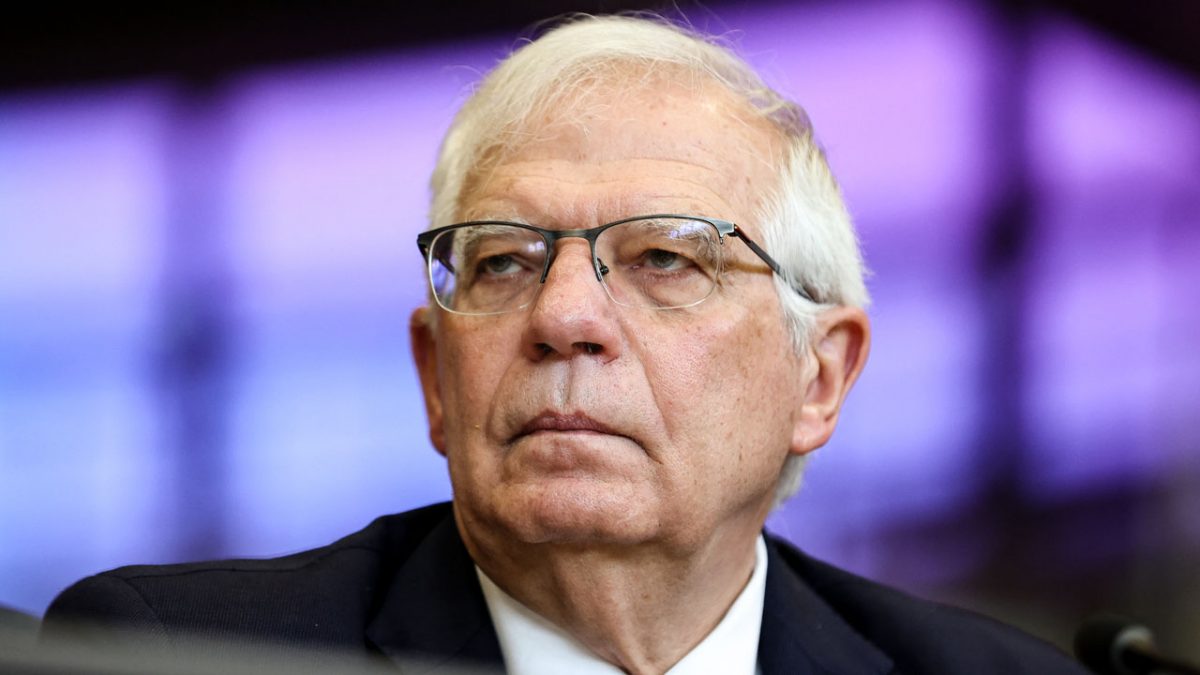
EU foreign policy chief Josep Borrell says the bloc is urgently discussing a new round of sanctions on Russia as it condemns “atrocities” reported in Ukrainian towns

BUCHA: EU officials said Monday they were weighing new sanctions targeting Moscow in response to alleged atrocities against Ukrainian civilians by Russian forces that sparked a wave of international outrage.

Despite Russian denials of responsibility, condemnation was swift, with Western leaders, NATO and the UN all voicing horror at images of dead bodies in Bucha, northwest of Kyiv, and elsewhere.

Local authorities said they had been forced to dig communal graves to bury the dead accumulating in the streets, including one in Bucha found with his hands bound behind his back.

Ukraine’s President Volodymyr Zelensky called Russian troops “murderers, torturers, rapists, looters” and warned in his nightly video message that “concentrated evil has come to our land.”

EU foreign policy chief Josep Borrell said the bloc was urgently discussing a new round of sanctions as it condemned “atrocities” reported in Ukrainian towns that have been occupied by troops sent in by Russian President Vladimir Putin five weeks ago.

The proposals, which French President Emmanuel Macron said could target Russia’s oil and coal sectors, could be discussed by foreign ministers on the sidelines of a NATO meeting on Wednesday and Thursday, or at their regular meeting early next week, an EU official told AFP.

Borrell also offered EU assistance in documenting evidence of the alleged atrocities, and Zelensky said he had created a special body to investigate.

The scale of the killings is still being pieced together, but Ukrainian prosecutor general Iryna Venediktova said 410 civilian bodies had been recovered so far.

And Bucha’s mayor Anatoly Fedoruk told AFP that 280 bodies were placed in mass graves because it was impossible to bury them in cemeteries still within firing range of Russian forces.

Satellite imagery firm Maxar released pictures it said showed a mass grave located in the grounds of a church in the town.

Municipal worker Serhii Kaplychnyi told AFP that Russian troops initially refused to allow residents to bury the dead in Bucha.

“They said while it was cold to let them lie there.”

Eventually, they were able to retrieve the bodies, he said. “We dug a mass grave with a tractor and buried everyone.”

AFP reporters in the town saw at least 20 bodies, all in civilian clothing, strewn across a single street.

 ‘Clear indications of war crimes’

Zelensky’s spokesman, Sergiy Nikiforov, said the scene in Bucha “looks exactly like war crimes.”

Moscow rejected the accusations and suggested the images of corpses were “fakes” while calling for a UN Security Council meeting on what its deputy ambassador to the body called a “heinous provocation of Ukrainian radicals in Bucha.”

“We categorically reject all allegations,” Kremlin spokesman Dmitry Peskov told journalists.

But Macron said he was in favour of fresh sanctions since “there are very clear indications of war crimes. It was the Russian army that was in Bucha,” he told France Inter radio.

In Germany, Chancellor Olaf Scholz’s defence minister raised the possibility of an end to gas imports.

“President Putin and his supporters will feel the consequences,” Scholz said.

Prime Minister Mateusz Morawiecki of Poland, whose country has welcomed millions of Ukrainians fleeing the violence, called for an international investigation into what he termed a “genocide.”

‘Even worse things’

Zelensky warned that the worst could be yet to come as Moscow refocuses its attention on the south and east of the country, in a bid to create a land link between occupied Crimea and the Russian-backed separatist statelets of Donetsk and Lugansk.

“Russian troops still control the occupied areas of other regions, and after the expulsion of the occupiers, even worse things could be found there, even more deaths and tortures,” he said.

Eight people were killed and 34 wounded in Russian attacks on two towns in southern Ukraine on Sunday, prosecutors in Kyiv said.

Europe’s worst conflict in decades, sparked by Russia’s invasion on February 24, has already killed 20,000 people, according to Ukrainian estimates.

Nearly 4.2 million Ukrainians have fled the country, with almost 40,000 pouring into neighbouring countries in the last 24 hours alone, the UN refugee agency said.

In the eastern city of Kramatorsk, women, children and elderly people were boarding trains to flee the Donbas region.

“The rumour is that something terrible is coming,” said Svetlana, a volunteer organising the crowd on the station platform.

Russia has redoubled its efforts in Ukraine’s south and east, including carrying out several strikes Sunday on the strategic Black Sea port of Odessa, which Moscow said targeted an oil refinery and fuel depots.

“We were woken up by the first explosion, then we saw a flash in the sky, then another, then another. I lost count,” a 22-year-old resident, Mykola, told AFP.

Britain’s defence ministry said recent Russian air activity had been focused on southeastern Ukraine, adding that heavy fighting was continuing in the devastated and besieged southern city of Mariupol.

“The city continues to be subject to intense, indiscriminate strikes,” the ministry said in an update on Twitter.

The UN’s top humanitarian envoy Martin Griffiths is expected in Kyiv soon after arriving in Moscow on Sunday in an attempt to halt the fighting.

And peace talks are scheduled to resume by video on Monday, though Russia’s chief negotiator Vladimir Medinsky said it was too early for a top-level meeting between Zelensky and Putin.

He said Kyiv had become “more realistic” in its approach to issues related to the neutral and non-nuclear status of Ukraine, but a draft agreement for submission to a summit meeting was not ready.


Sri Lanka opposition rejects unity offer, demands president resign

COLOMBO: Sri Lanka’s opposition on Monday dismissed the president’s invitation to join a unity government as “nonsensical” and instead demanded he resign over the country’s worsening shortages of food, fuel and medicines.

President Gotabaya Rajapaksa’s overture came as armed troops looked to quell more demonstrations over what the government acknowledges is the country’s most severe economic crisis since independence from Britain in 1948.

Police fired tear gas and water cannon to disperse thousands of protesters trying to storm the private home of the prime minister — the president’s elder brother and the head of the family political clan — in Tangalle, once a bastion of support for the Rajapaksas in the island’s south.

The president asked opposition parties represented in parliament to “join the effort to seek solutions to the national crisis,” after the late-night resignation of nearly all cabinet ministers to pave the way for a revamped administration.

“We will not be joining this government,” Eran Wickramaratne of the main opposition Samagi Jana Balawegaya (SJB) party told AFP. “The Rajapaksa family must step down.”

It capped a day of rejections from political parties demanding the once popular and powerful ruling family relinquish power.

“He really must be a lunatic to think that opposition MPs will prop up a government that is crumbling,” lawmaker Anura Dissanayake of the leftist People’s Liberation Front (JVP) told reporters in the capital Colombo.

And Abraham Sumanthiran of the Tamil National Alliance told AFP: “His offer to reconstitute the cabinet with opposition MPs is nonsensical and infuriates the people who have been demanding his resignation.”

Every member of Sri Lanka’s cabinet except the president and his elder brother, Prime Minister Mahinda Rajapaksa, resigned late Sunday.

The country’s central bank governor Ajith Cabraal — who has long opposed the International Monetary Fund bailout now being sought by the country — also stepped down on Monday.

A day after en masse resignations, the president reappointed four of the outgoing ministers — three of them to their old jobs — while replacing brother Basil Rajapaksa as finance minister with the previous justice chief.

‘Deck chairs on the Titanic’

Political analysts said the offer of a unity government did not go far enough to address the economic crisis or restore confidence in the Rajapaksa administration.

“This is like re-arranging the deck chairs on the Titanic,” Bhavani Fonseka, political analyst and human rights lawyer, told AFP. “This is a joke.”

Political columnist Victor Ivan told AFP that a cabinet reshuffle in the guise of a national government would not be acceptable to the public.

“What is needed is a serious reform programme, not just to revive the economy but address issues of governance,” Ivan told AFP.

A critical lack of foreign currency has left Sri Lanka struggling to service its ballooning $51-billion foreign debt, with the pandemic torpedoing vital revenue from tourism and remittances.

The result has seen unprecedented food and fuel shortages along with record inflation and crippling power cuts, with no sign of an end to the economic woes.

Trading was halted on the country’s stock exchange seconds after it opened Monday as shares plunged past the five percent threshold needed to trigger an automatic stop.

Economists say Sri Lanka’s crisis has been exacerbated by government mismanagement, years of accumulated borrowing and ill-advised tax cuts.

The government plans to negotiate an IMF bailout, but talks are yet to begin.

‘Step down Rajapaksa’

Noisy demonstrations have spread across the country since Sunday evening with thousands of people joining.

Thousands of young men and women dressed mostly in black and carrying hand-written posters and placards staged a noisy but peaceful demonstration at a busy roundabout in Colombo on Monday.

“Step down Rajapaksa,” said one placard, while another read: “Return the funds stolen from the republic.”

“Gota lunatic, go home Gota,” crowds chanted elsewhere in the city, referring to the president, who imposed a state of emergency last week, the day after a crowd attempted to storm his residence.

The homes of several senior administration figures in various parts of the island were surrounded by protesters, with police firing tear gas to disperse the crowds.

Pakistan’s supreme court is expected to decide the fate of embattled Prime Minister Imran Khan, following a day of political turmoil.

Mr Khan has faced an attempt to oust him from office in recent days.

But in a move that has roiled the country, members of Mr Khan’s party on Sunday blocked a vote of no-confidence in the PM and dissolved parliament.

Mr Khan had claimed the vote was part of a US-led conspiracy to remove him, but the US has denied this.

Furious opposition politicians have now filed a petition to the Supreme Court to rule on whether the move to block the vote was constitutional.

The court was initially expected to decide by the end of Monday, but delayed the decision until Tuesday.

Mr Khan was widely regarded as having come to power with the help of Pakistan’s army, but they have since fallen out, according to observers.

His political opponents then seized this opportunity to demand a no-confidence vote after persuading a number of his coalition partners to defect to them.

On Sunday, MPs meeting to hold the vote – which Mr Khan was expected to lose – were told of an “an operation for a regime change by a foreign government”.

The deputy speaker chairing the session – a close ally of the prime minister – then proceeded to declare the vote unconstitutional.

Shortly afterwards Pakistan’s president Arif Alvi – who is from Mr Khan’s ruling PTI party – dissolved parliament in a step towards early elections.

The move has sparked anger among the opposition, with some politicians accusing Mr Khan of “treason” for not allowing the vote to go ahead.

But in a television address and a series of late night tweets Mr Khan defended the decision.

Mr Khan has said his criticism of US policy and other foreign policy decisions has led to an attempt by the US to remove him from power.

Opposition politicians have ridiculed the accusation, and the US has denied it.

“There is no truth to these allegations… we respect and support Pakistan’s constitutional process and the rule of law,” a State Department spokesperson told news outlet Reuters.

Presentational grey line

A ‘foreign-funded’ conspiracy or a bid to entrench power?

Abid Hussain, BBC Urdu

As the holy month of Ramadan started in Pakistan, yet another political crisis embroiled the country of 220 million, as another Prime Minister was unable to finish his full term of five years.

But the overall mood seemed jubilant among the supporters of the former cricketer-turned-politician Imran Khan.

In the last week, Mr Khan has doubled down on a “secret memo”, which he claims showed clear proof of a US conspiracy to overthrow his government, and has rallied his supporters by making multiple TV appearances in recent days.

Many others, however, feel that Imran Khan violated all democratic norms and pulled off a “civilian coup” in an attempt to secure power.

As the country’s oldest paper, Dawn, wrote in its editorial: “No one could have guessed that his last ploy would involve having the democratic order burnt down by a democratically empowered party.”

The BBC’s Secunder Kermani says that many of Mr Khan’s supporters still believe his narrative.

While Mr Khan’s popularity has been severely dented by the rising cost of living, he still has a sizeable following and he stands a better chance in fresh elections than he did in a parliamentary vote, according to our correspondent.

Pakistan: The basics

Who is the ruling party in Pakistan? Pakistan’s current ruling party is Pakistan Tehreek-e-Insaf (PTI), which is one of the three major political parties of Pakistan. It is now headed by former cricketer-turned-politician and PTI head Imran Khan, who took power as Prime Minister in 2018 after PTI emerged as the dominant party in government following the 2013 general elections.

Who are the opposition? The opposition is headed by the Pakistan Muslim League-N (PML-N) and the Pakistan Peoples Party (PPP) — two usually feuding dynastic groups that dominated national politics for decades until prime minister Imran Khan forged a coalition against them.

How long does the prime minister serve for? The prime minister of Pakistan serves for a five-year term. However no elected or appointed prime ministers have served the entirety of their term to date.

Police have arrested one suspect in connection with a shooting in the centre of Sacramento, California’s capital, on Sunday, that left six dead.

Dandre Martin, 26, has been charged with assault and illegal firearm possession, police said on Monday.

Multiple people are believed to have opened fire in the busy downtown area, close to the state Capitol building.

Officials have identified the three men and three women killed in this year’s worst US mass shooting so far.

Three of the victims were men: Sergio Harris, 38, De’Vazia Turner, 29, and Joshua Hoye-Lucchesi, 32.

Three women were also shot dead: Johntaya Alexander, 21, Melinda Davis, 57, and Yamile Martinez-Andrade, 21.

Police say all six victims died at the scene, when multiple shooters opened fire just after 02:00 (09:00 GMT) on Sunday near the junction of 10th and K Street.

An additional twelve people were wounded in the shooting and taken to local hospitals. By Monday, seven had been discharged.

The violence was “unprecedented” for the city, its police chief said.

Police have executed several search warrants as of Monday. At least one handgun, now understood to be stolen, was recovered.

Sacramento city councillor Katie Valenzuela: “I’m heartbroken and I’m outraged”

The family of Sergio Harris told local media the vivacious and friendly father had gone to a nightclub, London, late on Saturday and never returned.

Mr Harris’s wife, Leticia Fields, told the San Francisco Chronicle a stranger had told her on the phone that he had been shot.

“It sounds like a lot of innocent people lost their lives tonight,” Ms Fields told the Chronicle. “I’m taking it day by day. I haven’t told our 11-year-old yet”.

Mr Harris had gone to the nightclub with his cousin, DeVazia Turner – another of the victims – Mr Turner’s father told local TV station Fox40.

“There’s just nothing to say. I’m just here. I’m grief, that’s all – grief,” the elder Mr Turner said.

Videos posted online appear to show a brawl break out in the area – packed with restaurants and bars – in the early hours on Sunday, just before rapid gun fire sent people fleeing.

It was so far unclear whether the fight led to the shooting, police say, and on Monday, officials set up an online portal to ask the public to submit information from the scene.

In a statement on Sunday, President Joe Biden decried “another” instance of gun violence leaving “families forever changed. Survivors left to heal wounds both visible and invisible”.

Firearms are involved in approximately 40,000 deaths a year in the US, including suicides, according to the Gun Violence Archive website.

Zelensky fears worst atrocities still to be found: Ukraine war

He said the town of Borodyanka may have suffered more than others.

Horrific images of bodies in streets in towns like Bucha have generated shock and condemnation worldwide.

Russia denies killing civilians, and without evidence says Ukraine staged the scenes.

But the images prompted US President Joe Biden to call for his Russian counterpart Vladimir Putin to be tried for war crimes.

His intervention follows the publication of new satellite photos by the earth observation company Maxar, which show bodies lining Bucha’s streets during its occupation by Russian forces.

The Ukrainian government started a war crimes investigation after it said the bodies of 410 civilians had been found in areas around Kyiv.

Some were discovered in mass graves while others had their hands tied and had apparently been shot at close range.

Foreign Minister Dmytro Kuleba told a news conference in Warsaw on Monday that the killings were the “tip of the iceberg” and demanded more severe sanctions against Russia.

In a BBC interview, he cited the desperate situation in the southern town of Mariupol, which has been under Russian bombardment for weeks.

“What we’ve seen in recent weeks is that Russia is much worse than Isis [the Islamic State group] when it comes to its atrocities and massacres,” he said.

In his nightly address to the Ukrainian people, Mr Zelensky said things were done throughout the region north of Kyiv that people had not seen since the Nazi occupation.

“There is already information that the number of victims may be even higher in Borodyanka and some other liberated cities,” he said.

Mr Zelensky is due to speak to the United Nations Security Council later on Tuesday, where he is expected to offer more evidence of atrocities.

Several Western nations have expelled Russian diplomats in response to the discovery of the atrocities, and new sanctions against Russia are being discussed.

But Moscow’s ambassador to the UN said Russia would present “empirical evidence” to the UN Security Council demonstrating that Western statements on events at Bucha were lies.

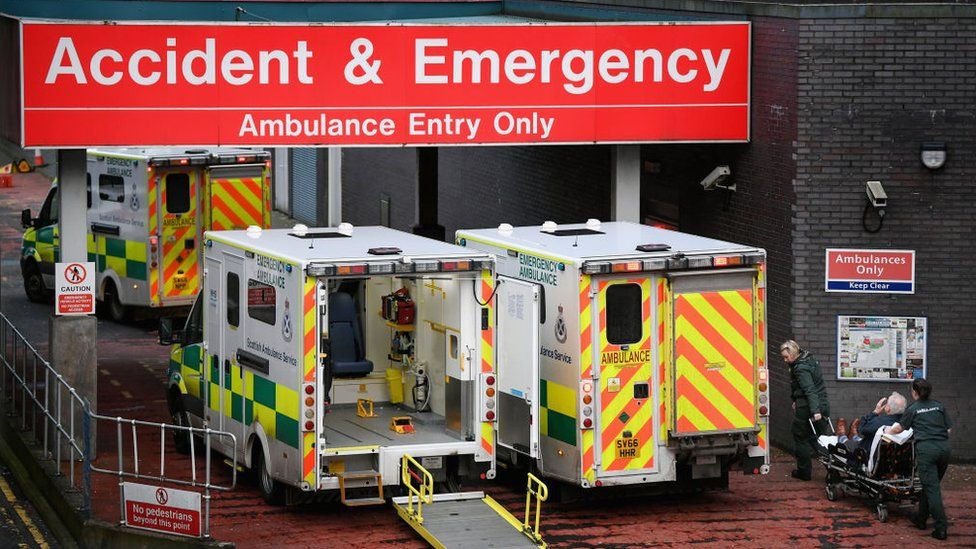
Record numbers of patients have had long waits in Scotland’s emergency departments, new figures show.

Public Health Scotland found that 2,627 patients spent more than eight hours in A&E last week, and 1,022 of them were there for more than 12 hours.

However, there a slight improvement in the percentage of patients seen within four hours – the government’s main target for wards – to 68.4%.

Doctors have said hundreds of patients have died due to hospital delays.

Health boards point to record numbers of patients being treated for Covid along with staff shortages as putting unprecedented pressure on services.

And the Scottish government said the figures appeared to be stabilising despite continuing high levels of Covid transmission.

The latest statistics from Public Health Scotland showed a slight drop in the number of people attending A&E in the week ending 27 March, from 25,506 to 25,264.

This coincided with an improvement in the percentage of patients seen within four hours, from 66.2% to 68.% – although this is still the third worst on record, and far below the government’s 95% target.

And the number of patients experiencing longer waits increased slightly, with the number spending more than eight hours in an emergency department before being admitted, discharged or transferred rising from 2,614 to 2,627.

Meanwhile, the number waiting 12 hours or more rose from 1,015 to 1,022 – the highest total since records began in 2015.

‘We can’t go on like this’

In March, the Royal College of Emergency Medicine estimated that there had been 240 avoidable deaths since the start of the year, blaming long waits for a hospital bed.

Vice president Dr John Thomson said it was “beyond doubt the biggest crisis that we have faced in emergency care”.

Opposition parties said A&E wards were in crisis, with the Scottish Conservatives saying “we can’t go on like this”.

And the Scottish Lib Dems called for an urgent inquiry into avoidable deaths, saying that “NHS patients and staff are in dire need of new hope”.

A Scottish government spokesman said new infection control guidance had been issued to health boards in the past week which could help ease pressures on hospitals and improve patients flows.

He added: “The latest weekly figures show performance in our A&E departments has slightly improved, although we know this may fluctuate in the weeks ahead as the unprecedented impact of the pandemic continues to take its toll.

“We are still seeing high levels of Covid transmission and people in our hospitals with the virus, but there are some indications that numbers are stabilising.”

The closure of 140 police stations and offices has happened in Scotland over the past decade, new figures reveal.

The Scottish Police Federation said it was having a “detrimental impact” on policing in remote and rural areas.

The research, by social affairs magazine 1919, found some staff were relocated to shared buildings including council headquarters. However, many building were closed and not replaced.

Calum Steele, general secretary of the Scottish Police Federation (SPF) – which supports 1919 magazine – said many stations were in “a shocking state of repair”.

He cited a lack of investment and “simple neglect” towards the police estate as an issue for remaining stations, with some ending up in disrepair.

The SPF, which represents for rank and file officers, previously posted images on social media showing mushrooms growing on the walls of accommodation for police officers in Dunoon.

Finance Secretary Kate Forbes froze Police Scotland’s capital funding in this year’s budget.

It came despite calls from the force for additional funds of £242m over 10 years to help fix a backlog of problems.

Mr Steele told 1919 : “Years of underinvestment in the police estate have left many police stations in a shocking state of repair. Were it not for rats, many would have no inhabitants at all.

“Whilst we welcome new buildings and co-location with other agencies where they exist, the stark reality is that simple neglect has led to so many police stations being closed and lost forever.”

Mr Steele also claimed that moving more officers to urban offices discouraged people in rural communities from contacting the police, as they had “little confidence of a meaningful response”.

He added: “Officers and communities in remote and rural Scotland deserve much better.”

The former training school at Chambers Street in Edinburgh is now part of the University of Edinburgh

It emerged last year that Police Scotland had made £28.5m after selling off 96 of its old properties.

The former Strathclyde Police headquarters in Glasgow’s Pitt Street raised £9.8m for the force while the former police training school in Chambers Street, Edinburgh, made £3.3m.

A further 26 buildings were listed as being under offer, on the market, being prepared to go up for sale or for proposed community transfer.

Since then, three other police stations have closed, with staff being relocated to council buildings in Aberdeen, Crieff and Alloa.

Leases for 15 other police stations have also been terminated or transferred.

‘Not fit for purpose’

Police Scotland Deputy Chief Constable Will Kerr said: “Scotland’s policing estate has been built up over the course of several decades and has suffered from a historic lack of investment under legacy arrangements.

“Some buildings are no longer in the right place, are not operationally fit for purpose and not designed in a way which allows us to work alongside key delivery partners.

“We carefully consider all options regarding the use of policing buildings, including co-location or relocation and consult with a range of stakeholders and the local community.”


The Scottish government said recorded crime is at one of the lowest levels since 1974 and is down 41% compared to the data for 2006/07.

A spokesman for the Scottish government said: “The allocation of resources, including for the police estate, is for the Scottish Police Authority and the chief constable to determine.

“However, the police capital budget has more than doubled since 2017/18, supporting continued investment in the police estate.

“Police Scotland has prioritised the progress of a new and ambitious estates strategy which will lead to improvements in the operating environment for all officers and staff in line with the objective to proactively look after their wellbeing.”

The bodies of a man and a woman in their 80s have been found in a house in a seaside town.

Norfolk Police said officers were sent to The Warren in Cromer at 19:18 BST on Monday, having been alerted by the East of England Ambulance Service.

The couple were found unresponsive.

Det Insp Chris Burgess said: “We believe that those involved are known to one another and we are not currently seeking anyone else in relation to this investigation.”

Police said detectives were carrying out inquiries into the incident

A police cordon was put in place and Det Insp Burgess added that “detectives will carry out further inquiries to establish the full circumstances leading up to this incident”.

Two members of a British family have died and two others are critically injured after a landslide in Australia.

The man, 49, and his nine-year-old son were killed by falling rocks in the Blue Mountains near Sydney on Monday.

A woman, 50, and her son, 14, were taken to hospital with serious head and abdominal injuries. Her daughter, 15, was treated for shock.

Authorities said the family were on holiday in the popular tourist area when the accident happened.

“Unfortunately there’s been a landslip while they’ve been bushwalking. It’s quite a tragic scene,” said Supt John Nelson from New South Wales Police.

The woman and teenage boy had required sedation and intubation before being winched to safety and flown to hospital on Monday, paramedics said.

The teenage girl was also taken to hospital and was “extremely distressed”, according to authorities.

“We’ve focused on caring for her while the best medical care is given to her mum and brother and just trying to get that support for the young 15-year-old,” said Supt Nelson.

Authorities had to wait until Tuesday to recover the bodies of the man and boy, describing it as “extremely dangerous” terrain.

Details of the victims, including where they are from in the UK, has not been released at this stage. The Foreign Office said it was “providing consular support to the family of a British couple and their children following an incident in Australia” and that it was in contact with local authorities.

Like much of Australia’s east coast, the Blue Mountains has been lashed by weeks of heavy rain.

Some walking tracks have been closed “due to flood damage and ongoing rockfall risk”, according to NSW National Parks and Wildlife Service website.

But a spokesman said the track at Wentworth Falls had recently been deemed safe.

“The walking track where this incident occurred was inspected in the days before the rockslide as part of a routine track assessment programme,” he told the Australian Broadcasting Corporation.

“Unfortunately, it is not possible to predict and eliminate all natural risks such as rockslides, which can occasionally occur around the state.”

Following the removal of the bodies, the New South Wales Department of Environment and Heritage announced the area would be closed to the public until further notice and a “comprehensive review” would be undertaken.

New South Wales premier Dominic Perrottet described it as a “tragic” incident and said he would seek advice on whether the walking track should have been open, given recent heavy rain.

“These tragedies occur too often so anything we can do to keep people safe, we will,” he told the Australian Broadcasting Corporation.

“Obviously, the Blue Mountains is a place where people love to go trekking. It’s one of the wonders of the world but when those tragedies occur it would be remiss of any government not to act.”