India strongly condemns Bucha civilian killings: Ukraine

Images of mass graves and bodies of civilians reportedly executed in the Kyiv suburb have shocked the world.

India’s condemnation at the UN meeting is the strongest statement it has made since Russia invaded Ukraine.

Delhi has so far abstained from UN votes condemning Russia’s actions.

In a statement on Tuesday at the UN Security Council meeting, India’s permanent representative to the United Nations TS Tirumurti said the country “remained deeply concerned at the worsening situation and reiterates its call for immediate cessation of violence and end to hostilities”.

“The situation in Ukraine has not shown any significant improvement since the Council last discussed the issue. The security situation has only deteriorated, as well as its humanitarian consequences,” Mr Tirumurti said.

“We hope the international community will continue to respond positively to the humanitarian needs. We support calls urging for guarantees of safe passage to deliver essential humanitarian and medical supplies.”

Presentational white space

India has a long history of pursuing a non-aligned foreign policy but is under pressure from Western countries over its diplomatic balancing act. Delhi and Moscow also share a decades-old relationship, and Russia is also India’s biggest defence supplier.

India recently also placed contracts for nearly six million barrels of Russian crude after prices slumped in the wake of Western sanctions on Russia. But the Indian government says this is “literally a drop, in a larger bucket” of its oil imports globally.


Last week, Delhi was criticised by the US and Australia for considering a Russian offer that was seen as circumventing the sanctions.

The civilian killings in Bucha were uncovered after Russian troops withdrew from the town. The mayor, Anatoli Fedoruk, said on Monday that at least 300 civilians had been killed, but there is no official tally yet.

‘Delhi-Moscow ties to be tested’

India’s support for an independent inquiry into civilian killings in Bucha is hardly surprising.

It stopped short of blaming or naming Russia for the violence in Bucha, which was in line with its policy of neutrality over Ukraine.

The West has so far appeared to be accommodating of India’s stand, which largely stems from its reliance on Russian defence equipment and its historical ties with Moscow.

But as allegations of atrocities in Ukraine mount, so will the pressure on Delhi to take a clearer stand.

US Defence Secretary Lloyd Austin on Tuesday said that Washington wanted Delhi to scale down its defence dependence on Russia. If his statement is a sign of things to come, India’s policy of pushing for diplomacy over Ukraine will be seriously tested.

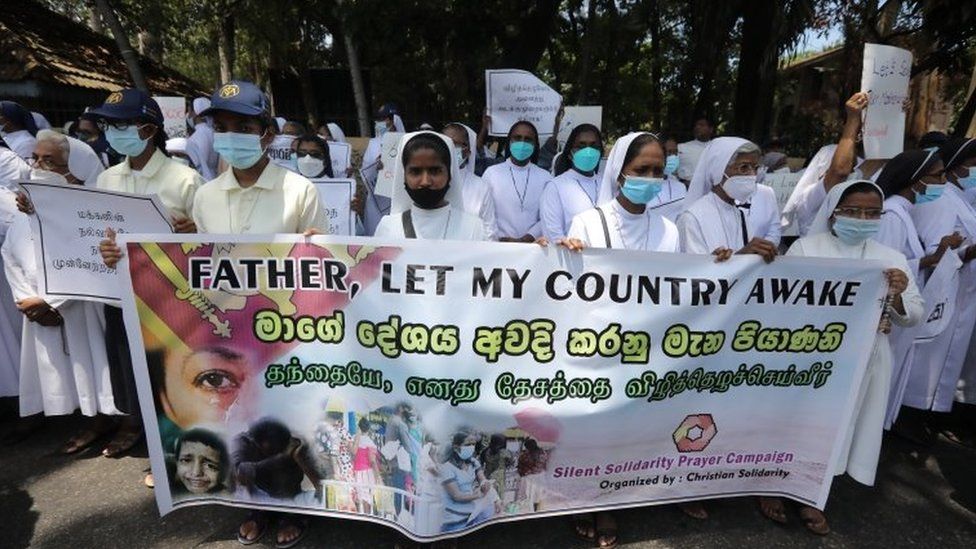
Sri Lanka’s beleaguered president will not be resigning, his government’s whip has told parliament.

The declaration defies calls from the public and political opponents for Gotabaya Rajapaksa to step down amid the country’s economic crisis.

Crowds have protested for weeks over lengthy power cuts and shortages of gas, food and other basic goods.

The public anger has prompted nearly all Cabinet ministers to quit, and scores of MPs to leave his government.

Opposition MPs have also rejected his invite to form a national unity government, saying voters want the president and entire government to resign.

But on Wednesday, Chief Government Whip Johnston Fernando told lawmakers: “As a responsible Government, we state President Gotabaya Rajapaksa will not resign from his post under any circumstances.”

On Tuesday night, Mr Rajapaksa lifted controversial state of emergency measures following further protests, the departure of several government lawmakers and the resignation of his finance minister.

The president had invoked the law – which allows the arrest of suspects without warrants – on 1 April after protests outside his house.

But he lifted them on Tuesday in an apparent concession to angry citizens. Earlier that day in parliament, 41 MPs had left the president’s ruling coalition to “represent themselves independently”. The implication of this is still unclear.

Sri Lanka is facing its worst economic crisis since gaining independence from the UK in 1948.

The heavily import-reliant South Asian nation no longer has enough dollar reserves to buy essential items like food, fuel to power vehicles or even generate electricity.

People have been suffering power cuts of up to 13 hours, massive inflation and a shortage of food and basic goods.

Protests across the country continued on Wednesday. Public frustration over the crisis has seen peaceful demonstrations held since January.

But the situation has escalated in the last fortnight, with many more people taking to the streets as power cuts stretched to 13 hours and petrol stations ran out of fuel.

“People can’t afford their daily rice, their dhal, their basic necessities. People can’t get on buses to come to work, to go to school,” one protester told the BBC this week.

While most protests are peaceful, there have also been violent flare-ups – with attacks on politicians’ homes and clashes between protesters and police.

On Tuesday, the UN Human Rights Council expressed its concerns about the emergency measures in a statement issued before they were lifted.

The UN noted the reports of police violence and said it was worried the restrictions aimed at “preventing or discouraging people from legitimately expressing their grievances through public protests”.

It added that: “The drift towards militarisation and the weakening of institutional checks and balances in Sri Lanka have affected the state’s ability to effectively tackle the economic crisis.”

Western leaders are set announce a further set of sanctions against Russia on Wednesday, the US has said.

White House Press Secretary Jen Psaki said the measures will target Russian financial and state-owned bodies, as well as some officials and oligarchs.

Ms Psaki said the move will “hold accountable the Russian kleptocracy that funds and supports Putin’s war”.

Calls for further sanctions have grown in recent days amid allegations of Russian atrocities in Bucha.

The town’s mayor told the BBC on Tuesday night that Russian forces had killed around 320 civilians during their occupation of the town, while the discovery of mass graves has caused outage in western capitals.

Ms Psaki told reporters during a news conference in Washington DC on Tuesday that the sanctions, which are expected to include a ban on all new investment in Russia, will “degrade key instruments of Russian state power, impose acute and immediate economic harm on Russia”.

The Wall Street Journal said on Tuesday that the Sberbank, Russia’s largest lender, may be among those targeted.

US media has suggested that sanctions could also target the two daughters of Russian President Vladimir Putin, though Ms Psaki refused to comment on the reports.

She added that the sanctions will be announced will be taken in coordination with the EU and other G7 nations.

“In coordination with the G7 and the EU, an additional sweeping package of sanctions measures that will impose costs on Russia to send it further down the road of economic, financial, and technological isolation,” Ms Psaki said.

On Tuesday, the European Commission proposed broad new sanctions on Russia, including a potential ban on imports of Russian coal and additional measures targeting state-owned businesses and officials and oligarchs in Moscow.

The proposed ban on Russian coal, which must be agreed by all 27 member states, would mark the first time the EU has blocked imports of Russian energy.

The bloc buys around €4bn (£3.3bn) worth of coal from Moscow every year.

Some member states, including Germany, are heavily reliant on Russian energy and had been reluctant to directly target the sector. But sentiment appeared to change after evidence of Russian war crimes emerged, with French President Emmanuel Macron joining calls for a ban earlier this week.EU officials say sanctions on Russian imports of coal and oil are definitely being considered

Member states are also expected to impose a “full transaction ban” on four Russian banks and ban a range of other Russian and Belarus imports, including wood, cement, seafood and liquor, worth €5.5 billion (£4.59bn).

And Ursula von der Leyen, the European Commission president, said she intends to close EU ports to Russian vessels and ban Russian and Belarusian road transport operators from the region.

Ms Von der Leyen accused Russia of “waging a cruel and ruthless war” against Ukrainian civilians and said the EU must “sustain utmost pressure on Putin and the Russian government at this critical point”.

But Lithuanian Foreign Minister Gabrielius Landsbergis on Tuesday evening criticized the EU’s proposed sanctions package, calling it a “feeble response” which is “an invitation for more atrocities.”

“Coal, four banks…a ban on ports and borders (with exceptions) is not really an adequate sanctions package to the massacres that are being uncovered,” Vilnius’ chief diplomat wrote on Twitter.

Addressing the UN Security Council on Tuesday, Ukrainian President Volodymyr Zelensky accused Russian leaders of committing war crimes in his country and called for them to be brought to justice.

“The Russian military searched for and purposefully killed anyone who served our country,” he said. “They killed entire families, adults and children, and they tried to burn the bodies.”

Also on Tuesday, American officials said they will provide $100m (£76m) in anti-armour Javelin missiles to Ukraine’s forces. This is the sixth batch of US equipment aid released to Ukraine since August.

US Pentagon spokesman John Kirby said in a statement that the newly-authorised money will “meet an urgent Ukrainian need for additional Javelin anti-armour systems, which the United States has been providing to Ukraine and they have been using so effectively to defend their country”.

A Scottish cabling company has unveiled plans to expand into the US for the first time.

Emtelle, which has its headquarters in Hawick, is opening a new manufacturing facility in Fletcher, North Carolina.

The firm already employs 700 staff worldwide and it said the new factory would create up to 200 jobs.

It said the move would also allow it to better serve its customer base in North America by providing its first fully “made in the USA” range of products.

Emtelle describes itself as the “leading global manufacturer of pre-connectorised blown fibre, cabling and ducted solutions”.

It already has manufacturing facilities in Denmark and Germany and recently announced the acquisition of Dubai-based telecoms ducts manufacturer AfriPipes.

‘Landmark moment’

It has also expanded its UK manufacturing facilities to Wrexham to help meet “unprecedented demand”.

The company said the latest expansion continued its efforts to “put the Scottish Borders on the new technology map”.

Chief executive Tony Rodgers said: “Our US expansion marks a landmark moment for Emtelle.

“With an estimated multi billion dollars to be invested in fibre rollouts across the US in the next five years, the new manufacturing facility in Fletcher will better position us to ensure our customers across the US have access to our high-quality product range.”

The burden of tax falling on workers and employers has increased as a hotly-debated rise in National Insurance payments takes effect.

Employees, businesses and the self-employed will pay an extra 1.25p in the pound. The extra tax is earmarked for government spending on social care.

Some MPs opposed the move amid cost of living pressures, but mitigation will instead be introduced in July.

Experts are urging people to check their status as a new tax year starts.

Earnings levels at which people start to pay income tax have been frozen, increasing the chances of employees being dragged into a new band – with a higher rate of tax – if they receive a pay rise.

How National Insurance will change

Employees pay National Insurance on their wages, employers pay extra contributions for staff, and the self-employed pay it on their profits.

In September, the government announced the rise in contributions from 6 April, in part to help ease the burden on the NHS.

It means that, instead of paying National Insurance contributions of 12% on earnings up to £50,270 and 2% on anything above that, employees will now pay 13.25% and 3.25% respectively. The self-employed will see equivalent rates go up from 9% and 2% to 10.25% and 3.25%.

Those of state pension age do not pay the tax at present, and nor do those on very low incomes.

After the announcement last year, the plans were met with disapproval from opposition parties and some backbench Conservative MPs who criticised the timing, as many people face sharp rises in energy bills and prices in general.

Chancellor Rishi Sunak responded in his Spring Statement with plans to allow workers and the self-employed to earn more before they start making National Insurance payments. This will take effect in July.

From now, employees will pay National Insurance contributions on earnings above £9,880 a year. From July, it will be paid on earnings above £12,570 a year.

Taken together, the measures mean that, over the next 12 months, anyone earning less than about £34,000 a year will pay less in National Insurance than they did the previous year, while those earning more will see their payments rise.

Had the chancellor stuck with his original plan, then all but the very lowest income workers would have paid more in National Insurance.

Many employers will still pay more, and business groups have warned that this may be passed on in higher prices. They also said it would add to the pressures already faced by firms following the withdrawal of Covid support measures.

Among those concerned about the bill is Hanna Gentry, an assistant general manager at George’s Bistro in Cleckheaton.

Hanna Gentry says the bar will need to bring in more business

“Personally for me if I look at my wage I think it’s not too much, but as a business when you have to pay that on everybody’s wages, it adds up really really quickly,” she said.

“We are going to try and bring in more custom, that’s the only way we can do it – in terms of events, new menus, to try and draw customers in.”

Meanwhile James Hipkins, managing director of Emery’s Timber and Builders Merchants in Stoke and Telford, told the BBC’s Today programme the rise was “another little extra bit” to add to the rising cost of materials, fuel and energy.

“My greater concern is, is it the beginning of a perfect storm? By that I just mean all the little snips going up, is it going to start to stifle industry?”

However, Mr Hipkins said society had a “moral obligation and responsibility to this” to fund social care services, which he added have been “overlooked” for too long.

“We all know it needs sorting out, we all know it needs to be paid for but none of us are particularly keen on paying for it,” he added.

“At this stage is it seems a bit wishy washy and woolly as it’s coming in. I would feel a lot more confident and a lot more happy when I see it as an actual separate levy and it can be identified for where it’s supposed to be going.”

The government said it had raised Employment Allowance from £4,000 to £5,000, so smaller firms could claim up to £5,000 off their National Insurance bills. Ministers said it meant 670,000 firms would not pay the tax at all.

Overall, the increases in National Insurance for employers and higher-income workers will raise an extra £10.9bn in a year for the government, according to the Institute for Fiscal Studies.

Prime Minister Boris Johnson described it as “necessary, fair and responsible”, adding that it would “provide the health and care system with the long term funding it needs as we recover from the pandemic”.

Next year, the extra tax will be rebranded as the Health and Social Care Levy.

Other tax changes

An increase in the tax on dividends is also coming into effect, to add to the funds channelled by the government into the NHS and social care.

It has also gone up by 1.25p in the pound. Many private investors hold shares in an Individual Savings Account (Isa) which protects them from tax. However, some business owners pay themselves in dividends and so will face a tax rise.

Early last year Mr Sunak said the thresholds at which income tax is paid would be frozen at April 2021 levels for five years (although Scotland has different levels). That means pay rises will push more people into higher tax bands.

If a pay rise takes somebody from below £12,570 a year to above, then they will start paying income tax at 20% on the amount above £12,570. A shift in salary from below £50,270 to above means paying the higher rate of 40% on the amount above £50,270. The next threshold is at £150,000, when the additional tax rate of 45% kicks in.

Adrian Lowery, personal finance spokesman at investing platform Bestinvest, urged people to check their tax code, which is issued by HM Revenue and Customs and can be found on a pay slip.

“A tax code of 1257L is currently used for most people who have one job or pension. If yours is different, make sure you understand why, so you’re not paying too much tax,” he said.

At last month’s Spring Statement, Mr Sunak pledged to reduce the basic rate of income tax by 1p in the pound before the end of the Parliament in 2024.

For this new tax year, the personal allowance of capital gains tax has also been frozen at £12,300, so this much profit can be realised from assets in a year before tax is paid.

The threshold for inheritance tax – a levy on estates when somebody dies – has also been frozen again at £325,000, as it has since 2009.

‘Changing regime:’ US once again strongly refutes PM Imran Khan’s allegations

The US State Department has once again spurned Prime Minister Imran Khan’s allegations of toppling his government through a no-trust motion by funding the Opposition, Geo News reported.

On March 27, at a jalsa, the PM accused the US of interfering in Pakistan’s politics and plotting to oust his regime through a no-trust motion in the National Assembly.

As proof, the PM also brandished a ‘threat letter’ at a public gathering, saying that a foreign country has warned of dire consequences if he remains in power.

Following the Opposition’s ruckus on the ‘threat letter’, the PM had called the National Security Committee (NSC) and presented the letter. To this, the NSC expressed concern and a demarche was issued to the US envoy in Pakistan.

Subsequently, based on this ‘threat letter’, the deputy speaker rejected the no-trust motion against the PM and President Arif Alvi dissolved the NA on the PM’s advice. However, this act turned into a deep constitutional crisis as the matter is in the Supreme Court now.

Earlier, the US State Department and White House categorically rejected PM’s allegations and said the US government has nothing to do with it.

Despite the earlier rejection, the US has once again refuted PM Imran Khan’s allegations over the US government involvement.

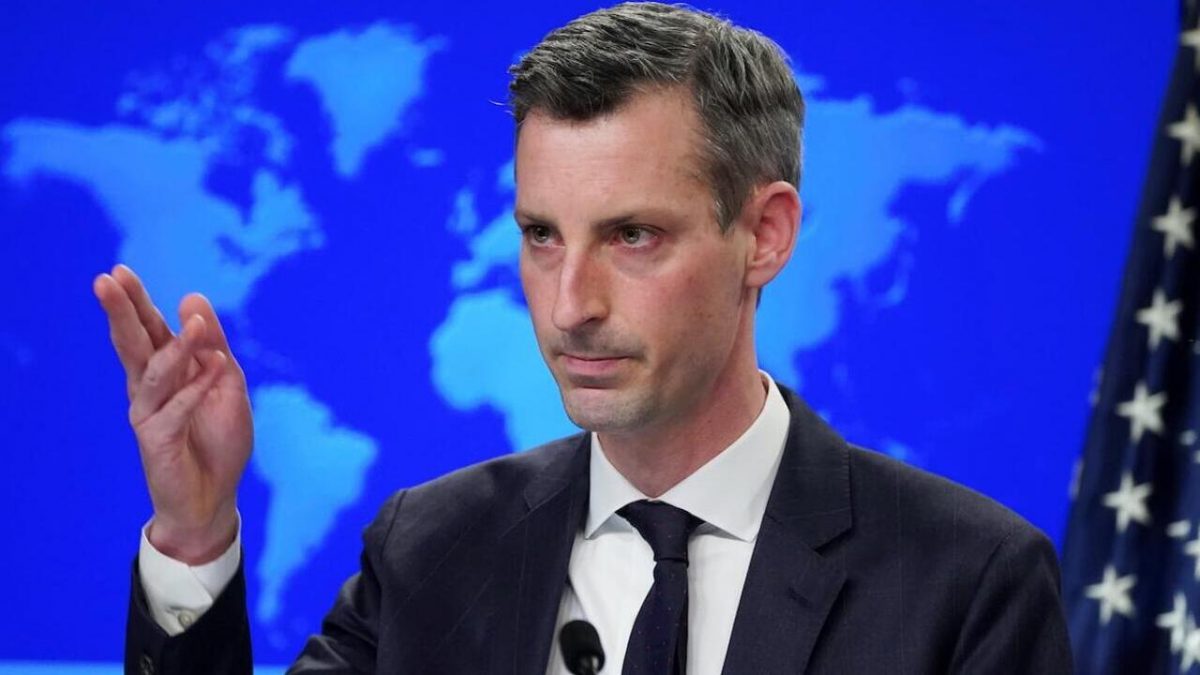
During a regular press briefing, US State Department spokesperson Ned Price rejected the allegation and said, “The US believes in democratic principle, not only in Pakistan but around the world.”

“There is no truth to the allegation as you heard from me last week, we support the peaceful upholding of constitutional democratic principle,” he added.

Ned Price further maintained that the US never supports one political party as it encourages broader principles.

“We do not support one political party over another, we support the broader principles, the principles of rule, of law, and equal justice under the law,” he said.

Pakistan demarched US ambassador on NSC’s suggestions: Qureshi

Meanwhile, former foreign minister Shah Mahmood Qureshi reacted to the alleged “foreign conspiracy” saying that Islamabad, on the directions of the National Security Committee (NSC), demarched the US ambassador over the “threatening letter”.

Qureshi said that the NSC meeting declared the “foreign interference” inappropriate and directed to issue a demarche to the country. He maintained that Pakistan had also registered its protest in Washington through its ambassador over the “foreign plot”.

“Pakistan is an independent and sovereign country and no country should interfere in our internal affairs,” he added.

The former foreign minister said that the Pakistani nation does not want any kind of external interference in the country.

Qureshi said: “Our decisions should be in accordance with our constitution, law and public aspirations.”

Responding to a question, Qureshi said that Turkey is Pakistan’s time-tested friend and it always supported Islamabad in difficult times.

Criticising the Opposition over their protest against the PTI’s government for “violation of the Constitution”, he asked if the Constitution allows horse-trading.

India wants a pro-New Delhi government in Pakistan, he added. Qureshi said that they had told India that Islamabad wanted friendly ties with India but they will not compromise on Kashmir.

PM Imran Khan discloses name of US official who sent ‘threat letter’

Hours after the National Assembly deputy speaker ‘trashed’ the Opposition’s no-confidence motion on Sunday, Prime Minister Imran Khan disclosed the name of the US diplomat who had allegedly sent the “threat letter” to Pakistan.

During a meeting with ex-lawmakers, PM Imran Khan, who seemed much calmer and more confident after the proceedings of the day, revealed that the threatening message that was received from the US was sent by its Assistant Secretary of State for the South and Central Asian Affairs Donald Lu.

He was quoted as saying that during a meeting between Lu and Pakistan’s Ambassador Asad Majeed, note-takers from both sides were present and minutes of the meeting were released after the meeting ended.

Lu, who is currently visiting India, in an interview with Hindustan Times, was questioned regarding the “threatening message” controversy; however, he denied responding to the allegations of PM Imran Khan, The News reported.

The top US official had said that the US is closely monitoring the situation in Pakistan and “we respect and support Pakistan’s constitutional process and the rule of law.”

Who is Donald Lu?

Lu became Assistant Secretary of State for the Bureau of South and Central Asian Affairs on September 15, 2021. Prior to this assignment, Assistant Secretary Lu served as the US Ambassador to the Kyrgyz Republic from 2018 to 2021 and the US Ambassador to the Republic of Albania from 2015-2018.

Before his posting in Albania, Assistant Secretary Lu worked on the Ebola crisis in West Africa as the Deputy Coordinator for Ebola Response in the Department of State.

Lu is a Foreign Service Officer with more than 30 years of US government service. He served as Deputy Chief of Mission (DCM) in India (2010-2013), Chargé d’Affaires (2009-2010) and DCM (2007-2009) in Azerbaijan, and as DCM in Kyrgyzstan (2003-2006).

Earlier in his career he was assigned as Deputy Director in the Office of Central Asian and South Caucasus Affairs, Bureau of European Affairs (2001-2003), Special Assistant to the Ambassador for the Newly Independent States in the Office of the Secretary of State (2000-2001), Political Officer in New Delhi, India (1997-2000), Special Assistant to the Ambassador in New Delhi, India (1996-1997), Consular Officer in Tbilisi, Georgia (1994-1996), and Political Officer in Peshawar, Pakistan (1992-1994).

As a Peace Corps volunteer in Sierra Leone, West Africa from 1988-1990, he helped to restore hand-dug water wells and to teach health education and latrine construction.


Shahbaz Sharif asks COAS, DG ISI to produce evidence if Opposition members committed treason

ISLAMABAD: PML-N President and Leader of the Opposition in the National Assembly Shahbaz Sharif on Tuesday asked Chief of Army Staff General Qamar Javed Bajwa and DG ISI to present evidence before the nation on whether the Opposition leaders have committed treason.

Speaking to journalists outside the premises of the Supreme Court, Shahbaz reiterated that none of the Opposition leaders have committed treason. “We did not invite any foreign power and neither are we involved in any foreign conspiracy,” he said, adding that this issue should be clarified.

“I demand COAS and DG ISI to take notice of this issue and produce evidence in the Supreme Court if we have committed treason,” Shahbaz said, adding that he has never spoken such clear words before.


The PML-N leader said he will also present this request in front of the Supreme Court, “we will put this demand forward through our lawyers that please review this matter and create a forum in which the matter is clarified.”

Recalling their previous demands, he said: “We have been raising this issue for last three-and-a-half years that this government and the prime minister is illegal.”

He complained that when the joint Opposition submitted a no-confidence motion against Prime Minister Imran Khan practising its constitutional right the former PTI-led government raised the issue of “foreign conspiracy.”

The Opposition leader said: “It is now time for the army officials, who have made innumerable sacrifices, to clarify whether the National Security Committee (NSC) passed a resolution in which the role of Opposition in the ‘foreign conspiracy’ is stated.”


“Did they sign those minutes? See if it has the approval of the establishment?” he questioned.

Replying to a question regarding the formation of the caretaker government, the PML-N leader said that he has not received President Arif Alvi’s letter in this regard, adding that first, they want the Supreme Court to resolve the issue of the unconstitutional step taken by the president and prime minister and then they [the Opposition] will talk about other matters.

He said that if the matter isn’t resolved, the country will become a “Banana Republic”.

Russia slams US’ attempt of ‘shameless interference’ in internal affairs of Pakistan

MOSCOW: Russia slammed the United States for “another attempt of shameless interference” in the internal affairs of Pakistan for its “own selfish purposes”.

According to a statement issued by the Ministry of Foreign Affairs of the Russian Federation, spokesperson Maria Zakharova noted the ongoing political situation in Pakistan, saying that the development “leaves no doubt” that the US intended to punish “disobedient” Prime Minister Imran Khan.

The statement cited the ruling PTI’s claim, that US Deputy Secretary of State for South Asia Donald Lu called upon the Pakistani ambassador in Washington and subsequently called upon Ambassador Asad Majid to “condemn the balanced reaction of the Pakistani leadership to the events in Ukraine,” as evidence of US involvement.

“Immediately after the announcement of the working visit of Imran Khan to Moscow on February 23-24 this year, the Americans and their Western associates began to exert rude pressure on the prime minister, demanding an ultimatum to cancel the trip,” the statement read.

The spokesperson further noted that when he [PM Imran Khan] nevertheless came to Russia, “US Deputy Secretary of State for South Asia [Donald Lu] called the Pakistani ambassador in Washington and “demanded that the visit be immediately interrupted, which was also rejected.”

Citing Pakistani media, the Russian ministry said that on March 7 this year, in a conversation with the Pakistani ambassador, a high-ranking American official (presumably the same Donald Lu) “sharply condemned the balanced reaction of the Pakistani leadership to the events in Ukraine and made it clear that partnerships with the United States are possible only if Imran Khan is removed from power.”

Zakharova said the further development of the situation “leaves no doubt that the United States decided to punish the disobedient Imran Khan: a group of deputies of the same party of the prime minister suddenly went over to the Opposition and the question of a vote of no-confidence in the head of government was immediately submitted to the Parliament.”

“There is another attempt of shameless US interference in the internal affairs of an independent state for its own selfish purposes, the above facts eloquently testify to this,” the statement read.

“We hope that Pakistani voters will be informed about these circumstances when they come to the elections, which should be held within 90 days after the dissolution of the National Assembly,” it further added.

US poor died at much higher rate from COVID than rich, report says

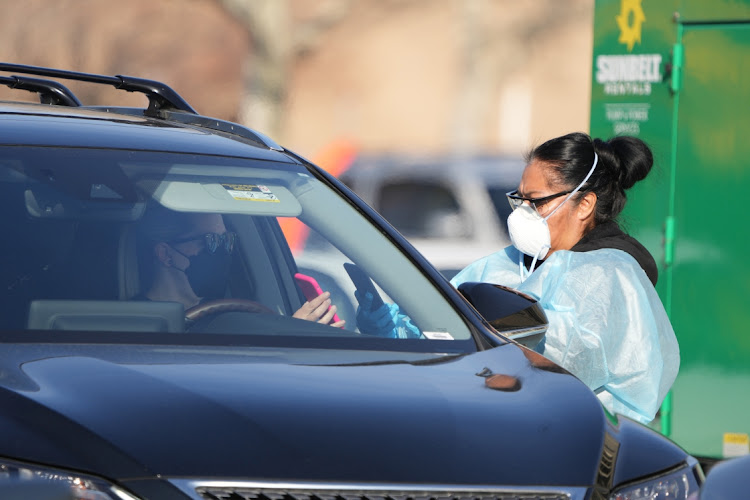
WASHINGTON: Americans living in poorer counties died during the pandemic at almost twice the rate of those in rich counties, a study released Monday by the Poor People’s Campaign showed.

The study, based on income and death data from over 3,200 US counties, shows an even bigger gap during the Delta variant that made up the US’s fourth coronavirus wave when people living in the lowest income counties died at five times the rate of those in the highest income counties.

The 300 counties with the highest death rates have an average poverty rate of 45%, and household median incomes on average $23,000 lower than counties with lower rates. Many of the top twenty counties were sparsely populated areas in Georgia, Texas and Virginia, the report and an accompanying map of death rates and income online show.


“The neglect of poor and low-wealth people in this country during a pandemic is immoral, shocking and unjust, especially in light of the trillions of dollars that profit-driven entities received,” said William Barber, director of the Poor People’s Campaign, an activist group that aims to correct the United States income inequality.

The United States is the only wealthy nation not to guarantee health services for all and witnessed the biggest decline in male life expectancy during the COVID pandemic of 29 nations studied by Oxford University.

More than 980,000 Americans have died of COVID, the most of any country in the world.


Vaccine hesitancy that left one-fourth of all American adults unvaccinated likely accounts for hundreds of thousands of preventable deaths, public health experts say.

Hindu activists set Muslims’ houses, shops ablaze in Rajasthan

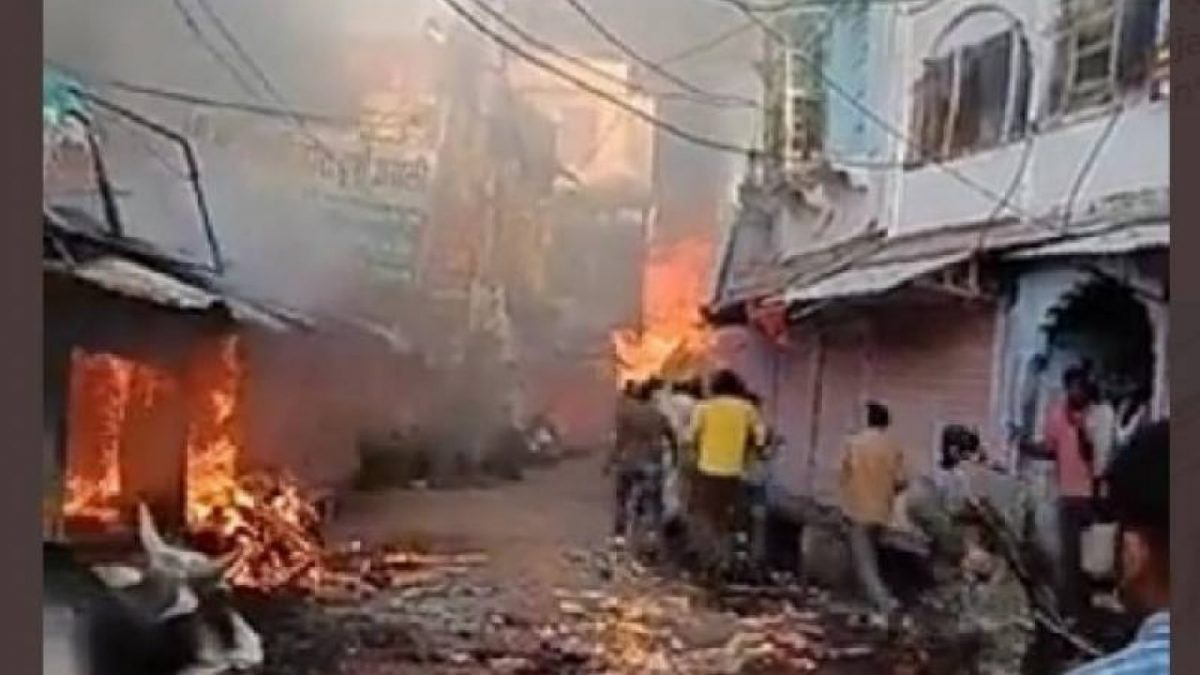
KARAULI: Some Hindu activists set the houses, shops and other properties of Muslims in flames in Karauli city of the Indian state of Rajhasthan, The News reported citing international media.

The anti-Muslim violence broke out following a bike rally by Hindu extremist groups to celebrate the start of new Hindu year in a Muslim-dominated locality in Karauli. The rally participants shouted provocative slogans and played Hindutva songs inciting violence against Muslims.

Moreover, the participants even pelted stones on the houses in the locality, later burning the shops and vehicles of the residents to the ground.

As many as 35 people were injured in the clashes, local police said.

After the incident, the authorities declared curfew in the area from 6:30pm on April 2 to 12am on April 4 and suspended the internet service. Meanwhile, 46 people were arrested and seven others were detained for interrogation following the incident.