President Arif Alvi asks ECP to propose dates for general elections

ISLAMABAD: President Arif Alvi Wednesday asked the Election Commission of Pakistan (ECP) to propose dates for the next general elections, which will be held within 90 days following the dissolution of the National Assembly.

“In a letter dated April 5, 2022 addressed to ECP, the President’s Secretariat asked to propose date(s) for holding general elections within 90 days from the date of dissolution of the National Assembly i.e., April 3, 2022, in accordance with the provisions of the Constitution of Pakistan,” the President House said in a statement.

The letter mentioned that the ECP has been conveyed that clause 5 (A) of the Article 48 and clause 2 of Article 224 of the Constitution provide that the president shall appoint a date, not later than 90 days from the date of dissolution of the National Assembly, for holding general elections to the National Assembly.

“In order to carry out the mandate of the Constitution of announcing the date of general elections, consultation with the Election Commission is required under Section 57(1) of the Elections Act, 2017,” the letter stated.

It is pertinent to mention that the president had dissolved the NA on the advice of Prime Minister Imran Khan on April 3 following a controversial ruling of Deputy Speaker Qasim Suri rejecting the no-trust motion against the premier, plunging the country in a constitutional crisis.

The president had also written a letter to the PM and Leader of the Opposition Shehbaz Sharif to recommend names for the caretaker prime minister.

To this, the PTI nominated former chief justice, Gulzar Ahmed, while the PML-N president denied receiving the letter officially and said he would consult other opposition leaders in this regard.

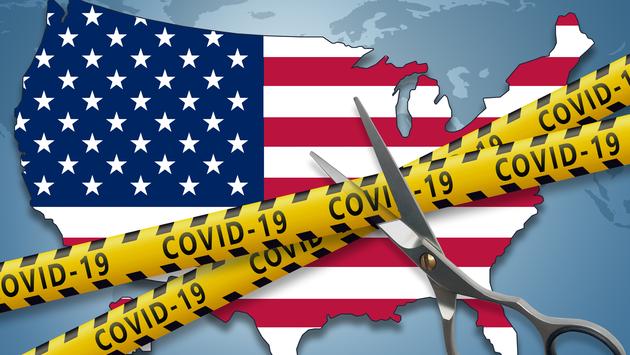
US revises COVID-19 travel advisory for Pakistan

Following Islamabad’s success against the coronavirus, the United States on Wednesday revised the COVID-19 travel advisory for Pakistan and brought it to the “Level 1” category, showed the State Department’s website.

The State Department made the changes based on the US Centers for Disease Control and Prevention’s (CDC) recommendation. The body issues travel advisory for different countries for “travellers and other audiences” so they are informed about the “health threats around the world” and “advises” them on “how to protect themselves”.

Bringing Pakistan to Level 1 means that the US sees COVID-19’s prevalence in the country at a “low level” and only advises travellers to ensure they are vaccinated if they wish to visit the country.

Change in the health threat comes after Prime Minister Imran Khan’s last month decision to shut down the National Command and Operation Centre (NCOC) as the country witnessed a sharp decline in COVID-19 cases.

On Twitter PM said, “As NCOC closes down, I want to congratulate the NCOC team & its leadership for a professional, nationally-coordinated response to the pandemic. As a result international agencies and people in the field as one of the most successful recognised our COVID response globally.”

Pakistan scraps all remaining COVID-19 restrictions

Federal Minister for Planning and Development and Special Initiatives Asad Umar had already announced that the government was scrapping all the COVID-19 related restrictions across Pakistan.

“The pandemic has not ended yet but undergoing the ending phase,” Umar had said while addressing a press briefing at NCOC, flanked by SAPM on Health Dr Faisal Sultan.

Umar, who is also the NCOC chief, had said that after reviewing the COVID-19 situation in the country in detail, the forum has decided to lift all coronavirus restrictions, including protocols for indoor dining, indoor wedding events and markets, sports activities and all the other SOPs across Pakistan.

However, he had said that the only restriction that would continue is the vaccination against COVID-19, but that too till the vaccination ratio reaches 80% or above.

“Then we will consider if we still need to keep the restriction for vaccination in place,” he had said.

PM Imran Khan believes the people of Pakistan are its “strongest defenders of sovereignty and democracy”.

With the country under the grip of a political crisis, Prime Minister Imran Khan on Wednesday once again urged the public to “come out and defend” Pakistan’s sovereignty and democracy, reasoning that “the people are always the strongest defenders”.

“The people are always the strongest defenders of a country’s sovereignty and democracy,” tweeted PM Imran minutes before the Supreme Court was set to hold a hearing on the suo motu notice on the deputy speaker’s April 3 ruling.

“It is the people who must come out and defend against this latest and biggest assault on Pakistan’s sovereignty and democracy by a foreign power through local collaborators — our Mir Jafars and Mir Sadiqs,” said PM Imran.

This is the second time that PM Imran has asked the public to come out in support of him.

On April 2, a day before the expected voting on the no-confidence motion against him, he had called on the youth to protest for two days against a “foreign conspiracy” being hatched against his government.

A day later, on April 3, the National Assembly had to vote on the no-trust motion against the PM, but NA Deputy Speaker Qasim Suri ruled out the no-trust motion under Article 5. Subsequently, President Arif Alvi dissolved the National Assembly on the PM’s advice and ordered fresh polls in the country.

National Assembly Deputy Speaker Qasim Suri termed the no-confidence motion “unconstitutional”, saying that it was backed by “foreign powers”.

The ruling came after PM Imran on March 27 in a public rally, revealed that “foreign elements” are behind the no-confidence motion moved against his government and said, “some of our own people” are being used in this regard.

Later, he named the United States to be behind the conspiracy — an allegation that the country has dismissed as baseless.

Following the controversy, the National Security Committee (NSC) met on March 31 and decided Pakistan would issue a strong demarche to the country whose official communicated the “threat”.

However, the ruling of the deputy speaker plunged the country into a political crisis and on the same day Chief Justice of Pakistan Umar Ata Bandial took notice of the political situation in the country and said that “any orders and actions that Prime Minister Imran Khan and President Arif Alvi regarding the dissolution of the National Assembly shall be subject to the order of this court.”

PTI submits no-trust motion against Deputy Speaker Punjab Assembly Dost Muhammad Mazari

LAHORE: The political crisis in Punjab took a new turn after the ruling PTI submitted a no-confidence motion against Deputy Speaker Dost Muhammad Mazari as he decided to summon a session today, instead of April 16.

Following the submission of the motion, PML-Q said that Deputy Speaker Mazari is “no longer authorised” to summon a session.

The move is surprising as Mazari won his provincial assembly seat on a PTI ticket.

The motion was submitted after Deputy Speaker Mazari told Geo News that the secretariat staff of the Punjab Assembly was not “cooperating” with him.

“Punjab Assembly secretariat staff is not cooperating with me,” Mazari told Geo News. He had added that the session called today would happen and he had summoned the Assembly session on the orders of the Supreme Court.

Mazari said that the advocate-general of Punjab had stated before the Supreme Court that the session will be held today.

“I did not consult the Punjab government, PTI or the speaker. I summoned the Assembly session in light of the Supreme Court’s orders,” said Mazari.

Ahead of Mazari’s conversation with Geo News, sources had confirmed that the secretary of the Assembly refused to follow the orders of the deputy speaker.

The sources said that the secretary is refusing to call the session as it cannot be summoned on a “simple piece of paper”.

On the other hand, the spokesperson of the Punjab Assembly, speaker Zain Ali Bhatti, shared that the session will be summoned on April 16.

“Till an official letter is not issued, the first order will remain in place,” said Bhatti. He added that the Assembly is being refurbished due to the damage done to the hall in the last session.

When Mazari was asked a question about the validity of his orders, the deputy speaker said that the “notification was not fake”. He added that the notification summoning the session on April 16 was also issued by him and has been cancelled.

Police deployed outside PA secretariat

On the instructions of Punjab Assembly Speaker Chaudhry Parvez Elahi, a heavy contingent of police has been deployed outside the Assembly secretariat to avoid any untoward situation.

Meanwhile, Elahi also banned the entry of media persons to the provincial assembly, security staff confirmed.

Punjab Assembly session called to elect new CM Punjab today

A crucial session of the Punjab Assembly has been called hurriedly today to elect the new chief minister of the province, Geo News reported.

On Sunday, the Punjab Assembly session had been adjourned until April 6, however, on April 5 advocate general Punjab also assured the Supreme Court that the provincial assembly would conduct a session on April 6 as per the constitution.

Subsequently hours after the advocate general Punjab’s assurance, the provincial assembly session was postponed further till April 16.

The notification for holding the session on April 16 was also issued after Punjab Assembly Deputy Speaker Sardar Dost Muhammad Mazari approved the order.

In a surprise move, in the wee hours of Wednesday, the Deputy Speaker of the Punjab Assembly Dost Mazari called a provincial assembly session to elect a new chief minister of the province today.

A notification has also been issued in this regard, which stated that the “40th session of Punjab Assembly will now be held on Wednesday at 7:30 PM for the election of chief minister of Punjab.”

The political temperature and uncertainty in the country already continue to rise as President dissolved the National Assembly on the PM’s advice, however, both government and opposition are busy in political manoeuvrings for the CM’s slot.

Following Pervaiz Elahi’s announcement to support the government in the no-trust motion, the PM had asked Usman Buzdar to step down and nominated the PML-Q leader for the CM’s post.

On the other hand, joint opposition including disgruntled PTI leader Aleem Khan and Jahangir Tareen announced full support for PML-N leader Hamza Shahbaz.

Number game in Punjab

Both candidates need at least 186 votes in the House of 371 to win the poll for the slot of CM Punjab.

With the house comprising 371 MPAs, the PML-N seems highly optimistic about regaining the crown of Punjab that it lost in 2018.

The Opposition claims that its joint strength comprising its own 160 MPAs (PML-N total strength is 165 out of which five MPAs are siding with the government), seven MPAs of PPP, and the rest from the rebel groups of PTI headed by Jehangir Khan Tareen (JKT) and Abdul Aleem Khan and four out of five independents, stands above 188.

On the other hand, the ruling coalition’s candidate has also used his experience and influence in winning the support of JKT group MPAs, and publicly, MPA Rafaqat Gilani, a part of the JKT group has claimed that he was “siding with Imran and cannot leave him in crucial time”.


Italy, Denmark and Sweden on Tuesday joined EU allies in expelling Russian diplomats over war in Ukraine, with more than 120 sent packing in the last 48 hours

MOSCOW: The Kremlin on Tuesday called mass expulsions of Russian diplomats by a number of European countries a “short-sighted move” that will only complicate communication.

“Narrowing down opportunities for diplomatic communication in such an unprecedentedly difficult crisis environment is a short-sighted move that will further complicate our communication, which is necessary to find a solution,” Kremlin spokesman Dmitry Peskov told reporters.

Italy, Denmark and Sweden on Tuesday joined EU allies in expelling Russian diplomats over the war in Ukraine, with more than 120 sent packing in the last 48 hours.

On Monday, France expelled 35 Russian diplomats, and Germany announced it had expelled a “significant number” of Russian envoys.

The expulsions come amid international outrage over killings in the town of Bucha, near the Ukrainian capital Kyiv, where dozens of bodies were found over the weekend in mass graves or littering the streets.

Peru president imposes curfew in Lima, Callao after protests

Peruvian President Pedro Castillo announced a curfew for Tuesday in the capital Lima and neighboring port city Callao, after demonstrations across the country over fuel prices caused roadblocks and “acts of violence”.

Protests had erupted across Peru in recent days due to a hike in fuel prices and tolls, during a time of rising food prices.

In an attempt to appease protesters, the government eliminated the fuel tax over the weekend.

But truckers and other transport workers took to the streets again Monday in Lima, as well as several regions in the north — from the coastal city Piura to the densely forested Amazonas.

Castillo announced late Monday that Peru‘s Council of Ministers had approved a curfew for the following day.

“In view of the acts of violence that some groups have wanted to create… and in order to reestablish peace… the Council of Ministers has approved the declaration of citizen immobility (curfew) from 2:00 am to 11:59 pm on Tuesday, April 5,” he said in a televised message.

There have been several violent incidents during recent protests, including the burning of toll booths on highways, looting and clashes with police.

Protesters had also set fire to tires and blocked the Pan-American highway, the country’s most important transport and traffic artery snaking north to south, and school was suspended.

“I call for calm and serenity,” the leftist president said during his brief appearance on television.

“Social protest is a constitutional right, but it must be done within the law.”

LACK OF DIRECTION

The 52-year-old former teacher announced the curfew a week after he was saved from being impeached by Congress, where opponents accused his administration of having a “lack of direction” and for allegedly allowing corruption in his entourage.

The impeachment attempt last week was the second during Castillo’s eight-month administration in a country with a recent history of ousting presidents.

Castillo’s action to impose movement restrictions — which will cover more than 10 million residents in Lima and Callao — was met with immediate repudiation.

“A curfew to reestablish order — (this is) an authoritarian measure of Pedro Castillo’s government that shows ineptitude, incapacity to govern,” political analyst Luis Benavente told AFP.

“It is like putting an end to traffic accidents by taking vehicles off the roads.”

Tuesday’s curfew measures coincide with the 30th anniversary of a coup staged by ex-president Alberto Fujimori, a controversial figure now jailed after a regime marked by a bloody campaign against insurgents.

“The measure dictated by President Pedro Castillo is openly unconstitutional, disproportionate and violates people’s right to individual freedom,” tweeted lawyer Carlos Rivera, one of the defenders of the victims of Fujimori’s government.

FUEL AND WAGE WOES

Like much of the rest of the world, Peru‘s economy is still recovering from the damages wrought by the coronavirus pandemic.

The country’s Consumer Price Index in March saw its highest monthly increase in 26 years, driven by soaring food, transport and education prices, according to the national statistics institute.

The multi-region demonstration was largely organized by the Union of Multimodal Transport Guilds of Peru.

To appease them the government eliminated the fuel tax over the weekend, and Castillo decreed a 10 percent increase in the monthly minimum wage — which would rise to 1,025 soles ($277) beginning in May.

But the General Confederation of Peruvian Workers, the country’s main trade union confederation, rejected the wage hike, stating it was insufficient, and called on its affiliates to march on Thursday.

Influential journalist Rosa Maria Palacios said on Twitter that Castillo’s 11th-hour announcement of a curfew only revealed how the government had “lost all control of public order”.

“By denying them the right to work, without any real cause, Castillo has put himself in a situation of absolute vulnerability,” she warned.

Biden, Obama put the band back together for a day

Joe Biden and Barack Obama are getting the band back together Tuesday — at least for the day, with the former president visiting his former vice president in the White House to try and restoke Democratic momentum ahead of midterm elections.

For Obama, it will be the first time he steps into the hallowed corridors and historic rooms since he left five years ago, handing power to Donald Trump and ushering in a period of political turmoil unprecedented in modern times.

For Biden, who served two terms as deputy to the first Black president before coming out of retirement to deny Trump a second term, this will also be a poignant moment.

Beset by aftershocks of the Covid-19 pandemic, galloping inflation, a bitterly obstructionist Republican opposition, and Russia’s invasion of Ukraine, he’s had more than a year to appreciate how hard the top job really is. His approval polls are dire, stuck in the low 40 percent range, with little sign of improvement.

The peg for the White House reunion is a relatively happy political event — the 12th anniversary of the launch of the Affordable Care act, Obama’s signature domestic achievement.

Popularly known as Obamacare, the subsidized healthcare plan expanded access to medical services to millions in a country where many are unable to afford to visit the doctor and dentist and risk being bankrupted by the cost of emergency operations.

“President Biden and former president Obama both see the Affordable Care Act is an example, a shining example, of how government can work for the American people,” White House Press Secretary Jen Psaki said.

Republicans have made repeated, ferocious attempts to strip away a plan they denounce as socialism, but Obamacare has survived most assaults and under Biden seen expanded participation.

“Not only did it ensure that millions of people had access to affordable healthcare, but it has been an opportunity to build on that and make changes and make improvements over the course of time,” Psaki said.

– POWER LUNCH –

The real point of the Biden-Obama get-together is broader: a chance to reinforce Biden’s centrist brand and reassure Democrats running scared ahead of what polls predict will be a crushing election defeat in November, with Republicans regaining control of Congress.

The White House set the mood music to chill, trying to erase any sense that Obama was coming on a rescue mission of any kind.

The two men will have lunch, “as they used to do on a weekly basis,” Psaki said, adding that even if this is the first time Obama has been invited over, “they continue to talk regularly.”

“They are real friends, not just Washington friends,” she insisted.

Real friends are often said to be scarce in cutthroat Washington, but Barack and his wife Michelle Obama are certainly popular among Democrats and seen as able to sprinkle much needed magic dust on the party.

When it comes to the midterms, Obama is not exactly the best example: his Democrats were wiped out in the 2010 and 2014 congressional races.

On the other hand, Obama showed with his reelection in 2012 that a president can survive those earthquakes — a lesson, perhaps, for Biden in 2024, when he may face a rerun of his battle against Trump.

US tests hypersonic missile

Washington: The US military announced Tuesday a new test of a hypersonic missile, as Pentagon officials seek to match or get ahead of China’s and Russia’s advances in the cutting-edge strategic weapons technology.

The Defense Advanced Research Projects Agency (DARPA) said it had recently completed a free flight test of an aircraft-launched hypersonic missile that maintained a speed of more than Mach 5, or five times the speed of sound (at least 3,800 miles per hour, or 6,100 kilometers per hour).

The missile flew to an altitude greater than 65,000 feet (19,800 meters) and soared over 300 nautical miles, said DARPA, the Pentagon’s high-tech research body.

It was the second test under the agency’s HAWC Program — named for hypersonic air-breathing weapon concept —and the missile had a different configuration from the first, which was tested last September.

According to CNN, the newest test took place in mid-March but was kept quiet to avoid appearing to escalate the geopolitical tensions surrounding the Russian invasion of Ukraine.

In March 2020, the US army and navy undertook a joint test of a different hypersonic prototype.

DARPA said air-breathing hypersonic missiles use air captured from the atmosphere to help sustain propulsion.

“This Lockheed Martin HAWC flight test successfully demonstrated a second design that will allow our warfighters to competitively select the right capabilities to dominate the battlefield,” said Andrew Knoedler, HAWC program manager, in a statement.

Hypersonic missiles pose a potential threat to the global military balance, capable of being steered to deliver nuclear weapons precisely on target, at speeds too fast to intercept.

The Pentagon is under pressure to match China’s apparent successful test of a hypersonic missile last year that flew around the globe and hit a target in China.

Russia also claimed two weeks ago to have fired two hypersonic missiles in strikes on Ukraine.

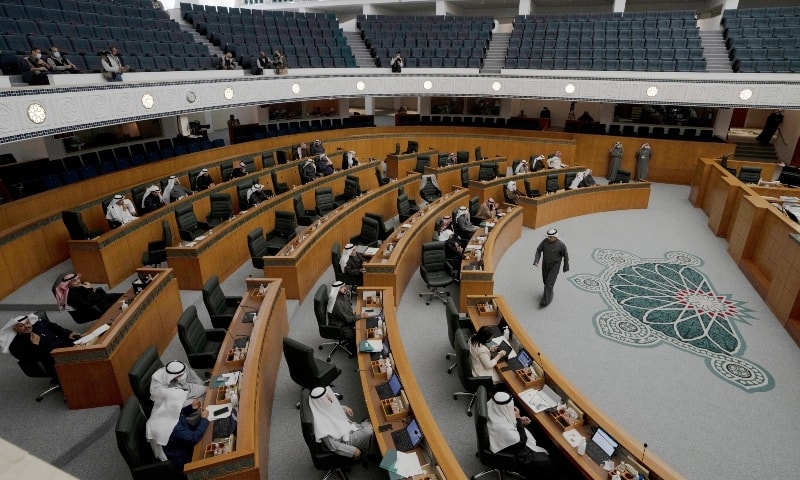
Kuwait govt resigns as political crisis intensifies

Kuwaiti Prime Minister Sheikh Sabah Al-Khaled Al Hamad Al Sabah submitted the cabinet’s resignation to the crown prince, state-run KUNA news agency reported, ahead of a no-confidence vote in parliament later this week that sought to remove him from office.

It marks Kuwait’s third collective government resignation in the past year-and-a-half. A host of new faces, including some picks to appease opposition blocs, had been appointed to ministerial posts as recently as December, with their resignation now reflecting their failure to make reforms.

Opposition has been mounting against Sheikh Sabah. Angry lawmakers hauled him in for extensive interrogations last week over his alleged corruption and mismanagement. They publicly declared him unsuitable and called for a new prime minister to tackle the country’s problems and secure badly needed reforms.

Cabinet’s resignation comes after the defence and interior ministers submitted their resignations earlier this year. Exasperated, the two senior ministers decried their inability to make anything happen in oil-rich Kuwait because of parliament’s what they called rowdy opposition.

Lawmakers increasingly in recent months have expressed their political frustrations and mistrust by questioning various unpopular ministers and stalling major projects.

Although soaring oil prices amid Russia’s war in Ukraine have recently created a windfall for Kuwait, they have also served as a reminder of the nation’s utter dependence on oil revenues and need to diversify. Even if the International Monetary Fund now expects Kuwait to run a budget surplus after years in the red and see its gross domestic product increase by 2.7 per cent, it remains politically stuck.

Years of low oil prices, coupled with the coronavirus pandemic, pushed the country’s account deficit to 16.6pc of its GDP last year. As financial stress worsened, the government couldn’t draw from Kuwait’s flush sovereign wealth fund or issue debt because lawmakers have blocked a public debt law.

The parliament, a rarity in the autocratic region of Persian Gulf sheikhdoms, is empowered to pass and block laws, question ministers and submit no-confidence votes against senior officials. However, final authority rests with the ruling emir.

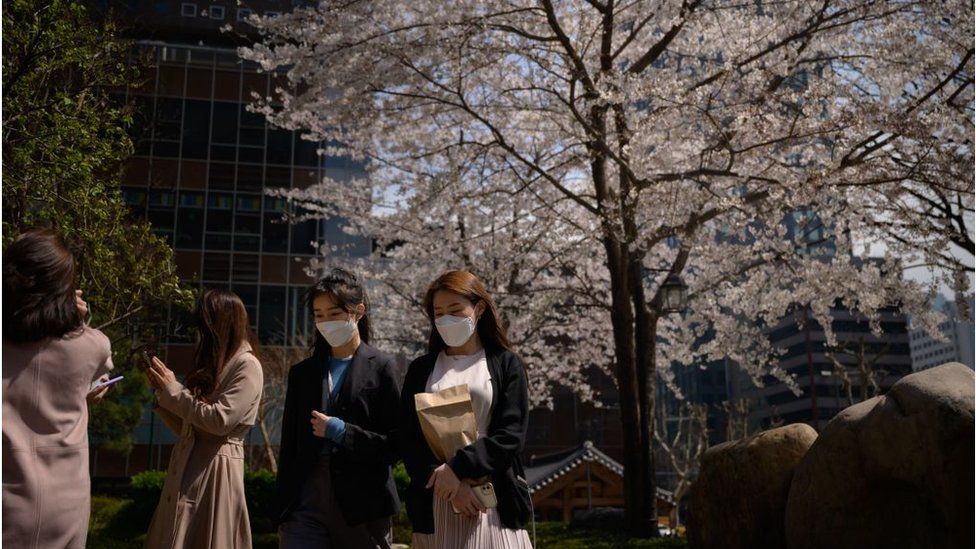
South Korea is one of the most sleep deprived nations on earth, and it has taken a massive toll on its population.

Ji-Eun began having trouble sleeping when her office hours became so gruelling she couldn’t relax any longer.

On average she worked from 07:00 until around 22:00 but on particularly busy days, the 29-year-old public relations officer would find herself in the office until three in the morning.

Her boss often called in the middle of the night, requesting something be done right away.

“It was almost like I forgot how to relax,” she says.

At the Dream Sleep Clinic in the glitzy Gangnam district of Seoul, Dr Ji-hyeon Lee, a psychiatrist specialising in sleep, says she often sees clients who take up to 20 sleeping pills a night.

“It usually takes time to fall asleep, but Koreans want to sleep real quick and so they take medication,” she says.

Addiction to sleep medication is a national epidemic. There are no official statistics but it is estimated 100,000 Koreans are addicted to sleeping pills.

When they still can’t sleep they often resort to drinking alcohol on top of the medication – with dangerous consequences.

”People sleep walk. They go to the refrigerator and eat a lot of things unconsciously, including uncooked food,” Dr Lee says. ”There were even cases of car accidents in the centre of Seoul caused by a sleepwalking patient.”

Dr Lee is used to seeing chronic insomniacs suffering from what is known as hypo-arousal. Some of her patients tell her it has been decades since they have slept for more than a few hours a night.

”They cry [but] still hold a single thread of hope [when they come here]. It’s a really sad situation,” she says.

Overworked, stressed out and sleep deprived

South Korea is one of the most sleep deprived nations on earth. It also has the highest suicide rate among developed nations, the highest consumption of hard liquor and a huge number of people on antidepressants.

There are historic reasons for these statistics.

In just a few decades the country has gone from being one of the poorest countries on earth to one of the world’s most technologically advanced nations. It also wields considerable soft power, with its growing influence on pop culture.

Nations with a similar trajectory, like Saudi Arabia and the UAE, could tap into their natural resources, but Korea has no such hidden wealth. It transformed itself through the sheer dedication of a population driven by a collective nationalism pushing them to work harder and faster.

An increasing number of young South Koreans have been seeking help for their sleep disorders

One result is that its people are overworked, stressed out and sleep deprived.

Now, an entire industry has grown around catering to those who can’t sleep – with the sleep industry estimated to be worth $2.5bn in 2019.

The burgeoning sleep-aid industry

In Seoul, whole department stores are devoted to sleep products, from the perfect sheets to the optimum pillow, while pharmacies offer shelves full of herbal sleep remedies and tonics.

And then there are the tech approaches to insomnia. A little over two years ago Daniel Tudor started a meditation app – Kokkiri – aimed at helping stressed out young Koreans.

Although Korea is historically a Buddhist country, young people think of meditation as an old person’s pastime, not something an office worker in Seoul might do. Daniel says he had to re-import and re-package meditation as a Western idea for young Koreans to find it attractive.

More traditional institutions have also joined in on the action.

Hyerang Sunim is a Buddhist nun who helps run a Temple-Stay retreat on the edge of Seoul where the sleep-deprived can engage in meditation and absorb Buddhist teachings.

Buddhist temples, who often run sleep retreats, have been criticised for profiting off people with sleep disorders

In the past these kinds of mini-breaks were reserved for retirees who wanted teachings and prayer. Now the participants tend to be younger, working-age Koreans. But these same Buddhist temples have also been criticised for making a profit from such retreats.

”Of course there are concerns… but I think the benefits outweigh them,” said Hyerang Sunim.

”Traditionally it has been rare to see young people come and seek the Buddhist teachings. And they are getting a lot out of their interactions with the temple stay.”

The need for fundamental change

Lee Hye-ri, who attended one such Buddhist retreat after the pressure at work became too much, says she has learned to take responsibility for her stress.

”Everything starts from me, all problems start with me. That’s what I learned here.”

But framing the solution to stress and sleep deprivation as something to be dealt with at the individual level can be problematic.

Those who believe the problem is caused by an unreasonable work culture and societal pressures have criticised this individualistic approach saying it is tantamount to victim-blaming. These critics say meditation or relaxation is a sticking plaster and that real solutions can only come about through fundamental changes to society.

Ji-Eun was eventually so sleep deprived and stressed that she quit her job. These days she works far more reasonable hours as a freelancer and the pandemic means she can work from home. She has also sought professional help at Dr Lee’s sleep clinic to manage her insomnia.

”What’s the point of working so hard now that we’ve made it as a country?” Ji-Eun says. ”We should be able to relax.”