Six hurt as grenade goes off at mosque in Afghanistan

Attacks on public targets have largely diminished since the Taliban seized power in August last year, but the militant Islamic State group continues to operate across the country.

“We had finished the prayers and were heading out of the mosque when the blast occurred,” worshipper Mohammed Yasin said.

Kabul police spokesman Khalid Zadran said a grenade was thrown inside the Pul-e-Khisti mosque and a suspect was arrested at the scene.

No group has claimed responsibility, but the Islamic State-Khorasan (IS-K) group has carried out recent attacks in Kabul and other cities.

The blast was the second in a week in the Afghan capital, after another tore through the main money exchange centre, killing one person and injuring dozens.

Wednesday’s explosion occurred after someone threw a grenade at the mosque, and one person had been arrested, according to a spokesman for Kabul’s military commander.

The attacks have hit the capital after a relative lull in violence over the cold winter months.

Taliban officials insist their forces have defeated IS, but analysts say the jihadist group is a key security challenge to the hardline Islamists who now rule Afghanistan.

Crisis could cause starvation, warns Sri Lankan speaker

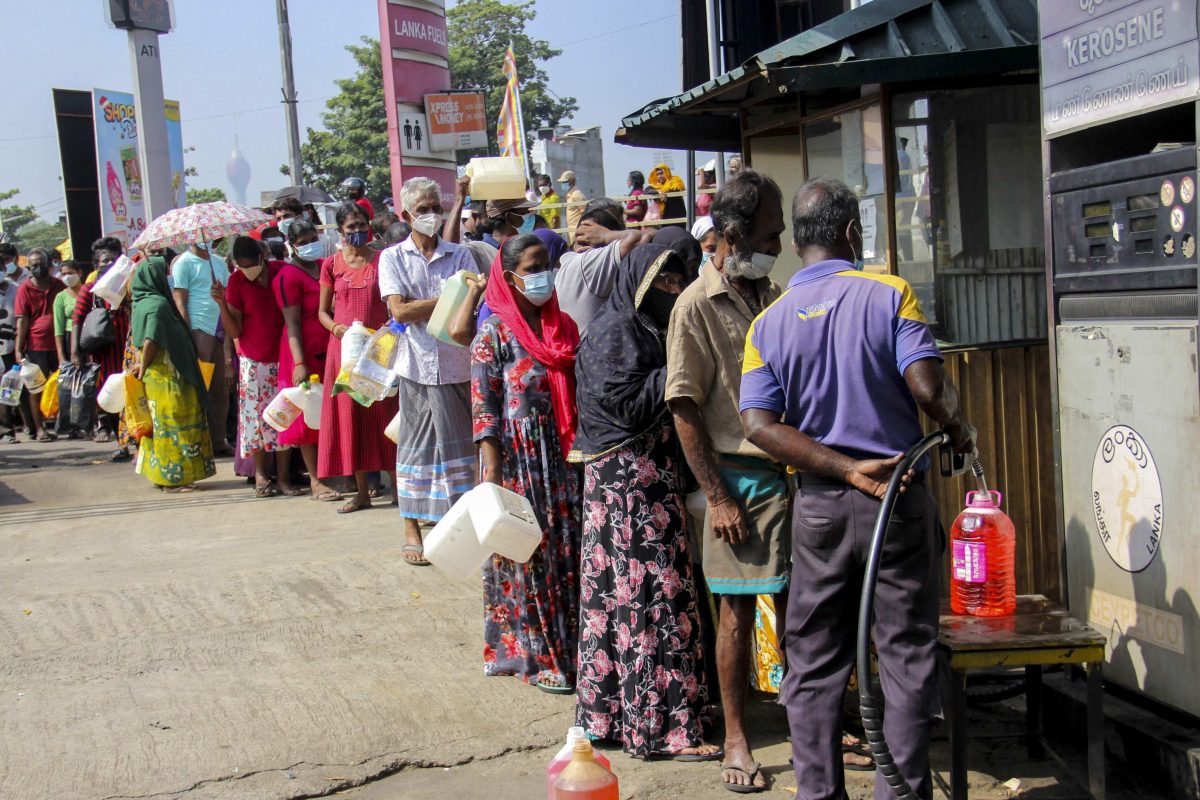
Scarce supplies of food and fuel, along with record inflation and electricity rationing, have inflicted widespread misery in the country’s most painful downturn since independence from Britain in 1948.

Public anger is at a fever pitch, with crowds attempting to storm the homes of several government figures — including President Gotabaya Rajapaksa — and large demonstrations elsewhere.

Parliamentary Speaker Mahinda Yapa Abeywardana told legislators that more hardships were to come as the country appeared at the brink of a political impasse.

“We are told this is the worst crisis, but I think this is just the beginning,” Abeywardana said at the start of a two-day debate on the worsening economic woes.

“The food, gas and electricity shortages will get worse. There will be very acute food shortages and starvation.” The parliamentary session was disrupted twice as opposition lawmakers shouted slogans denouncing members of Rajapaksa’s once powerful ruling family and demanding they step down.

But chief government whip Johnston Fernando vowed that the president would stay in office to shepherd the country through the crisis.

“We say very clearly that he will not resign under any circumstances,” Fernando said, drawing loud catcalls from opposition MPs.

Security forces have dispersed protests with tear gas, water cannon and rubber bullets, but a state of emergency imposed by the president last week to quell demonstrations was lifted at midnight.

More than 60 people had been arrested in connection with the unrest and many have said they were tortured in police custody.

Legislators had pushed for a debate on the emergency decree during this week’s session of parliament, where the government has lost its majority after the desertion of political allies — several of whom have since called for Rajapaksa’s resignation.

Opposition parties had already rejected the president’s overture to form a unity administration after the resignation of nearly the entire cabinet late on Sunday.

But there has so far been no clear signal that opposition legislators will attempt a no-confidence motion to topple the Rajapaksa administration.

A critical foreign currency shortage has left Sri Lanka struggling to import essential goods, with the pandemic torpedoing vital revenue from tourism and remittances.

Rating agencies have warned of a potential default on Sri Lanka’s $51 billion foreign debt, and authorities are unable to raise more commercial loans because of credit downgrades.

Economists say the crisis has been exacerbated by government mismanagement, years of accumulated borrowing and ill-advised tax cuts.

Agriculture ministry secretary Udith Jayasinghe warned in December that the country could face a famine due to the government’s decision to ban agrochemical imports last year.

Turkey suspends trial of Saudi suspects in Khashoggi killing

The decision comes despite warnings from human rights groups that turning the case over to the kingdom would lead to a cover-up of the killing which has cast suspicion on Saudi Crown Prince Mohammed bin Salman.

It also comes as Turkey, which is in the throes of an economic downturn, has been trying to repair its troubled relationship with Saudi Arabia and an array of other countries in its region. Some media reports have claimed that Riyadh has made improved relations conditional on Turkey dropping the case against the Saudis.

Last week, the prosecutor in the case recommended that the case be transferred to the kingdom, arguing that the trial in Turkey would remain inconclusive. Turkey’s justice minister supported the recommendation, adding that the trial in Turkey would resume if the Turkish court is not satisfied with the outcome of proceedings in the kingdom. It was not clear, however, if Saudi Arabia, which has already put some of the defendants on trial behind a closed door, would open a new trial.

Human rights advocates had urged Turkey not to transfer the case to Saudi Arabia.

“By transferring the case of a murder that was committed on its territory, Turkey will be knowingly and willingly sending the case back into the hands of those who bare its responsibility,” said Amnesty International Secretary General Agnes Callamard. “Indeed, the Saudi system has repeatedly failed to cooperate with the Turkish prosecutor and it is clear that justice cannot be delivered by a Saudi court.”

“What has happened to Turkey’s declared commitment that justice must prevail for this gruesome murder and that this case would never become a pawn in political calculations and interest?” she asked.

The New York-based Human Rights Watch said: “Given the complete lack of judicial independence in Saudi Arabia, the role of the Saudi government in Khashoggi’s killing, its past attempts at obstructing justice, and a criminal justice system that fails to satisfy basic standards of fairness, chances of a fair trial for the Khashoggi case in Saudi Arabia are close to nil.”

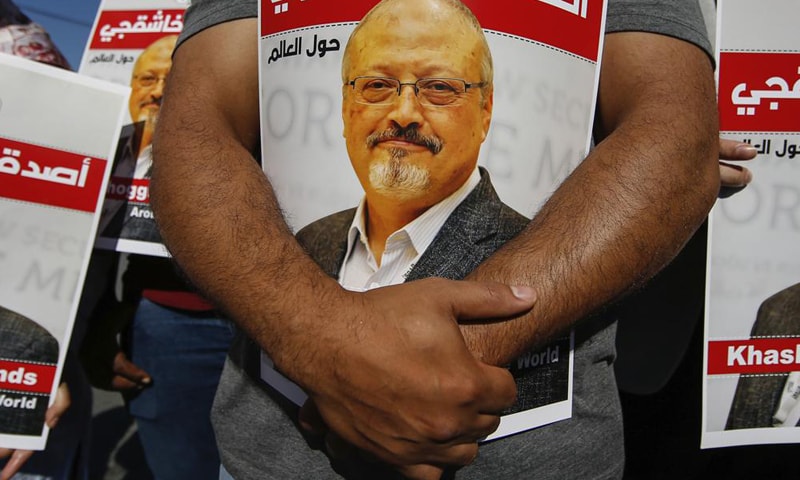
Khashoggi, a US resident who wrote for the Washington Post, was killed on October 2, 2018, at the Saudi Consulate in Istanbul, where he had gone for an appointment to collect documents required for him to marry his Turkish fiancee, Hatice Cengiz.

Turkish officials allege that Khashoggi, who wrote critically about the crown prince, was killed and then dismembered with a bone saw inside the consulate by a team of Saudi agents sent to Istanbul. The group included a forensic doctor, intelligence and security officers and individuals who worked for the crown prince’s office. Khashoggi’s remains have not been found.

Last week one of India’s richest women tweeted an unusual appeal to ruling politicians.

Kiran Mazumdar Shaw, who heads Biocon, a leading biotechnology firm, urged the Bharatiya Janata Party-led government in Karnataka to “resolve the growing religious divide” in the southern state of 64 million people. Shah’s enterprise is based in Karnataka’s capital, Bangalore, India’s booming info-tech hub.

Her remarks came in the wake of a blistering controversy over demands by radical Hindu groups in the state to ban Muslim traders from setting up stalls at temple fairs. These groups have also been urging Hindus not to buy meat sold by Muslim butchers who kill the animal under the requirements of the community’s halal slaughter. (The animal’s throat is slit quickly with a sharp knife while it is still conscious.) Now the groups are seeking a ban on the use of loudspeakers in mosques, and a boycott of Muslim mango sellers.

That’s not all. In the past months, Karnataka has been roiled by tension over a government order barring entry to colleges of Muslim girls wearing hijab. A court has upheld the order, and many students have skipped exams and classes in protest.

Last year, the government banned trade and slaughter of cows in a state where some 13% of people are Muslims. There are plans to include the Hindu holy book Bhagvad Gita in the school curriculum, and a proposal to remove a chapter on Tipu Sultan, the 18th Century Muslim ruler of Mysore, because it glorifies him.

Groups have also been urging Hindus not to buy meat sold by Muslim butchers

Many of these moves have polarised opinion, with critics seeing them as attempts at marginalising Muslims by Prime Minister Narendra Modi’s nationalist government. But this, many fear, could also backfire and end up sullying the image of one of India’s relatively prosperous states.

Ms Shaw tagged Chief Minister Basavaraj Bommai in her tweet and said Karnataka had “always forged inclusive economic development”. If [the city] of information and biotechnology “became communal”, it would “destroy its global leadership”, she said.

Her concerns are understandable. Karnataka’s economic success flows from Bangalore. More than 60% of the state’s revenues are generated from this lively and chaotic city of some 10 million people. It’s home to more than 13,000 technology start-ups. Some 40% of India’s 100-odd unicorns – unlisted companies with a valuation of more than $1bn – are based here. Thanks to Bangalore, the state generates 41% of India’s info-tech exports.

Yet Bangalore – and Karnataka – has been a divided place and experienced religious violence in the past. The info-tech industry bypassed Bangalore’s “internal conflicts” by basing itself on the outskirts, creating its own infrastructure and controlling the imaging of the city, said Narendra Pani, a professor of economics at the city’s National Institute of Advanced Studies.

Karnataka is central to Mr Modi’s push to expand the BJP’s fledgling footprint in the southern India. It is only one of five southern states where the party has won power. In a state which has a medley of castes, linguistic groups and religions, the BJP has won a majority of the parliamentary seats in four successive general elections.

Bangalore is India’s info-tech hub

For years, in the state’s coastal regions and villages, where a sizeable number of Muslims live, the BJP has pursued a politics of strident Hindu nationalism. The RSS, the BJP’s ideological fountainhead, has dug deep roots here. In the past, Hindu groups have tried to impose moral policing by attacking young men and women in pubs, and run campaigns against “love jihad”, a term radical Hindu groups use to accuse Muslim men of converting Hindu women by marriage.

For long, electoral politics in Karnataka was determined mainly by caste allegiances. BS Yeddyurappa, who led the BJP to its first win in 2008, forged a successful coalition of Lingayats – who account for about a sixth of the state’s voters – and other disadvantaged castes. But a faction of Lingayats want themselves to be treated as a separate faith from Hinduism, and there are demands among the disadvantaged castes for increased affirmative action. “Under pressure, the BJP is now trying to forge a different politics. It is trying to create an electorate based on Hindu nationalism and development,” said Sugata Srinivasaraju, biographer of HD Deve Gowda, the only Indian prime minister to hail from Karnataka.

Mr Bommai, a low profile 61-year-old politician, took over from Mr Yeddyurappa last year. Critics say his government’s performance has been underwhelming. There have been allegations of mismanagement of the pandemic. An internal review found that half of the government’s departments have been underperforming, according to a report in The File, a respected local news and investigation website.

There has been religious violence in Karnataka in the past

Corruption is also holding back development. In a stunning move last November, the state’s private contractors wrote to Prime Minister Modi complaining they had to pay up to 40% of a project cost as bribes to ministers and officials. There are reports of unspent development money, unpaid salaries to transport workers and delayed scholarships to the disadvantaged. State elections are due next year. “Hindu nationalism appears to be the only card the government can play. They have little to show by way of major achievements,” said Chandan Gowda, a professor of sociology at Bangalore-based Institute for Social and Economic Change.

A day after Ms Shaw’s comments, Mr Bommai appealed to people to “cooperate in maintaining peace and order”. “Karnataka is known for peace and progress, and everyone should observe restraint,” he said.

There has been some pushback from within Mr Bommai’s party. At least two BJP legislators have minced no words. Banning Muslim traders from Hindu temple festivals is “nothing but untouchability… It is an inhuman practice,” AH Vishwanath told BBC Hindi. Added Anil Benake, “We will not stop Muslims from doing business at temple festivals.” In a show of solidarity, Hindus have also lined up outside Muslim butcher shops to buy meat.

All this offers hope, but more needs to be done. “To give Karnataka’s politics a religious turn has been a persistent effort for two decades. Over the years, opposition parties, most intellectuals and businesspersons have remained silent or have been calculative in their response. They need to speak out boldly without trying to falsely balance their opinion,” says Mr Srinivasaraju.

Some residents under lockdown in Shanghai say they are running out of food, amid the city’s biggest-ever Covid outbreak.

Residents are confined to their homes, banned from leaving for even essential reasons such as grocery shopping.

Nearly 20,000 cases were reported on Thursday in China’s biggest city – another near-record high.

Officials have admitted the city is facing “difficulties” but say they are trying to improve this.

But public anger is also being stoked by other drastic measures – such as the removal of children from their parents if they test positive.

Shanghai officials later responded by allowing parents who were also infected to accompany their children to isolation centres.

However, according to a Reuters report, there are still complaints over children separated from parents who were not Covid-positive.

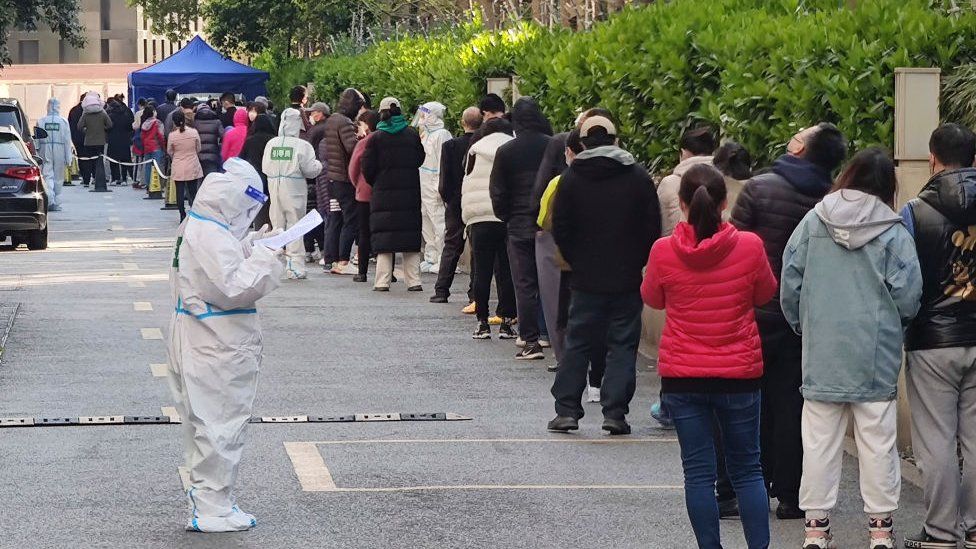
All locals have to get tested regularly under the city-wide testing order

The city began another round of mandatory mass testing on Wednesday to identify and isolate every case.

Shanghai residents who test positive can’t isolate in their homes even if their conditions are mild or asymptomatic.

They have to go to mandatory quarantine facilities, which critics say have become crowded and have sub-par conditions.

Why is there a food shortage?

When Omicron first emerged in Shanghai a month ago, the city quarantined only certain compounds. Then as the virus spread officials last week implemented a staggered lockdown where the city was split into two and each half had separate measures.

On Monday the lockdown was extended indefinitely to cover the entire city of 25 million people.

Strict rules mean most people have to order in food and water and wait for government drop-offs of vegetables, meat and eggs.

But the lockdown extension has overwhelmed delivery services, grocery shop websites and even the distribution of government supplies.

Many delivery personnel are also in locked-down areas, leading to an overall decrease in delivery capacity.

Locals in some areas of the city say they’ve been completely cut off.

“Please solve the problem of insufficient delivery capacity as soon as possible,” one user wrote on social media site Weibo in response to city officials’ video message.

Another person wrote that it was the “first time in my life that I have gone hungry”.

Presentational white space

Residents have also raised other concerns about price gouging, and how elderly or less tech-savvy residents are surviving.

City officials acknowledged the food struggles on Wednesday, saying Shanghai had enough supplies of rice, noodles, grain, oil and meat but there were delays in distributing them.

“It is true there are some difficulties in ensuring the supply of daily necessities,” said Liu Min, the deputy director of the Shanghai Municipal Commission of Commerce.

On Thursday, Shanghai’s vice mayor added the city would try to re-open some wholesale markets and food stores, and allow more delivery personnel out of locked-down areas.

“We have been holding meetings overnight to try and figure out solutions,” said Chen Tong.

The government has been under pressure to quickly deliver food supplies to residents

China is one of the last remaining nations still committed to eradicating Covid, in contrast to most of the world which is trying to live with the virus in its Omicron variation.

The country has successfully enacted full lockdowns before – endured by millions of people in cities including Xi’an and Wuhan – but Shanghai is its biggest city and the case spread this time is much higher than previous outbreaks.

As one of the economic powerhouses of China, Shanghai’s shutdown is also fuelling concerns about the impact to China and the world’s economy.

Scottish Labour has proposed capping bus fares at £1.80 and cutting the price of rail tickets in half for three months to help with household bills.

The party is putting action to tackle the cost-of-living crisis at the heart of its council election campaign.

Its manifesto includes a windfall tax on oil and gas firms and extra payments for families struggling with bills.

The party wants to cut the “cost of commuting” both to help workers and to push up the use of public transport.

Leader Anas Sarwar said every level of government should be focused on “bold policies” to protect household budgets.

All 32 of Scotland’s councils will hold elections on 5 May.

Scottish Labour is targeting a recovery, having slipped to third place behind the SNP and the Conservatives in the last votes in 2017.

The polls coincide with a cost-of-living crunch hitting millions across the UK, with soaring energy and fuel bills, rising prices in shops and changes to National Insurance payments.

Mr Sarwar said: “People across Scotland are struggling to make ends meet, and the cost of commuting is piling extra pressure on.

“Fuel prices are through the roof, and public transport isn’t faring any better. Rail passengers are coughing up for the highest fare hike in a decade and bus passengers are forced to navigate patchwork services and inconsistent fares

“It doesn’t need to be this difficult – we can give people a break and give public transport a boost by putting a stop to rip-off fares.”


Labour is putting the cost-of-living crisis at the heart of its local election campaign

Labour’s proposal is to use powers from the 2019 Transport Act to cap the price of local bus journeys at £1.80, while its manifesto also suggests cutting rail fares.

ScotRail was brought into public ownership at the beginning of the month, and the party said ministers could cut fares in half for three months to help workers and boost use of public transport.

Labour claims this would cost at most £45m, and that this would be offset by an increase in passenger numbers, which are still only at 71% of pre-pandemic levels.

Mr Sarwar said: “These are the kind of bold policies at the heart of our manifesto – which help people during this cost-of living crisis and build a better future for our communities.”

Windfall tax

The manifesto also includes a series of policies on the cost of living which Labour says could save households more than £1,000, while tackling rising energy bills and high water charges.

These include the party’s long-standing call for a one-off windfall tax on oil and gas giants, which it says will help reduce household bills by £600.

It also proposes a £400 fuel costs payment for those hardest hit by price rises, and a £100 rebate on water bills for all households.

The party also wants to create a publicly-owned energy company to improve energy security – similar to plans dropped by the Scottish government last year.

Counting is being held the day after the ballots, on Friday 6 May, with results expected from the 32 dedicated count centres across the country by the end of the day.

There has been a sharp rise in the number of people registered for postal votes, with 22.5% of the total electorate signed up for them as of December 2021.

This represents a 38.3% increase on the previous year, with the National Records of Scotland saying the jump was “most likely driven by the Covid pandemic”.

Industry standards should be reviewed after fatigue and corrosion led to high-speed trains being withdrawn from service, the rail regulator has found.

Cracks were found in more than 180 Hitachi trains being used by Great Western Railway (GWR) and London North Eastern Railway (LNER) last year.

The Office of Rail and Road (ORR) said the damage was partly due to the trains being corroded by salt in the air.

Hitachi Rail said it took “appropriate action to prioritise safety”.

In May 2021, the withdrawal of the damaged Hitachi Class 800 and 385 series trains led to a week of delays and cancellations for travellers.

Affected operators were Great Western Railway, London North Eastern Railway, TransPennine Express and Hull Trains.

Cracks were also found after examination of ScotRail’s Class 385 and Southeastern’s Class 395 trains.

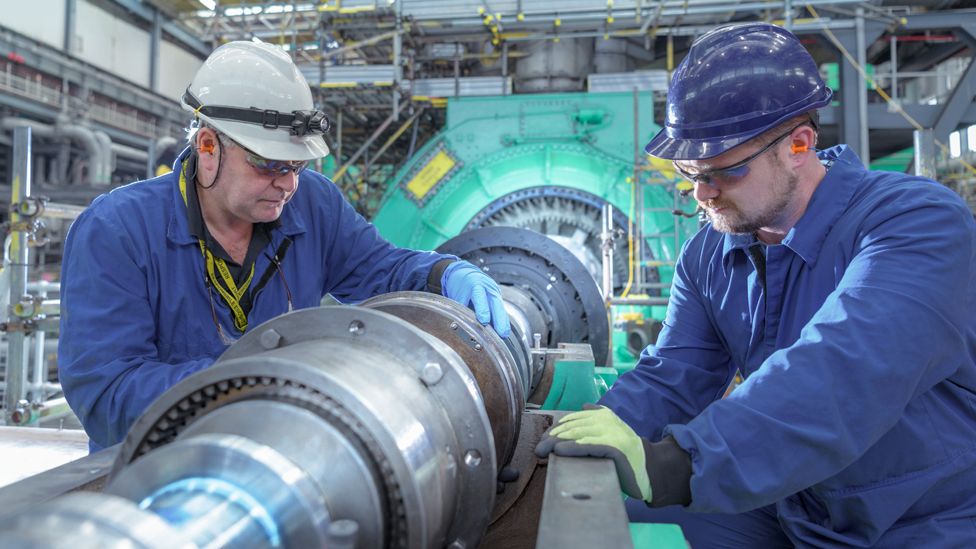
The ORR investigation found the design of the trains complied with existing standards but that corrosion cracks were found on lifting points – which allow carriages to be raised during maintenance work – resulting from the use of a particular type of aluminium, which was corroded by salt in the air.

It said fatigue cracking was caused by the “trains experiencing greater loads from train movement than allowed for in the original design”.

It added: “It is not yet known for certain why this happened, although potential factors include wheel wear and track design.”

The trains first entered service in 2017.

‘No safety failures’

The ORR recommended further work was carried out to identify the reasons for cracks developing in the rolling stock.

It said it had been assured of “no safety failures and trains have performed as specified” since they returned to service.

Ian Prosser, ORR’s chief inspector of railways, said Hitachi Rail and other operators had put in place “robust plans to make sure the right safety issues are being managed”.

“Our review provides a clearer picture of the issue and we will continue our oversight to ensure work moves forward to agree the permanent solution and our recommendations are acted on,” he added.

“It is important that the whole industry works together to learn lessons from what has happened.”

Hitachi Rail has proposed a plan to replace and modify affected parts to be completed over six years in order to minimise the number of trains out of service at one time.

In a statement, the company said the report confirmed “all Hitachi trains meet relevant standards and that we took the appropriate action to prioritise safety and maintain train availability”.

“The proposed engineering solutions outlined in the report are currently being reviewed by all partners,” it added.

“We are working together to finalise the plan for their implementation, while always prioritising safety and train availability to support consistent passenger services.”

No new nuclear power stations will be built in Scotland as part of the UK government’s plans to boost energy independence, it has been confirmed.

UK ministers want to install eight new reactors at existing sites to help reduce reliance on oil and gas.

But the Scottish government is opposed to nuclear energy, and could block any new developments via planning powers.

Energy Secretary Kwasi Kwarteng said there were “no plans to impose nuclear reactors in Scotland” in future.

His Scottish counterpart Michael Matheson said the focus should instead be on accelerating the decarbonisation of the network and ramping up investment in energy efficiency.


The UK government plans will also see a new licensing round for oil and gas projects in the North Sea – something the Scottish government has also dismissed as not a short-term solution to energy concerns.

The UK government is setting out a new energy strategy, which includes plans to increase wind, hydrogen and solar power production.

It also aims to accelerate the use of nuclear power, with up to eight more nuclear reactors across England and Wales.

Ministers hope up to 24GW will come from this source by 2050 – representing about 25% of the UK’s projected electricity demand.

‘Devolved affair’

A new government body, Great British Nuclear, will be set up to bring forward new projects and a £120m Future Nuclear Enabling Fund will be set up this month.

However, none of the reactors will be built in Scotland, which now only has one operational nuclear station – at Torness in East Lothian, which is due to close in 2028.

Mr Kwarteng told BBC Radio’s Good Morning Scotland programme the only way to decarbonise the UK’s energy “baseload” was through use of nuclear energy, saying there was “huge appetite” for new projects in England and Wales.

He added: “We have no plans to impose nuclear reactors in Scotland. It’s a devolved affair, it’s up to people in Edinburgh to decide what their nuclear policy is.”

IMAGE SOURCE,GETTY IMAGES

Mr Matheson told BBC Scotland the backbone of future energy supply should be offshore renewables, in particular wind farms.

And he dismissed nuclear power as being risky and expensive, saying it would need to be subsidised heavily by taxpayers.

He said: “Not only is there environmental risk associated with that, there is also the issue that this is likely to drive up the cost of household bills – whereas renewables such as wind and marine tidal in the future would actually reduce the cost of electricity.

“I think the UK government might have allowed themselves to be wrapped up in the nuclear lobby here.”

‘Pipe dream’

The GMB Scotland union has backed nuclear energy, with senior organiser Drew Duffy saying it was was “an absolute pipe dream that we could provide Scotland’s energy needs on wind alone”.

He said: “Yes there has to be renewables, wind is going to be part of an energy mix, but there are days when the wind doesn’t blow. You could have a million wind farms, but if there’s no wind they don’t generate enough electricity to keep the lights on.

“Nuclear is green, it’s safe, and it’s continuous – you can have that as the baseline to make sure that the lights in Scotland stay on.”

The UK government hopes to accelerate production of North Sea oil and gas

Scottish and UK ministers are also at odds over the future of domestic oil and gas supplies, with the energy strategy calling for fresh licensing in the North Sea.

Mr Matheson said any new development of reserves in the North Sea would need to be compatible with climate change goals – and would not come quickly or cheaply.

He added: “Even fossil fuels that come from Scottish waters are open to the vagaries of international markets. Oil and gas is an internationally-traded commodity, so if the prices go up internationally we can’t insulate ourselves from that.

“That’s why the objective is to move much more quickly towards renewables and energy efficiency.”

The UK government said its commitment to more North Sea projects recognised “the importance of these fuels to the transition and to energy security”, adding that producing gas in the UK had a lower carbon footprint than that imported from abroad.

However, last month the government’s climate advisers said UK-produced gas would be sold internationally and would barely reduce the consumer price.

Scottish Secretary Alister Jack said the plans would “turbocharge energy production” and the key to that would be accelerating the use of green technologies.

He added: “We will also maximise oil and gas production in the North Sea, making the most of our existing assets and expertise. This will bolster domestic energy security while at the same time supporting Scottish jobs.

“Scotland will play a key role in achieving our ambitious energy security strategy, and we will work with the Scottish government to maximise our domestic energy supply.”

Although most aspects of energy policy are reserved to the UK parliament, planning is a devolved matter and therefore the Scottish ministers have the power to approve or reject new projects north of the border.

Deirdre Michie, chief executive of industry trade body Offshore Energies UK, said “energy security is now national security”.

She added: “Many companies involved in UK oil and gas are already expanding into offshore wind, creating the infrastructure for mass hydrogen production, and building carbon capture and storage systems. They have the expertise not just in engineering but also in financing and managing these huge projects.”


For offshore wind, the government said its new target would be to generate up to 50GW by 2030, more than enough to power every home in the UK.

For onshore wind, the strategy only commits to consulting on developing partnerships with “a limited number of supportive communities” who wish to host wind turbines in return for lower energy bills.

Keith Anderson, chief executive of Scottish Power, said: “Supercharging ambition on green energy security is to be welcomed – we have the projects and are ready to build them.

“It takes five times longer to get a project through the UK’s planning system than to build it – that’s got to change if we’re to stand any chance of weaning our energy system off global gas and making a green future a reality.”

Targets for hydrogen production are also being doubled, with an ambition of increasing capacity to up to 10GW by 2030.

Under the new plans, up to 95% of the UK’s electricity could come from low-carbon sources by 2030.

Up to eight more nuclear reactors could be approved on existing sites as part of the UK’s new energy strategy.

The plan, which aims to boost UK energy independence and tackle rising prices, also includes plans to increase wind, hydrogen and solar production.

But experts have called for a bigger focus on energy efficiency and improving home insulation.

Consumers are facing soaring energy bills after the Russian invasion of Ukraine pushed gas prices even higher.

Under the government’s new plans, up to 95% of the UK’s electricity could come from low-carbon sources by 2030.

It outlines, for example, the hope of producing up to 50 gigawatts (GW) of energy through offshore wind farms, which the Department for Business, Energy and Industrial Strategy (Beis) said would be more than enough to power every home in the UK.

The government’s energy strategy has been much-delayed, with one of the big points of contention reported to have been the construction of onshore wind turbines.

Key points of the new energy strategy

  • Nuclear – The government plans to reduce the UK’s reliance on oil and gas by building as many as eight new nuclear reactors, including two at Sizewell in Suffolk. A new body will oversee the delivery of the new plants.
  • Wind – The government aims to reform planning laws to speed up approvals for new offshore wind farms. For onshore wind farms it wants to develop partnerships with “supportive communities” who want to host turbines in exchange for guaranteed cheaper energy bills.
  • Hydrogen – Targets for hydrogen production are being doubled to help provide cleaner energy for industry as well as for power, transport and potentially heating.
  • Solar – The government will consider reforming rules for installing solar panels on homes and commercial buildings to help increase the current solar capacity by up to five times by 2035.
  • Oil and gas – A new licensing round for North Sea projects is being launched in the summer on the basis that producing gas in the UK has a lower carbon footprint than doing so abroad.
  • Heat pumps – There will be a £30m “heat pump investment accelerator competition” to make British heat pumps which reduce demand for gas.

Environmentalists and many energy experts have reacted with disbelief and anger at some of the measures in the strategy.

They cannot believe the government has offered no new policies on saving energy by insulating buildings.

They say energy efficiency would immediately lower bills and emissions, and is the cheapest way to improve energy security.

A Downing Street source said the strategy was now being seen as an energy supply strategy.

Campaigners are also furious that ministers have committed to seeking more oil and gas in the North Sea, even though humans have already found enough fossil fuels to wreck the climate.

There is a strong welcome, though, for the promise of more energy from wind offshore with speedier planning consent.

The same boost has not been offered to onshore wind.

The decision to boost nuclear has drawn a mixed reaction. Some environmentalists say it’s too dear and too dangerous. They ridicule the idea from some politicians that every city could have its own mini reactor.

But other climate campaigners believe nuclear must be part of the energy mix.

Nuclear plans

The government announced that a new body called Great British Nuclear will be launched to bolster the UK’s nuclear capacity, with the hope that by 2050 up to 24 GW of electricity will come from that source – 25% of the projected electricity demand.

The focus on nuclear will deliver up to eight reactors overall, with one being approved each year until 2030.

It also confirmed advanced plans to approve two new reactors at Sizewell in Suffolk during this parliament.

Tom Greatrex, boss of the Nuclear Industry Association, said the plans marked a “vital step forward” for the UK to meet its climate goals, and could create thousands of jobs.

“The ambition and determination to do much more and quicker is very welcome,” he said.

For onshore wind, the strategy commits to consulting on developing partnerships with “a limited number of supportive communities” who want to host wind turbines in exchange for guaranteed lower energy bills.

Although it is one of the cheapest forms of energy, new onshore wind projects have been declining since 2015 when the government ended subsidies and introduced stricter planning rules in response to some complaints that wind turbines were an eyesore and noisy.

There are also plans to accelerate oil and gas production with a new licensing round for North Sea projects to launch in the summer.

The government said it recognised the importance of these fuels to energy security “and that producing gas in the UK has a lower carbon footprint than imported from abroad”.

‘Opportunity missed’

Green Party co-leader Adrian Ramsay said the new strategy “did not serve the needs of people or the climate”.

Mr Ramsay suggested that if the government was “concerned about energy bills and taking real climate action, it would be going even further on onshore wind.”

Former Ofgem boss Dermot Nolan said: “Most of these decisions will take a long time to have an impact and in the short run we will continue to be dependent on fossil fuels.

He said the lack of focus on energy efficiency, on insulation, on improving the quality of people’s homes “is an opportunity missed”.

Ed Miliband, Labour’s shadow climate change and net-zero secretary, said: “The government’s energy relaunch is in disarray. This relaunch will do nothing for the millions of families now facing an energy bills crisis.”

Liberal Democrat leader Sir Ed Davey also described the plans as “utterly hopeless”, while the SNP’s Stephen Flynn called it a “missed opportunity”.


Dr Simon Cran-McGreehin, head of analysis at the Energy & Climate Intelligence Unit said: “This is an immediate problem that needs solutions now, and this doesn’t do anything on prices.

“It tries to do some things on energy supply, but they’re all medium to long-term measures. So it does seem to fail the exam question,” he said.

Prime Minister Boris Johnson said in a statement that the strategy would “reduce our dependence on power sources exposed to volatile international prices we cannot control, so we can enjoy greater energy self-sufficiency with cheaper bills”.

Business and Energy Secretary Kwasi Kwarteng added: “Scaling up cheap renewables and new nuclear, while maximising North Sea production, is the best and only way to ensure our energy independence over the coming years.”

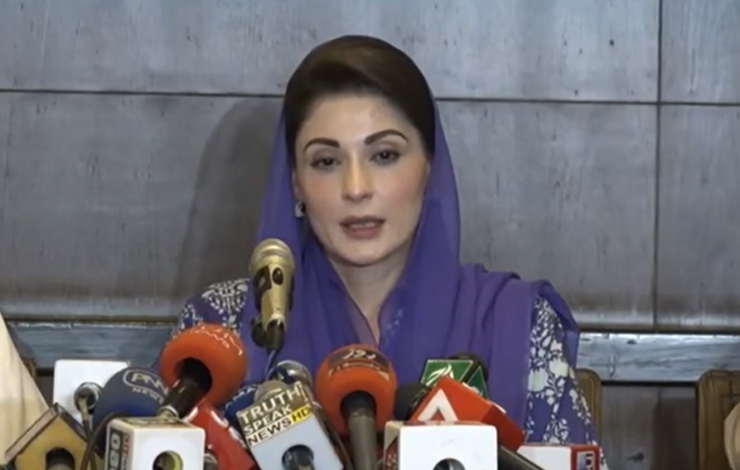
Imran Khan used NSC’s platform to further personal agenda: Maryam Nawaz

LAHORE: PML-N Vice-President Maryam Nawaz Sharif on Wednesday slammed Prime Minister Imran Khan for using the National Security Committee’s (NSC) platform to further his personal agenda.

Speaking during a press conference in Lahore, Maryam said that the PTI-led government, instead of talking about its achievements, resorted to using a “fake letter” to gain popular support.

Maryam was referring to the “threat letter” against the PTI government that — according to PM Imran Khan — was sent to Pakistan by a US diplomat.

She said the premier, in a bid to save his government, not only used a “fake letter” based on an “unfounded conspiracy”, but he also misused the platform of the NSC.

“You have already read out the contents of the letter that you were trying to hide,” she said to the premier. “Then why is it that you are not showing the letter to anyone?”

Maryam maintained that the premier is not showing the letter to anyone because there is nothing in the letter that he claimed.

“You waved an empty paper during your jalsa,” she alleged, adding that there was no threat, to begin with. “This letter was drafted at the Ministry of Foreign Affairs.”

She said that once PM Imran Khan realised that he had already let the cat out of the bag and wanted to hide his hoax, he sent the concerned ambassador to Brussels immediately so that no one could question him.

“I ask, where is the ambassador today who had received the letter?” she said.

Lashing out at the prime minister for using the platform of the NSC, she said: “This was the Nationa Security Committee, not the ‘save Imran Khan’ committee.”

She then addressed the security agencies of the country and urged them to issue a clarification regarding the letter.

Maryam then censured the prime minister for using Opposition leaders’ old pictures, in which they could be seen mingling with foreign diplomats, as “proof of the foreign conspiracy’.

In response, she also flashed some of PM Imran Khan’s previous photographs in which he could be seen talking with foreign diplomats.

“Was this a conspiracy as well,” she asked while flashing one of PM Imran’s pictures before journalists.

“Whenever we [the opposition leaders] met diplomats, we talked about our country and its good traits,” she said.

She then talked about how the masses had to suffer due to inflation under the PTI government’s rule. “If you think the public will forget about the inflation, you are mistaken,” she said.

Maryam said that in a bid to stay in power for a few more days, Imran Khan violated the Constitution of the country.

“Four dictators that ruled this country did not violate the Constitution as badly as Imran Khan did,” she said. “The punishment for violating the Constitution is Article 6, which pertains to committing high treason.”

She said National Assembly Speaker Asad Qaiser, Deputy Speaker Qasim Suri, and Imran Khan — all three are equally involved in violating the Constitution.

“In the next election, you will be contesting as a politician who violated the Constitution. If the courts do not punish you, the people of Pakistan will.”

She also turned her guns toward First Lady Bushra Bibi’s close aide Farah Khan and accused her of corruption.

“Farah was the frontperson of Bani Gala,” she maintained. “Appointments in Punjab either used to take place through witchcraft or by paying a bribe to Farah Khan.”