
UN suspends Russia from human rights body, Moscow then quits

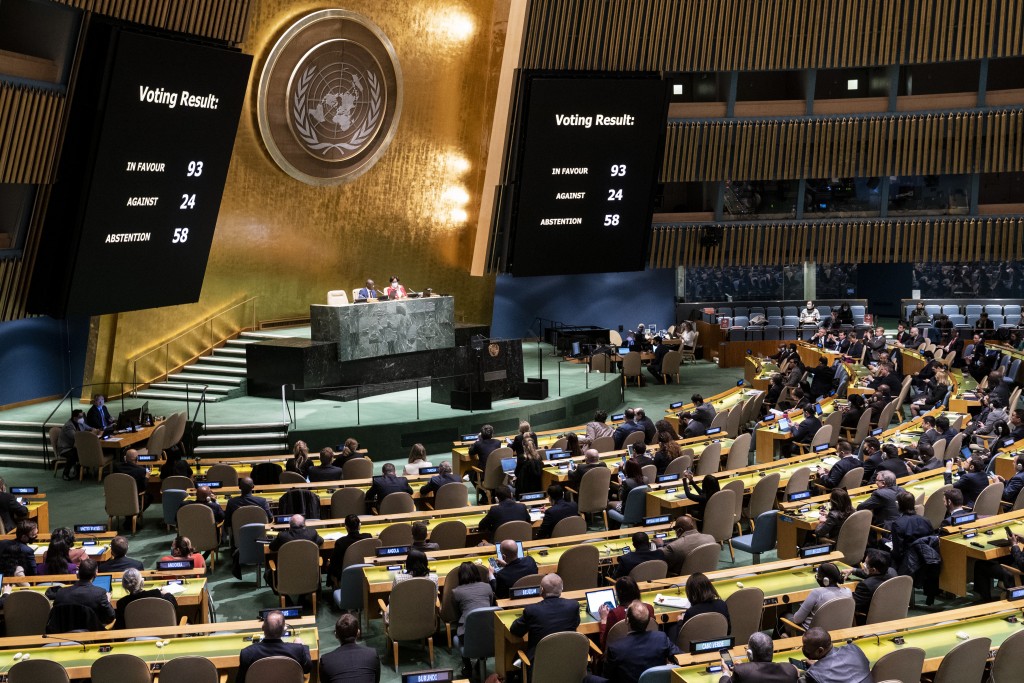
UNITED NATIONS: The United Nations General Assembly on Thursday suspended Russia from the UN Human Rights Council over reports of “gross and systematic violations and abuses of human rights” in Ukraine, prompting Moscow to announce it was quitting the body.

The US-led push garnered 93 votes in favour, while 24 countries voted no and 58 countries abstained. A two-thirds majority of voting members in the 193-member General Assembly in New York — abstentions do not count — was needed to suspend Russia from the 47-member Geneva-based Human Rights Council.

Speaking after the vote, Russia’s deputy UN Ambassador Gennady Kuzmin described the move as an “illegitimate and politically motivated step” and then announced that Russia had decided to quit the Human Rights Council altogether.

“You do not submit your resignation after you are fired,” Ukraine’s UN Ambassador Sergiy Kyslytsya told reporters.

Russia was in its second year of a three-year term. Under Thursday’s resolution, the General Assembly could have later agreed to end the suspension. But that cannot happen now Russia has quit the council, just as the United States did in 2018 over what it called chronic bias against Israel and a lack of reform.

The United States was last year re-elected to the council. Suspensions are rare. Libya was suspended in 2011 because of violence against protesters by forces loyal to then-leader Muammar Gaddafi.

US Ambassador to the United Nations Linda Thomas-Greenfield said the United Nations “sent a clear message that the suffering of victims and survivors will not be ignored.”

“We ensured a persistent and egregious human rights violator will not be allowed to occupy a position of leadership on human rights at the UN,” she said in remarks to be delivered to the General Assembly later on Thursday.

The Human Rights Council cannot make legally binding decisions. Its decisions send important political messages, however, and it can authorise investigations. Last month the council opened an investigation into allegations of rights violations, including possible war crimes, in Ukraine.

The resolution on Thursday was the third adopted by the 193-member General Assembly since Russia invaded neighbouring Ukraine on February 24. The two previous General Assembly resolutions denouncing Russia were adopted with 141 and 140 votes in favour.

After abstaining on the previous two General Assembly votes, Russia’s partner China opposed the resolution on Thursday.

“Such a hasty move at the General Assembly, which forces countries to choose sides, will aggravate the division among member states and intensify the confrontation between the parties concerned — it is like adding fuel to the fire,” China’s UN Ambassador Zhang Jun said before the vote.

The General Assembly text on Thursday expresses “grave concern at the ongoing human rights and humanitarian crisis in Ukraine,” particularly at reports of rights abuses by Russia.

Russia says it is carrying out a “special military operation” that aims to destroy Ukraine’s military infrastructure and denies attacking civilians. Ukraine and allies say Moscow invaded without provocation.

Russia had warned countries that a yes vote or abstention will be viewed as an “unfriendly gesture” with consequences for bilateral ties, according to a note seen by Reuters.
Saudi Arabia allows one million people to perform Hajj this year

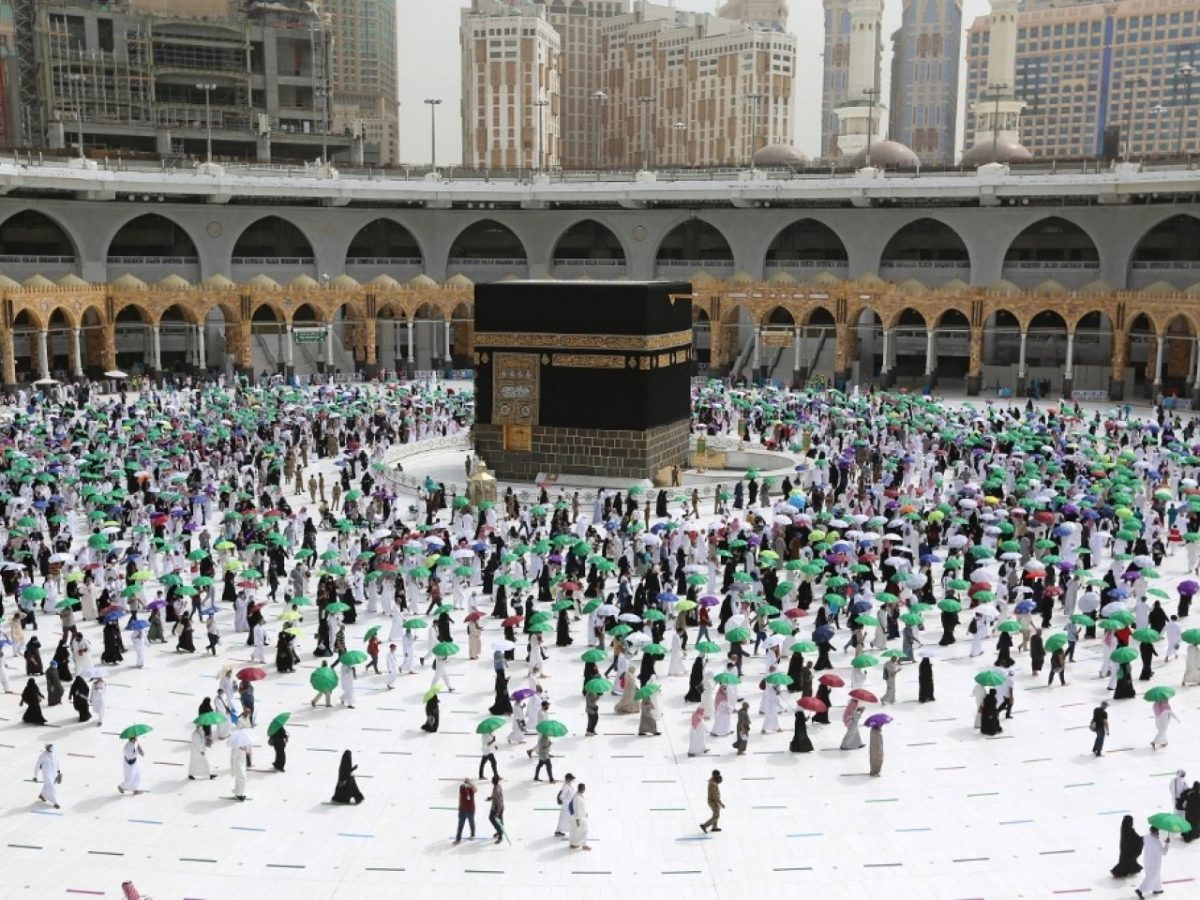
Around one million people will be permitted from inside and outside the country to perform Hajj this year, Saudi Arabia announced on Saturday, according to The Khaleej Times.

According to a statement issued by the Ministry of Hajj and Umrah, the kingdom has “authorised one million pilgrims, both foreign and domestic, to perform the hajj this year.”

The statement further said that the Hajj this year is open to those who are “under 65-years-old and have received the main COVID-19 vaccinations approved by the Saudi Ministry of Health.”

However, pilgrims coming from outside are required to submit a negative COVID-19 PCR result within 72 hours from the time of departure.

The Saudi government wants to ensure the maximum safety and security of the pilgrims while ensuring that the “maximum number of Muslims worldwide can perform Hajj.”

Two airline passengers accused of “unruly behaviour” have been hit with the largest fines ever proposed by the US Federal Aviation Administration.

The five-figure penalties on the two flyers accused of violence are part of $2m (£1.5m) in fines levied this year.

US airlines have seen record numbers of disruptive passengers since early 2021, with many incidents involving the refusal to wear an anti-viral facemask.

The fines were announced by transport secretary Pete Buttigieg on Friday.

“If you are on an airplane, don’t be a jerk and don’t endanger the flight crews and fellow passengers,” he said in an appearance on ABC’s The View. “If you do, you will be fined by the FAA.”

In one incident, an American Airlines passenger travelling from Texas to North Carolina has been asked to pay a $81,950 fine for threatening to hurt a flight attendant. The attendant had offered to help the passenger after she fell into the aisle of the plane.

The unnamed passenger then allegedly pushed an airline worker and tried to open the cabin door. While flight attendants attempted to restrain her, she repeatedly hit one staff member in the head.

When she was placed in cuffs, “she spit at, headbutted, bit and tried to kick the crew and other passengers”, the FAA said in a news release.

In the other incident, the passenger was flying on Delta Air Lines from Las Vegas to Atlanta. She allegedly tried to “hug and kiss the passenger seated next to her, walked to the front of the aircraft to try to exit during flight; refused to return to her seat; and bit another passenger multiple times”.

That passenger, who is also unnamed, was physically restrained by crew members and has now been asked to pay a fine of $77,272.

Neither incident involved a failure to adhere to Covid measures.

In his interview with The View, Mr Buttigieg said the US would decide by 18 April on whether to extend the federal requirement to wear masks on planes and in airports.

The FAA announced a “zero-tolerance” policy on unruly passengers in January 2021, and has issued some $7m in fines since then.

They have recorded 7,060 air rage incidents and say around 70% involved masking rules. But the rate of incidents has now declined by 60% since its high last year.

Pakistan’s Prime Minister Imran Khan has warned that if he is ousted from power, he will not recognise an opposition government.

He was speaking ahead of a no-confidence vote in parliament on Saturday, which he is expected to lose.

Mr Khan said he accepted the Supreme Court decision that he must face the vote, but repeated claims the US is leading a conspiracy to remove him. He did not provide evidence.

Washington denies the accusations.

There were angry scenes between supporters and opponents of the prime minister as parliament met to debate the motion on Saturday.

The speaker adjourned proceedings for several hours before parliament reconvened at 14:30 local time (10:30 BST).

The BBC’s Secunder Kermani says the prime minister is widely regarded as having come to power with the help of Pakistan’s army, but now observers say they have fallen out.

A number of his coalition partners have also deserted him.

During his Friday address, Mr Khan urged people to come out of their houses on Sunday to protest against the “foreign-funded drama”.

He added: “I will be there with you as I will never accept this foreign conspiracy against Pakistan.”

The leader of the opposition, Shehbaz Sharif, said the decision to go forward with a vote of no confidence had “saved Pakistan and the constitution”.

Pakistan’s Supreme Court had ordered parliament to reassemble on Saturday morning, and it has.

It initially appeared that Imran Khan’s party would attempt to delay the vote of no confidence, with the Foreign Minister Shah Mahmood Qureshi, known for his lengthy speeches at the best of times, embarking on a what appeared to be a deliberately meandering monologue.

Opposition MPs reacted angrily, warning that a delay would be in breach of the Supreme Court’s order. There’s a suggestion the vote could happen in the evening and Imran Khan is still expected to lose it.

His allies, however, are doubling down on their allegation that the attempt to oust him is part of a US orchestrated conspiracy.

They cite a diplomatic cable from the Pakistani ambassador in Washington as proof, in which he reportedly said an American official warned there would be “consequences” if Mr Khan remained prime minister because of his recent visit to Russia.

Members of Mr Khan’s party in parliament have brought posters with them, one reading, “whoever is a friend of America is a traitor”.

Mr Khan’s opponents and US officials have dismissed the conspiracy allegation, most analysts believe it’s a deliberate exaggeration of the contents of the diplomatic cable.

line

Saturday’s confidence vote comes after opposition lawmakers put forward a no confidence motion to parliament last Sunday, in a bid to oust Mr Khan from power.

But parliament’s deputy speaker Qasim Suri – a member of Mr Khan’s political party – swiftly blocked the vote, saying it showed “foreign interference”. Mr Suri also said that it went against the constitution, which calls for loyalty to the state.

Mr Khan’s government went on to dissolve parliament and called for a snap election to be held.

This made several opposition members furious, with some accusing the prime minister of treason for blocking the vote.

Opposition figures submitted a petition to the Supreme Court to assess the situation.

On Thursday, Pakistan’s top court ruled that Mr Khan’s decision to stop the vote from going ahead was unconstitutional. It ordered that the no confidence vote should go ahead again on Saturday, 9 April.

Opposition supporters celebrated outside the Supreme Court after the court ruled the blocked vote as unconstitutional

Mr Khan has repeatedly said that Pakistan’s opposition parties are working with foreign powers.

He claims that he is the target of a US-led conspiracy to remove him because of his refusal to stand with Washington on issues against Russia and China. The US said there was “no truth” in these allegations.

The expectation is that the former international cricket star will lose Saturday’s vote.

In the event that Mr Khan is ousted from power, the opposition parties will appoint a new prime minister who can hold power until October 2023, when a new election is scheduled to be held.

We reporter Abid Hussain says it is unclear what other options Mr Khan can exercise to avoid that outcome, unless he and his MPs decide to submit a resignation in an attempt to avoid the humiliation of a defeat.


Holidaymakers are continuing to experience delays and queues as they try to get away for the Easter break.

In the past week, more than 100 flights a day had been cancelled due to staff shortages and ferry operators are struggling to meet demand after P&O suspended services.

EasyJet and British Airways said fewer flights were cancelled on Saturday.

The transport secretary earlier urged operators to “redouble” their efforts to get people away as soon as possible.

Labour has accused the government of being “missing in action”.

The easing of pandemic rules means that, for many families, this is the first school holiday where they can travel restriction-free.

But a rise in passenger numbers comes as travel operators are struggling with staff shortages and Covid-related absences, leading to long delays.


Manchester Airport told the BBC the long waits it has seen at security this week could continue, with some passengers facing queues of 60 to 90 minutes over the next few weeks.

Heathrow, Gatwick and Birmingham airports have also been hit by delays and cancellations.

The boss of the airlines watchdog has written to UK airlines expressing frustration and concern for holiday-makers.

Meanwhile at Dover, the suspension of P&O ferry services and bad weather have also caused delays.

A 23-mile (37km) stretch of road into Dover, the M20 Southbound, remains closed, with thousands of lorries trying to reach the port being held.

Toby Howe, tactical lead at the Kent Resilience Forum, advised travellers to France to “allow a lot of extra time” and make sure they had some food and drink because there would be delays.

He told BBC Breakfast the delays had been caused by “the perfect storm” – with ferries being suspended, a storm preventing those which were running from sailing and a train being stuck in the tunnels.

Transport Secretary Grant Shapps said he was “very concerned” about the level of disruption and called on travel operators to “redouble their efforts” to make sure people travelling abroad “can get away as smoothly as possible”.

But shadow transport secretary Louise Haigh accused the government of being “missing in action”.

The Labour MP said: “Tory ministers need to step-up and act to ease the disruption. The government need to begin clearing the huge backlogs in security checks so airport staff can safely begin work.

“And they should be holding emergency talks with ferry operators and Eurotunnel to boost capacity following P&O’s shameful action.”

Queues at Manchester Airport on Tuesday

P&O Ferries sparked outrage last month after suddenly sacking hundreds of staff.

A Department for Transport spokesperson blamed P&O Ferries for contributing to the delays, adding that regional police and leaders were working to ease disruption in Kent.

The DfT spokesperson said: “P&O’s unacceptable actions have resulted in its vessels being detained, causing backlogs and traffic jams which would be substantially alleviated if its fleet was operating normally. It’s left operators, local authorities and, of course, government having to clear up the mess.

“That alongside bad weather and the Easter rush has meant that roads are exceptionally busy.”

Boris Johnson has announced £100m worth of weapons for Ukraine after the “unconscionable bombing” of refugees at a railway station.

The prime minister said the UK will send additional military equipment including Starstreak anti-aircraft missiles and 800 anti-tank missiles.

It comes after dozens of people died when a crowded railway station in eastern Ukraine was hit by rockets.

Vladimir Putin’s daughters have also been sanctioned by the UK.

Speaking at a Downing Street press conference with German Chancellor Olaf Scholz, Mr Johnson warned Russia will not escape punishment after the attack at Kramatorsk station.

He said: “I know that Britain and Germany share exactly the same sense of horror and revulsion at the brutality unleashed including the unconscionable bombing of refugees fleeing their homes this morning.

“It is a war crime indiscriminately to attack civilians, and Russia’s war crimes in Ukraine will not go unnoticed or unpunished.”

Mr Johnson added the UK will send precision munitions “capable of lingering in the sky until directed to their target” and more helmets, body armour, and night vision.

Defence Secretary Ben Wallace said the UK will also be providing Ukraine with armoured Mastiff vehicles to fight Russia’s invasion.

Mastiffs are heavily armoured vehicles suitable for road patrols and convoys.

The vehicles will be stripped of sensitive equipment and British troops will help with training in a neighbouring country,

Mr Putin’s daughters Maria Vorontsova and Katerina Tikhonova are subject to travel bans and asset freezes

Earlier, the Foreign Office announced fresh sanctions on Mr Putin’s daughters, Katerina Vladimirovna Tikhonova, 35, and Maria Vladimirovna Vorontsova, 36.

They will be subject to travel bans and asset freezes, the government said.

Foreign Secretary Liz Truss said the move ensures those benefitting from Mr Putin’s rule will “feel consequences”.

Meanwhile, the daughter of Russian foreign minister Sergey Lavrov, Yekaterina Sergeyevna Vinokurova, 39, has also been sanctioned.

It comes after the three women were sanctioned by the United States on Wednesday.

Ms Truss said: “By freezing the assets and limiting the travel of Putin’s allies, the UK government is sealing off reservoirs of cash funding the conflict, while also making sure those who have benefited from Putin’s rule feel the consequences.

“Oligarchs and other wealthy Russians are amongst those hit hardest by the sanctions, which have drastically limited their access to luxury consumer goods and access to international markets.”

The UK government said £275bn of Russian foreign currency reserves, representing 60% of its total, have been frozen due to UK and international sanctions.

It added the sanctions were having “deep and damaging consequences for Putin’s ability to wage war”.

More than 1,200 individuals and businesses have been targeted by the UK, including Chelsea FC owner Roman Abramovich and Mr Lavrov’s stepdaughter Polina Kovaleva.

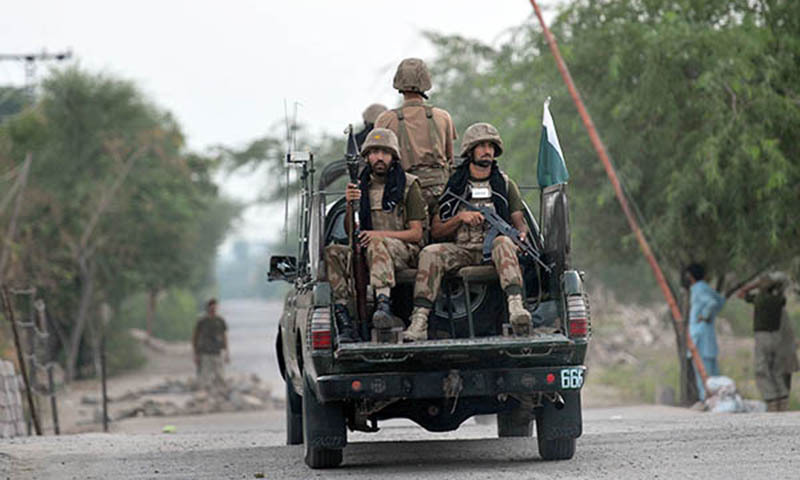
RAWALPINDI – Two soldiers were martyred while as many terrorists belonging to the banned Balochistan Liberation Federation (BLF) killed in an exchange of fire in Singi area, near Mashkai, Balochistan.

According to a press release issued by the ISPR on Friday, the security forces conducted an operation on information of presence of terrorists. Once the troops started establishing blocking positions in the area. Terrorists tried to escape from their hideout and opened fire on security forces.

These terrorists were involved in different security incidents in District Awaran and surroundings. In addition, arms and ammunition have also been recovered which were intended to be used by the terrorists for disrupting peace and security in the area.

During the operation, two valiant sons of soil Lance Havaldar Raj Wali Khan and Sepoy Usama Khan embraced martyred while one officer was injured. Security forces, in step with the nation, remain determined to thwarting attempts at sabotaging peace, stability and progress of Balochistan.

India cbank holds rates but starts to rein in loose policy as inflation risks rise

MUMBAI: The Reserve Bank of India kept its key lending rate at a record low on Friday, as expected, but said it will turn its focus to battling inflation as the Russia-Ukraine crisis pushes crucial commodity prices to near-record highs.

In a surprise move, the central bank also said it would restore a liquidity adjustment tool to pre-crisis levels, which was seen as a first step to moving away from the ultra-loose monetary policy embraced during the COVID-19 pandemic.

But with global risks rising, RBI Governor Shaktikanta Das said the process of returning policy settings to more normal levels would be gradual.

“The conflict in Europe has the potential to derail the global economy caught in the crosscurrent of multiple headwinds. Our approach needs to be cautious, but proactive in mitigating the adverse impact on India’s growth and inflation,” Das said after the policy decision.

The RBI’s monetary policy committee held the lending rate, or the repo rate (INREPO=ECI), at 4%. The reverse repo rate (INRREP=ECI), or the key borrowing rate, was also kept unchanged at 3.35%.

However, the central bank said it would restore the width of the liquidity adjustment facility corridor to 50 basis points.

RBI said the floor of the corridor would be the standing deposit facility rate, which was set at 3.75%, and the marginal standing facility rate at 4.25% will be the upper bound with the repo rate in between the two.

“The hawkish turn by the RBI was warranted and it is likely that central bank will change its stance to neutral in the coming policy (meeting) followed by a repo rate hike sooner than earlier expected,” said Sakshi Gupta, senior economist at HDFC Bank.

All but six of 50 respondents polled by Reuters between March 29-April 5 forecast no change in the repo rate on Friday. Thirty-two had expected rates to still be unchanged by end-June.

‘Inflation before growth’

Reflecting growing uncertainties, the RBI raised its inflation forecast for the current fiscal year to 5.7%, 120 basis points above its forecast in February, and cut its economic growth forecast to 7.2% for 2022/23 from 7.8% earlier.

“We have now put inflation before growth. So that is the sequence of our priorities – first is inflation followed by growth,” RBI Governor Das said. He added that this is the first time in three years that it was putting inflation in the forefront.

Das said RBI will gradually withdraw system liquidity over a multi-year timeframe beginning this year but will do it in a non-disruptive manner. He said economic activity is barely above pre-pandemic levels but continues to steadily recover.

Das said the MPC voted unanimously to keep the repo rate unchanged and to retain an ‘accommodative’ monetary policy stance.

But he added that even though the stance remained ‘accommodative’ the focus is on withdrawal of accommodation.

Inflation has held above the RBI’s 6% upper threshold so far this year, casting doubt on its strategy of keeping rates low to bolster growth even as some other central banks are already raising borrowing costs to tamp down price pressures.

India’s 10-year benchmark bond yield jumped to 7.048%, while the rupee strengthened as much as 75.71 against the dollar. The NSE Nifty 50 index (.NSEI) was up 0.48% at 17,724.75, as of 0703 GMT, while the S&P BSE Sensex (.BSESN) was up 0.37% at 59,256.26.

Das also said that banks’ held-to-maturity limit in debt has been increased to 23% from the current 22% until end-March 2023.

Traders have been closely watching for any measures to support the bond market in absorbing the government’s record $14.31 trillion borrowing programme.

“Amid inability to explicitly support the government borrowing program, the RBI enhanced the held-to-maturity limit by 100 bps, which could calm the bond markets despite a sharp increase in inflation forecast,” said Garima Kapoor, economist institutional equities at Elara Capital.

British Prime Minister says transgender women should not be competing in female sporting events.

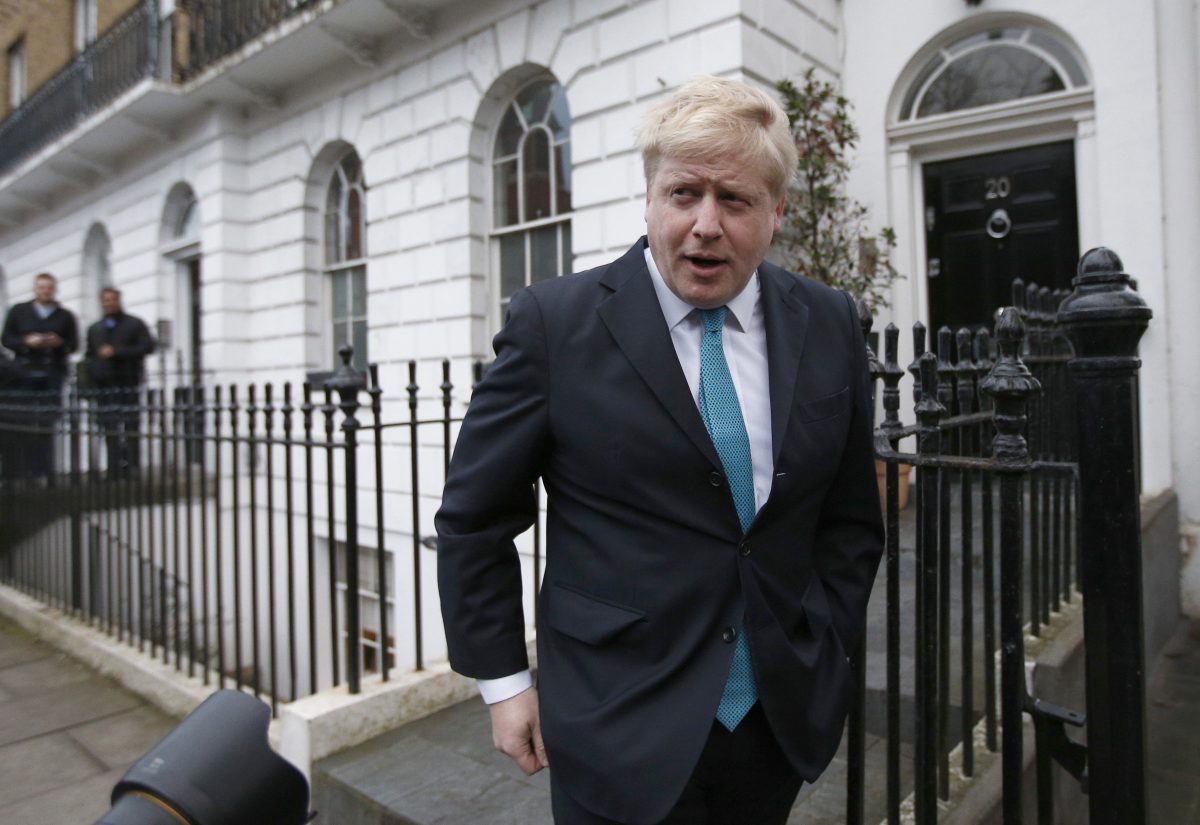
Transgender women should not be competing in female sporting events, British Prime Minister Boris Johnson told broadcasters on Wednesday.

Johnson was speaking as the country looked set to abandon plans to hold a flagship conference designed to promote LGBT+ rights around the world.

Charities and organisations are boycotting the event following a dispute over conversion therapy for transgender people.

“I don’t think biological males should be competing in female sporting events. Maybe that’s a controversial thing to say, but it just seems to me to be sensible,” Johnson said.

“I also happen to think that women should have spaces […] whether it’s in hospitals, prison or changing rooms […] which are dedicated to women. That’s as far as my thinking has developed on this issue.

“If that puts me in conflict with some others, then we have got to work it all out. It doesn’t mean I’m not immensely sympathetic to people who want to change gender, to transition and it’s vital we give people the maximum love and support in making those decisions.”

Transgender rights has become a hot talking point as sports seek to balance inclusivity with ensuring there is no unfair advantage.

Transgender cyclist Emily Bridges was ruled out of Britain’s National Omnium Championships last weekend after the sport’s governing body, the UCI, ruled she was ineligible.

British Cycling had cleared Bridges to take part under their “Transgender and Non-Binary Participation policy”.

New Zealand weightlifter Laurel Hubbard became the first transgender athlete to compete at the Olympics Games in Tokyo last year.

University of Pennsylvania swimmer Lia Thomas last month became the first transgender National Collegiate Athletic Association (NCAA) champion in Division I history after winning the women’s 500-yard freestyle.

Thomas competed on Pennsylvania’s men’s team for three years before transitioning and setting multiple programme records with the women’s team, but her eligibility has come under considerable scrutiny.

The latest International Olympic Committee (IOC) guidance, updated in November last year, is that no athlete should be excluded from the competition on the grounds of a perceived unfair advantage due to gender.

Yemen president cedes powers to council amid efforts to end war

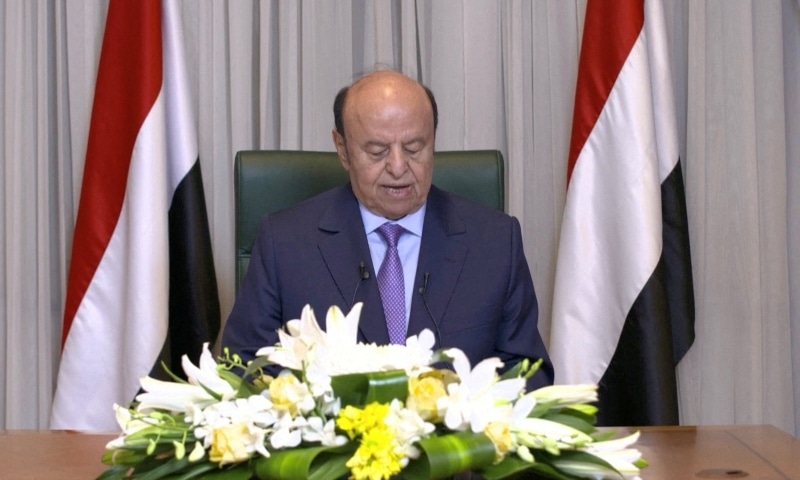
Riyadh announced $3 billion in financial aid to the Saudi-backed government after the announcement by President Abd-Rabbu Mansour Hadi. It called for talks with the Houthi group that controls the north and has been battling a Saudi-led coalition.

Yemen’s warring sides, in a major breakthrough, agreed on a two-month truce that began on Saturday, the first since 2016. The deal eased a coalition blockade on areas held by the Houthis, who ousted Hadi’s government from the capital, Sanaa, in late 2014.

“I irreversibly delegate to the Presidential Leadership Council my full powers in accordance with the constitution and the Gulf Initiative and its executive mechanism,” Hadi, who is based in Riyadh, said on state television.

Hadi took the helm of a crumbling state a decade ago in a Gulf-backed transition plan after protests that brought down President Ali Abdullah Saleh, who was later killed.

Analysts say the new council aims to unify anti-Houthi ranks by giving more parties a seat at the table. With Hadi effectively out of the equation and his controversial deputy dismissed, the hope is the Houthis may also be more amenable.

Riyadh, which has struggled to exit the war in Yemen, urged the new council to negotiate with the Iran-aligned Houthis under UN auspices “for a final and comprehensive solution”.

Houthi chief negotiator Mohammed Abdulsalam said in a statement that Yemen’s future should be decided inside the country. He did not respond, when asked by Reuters, on whether the group would accept an invitation for talks with the council.

“Any activity outside Yemen’s borders is merely a farce and recreation by aggressor nations,” he said.

Saudi de facto ruler Crown Prince Mohammed bin Salman was shown in a video on state media meeting with the new eight-member council, led by Rashad Al-Alimi, who has close ties with both Riyadh and major Yemeni bloc the Islamist Islah party.

The new body includes several leaders of United Arab Emirates-backed factions, including Aidarous al-Zubaidi of the separatist Southern Transitional Council, which distrusts Islah and vied with Hadi’s government for control of Aden.

Dismissed vice president Ali Mohsen al-Ahmar, an Islamist-leaning general, is resented by the Houthis for military campaigns in their northern stronghold and by some southerners for his role in the 1994 north-south civil war. The war has killed tens of thousands, devastated the economy and pushed Yemen to the brink of famine.