
World treats crises affecting blacks, whites unequally, regrets WHO chief

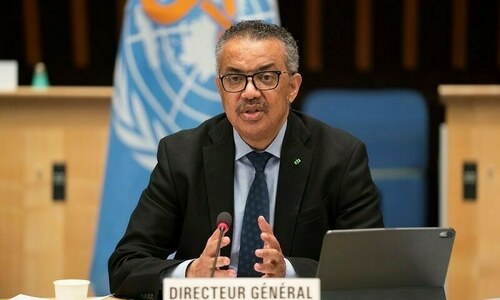
World Health Organisation’s director-general Tedros Adhanom Ghebreyesus said the emergencies happening in other parts of the world were not being taken as seriously and hoped the international community “comes back to its senses”.

“I don’t know if the world really gives equal attention to black and white lives,” Tedros told a news conference. “The whole attention to Ukraine is very important of course, because it impacts the whole world.

“But even a fraction of it is not being given to Tigray, Yemen, Afghanistan and Syria and the rest. A fraction.

“I need to be blunt and honest that the world is not treating the human race the same way. Some are more equal than others. And when I say this, it pains me. Because I see it. Very difficult to accept but it’s happening.”

Tedros, who is himself from Tigray, said the United Nations had determined that 100 trucks per day of life-saving humanitarian supplies needed to be going into the besieged northern region of Ethiopia.

The country’s former health and foreign minister said that since a truce was declared, at least 2,000 trucks should have gone in, but only 20 have done so thus far.

Tedros said he was worried that the 20 trucks going in could be just a “diplomatic manoeuvre” on the part of the government in Addis Ababa.

“In effect, the siege by the Ethiopian and Eritrean forces continues,” he said.

“To avert the humanitarian calamity and hundreds of thousands more people from dying, we need unfettered humanitarian access from those reinforcing the siege.” But Tedros said global attention was simply not being placed on such humanitarian crises.

“I hope the world comes back to its senses and treats all human life equally,” he said.

“What is happening in Ethiopia is a tragic situation. People are being burned alive… because of their ethnicity…. Without any crime. “So we need to balance. We need to take every life seriously because every life is precious.”

The UN says hundreds of thousands of people are at risk of starvation in Tigray, where people have for months also faced fuel shortages and a lack of basic services such as electricity, telecommunications, internet and banking.

Across northern Ethiopia, the 17-month conflict has driven more than two million people from their homes, according to the UN, and left more than nine million people in need of food aid.

Thursday marks 50 days since Russia invaded Ukraine. More than a quarter of the Ukrainian population has been forced from their homes.

Moscow — already accused by the West of widespread atrocities against civilians — appears to be readying a massive offensive across Ukraine’s eastern Donbas region.

The UN calls Yemen the world’s worst humanitarian crisis.

Sri Lanka is about to default on its debts, two of the world’s largest credit rating agencies have warned.

Fitch Ratings lowered its assessment of the South Asian nation, saying “a sovereign default process has begun”.

S&P Global Ratings made a similar announcement and said that a default is now a “virtual certainty”.

This week, Sri Lanka said it will temporarily default on its foreign debts as it faces its worst economic crisis in more than 70 years.

Meanwhile, faced with mass protests over major power cuts and the soaring cost of food and fuel, officials have urged Sri Lankans working abroad to send money home.

The new governor of the country’s central bank appealed for donations in sterling, US dollars and euros on Wednesday.

He said the money “will be utilised only for the purpose of importation of essentials such as food, fuel and medicine”.

On Monday, Sri Lanka is due to make $78m (£59.4m) of interest payments on its international sovereign bonds.

If the payment is not made within a 30-day grace period it would mark the country’s first default on its foreign debt since independence from the UK in 1948.

Fitch’s latest rating puts Sri Lanka at “near default” and indicated that its “payment capacity is irrevocably impaired”.

“We will downgrade the [rating] once a payment on an issuance is missed and the grace period has expired,” the firm said in a statement on Wednesday.

S&P also downgraded Sri Lanka “to reflect the virtual certainty of a default on some affected obligations”.

The ratings agency said it was waiting for more details on Sri Lanka’s debt restructuring plan, or confirmation that its government had failed to pay its creditors.

“We expect the government to miss paying these coupons,” S&P said in a note. A coupon is the interest payment due on a bond.

Credit ratings are intended to help investors understand the level of risk they face when buying a financial instrument, in this case a country’s debt – or sovereign bond.

On Tuesday, the Sri Lankan government said it would temporarily default on $35.5bn in foreign debt.

Its finance ministry said the impact of the pandemic and the war in Ukraine made it “impossible” to pay its creditors.

The country is due to start talks with the International Monetary Fund (IMF) next week on a loan programme to get its economy back on track.

It steeply devalued its currency last month ahead of talks with the IMF over a bailout.

New Zealand’s top court has ruled that a man can be extradited to China to face a murder charge, in what activists have called a “deeply disturbing precedent”.

Kyung Yup Kim, a New Zealand permanent resident, is accused of murdering a young woman in Shanghai in 2009.

Human rights groups say he faces an unfair trial or risk of human rights abuses under China’s judicial system.

But New Zealand’s government says it has been assured this will not happen.

If he is is sent over, it will mark New Zealand’s first extradition of a prisoner to China.

Mr Kim has been fighting the move for over a decade, since Chinese authorities requested his extradition in 2011.

His lawyer, Tony Ellis, told the BBC the government was “deluded” if they thought the diplomatic assurances they had received from China would protect Mr Kim from receiving ill treatment in Chinese custody.

Lawyers also claimed that Mr Kim could be subjected to undetectable forms of torture.

“Torture is systemic in the Chinese system… and it’s now shifted to a new form of torture which no amount of diplomatic assurances can safeguard against,” said Mr Ellis, adding that he has written to New Zealand’s justice minister again to stop any extradition.

New Zealand had at first refused to give Mr Kim up to China upon receiving the extradition request in 2011.

However, the government changed its mind in 2015. It told the Supreme Court it had sought and secured assurances from Beijing that Mr Kim would be treated fairly.

The diplomatic promises include that Mr Kim would be held in custody and trialled in Shanghai, and that New Zealand consulate officials would be able to visit Mr Kim every 48 hours during the investigation period.

On Wednesday, the Supreme Court ruled in favour of the government.

Foreign minister Nanaia Mahuta said in court documents that China saw this case as an important “test case” for succeeding in further extradition requests, and the international attention around it would preclude authorities from mistreating Mr Kim.

She added New Zealand and China had “a strong common interest” in “effective law enforcement co-operation”.


She also noted that while the government recognised other concerning cases of foreign nationals – including Australians and Canadians currently detained in China – she said Mr Kim faced a lower risk because his case was “non-political” and wasn’t mired in “broader bilateral issues”.

‘No reason for New Zealand to compound injustice’

But activists argue otherwise.

“[Mr] Kim’s case stems from terrible injustice – an unsolved murder – in China. But there is no reason for New Zealand to compound injustice and set this deeply disturbing precedent,” tweeted Sophie Richardson, the China director of HRW.

Amnesty International and Human Rights Watch (HRW) had earlier last year made submissions to the New Zealand government. Some reports say China’s jurisdictional system has a conviction rate of over 99%.

Mr Kim is accused of murdering Peiyun Chen, a 20-year-old waitress and sex worker in Shanghai in 2009 – a charge he denies. Chinese police say they have DNA evidence linking him to the crime and a confession he made to an acquaintance that he had “beaten a prostitute to death”.

His lawyer says they are making a complaint to the UN human rights committee and will also launch a further legal challenge based on Mr Kim’s deteriorating health, if political lobbying efforts fail.

Like most other Western nations, New Zealand does not have an extradition treaty with China. In 2020 it also joined Australia and Canada in suspending its extradition agreement with Hong Kong over fears of China’s expanding legal reach in that territory.

A car carrying the Australian prime minister’s security team has crashed in Tasmania during an election campaign visit.

Four police officers were taken to hospital with “non-life threatening injuries” after the car and another vehicle collided, authorities said.

Prime Minister Scott Morrison was not in the car, but the accident prompted him to cancel the rest of his campaign events on Thursday.

The other driver involved was not hurt.

Tasmania Police said initial investigations suggested the second car had “collided with the rear of the police vehicle, while attempting to merge”. It caused the unmarked security vehicle to roll off the road.

The two Tasmania Police officers and two Australian Federal Police officers were conscious when taken to hospital for medical assessment, the prime minister’s office said.

“Family members of the officers have been contacted and are being kept informed of their condition,” a statement said.

“The PM is always extremely grateful for the protection provided by his security team and extends his best wishes for their recovery and to their families.”

Australians go to the polls on 21 May. Mr Morrison – prime minister since 2018 – is hoping to win his conservative coalition’s fourth term in office.

Polls suggest the opposition Labor Party, led by Anthony Albanese, is favoured to win. However, Mr Morrison defied similar polling to claim victory at the last election in 2019.


Mr Morrison’s Liberal-National coalition holds 76 seats in the House of Representatives – the minimum needed to retain power.

Political observers say the cost of living, climate change, trust in political leaders, and national security will be among key issues in the campaign.

In recent weeks, the prime minister has faced accusations of being a bully and once sabotaging a rival’s career by suggesting the man’s Lebanese heritage made him less electable. Mr Morrison has denied the allegations.

Mr Albanese stumbled into his own controversy this week when he failed to recall the nation’s unemployment or interest rates.

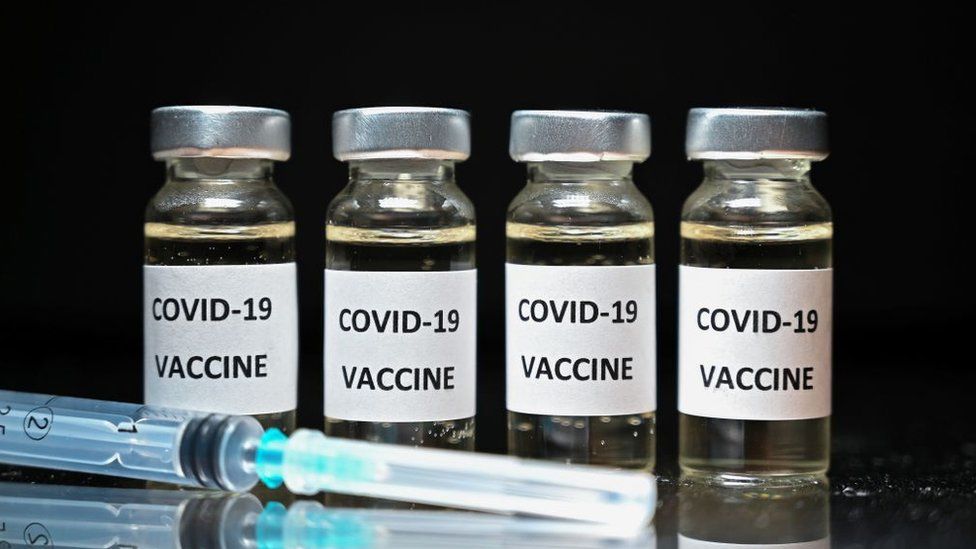
A new Covid vaccine has been approved for use in the UK by regulators.

It is manufactured by Valneva, using more traditional technology – similar to how polio and flu shots are made.

It contains a whole copy of the virus which has been inactivated, so that it can’t cause the disease but does teach the body how to fight it.

The UK was due to receive 100 million doses of the jab, but the government cancelled the deal in September due to a “breach of obligations”.

The French company strenuously denied the government’s accusation.

Dr June Raine, chief executive of the UK’s Medicines and Healthcare products Regulatory Agency, said the approval followed “a rigorous review of the safety, quality and effectiveness of this vaccine”.

As with the AstraZeneca and Pfizer vaccines, it is designed to be given as two doses.

Professor Sir Munir Pirmohamed, from the Commission on Human Medicines – which led the review – said: “We have advised that the benefit risk balance is positive. The vaccine is approved for use in people aged 18 to 50 years, with the first and second doses to be taken at least 28 days apart.”

The jab developed by Valneva, which has a factory in Livingston near Edinburgh, is the sixth Covid-19 vaccine to be granted an MHRA authorisation.

In trials, blood results from volunteers who received the jab had high levels of neutralising antibodies against the pandemic virus.

It outperformed the AstraZeneca vaccine on this measure in head-to-head tests.

Experts say it is possible that by using the whole virus – rather than just the spike protein – the vaccine may be more useful against future emerging variants of Covid.

Prof Adam Finn who ran the trials said: “On behalf of all the participants in the clinical trials which underpinned this authorisation, which were conducted in the UK, and all of the clinical and laboratory teams involved, I’d like to express our delight that this vaccine has now been approved.

“This vaccine has an important role to play in the ongoing global effort to combat the pandemic.”

A lorry fire has caused major disruption on the Edinburgh city bypass.

The route was closed in both directions for more than an hour after the fire broke out at about 10:45.

Traffic was directed away from the Calder junction as firefighters tackled the blaze in a trailer close to a slip road.

Police Scotland said no-one was hurt but the westbound carriageway was likely to remain closed for some time.

The eastbound side of the bypass has now reopened.

Councils should be given more power over their budgets with a new local tax system in place, Scottish Green co-leader Patrick Harvie has said.

The SNP-Green government at Holyrood has committed to holding a citizens’ assembly on how to replace council tax.

With parties now campaigning for May’s local elections, Mr Harvie told the BBC that “deeper reform” was needed.

However the government has previously said council tax reforms are unlikely to take effect during the current term.

Public finance minister Tom Arthur told MSPs in March that legislation would be needed to set up a new tax system, and that change would “go beyond the lifetime of this parliament”.


Mr Harvie is now a government minister, thanks to the partnership agreement sealed by the SNP and Greens following the 2021 Holyrood election.

Part of that agreement was to hold a citizens’ assembly on reform of the council tax – something both parties have pledged to pursue for years.

Councils were also given the freedom to set local rates this year, for the first time under the SNP, after years of council tax freezes.

Mr Harvie told the BBC’s Good Morning Scotland programme that a fundamental review of council financing was needed, “rather than this annual haggling over how much the budget would be from central government”.

He said: “In a lot of other European countries it would be bizarre that local councils would be so dependent on a single block grant. They have more of their own powers.

“We have already made a start – we have achieved significant change to make small steps towards local empowerment, local financial powers for councils, but we need to do much more.

“We have a commitment in the Scottish Parliament to have a citizens assembly on reforming council tax. That has been deadlocked parliament after parliament.

“Since 1999, the Scottish Parliament has failed to resolve this problem of a broken council tax system. We need to do that, and we believe that a citizens’ assembly can cut through the party political deadlock in a way that so far the Scottish Parliament has not managed.”

Four out of five parties at Holyrood support scrapping and replacing the council tax – including the SNP, which has pledged to scrap the tax at each election since 2007.

In its local elections manifesto Scottish Labour pledged to “abolish the unfair council tax and replace it with a fairer alternative based on property values and the ability to pay”, while the Lib Dems also support its “long-overdue replacement”.

Even the Scottish Conservatives are not entirely opposed to reform, calling the system “outdated” but a stable form of revenue for local services.

The Scottish government has promised to embark on a series of consultations, culminating in a citizens’ assembly which will examine how local government should be funded.

However Tom Arthur told Holyrood’s finance committee in March that he could not give a “concrete timescale” for changes.

He said: “Going from where we are now to a fully embedded and operational new system would go beyond the lifetime of this session of parliament.

“However, the commitment in this session is to do the groundwork at pace to establish the citizens assembly and allow it to be able to report back to parliament in sufficient time so that parliament can consider its response.”

Some asylum seekers who cross the Channel to the UK will be given a one-way ticket to Rwanda, under new government plans.

The trial will involve mostly single men arriving on boats or lorries.

Prime Minister Boris Johnson said the £120m scheme would “save countless lives” from human trafficking.

Refugee organisations have criticised the plan as cruel, questioned its cost and efficacy, and raised concerns about Rwanda’s human rights record.

In a speech in Kent, Mr Johnson argued action was needed to stop “vile people smugglers” turning the ocean into a “watery graveyard”, adding the “humane and compassionate” plan was designed to break their business model.

He said he wanted to make clear to people arriving on the Kent coast they were better off taking legal routes and that the new plan would “over time prove a very considerable deterrent”.

Last year, 28,526 people are known to have crossed in small boats, up from 8,404 in 2020.

Around 600 people made the crossing on Wednesday, and Mr Johnson said the figure could reach 1,000 a day within weeks.

Mr Johnson said the scheme would be uncapped, affect those who arrived illegally since 1 January, and potentially involve tens of thousands in the coming years.

The BBC has seen accommodation the asylum seekers will be housed in, thought to have enough space for around 100 people at a time and to process up to 500 a year.

“We cannot sustain a parallel illegal system,” the prime minister said. “Our compassion may be infinite, but our capacity to help people is not.”

Home Secretary Priti Patel travelled to the Rwandan capital Kigali to sign the deal.

BBC home editor Mark Easton, reporting from Rwanda, explained ministers face legal hurdles and substantial costs to launch the scheme.

Precise details of the plan are yet to be confirmed, but, he said the trial would be restricted to mostly single men the British authorities believe are inadmissible.

Under the proposal, Rwanda would take responsibility for the people who make the more than 4,000 mile journey, put them through an asylum process, and at the end of that process, if they are successful, they will have long-term accommodation in Rwanda.

The Rwandan government said migrants will be “entitled to full protection under Rwandan law, equal access to employment, and enrolment in healthcare and social care services”.

The UK Home Office believes existing asylum law will be enough to implement the plan, but questions remain about the legality of the scheme.

Questions have also been raised over the human rights record of the Rwandan government and its president, Paul Kagame.

Last year, the UK government itself expressed concern over “continued restrictions to civil and political rights and media freedom” in Rwanda at the United Nations.

However, Mr Johnson described Rwanda as being one of the safest countries in the world.

The prime minister also announced:

  • Asylum seekers who are resettled in the UK will be spread more evenly across local authorities
  • Plans to hand operational control of the Channel to the Royal Navy
  • £50m in funding for new equipment and specialist personal for Channel operations
  • A new government facility to house migrants, described as a reception centre, in Linton-on-Ouse, North Yorkshire
  • A maximum sentence of life imprisonment for people smugglers

A hugely controversial plan

The partnership with Rwanda is the centrepiece of a wider policy blitz to deal with what has been a humiliation for ministers who promised Brexit would mean control of Britain’s borders.

Instead, record numbers of asylum seekers have been turning up in dinghies beneath the white cliffs of Dover. This year has already seen 4,578 arrivals and looks set to be a new record.

Sending asylum seekers to Rwanda, however, is likely to prove hugely controversial and legally fraught.

Critics point to Rwanda’s poor human rights record. At the UN last year, the UK demanded investigations into alleged killings, disappearances and torture.

Ministers will have to explain why Rwanda is the right place to entrust with protecting the human rights of vulnerable asylum seekers who hoped the UK would protect them.

line

The government’s Nationality and Borders Bill is making its way through Parliament, but time is running out to pass it into law after a series of defeats in the House of Lords.

MPs are currently on a break, but when they return, they are due to review a series of amendments, including one about powers to offshore asylum claims.

The government wants to introduce new laws – under the Nationality and Borders Bill – to make it easier for the UK to send refugees to another country for their asylum claim to be processed.

But the country must be “safe” and the UK has also signed up to two key international treaties guaranteeing refugees’ rights:

So if there was a risk that a person would be mistreated in Rwanda then they could not be sent there.

Human rights campaigners have highlighted the negative impact on refugee human rights, the cost of the scheme, and have questioned whether it will achieve its aims.

Enver Solomon, chief executive of the Refugee Council, said the proposal would not address the reasons why desperate people travel to the UK.

Amnesty International UK described the plan as “shockingly ill-conceived idea” that would waste public money.

Shadow culture secretary Lucy Powell said Labour advocates “boring measures” like curbs on people smugglers touting for business online.

The Lib Dems said the government was “slamming the door” in the face of refugees, while the SNP’s Ian Blackford described the plan as “absolutely chilling”.

New PM sends positive signals to China, US

“The new government wishes to constructively and positively engage with the US to promote shared goals of peace, security and development in the region,” the Prime Minister’s Office said in response to a White House statement on Mr Sharif taking over as the new prime minister.

White House Press Secretary Jen Psaki had earlier said that a democratic Pakistan was critical to US interests.

Ties between Islamabad and Washington touched a new low after former prime minister Imran Khan accused the US of conspiring to dislodge his government. He based his allegation on a diplomatic cable in which it was reportedly said that a State Department official had warned of consequences for bilateral ties if the no-confidence motion failed.

Beijing, Moscow send messages; Kashmir solution inevitable, Shehbaz tells Modi

Washington has denied the allegation.

Mending fences with the US would be one of the top foreign policy priorities for the new government.

Mr Sharif, while speaking in the National Assembly after his election, noted “confusion” in ties and said that it did not mean an end to the historic relationship.

The same was repeated in the PM Office statement, which welcomed US reaffirmation of long-standing ties with Pakistan and said that the new government looked forward to deepening this “important relationship” on the principles of equality, mutual interest and mutual benefit.

Messages from other leaders

Meanwhile, in response to a congratulatory tweet by Indian Prime Minister Narendra Modi, Mr Sharif called for securing peace and focusing on socio-economic development of the people.

“Pakistan desires peaceful & cooperative ties with India. Peaceful settlement of outstanding disputes, including Jammu & Kashmir, is indispensable,” he further said.

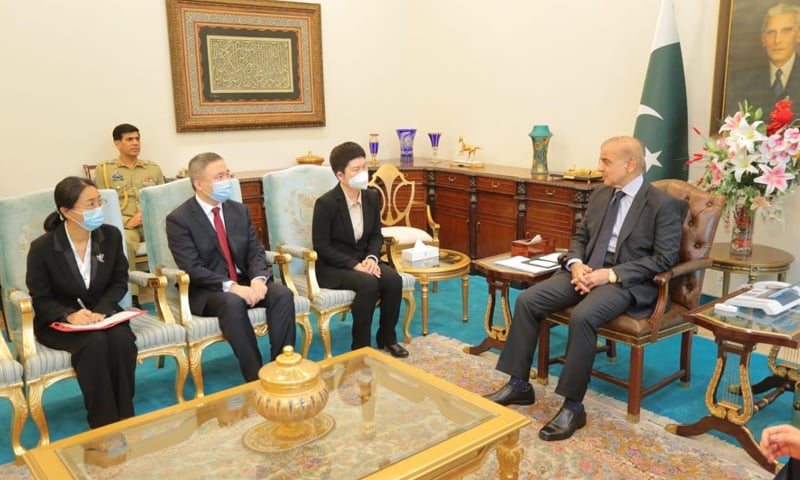
Talking to the Charge d’ Affaires of People’s Republic of China, Ms Pang Chunxue, who called on him, PM Sharif affirmed his government’s commitment to further deepening the win-win economic cooperative partnership between the two countries.

He expressed his government’s resolve to speed up high quality development of CPEC projects and make it a symbol of China-Pakistan friendship and close partnership. He, moreover, underlined the importance of enhanced investment from China in industrialization, agriculture, and digital technologies.

Russian President Vladimir Putin also greeted Mr Sharif. According to a statement by Russia’s embassy in Pakistan, hoped that the new government will “contribute to further development of the Pakistan-Russia cooperation and partner interaction on the Afghan settlement as well as countering international terrorism.”

US approach

At the Monday afternoon news briefing in Washington, a journalist asked White House Press Secretary Jen Psaki what was the administration’s reaction to the new developments in Pakistan. “Does President Biden plan to speak with the country’s new prime minister?”

Responding to the first part of the question, Ms Psaki said the United States “support(s) the peaceful upholding of constitutional democratic principles. We don’t support one political party over another, and we certainly support the principles of rule of law and equal justice under the law.”

Recalling that the United States and Pakistan were old allies, she said: “We value our long standing cooperation with Pakistan, and have always viewed a prosperous and democratic Pakistan as critical to US interests. That remains unchanged, regardless of who leadership is.”

Responding to the question about President Biden calling the new prime minister, she said she did not “have anything to predict at this point in time. Obviously, we stay in close touch with them at a range of levels.”

A third journalist tried a different approach and asked to get more information from the White House Press Secretary on Mr Biden’s call. “What arrangements does the administration have to contact him (Mr Sharif) and what’s moving forward on that?” he asked.

“I don’t have a prediction of a call at this point in time. Obviously, those are assessments made day by day, especially after new leaders are elected,” Ms Psaki said.

“We have a long, strong, and abiding relationship with Pakistan, an important security relationship, and that will continue under new leaders,” she added.

Over 2,000 Sikhs arrive from India for Baisakhi

LAHORE: Over 2,000 Sikh pilgrims entered Pakistan on Tuesday from the Wagah border to attend the annual Baisakhi festival starting from Wednesday (today).

The main festival ceremony is scheduled to be held at Gurdwara Panja Sahib (Hasanabdal) on Thursday (tomorrow), according to officials.

Led by Sardar Arvinder Singh, the pilgrims first reached Attari on the Indian side from various areas and then entered Pakistan at 11am by crossing the Wagah-Attari border on foot.

Upon arrival, officials of the Evacuee Trust Property Board (ETPB), led by Additional Secretary (Shrines) Rana Shahid, Pakistan Sikh Gurdwara Parbandhak Committee and other departments concerned, warmly received the pilgrims.

Main ceremony to be held at Gurdwara Panja Sahib tomorrow; pilgrims thank Pakistan for facilitating trip

“Whenever we come to Pakistan — the land of our gurus — we feel very happy and relaxed. Therefore, this time too, we have come here with a lot of love for the people of Pakistan,” said Sardar Arvinder Singh, the party leader/Shiromani Gurdwara Parbandhak Committee (India) office-bearer, while talking to the media at the border. He expressed gratitude to Pakistan for issuing visas in great numbers, enabling pilgrims to participate in the Baisakhi festival.

Delhi Gurdwara Management Committee chief Sardar Sukhbeer Singh said both Pakistan and India had the same culture and they (the pilgrims) always felt comfortable in Pakistan.

“The arrangements made by the Pakistan government for us are impressive,” he added.

According to an official source in the ETPB, the Pakistan High Commission in New Delhi had issued visas to 2,200 pilgrims out of whom 2,044, including women, crossed into Pakistan via Wagah to attend the festival.

“After exiting India (at Attari) gradually, they (the pilgrims) started entering Pakistan at 11am via Wagah. Till afternoon (3pm) all 2,044 had entered Pakistan,” the official told Dawn.

“After having some food, they were sent to Hasanabdal by special buses and trains escorted by the Railways Police, respective district police and other law enforcement agencies,” he added.

A spokesman for the Pakistan Railways police said the pilgrims were first brought from Wagah border to the railway station and then they were shifted to three trains under tight security of the Railways Police.

“Due to security issues, the pilgrims were not allowed to get off the trains on their way to Hasanabdal. Similarly, they wouldn’t be allowed to get off the trains or other transport (bus, car etc) whenever they are travelling in Pakistan during their trip,” the spokesman made it clear.

“The meal was also provided to them free of cost during the journey from Wagah to Hasanabdal,” he added.

“For women pilgrims, the female cops provided special security. All pilgrims reached Hasanabdal at about 8pm safely,” he said.

Discussing the security plan, he said a total of 400 policemen of the railways had been deployed for the security of the pilgrims. Special commandos and snipers have also been deployed at each railway station especially Wagah, Lahore, Hasanabdal and Nankana Sahib.

Owing to security concerns, none of the Sikh pilgrims is allowed to interact with the general public or to leave their specified area of stay, and they are not allowed to carry inflammable utensils in train. “A control room has also been established at Wagah to pass on timely information about movement of the trains. The intention of a comprehensive plan is to provide safe and peaceful atmosphere to the Sikh pilgrims,” the official said.

Meanwhile, ETPB’s Rana Shahid stated: “Arrangements related to cold water, clean washrooms, trains, sitting arrangements and security have been made available for the Sikh yatrees”.

After attending the main ceremony at the Gurdwara Panja Sahib (Hasanabdal), the pilgrims would also visit Nankana Sahib and other places, he said.

It is pertinent to mention that Baisakhi is an ancient spring harvest festival of India and Pakistan. It became closely associated with Sikhism at the end of the 17th century when Guru Gobind Singh chose the date of the festival. The Sikhs celebrate the event by making pilgrimages to their holy sites.