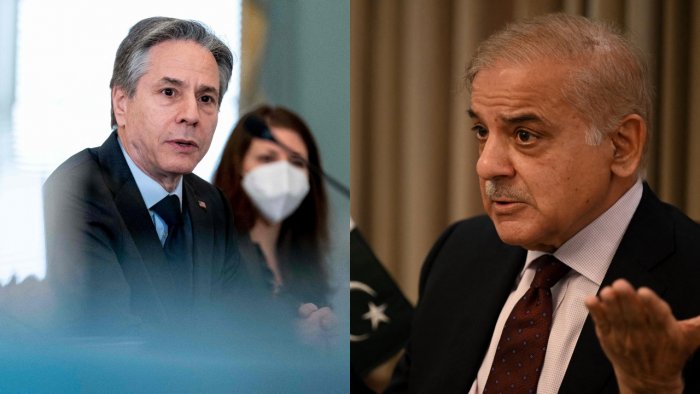

US ‘agrees’ with DG ISPR’s statement on no ‘foreign conspiracy’ to oust Imran

The senior US official made this statement during a press briefing in response to a question from a journalist.

“Pakistan’s military spokesperson said they had no evidence to suggest that the United States had threatened or was involved in the conspiracy to seek the ouster of Imran Khan’s government. What are your comments on it?” the journalist had asked.

“We would agree with it,” Price said.

Military spokesman Maj Gen Babar Iftikhar had on Thursday tried to clear the air about the alleged foreign conspiracy behind Imran’s ouster and specifically mentioned that the National Security Committee (NSC) – which includes the army and ISI chiefs – did not use the word “conspiracy” in its statement on the “cablegate” unlike some political pronouncement by the PTI leaders.

Gen Iftikhar said the military’s stance on the cable was formulated after a thorough investigation by an intelligence agency.

The NSC, however, had noted that the message conveyed by a State Department official was tantamount to “blatant interference in the internal affairs of Pakistan”.

At a press briefing on Thursday, Price dismissed the accusations leveled by Imran, saying “there is no truth whatsoever to the allegations that have been put forward.”

“We support the peaceful upholding of constitutional and democratic principles, including respect for human rights. We do not support, whether it’s in Pakistan or anywhere else around the world, one political party over another,” he told the briefing.

The State Department official said the US supported broader principles, including the rule of law and equal justice under the law.

He also underlined that the United States looked forward to working with newly elected Prime Minister Shehbaz Sharif and his government “to promote peace and prosperity in Pakistan and the broader region”.

Price said the relationship between the United States and Pakistan had been a vital one for the last 75 years. “You probably saw a statement that we released from the Secretary last night regarding the selection of Prime Minister Shehbaz Sharif,” he added.

A day ago, US Secretary of State Antony J. Blinken had also congratulated Shehbaz Sharif and vowed to continue its long-standing cooperation with Pakistan’s government.

Likewise, earlier this week, Pentagon spokesperson John Kirby had insisted that the US had a “healthy military-to-military relationship with Pakistani armed forces”, hoping that “we have every expectation that will be able to continue to be the case”.

Cablegate

The controversy surrounding the no-confidence motion against the former premier Imran Khan took a dramatic turn when the embattled PM brandished a letter at a rally on March 27 — days before his ouster, claiming it contained evidence of a “foreign conspiracy” hatched to topple his government.

Imran had kept a mum about the contents of the letter when he first unveiled it, however, he spilled the beans days later by naming the United States when the exit of the government appeared imminent.

Imran’s allegation that the US spearheaded his exit from power was based on a cable received from Pakistan’s Ambassador to the US, Asad Majeed, in which he had reported about a meeting with Assistant Secretary of State for South and Central Asia Affairs Donald Lu.

Majeed had reportedly said that Donald Lu warned that Imran Khan’s continuation in office, who was set to face a vote of no confidence, would have repercussions on bilateral relations. The US was said to be annoyed with Imran over his “independent foreign policy” and visit to Moscow.

The Pentagon and the State Department have rejected the accusations, saying there was no veracity to it.

The National Security Committee (NSC), which includes all services chiefs as well as the head of Pakistan’s top intelligence agency, took up the matter on March 31 and decided to issue a “strong demarche” to a country that it did not name over what was termed “blatant interference in the internal affairs of Pakistan”.

It had also termed the interference “unacceptable under any circumstances” and said the language used in the communique was undiplomatic.


A Russian warship that was damaged by an explosion on Wednesday has sunk, Russia’s defence ministry has said.

Moskva, the flagship of Russia’s Black Sea Fleet, was being towed to port when “stormy seas” caused it to sink, according to a ministry message.

The 510-crew missile cruiser was a symbol of Russia’s military power, leading its naval assault on Ukraine.

Kyiv says its missiles hit the warship. Moscow has not reported any attack – it says the vessel sank after a fire.

The blaze caused the explosion of the warship’s ammunition, Russia says, adding that the entire crew were later evacuated to nearby Russian vessels in the Black Sea.

After saying initially the warship was afloat, late on Thursday the Russian defence ministry announced that the Moskva had been lost.

The 12,490-tonne vessel is the biggest Russian warship to be sunk in action since World War Two.

“While being towed… towards the destined port, the vessel lost its balance due to damage sustained in the hull as fire broke out after ammunition exploded. Given the choppy seas, the vessel sank,” the Russian defence ministry said.

1px transparent line

Ukrainian military officials said they struck the Moskva with Ukrainian-made Neptune missiles – a weapon designed after Russia’s annexation of Crimea in 2014, and the naval threat to Ukraine in the Black Sea grew.

The ship’s sinking was described by the US as a “big blow”, but American officials were unable to confirm whether Ukrainian Neptune missiles were responsible.

“It’s certainly plausible and possible that [Ukraine] did in fact hit this with a Neptune missile or maybe more,” Pentagon spokesman John Kirby said to CNN.

A senior Ukrainian official said as many as 510 crew could have been on board the Moskva.

On the first day of Russia’s invasion of Ukraine on 24 February, the Moskva gained notoriety after calling on a small garrison of Ukrainian border troops defending Snake Island in the Black Sea to surrender – to which they memorably radioed an expletive-laden message of refusal.

Originally built in the Soviet-era, the Moskva entered service in the early 1980s. The vessel was actually laid down in Ukraine’s southern city of Mykolaiv, which has been heavily bombed by Russia in recent days.

Sinking of Moskva a blow to national pride

By Jenny Hill, BBC News, Moscow

This is a significant and humiliating loss for Vladimir Putin, who has repeatedly insisted that his “special military operation” in Ukraine is going according to plan.

Unsurprisingly, perhaps, Russian state media are not dwelling on the loss of the pride of the Black Sea fleet.

Morning TV bulletins limited themselves to briefly reporting the statement issued by the authorities, who claim the ship sank in stormy seas after fire and explosions on board caused significant damage to its hull.

A furious ex-MP, Vladimir Bortko, said the sinking of the Moskva was grounds for war

Some newspaper commentators appeared to support that, arguing that the fire extinguishing systems on board the forty-year-old warship were out of date and inefficient but several writers agree that the development won’t change the course of war.

It is however a blow to national pride; the Moskva, once a symbol of Russian might and ambition, now lies at the bottom of the sea.

While one TV talk show host didn’t speculate on Ukraine’s claims that it had struck the ship, a clearly emotional studio guest – film director and ex-MP Vladimir Bortko – said the fate of the Moskva was grounds for war.

1px transparent line

Operational impact

“It’s more about psychological damage than material damage,” Mykola Bielieskov from Ukraine’s National Institute for Strategic Studies told the BBC.

“It won’t remove Russia’s naval blockade on Ukraine completely,” he said. “But it’s a powerful symbol that we can employ sophisticated weaponry effectively.”

But Mr Bielieskov, who advises the Ukrainian government on military strategy, did predict that “Russian ships will now be forced to move further from the Ukrainian shore, where they can no longer feel secure.”

The Moskva didn’t itself fire missiles at Ukrainian land targets, but military experts told the BBC that it offered crucial support to other vessels that did.

The remaining vessels in Russia’s Black Sea fleet will now be more vulnerable to aerial attacks – although it’s not clear that Ukraine’s depleted forces have the resources to take advantage of this.

“The Moskva was the only ship in the fleet which had long-range air defences on board,” said Sidharth Kaushal, a sea power expert at the Royal United Services Institute.

“While smaller vessels were conducting bombardments of Ukrainian cities, the Moskva was providing them with wide-area air cover.”

Moskva’s battle record

The guided missile cruiser was previously deployed by Moscow in the Syria conflict where it supplied Russian forces in the country with naval protection.

It is the second major vessel Russia has lost since the start of its invasion.

Admiral Lord West, former First Sea Lord and Chief of the Naval Staff, said that as well as being a military blow the vessel’s loss was “very embarrassing”.

“This has a huge impact,” Lord West said, speaking to BBC Radio 4’s PM before confirmation that the Moskva had sunk.

“Putin loves the navy. When he came into power, the first bit of the old Soviet forces that he put effort into was the navy. He’s always had a soft spot for it.”

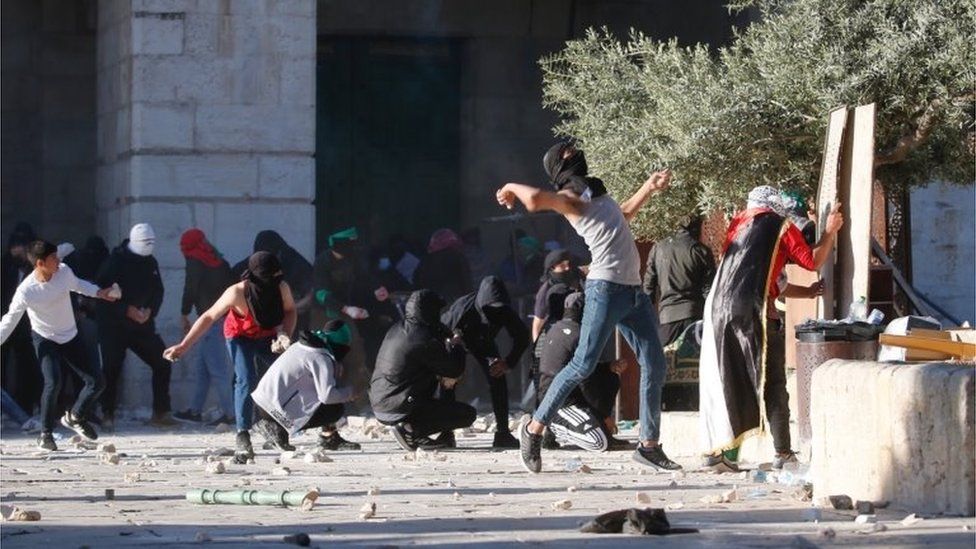
More than 150 Palestinians have been injured in clashes with Israeli police at the al-Aqsa Mosque compound in Jerusalem, Palestinian medics say.

Israeli police said officers entered the site after coming under attack with fireworks, stones and other objects.

Three Israeli police were hurt, they said.

The flashpoint site is deeply important to Muslims and Jews, who know it as the Temple Mount, and is at the heart of competing historical claims.

Israeli-Palestinian tensions have soared recently after deadly attacks in Israel and Palestinian deaths during subsequent Israeli raids in the occupied West Bank.

A 17-year-old Palestinian wounded on Thursday during an Israeli operation in the area of Jenin in the northern West Bank died on Friday, the Palestinian health ministry said.

More than 20 Palestinians, many identified as gunmen, have been killed since Israel stepped up sweeps in the West Bank, centring on Jenin district, after a Palestinian killed three Israelis in Tel Aviv last Thursday.

That attack was the fourth in Israel by Israeli Arabs and Palestinians in just over two weeks. The killings have left 12 Israelis and two Ukrainians dead, marking the deadliest period of attacks in Israel for more than 15 years and leaving the country on edge.

Israeli police said dozens of Palestinians, some carrying flags of the Palestinian militant group Hamas, marched on the compound at about 04:00 (01:00 GMT) then started throwing stones and fireworks.

The police said they waited until Muslim Friday prayers had ended before entering the site to disperse the rioters, who had started throwing stones towards the Western Wall below the compound, where Jewish worshippers were.


The police tweeted video showing fireworks exploding inside the al-Aqsa Mosque compound, and masked youths throwing stones towards officers.

Israel’s foreign ministry tweeted video showing masked Palestinians inside the Qibli mosque (also known as al-Aqsa Mosque) throwing objects with the sound of a bang followed by a spray of sparks.

The foreign ministry denied reports on social media that police had entered the mosque building itself during the violence. Hours later footage from inside the mosque building showed Israeli police and Palestinians there with the scene more calm.

Volatile time

The Palestinian foreign ministry condemned Israel’s actions at the compound, saying it held it “fully and directly responsible for this crime and its consequences”.

The clashes come after militant groups in Gaza called for “hundreds of thousands” of Palestinians to converge on the compound on Friday “to protect our nation and our mosque”.

Last year Hamas, which governs Gaza, fired rockets towards Jerusalem following clashes at the mosque compound after weeks of unrest in the city, triggering a devastating 11-day war with Israel.

The compound is known to Muslims as Haram al-Sharif (Noble Sanctuary) and is also considered, in its entirety, as al-Aqsa Mosque. It is the third holiest site in Islam.

The same ground is sacred to Jews as the location of two biblical temples, and is the holiest site in Judaism. The question of rights there is one of the most contentious issues of the Israel-Palestinian conflict and between Israel and the wider Muslim world.

The recent surge in violence comes at a particularly volatile time, with the start of the Jewish festival of Passover on Friday night coinciding with the Islamic holy month of Ramadan and the Christian festival of Easter.

Passover traditionally sees an increase in visits by religious Jews to the site, which are viewed by Palestinians as provocative.

The US has linked North Korea-backed hackers to a massive cryptocurrency heist worth $615m (£469m) from players of the popular online game Axie Infinity in March.

The game allows to earn crypto through game play or trading their avatars.

The hack is likely one of the biggest ever to hit the crypto world.

US officials say they linked the breach to a group called “Lazarus”, believed to be controlled by North Korea’s primary intelligence bureau.

“Through our investigations we were able to confirm Lazarus Group and APT38, cyber actors associated with [North Korea], are responsible for the theft,” the FBI said in a statement on Thursday.

Lazarus Group gained notoriety in 2014 after they were accused of hacking into Sony Pictures and publicly leaking confidential data.

The group demanded that Sony withdraw its then-upcoming film The Interview, a satirical comedy about a plot to assassinate North Korean leader Kim Jong-un.

A United Nations panel that monitors sanctions on North Korea has accused Pyongyang of using stolen funds to support its nuclear and ballistic missile programmes as a way to avoid international sanctions.

“The United States is aware that the DPRK has increasingly relied on illicit activities – including cybercrime – to generate revenue for its weapons of mass destruction and ballistic missile programs as it tries to evade robust US and UN sanctions,” Reuters quoted a Treasury Department spokesperson as saying.

2020 US military report says North Korea’s hacking programme dates back to at least the mid-1990s and has grown to a 6,000-strong cyber warfare unit, known as Bureau 121, which operates from several countries including Belarus, China, India, Malaysia and Russia.

Blockchain analysis company Chainalysis said North Korean hackers stole almost $400m (£291m) worth of digital assets in at least seven attacks on cryptocurrency platforms in 2021- one of most successful years on record for cyber-criminals in the closed-off east Asian state.

Doctors have called for action after a large anti-abortion protest was held close to a Glasgow hospital.

More than 100 activists from the 40 Days of Life group gathered on a road approaching the Queen Elizabeth University Hospital on Sunday.

In a letter to Women’s Health Minister Maree Todd, 76 consultants from the hospital accused the group of intimidation and harassment.

The BBC has contacted the 40 Days for Life group for comment.

The group, which was founded in Texas in 2004, has previously said its members were staging public prayers for a “culture of life” over the Christian period of Lent, and it was not their intention to upset people.

Buffer zones

The letter, written by the campaign group Back Off and signed by doctors working at the Queen Elizabeth University Hospital, says thousands of woman having an abortion in Scotland have been subject to protests over the years.

The doctors are backing calls for clinics to have protest-free buffer zones similar to those being introduced in Northern Ireland.


The letter reads: “As well as being our patients, these women are our sisters, daughters and colleagues. They deserve compassion and support.

“They should be spared the deplorable intimidation and harassment which they currently receive from protesters. This group seeks to restrict women’s access to healthcare.”

The letter called on the Scottish government to pass a Safe Access Zone Bill, banning activities intended to deter or prevent women from accessing abortion care within 150 metres of a clinic entrance.

Similar measures have been introduced in Spain, Australia and most recently in Northern Ireland.

Ealing Council in London was the first authority in the UK to use anti-social behaviour laws to create “buffer zones” outside abortion clinics – using legislation available in England.

Women ‘vulnerable and upset’

Lead signatory and consultant paediatric radiologist Dr Greg Irwin said he was seriously concerned about the protests taking place outside the Glasgow hospital, and their impact on the delivery of care.

He said: “We know first-hand how distressing this harassment is for our patients, which makes it infuriating for us as clinical staff to have to pass these groups day-in-day-out.

“These women may well be feeling vulnerable and upset. They should not have to put up with judgement or intimidation outside our hospital.

“How can we offer our patients the standard of care and support they deserve in this situation? Implementing buffer zones is essential to deal with this problem, both in Glasgow and throughout Scotland.”

Woman’s Health Minister Maree Todd said she looked forward to Green MSP Gillian Mackay bringing forward a members’ bill on buffer zones.

She said she had also convened a working group to consider the issue of protests outside abortion clinics.

She added: “The Scottish government is committed to women being able to access timely abortion without judgement. I condemn, in the strongest possible terms, any attempts to intimidate women as they choose to access abortion services.”

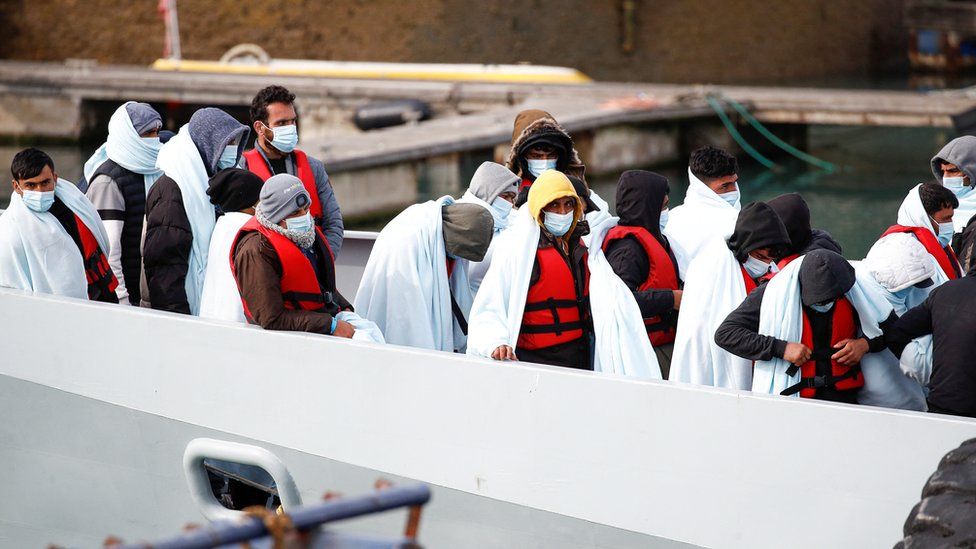
The first asylum seekers could be flown to Rwanda from the UK within weeks, the government has said.

It follows the announcement of a pilot that will see people sent to the east African country to claim asylum there.

That scheme will initially focus on single men crossing the Channel in boats or lorries from France.

The prime minister said it would “save countless lives” and break the business model of traffickers, but campaigners have called the plan “inhumane”.

Andrew Griffith MP – director of the No 10 policy unit – said the scheme would not require new legislation and could be implemented under “existing conventions”.

He told BBC Newsnight it could therefore be launched “in weeks or a small number of months”.

He added that, if the flow of illegal migration could be stopped, it would leave “lots of capacity for the very generous safe and legal routes” into the UK.


The Rwanda scheme is part of a broader strategy to reduce the number of people entering the UK by crossing the Channel in small boats.

The Royal Navy has taken operational command of the Channel from UK Border Force in an effort to detect every boat headed to the UK.

Last year, 28,526 people made the crossing, up from 8,404 in 2020.

Tony Smith, former director general of UK Border Force, said it could be weeks before it became clear if the “radical” new scheme was feasible.

He told BBC Breakfast the government was likely to face a legal challenge when people are put on aircraft bound for Rwanda.

“But then I’m not sure what the answer is to stopping the boats… because if we don’t do something, then more people are going to drown,” he said, adding the UK was potentially facing its biggest asylum intake ever.

In a speech on Thursday, Boris Johnson said the agreement with Rwanda would provide “safe and legal routes for asylum”.

“Economic migrants taking advantage of the asylum system will not get to stay in the UK, while those with genuine need will be properly protected,” he said.

He said the scheme would cover anyone who had arrived in the UK illegally since the start of this year.

No one we initially spoke to yesterday seemed to know about the Rwanda announcement – but it wasn’t long before word spread.

Soon a group of men was asking us lots of questions: “When will this happen? Why? If I come from Afghanistan will it still apply to me?”

Shafi, who told me he fled Afghanistan, said: “[Rwanda] is a lot worse place than Afghanistan, there is no future for us in Rwanda.”

But I didn’t meet anyone who said the government’s plans would prevent them from trying to cross the Channel, including Shafi, who said he had no choice.

Many of these men have already faced huge risks to get this far and are willing to risk their lives crossing the Channel on a small boat.

The risk of being sent to Rwanda, at this stage, seemed like just another thing to factor in down the line.

More than 160 charities and campaign groups have urged the government to scrap the plan, describing it in an open letter as “shamefully cruel”.

Refugee Council chief executive Enver Solomon said it would do little to deter desperate people and “only lead to more human suffering”.

Labour leader Sir Keir Starmer said Mr Johnson was trying to distract the country from the Partygate scandal with an “unworkable, unethical, and extortionate” scheme.

The Lib Dems said the government was “slamming the door” in the face of refugees, while the SNP’s Ian Blackford called the plan “absolutely chilling”.

Former Ukip and Brexit Party leader Nigel Farage said it was “not much more than a short-term solution”.

Questions are also being raised about the price of the scheme, with The Times reporting a cost of £20,000 to £30,000 for each migrant sent to Rwanda.

But justice and migration minister Tom Pursglove declined to give such a figure, telling BBC Breakfast it would depend on several factors.

He said the UK was spending nearly £5m a day on hotels, while the new scheme would initially cost £120m, with more money to be given later.

A similar programme in Australia cost an estimated £460m in 2021 but successfully resettled only 239 people – a cost of around £1.9m per person.

Concerns are being raised about the human rights record of Rwanda and its president, Paul Kagame.

Mr Pursglove said Rwanda was a progressive country which wanted to provide sanctuary and had made “huge strides forward” in the last three decades.

The minister said it was now one of only two countries in the world with a female-majority parliament and had an antidiscrimination law running “right through its constitution”.

However, just last year the UK government expressed concern at the United Nations about Rwanda’s “continued restrictions to civil and political rights and media freedom”.

Steve Valdez-Symonds, from Amnesty International UK, said sending people to the east-African nation was “the very height of irresponsibility”.

Yolande Makolo, a spokesperson for Rwanda’s government, told the BBC it is a “safe country, it’s developing rapidly, we care as much as every country about human rights”.

According to an agreement between the two governments, people sent to Rwanda will get accommodation and support. They will be free to come and go from their accommodation at all times.

US Secretary of State congratulates Shehbaz Sharif on becoming PM

US Secretary of State Antony Blinken congratulated Thursday Shehbaz Sharif on becoming the new Prime Minister of Pakistan.

On Sunday, Shehbaz took oath as the 23rd Prime Minister of Pakistan after he was elected by the joint opposition as the premier following the ouster of PTI chairman Imran Khan through the no-confidence motion.

PM Shehbaz had secured 174 votes against PTI’s Shah Mehmood Qureshi, who received no votes as his party boycotted the election and decided to resign from the National Assemblies.

In the wee hours of Thursday, US Secretary of State Antony Blinken congratulated Prime Minister Shahbaz Sharif and vowed to continue cooperation with the new Pakistan government.

“Pakistan has been an important partner on wide-ranging mutual interests for nearly 75 years and we value our relationship. The United States congratulates newly elected Pakistani Prime Minister Shehbaz Sharif and we look forward to continuing our long-standing cooperation with Pakistan’s government,” a statement from the US State Department read.

In his statement, Blinken further said, “The United States views a strong, prosperous, and democratic Pakistan as essential for the interests of both of our countries.”

Indian Prime Minister Narendra Modi, Turkish President Recep Tayyip Erdogan, and Russia’s President Vladimir Putin had also congratulated Prime Minister Shehbaz Sharif on becoming the 23rd premier of Pakistan.

Pentagon sees continuation of military-to-military ties with Pakistan

One day prior, the Pentagon said that the United States would continue its “healthy” military-to-military ties with Pakistan despite the change in the government and swearing-in of Shehbaz Sharif as the prime minister.

Pentagon Press Secretary John Kirby said the US recognises that it has shared interests with Pakistan with respect to security and stability. “We recognise that Pakistan plays a key role in the region.”

Ruling out any US military role in Pakistan, Kirby said that America recognises that Pakistan and its people are, themselves, victims of terrorist attacks “inside their own country”.

“I don’t foresee any US military role here. And I’m certainly not going to, again, wade into internal domestic politics in Pakistan,” he told a journalist at a press briefing.

NSC statement did not include the word ‘conspiracy’: DG ISPR

RAWALPINDI: Inter-Services Public Relations (ISPR) Director-General Major General Babar Iftikhar Thursday clarified that the word “conspiracy” was not used in the statement issued after a meeting of the National Security Committee (NSC) last month.

Addressing a press conference on the recently held 79th Formation Commanders’ Conference, the DG ISPR said he cannot discuss what was discussed in the meeting, but noted that the word “conspiracy” was not used.

He, however, said that the stance of the military leadership was conveyed in the meeting as well as the statement issued after it. “Whatever the meeting concluded is present in the statement.”

He said that Pakistan’s military agencies are working day and night against such plots and will not let them get successful.

Did ISI work on the cypher?

In response to a question, the DG ISPR said the “cyphers” are top-secret documents that are sent to the Foreign Office by Pakistani ambassadors from across the world.

“…we also receive some of these [cyphers] at the directorate of the Inter-Services Intelligence that is considered to be related to national security,” the military’s spokesperson said.

ISI had started its work when the cypher was received on March 7 or 8, and based on that, it gave its input to the NSC, the DG ISI said, but noted that cyphers come under the domain of the Foreign Office and only those related to the national security were shared with the military.

COAS Gen Bajwa does not want an extension: DG ISPR

“He [Gen Bajwa] will retire on time on November 29, 2022,” Major Gen Iftikhar said. The DG ISPR asked political parties and the public not to drag the Pakistan Army into politics.

He said any effort to create a rift between people and the armed forces is against national interest. The military’s spokesperson welcomed constructive criticism but pointed out that a “malicious campaign” is being run against the army and its leadership.

Major Gen Iftikhar said that the formation commanders expressed confidence in the steps taken for the country’s security, especially on account of international security and the Pakistan Army’s role in upholding the rule of law.

“All of them agreed that democracy, the strength of institutions and rule of law and all the institutions working within the constitutional limits is the guarantor of national interest,” he said.

Major Gen Iftikhar went on to say that the nation’s support is the core of the army’s strength and without it, the concept of national security is meaningless.

He said that that is why any intentional or unintentional effort that becomes the reason for creating a rift between the nation and armed forces is against the broader national interest.

‘Organised malicious propaganda’

Responding to another question, he reiterated that the army has nothing to do with politics. “There is no such thing as neutral.”

He said that the word neutral doesn’t appropriately describe the army’s stance. Instead, the word apolitical does it better.

“There is no interference by the army in any by-election or local bodies election.” He said that claims were made that “calls were received”, therefore, evidence should be brought to the fore if there is any.

“An organised malicious propaganda is being run against the Pakistan Army and its leadership. Even fake audio messages of different retired senior military officials are being created using a deep-fake technology to create a divide between the nation and armed forces.

“This is illegal, unethical and totally against national interest,” he said.

He then requested the public and political parties to not drag the army into politics.

“We want to stay out of it. Keep us out of this discourse,” he said, adding that this campaign didn’t get successful ever in the past nor will it in future.

BBC report on events leading to no-confidence motion

Responding to a question about the BBC report on events that took place at the Prime Minister’s House on the night of Imran Khan’s ouster from power, Maj Gen Iftikhar said that it is a “false story” and nothing but a pack of lies”.

“The army has nothing to do with the political process that took place a few days back in the country,” he iterated. “Do not drag the army into political matters.”

On the ongoing propaganda against the security forces, the DG ISPR said that the concerned departments of the government were taking action against it and maintained that they have also traced foreign linkages during the probe into the malicious campaign.

“We have collected data around the malicious campaign against institutions. The campaigns started locally and have expanded globally. We will share our analysis in the coming days.”

He also urged the people to avoid sharing such reports without confirming them.

‘There will never be martial law in Pakistan’

Maj Gen Iftikhar asked the political leadership to not malign the army chief and termed it unfortunate as the leader of an institution — that keeps working for Pakistan’s security — is defamed.

Moving on, the DG ISPR said the military had a lot on its plate already and was busy tackling the preexisting issues. “We cannot get involved in something else and dragging us into something else and blaming us for it is not justified.”

Maj Gen Iftikhar said the military would “absolutely not” impose martial law, noting that democracy was the only way forward for Pakistan — and the COAS has time and again maintained this.

“There will never be martial law in Pakistan […] as the country’s progress lies in democracy,” he said.

US ‘did not’ ask for military bases

While responding to the question about former prime minister Khan’s statement about providing military bases, Major General said that no such demand had been made on any level.

“However, the army would have the same stance of ‘absolutely not’ in case the military bases were asked for.”

The DG ISPR also categorically rejected the “rumours” about any political leadership meeting the army chief or his representative in Pakistan or outside.

Conservative MPs hold Johnson’s political fate in their hands

The embattled UK leader offered a “full apology” on Tuesday after being penalised for breaching Covid lockdown laws by attending a brief celebration of his birthday in 2020, but defied calls to resign.

However, the so-called “partygate” scandal shows little sign of abating.

Johnson faces further possible fines as police continue their probe into numerous rules-breaching events in Downing Street, while his ruling Conservatives look set to be punished in local elections next month.

And once police have concluded their investigation, a senior civil servant’s detailed report on the scandal will be published in full, which seems likely to increase the political pressure.

Once-mutinous Conservative MPs have in recent weeks rallied around their leader as the war in Ukraine and the growing cost-of-living crisis diverted attention away from the furore.

But commentators are questioning whether Johnson, 57, can maintain that support if he is repeatedly fined, his party fares poorly in the May 5 nationwide polls and further lurid details of parties emerge.

“A lot more fines and a lot more headlines might change the view of more voters and that in turn might change the mind of Conservative MPs if they do very badly in the elections,” Anand Menon, a politics professor at King’s College London, said.

“He’s clearly willing and able to brazen some things out in a way other, earlier prime ministers probably weren’t… I don’t think he’s superhuman, though.”

Johnson’s position was hanging by a thread earlier this year following a stream of controversies since last summer that culminated in “partygate” and an increasingly rebellious mood among his MPs.

Several Conservative lawmakers publicly withdrew their support for his leadership, with more reportedly writing letters of no-confidence in him to the party’s 1922 Committee.

If the grouping of backbenchers receives at least 54 such letters from Johnson’s 360 MPs, it would spark a confidence vote and his possible removal as leader.

“Boris Johnson will remain PM so long as he… retains the confidence of the Conservative group of MPs,” Robert Hazell, of University College London’s Constitution Unit, explained.

“It is they who will decide his fate.” Johnson is expected to face lawmakers when they return from their Easter break next week to explain why he repeatedly insisted in the House of Commons that no lockdown rules had been broken. Knowingly misleading parliament is a breach of government ministers’ code of conduct, which states they should resign as a result.

Hannah White, of the Institute for Government think tank, told the BBC that Johnson’s refusal to do so “puts us in a very difficult situation”.

“If it is now henceforth precedent that if you break the law as a minister, you don’t automatically have to resign, that’s… quite a difficult precedent to have been set,” she said.

White noted that Johnson was hoping voters’ anger over “partygate” had dissipated.

But Britons across the country made huge sacrifices during the pandemic, including not being able to attend loved one’s funerals. Opinion polls suggest that many remain furious at the behaviour in Downing Street.

India’s Infosys to exit Russia business

Sunak’s wife Akshata Murty holds a nearly $1 billion stake in the IT firm, which was founded by her father N. R. Narayana Murthy and established itself as a global outsourcing behemoth.

Critics have accused Sunak of financially benefiting from Infosys operations in Russia through his wife’s stake, even in the wake of stiff British sanctions against Moscow in response to the invasion of Ukraine.

“Given what is going on in the region, we have started to transition all of our work from our centres in Russia to our centres outside Russia,” chief executive and managing director Salil Parekh told a media briefing.

“We have no work with any Russian client today and we have no plans for any work with any Russian client going ahead,” he added.

Parekh said the company was “very concerned” about the situation in Ukraine and had committed $1 million in humanitarian aid.

But he declined to confirm if the company’s board has discussed recent criticism surrounding Murty’s stake in the company.

“We have no comments to make on any individual shareholder,” he said.

Infosys also announced quarterly earnings on Wednesday but fell short of analyst estimates despite strong growth on the back of sustained demand for digital services since the pandemic.

Net profit at the Bangalore-headquartered company rose 12 percent on-year to 56.86 billion rupees ($746 million) in the March quarter.

Revenues grew 22.7 percent to 322.76 billion rupees, and were up 19.7 percent on a full-year basis, the company’s fastest pace in 11 years.

Revenue growth was forecast at 13-15 percent for the current financial year, after the company recorded an order book of $9.5 billion for the year to March 31.

Infosys was at the forefront of an outsourcing boom that saw India become a back office to the world as Western firms subcontracted work to a skilled English-speaking workforce.

More than 60 percent of its revenue comes from North American markets.

The company’s board approved a final dividend of 16 rupees per share. Its stock closed 0.41 percent higher in Mumbai ahead of the earnings announcement.