
Thousands of weather enthusiasts are celebrating the rescue of a unique trove of UK rainfall data.

The volunteer army stepped up during the first Covid lockdown to transfer handwritten rain gauge totals on to computers.

This digitisation effort has given the UK Met Office a much clearer idea of when our islands were sodden or parched going back almost 200 years.

And that’s extremely useful for understanding climate change.

“What our 16,000 volunteers did in the first weeks of lockdown is going to really help us recognise long-term trends,” said the Rainfall Rescue project scientist and Reading University professor Ed Hawkins, who’s now analysed the new dataset.

“But almost more important is what we learn about extremes. We want to know about the big floods, the big droughts – how likely they are, how frequently they might happen. This will allow us to put modern extremes in their proper context,” he told BBC News.

The Rainfall Rescue project was launched in those first few days after the government issued its pandemic stay-at-home order in March 2020.

People were asked to while away their time by helping to recover a series of pre-1960 weather records known as the “10 Year Rainfall Sheets”.

These were 65,000 scanned pieces of paper in the UK Met Office archives that contained the scribbled monthly and decadal rainfall totals at thousands of weather stations across the country.

Converting all the data into a modern electronic form, able to be analysed by computer, was expected to take a long time, especially since the ornate handwriting on many sheets demanded human eyes do the job rather than an automated character-recognition system.

But the British public raced through the information in just 16 days.

“Across those 66,000 sheets, we had 5.4 million individual rainfall observations. They were keyed into the computer four times for quality control purposes. So that actually makes over 20 million individual observations being keyed,” explained Met Office archivist Dr Catherine Ross.

“Add in other data, such as the names of the places where the rainfall was recorded and who the observers were – we’re up to 100 million keystrokes.”

A vast effort, but one that will now pay big dividends.

Consider the task of planning for the consequences of too little or too much water.

How do we satisfy our need for water resources, for domestic supply and industrial use, and also ensure we have the necessary infrastructure to protect our homes from flooding?

The “weather memory” recovered from the decadal sheets will underpin future decision-making.

Some nuggets of information to emerge from the project include:

  • The UK now has a dense grid of rainfall readings stretching back to 1836. Previously, it was only to 1862
  • Before the project, just 19 rain gauges had informed the 1862 picture. Today, the number is more than 700
  • There is now a new driest year on record. This is 1855, with just 786.5mm of rain. It takes over from 1887
  • There is now higher confidence that the wettest month on record was October 1903, with 220mm of rainfall
  • The driest month for the UK is February 1932 with 9.5mm. Again, this record now has higher confidence
  • The project has better mapped big drought periods in the 1880s and 1890s; and in the 1840s and 1850s
Observations being taken at a rain gauge at Seathwaite in the Lake District on 14 July 1899

Much of the rescued data comes from a period prior to the Met Office’s foundation in 1854 – a lot of it gathered by keen amateurs.

These were individuals working in schools, in hospitals, at reservoirs and iron & steelworks, in lighthouses and at a chocolate factory.

There’s even royal data from Sandringham House. Its 10-year sheet from 1900-1909 has written on it: “For His Majesty the King.”

Social gatherings in London didn’t keep Lady Bayning from her weather observations

Consider one Lady Bayning. She recorded rainfall in Norfolk between 1835 and 1887, and would take her rain gauge with her to London for the social season.

A good number of sheets had incomplete information, perhaps a missing location for the rain gauge.

“We had to track down a Reverend Iliff from Sunderland,” recalled Jacqui Huntley, one of eight dedicated Rainfall Rescue volunteers (known as “The Collective”) who set themselves the task of validating the recovered data.

“The poor man had so much bad luck. First, his rain gauge was stolen. He then had his arm broken and could only take readings for a few months, and then they put a road through his garden. We had to find his precise street to know where exactly he had his rain gauge.”

Dr Mark McCarthy is head of the Met Office’s National Climate Information Centre. He said: “I’m always humbled to think about these individuals who were collecting weather records long before the Met Office existed or indeed any sort of systematic observing of our climate was under way.

“They saw fit to collect their records for whatever reason, and 150, 200 years later they’ve produced real gems for science.”

The Rainfall Rescue project was carried out on the Zooniverse citizen science platform. The analysis of its data is published in a paper published in Geoscience Data Journal.
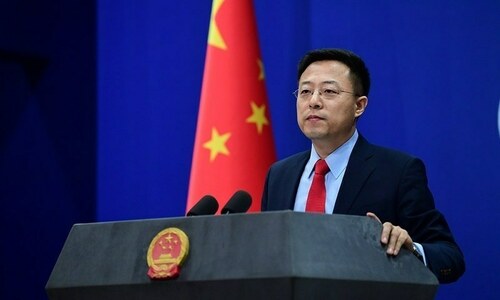
Chinese FM may seek revival of India border talks

Mr Wang arrived in Delhi from a short visit to Kabul, reports said, and a day after India’s Ministry of External Affairs slammed his comments at the Organisation of Islamic Cooperation (OIC) in Pakistan, where he referred to “sharing hopes for Kashmir”.

The Indian reaction however seems to have not deterred the visit amidst deep tensions between both countries on a large number of other issues, and in the backdrop of the raging conflict in Ukraine.

Mr Wang arrived officially unannounced and reports could only cite the Chinese embassy as confirming that he was indeed in Delhi. The visit has been kept under wraps evidently amid differences over the agenda and scheduling issues during a busy time in New Delhi.

Reports said a meeting with Prime Minister Narendra Modi is still “under discussion”. The Ministry of External Affairs made no formal comment on the visit thus far. Asked on Wednesday, China’s Foreign Ministry spokesperson Wang Wenbin told reporters, “I have no information to offer at this moment.”

The decision to host Mr Wang in Delhi is being seen as a departure from the government position thus far that normalcy in the relationship can only follow a complete de–escalation and disengagement at the LAC (Line of Actual Control).

India, according to local reports, has made it clear that the unresolved LAC crisis remains the most important issue on the agenda, to the exclusion of all others, with some hoping that the ministerial–level talks will jumpstart the disengagement process that has been stalled.

The 15th round of military-level talks between the two sides, on March 11, failed to achieve a breakthrough though both sides said the talks were positive.

Both sides have differed on the way forward in disengagement. India has said normalcy is not possible without peace on the LAC, while China has called for the border to be put in an ‘appropriate’ place and not dominate the relationship, a message that Mr Wang is likely to repeat in New Delhi. China is also expected to bring into focus the Russia-Nato standoff over Ukraine.

Hu Shisheng, Director of the Institute of South Asian Studies at the China Institutes of Contemporary International Relations, told The Hindu that it was “time for us two giants to do something out of the box”. “India’s stand is very similar with China’s. Both China and India don’t want to see a much weakened, isolated Russia, which means a more vulnerable regional and global order. We have stakes in a stable and not so isolated Russia, and we need to see what we two can do for ending this crisis”.

Nato will ‘respond’ if Russia uses chemical weapons in Ukraine

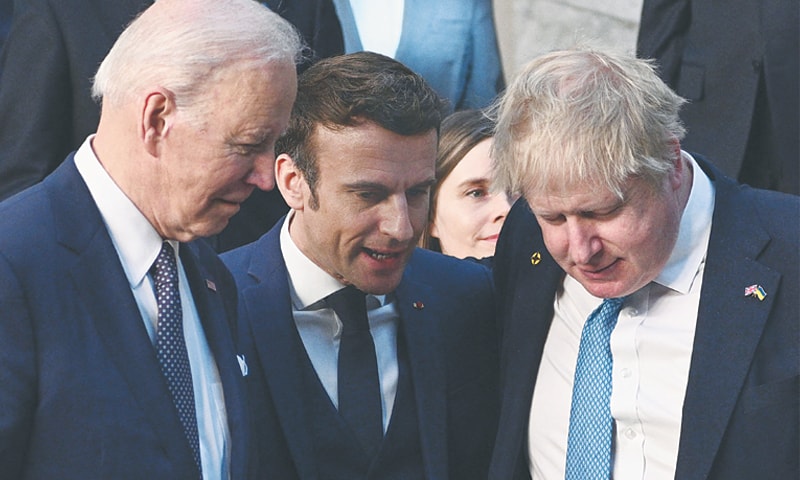
“We will respond if he uses it. The nature of the response would depend on the nature of the use,” Biden said after a Nato summit in Brussels.

The United States and allies upped the pressure on Russia over its invasion of Ukraine at summits in Brussels Thursday, warning Moscow its costs will keep rising the longer the war continues.

Washington unveiled fresh sanctions on Russian lawmakers and defence contractors, and outlined a push by the G7 to freeze Russia out of international organisations and to cut it off from its gold reserves.

US President Joe Biden was the central figure of the summits, which gathered, in succession, the 30 Nato member countries, the G7 powers and then the EU’s 27-nation bloc.

Ukraine President Volodymyr Zelensky also participated by videolink. He pleaded with NATO leaders to send his forces weapons “without restrictions”.

“The alliance can still prevent the deaths of Ukrainians from Russian strikes, from Russian occupation, by giving us all the weapons we need,” he said.

Kyiv, Moscow exchange prisoners

Russia and Ukraine have exchanged prisoners, Kyiv and Moscow confirmed on Thursday, in what Ukraine said was the first swap of soldiers since Moscow ordered troops into Ukraine one month ago.

“Following an order from President Volodymyr Zelensky, the first fully-fledged exchange of prisoners of war has taken place,” Ukrainian Vice Prime Minister Iryna Vereshchuk wrote on Facebook.

“In exchange for 10 captured occupiers we rescued 10 of our servicemen,” she said, referring to Russian and Ukrainian troops.

Vereshchuk also said that 11 Russian civilian seamen rescued near the Black Sea port city of Odessa were exchanged for 19 Ukrainian civilian ship crew members held by Moscow.

“I confirm the information regarding the exchange of 10 Russian servicemen detained on Ukrainian territory for 10 Ukrainian servicemen. And there was also an exchange of Russian civilian sailors for Ukrainian civilian sailors”, said Russian human rights ombudsman Tatiana Moskalkova.

Russia’s foreign ministry said earlier this week that Moscow had completed two prisoner swaps since it launched its invasion of Ukraine late last month.

Moskalkova said nine Russian prisoners were exchanged for the mayor of Melitopol, a city in southeastern Ukraine captured by the Russian army. Vereshchuk on Wednesday confirmed the Melitopol swap but denied any others had taken place.

UNGA demands end of war

The UN General Assembly on Thursday adopted by an overwhelming majority a new non-binding resolution that demands an “immediate” halt to Russia’s war in Ukraine.

At UN headquarters in New York, 140 countries voted in favour, 38 abstained and five voted against the measure, with applause ringing out afterwards.

The vote came after the adoption of a similar non-binding resolution on March 2 that demanded Russia immediately cease its use of force — a vote that was approved by 141 countries.

On Wednesday Ukraine put forward the new resolution, originally prepared by France and Mexico, at an emergency session of the General Assembly.

A competing text by South Africa, which never mentioned Russia by name, received only 50 votes for, 67 against and 36 abstentions, and was therefore not adopted.

The approved resolution specifically implicates Moscow and “demands an immediate cessation of the hostilities by the Russian Federation against Ukraine, in particular of any attacks against civilians and civilian objects.”

The same five countries voted against the resolution on Thursday and March 2 — Russia, Syria, North Korea, Belarus and Eritrea.

The US ambassador to the UN, Linda Thomas-Greenfield, welcomed the “strong majority” of member states that approved the resolution.

The countries made clear that “Russia bears sole responsibility for the grave humanitarian crisis and violence in Ukraine,” she said.

Madeleine Albright, former US secretary of state, dies at 84

WASHINGTON: Madeleine Albright, who fled the Nazis as a child in her native Czechoslovakia during World War Two but rose to become the first female US secretary of state and, in her later years, a pop culture feminist icon, died on Wednesday at the age of 84, her family said.

Albright was a tough-talking diplomat in an administration that hesitated to involve itself in the two biggest foreign policy crises of the 1990s — the genocides in Rwanda and Bosnia-Herzegovina.

“We are heartbroken to announce that Dr Madeleine K. Albright, the 64th US Secretary of State and the first woman to hold that position, passed away earlier today. The cause was cancer,” the family said on Twitter.

Albright, who had become the US ambassador to the United Nations in 1993, had pressed for a tougher line against the Serbs in Bosnia. But during President Bill Clinton’s first term, many of the administration’s top foreign policy experts vividly remembered how the United States became bogged down in Vietnam and were determined to not repeat that error in the Balkans.

The United States responded by working with Nato on airstrikes that forced an end to the war but only after it had been going on for three years. Albright’s experience as a refugee prompted her to push for the United States to be a superpower which used that clout. She wanted a “muscular internationalism,” said James O’Brien, a senior adviser to Albright during the Bosnian war. She once upset a Pentagon chief by asking why the military maintained more than 1 million men and women under arms if they never used them.

Early in the Clinton administration, while she unsuccessfully advocated for a quicker, stronger response in Bosnia, Albright backed a United Nations war crimes tribunal that eventually put the architects of that war, including Serbian President Slobodan Milosevic and Bosnian Serb leaders, in jail, O’Brien said.

India says US, Russia ties ‘stand on their own merit’ despite Ukraine war

Over the past decade, India has grown closer to the United States in the face of a resurgent China across the border, but Russia remains its biggest arms supplier.

India is the only major country close to the United States not to have condemned Russia’s invasion of Ukraine or imposed any sanctions on it.

“India has called for immediate cessation of hostilities and return to the path of diplomacy and dialogue with respect to the conflict in Ukraine,” junior foreign minister Meenakashi Lekhi told parliament.

“India has close and friendly relations with both the US and Russia,” she added. “They stand on their own merit.”

After a visit this week to New Delhi, a US diplomat said the country stood ready to help India with more supplies of military hardware and energy to reduce its reliance on Russia.

From rifles to rockets, about 60 per cent of India’s military supplies come from Russia, which analysts say are more cost effective than those from the United States.

The development comes two days after US President Joe Biden said that India was an exception among Washington’s allies with its “shaky” response to the Russian invasion of Ukraine.

Addressing a meeting of US business leaders in Washington Monday, Biden said there had been “a united front throughout Nato and in the Pacific”.

“The Quad is, with the possible exception of India being somewhat shaky on some of this, but Japan has been extremely strong – so has Australia – in terms of dealing with Putin’s aggression.”

He added that Putin was “counting on being able to split Nato” and instead, “Nato has never been stronger, more united, in its entire history than it is today.”

New Delhi, which historically has had close ties with Moscow, called for an end to the violence in Ukraine but has stopped short of condemning Russia’s invasion, abstaining in three votes at the United Nations.

World beginning to recognise Pakistan’s long-standing concern about India’s nuclear capabilities: NSA

In a series of tweets, he said participants at the summit “highlighted threats to the regional security” following a missile launch by India inside Pakistan, which the neighbouring country claimed had been “accidental”.

Yusuf said he hoped that the Islamabad Declaration would lead to an increase in global calls for New Delhi’s accountability and the launch of a transparent and joint investigation into the incident.

A day earlier, foreign dignitaries attending the 48th session of the Organisation of Islamic Cooperation’s Council of Foreign Ministers in Islamabad had expressed concern over an Indian missile striking a building in Pakistani territory on March 9 and put their weight behind Islamabad’s demand for a joint probe to accurately establish facts.

The incident first came to light after Inter-Services Public Relations (ISPR) Director General (DG) Major Gen Babar Iftikhar shared details on March 10 of what he described as a “high-speed flying object”, which was fired from Indian territory.

The DG ISPR had told media persons that the object, which was unarmed and probably a missile, had fallen in the Mian Channu area of Punjab’s Khanewal district.

Gen Iftikhar had called the airspace intrusion a “flagrant violation” and demanded an explanation from India.

Editorial: Mian Channu missile fiasco proves India’s safety systems are either weak or compromised

A day later, New Delhi had confirmed that a missile had been launched across the border into Pakistan, expressing regret over the incident and attributing the “accidental” fire to a “technical malfunction”.

Islamabad, however, has maintained that this explanation is “simplistic” and fails to answer multiple questions in relevance to the incident.

While India says an inquiry has been launched into the matter, Pakistan has repeatedly insisted on a joint probe to establish facts surrounding the incident.

In his tweets today, the national security adviser said that foreign ministers at the OIC moot, too, had underscored the “threat to the region’s security due to India’s recent missile launch into Pakistan”.

“Make no mistake, India has become an irresponsible state with nuclear weapons and the world is beginning to recognise Pakistan’s longstanding concern on this count,” he said, adding that naturally, countries “reportedly looking to buy Indian missiles and other equipment are having second thoughts”.

Yusuf emphasised that the “missile ‘misfire’ from India must remain an issue of international concern”.

“Indian attempts to brush it off cannot mask the gravity of the episode,” he said, dubbing the “lack of Indian response to Pakistan’s call for joint investigation and lack of Indian information about India’s so-called internal inquiry” a “wakeup call” for the international community.

“This reflects the mindset of the [Narendra] Modi regime and the character of the Indian state today,” he added.

Yusuf further said that Pakistan would “continue to sensitise international opinion on the dangers of India’s nuclear programme and will continue efforts to ensure strategic stability while defeating aggression at all costs”.

Chinese FM lands in Kabul on unannounced visit after OIC moot

Afghanistan’s acting Foreign Minister Amir Khan Muttaqi received Yi on arrival in Kabul along with a high-level delegation.

The visit comes a week before Beijing hosts a two-day conference, on March 30-31, of Afghanistan’s neighbours on how to assist the Taliban government. Pakistan and Iran had earlier hosted similar meetings of these neighbouring countries after the Taliban takeover.

During the day-long visit, Yi held separate meetings with acting Afghan Deputy Prime Minister Abdul Ghani Baradar and FM Muttaqi, the officials said, adding that bilateral matters, economic cooperation and Chinese investment in Afghanistan were discussed during the meetings.

‘Afghan territory will not be used against any country’

According to Inamullah Samangani, deputy spokesperson of the Afghan government, Baradar assured the Chinese foreign minister that Afghan territory would not be used against any country.

In the past, China has expressed concern about the presence of members of the East Turkestan Islamic Movement, which has been recognised as a terror outfit by the United Nations.

Samangani said both sides discussed the expansion of Afghanistan-China relations in several fields, including trade, transit and the economy.

In this regard, Samangani quoted Baradar as saying that Afghanistan and China had historical and friendly relations and that the two countries had stood together in difficult times.

“So it is very important that we strengthen and expand our relations,” Baradar said.

According to Samangani, Baradar told the Chinese foreign minister that Afghanistan was working to expand relations with all countries, especially China.

“And we thank China for its humanitarian assistance,” Baradar added.

‘China’s policy is not to interfere in Afghanistan’

Separately, Yi met Afghan Foreign Minister Amir Khan Muttaqi, according to a statement by Abdul Qahar Balkhi, spokesperson for the Afghan foreign ministry.

The two foreign ministers exchanged views on politics, the economy, transit and air corridor, the statement said, adding that the export of dry fruits from Afghanistan to China, educational scholarships, issuance of visas, Afghanistan’s role in the Belt and Road Initiative and other matters of significance were also discussed.

Yi called his visit to Afghanistan a step towards strengthening comprehensive relations and said Afghan-China should be further enhanced and expanded, the statement shared by Balkhi on Twitter read.

Yi told Muttaqi that China had adopted a policy of non-interference in Afghan internal affairs and objected to the imposition of political and economic sanctions on the war-torn country.

He praised the changes made by and the security measure taken by the new Afghan government and highlighted the humanitarian, development and other assistance provided to Afghanistan, the statement said.

It added that Yi also underlined the importance of the upcoming meeting of foreign ministers from Afghanistan’s neighbouring countries and expressed pleasure over Muttaqi’s intent to participate in the meeting.

For his part, Muttaqi said the Chinese foreign minister’s visit to Afghanistan gave a “positive message” to Afghans and the world and appreciated China for its support and assistance.

He also extended his condolences over the loss of lives in a recent plane crash in China.

The Afghan foreign minister told his Chinese counterpart that the new Taliban government had taken measures to ensure security in the country and that this “existing security” would pave the way for foreign investment, including that from China.

He also raised the prospect of China working with Afghans on economic growth and stability, which Muttaqi said his government would fully support.

“We are committed to [pursuing] sincere cooperation with the People’s Republic of China, and ensuring peace and security in Afghanistan means peace and stability in the region,” he said, stressing that the Afghan territory would not be used against any country.

Yi’s visit is the first by a senior Chinese leader after the Taliban took control of Kabul in August and comes right after he completed his three-day visit to Islamabad where he attended the Organisation of Islamic Cooperation’s foreign minister’s conference, which ended yesterday, as a special guest.

FM Yi last visited Kabul in June 2017 after a huge truck bomb killed and injured many. He had tried to ease tensions between Afghanistan and Pakistan after exchanges of fire in May 2017 had made relations tenuous.

The Chinese foreign minister’s visit might give a diplomatic boost to the Taliban government, which is yet to be recognised by any country.

China has been involved in the Afghan peace process after the US withdrew most of its troops in 2014. Taliban political representatives have paid several visits to China over the past few years.

Meeting with Russian delegation

The statement quoted Muttaqi as saying that Russia had utilised the opportunities created by the new Afghan government and extended assistance on several development projects.

“Muttaqi said the new government is focused on regional security and connectivity, and wants Afghanistan, as the heart of Asia, to play an important role in strengthening transit, trade, industry and economy … in the region,” the statement read.

The two sides called the meeting positive, expressing hope for an expedited and enduring series of practical cooperation, the statement added.

Chinese: Soon after his arrival, Wang Yi went into a meeting with Taliban Foreign Minister Amir Khan Muttaqi

KABUL: China’s Foreign Minister Wang Yi arrived in Kabul on Thursday, a week before Beijing hosts a meeting of Afghanistan’s neighbours on how to assist the Taliban government.

Even before the Taliban seized control of the country in August, Beijing had sought to maintain ties with the group as US-led foreign forces withdrew. However, like other countries, China has so far not officially recognised the Taliban government.

“Chinese Foreign Minister arrives in Kabul for talks with Islamic Emirate leaders,” tweeted Ahmad Yasir, a top Taliban official.

Soon after his arrival, he went into a meeting with Taliban Foreign Minister Amir Khan Muttaqi.

Wang arrived in Kabul from Islamabad where he attended a two-day meeting of the Organisation of Islamic Cooperation.

Since the exit of the former US-backed regime, Afghanistan has been further plunged into financial and humanitarian crises.

The United Nations and other aid agencies say more than half of the country’s 38 million people are facing hunger as the winter drags on.

China shares only a rugged 76-kilometre (47-mile) sliver of a border with Afghanistan, but Beijing has long feared its neighbour could become a staging point for minority Muslim Uyghur separatists from Xinjiang.

Beijing is due to host a meeting of Afghanistan’s neighbours next week that would allow the Taliban to present their own assessment of the latest situation in the country.

Media reports say that during the meeting Chinese and Pakistani officials are expected to discuss new economic projects in Afghanistan.

The Taliban’s takeover opens a strategic door to China laden with both risk and opportunity.

Maintaining stability after decades of war in Afghanistan is Beijing’s main consideration, as it seeks to secure its borders and strategic infrastructure investments in neighbouring Pakistan, home to the China-Pakistan Economic Corridor.

For Beijing, a stable and cooperative administration in Kabul would also pave the way for an expansion of its Belt and Road Initiative into Afghanistan and through the Central Asian republics, analysts say.

The Taliban have also repeatedly expressed their hope to develop good relations with China.

They consider China a crucial source of investment and economic support, either directly or via Pakistan.

During the chaotic takeover of power by the Taliban, Beijing kept its embassy open in Kabul even as it evacuated many citizens from the country.

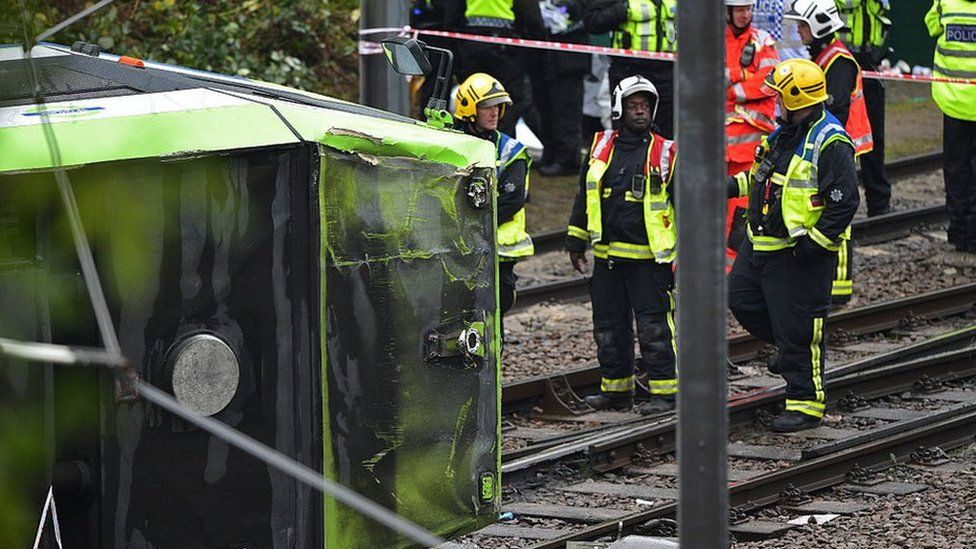
The driver of the Croydon tram that crashed killing seven people is being prosecuted by the railway watchdog.

Transport for London (TfL) and the operator, Tram Operations Limited (TOL), are also facing action for breaches of health and safety law, the Office for Road and Rail (ORR) says.

Alfred Dorris was driving the tram when it overturned in November 2016.

The crash was ruled accidental by an inquest jury and TfL paid compensation to victims’ families.

The tram was travelling more than three times faster than a speed limit when it tipped over and spun off the tracks near Sandilands tram stop in south London.

The crash resulted in the deaths of Dane Chinnery, 19, Philip Logan, 52, Philip Seary, 57, Dorota Rynkiewicz, 35, and Robert Huxley, 63, all from New Addington, and Mark Smith, 35, and Donald Collett, 62, from Croydon.

Sixty-one people were injured in the crash in darkness and heavy rain on 9 November 2016, 19 of them seriously.

Mr Dorris, then aged 42, is accused of “an alleged failure as an employee to take reasonable care of passengers whilst employed at work driving the tram”, the ORR said.

If found guilty, he could face a penalty of up to two years imprisonment and an unlimited fine. TfL and ToL could also face an unlimited financial penalty.

Transport for London admitted liability for the crash

Simon French, chief inspector of the Rail Accident Investigation Branch, previously said Mr Dorris may have slipped into a period of “microsleep” before the derailment.

During police interviews, Mr Dorris said he was “confused” but when asked if he had fallen asleep, he replied: “No, no, no.”

19 the Crown Prosecution Service (CPS) said he would not be charged with manslaughter due to a lack of evidence.

The CPS also said corporate manslaughter charges would not be brought against TfL or TOL.

‘Welcome news’

Ben Posford, partner at London law firm Osbornes Law, who represented five of the seven families at the inquest, described this as “welcome news” for the families “who have been fighting for years for justice”.

Marilyn Logan, 67, whose husband Philip Logan died in the crash, said she had been given “some kind of closure” from the news that prosecutions would be launched, according to her granddaughter Danielle Wynne.

Ms Wynne said: “It has been a horrible five years of feeling so let down, I feel like our families have been forgotten along the way.

“I will be in that courtroom, I will be there however long it takes every step of the way, it’s for them, it’s justice for our loved ones and I don’t want their lives to have been lost for nothing, because that’s what it feels like at the moment.”

Jean Smith, whose son Mark, 35, died in the crash told the BBC: “It has been a long time coming but it’s a step in the right direction.

“I’m happy that there will be accountability where it rightly belongs.”

For the families who lost loved ones this prosecution will be very welcome.

One family this morning told me they were “elated” there might be accountability over what happened because after a safety investigation and an inquest, they felt too many questions had not been answered.

Why had previous incidents of speeding not been reported? Why did it take so long to investigate a similar incident on the same corner just 10 days before?

That was only looked into after the Sandilands crash and it took so long the CCTV from the tram had automatically been wiped.

Why did drivers feel they could not report incidents?

And were fatigue management systems in place and adequate – considering most tram drivers in a survey said they were not?

The inquest heard that over five years, five drivers had been disciplined or sacked for falling asleep but it kept happening.

It seems now those questions will have to be answered in court.

Many of the families had lost faith in the system. It has taken six years to get here.

A spokesperson for TOL said it would “co-operate fully with the legal process”, adding: “Our thoughts remain with all those affected by the tragic incident at Sandilands in 2016.

“Our commitment to safety remains unwavering and is integral to everything we do.”

TfL said it would “consider those proceedings once we receive them” and “safety will always be our highest priority”.

A spokesperson for Mayor of London Sadiq Khan said he would “continue to work with TfL to introduce further measures to help ensure such an awful incident never happens again”.

ORR’s Chief Inspector of Railways Ian Prosser CBE said: “We’ve made a fair, independent and objective assessment about what happened, and it is now for the court to consider if any health and safety law has been breached.”

A hearing will take place in due course at Croydon Magistrates’ Court.

Recovery teams have found human remains at the crash site of the China Eastern jet which plunged into mountains this week, say state media.

Authorities have yet to declare the number of victims, but there has been no sign so far that any of the 132 people onboard had survived.

Investigators still do not know why the plane suddenly entered a near-vertical dive in southern China on Monday.

But the recovery of the intact cockpit voice recorder is hoped to yield clues.

The black box was found damaged on the outside but its internal records appeared to be fine, officials said. It has been sent to Beijing for its data to be analysed.

Search teams found the first of the crucial black boxes in difficult circumstances on Wednesday.

Heavy rains have flooded the steep and rugged landscape of the crash site in Wuzhou, making efforts harder for hundreds of rescuers and volunteers, who have so far also found scattered plane debris and the charred remains of personal belongings.

On Wednesday, dozens of family members of those onboard the flight began to arrive at the scene. Escorted by officials and supporters, many kept their heads bowed as they passed gathered media but some spoke briefly to journalists about their loss.

One man told Reuters his nephew had been a passenger on the flight. He and his son had driven five hours from neighbouring Shenzhen province in the hopes of being able to find their relative alive.

“I plan to stay until the matter is sorted and I can take his ashes back. But this depends on the work of authorities.

“I hope the country can thoroughly investigate this matter and find out whether it is the manufacturer’s fault or a maintenance problem.”

The crash of the passenger plane this week – which had been on a short domestic flight from Kunming to Guangzhou on the coast- has shocked and devastated China. The country has had a strong air safety record over the past three decades.

President Xi Jinping swiftly ordered a full-scale investigation into the tragedy, dispatching Vice Premier Liu He and hundreds of personnel to the rural hillside region in Guangxi province.

But none of the knowledge released so far about the flight indicates any technical problems or anything amiss with environmental factors.

At a press conference on Wednesday, aviation officials said there hadn’t been any weather or other hazards endured by the flight on its route path. China Eastern said the Boeing 737-800 plane, less than seven years old, had also passed all pre-flight checks.

There had been three pilots, China Eastern officials disclosed. The captain had 6,709 hours flying experience, and the first and second officers had 31,769 hours and 556 hours respectively.

“From what we know, the performance of the three pilots had been good and their family life relatively harmonious,” the airline representative said.

Air traffic control had also been in regular communication with the pilots on board right until it entered its near nose-dive descent from a cruising height.

Flight tracking data showed the plane plummeted thousands of metres in minutes.

According to FlightRadar24, the plane was cruising at an altitude of 29,100ft (about 9,000m), but two minutes and 15 seconds later it was recorded at 9,075ft. The last sourced information on the flight showed it ended at 14:22 local time, at an altitude of 3,225ft.

Investigators are expected to look at several possible causes, including deliberate action, pilot error, or technical issues such as a structural failure or mid-air collision.

China investigators have also invited US aviation experts to join in the investigation – as the Boeing plane was manufactured in the US. The invite has been welcomed by the Biden administration.

But US officials said they weren’t sure if they would send over a team yet due to China’s strict Covid quarantine requirements for incoming visitors.

In the meantime, China’s aviation officials are carrying out a two-week safety audit of all planes while China Eastern and its two subsidiaries have grounded its fleet of Boeing 737-800s as an emergency precaution.