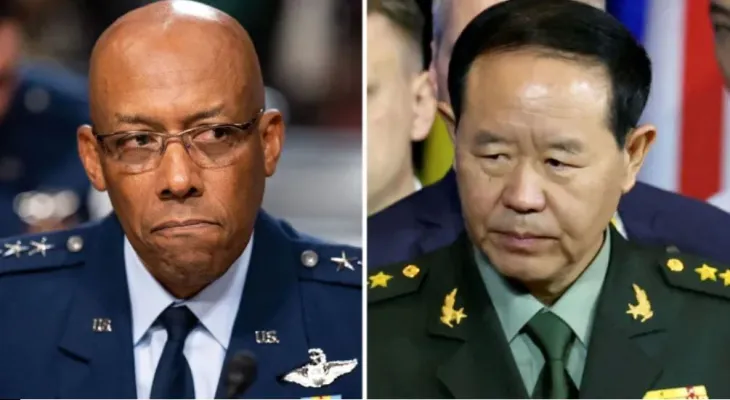
US, China defense chiefs hold first talks in nearly 18 months

The United States has been working to strengthen defence cooperation with its allies in the Asia-Pacific region to counter China’s growing influence, but also wants to maintain lines of communication with Beijing to prevent tensions from spiraling out of control.

“The two officials discussed US-PRC defence relations and regional and global security issues,” the Pentagon said in a statement, referring to the People’s Republic of China.

“Secretary Austin emphasised the importance of continuing to open lines of military-to-military communication between the United States and the PRC” following talks between the two sides in recent months, the statement said.

Austin also “reiterated that the United States will continue to fly, sail, and operate — safely and responsibly — wherever international law allows,” and “underscored the importance of respect for high seas freedom of navigation guaranteed under international law, especially in the South China Sea”.

Austin’s last significant interaction with a Chinese counterpart occurred in November 2022 in Cambodia.

Security Council to vote Thursday on Palestinian state UN membership

The United Nations Security Council will vote Thursday on the Palestinians’ application to become a full UN member state, several diplomatic sources have told AFP.

Amid Israel’s military offensive in Gaza, the Palestinians in early April revived a membership application first made to the world body in 2011, though the veto-wielding United States has repeatedly expressed opposition to the proposal.

The General Assembly can admit a new member state with a two-thirds majority vote, but only after the Security Council gives its recommendation.

Regional bloc the Arab Group issued a statement Tuesday affirming its “unwavering support” for the Palestinians’ application.

“Membership in the United Nations is a crucial step in the right direction towards a just and lasting resolution of the Palestinian question in line with international law and relevant UN resolutions,” the statement said.

Algeria, a non-permanent Security Council member, has drafted the resolution that “recommends” to the General Assembly “the State of Palestine be admitted to membership of the United Nations.”

The vote on Thursday will coincide with a Security Council meeting scheduled several weeks ago to discuss the situation in Gaza, which ministers from several Arab countries are expected to attend.

The Palestinians — who have had observer status at the United Nations since 2012 — have lobbied for years to gain full membership.

“We are seeking admission. That is our natural and legal right,” Riyad Mansour, the Palestinian ambassador to the United Nations, said in April.

According to the Palestinian side, 137 of the 193 UN member states already recognize a Palestinian state, raising hope that their request would be supported in the General Assembly.

But the Palestinian push for UN membership faces a major hurdle, as the United States — Israel’s closest ally — could use its veto power to block the Security Council recommendation.

“We call on all members of the Security Council to vote in favor of the draft resolution… At the very least, we implore Council members not to obstruct this critical initiative,” the Arab Group said Tuesday.

The United States has voiced its opposition to full Palestinian membership, saying it backed statehood but only after negotiations with Israel, while pointing to US laws that would require cuts to UN funding if such a move took place without a bilateral agreement.

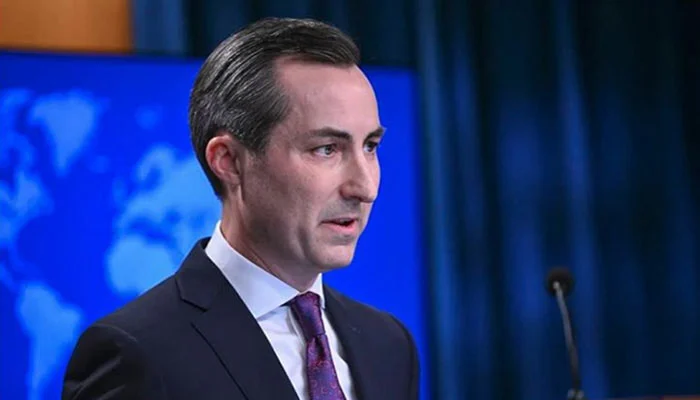
“That is something that should be done through direct negotiations through the parties, something we are pursuing at this time, and not at the United Nations,” State Department spokesman Matthew Miller told reporters in April.

Israel’s UN Ambassador Gilad Erdan has strongly opposed the Palestinian membership bid, saying in mid-April the considerations were “already a victory for genocidal terror.”

“The Security Council is deliberating granting the perpetrators and supporters of October 7 full membership status in the UN,” Erdan said.

Hamas launched an unprecedented attack against Israel on October 7, resulting in the deaths of 1,170 people in Israel, mostly civilians, according to Israeli figures.

Israel’s retaliatory offensive has killed over 33,000 people in Gaza, mostly women and children, according to the health ministry in the Hamas-run territory.

Middle East on edge after Israel vows ‘response’ to Iran

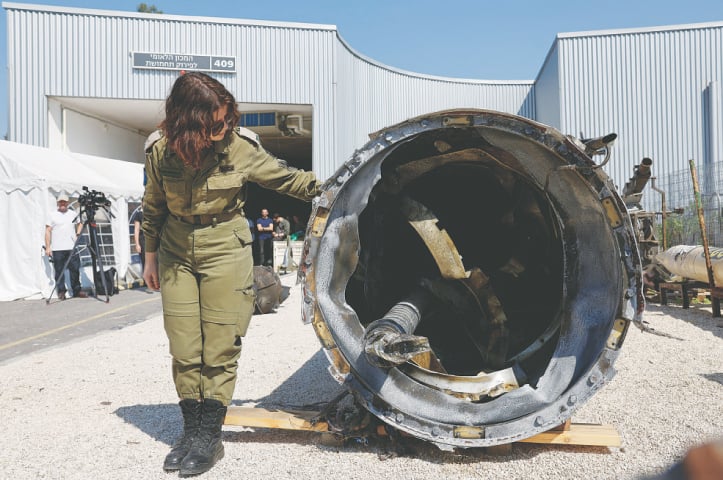
JERUSALEM: Israel and Iran traded threats on Tuesday after Tehran’s first-ever direct attack on its arch-foe sharply heightened regional tensions as the Gaza war ground on with no truce in sight.

Israeli military spokesman Rear Admiral Daniel Hagari said Iran would not get off “scot-free” after Iran launched a barrage of over 300 missiles, drones and rockets at Israel at the weekend.

“We cannot stand still from this kind of aggression,” Hag­ari said, a day after Israel’s mil­itary chief vowed there would be “a response” to Iran’s offensive.

Iran said its attack was an act of self-defence following a deadly Israeli air strike on its consulate in Syria and that it would consider the matter “concluded” unless Israel retaliated.

Putin, Erdogan join list of world leaders calling for restraint; US warns of further sanctions on Tehran

Iran’s President Ebrahim Raisi warned that “the slightest action against Iran’s interests will definitely be met with a severe, extensive and painful response”.

Israel weighs options

Israel was weighing its options after the Iranian drone and missile onslaught, which caused little damage as Israeli defences intercepted most projectiles, helped by US, British and French forces, as well as regional allies.

It remained unclear when Israel might strike and whe­ther it would target Iran dir­e­ctly or attack its interests or allies abroad, including in Leb­anon, Syria, Iraq and Yemen.

Israel made its first official comment on Monday on the strike that levelled a five-storey Iranian consulate building on April 1, killing seven Ira­nian Revolutionary Guards, including two generals.

“These were people who engaged in terrorism against the State of Israel,” Hagari said.

Calls for restraint

Meanwhile, world leaders have urged restraint and de-escalation.

During a phone call with Raisi, Russian President Vladimir Putin called on both sides to “show reasonable restraint and prevent a new round of confrontation,” the Kremlin said in a readout of the call.

He warned that further escalation in the Middle East could have “catastrophic consequences”.

Turkish President Tayyip Erdogan said on Tuesday that Israel’s Netanyahu and the Israeli leadership are solely responsible for the recent escalation of tensions.

“Israel is trying to provoke a regional conflict, and its attack on Iran’s embassy in Damascus was the last drop,” he told a press conference in Ankara after a cabinet meeting.

He added that new regional conflicts were possible as long as the “cruelty and genocide” in Gaza continued, and called on all parties to act with common sense.

In a statement, Portugal’s foreign ministry also urged de-escalation in the Middle East.

A day ago, US President Joe Biden stressed that “the United States is committed to Israel’s security” and wants to prevent the conflict from spreading.

Washington, Israel’s top ally and arms supplier, has made clear it will not join Israel in any attack on their common adversary Iran, a senior US official said.

More sanctions

Israeli Foreign Minister Israel Katz called on 32 countries to impose sanctions on Iran’s Islamic Revolutionary Guard Corps and their missile programme.

German Foreign Minister Annalena Baerbock, who will head to Israel on Tuesday, urged the European Union to impose sanctions on Iranian drone technology.

“I campaigned in late autumn together with France and other partners within the European Union for this drone sanctions regime to be extended further,” she said, adding she also wanted it to cover “other missile technologies in Iran’s arsenal”.

“I hope that we can now finally take this step together.”

Also on Tuesday, US Treasury Secretary Janet Yellen warned of further sanctions targeting Iran, saying she expects Washington will take added action “in the coming days.”

“I fully expect that we will take additional sanctions action against Iran in the coming days,” she said as this week’s spring meetings of the International Monetary Fund and World Bank began in Washington.

The Treasury, Ms Yellen said, will not hesitate to work with US allies to “use our sanctions authority to continue disrupting the Iranian regime’s malign and destabilizing activity.”

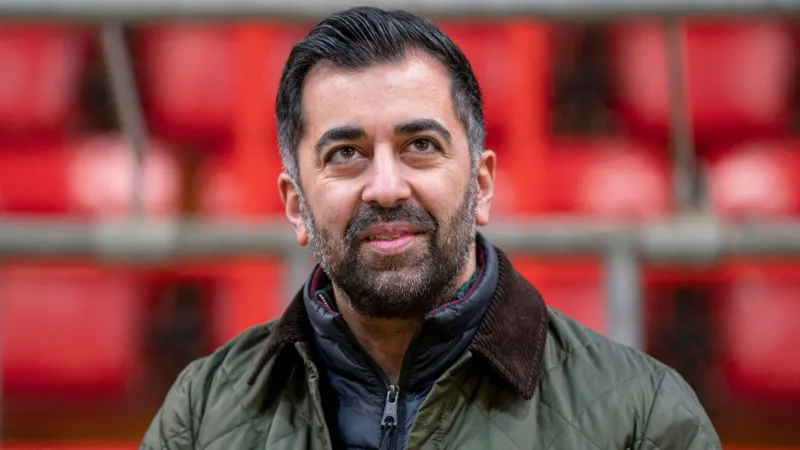
Scotland’s first minister has said transgender women will be protected under any new misogyny laws.

Humza Yousaf insisted that “anyone affected” by misogyny would be covered, whatever their biological sex.

He also insisted the Scottish government would not spend an “inordinate” amount of time deciding whether to follow the recommendations of the recent Cass Review into gender care.

The Scottish government wants to introduce a bill to tackle misogyny before the end of the current parliamentary term in 2026, following a review carried out by the human rights lawyer Baroness Helena Kennedy KC.

Women were not included in the recent Hate Crime and Public Order (Scotland) Act 2021 that was introduced on 1 April – a decision that Mr Yousaf said had followed discussions with a number of women’s groups.

When asked whether fresh legislation would cover transgender women, Mr Yousaf said that it would, as whoever was directing misogynistic abuse would be unaware if a woman was trans or not.

Separate law

He told the BBC’s Good Morning Scotland programme: “Women and girls will be protected, and trans women will be protected as well, as they will often be the ones who suffer threats of rape or threats of disfigurement for example.

“When a trans woman is walking down the street and a threat of rape is made against them, the man making the threat doesn’t know if they are a trans woman or a cis woman. They will make that threat because the perception of that person [is] as a woman.”

The first minister added that the bill would be proceeding with “urgency and pace”, due to the number of women who have “raised concerns” over sex not being covered within the recent hate crime bill.

Baroness Kennedy’s report had recommended the creation of a separate law to tackle “the spectrum of misogynistic conduct”, rather than including it in the hate crime law.

A government spokesperson previously said that a misogyny bill would “create a new focus on protecting women and girls to address criminal behaviour motivated purely by misogyny”.

The Cass review was released last week

Figures released by Police Scotland on Tuesday showed that the number of online hate reports dropped by almost 75% in the second week since the introduction of the new hate crime legislation.

There were 1,832 online hate reports received between 8 and 14 April, down from 7,152 the previous week.

The vast majority of reports received were anonymous, and resulted in no action being taken.

There were 213 hate crimes recorded in the same period, down from 240 the previous week, with officers also recording 25 non-crime hate incidents, five fewer than between the previous week.

During a ministerial statement in parliament on Tuesday, Justice Secretary Angela Constance said the government could have “done more” to inform people about the new law.

She said: “I accept that the Scottish government could have done more to inform people about this act as well as our wider approach to tackling hate crime and prejudice.

“However, let’s be clear even if the government had produced more information bad faith actors who are intent on spreading misinformation would have done so regardless.”

‘Not enough evidence’

Mr Yousaf also said that “all aspects” of the recent review by Dr Hilary Cass into NHS England’s gender identity services for under-18s would be considered by the Scottish government.

The review was released last week and found the evidence base for medical interventions in gender care for young people had been “remarkably weak” and that children had been let down by a “toxic” public discourse around gender.

Mr Yousaf did not rule out halting the routine prescription of puberty blockers – a move the NHS in England has already made after the Cass review stated there was “not enough evidence” for them.

He said: “Every recommendation that Dr Cass makes will be considered as part of that consideration of the entire report including the recommendations that she makes in relation to puberty blockers, and that is one element of the recommendations that Dr Cass makes.

“There’s a number of recommendations – all of them will be given consideration.”

However, the first minister said that the prescription of treatments should be one made by clinicians rather than politicians.

The Scottish government has come under pressure to scrap the use of puberty blockers, with SNP MP Joanna Cherry, Alba Party MSP Ash Regan and Scottish Conservative deputy leader Meghan Gallacher calling for a review.

Dr Cass said last week that “we don’t have good evidence” that puberty blockers are safe to use to “arrest puberty”, adding that what started out as a clinical trial had been expanded to a wider group of young people before the results of that trial were available.

She said: “It is unusual for us to give a potentially life-changing treatment to young people and not know what happens to them in adulthood, and that’s been a particular problem that we haven’t had the follow-up into adulthood to know what the results of this are.”

The Tavistock Clinic in London – which offered gender services – was closed this year, but the first minister said Scotland’s hub at the Sandyford Clinic in Glasgow would not suffer the same fate.

He said: “Sandyford provides, we know, some exceptional health care to some of those who are the most marginalised and vulnerable. Not just young people, but right across the spectrum.”

He added that the Scottish government would look into the possibility of opening more regional hubs and said that ministers “won’t be taking an inordinate amount of time to consider” the Cass review’s findings.

The Scottish Conservatives said the first minister was “stalling for time and passing the buck to clinicians”.

The party’s deputy leader Meghan Gallacher said: “It’s not good enough to say he and health boards need more time to look at Dr Cass’s report, and it’s an abdication of leadership not to pause the prescribing of puberty blockers in the interim.”

The Alba Party MSP Ash Regan said the first minister’s reference to cis women was “offensive”.

She added “Women are not a subclass of our sex. Trans-identifying people are protected under the Hate Crime and Public Order Act 2021, yet despite crime against women being a scourge in our society, women are not.”

The author JK Rowling, who has been an outspoken critic of the Hate Crime Act, said the first minister’s remarks showed “absolute contempt” for women.

On X, formerly known as Twitter, she said: “Women were excluded from his nonsensical hate crime law, now he introduces a ‘misogyny law’ designed to also protect men.”

Yusuf Raza Gilani, Saidal Khan Nasir elected Senate chairman, deputy unopposed

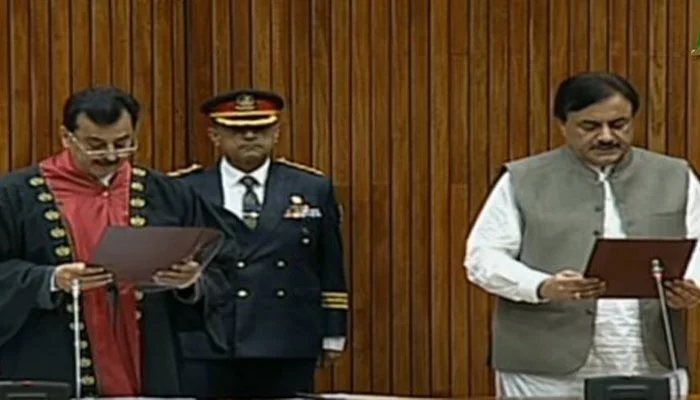
ISLAMABAD: Pakistan Peoples Party (PPP) leader Syed Yusuf Raza Gilani and Pakistan Muslim League-Nawaz’s (PML-N) Saidal Nasir Khan Tuesday were elected as the Senate chairman and deputy chairman “unopposed” amid protests by the Pakistan Tehreek-e-Insaf (PTI).

No candidate submitted nomination papers against them for the coveted Senate posts.

Earlier today, 41 newly-elected senators took oath as PTI members protests on the floor of the house, terming the process of election of chairman and deputy chairman as “unconstitutional” due to an “incomplete house”.

President Asif Ali Zardari had summoned the house to meet for its inaugural session today for the oath-taking of newly-elected members and the election of the Senate chairman and deputy chairman.

When the session began today with Senator Ishaq Dar as the presiding officer, the PTI members launched the protest and demanded adjournment of the house till the election of senators from Khyber Pakhtunkhwa.

Speaking on the floor of the house, PTI leader Senator Ali Zafar demanded the Senate election be deferred as Article 59 of the Constitution requires 96 members to be present in the house for the election of its chairman and that the “process would be unconstitutional till the house is complete”.

“We will not accept this illegal election till the senators from Khyber Pakhtunkhwa are duly elected and are present here,” he insisted.

Lamenting that Senate polls in Punjab were held excluding the reserved seats, the PTI leader said that the election of the house’s chairman and deputy chairman are being made “controversial”.

“We wanted to participate in the election [of chairman and deputy chairman], however, we would not be part of it where it is ultra vires of the Constitution,” Senator Zafar added.

Blaming the Election Commission of Pakistan (ECP) for making controversial decisions, he called for the Senate session to be adjourned till senators from KP are elected.

In response to the objections raised by the opposition members, Federal Law Minister Azam Nazeem Tarar stressed that Article 60 of the Constitution provisions elections for the posts of the Senate chairman and deputy chairman as soon as the key posts are vacated.

Stressing that the term “duly constituted” was only used as the Senate simply didn’t exist in our legislative system before the 1973 Constitution. However, he added, that the framers of the Constitution didn’t include the said term with the election of the chairman.

“The word ‘duly constituted’ is also not used in Article 53, which pertains to the constitution of National Assembly as it was already in existence when the [1973] Constitution was formulated,” Tarar said.

Lamenting the reasons behind the postponement of Senate polls in the Khyber Pakhtunkhwa (KP), the law minister said that the elections weren’t postponed due to any calamity.

He added that it was the KP government’s failure as it didn’t abide by the Peshawar High Court’s (PHC) orders wherein it had directed to ensure administering of the oath to MPAs elected on reserved seats in the province.

“Had it been a case of force majeure, where the senate polls weren’t held [in KP] due to any natural disaster, this House would’ve decided whether to wait for them [senators elected from the province],” Tarar added.

Recalling the election of Senate chairman and deputy chairman in 2015 where Raza Rabbani and Abdul Ghafoor Haideri were elected to the said posts, respectively, the law minister said that even then an objection was raised against the election owing to the absence of four senators hailing from the then Federally Administered Tribal Areas (FATA).

However, the House proceeded nevertheless as Article 67 states that the absence of any member(s) doesn’t invalidate the proceedings of the Senate, Tarar added.

“The House is complete for Constitutional purposes,” he concluded.

He also blamed the PTI for creating obstacles in the election of senators from KP after which polls were postponed by the ECP.

Following legal explanation by the minister, Ishaq Dar gave his ruling on the matter.

“In the light of explanation given by the worth law minister, with reference to the provisions of the Constitution of Islamic Republic of Pakistan, the objection is overruled.”

After taking oath as the Senate chairman, Gilani gave a speech, saying, “It’s a unique honour to be elected chairman of this august house. I am thankful to Allah Almighty for having been given this opportunity. I am also thankful to my party, my leadership and allies.”

He said the senators presented the unity of the federation, adding that Senate represented the diversity and strength of the nation.

Recounting and sobbing over “judicial murder” of former prime minister Zulfikar Ali Bhutto, the Senate chairman said the Supreme Court of Pakistan admitted its historical injustice.

“54 years ago in April 1970, Pakistan passed its constitution, which gave birth to the Senate. 45 years ago in April 1979, the creator of the constitution, Bhutto was murdered. Last month, Supreme Court acknowledged the judicial murder and admitted its historical injustice,” he said.


He recalled that Bhutto tackled the crisis situation in the country after becoming the prime minister.

“Real attempt was made to empower the provinces and acknowledged and cherished each province’s history, culture and language. Rights were granted to religious minorities, women and poor. His constitution gave a roadmap to fight and flourish,” he said.

Gilani said in the present moment, the crisis was deep. Pakistan faced an assault of those who sought to divide and polarise us, those who sought to incite hatred, those who sought to replace norms of stability and abuse democracy.

“On the many crisis we confront, the most dangerous is an attempt to sow hatred amongst us, toxic polarisation and incitement of violence,” the Senate chairman said.

Gilani said his ambition was to build bridges, enable dialogue and provide space for disagreements within the parliamentary norms for progress of the country.

“When I became the PM, it was time of great fear and apprehension with systematic dismantling of democratic institution, a global economic recession and a divided country but we steadied the ship.

“InshaAllah, we will succeed in returning the senate to its real glory as a powerful legislative house. By the grace of Allah, I have held high regard whether in the PM house or in the prison,” he said.

The former PM said he would not compromise on the dignity of the house or its members.

“May Allah help us all. Thank you once again. Pakistan Zindabad,” he said drawing curtain on his speech.


US urges Pakistan, India to resolve issues through dialogue

WASHINGTON: Amid rising tensions between Pakistan and India, the United States on Monday urged both countries to avoid escalation and resolve issues through dialogue.

“We don’t have any comment on the underlying allegations, but of course, while we’re not going to get in the middle of this situation, we encourage both sides to avoid escalation and find a resolution through dialogue,” said State Department’s spokesperson Matthew Miller, responding to a question about claims that India had ordered killings in Pakistan.

Recently, Indian Defence Minister Rajnath Singh, in an interview with broadcaster CNN News18, said India will enter Pakistan to kill anyone who escapes over the border after trying to carry out terrorist activities in the country.

The Indian defence minister admitted to the Modi-led government’s policy of orchestrating killings in Pakistan during a televised interview.

The minister’s comments came a day after the British publication, The Guardian, revealed in a report that the Indian government had killed about 20 people in Pakistan since 2020 as part of a broader plan to eliminate terrorists residing on foreign soil.

The report in the UK paper came months after Canada and the United States accused India of killing or attempting to kill people in their countries.

In the report, the UK daily newspaper claimed that the New Delhi government “assassinated individuals in Pakistan”. The publication said that New Delhi has adopted a policy of targeting those it considers hostile to India on foreign soil.

Following the defence minister’s claims, Foreign Office denounced his remarks, terming them as “hyper-nationalistic sentiments” fuelled for “electoral gains”.

The FO said: “India’s ruling dispensation habitually resorts to hateful rhetoric to fuel hyper-nationalistic sentiments, unapologetically exploiting such discourse for electoral gains.”

“India’s assertion of its preparedness to extra-judicially execute more civilians, arbitrarily pronounced as ‘terrorists’, inside Pakistan constitutes a clear admission of culpability. It is imperative for the international community to hold India accountable for its heinous and illegal actions,” the statement added.

Israel rejects Turkey request to airdrop aid to Gaza: minister

Turkey on Monday said Israel had blocked its attempt to airdrop aid to Gaza, and vowed to take a series of new measures against the country.

The Turkish airforce wanted to drop part of a humanitarian aid operation through its cargo planes.

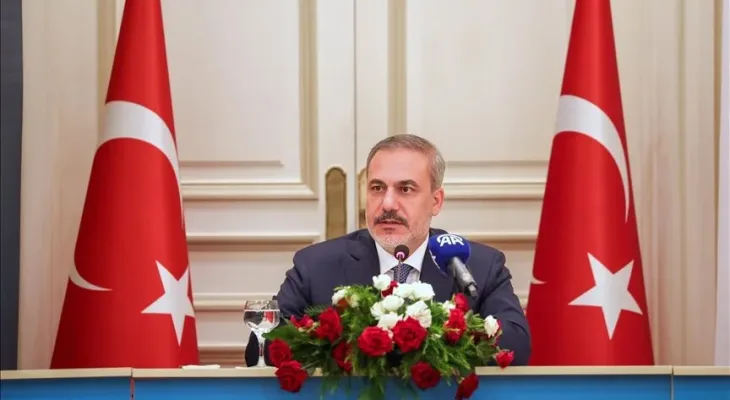
“Today we learned that our request… was rejected by Israel. There is no excuse for Israel to block our attempt to airlift aid to starving Gazans,” Foreign Minister Hakan Fidan said.

“We decided to take a series of new measures against Israel,” he said, adding that they would be publicised by the relevant institutions.

Fidan said Ankara’s reprisals approved by President Recep Tayyip Erdogan, a vocal advocate of the Palestinian cause, would be implemented “step by step” and “without any delay”.

“These measures will be in place until Israel declares a ceasefire and allows humanitarian aid to reach Gaza uninterruptedly,” the minister said.

Erdogan has become one of the harshest critics of Israel’s war in Gaza.

He has branded Israel a “terrorist state” and compared Prime Minister Benjamin Netanyahu to Adolf Hitler while calling Hamas — considered a terrorist group by Israel, the United States and the European Union — “a liberation group”.

Hopes dampened for speedy Gaza ceasefire agreement

GAZA STRIP: Israel and Hamas both dampened hopes on Monday of a speedy breakthrough in Cairo talks towards a Gaza truce and hostage release deal after Egyptian state-linked media had reported “significant progress”.

As the Gaza war raged on into a seventh month, Israel is under growing international pressure to agree to a ceasefire, including from its top ally and arms supplier the United States.

Prime Minister Benjamin Netanyahu insisted on Sunday — half a year after the October 7 attack — that Israel is “one step away from victory” and has vowed to defeat remaining Hamas fighters in Gaza’s far-southern Rafah city.

On the same day, however, the army also announced it had pulled its forces out of southern Gaza, although military commanders stressed the withdrawal was tactical and did not signal an end to the war.

Rafah operations

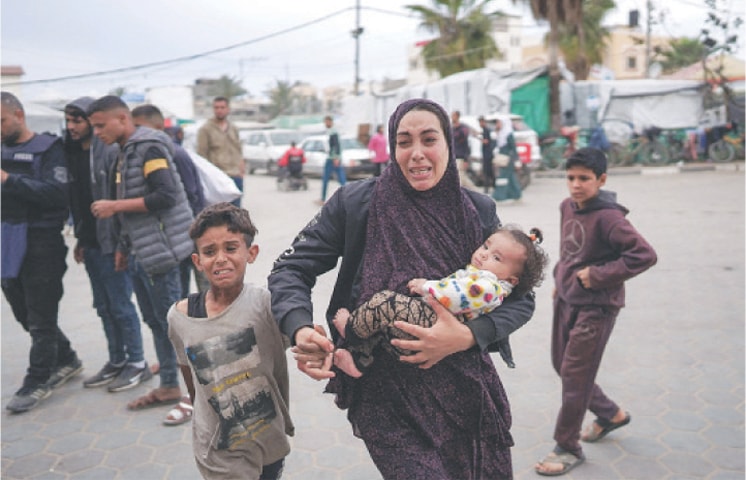
Israeli leaders were preparing on Monday for military operations in Gaza’s southern city of Rafah, where most of the Palestinian territory’s population has fled after six months of fighting.

Defence Minister Yoav Gallant said the troops would “prepare for future missions, including … in Rafah” on the Egyptian border where almost 1.5 million Gazans live in crowded shelters and tents.

Israeli government spokesman Avi Hyman said: “I wouldn’t read too much into the fact that we’ve moved soldiers in or out of anywhere. I’ll remind everyone that we’re living in a tiny country, we can move soldiers in or out very easily and very quickly.”

The United States said it still opposed a major Israeli assault on Rafah, after Prime Minister Benjamin Netanyahu said a date for the attack was set. “We have made clear to Israel that we think a full-scale military invasion of Rafah would have an enormously harmful effect on those civilians and that it would ultimately hurt Israel’s security,” State Department spokesman Matthew Miller told reporters when asked about Netanyahu’s remarks.

“It’s not just a question of Israel presenting a plan to us. We have made clear to them that we think that there is a better way to achieve what is a legitimate goal, which is to degrade and dismantle and defeat the Hamas battalions that still remain in Rafah,” Miller said.

Witnesses said that more Israeli air strikes and artillery fire hit central Gaza, including near Gaza City and in Deir al-Balah, as well as in Rafah in the south.

Amid the threats and ongoing fighting, Netanyahu has sent negotiators to fresh truce talks that started in Cairo on Sunday, joined by US, Qatari and Egyptian mediators.

US President Joe Biden sent CIA chief Bill Burns to the talks, three days after a terse phone call with Netanyahu in which Biden demanded a halt to the fighting and greater steps to help and protect Gaza civilians.

Egypt’s state-linked news outlet Al-Qahera reported “significant progress being made on several contentious points of agreement”, citing an unnamed high-ranking Egyptian source.

The Qatari and Hamas delegations had left Cairo and were expected to return “within two days to finalise the terms of the agreement”, it said, while the US and Israeli teams were also planning 48 hours of consultations.

However, Israel’s Ynet news outlet cited an unidentified Israeli official as tempering the upbeat Egyptian report and stressing that “we still don’t see a deal on the horizon”.

“The distance is still great and there has been nothing dramatic in the meantime,” the Israeli official was quoted as saying by the Hebrew-language website.

A separate senior Israeli official was quoted by Ynet as saying that “patience is needed. There is potential, but we are not there yet.”

A Hamas official said on Monday no progress was made at a new round of Gaza ceasefire talks in Cairo. “There is no change in the position of the occupation and, therefore, there is nothing new in the Cairo talks,” the Hamas official, who asked not to be named, told Reuters. “There is no progress yet.”

Another senior Hamas official told AFP that “we cannot speak of concrete progress so far”, with disagreement centred on the pace of displaced Palestinians returning to Gaza City.

Netanyahu also faced pushback from one of the far-right allies he needs to maintain a parliamentary majority and stay in power, National Security Minister Itamar Ben Gvir.

Ben Gvir warned on X, formerly Twitter, that “if the prime minister decides to end the war without an extensive attack on Rafah in order to defeat Hamas, he will not have a mandate to continue serving as prime minister”.

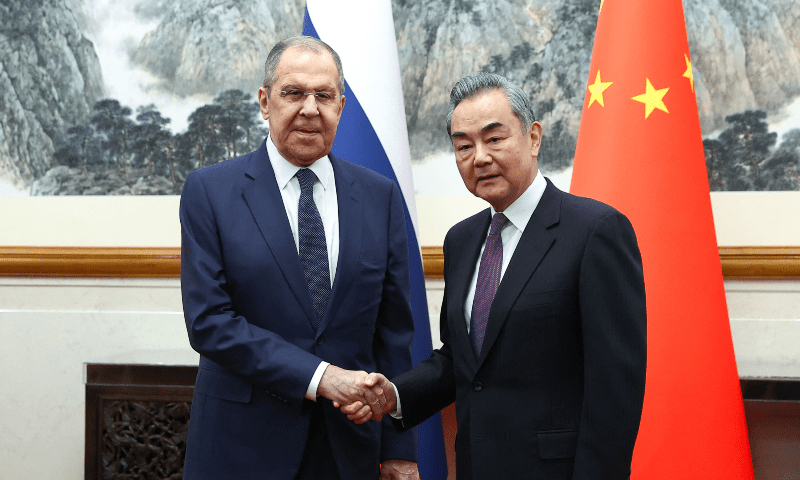
China to ‘strengthen strategic cooperation’ with Russia as FM Lavrov visits

Lavrov arrived in China for a two-day official visit on Monday, with the two countries looking to deepen diplomatic ties as Russia’s war in Ukraine grinds on.

Russia and China have in recent years ramped up contacts, and their strategic partnership has only grown closer since the invasion of Ukraine.


Lavrov held discussions with President Xi Jinping on Tuesday afternoon, Chinese state media announced, in a previously undisclosed meeting.

State broadcaster CCTV showed footage of chairs arranged around a glossy table in an opulent room in Beijing’s Great Hall of the People ahead of the talks.


In earlier meetings on Tuesday, Chinese Foreign Minister Wang Yi promised: “China will support Russia’s stable development under the leadership of (Vladimir) Putin.

“Beijing and Moscow will continue to strengthen strategic cooperation on the world stage and provide each other with strong support,” Wang said, according to Russia’s RIA Novosti news agency.

“Under the strong leadership of President Putin, the Russian people will have a bright future,” he said.

Lavrov, in turn, thanked China for its “support” after Putin’s recent re-election, in which he was unchallenged by any meaningful opposition.

“Xi Jinping […] was among the first ones to send congratulations to the president-elect Putin, and we are overall grateful to our Chinese friends for this support,” Lavrov said, according to a video of the meeting shared by Izvestia on Telegram.

“The election results confirmed the deep trust of the Russian people in our leader and the ongoing domestic and foreign policies,” he added, according to RIA Novosti.

“This applies not least to the course to strengthen strategic interaction and partnership with the PRC,” the top diplomat said, referring to China by its official acronym.

Lavrov last visited Beijing in October for an international forum on Chinese President Xi’s flagship Belt and Road infrastructure initiative.

Analysts say China holds the upper hand in the relationship with Russia, with its sway growing as Moscow’s international isolation deepens following its invasion of Ukraine.


That asymmetry is still “changing in China’s favour” as it enables Moscow “to continue the war by providing very necessary materials for the Russian war machine”, Alexander Gabuev, director of the Carnegie Russia Eurasia Center, told AFP.

“Integrating Russia’s economy, brainpower, and military technology into… a Chinese-led order with Eurasia at its geographic heart, is the only way Russia can sustain its confrontation with the West,” he wrote in Foreign Policy magazine this week.

“China has stronger bargaining power and many more options than does Russia, and its leverage over its northern neighbour is growing all the time,” he added. “Russia is now locking itself into vassalage to China.”

US officials have recently warned Beijing against providing indirect aid to the Russian war effort and regularly urge China to wield its influence to help bring about peace in Ukraine.

In Brussels last week, US Secretary of State Antony Blinken told reporters that “China continues to provide materials to support Russia’s defence industrial base”.

And Treasury Secretary Janet Yellen, who wrapped up a visit to China on Monday, said she had warned officials of the consequences of supporting Russia’s military procurement.

But Lavrov on Tuesday drew a parallel between the West’s “unlawful sanctions” and efforts to curb China’s access to sensitive US-made technologies.


At a press conference following bilateral talks, he accused the West of seeking to impede China’s “economic, technological development opportunities, to put it simply in order to eliminate the competitors”.

Wang, in turn, declared that Russia and China “always stick to the correct path on great matters of principle”. “China and Russia must take a clear-cut stand on the side of historical progress, on the side of fairness and justice,” he said.

“(We must) oppose all acts of hegemony, tyranny and bullying; oppose Cold War thinking and separatist provocations; and actively push for the construction of a common future for all humankind,” he said.

“As a force for peace and stability, China will stick to playing a constructive role on the international stage […] and will never add oil to the flames,” he added.

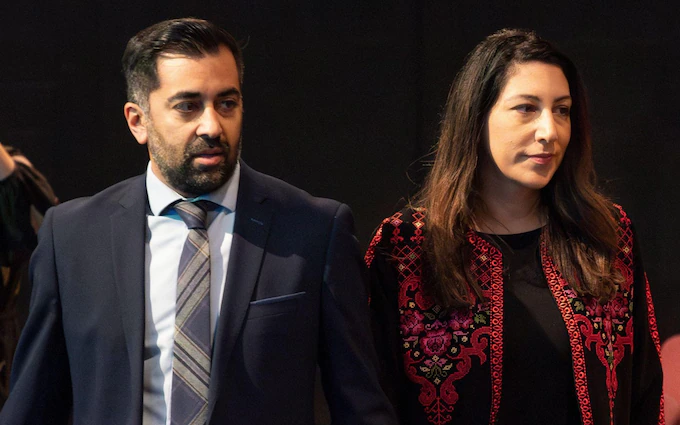
First Minister Humza Yousaf’s brother-in-law has been charged with abduction and extortion following an incident where a man fell from a block of flats and later died.

Ramsay El-Nakla, 36, is expected to appear at Dundee Sheriff Court later.

Ryan Munro was seriously injured in the fall in Morgan Street on 10 January and died a week later.

Three other people were arrested and charged and appeared in court last week following the same incident.

Mr El-Nakla is the brother of Mr Yousaf’s wife Nadia El-Nakla.

Jennifer Souter appeared in private at Dundee Sheriff Court last week charged with the culpable homicide of Mr Munro.

Stephen Stewart, 50, and Victoria McGowan, 41, were charged with abduction and extortion following the incident.

Ms Souter is alleged to have threatened, intimidated and detained the 36-year-old man against his will with a view to extorting money from him and placing him in a state of fear and alarm.

It is claimed she committed culpable homicide by putting Mr Munro in fear for his safety and causing him to fall from a second floor window, resulting in fatal injuries.

She made no plea or declaration and was remanded in custody by Sheriff John Rafferty.

Neither Mr Stewart nor Ms McGowan made any plea to the charge against them and both were granted bail.

Mr Munro sustained serious head injuries when he fell about 30ft.