Macron ready to ‘open debate’ on nuclear European defence

French President Emmanuel Macron is ready to “open the debate” about the role of nuclear weapons in common European defense, he said in an interview published Saturday.

It was just the latest in a series of speeches in recent months in which he has stressed the need for a European-led defense strategy.

“I am ready to open this debate which must include anti-missile defence, long-range capabilities, and nuclear weapons for those who have them or who host American nuclear armaments,” the French president said in an interview with regional press group EBRA.

“Let us put it all on the table and see what credibly protects us,” he added.

France will “maintain its specificity but is ready to contribute more to the defence of Europe”.

The interview was carried out Friday during a visit to Strasbourg.

Following Britain’s withdrawal from the European Union, France is the only member of the bloc to possess its own nuclear weapons.

In a speech Thursday to students at Paris’ Sorbonne University, Macron warned that Europe faced an existential threat from Russian aggression.

He called on the continent to adopt a “credible” defence strategy less dependent on the United States.

“Being credible is also having long-range missiles to dissuade the Russians.

“And then there are nuclear weapons: France’s doctrine is that we can use them when our vital interests are threatened,” he added.

“I have already said there is a European dimension to these vital interests.”

Constructing a common European defence policy has long been a French objective, but it has faced opposition from other EU countries who consider NATO’s protection to be more reliable.

However, Russia’s invasion of Ukraine and the possible return of the isolationist Donald Trump as US president has given new life to calls for greater European defense autonomy.

UN nuclear agency chief to visit Iran next week

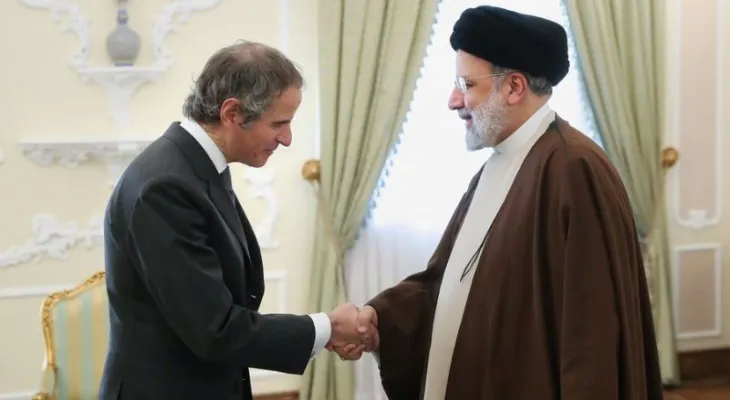
UN nuclear agency chief Rafael Grossi will visit Iran next week, the IAEA said on Tuesday, amid heightened tensions between the Islamic republic and Israel that have led to fears of an attack on a nuclear facility.

“We can confirm that director general Grossi will be in Iran on May 6-7 for meetings with senior Iranian officials,” a spokesman of the International Atomic Energy Agency told AFP.

His visit next week comes less than three weeks after a reported Israeli strike in the central province of Isfahan in retaliation for Iran’s first-ever attack on Israel.

The IAEA and Iranian officials reported “no damage” to nuclear sites in the province.

Concerns have also risen that Iran may further step up its nuclear programme.

The Vienna-based agency has been struggling since 2021 to carry out controls on the programme, which Tehran has expanded even as it denies it wants to make nuclear weapons.

Grossi will take part in “the first International Nuclear Energy Conference” which will be held in Isfahan from May 6-8, Iran’s Tasnim news agency reported.

Iran’s nuclear chief Mohammad Eslami said in February that Tehran had invited Grossi to visit in May to attend the conference.

The IAEA chief is scheduled to meet with Iranian officials to discuss “nuclear issues,” Tasnim reported.

Grossi was last in Iran in March 2023.

In January, Grossi expressed frustration over Iran’s nuclear activity in an interview with AFP, saying Tehran was “restricting cooperation in an unprecedented way”.

In 2015, Iran signed an agreement with major powers to restrict its nuclear programme in exchange for sanction relief.

But in 2018, then US president Donald Trump unilaterally pulled out of the agreement  and reimposed sweeping sanctions, leading to Iran starting to suspend its compliance with limits on its nuclear activities a year later.

In February, Iran said it had started building a new nuclear research reactor in Isfahan, days after it announced it was constructing a nuclear power plant complex in the south.

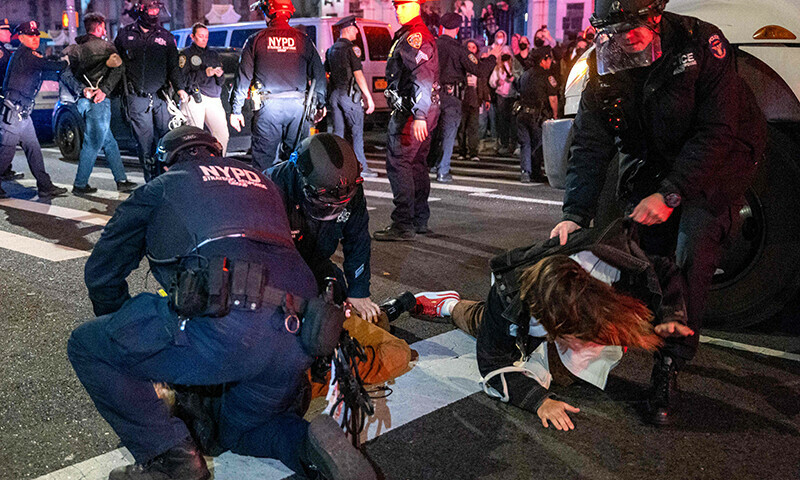
Police arrest dozens of pro-Palestinian protesters in Columbia University raid

Shortly after police moved in, Columbia University President Minouche Shafik released a letter in which she requested police stay on campus until at least May 17 — two days after graduation — “to maintain order and ensure that encampments are not re-established”.

Within three hours the campus had been cleared of protesters, said a police spokesperson, adding “dozens” of arrests were made.

At the start of the raid around 9pm ET throngs of helmeted police marched onto the elite campus in upper Manhattan, a focal point of student rallies that have spread to dozens of schools across the US in recent days expressing opposition to Israel’s offensive in Gaza.

“Were clearing it out,” the police officers yelled.

Soon after, a long line of officers climbed into Hamilton Hall, an academic building that protesters had broken into and occupied in the early morning hours of Tuesday. Police entered through a second-story window, using a police vehicle equipped with a ladder.

Students standing outside the hall jeered police with shouts of “Shame, shame!” Police were seen loading dozens of detainees onto a bus, each with their hands bound behind their backs by zip-ties, the entire scene illuminated with flashing red and blue lights of police vehicles.


“Free, free, free Palestine,” chanted protesters outside the building. Others yelled “Let the students go.” Columbia will be proud of these students in five years, said Sweda Polat, one of the student negotiators for Columbia University Apartheid Divest, the coalition of student groups that has organised the protests.

She said students did not pose a danger and called on police to back down, speaking as officers shouted at her and others to retreat or leave campus.

Protesters were seeking three demands from Columbia: divestment from companies supporting Israel’s government, greater transparency in university finances, and amnesty for students and faculty disciplined over the protests.

President Shafik this week said Columbia would not divest from finances in Israel. Instead, she offered to invest in health and education in Gaza and make Columbia’s direct investment holdings more transparent.

In her letter released on Tuesday, Shafik said the Hamilton Hall occupiers had vandalised University property and were trespassing, and that encampment protesters were suspended for trespassing. The university earlier warned that students taking part in the Hamilton Hall occupation faced academic expulsion.

The occupation began overnight when protesters broke windows, stormed inside and unfurled a banner reading “Hind’s Hall”, saying they were renaming the building for a 6-year-old Palestinian child killed in Gaza by the Israeli military.

The eight-story, neo-classical building has been the site of various student occupations dating back to the 1960s.

At an evening news briefing held a few hours before police entered Columbia, Mayor Eric Adams and city police officials said the Hamilton Hall takeover was instigated by “outside agitators” who lack any affiliation with Columbia and are known to law enforcement for provoking lawlessness.


Police said they based their conclusions in part on escalating tactics in the occupation, including vandalism, use of barricades to block entrances and destruction of security cameras.

One of the student leaders of the protest, Mahmoud Khalil, a Palestinian scholar attending Columbia’s School of International and Public Affairs, disputed assertions that outsiders led the occupation.

“Disruptions on campus have created a threatening environment for many of our Jewish students and faculty and a noisy distraction that interferes with the teaching, learning and preparing for final exams,” the university said in a statement on Tuesday before police moved in.

The Oct 7 attack on southern Israel by Hamas fighters from Gaza, and the ensuing Israeli offensive on the Palestinian enclave, have unleashed the biggest outpouring of US student activism since the anti-racism protests of 2020.

Many of the demonstrations across the country have been met with counter-protesters accusing them of fomenting anti-Jewish hatred. The pro-Palestinian side, including Jews opposed to Israeli actions in Gaza, say they are being unfairly branded as anti-Semitic for criticising Israel’s government and expressing support for human rights.

The issue has taken on political overtones in the run-up to the US presidential election in November, with Republicans accusing some university administrators of turning a blind eye to anti-Semitic rhetoric and harassment.

White House spokesperson John Kirby on Tuesday called the occupation of campus buildings “the wrong approach.”

New York Police Department officials had stressed before Tuesday night’s sweep that officers would refrain from entering the campus unless Columbia administrators invited their presence, as they did on April 18, when NYPD officers removed an earlier encampment.

More than 100 arrests were made at that time, stirring an outcry by many students and staff.

Dozens of tents, pitched on a hedge-lined grassy area — beside a smaller lawn since planted with hundreds of small Israeli flags — were put back up days later.

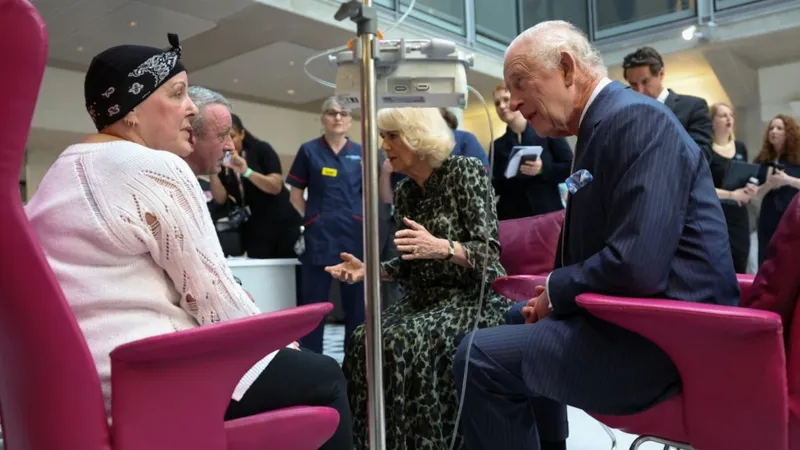
King Charles spoke to patients about the “shock” of hearing a cancer diagnosis – as he returned to public engagements with a hospital visit.

The King was asked by a patient how he was feeling while he had his own cancer treatment: “I’m all right, thanks. Not too bad,” the King replied.

Looking relaxed and smiling, the King visited a specialist cancer centre in central London with Queen Camilla.

It was his first big public appearance since his cancer diagnosis.

The King, who has become Cancer Research UK’s new patron, was shown some of the innovative medical technology at the Macmillan Cancer Centre at University College London Hospital.

But there was a sense of shared human experience as he sat down to chat to patients about the treatment they were receiving – sympathising that he had his own “treatment this afternoon as well”.


“It’s always a bit of a shock isn’t it, when they tell you,” agreed the King, as he spoke to Lesley Woodbridge, 63, from Houghton Regis, Bedfordshire.

Her husband Roger spoke with Queen Camilla about the impact on them. “I said to her ‘How do you feel?” … She just said ‘It’s just so difficult’ and we both agreed,” Mr Woodbridge said.

“We’ve all got to stick together,” another patient told the King, while others discussed painful side effects such as mouth ulcers and exhaustion.

There was also a message of modern treatments allowing people to keep going with their lives, with one patient telling the King he was continuing to work in his job at the Royal Opera House.

“One of my favourite places. It restores my spirit,” said the King.

The visit was intended to raise awareness of the importance of early cancer diagnosis and follows the King’s decision to make his own health issues public, in the hope it will encourage others to seek checks.

On the hospital visit, he said the challenge is “to get enough people early”.

In terms of the King’s own health, the hospital’s chief executive David Probert said the King was showing plenty of “energy” going round the hospital. He was using the stairs rather than the lift.

Asha Millen, 60, who is receiving chemotherapy, said the King had told her: “I’m well”.

When the King arrived at the hospital in the royal Bentley, someone shouted: “Are you glad to be back?”

He replied with that kind of cheerful but indistinct noise that sounds like agreeing with someone without being pinned down to anything specific. Alphabetti spaghetti without any of the vowels.

The King then went inside the hospital to loud cheers from the staff and patients waiting inside.

He seemed well and was quick to listen to the stories of many people who had arrived for their own cancer treatment.

They included 11-year-old Ellis Edwards, who is receiving radiotherapy and was given a special present of three books by Queen Camilla – plus a big chocolate coin.

The royal visit was a “really nice distraction”, said the boy’s mother Carly, from Southampton, as they face regular trips to hospital. “He’s really brave and a superstar so it’s great he can do something nice. He deserves it,” she said.

The first visit of the year comes after a Buckingham Palace statement last week revealed a more positive message about his health.

Aside from an Easter church service, the King has stayed away from public events since his treatment for an unspecified form of cancer began.

But the King’s doctors were said to be “very encouraged by the progress made so far”.

Although the mood music about the King’s health is more positive, it remains a cautious optimism, with the King’s cancer treatment still continuing and no date announced for its completion so far.

However, he is expected to be sufficiently well to host a state visit from the Emperor and Empress of Japan in late June, which forms part of his role as head of state.

Despite his recent convalescence, the King has carried on with his constitutional role, including regular private meetings with the prime minister.

Nonetheless, it remains uncertain whether the King will be able to attend some of the key royal events taking place in the weeks ahead, including Trooping the Colour, garden parties and D-Day commemorations.

Decisions on whether he will be able to take part will be made following medical advice nearer the time, but the King’s summer schedule is likely to be reduced, or adapted, while he continues his recovery.


Four terrorists killed in Tank IBO, says ISPR

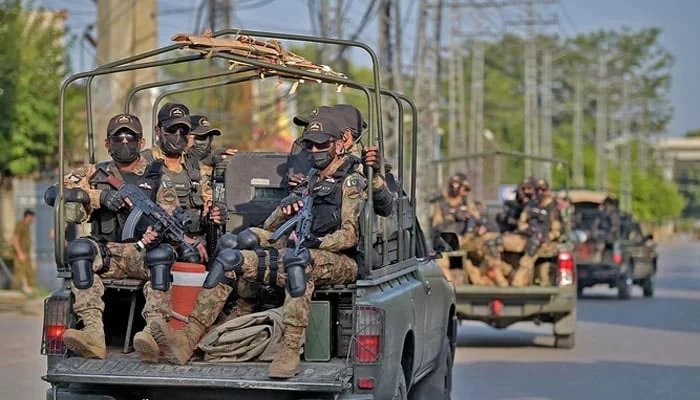
RAWALPINDI: The security forces have killed at least four terrorists during an intelligence-based operation (IBO) in Tank district, the military’s media wing reported on Monday.

“On night 28/29 April 2024, security forces conducted an intelligence-based operation in Tank district on reported presence of terrorists. Own troops effectively engaged the terrorists’ location as a result of which four terrorists were sent to hell,” the Inter Services Public Relations (ISPR) said in a statement.

The ISPR said the security forces recovered weapons and ammunition as well from the terrorists who were involved in numerous terrorist activities in the district.

The media wing said residents of the area appreciated the operation by the security forces, who remained determined to eliminate the menace of terrorism from the country.

A day ago, the ISPR had reported that two terrorists involved in target killing and extortion were shot dead during an intense exchange of fire between militants and security forces in Dera Ismail Khan District of Khyber Pakhtunkhwa.

As per the military’s media wing, the security forces had conducted an IBO in Dera Ismail Khan on reported presence of terrorists on April 28.

“During conduct of the operation, intense fire exchange took place between own troops and terrorists, and resultantly two terrorists; terrorist Faheem Nawaz alias Gandapuri and terrorist Mohsin Nawaz were successfully neutralised and sent to hell,” the ISPR had stated.

The brief statement issued by the military’s media wing had stated that weapons, ammunition and explosives were also recovered from the slain terrorists, who remained actively involved in numerous terrorist activities against the security forces and innocent civilians via target killings and extortion.

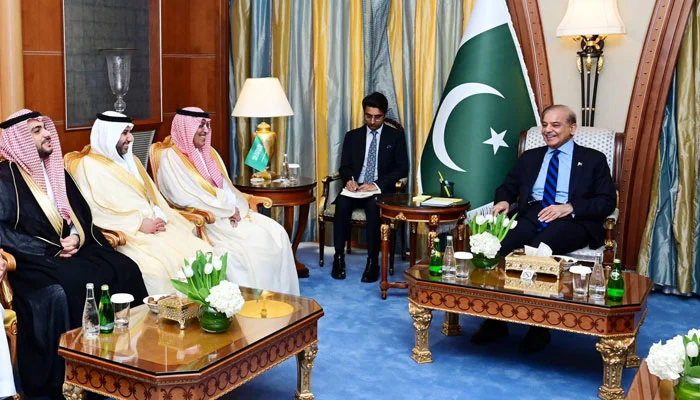
PM Shehbaz declared ‘Man of Action’ by Saudi leadership

ISLAMABAD: Prime Minister Shehbaz Sharif was declared the “Man of Action” by the Saudi leadership in recognition of his commitment to reviving Pakistan’s economy through massive reforms and foreign investment.

This acknowledgement came during the premier’s busy day in Riyadh, where he met different leaders and addressed a special meeting of the World Economic Forum (WEF).

The remarks were made during separate meetings of PM Shehbaz with Saudi Minister for Investment Khalid Al-Falih, Minister for Finance Mohammad Al Jadaan, and Minister for Industry Bandar bin Ibrahim Alkhourayef.

During his meeting with the prime minister on the margins of the Forum, Saudi Minister for Investment Khalid Al-Falih called him a “Man of Action,” recognising his performance and speed of work, along with his commitment to contributing to Pakistan’s development and progress.

This is the second time PM Shehbaz has earned such a distinction from foreign leadership as earlier, he was given the title of “Shehbaz Speed” by a Chinese leader to acknowledge his swift execution of development projects while serving as Punjab chief minister.

“We are all aware of your performance and speed of work,” the Saudi minister said, adding that the prime minister was advancing the mission of progress in Pakistan, with their full support.

“Your mission is our mission,” he remarked.

The Saudi minister for finance said that a delegation of Saudi investors would soon visit Pakistan. Pakistan was a priority for their investment and Saudi Arabia would continue to fully cooperate in the fields of agriculture, information technology and energy.

He also lauded Pakistanis’s prominent role in the progress of Saudi Arabia in different fields.

During the meeting, it was agreed that Saudi Arabia would further explore opportunities of investment in Pakistan. He reaffirmed the support of Saudi Arabia in the economic progress of Pakistan and called the “progress of Pakistan the progress of Saudi Arabia”.

Only US can halt Israel’s attack on Rafah, says Palestinian President Abbas

Mr Abbas, who runs parts of the occupied West Bank, said any attack could see Palestinians flee Gaza.

Israel has consistently vowed to carry out an offensive in Rafah.

US President Joe Biden “reiterated his clear position” on Rafah to Israel PM Benjamin Netanyahu in a call on Sunday.

The US has repeatedly said it cannot support a large-scale Israeli military operation in Rafah without seeing a credible plan to keep civilians out of harm’s way.

Speaking at the World Economic Forum (WEF) in the Saudi capital Riyadh earlier, Mr Abbas – whose Palestinian Authority is not present in Gaza, which has been under Hamas rule since 2007 – urged the US to intervene.

“We appeal to the United States of America to ask Israel to stop the Rafah operation because America is the only country capable of preventing Israel from committing this crime,” he said, adding that only a “small strike” on Rafah would force the Palestinian population to flee the Gaza strip.

“The biggest catastrophe in the Palestinian people’s history would then happen.”

More than half of Gaza’s population is in Rafah and conditions in the overcrowded southern city are already dire, with displaced people there telling the BBC there was a lack of food, water and medication.

While the White House did not elaborate on what specifically Mr Biden’s latest comments to Mr Netanyahu were regarding the planning offensive in Rafah, national security spokesman John Kirby told the ABC network that Israel had agreed to listen to US concerns and thoughts before going in.

US Secretary of State Antony Blinken has arrived in Riyadh where he will hold talks with Mr Abbas at the start of a new Middle East tour.


Meanwhile, the indirect negotiations between Israel and Hamas over a potential ceasefire and the release of remaining hostages in Gaza, which have gained new momentum recently, have been further exposing divisions in Israel’s governing coalition.

War cabinet member and opposition figure Benny Gantz on Sunday said that the current government “would not have the right to continue to exist” if a reasonable deal to return the hostages was not accepted.

“Entering Rafah is important in the long struggle against Hamas. The return of our abductees, is urgent and of far greater importance,” Mr Gantz wrote on X, formerly Twitter.

The far-right Finance Minister Bezalel Smotrich, however, said the government should resign if it accepted a deal in which the planned offensive in Rafah was cancelled.

Their comments come after Israel’s foreign minister said that the country could suspend the incursion, which Mr Netanyahu has said is the next step in its battle against Hamas, if there was a hostage deal.

The Israeli military said its chief Herzi Halevi had approved plans to continue the war, with Israeli media saying this referred to the Rafah operation.

Long-running talks mediated by Egypt and Qatar have largely stalled because of the gaps between the Israeli and Hamas positions, but on Sunday Hamas said it would send representatives to Cairo to give a response to the latest proposal.

US media have quoted unnamed Egyptian officials as saying the latest ceasefire proposal given to Hamas involved a several-week period of calm intended to lead to the end of the war, in return for the release of 20 hostages.

Hamas wants a permanent end to the war and withdrawal of all Israeli troops from Gaza, while Israel insists Hamas must be destroyed in Gaza and all hostages freed.

Egypt and other Arab states have previously said an influx of Palestinian refugees fleeing the war would be unacceptable because it would amount to the expulsion of Palestinians from their land.

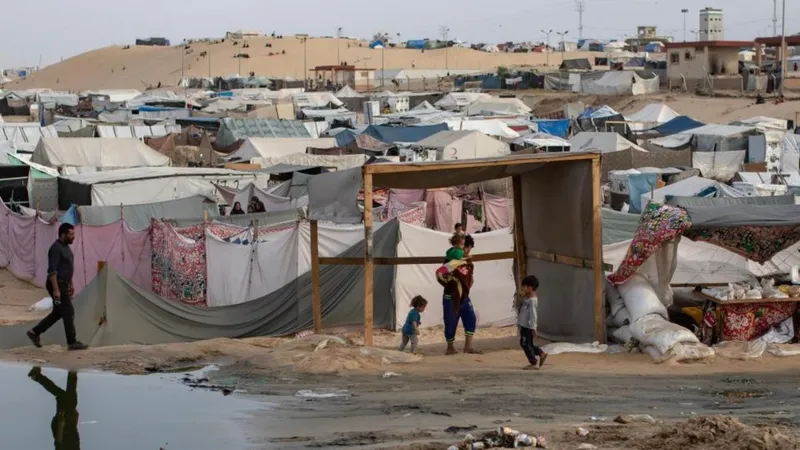
Satellite pictures have shown new tent encampments being built near the Gaza coast, to the west of Rafah and the city of Khan Younis slightly further north, which has been left largely in ruins. Media reports say the tents are to accommodate people displaced from Rafah.

The current war began when Hamas attacked Israeli communities near Gaza, killing about 1,200 people, mainly civilians, and taking about 250 hostages. Some 133 hostages are believed still to be in Gaza, of whom about 30 are thought to be dead, after a brief truce in November saw some hostages released.

This week Hamas’s armed wing released two videos showing the first proof of life of three hostages since they were abducted last October.

Israel’s campaign of aerial bombardment and ground operations in Gaza since 7 October has killed 34,454 people, mostly civilians, according to the Hamas-run health ministry there.

Over the six months of war, the Israel Defense Forces (IDF) have entered and taken control of all of northern Gaza including Gaza City and most of central and southern Gaza including Khan Younis.

They have since withdrawn from almost all of those areas but troops remain stationed on a road Israel has built that separates northern and southern Gaza.

However, Palestinians displaced to southern Gaza – where the Israeli military told them to go for their own safety earlier in the war – have been unable to return to homes further north, a key demand Hamas is making in ceasefire talks, and Israel has given no indication when they will be allowed to.

Meanwhile, deadly Israeli bombardment has continued across Gaza, including in Rafah, with the Israeli military saying it has been striking launch sites for projectiles.

Israeli ministers slam Netanyahu over truce deal

Far-right Finance Minister Bezalel Smotrich and war cabinet minister Benny Gantz called for Hamas to be destroyed, as planned by the government when it launched an invasion of Gaza.

“If you decide to raise a white flag and cancel the plan to occupy Rafah aimed at destroying Hamas in order to restore security to Israel, then the government headed by you will have no right to exist,” Smotrich wrote on X, addressing the premier.

“The Egyptian deal is a humiliating surrender… it sentences the hostages to death, and above all, constitutes an immediate existential danger to the state of Israel.” Gantz, a former army chief and defence minister, also pushed for Rafah to be invaded.

“Entering Rafah is important in the long struggle against Hamas,” he said in a statement issued by his party.

“If a responsible outline for the return of hostages backed by the entire defence establishment is achieved, which doesn’t entail ending the war, and the ministers who led the government on October 7 prevent it — the government will not have the right to continue to exist.”

Diplomatic efforts have intensified to reach a truce and prisoner-release deal in Gaza amid growing calls against a ground assault on Rafah.

Netanyahu has vowed to send troops into Rafah, where more than 1.5 million civilians have taken refuge, but is under tremendous international and domestic pressure to strike a deal to free Israeli prisoners.

citing two Israeli officials, reported that Israel’s latest proposal includes a willingness to discuss the “restoration of sustainable calm” in Gaza after hostages are released.

It is the first time in the nearly seven-month war that Israeli leaders have suggested they are open to discussing an end to the war, Axios said.

At least five people, including a four-month-old baby, have been killed after dozens of tornadoes ripped through the central US causing serious damage.

Tens of thousands of residents were left without power following separate storms that began on Friday.

Four of the deaths happened in Oklahoma, where a state of emergency has been declared in a dozen counties.

A fifth person died from their injuries in Iowa after a separate storm system hit the Midwest, local media reported.

The National Weather Service (NWS) said a preliminary investigation had confirmed some of Saturday’s tornadoes had gusts of above 136 miles (218km) an hour.

The storms – which swept from Texas to Missouri – also saw up to seven inches (18cm) of rain fall in some places within hours, the AFP news agency reported.

The town of Sulphur, in eastern Oklahoma, was hit particularly hard. Video of the aftermath showed flattened homes and overturned vehicles.

According to the Oklahoma State Department of Health, around 100 injuries were reported.

The towns of Holdenville and Marietta were also badly damaged.

The speaker of the Oklahoma state House of Representatives, Charles McCall, insisted that the affected areas would recover.

“We will rise, we’ll clean up, we’ll rebuild and we’ll move forward,” he told a news conference in Sulphur on Sunday.

The state’s Governor, Kevin Stitt, also visited the town and said the damage there was the worst he had seen in his six years in office.

“You just can’t believe the destruction,” he said.

“It seems like every business downtown has been destroyed.”

The White House said US President Joe Biden had spoken with Mr Stitt and offered the federal government’s full support.

The town of Sulphur in the state of Oklahoma was one of the places worst hit in the weekend storms

It comes after a separate weather system brought more than 70 tornadoes to the Midwestern states of Nebraska and Iowa on Friday.

Most happened around the city of Omaha, where one resident described his ordeal.

“Saw this big tornado coming and just had to cover with the kids and wife as fast as we could,” Brent Richardson told the Associated Press.

“Loudest freight train you’ve ever heard in your life coming right through your house.”

“Utter destruction, just chaos. A neighbourhood that’s trying to band together to help people out and you have some people trapped in houses that we’re trying to get out and there’s houses that aren’t standing any more.”

Nebraska’s governor issued emergency declarations for three counties on Sunday, making them also eligible for extra funding towards rescue and recovery operations.

Further severe weather has been forecast.

“The threat of tornadoes appears to be lower, but instances of damaging winds and hail are still expected, especially across north-eastern Texas, northern Louisiana, Arkansas and southern Missouri,” meteorologist Brandon Buckingham from the commercial forecaster AccuWeather reported.

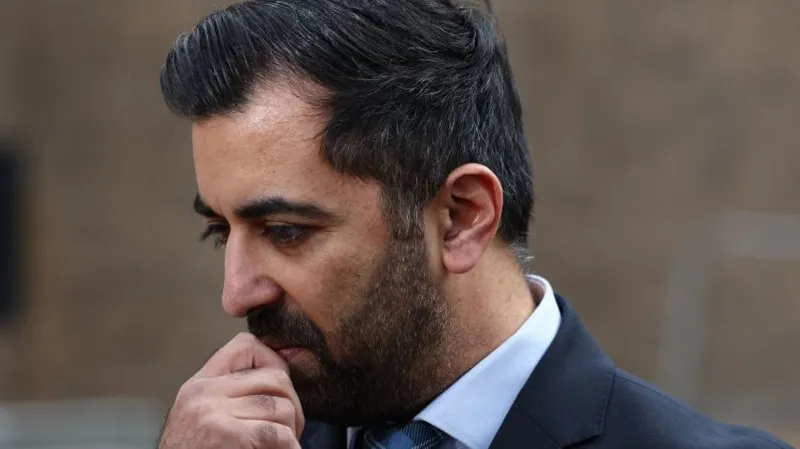
Humza Yousaf is considering quitting as Scotland’s first minister rather than face two confidence votes

Humza Yousaf is considering quitting as Scotland’s first minister rather than face two confidence votes, B

A source close to Mr Yousaf said that resignation was now an option but a final decision had not yet been taken.

“The clock has been ticking ever downwards,

Mr Yousaf has faced a fight for survival as first minister after abruptly ending the SNP’s power-sharing deal with the Scottish Greens last Thursday.

He is understood to have ruled out a deal with Alex Salmond’s Alba party, and his prospect of surviving a vote of no confidence in his leadership is now dependent on the Scottish Greens.

He needs the support of at least one member of the opposition at Holyrood to survive the vote, which could take place as early as Wednesday.

The parliamentary bureau, made up of the presiding officer and MSPs from the main parties, will decide this week when the vote takes place and normally gives two days notice.

The ending of the Bute House Agreement provoked a furious reaction from the Scottish Green co-leaders Lorna Slater and Patrick Harvie

Jettisoning the deal with the Greens, known as the Bute House Agreement, provoked a furious reaction from his former partners in government.

He now faces two motions of no-confidence this week, one tabled by the Scottish Conservatives in his own leadership as first minister and another from Scottish Labour which would force his entire government to resign.

The Greens are due to meet later on Monday but have repeatedly ruled out supporting him in the personal vote.

The Scottish Conservatives, Labour and the Liberal Democrats have already said they will vote against him.

If nothing changes, that leaves the first minister facing a choice of defeat in a confidence vote or resignation in advance.

The SNP has 63 MSPs in the 129 seat parliament, so if the seven Green MSPs vote against him, he is reliant on support from the sole Alba party MSP Ash Regan to continue in his role.

That would lead to a 64:64 tied vote in which case the presiding officer would be expected to vote to maintain the status quo.

The motion of no confidence in him personally is not binding but if he lost he would come under intense pressure to step down.

If he lost the government vote, MSPs would have 28 days to vote for a new first minister or automatically trigger a Scottish parliamentary election.

Alex Salmond’s Alba party has drawn up a list of demands in return for its support

Alba, a rival pro-independence party led by former first minister Alex Salmond, has been outlining a list of demands that might persuade Ms Regan to support the first minister.

At an emergency meeting on Sunday, Alba’s governing body formally approved Ms Regan’s plan to pursue the issues of independence, “women’s rights” and the “restoration of competent government” in any negotiations.

Mr Salmond told BBC News he was also looking for a move away from “the culture wars” and a shift towards the “people’s priorities,” which he said were health, housing, transport, education and the economy.

He said he expected Ms Regan to hold talks with Mr Yousaf in the coming days.

But a deal with Mr Salmond’s party is opposed by many within the SNP, and could open up further internal divisions.

A source close to Mr Yousaf told the BBC on Sunday evening “there is going to be no deal,” with Alba.

The Scottish government has not confirmed a time for any meetings with opposition figures or even that they will definitely go ahead.

Two SNP MPs, Stewart McDonald and Pete Wishart, have come out publicly against the idea of a deal with Alba.

One senior SNP figure told BBC News it would be intolerable for any SNP leader to be beholden to Mr Salmond, whose estrangement from the party he twice led is a source of bitterness all round.

Even if he were to survive the vote of no confidence, Mr Yousaf’s authority would be badly weakened.

Liz Lloyd, who was chief of staff to Nicola Sturgeon when she was first minister, pointed out that while Mr Yousaf might himself survive on a tie, legislation including budgets “can’t pass without a majority” in the Scottish Parliament.

In other words, even if Mr Yousaf were able to continue in office with the support of his own MSPs plus Ms Regan, without votes from elsewhere in the chamber, he would struggle to govern.

Alba’s sole MSP Ash Regan has been placed in a powerful position by Humza Yousaf’s predicament

The BBC has been told that there were talks between the SNP leadership and the Green leadership over the weekend but that they did not alter the Greens’ position.

Nor did the SNP’s former Westminster leader, Ian Blackford,

Co-leader Lorna Slater who, along with Patrick Harvie, was dismissed as a minister in Mr Yousaf’s government at a short and “pretty robust” meeting in the first minister’s official residence, Bute House, early on Thursday morning, told The Sunday Show on BBC Scotland that the first minister “has lost our confidence and lost our trust.”

She added: “I cannot imagine anything at this point that could change that position.”

\
Green co-leader Lorna Slater said Mr Yousaf must face the consequences of a spectacular breach of trust

The Greens are due to convene on Monday to decide whether or not to even accept Mr Yousaf’s invitation to a meeting.

They had been scheduled to meet next month to decide whether or not to continue in the power-sharing deal with the SNP after discontent among members about changes to gender healthcare and the abandonment of a key climate change target.

Some Greens have expressed concerns that the Scottish government is considering implementing the recommendations of the Cass review on English gender healthcare.

A critic of the Greens’ approach to that issue, and others, is Kate Forbes, the former finance secretary, a social conservative who came close to defeating Mr Yousaf in last year’s leadership contest and could run again if he stands down.

PA
Former leadership contender Kate Forbes is a possible replacement for Mr Yousaf

Ms Forbes insisted this week that she was backing Mr Yousaf but she has used similar language to Mr Salmond’s about “getting back to the people’s priorities,” such as creating wealth, improving education and fixing healthcare.

As the leadership election demonstrated, thousands of party members do not appear to be put off by her personal objection to gay marriage and opposition to abortion.

However, those positions are deeply unpopular within the progressive wing of the SNP and she might find it difficult to unite the party and to run a minority government, especially if she were dependent on the Greens for support.

Other names being floated as potential replacements for Mr Yousaf are Education Secretary Jenny Gilruth, Culture Secretary Angus Robertson, Health Secretary Neil Gray and Economy Secretary Màiri McAllan.

With the Greens apparently standing firm, and the SNP’s leadership’s reluctance to engage with Alba, Mr Yousaf may yet resign rather than endure the humiliation of losing a confidence vote.

One source close to the first minister said the end of his time in office appeared to be approaching and that, by sacking the Greens, he had gambled and lost.