
Biden, Yoon signal military drills due to North Korea ‘threat’

After meeting in Seoul on Biden’s first trip to Asia as president, the two leaders said in a statement that “considering the evolving threat posed by” North Korea, they “agree to initiate discussions to expand the scope and scale of combined military exercises and training on and around the Korean peninsula”.

The possible beefing up of joint exercises comes in response to North Korea’s growing belligerance, with a blitz of sanctions-busting weapons tests this year as fears grow that Kim Jong Un will order a nuclear test while Biden is in Asia.

Biden and Yoon also extended an offer of help to Pyongyang, which has recently announced it is in the midst of a Covid-19 outbreak, a rare admission of internal troubles.

The US-South Korea statement said the two presidents “express concern over the recent Covid-19 outbreak” and “are willing to work with the international community to provide assistance” to North Korea to help fight the virus. On Saturday, North Korean state media reported nearly 2.5 million people had been sick with “fever” with 66 deaths as the country “intensified” its anti-epidemic campaign.

Biden, while adding that he would not exclude a meeting with Kim if he were “sincere”, indicated the difficulty of dealing with the unpredictable dictator.

“We’ve offered vaccines, not only to North Korea but to China as well and we’re prepared to do that immediately,” Biden said at a press conference with Yoon. “We’ve got no response.” For his part, Yoon stressed that the offer of Covid aid was according to “humanitarian principles, separate from political and military issues”.

Elected on a strongly pro-US message, Yoon emphasised the need to reinforce South Korea’s defences.

According to Yoon, he and Biden “discussed whether we’d need to come up with various types of joint drills to prepare for a nuclear attack”.

Talks are also ongoing on ways to “coordinate with the US on the timely deployment of strategic assets when needed”, he said, reaffirming commitment to North Korea’s “complete denuclearization”.

The strategic assets should include “fighter jets and missiles in a departure from the past when we only thought about the nuclear umbrella for deterrence”, he said.

Any such deployments, or a ramping up of US-South Korea joint military exercises, is likely to enrage Pyongyang, which views the drills as rehearsals for invasion.

Biden began his day by paying respects at Seoul National Cemetery, where soldiers killed defending South Korea, including many who fought alongside US troops in the Korean War, are buried. He then held closed-door talks with Yoon ahead of the joint press conference and a state dinner.

A US official said that in addition to tensions over North Korea and the US-led campaign to punish Russia for invading Ukraine, Biden’s main focus Saturday was establishing “a strong personal relationship”

with Yoon, who is less than two weeks into his presidency.

Russia halts gas supplies to Finland

Following Russia’s Feb 24 invasion of Ukraine, Moscow has asked clients from “unfriendly countries” — including EU member states — to pay for gas in rubles, a way to sidestep Western financial sanctions against its central bank.

Gazprom said in a statement on Saturday that it had “completely stopped gas deliveries” as it had not received ruble payments from Finland’s state-owned energy company Gasum “by the end of the working day on May 20”.

Gazprom said it had supplied 1.49 billion cubic metres of natural gas to Finland in 2021, equal to about two thirds of the country’s gas consumption. However, natural gas accounts for around eight percent of Finland’s energy.

Gasum said it would make up for the shortfall from other sources through the Balticconnector pipeline, which links Finland to Estonia, and assured that filling stations would run normally.

“Natural gas supplies to Finland under Gasum’s supply contract have been cut off,” the company said in a statement.

In April, Gazprom Export demanded that future payments in the supply contract be made in rubles instead of euros. Gasum rejected the demand and announced on Tuesday it was taking the issue to arbitration.

Gazprom Export said it would defend its interests in court by any “means available”.

Gasum said it would be able to secure gas from other sources and that gas filling stations in the network area would continue “normal operation”.

Rift over Nato bid

In efforts to mitigate the risks of relying on Russian energy exports, the Finnish government on Friday also announced it had signed a 10-year lease agreement for an LNG (liquefied natural gas) terminal ship with US-based Excelerate Energy.

On Sunday, Russia suspended electricity supplies to Finland overnight after its energy firm RAO Nordic claimed payment arrears, although the shortfall was quickly replaced.

Finland, along with neighbouring Sweden, this week broke its historical military non-alignment and applied for Nato membership, after public and political support for the western alliance soared following the invasion of Ukraine.

Moscow has warned Finland that any Nato membership application would be “a grave mistake with far-reaching consequences”.

Both Finland and Sweden are seemingly on the fast track to joining the military alliance, with US President Joe Biden offering “full, total, complete backing” to their bids.

But all 30 existing Nato members must agree on any new entrants, and Turkey has condemned the Nordic neighbours’ alleged toleration of Kurdish militants and has so far voiced opposition to letting them in.

Russian Defence Minister Sergei Shoigu has said the Kremlin would respond to any Nato expansion by creating more military bases in western Russia.

Saturday’s halt to gas shipments follows Moscow cutting off Poland and Bulgaria last month in a move the European Union described as “blackmail”.

FM Bilawal meets Chinese counterpart Wang Yi on first bilateral visit

According to the PPP’s Media Cell, Bilawal was holding talks with his counterpart. Minister of State for Foreign Affairs Hina Rabbani Khar was also present.

Yesterday, the foreign minister said his visit coincided with the 71st anniversary of the establishment of Pakistan’s diplomatic ties with China.

“Landed in Guangzhou, China on my first bilateral visit. Today also marks 71st anniversary of establishment of diplomatic ties between Pakistan and China. Looking forward to meeting Chinese State Councilor and Foreign Minister Wang Yi for in-depth discussions on Pakistan-China relations,” he tweeted after arriving in the Southern Chinese city which is also largest city and capital of China’s Guangdong province.

The minister left for the two-day visit to the neighbouring country on Saturday which is the first in-person high-level interaction between the two countries since the establishment of the coalition government in April.


This is Bilawal’s first bilateral visit as foreign minister to a foreign country after he took up the post in April.

Extensive consultations were set to be held with his Chinese counterpart, during which the entire gamut of bilateral relations will be reviewed, with particular focus on stronger trade and economic cooperation between Pakistan and China.

“Fast-tracked progress on the transformational China-Pakistan Economic Corridor (CPEC), a flagship project of President Xi Jinping’s visionary Belt and Road Initiative, will feature in the discussions,” the statement said.

The two sides will also have wide-ranging exchange of views on major regional and international issues, it added.

According to the Chinese state-affiliated Global Times, the foreign minister’s visit is a part of the high-level exchanges between China and Pakistan, which recently also included the message of felicitations to Prime Minister Shehbaz Sharif from Chinese Premier Li Keqiang, and a telephonic conversation between the two leaders on May 16, 2022.


Meanwhile, Chinese Foreign Ministry Spokesperson, Wang Wenbin said that as all-weather strategic cooperative partners, it was necessary for China and Pakistan to improve communication and coordination on major issues to deal with changes in the region and risks and challenges.

“China hopes to use this visit as an opportunity to carry on with the traditional friendship with Pakistan, consolidate strategic mutual trust, and further deepen the all-weather comprehensive strategic partnership to build a closer China-Pakistan community with a shared future,” the spokesperson added.

Women TV presenters defy Taliban order to cover faces on air

Since surging back to power last year the Taliban have imposed a slew of restrictions on civil society, many focused on reining in the rights of women and girls.

Earlier this month Afghanistan’s supreme leader Hibatullah Akhundzada issued a diktat for women to cover up fully in public, including their faces, ideally with the traditional burqa.

The feared Ministry for Promotion of Virtue and Prevention of Vice ordered women TV presenters to follow suit by Saturday. Previously they had only been required to wear a headscarf.

But broadcasters TOLOnews, Shamshad TV and 1TV all aired live programmes on Saturday with women presenters’ faces visible.

“Our female colleagues are concerned that if they cover their faces, the next thing they will be told is to stop working,” said Shamshad TV head of news Abid Ehsas.

“This is the reason they have not observed the order so far,” he said, adding the channel had requested further discussions with the Taliban on the issue.

Taliban orders such as this have caused many female journalists to leave Afghanistan since the hardline group stormed back to power, a woman presenter said.

“Their latest order has broken the hearts of women presenters and many now think they have no future in this country,” she said, requesting not to be named.

“I’m thinking of leaving the country. Decrees like this will force many professionals to leave.”

Mohammad Sadeq Akif Mohajir, spokesman for the vice ministry, said the women presenters were violating the Taliban directive.

“If they don’t comply we will talk to the managers and guardians of the presenters,” he said.

“Anyone who lives under a particular system and government has to obey the laws and orders of that system, so they must implement the order,” he said.

The Taliban have demanded that women government employees be fired if they fail to follow the new dress code. Men working in government also risk suspension if their wives or daughters fail to comply.

Mohajir said media managers and the male guardians of defiant women presenters would also be liable for penalties if the order was not observed.

During two decades of US-led military intervention in Afghanistan, women and girls made marginal gains in the deeply patriarchal nation.

Soon after they took over, the Taliban promised a softer version of the harsh rule that characterised their first stint in power from 1996 to 2001.

Since the takeover, however, women have been banned from travelling alone and teenage girls barred from secondary schools. In the 20 years after the Taliban were ousted from office in 2001, many women in the conservative countryside continued to wear a burqa.

But most Afghan women, including TV presenters, opted for the headscarf.

Television channels have already stopped showing dramas and soap operas featuring women, following orders from Taliban authorities.

President Joe Biden says North Korea has not responded to a US offer of Covid vaccines, as the country battles its first acknowledged outbreak.

Nearly 2.5 million people have been sickened by “fever” in North Korea and it is under a nationwide lockdown, according to the country’s state media.

It is thought to be particularly vulnerable because it has little testing or vaccine supply.

Mr Biden announced the offer at a press conference in South Korea.

“We’ve offered vaccines, not only to North Korea but to China as well, and we’re prepared to do that immediately,” Mr Biden said in a joint appearance with South Korean President Yoon Suk-yeol.

“We’ve got no response,” he added.

The isolated regime of North Korea has previously turned down offers of vaccines from Covax, the global vaccine-sharing scheme, and from South Korea, as well as reportedly declining other offers.

Instead it claimed to have successfully kept Covid out of the country by sealing its borders, although experts believe the virus has been present there for some time.

State media has recommended remedies such as herbal tea, gargling salt-water and taking painkillers such as ibuprofen, while the country’s leader, Kim Jong-un, has accused officials of bungling the distribution of national medicine reserves.

China is also struggling to control a wave of infections from the highly transmissible Omicron variant, with tens of millions of people under some form of lockdown.


At the news conference in the South Korean capital, Seoul, President Biden said he was willing to meet Mr Kim under the right circumstances.

“It would depend on whether he was sincere and whether he was serious,” Mr Biden said.

His predecessor, Donald Trump, held a historic summit with Mr Kim in Singapore in 2018 and became the first US president to set foot in North Korea the following year.

But two years ago, Mr Kim questioned whether there was any need to continue “holding hands” with the US.

The US and South Korean presidents also agreed to deploy American weapons if necessary to deter North Korea and to increase military drills – which had been scaled down in recent years in an effort to reduce tensions.

Australia’s new leader has vowed to take the country in a new direction, with a big shift in climate policy.

Anthony Albanese, who won Saturday’s election with the opposition centre-left Labor Party, said Australia could become a renewable energy superpower.

He is to be sworn in as PM on Monday, but it is not clear whether his party will have a majority in parliament.

Climate change was a key concern for voters, after three years of record-breaking bushfire and flood events.

Outgoing PM Scott Morrison, the leader of an ousted Liberal-National coalition, thanked the “miracle of the Australian people” after conceding.

Vote counting is still going on, and it is unclear whether Labor can get 76 seats to secure a majority in the 151-member lower house of parliament.

Final results may not be known for several days, as electoral officials have just started counting nearly three million postal votes.

If the election results in a hung parliament, Greens and independents – who have been campaigning for radical climate change action – could wield greater influence in framing the new government’s policies on the issue.


Speaking to the BBC’s Shaimaa Khalil shortly after his election victory, Mr Albanese, 59, said: “We have an opportunity now to end the climate wars in Australia.

“Australian business know that good action on climate change is good for jobs and good for our economy, and I want to join the global effort.”

Mr Albanese, who will be heading Australia’s first Labor government in almost a decade, also promised to adopt more ambitious emissions targets.

However, he has so far refused calls to phase out coal use, or to block the opening of new coal mines.

Short presentational transparent line

Mr Albanese will fly to Tokyo on Monday for a summit with the leaders of Japan, India and the US, known as the Quad. As he will be representing Australia as its prime minister, he will be sworn into office before his departure.

“Obviously the Quad leaders meeting is an absolute priority for us,” he told journalists on Sunday.

“It’s an opportunity for us to send a message that there is a change of government and that there will be a change of policies on things like climate change.

“I will return to Australia on Wednesday and then we’ll get down to business.”

He said he wanted to “change the country and change the way that politics operates in this country”.

One of Australia’s longest-serving politicians, Mr Albanese served briefly as deputy prime minister to Kevin Rudd in 2013 and has long been a favourite of his party’s left wing. Since becoming opposition leader in 2019, he has positioned himself more towards the centre.

‘A time of great upheaval’

After taking over from Malcolm Turnbull in 2018, Mr Morrison led Australia through a period dominated by natural disasters and the pandemic.

He had been expected to narrowly lose the election, but the result showed a collapse in his vote.

The Coalition shed crucial seats to so-called “teal” independents, mostly women, in traditional inner-city Liberal strongholds. They had campaigned on platforms of climate action and integrity in politics.

Short presentational transparent line

Mr Morrison congratulated Mr Albanese and said he would step down as Liberal leader after the defeat.

He said it had been “a time of great upheaval”.

“What Australians have endured over these past few years has shown a tremendous depth of character and resilience and strength,” the outgoing prime minister said.

Mr Morrison, 54, is the first prime minister to serve a full term in office since John Howard in 2007.

Former Defence Minister Peter Dutton is seen as favourite to take over as Liberal leader, after former Treasurer Josh Frydenberg seemed set to lose his seat.

UK Prime Minister Boris Johnson said he looked forward to working with Mr Albanese “in the weeks, months and years ahead as, together, we tackle shared challenges and demonstrate the importance of our shared values”.

New Zealand’s PM Jacinda Ardern said she had “a warm conversation” with Mr Albanese, describing Australia as “our most important partner”.

Indian PM Narendra Modi also congratulated Mr Albanese on his party’s election victory.

Australian election: The basics

Voting is compulsory in Australia, and about 17 million people were expected to cast a ballot this time round.

The vote was for all MPs in the House of Representatives, and just over half the seats in the Senate.

Australian politics is traditionally dominated by Labor and the Liberal-National coalition. Either party needs to win at least 76 of the 151 seats in the House of Representatives – where the prime minister sits – to form a majority government.

If they cannot do that, they must try to win support from independent MPs, or those from minor parties.

Two teenagers have been arrested on suspicion of terrorism offences as part of an ongoing investigation into alleged Islamist extremism.

The Metropolitan Police said an 18-year-old man was arrested in Essex on Wednesday on suspicion of encouraging terrorism.

He remains in police custody after a warrant was granted to allow detectives to question him for a further six days.

A 17-year-old girl was arrested on Friday at an address in east London.

On Wednesday, a 13-year-old boy was arrested in west London on suspicion of sharing Islamist terrorist material.

The force said all three arrests were made as part of a wider investigation into alleged Islamist extremism.

Cdr Richard Smith, head of the Met’s Counter Terrorism Command, said: “We have seen three teenagers arrested this week by Met officers for terrorism offences, albeit as part of separate investigations.

“We need to let this investigation run its course, but it is a further indication of a concerning upward trend in police action against younger people for terrorism-related matters.”

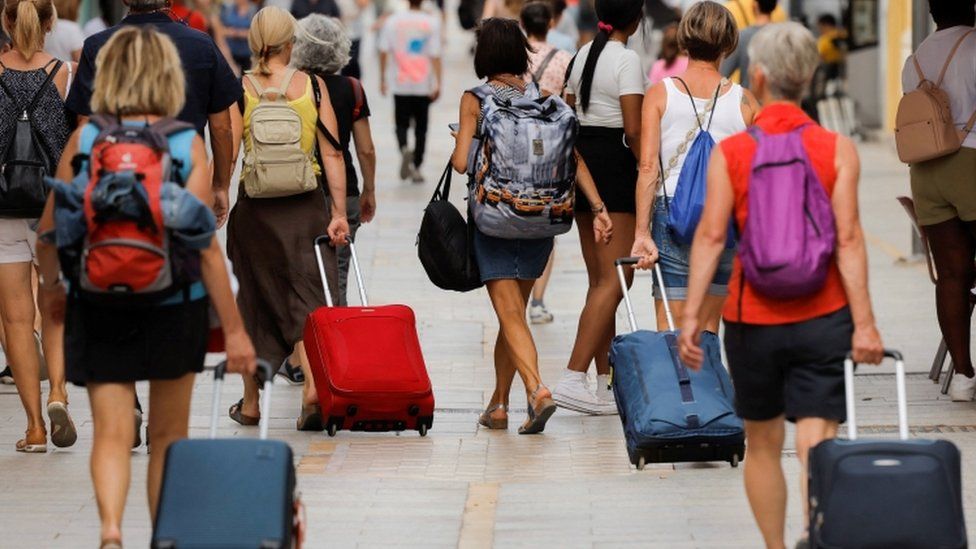
UK citizens who have not had a coronavirus jab can now travel to Spain by showing a negative PCR or antigen test on arrival.

The Spanish government confirmed that non-vaccinated travellers from outside the EU can enter the country from Saturday.

Fully vaccinated passengers will still need to show proof of vaccination.

This included passenger locator forms and tests for passengers who do not qualify as vaccinated.

Other European countries followed suit, with Austria, Greece, Switzerland, Bulgaria, Croatia, Lithuania, Sweden, Serbia, Slovenia and Slovakia no longer having any Covid travel restrictions for visitors.

Previously, heightened restrictions meant UK travellers were only allowed to enter Spain with vaccine certification or proof of recovery from the virus.

As the latest wave of that strain dissipated, countries across the world loosened their Covid travel restrictions to welcome visitors again.

And on Saturday, Spanish tourism minister Reyes Maroto said the “new phase of the pandemic” meant the country was able to relax the rules by equating non-EU travellers with those of the EU and Schengen-associated countries.

“This is excellent news, much awaited by the tourism sector,” said Ms Maroto, adding: “Spain is becoming one of the most desired destinations in the world.”

Analysis by Simon Browning, BBC business reporter

We love Spain.

Mallorca, Marbella and Madrid are some of our holiday favourites.

In 2019, 18 million visitors from the UK arrived at Spanish airports – and the Spanish want to see the same numbers hitting their beaches again this year.

Demand is high for holiday destinations across Europe, with airlines and tour operators reporting surges for summer sun bookings almost everywhere.

But Spain wants to retain its crown as Britain’s favourite, and to do that it has to be open to everyone. That’s why they’ve followed European holiday rivals and started allowing unvaccinated travellers – with a negative test – from today.

More holidaymakers means more euros arriving and that’s good for the Spanish economy, where tourism is crucial.

From 21 May, all visitors entering Spain at air or sea borders, wherever they are travelling from, must provide one of the following three certificates:

  • Vaccination certificate meeting the government’s requirements
  • A negative test certificate (PCR or similar)
  • Certificate of recovery at least 11 days after testing positive

Spain accepts the UK’s proof of Covid-19 vaccination record, either digitally, or as a printed download.

PCR tests must be carried out in the 72 hours prior to departure to Spain or an antigen test in the 24 hours prior to departure.

Proof of recovery certificates will be valid for 180 days from the date of the positive test.

Children under the age of 12 are exempt from submitting any type of certificate.

Abta says this summer is expected to be the busiest holiday season since the Covid pandemic began

Julia Lo Bue-Said from the Advantage Travel Partnership, an independent travel agent group, said: “This is very good news just ahead of the May half-term and peak season.”

Describing it as “extremely positive” for holidaymakers and the travel industry, she added: “However, it is disappointing that Spain has not gone further and removed the need for pre-arrival tests for unvaccinated travellers given the minimal benefit these tests have for public health.

“Consumers want to travel with ease and if destinations prohibit this, then they will go elsewhere.”

The Association of British Travel Agents (Abta) said the relaxation of the rules was great news as Spain is the most popular summer holiday destination for Britons.

The travel industry trade body said: “This summer is expected to be the busiest holiday season since the start of the pandemic, with 70% of families saying they have a holiday abroad booked this year.”

Abta said that France, Italy, Greece and Portugal were also proving popular. While Greece has scrapped all Covid travel restrictions, the other three countries still require visitors to meet certain entry rules.

Travellers either need proof of vaccination or to have taken a negative test before leaving the UK, while Italy and Portugal will also accept a Covid recovery certificate.

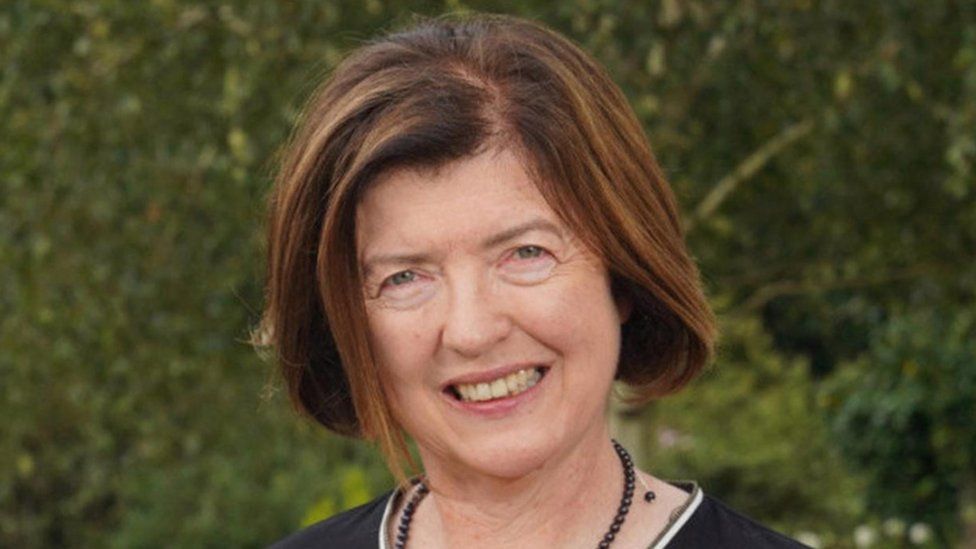
Officials set to be named by Sue Gray in her upcoming report into Downing Street gatherings have until 17:00 BST on Sunday to lodge any objections.

Ms Gray, a senior civil servant who has led the investigation, is expected to publish her full report within days.

Around 30 individuals, including Prime Minister Boris Johnson, have been told they are likely to be named.

As of Saturday night, none had launched legal action to try to prevent their names being included in the findings.

Speaking to the BBC, Whitehall sources conceded that challenges could still be launched before the deadline.

Any such moves could further delay the report, the release of which was already postponed until after the Metropolitan Police had concluded its own investigation.

This resulted in a total of 126 fines being issued to 83 people, including one to Mr Johnson.


It is not known how much of the evidence gathered by Ms Gray, which includes a total of 510 images, will be made public.

But Labour has called for the report to be published “in full and with all accompanying evidence”.

The BBC understands it is unlikely all the images will be released, although it is possible some will be published to illustrate the nature of the gatherings.

On Friday it emerged the prime minister and Ms Gray met several weeks ago over the report, although there are conflicting accounts of what was discussed.

Mr Johnson faced calls to explain the meeting from opposition parties, who said it threatened to undermine public confidence in the investigation.

Downing Street said the prime minister had been “clear throughout” that the report should be “completely independent”, and the findings had not been discussed.

There hasn’t been a renewed clamour among Conservative MPs for the prime minister to go, now that police have confirmed the scale of the fines imposed on officials and politicians in Downing Street.

But Boris Johnson’s long-standing critics will pore over the Sue Gray report to assess whether his initial assertion that Covid guidance and rules were followed was credible.

The devil for Mr Johnson will be in the as-yet unseen detail of the Downing Street gatherings. If, for example, she were to provide descriptions – or even possibly, in some cases, images – of events that weren’t socially distanced, that could potentially inflict more damage on the prime minister.

But if Mr Johnson, in the statement he will make to MPs when the report becomes public, can convince colleagues he was the victim of bad advice from his officials, then his next challenge will come in June.

That’s when voters will get a chance to have their say in two crucial by-elections in Conservative held seats.

An interim version of the report, published in January, did not name individuals but criticised “failures of leadership and judgement” and said some events should not have “been allowed to take place”.

The prime minister faces a further inquiry by the Commons’ Privileges Committee about whether he knowingly lied to Parliament when he previously told MPs that no laws had been broken in Downing Street.

Under government guidelines, ministers who knowingly mislead the House of Commons are expected to resign.

Bilawal arrives in China today

According to an official statement of the Foreign Office, the minister of state for foreign affairs and senior officials would be part of the foreign minister’s delegation.

During the visit, the foreign minister will hold extensive consultations with Mr Wang.

The two leaders will review the entire gamut of bilateral relations with particular focus on stronger trade and economic cooperation between the two countries.

The progress of China-Pakistan Economic Corridor (CPEC), the flagship project of President Xi Jinping’s Belt and Road Initiative, will also feature in the discussions.

The two sides will also have wide-ranging exchange of views on major regional and international issues.

Mr Bhutto-Zardari’s visit will also coincide with the 71st anniversary of the establishment of diplomatic relations between Pakistan and China.

The foreign minister’s visit will contribute towards further fortifying the time-tested all-weather strategic cooperative partnership between Pakistan and China, enhance and deepen CPEC-related engagement, and help in identifying new avenues for bilateral cooperation to the benefit of the two countries and their peoples.