
Drug shortage worries doctors in Sri Lanka

Sri Lanka imports more than 80pc of its medical supplies but with foreign currency reserves running out because of the crisis, essential medications are disappearing from shelves and the healthcare system is close to collapse.

At the 950-bed Apeksha cancer hospital on the outskirts of the commercial capital, Colombo, patients, their loved ones and doctors feel increasingly helpless in the face of the shortages which are forcing the suspension of tests and postponement of procedures including critical surgery. “It is very bad for cancer patients,” said Dr Roshan Amaratunga.

“Sometimes, in the morning we plan for some surgeries (but) we may not be able to do on that particular day … as (supplies) are not there.” If the situation does not improve quickly, several patients would be facing a virtual death sentence, he said.

Sri Lanka is grappling with its most devastating economic crisis since independence in 1948, brought about by Covid-19 battering the tourism-reliant economy, rising oil prices, populist tax cuts and a ban on the import of chemical fertilisers, which devastated agriculture.

A government official wor­king on procuring medical supplies, said about 180 items were running out, including injections for dialysis pati­ents, medicine for patients who have undergone transplants and certain cancer drugs. The official, Saman Rathnayake, said that India, Japan and multilateral don­ors were helping to provide supplies, but it could take up to four months for items to arrive.

In the meantime, Sri Lanka has called on private donors, both at home and abroad, for help, he said.

Doctors say they are more worried than the patients or their relatives, as they are aware of the gravity of the situation and the consequences. Referring to the ubiquitous queues for petrol and cooking gas, Dr Vasan Ratnasingam, a spokesman for the Government Medical Officers’ Association, said the consequences for people awaiting treatment were so much more dire.

Pakistan to raise Yasin’s conviction with world bodies: Shehbaz

Meanwhile, the Senate passed a resolution urging the international community to force India to drop all fabricated charges against all political leaders of India-held Kashmir (IHK), including Mr Malik, and ensure their safety and well-being.

On the other hand, Mushaal Malik, the wife of Yasin Malik, held a press conference asking Pakistan Tehreek-i-Insaf (PTI) Chairman Imran Khan to extend the date of his long march by a day and hold a countrywide demonstration for the safety of Mr Malik.

In a tweet, Prime Minister Sharif said Pakistan rejected India’s failed tactics against Yasin Malik, who was a symbol of unparalleled bravery and freedom. He urged the international community, including the United Nations and the Human Rights Council, to take note of India’s extrajudicial measures.

The prime minister said the government of Pakistan would highlight India’s actions against Malik and other Kashmiri leaders at all international forums, including human rights bodies and the Organisation of Islamic Cooperation.

PM Sharif further said that the case against Yasin Malik was unlawful as were the illegal measures of Aug 5, 2019, and pointed out that India was following a deliberate plan to overthrow the real leadership representing Kashmiris. He said the Indian government, which was afraid of the body of Syed Ali Geelani, also feared Malik, a great symbol of Kashmir.

Extend protest

In her press conference, Ms Malik said: “I appeal to Imran Khan with folded hands that extend the PTI long march by one day and come out on the streets to save the life of my husband, who has sacrificed his whole life for the freedom of Kashmir.”

“Imran sahib you are a friend of my husband, extend your dharna (sit-in) for one day, nothing will happen,” she pleaded.

She urged all political parties to shun their differences and raise their voice against the possible capital punishment of Mr Malik.

Senate resolution

Later, the Senate unanimously passed a resolution urging the international community to counsel India to drop all fabricated charges against all political leaders of IHK, including Yasin Malik.

It said the Indian government should arrange a meeting of the Hurriyat leader with his spouse, Mushaal Malik, and their 10-year-old daughter.

The Senate also passed another resolution, expressing solidarity with the family of Hurriyat leader Malik.

Risk of monkeypox spreading widely ‘very low’

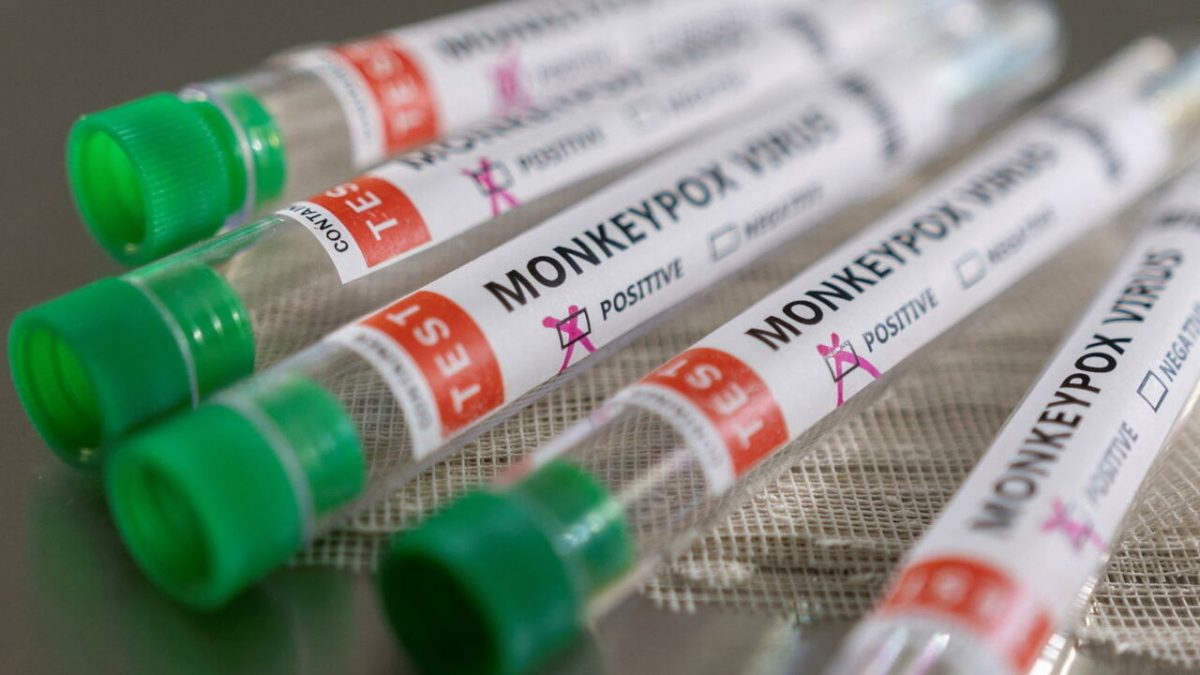
Fewer than 200 confirmed and suspected cases had been recorded since early May in Australia, Europe and North America, the World Health Organisation (WHO) said, sparking fears over the spread of the disease. Although monkeypox has been known for 40 years, WHO said it was the first time there had been several cases across many countries simultaneously and among people who had not travelled to the endemic regions in Africa.

But the UN agency said the outbreaks in non-endemic countries could be brought under control and human-to-human transmission of monkeypox stopped.

The EU’s European Centre for Disease Prevention and Control (ECDC) also played down fears of a spread among the wider public.

Monkeypox, which is not usually fatal, can cause a fever, muscle aches, swollen lymph nodes, chills, exhaustion and a chickenpox-like rash on the hands and face.

The virus can be transmitted through contact with skin lesions or droplets of bodily fluid from an infected person. No treatment exists, but the symptoms usually clear up after two to four weeks. The disease is considered endemic in 11 African nations.

US President Joe Biden insisted Monday “extra efforts” would not be needed to prevent the spread.

Afghan refugees hold rally, want to settle in developed countries

The Afghan nationals, who have been camping outside the National Press Club for the last several weeks, brought out the rally from the press club to D-Chowk.

Some of the protesters Dawn spoke to said they were insecure under the Taliban government that’s why they left their country.

“We are here and want to get settled in any developed country. So far, we are not being given the status of refugees here,” said Alyas Zaki, a protester.

He said Pakistan was also not providing asylum to them, adding: “We know people of Pakistan are also facing several challenges such as unemployment and high inflation, therefore, frankly speaking, we want to stay in any developed country,” he said.

Another protester, Mir Waiz, said after the takeover by Taliban last year, thousands of Afghan nationals came to Pakistan and were now facing issues of documentation as Pakistan, it seems, is not going to provide asylum to them. He urged the developed countries to look into the issues of Afghans who along with their families were moving from one place to other.

Many of the protesters were wearing white shrouds inscribed with the slogan “kill us, kill us”.

The protesters, most of them unable to speak Urdu or English, seemed committed to their cause. Some elderly people on wheelchairs were also part of the protest.

“I don’t want to go back; I will stay here or any other country but will not go back to Kabul because of life threats,” said 50-year-old Habiba, who along with her four daughters moved from Kabul to Islamabad.

She said his husband was a police official but since the takeover of Kabul by the Taliban he has been missing.

It may be noted that Pakistan has already been hosting around 1.5 million Afghan refugees for decades.

US does discuss freedom, human rights issues with India, says Biden’s aide

Mr Sullivan made these remarks on Sunday while talking to a group of journalists accompanying President Joe Biden on his Asian tour. The visit aims to strengthen US alliances with countries in the Indo-Pacific region to curb China’s growing influence. President Biden is also seeking support for US efforts to counter Russia’s invasion of Ukraine.

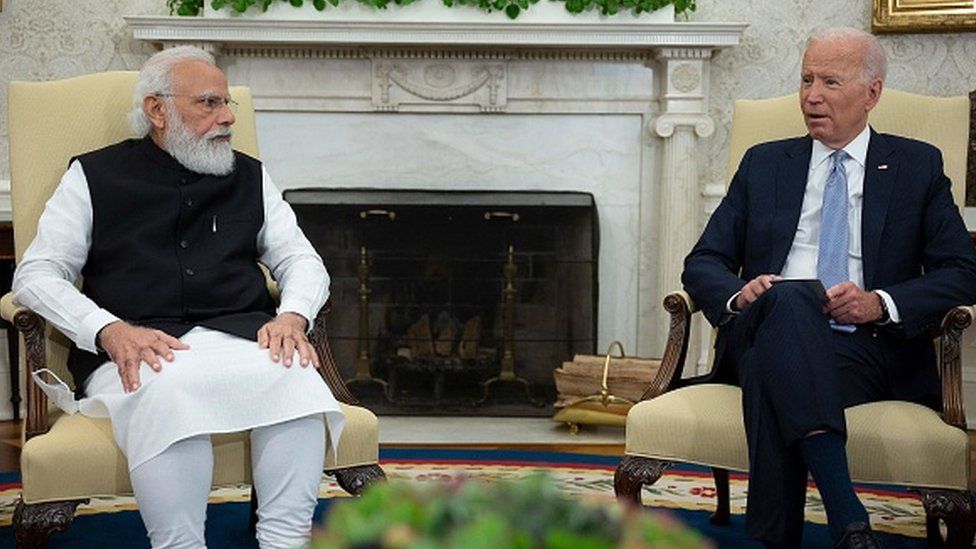
On Tuesday, President Biden will meet Indian Prime Minister Narendra Modi in Tokyo during a summit meeting of the Quadrilateral Security Dialogue, which is also known as the Quad.

Japanese Prime Minister Fumio Kishida and Australia’s newly elected Prime Minister Anthony Albanese will also attend the meeting.

Both US and Indian officials have said that Mr Biden and Mr Modi will also hold a separate meeting, focusing on bilateral issues as well as the Russian invasion.

India enjoys friendly ties with both Russia and the United States and recently purchased oil and gas from Russia on discounted rates despite a US ban on such deals with Moscow.

During the briefing a journalist reminded the US National Security Adviser that the administration often framed its foreign policy strategy as “a global battle between democracies and autocracies.”

“I’m wondering how you balance trying to engage economically with someone like Prime Minister Modi, who himself has been accused, under the guise of democracy, of human rights abuses and maligning Muslim minorities?” the journalist asked.

Mr Sullivan recalled that President Biden had been clear from the beginning of his administration that “we’ll speak out when we see any form of departure from or deviation from basic principles, fundamental freedoms, human rights, the values of democratic institutions, and the rule of law.”

The Biden administration made no exception while applying this principle, he added. “That’s true for a range of countries. And, you know, we don’t single India out.”

The United States, he said, had found a way both to pursue practical cooperation with countries that were “democratic and non-democratic,” while at the same time “being clear and consistent of where our values lie.”

Asked what President Biden would say to Mr Modi about the Russian invasion, Mr Sullivan said that President Biden had already had an extended discussion with Prime Minister Modi on this issue when both attended a virtual Quad Summit in March.

The two leaders also talked about when they had a short video bilateral meeting at the top of the 2+2 dialogue with India when two Indian ministers came to Washington.

“So, it won’t be a new conversation. It will be a continuation of the conversation they’ve already had” on this issue, Mr Sullivan explained, adding that Tuesday’s meeting would also focus on food security threats caused by the Ukraine war.

“So, they’ll talk all of that through. And I will leave the specifics of it to what has been a set of private and constructive exchanges,” he added.

Unilateral action on the Northern Ireland Protocol “will not work”, a delegation of US politicians has told the UK government.

Democratic congressman Dan Kildee urged Foreign Secretary Liz Truss to have face-to-face negotiations with Brussels.

The group met Irish premier Micheál Martin on Monday in Dublin, and will later visit Northern Ireland.

But the DUP said their view of the protocol was “one-sided”.

On Monday, Mr Martin said there was “a deep well of support” for a “joint, pragmatic solution” to concerns over the protocol.

He was speaking alongside Prime Minister of the Netherlands, Mark Rutte, who said the EU had “shown maximum flexibility” in negotiations.

A nine-strong team led by Congressman Richard Neal is visiting to discuss the post-Brexit trading arrangements.

Mr Kildee, who met Ms Truss over the weekend, said there was no indication the UK Government intends to “change course”.

“It’s important, and we stress this, that the (UK Government) negotiate and that they not take unilateral action,” Mr Kildee told RTE Morning Ireland.

“The only way we can come to agreement, the only way we protect the incredible progress that’s represented with the Good Friday Agreement, is face-to-face negotiation.

“We think unilateral solutions will not work, face-to-face negotiation to work out some of these technical questions can be achieved.”

Speaking in Kerry on Sunday, Mr Neal said the US would be “unwavering” in its support of the Good Friday Agreement.


Gordon Lyons said his party would have a difficult task explaining its views on the protocol to the US politicians

But the DUP says the protocol will destroy the agreement.

Economy Minister Mr Lyons said it was “not going to be an easy task” to explain that view to the US delegation.

But speaking on BBC News NI’s Good Morning Ulster programme on Monday, Mr Lyons said his party would be very clear when it meets with the US team, that “rather than protecting the Good Friday Agreement and its successor agreements, the protocol actually damages them”.

“It is not going to be an easy task,” Mr Lyons said.

“I previously met with Congressman Neal in Washington and reminded him and [House of Representatives Speaker] Nancy Pelosi of the problems with the protocol.

“It is fair to say they weren’t interested and we’re going to have a particular challenge with Congressman Neal.”

Mr Lyons said Mr Neal was a supporter of Irish unification and that he had worked closely with Friends of Sinn Féin.

“So yet again we’re dealing with more American politicians who are one sided and that adds to the challenges too,” he added.

Mr Lyons said his party wanted to see movement on the protocol but also accused the EU of being “painfully slow” at recognising issues surrounding the post-Brexit trading mechanism.

Congressman Richard Neal is leading the congressional delegation

The protocol is a special arrangement that keeps Northern Ireland aligned with the EU single market for goods, avoiding a hard border with the Republic of Ireland.

The arrangement ensured free trade could continue across the Irish land border, which is a sensitive issue because of the history of conflict in Northern Ireland.

But it brought in some new checks on goods moving between Great Britain and Northern Ireland and has been criticised by unionist politicians since its introduction in 2021.

They say it has undermined Northern Ireland’s place in the UK and that it has led to increased costs for consumers.

Congressional delegation

Sinn Féin leader Mary Lou McDonald met Mr Neal in Dublin on Monday.

Following the meeting, Ms McDonald tweeted: “The USA stands resolute in defence of the Good Friday Agreement and the protocol. It is imperative that the executive is formed. No delay.”

On a visit to County Kerry in the Republic of Ireland on Sunday, Mr Neal described the United States as a “guarantor of the Good Friday Agreement”.

“The Good Friday Agreement has worked, and it’s worked quite well,” he said.

Ms Truss announced on Tuesday that new legislation would be introduced to change the protocol.

In Europe’s oil capital, everyone knows the boom times are over.

Faced with the climate emergency, Aberdeen is having to move away from an industry that has created half a million jobs and brought almost incalculable wealth to north east Scotland.

But what happens next? Some young people are still banking on a career in the oil industry. Others are focusing on a future in renewable energy.

As politicians argue over a “just transition” to a greener future, thousands of jobs and the future of the planet depend on finding the right answers.

Who are the oil engineers of the future?

At Aberdeen’s Robert Gordon University (RGU), drilling and well engineering students are still hopeful of pursuing a career in oil and gas.

The vast majority are from parts of the world where energy transition is not so high up the political agenda – and many have no plans to stay in Scotland after they graduate.

They know that the world is still dependent on fossil fuels to heat homes, fuel vehicles and power industry.

Despite the moves towards producing more clean energy in Scotland, more than three-quarters (76.5%) of the country’s energy consumption came from oil and gas in 2019.

Affan Peshimam, 30, from India, is following in the footsteps of his father who worked in the oil and gas sector in the North Sea.

He said: “I love the smell of petrol. I love working offshore away from civilisation.”

Affan Peshimam will return to India to pursue a career in oil and gas

And he’s convinced that he can enjoy a full career in the industry in India once he’s graduated in Aberdeen.

“There’s still a lot of oil remaining, at least 30 or 40 years more,” he said. “Every time they say the peak has come, I don’t think so. Maybe for the North Sea.

“For certain parts of the world where there’s no oil left, the peak has come. But in Africa and India and the Far East we still have so much reserves left we can’t just keep them.

“Of course we have started some solar but we are still dependent on oil and gas. And coal, obviously.”

Affan is right about the North Sea – production peaked about 20 years ago and since then the UK has gone from producing more oil and gas than it needs, to importing it from other countries.

As prices rise following the Covid pandemic and the Russian invasion of Ukraine, this has raised concerns about UK energy security.

It has led to calls from some quarters for more oil fields – like the controversial Cambo field – to be opened to offset decades of decline.

Ryan Crighton, of the Aberdeen and Grampian Chamber of Commerce, said the growing energy deficit leaves Scotland with two choices: “To produce more domestically, with full control over the regulatory environment in which it is extracted. Or to import more energy from overseas, without the tax revenues that the North Sea gives us.

“The latter makes little economic sense and even less environmental sense.”


Others – including First Minister Nicola Sturgeon – argue that accelerating the transition to more renewable forms of energy is the best response to the crisis.

Eta Etta-Agbor, another drilling and well engineering student at RGU, knows she is acquiring skills which could be transferred to the renewables industry, if it comes to it.

Drilling and well engineering student Eta Etta-Agbor believes she could switch to the renewables industry

But the 42-year-old from Nigeria – which has some of the largest oil reserves in Africa – aspires to work for one of the majors like Shell or Chevron.

“What we are learning here, I could easily switch into the (renewables) industry but the fact is there will still be lots of drilling taking place,” she said.

And she pointed to the importance of gas in generating electricity – the UK, and England and Wales in particular, still relies on it heavily.

“Gas is essentially like the next fuel that can be used for electricity so we’ll still be drilling more gas in the future so I’ll still be relevant in the industry,” she said.

But over the next decade the mix of fuel generating electricity in Scotland will be transformed beyond recognition.

Coal power will end and many of our nuclear power stations will come to the end of their lives. Offshore wind is likely to become the powerhouse of our economy.

The ScotWind leasing round alone, announced in January, will generate enough electricity when it’s at maximum capacity to power about 85% of the UK’s homes.

It will see 17 new offshore wind projects built in waters around Scotland, with each expected to spend an average of £1.5bn on its supply chain.

The projects – many backed by big name oil and gas firms with the deep pockets necessary to invest in new technology – will also need a new workforce.

Their existing employees are among those switching to the greener jobs.

Who is making the move to renewables?

Harry Waugh is a project manager for an offshore wind farm

Harry Waugh was initially attracted to the oil and gas industry because of his love of engineering, problem-solving and “big things”.

He worked as an engineer in oil and gas for 11 years before moving into renewables as a project manager for an offshore wind farm.

There is a “ridiculous amount” of experience among his former colleagues which could be transferred into offshore renewables, the 34-year-old from Perth said.

And as wages in the renewable sector begin to equal those in oil and gas, he expects to see more people make the leap.

But he warned that green jobs were unlikely to be able to replace every traditional North Sea position.

There were 4,700 full time equivalent jobs supported by Scotland’s offshore wind industry in 2019, compared to 86,000 oil and gas jobs in the same year.

“An offshore oil and gas production plant is quite a complicated beast,” he said. “A $3bn oil and gas plant will have 100 people offshore; a $3bn wind farm will have nobody offshore.

“It’s not a job-for-job situation. In development and commissioning, it’s the same numbers but as soon as the turbines are spinning, it flicks to a different beast.”

Once wind turbines are constructed, they require few staff to keep the blades spinning

As the offshore wind industry begins to ramp up, Ryan Crighton is clear that Scotland must avoid a “cliff edge” end to North Sea oil and gas production.

“We need to keep this highly-skilled [oil and gas] workforce in work while we develop the low carbon technologies of the future,” the policy director of Aberdeen and Grampian Chamber of Commerce said.

“Those jobs aren’t there at scale right now. However, if we can manage this transition correctly, then research suggests we could end up with more people employed in our energy sector than we do right now. That is the outcome we should strive for.

“This region will benefit from being one of the first to tackle these challenges, and over time has the potential to become a net exporter of net zero.”

BP suggests UK renewables jobs to match oil boom

And BP’s head of UK operations, Louise Kingham agrees. She said they are “quite convinced” enough jobs can be created in its alternative energies business to replace those lost by the shift away from oil.

“We have real ambition to make sure that we can provide opportunities for people to move from one aspect of the energy work that we do to another.”

Who else is adapting to the change?

It’s not just the engineers on the rigs who are seeing huge changes in Aberdeen’s energy industry.

Many of those in businesses which have long supported oil and gas firms’ traditional operations are adapting to changing priorities.

Among them are firms like North Star, which started out in fishing before the oil boom of the 1970s saw them dip their toe in new waters.

They now have dozens of ships supporting the oil and gas sector but have just won contracts to provide vessels for the Dogger Bank wind farm off the north east coast of England.

Their cadet training programme creates the next generation of mariners to support whatever industry is out there.

Courtney Stanton is excited about the prospect of supporting the renewables industry

Engine cadet Courtney Stanton is responsible for machinery maintenance on the Grampian Freedom, a 980 tonne standby vessel with a length of 58 metres.

She explained: “As long as there’s going to be oil rigs in the sea there’s always going to need to be a standby ship or a supply ship.”

She said the addition of the renewables sector is a “welcome and needed change” and believes it would be exciting to work in this area.

But at the start of her career she is not fazed saying “jobs will be created which is brilliant and with us in the merchant navy, we tend to go to where the demand is.”

Meanwhile Paul Hudson runs Maersk Training’s UK operation, which is centred on Aberdeen.

He explained: “We all know the pace of energy transition is picking up so we, like other businesses, just have to adapt to that. It’s why we’ve made investments in new facilities specific to the renewables industry for example.”

Those new facilities at their Portlethen site, south of Aberdeen, focus on rope and climbing skills as well as more traditional needs like firefighting.

Workers are more likely to travel to wind turbines by boat rather than helicopter which is more common for rigs.

Paul adds that demand for renewable skills is growing but “for us, oil and gas will still remain a big part of the throughput of training that we do.”

The Metropolitan Police is facing fresh questions over why Boris Johnson was not fined for attending a gathering in Downing Street during lockdown

It comes after ITV released new pictures showing the PM raising a glass at a leaving do on 13 November 2020.

The police watchdog has been urged to review the Met’s handling of the Partygate investigation.

Meanwhile, civil servant Sue Gray’s report into No 10 parties is imminent, a Downing Street source said.

The prime minister and the Met are under fresh scrutiny after ITV News published four new photographs on Monday it says were taken at the leaving do for Mr Johnson’s communications chief, Lee Cain.

Mr Johnson is pictured toasting colleagues while standing by a table laden with wine bottles and wine glasses.

A second coronavirus lockdown was in place in England at the time the photographs were taken, with indoor gatherings of two or more people banned, except if “reasonably necessary” for work purposes.

The BBC has been told that at least one person who attended the event has received a fixed penalty notice, but Mr Johnson has not. The Met has declined to explain why the prime minister was not fined over the leaving party.


The Liberal Democrats have written to the Independent Office for Police Conduct, urging it to investigate the Met’s probe into events in No 10 and Whitehall during lockdown.

The party’s deputy leader Daisy Cooper said: “If anyone else had been pictured at a party like this during lockdown, surely this would have been enough evidence for them to be fined.

“It does seem that there has been one rule for the prime minister and another for everyone else.”

A No 10 spokeswoman said the Cabinet Office and the police had been given access to information, including photographs.

The emergence of the photographs has sparked fresh claims from opposition MPs and others that Mr Johnson knowingly misled Parliament when he previously told them no Covid rules had been broken in Downing Street.

The prime minister faces a probe by the Commons’ Privileges Committee about whether he lied to MPs. Under government guidelines, ministers who knowingly mislead Parliament are expected to resign.

Responding to the leaked pictures, Labour’s deputy leader Angela Rayner said the PM had “demeaned his office” and that “the British people deserve better”.

The peer and former leader of the Scottish Conservatives, Ruth Davidson, said the prime minister’s position was untenable, while veteran Tory MP Sir Roger Gale said the new images were “damning” and suggested Mr Johnson should quit.

How much do the Partygate photos matter?

Just when the prime minister might have hoped the bumpy moments of Partygate might be beginning to ease, these pictures emerge.

We already knew about the event in question.

But there’s one thing knowing about a party, something else seeing pictures from it. Pictures of partying when the rest of the country was in lockdown.

The big question, though, is how much does it matter?

How many minds will move, particularly among Conservative MPs who, remember, have the capacity to remove a party leader if they choose?

You can read Chris’s full blog here.

But Conservative backbench MP Sir Desmond Swayne said he believed it was a “work do”, adding “that’s what people do at work”.

He told BBC Newsnight: “Now I understand entirely the public anguish at a time when they were locked down and they were not supposed to be together, but there clearly was a distinction between the workplace – where people work together and are effectively in a bubble – and what was taking place outside.”

A No 10 spokeswoman said the prime minister would address parliament “in full” after senior civil servant Sue Gray published her report into the gatherings “in the coming days”.

Allegations about events held in Downing Street and Whitehall during the pandemic led to a Metropolitan Police probe into 12 events.

The inquiry concluded last week, with a total of 126 fines being handed to 83 people for parties held over eight separate dates.

Mr Johnson, his wife Carrie, and Chancellor Rishi Sunak all received a fine each for attending a birthday party thrown in the PM’s honour in June 2020.

Angela Rayner on PM drinking images: “I think they are appalling.”

But No 10 confirmed the PM was not facing any additional fines from the police.

MPs are also awaiting the outcome of an investigation by Durham Police into a gathering in the city on 30 April 2021 attended by Labour leader Keir Starmer and his deputy Ms Rayner.

Sir Keir has said he will resign if he is fined for attending the event.

The UK’s withdrawal from Afghanistan last year was a “disaster” and a “betrayal” that will damage the nation’s interests for years, an inquiry by MPs has found.

The Foreign Affairs Committee said there had been “systemic failures” of intelligence, diplomacy, and planning.

“Mismanagement” of the evacuation as the Taliban quickly took over the country “likely cost lives”, MPs said.

The UK government said “intensive planning” went into the withdrawal.

A spokesperson for the Foreign, Commonwealth and Development Office defended its handling of the withdrawal and said it would review and respond to the committee’s findings.

But the MPs who carried out the inquiry said they had lost confidence in the department’s top civil servant, Sir Philip Barton, and urged him to consider his position.

The report said Sir Philip, the then-Foreign Secretary Dominic Raab and Prime Minister Boris Johnson were all on leave when the Taliban took Afghanistan’s capital, Kabul.

“The fact that the Foreign Office’s senior leaders were on holiday when Kabul fell marks a fundamental lack of seriousness, grip or leadership at a time of national emergency,” the cross-party committee said.

Labour’s Shadow Foreign Secretary, David Lammy, said the report “highlights the scale of the government’s incompetence, laziness and mishandling” of the withdrawal.

“The Conservative government has badly let down Britain’s reputation on the global stage and those responsible for this calamity should be held accountable,” he said.


A coalition of international forces – led by the US – completed their withdrawal from Afghanistan on 30 August 2021, marking the end of the 20-year campaign in the Middle-Eastern country.

US-led forces went into Afghanistan in 2001, removing the Taliban from power in the wake of the 9/11 attacks, which were blamed on al-Qaeda – a militant jihadist group.

The UK sent forces but ended its combat operations in 2014, leaving hundreds of troops to help train the Afghan government’s army.

In February 2020, a withdrawal deal was signed by the Taliban and the US under former President Donald Trump and a year later his successor, Joe Biden, honoured the agreement.

Watch Taliban celebrate after the the last American soldier leaves Afghanistan

As the US pulled out troops and reduced military support for the Afghan army, the Taliban made rapid territorial gains, reclaiming control of the whole country by mid-August.

“The UK’s part in this tragedy exposes a lack of seriousness in achieving co-ordination, a lack of clear decision-making, a lack of leadership and a lack of accountability,” said Conservative MP Tom Tugendhat, who chairs the Foreign Affairs Committee.

A reminder of the horror and shame

The report brings back the sense of horror and, for some, shame generated by last August’s traumatic evacuation from Kabul.

It was always inevitable that ministers and senior officials were going to be lambasted. During the committee’s hearings, MPs expressed their dismay that the Foreign Office’s top civil servant hadn’t seen fit to return from holiday until the civilian evacuation was over.

And it was clear that they found some of the answers they received evasive and unconvincing.

Some will argue that the speed of the Taliban’s takeover of the country could not have been anticipated and made planning for such a complex evacuation impossible without causing widespread panic.

It’s not an argument that cuts much ice with the MPs. They say there was plenty of time to make plans and that what happened was a betrayal that will haunt the UK’s international reputation for years.

line

In September 2021, the committee launched an inquiry to consider the role of the FCDO in the build-up to, during and after the withdrawal.

The committee published its findings on Tuesday in a report, which “identified systemic failures of intelligence, diplomacy, planning and preparation – many of which were due, at least in part, to the Foreign Office”.

In key findings, the report said:

On planning for withdrawal

  • The government “failed effectively to shape or respond to” the US’s decision to withdraw from Afghanistan, which was known since February 2020
  • The FCDO “failed to make the necessary preparations for withdrawal” by laying the groundwork for an evacuation with third countries
  • There was a “total absence of a plan for evacuating Afghans who supported the UK mission, without being directly employed by the UK government”

On the evacuation

  • This “mismanagement” of the evacuation in a crucial period “likely cost hundreds of people their chance to leave the country, and as a result likely cost lives”
  • The fact that the FCDO’s top civil servant did not return from leave until the civilian evacuation was over “is difficult to understand and impossible to excuse”
  • The FCDO gave the committee answers that were “often deliberately misleading” in response to questions about the decision to evacuate animals looked after by the charity Nowzad

On the future relationship with Afghanistan

  • Attempts to isolate the Taliban “may only worsen the situation for the Afghan people, reduce the UK’s influence, and leave a vacuum to be filled by powers such as China”
  • The primary UK policy goal in Afghanistan “should be to reduce the impact of the humanitarian disaster unleashed by the international withdrawal”
  • The withdrawal has “serious implications for British security and has “heightened the terror threat” from Afghanistan

The UK airlifted about 15,000 Afghans and British nationals out of Kabul as the Taliban took control of the country. Thousands of staff from across the UK government and partners supported the evacuation effort.

“This was the biggest UK mission of its kind in generations and followed months of intensive planning and collaboration between UK government departments,” an FCDO spokesperson said.

“We are still working hard to assist the people of Afghanistan, having already helped over 4,600 individuals to leave the country since the end of the military evacuation.

“We carried out a thorough review to learn lessons from our withdrawal from Afghanistan and have drawn on many of the findings in our response to the conflict in Ukraine including introducing new systems for managing correspondence and increasing senior oversight of our operational and diplomatic response.”

Biden in Japan, but concern over North Korea clouds visit

Biden, making his first trip to Asia as president, flew from South Korea into Yokota Air Base outside Tokyo, where he will meet with Japan’s Prime Minister Fumio Kishida and emperor on Monday, as well as unveiling a US-led multilateral trade initiative.

On Tuesday, he reinforces the theme of American leadership in the Asia-Pacific by joining the leaders of Australia, India and Japan for a summit of the Quad group.

The trip, which comes as rival China is experiencing significant economic disruption due to Covid outbreaks, has been touted by Washington as a display of US determination to maintain its commercial and military edge across the region.

But hanging over every step of Biden’s tour is fear that unpredictable North Korea will test a nuclear-capable missile or a bomb.

Speculation that this might even happen while Biden was just across the border in Seoul did not materialise. However, US National Security Adviser Jake Sullivan told reporters that the threat remains.

Echoing Biden’s earlier statement that the United States is “prepared for anything North Korea does”, Sullivan said the dictatorship has a choice.

“If North Korea acts, we’ll be prepared to respond. If North Korea doesn’t act, North Korea has the opportunity, as we’ve said repeatedly, to come to the table.”

Pyongyang has so far declined to answer US appeals for dialogue, officials say, even ignoring offers of help to combat a sudden mass outbreak of Covid-19, according to Biden.

And while in Seoul, Biden confirmed he was prepared to meet with Kim Jong Un if the leader-for-life is “sincere”, but Sullivan said that remains far off.

“We’re not even at step one yet,” he said.

Symbolising the apparent one-way conversation, Biden said the only message he has right now for Kim would consist of a single word: “Hello. Period,” he said.

Biden spent two days with South Korea’s new President Yoon Suk-yeol, with beefing up the military defence against North Korea high on the agenda.

They issued a statement on Saturday saying that “considering the evolving threat” from Pyongyang, they were looking at expanding the “scope and scale” of joint US-South Korean military exercises.

Joint exercises had been scaled back due to Covid and for Biden and Yoon’s predecessors, Donald Trump and Moon Jae-in, to embark on a round of high-profile but ultimately unsuccessful diplomacy with North Korea.

In contrast to the dovish Moon, Yoon said he and Biden discussed possible “joint drills to prepare for a nuclear attack” and called for more US assets to be deployed to the region.