
Israeli air strikes martyr 26 Palestinians in Gaza

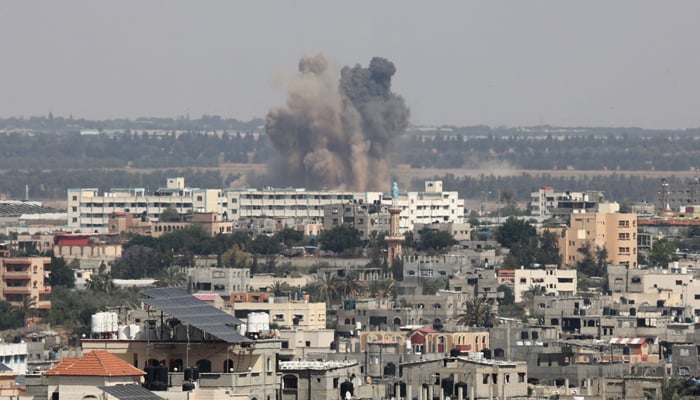
Israel and Palestinians traded more heavy fire Thursday, the third day of the worst escalation of violence in months that has resulted in the martyrdom of 26 people in the blockaded Palestinian enclave — Gaza.

Air strikes by the Israeli army since Tuesday have martyred freedom fighters as well as civilians, including several children, said officials in the crowded coastal territory.

Cairo mediated in efforts towards a truce between Israel and the Islamic Jihad group, while France, Germany, Jordan and Egypt called for an end to the violence.

“The bloodletting must end now,” said German Foreign Minister Annalena Baerbock after hosting her three counterparts for talks in Berlin.

The Israeli military has claimed that more than 550 rockets have been fired from the Gaza Strip at Israel, causing no casualties so far.

Of these, over 440 rockets made it over the border and at least 154 were intercepted by the Iron Dome missile defence system, while one in five fell inside Gaza, it said.

Shops in Gaza were shuttered and the streets largely abandoned as Israeli military aircraft circled over the territory where several buildings lay in ruins.

The Islamic Jihad confirmed it has lost five military leaders in strikes in recent days, including Ahmed Abu-Deka.

Abu Deka was the deputy of Ali Ghali, the commander of a rocket launch unit killed by Israel earlier on Thursday.

The Gaza health ministry said a man had been martyred in southern Gaza, with the Islamic Jihad confirming it was Abu Deka.

Fresh rockets at southern Israel followed the Israeli strike, AFP correspondents said.

Another group, the Popular Front for the Liberation of Palestine, said four of its freedom fighters had been martyred.

Israeli Defence Minister Yoav Gallant said he had instructed the security establishment “to take all the measures necessary, to prepare additional actions and maintain readiness for the possibility of increased fire”.

‘Wave of escalation’

In Gaza City’s Al-Rimal district, Mamoun Radi, 48, said: “We hope that the wave of escalation will end, but we support revenge for the martyrs.

“Israel assassinated a leader of [Islamic] Jihad at dawn today because it does not want calm.”

Across southern Israel, sirens wailed intermittently through the night and Thursday morning.

Miriam Keren, 78, an Ashkelon resident, said a Gaza rocket had destroyed a workshop and damaged her house.

“All the shrapnel is in the room; the house was shaken very powerfully, the glasses fell, the walls were damaged,” she told AFP.

“Luckily I have a safe room and I entered it immediately and closed the door.

“This isn’t the first time the house was hit but I’m not afraid, neither was I yesterday. You’re shocked for a moment but it’s not about fear. It’s more unpleasant, very unpleasant.”

Ceasefire efforts

An Islamic Jihad source told AFP that senior member Mohammad al-Hindi, head of the group’s political department, would arrive in Cairo on Thursday for talks with Egyptian intelligence officials.

An Egyptian source meanwhile told AFP that a security delegation from Cairo would be in Tel Aviv later Thursday for talks with Israeli officials on a ceasefire.

Israeli officials confirmed Egypt’s involvement in attempts to facilitate understandings between the sides toward halting the hostilities.

On Thursday, US Ambassador to Israel Tom Nides said, “We stand by Israel’s right to defend itself”, and that Washington was engaged in efforts “towards a quick deescalation”.

Both Hamas, which rules Gaza, and the Islamic Jihad are considered terrorist groups by Israel and the United States.

This week’s Gaza violence is the worst since a three-day escalation in August martyred 49 Palestinians, with no Israeli fatalities.

Violence has also flared in the occupied West Bank, where the Israeli army has staged repeated raids against militants which have often flared into street clashes or gun battles.

On Thursday, a Palestinian died from his wounds after being shot by the Israeli army in a raid the day before in the West Bank city of Qabatiya, the Palestinian health ministry said.

The conflict has escalated since veteran leader Benjamin Netanyahu returned to power late last year heading a coalition with extreme right and ultra-Orthodox parties.

Israel has also been shaken by its biggest domestic political crisis in decades as mass protests have flared against plans to reform the justice system, spearheaded by Netanyahu who is also battling corruption charges in court.
Pakistan’s Supreme Court has ruled that former prime minister Imran Khan’s dramatic arrest on corruption charges this week was illegal.

The court ordered Mr Khan’s immediate release. His lawyers had argued that his detention from court premises in Islamabad on Tuesday was unlawful.

At least 10 people have been killed and 2,000 arrested as violent protests have swept the country since he was held.

Tuesday’s arrest escalated growing tensions between him and the military.

The opposition leader, ousted in a confidence vote in April last year, was brought to court on the orders of Pakistan’s top judge.

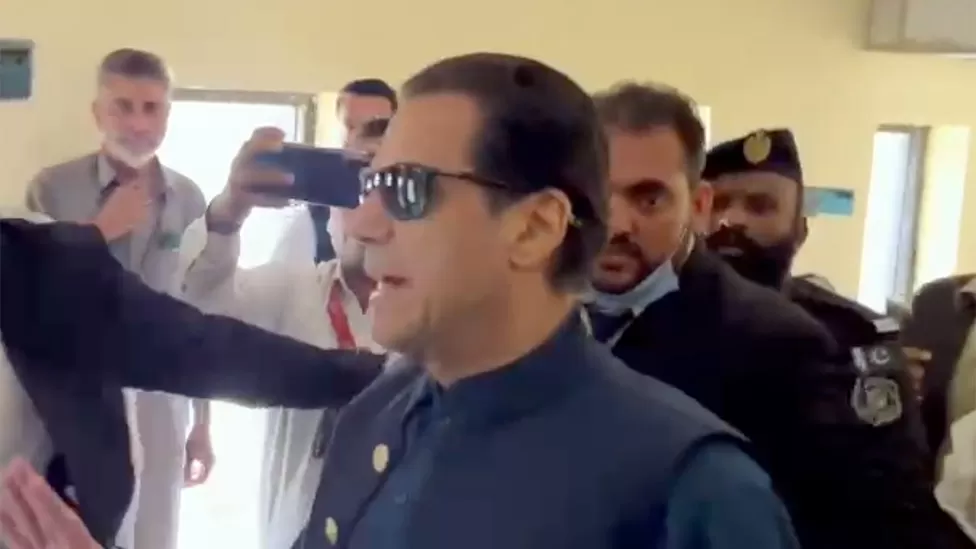
As Mr Khan arrived in court, media ran through the corridors to capture his first public appearance since he was arrested.

Surrounded by security, Mr Khan said nothing as he walked to the wood-panelled courtroom which was filled with officials from his party and journalists.

The Supreme Court was surrounded by police

Mr Khan stood surrounded by his lawyers in front of the three Supreme Court judges as they told him that because of the way he had been arrested on Tuesday – inside a court complex, conducting biometric tests – the arrest was invalid.

Footage of his arrest showed paramilitary forces seizing Mr Khan, who was injured in a gun attack last year, and dragging him from inside court premises, before whisking him away in an armoured vehicle.

“Your arrest was invalid so the whole process needs to be backtracked,” Chief Justice Umar Ata Bandial told Mr Khan. He would now be under the protection of the Supreme Court.

It was then Mr Khan’s turn to speak, defiant and indignant at the way he had been arrested.


The former cricketer told the judges he’d been kidnapped from the High Court on Tuesday and “hit with sticks”. He was reminded several times by the judges that others had experienced worse treatment.

There was no immediate response from the security forces to the allegation.

Watch dramatic arrest of Pakistan’s former prime minister

His Pakistan Tehreek-e-Insaf (PTI) party says the cases against him are politically motivated. The arrest enraged his supporters – the past 48 hours have seen widespread violence and rare attacks on state and military facilities.

Seven senior PTI leaders are among those arrested. They include former foreign minister Shah Mahmood Qureshi, who police say “incited violence”. In a statement Mr Qureshi denied this and urged supporters to continue with peaceful protests.

Mr Khan has been kept at a police guesthouse in the capital since Tuesday, which was turned into a makeshift court on Wednesday where a judge formally charged him with corruption for the first time in the dozens of cases he faces. He pleaded not guilty.

Conviction would disqualify the former international cricket star – prime minister from 2018-2022 – from standing for office, possibly for life. Elections are due later this year.

Former Pakistani ambassador Maleeha Lodhi told the BBC she thought the court’s decision would help to defuse the anger of Mr Khan’s supporters.

A paramilitary check post in Karachi that was set on fire during the recent protests

“The last couple of days have seen extraordinary violence by protesters who are supporters of Imran Khan, who are obviously enraged by the manner in which he was arrested,” she said.

“There is still uncertainty, but hopefully the situation will not return to the kind of violent scenes that we have seen.”

Although Mr Khan asked repeatedly to be allowed to stay at his home, the court determined that because of the security situation he would have to remain at the police guesthouse. However the judges repeatedly emphasised that he would be allowed to have whoever he chooses as a guest.

When the proceedings finished, Mr Khan sat within the court for 15 minutes taking questions from the media. He said he had not known that people had been killed during the protests or that senior members of his party had been arrested.

He told the BBC that when he was arrested he had been hit on the head and was bleeding and that when those images had circulated around the world the reaction by his supporters was not surprising.

When asked whether he would now ask his supporters to stop violent protests he said that he had already made his statement, saying he had always called for protests to be peaceful.

Supporters of Mr Khan welcomed the court’s decision. “Imran Khan’s release proves we knew the truth,” one man, who had spent the past few days gathered outside the PTI leader’s residence in Lahore, told the BBC.

Another said the verdict had “revived our hope in the nation”.

Khan supporters celebrated in Peshawar after the Supreme Court acquitted him

Many analysts believe Mr Khan’s election win in 2018 happened with the help of the military, which both parties denied. But he later fell out with the powerful army. After a series of defections, and amid mounting economic crisis, he lost his majority in parliament.

Since being ousted less than four years into his term, he has become one of the military’s most vocal critics, and analysts say the army’s popularity has fallen.

In November 2022, Mr Khan was shot in the leg while leading a protest march. He has accused a senior intelligence officials of carrying out the attack – which the military has strongly denied.

A day before his arrest, the military warned him against making “baseless allegations” after he again accused a senior officer of plotting to kill him.

Observers see the country facing an unprecedented series of crises – given endless political turmoil, the economy on a cliff edge and mounting violence by Islamist militants eroding confidence in the security forces.

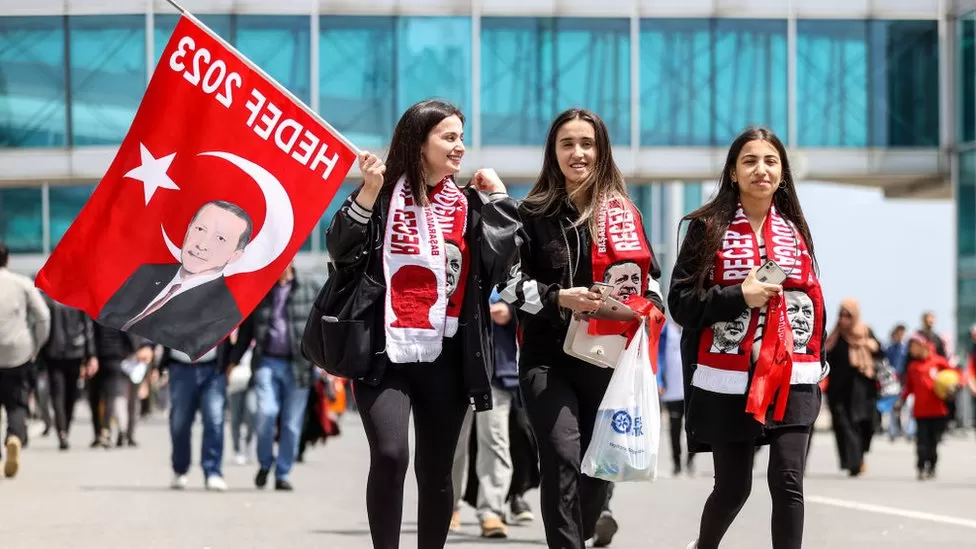
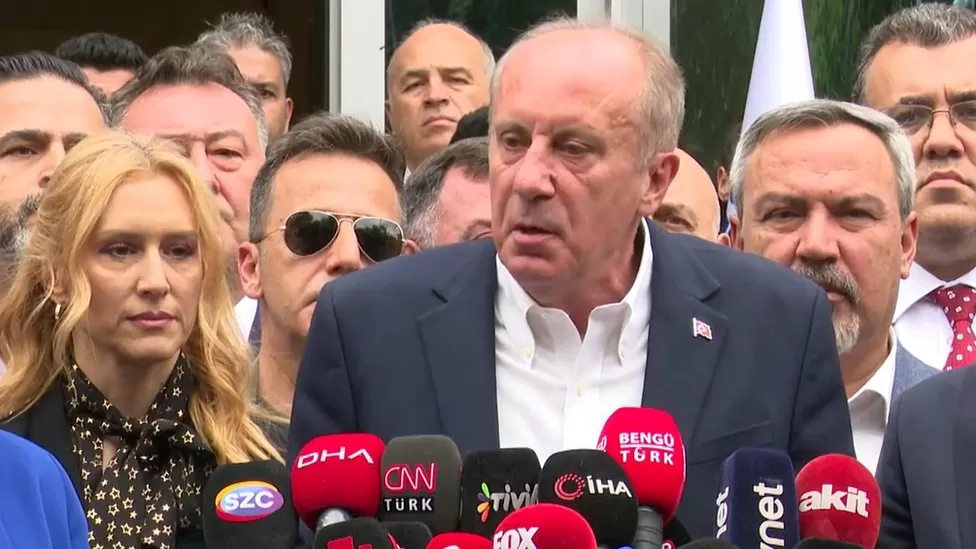
Three days before Turkey’s tightest presidential vote in years, one of the four candidates, Muharrem Ince, has pulled out of the race.

Mr Ince had been under increasing pressure for splitting the opposition vote, when they have their biggest chance yet of removing Recep Tayyip Erdogan from power.

“I’m withdrawing my candidacy,” he told reporters.

He cited fake sex pictures as one of his reasons for pulling out.

He complained that for 45 days he had been slandered and suffered character assassination, and Turkish authorities had failed to protect his reputation.

“Fake invoices, fake videos, pictures… they took a video from an Israeli porn website and added my face there,” he said.

“Unfortunately some people in Turkey shared those for the sake of being in so-called opposition.”

But he also said he did not want to be blamed by the alliance of opposition parties if they lost the presidential vote.

Mr Ince’s decision to pull out gives President Erdogan’s biggest rival, Kemal Kilicdaroglu, a big boost, and Turkey’s main stock market soared on the news.

Mr Erdogan has led his country for more than 20 years, but Turkey is grappling with an inflation rate of 44%.

The has also been criticised for failings in the response to a double earthquake in February that killed more than 50,000 people in 11 provinces.

Mr Kilicdaroglu, a soft-spoken man of 74, heads an alliance of six opposition parties and latest polls give him 49% of the vote.

Although Mr Ince is polling only a small share of the vote, opposition supporters hope his withdrawal might be enough to tip Mr Kilicdaroglu over the 50% needed to win the election outright on Sunday.

If no candidate secures 50%, the vote goes to a run-off two weeks later.

Mr Ince, 59, won 30% of the vote for the main opposition Republican People’s party five years ago, but he left the party the following year.

The UK saw weak growth in the first three months of the year and shrank during March as the economy was affected by strike action.

The economy grew by 0.1% between January and March the Office for National Statistics (ONS) said.

The figure comes a day after the Bank of England said it was more optimistic about prospects for the UK and that the economy would avoid recession.

The Bank also increased interest rates to 4.5% from 4.25%.

The rate rise was part of the Bank’s continued attempt to slow soaring price rises.

Darren Morgan, director of economic statistics at the ONS, said: “Across the quarter as a whole, growth was driven by IT and construction, partially offset by falls in health, education and public administration, with these sectors affected by strikes.”

The ONS figures showed that while the economy grew slightly over the first three months of 2023, in March it contracted by 0.3%, with car sales and the retail sector having a bad month.

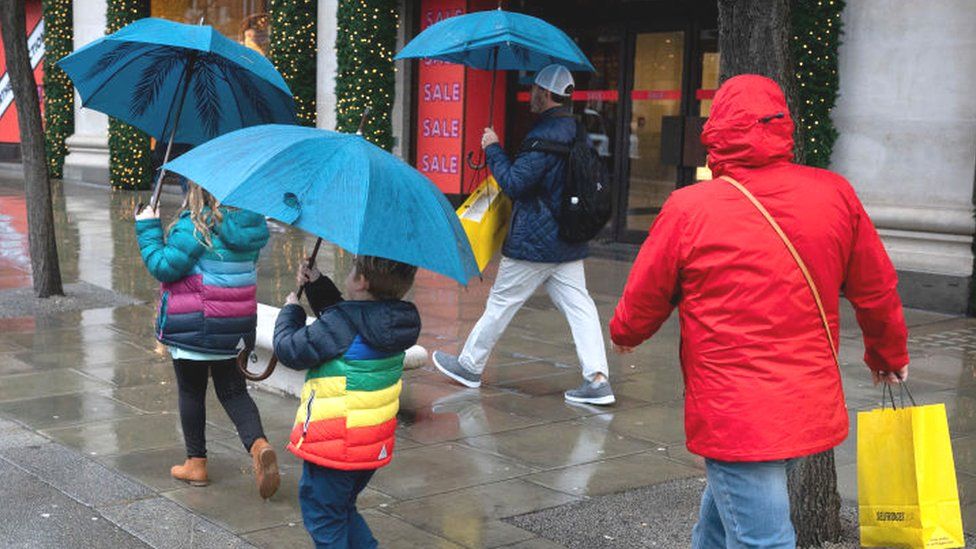
Mr Morgan told the BBC’s Today programme that car sales had been “relatively weak” for March, while retail sales had been hit by wet weather which put people off visiting the High Street.

“We also saw food store sales slip and retailers told us that the increased cost of living and rising food prices are continuing to affect consumer spending,” he added.

The economy just about grew in the first quarter of this year, but at 0.1% that was by the barest possible margin. The fall in March, the latest month, is of some concern with the service sector going into reverse, and car sales disappointing.

Strikes and the weather are factors here, but there is no denying the sluggish pattern that has persisted for a year now, as energy prices have risen. It will be not much comfort that Germany is not growing at all. On a quarterly basis the UK economy has still not regained all the ground lost since the pandemic and Brexit.

The current second quarter could see a fall too given the extra bank holiday. But forecasters are looking for the second half of the year for growth to start climbing again.

After a massive energy shock and other crises, the avoidance of a recession exceeds expectations. As the Bank of England said yesterday, two thirds of the impact of rate rises to date are yet to hit households.

While the engine of growth in the economy is on, Britain is going to have to wait a little longer for take off.

Responding to the latest growth figures, Chancellor Jeremy Hunt said: “It’s good news that the economy is growing but to reach the government’s growth priority we need to stay focused on competitive taxes, labour supply and productivity.”

Shadow chancellor Rachel Reeves said: “Despite our country’s huge potential and promise, today is another day in the dismal low growth record book of this Conservative government.”

David Bharier, head of research at the British Chambers of Commerce, said the figures highlighted the fragile nature of the UK economy and he expressed concern about how businesses will cope with further rate rises.

“The core issues affecting British businesses, such as unprecedented inflation, energy price shocks, and record tightness in the labour market, have not gone away,” he said.

NAB declares PM Shehbaz Sharif, others ‘innocent’ in money laundering case

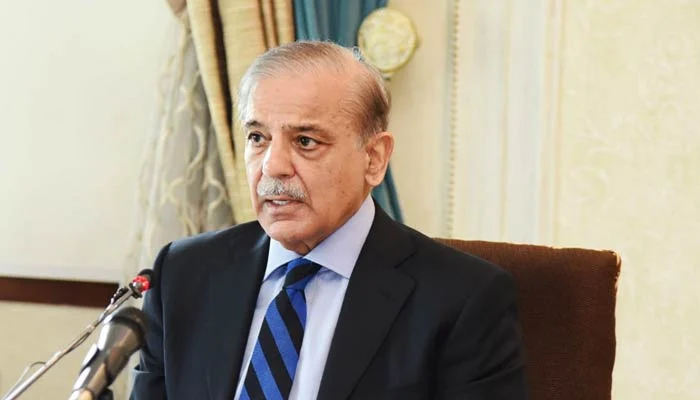
The National Accountability Bureau (NAB) has declared Prime Minister Shehbaz Sharif, his son Hamza Shehbaz and others “innocent” in Rs7 billion references against them for assets beyond means and money laundering filed against them by the anti-graft body.

During a hearing — which was heard by Judge Qamar-ul-Zaman at an accountability court in Lahore on Wednesday — the anti-graft body submitted a supplementary report for the money laundering reference.

PM Shehbaz’s legal representative Anwar Hussain appeared in the court, where NAB acquitted the prime minister, his son, and other people indicted in the case.

At the end of the hearing, the accountability court postponed the hearing of the case till May 24.

Earlier, the bureau had declared PM Shehbaz and his family guilty in Rs7 billion references of money laundering and assets beyond means.

NAB had claimed in references filed against the Shehbaz family that in the last 30 years, their assets had increased from Rs2 million to Rs7 billion which the family had failed to justify.

NAB had alleged that accused PM Shehbaz, in connivance with his co-accused family members, benamidars, front men, close associates, employees, and moneychangers, had developed an organised system of money laundering for the accumulation of assets disproportionate to his known sources of income to the tune of Rs7.3 billion.

Consequently, the accountability watchdog nominated PM Shehbaz, his wife Nusrat Shehbaz, sons Hamza and Suleman Shehbaz, and daughters Rabia Imran and Javeria Ali in the references.

Suleman is already a proclaimed offender in this case. The other nominated accused are Nisar Ahmad, Syed Muhammad Tahir Naqvi, Ali Muhammad Khan, Qasim Qayyum, Rashid Karamat, Masroor Anwar, Muhammad Usman, Fazal Dad Abbasi, Muhammad Shoaib Qamar, and Haroon Yousaf Aziz.

Saudi king invites Assad to attend Arab summit

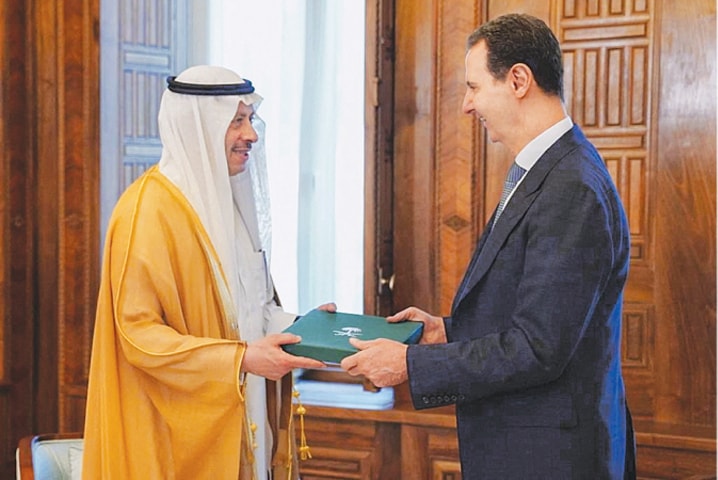
DAMASCUS: Saudi Arabia’s King Salman bin Abdulaziz has invited Syria’s President Bashar al-Assad to attend an Arab League summit in the Gulf country on May 19, Syrian state media reported on Wednesday.

Arab foreign ministers had on Sunday agreed that Syria could resume its role in the body, 12 years after its membership was suspended over Assad’s crackdown on protests against him.

Assad said the summit “will enhance joint Arab action to achieve the aspirations of the Arab peoples,” it said in a statement.

Saudi Arabia’s ambassador to Jordan, Nayef bin Bandar al-Sudairi, delivered the invitation, according to Saudi state news agency SPA.

Russia says roadmap in the works to mend Syria-Turkiye ties

He conveyed the King and his son Crown Prince Mohammed bin Salman’s “wishes to the brotherly government and people of Syria for security and stability,” SPA said.

The invitation comes a day after Riyadh and Damascus announced that work would resume at their respective diplomatic missions in Syria and Saudi Arabia, after more than a decade of severed relations.

‘Roadmap’

Russia said that a roadmap to normalise ties between Syria and Turkiye will be drafted following a meeting of their foreign ministers in Moscow.

Earlier on Wednesday the foreign ministers of Turkiye and Syria held their first official meeting since the start of the Syrian civil war.

The talks in the Russian capital also involved the top diplomats of Russia and Iran.

The ministers had agreed to task their deputies with putting together a “‘roadmap’ to advance ties between Turkiye and Syria” in coordination with the defence ministers and security services of the four countries, Moscow said in a statement.

“The ministers noted the positive and constructive atmosphere of the exchange of views and agreed to continue high-level contacts,” the Russian foreign ministry added.

Russian Foreign Minister Sergei Lavrov said the proposals could then be put to the leaders of Iran, Russia, Syria and Turkiye.

“Our task is to determine the general guidelines for further progress,” Lavrov said at the meeting.

Iran’s Foreign Minister Hossein Amir-Abdollahian said Tehran welcomed the start of the talks between Syria and Turkiye.

“We deeply believe that these two countries can put the past behind them and by looking to the future resolve their bilateral issues through dialogue and deepening cooperation based on good neighbourliness,” he said.

He pointed to “the transition process in the world order” and “the decline of American power”.

In April, Moscow also hosted four-way talks involving the countries’ defence ministers.

Turkiye supported early rebel efforts to topple Syrian President Bashar al-Assad, keeping a military presence in northern stretches of the war-torn country that angers Damascus.

Turkish President Recep Tayyip Erdogan has made up with former rivals across the region and is now courting a presidential summit with Assad.

Kremlin mediation would give President Vladimir Putin diplomatic clout with Russia isolated internationally over Moscow’s offensive in Ukraine.

Damascus is a staunch ally of Moscow, which intervened in the civil war in 2015, launching air strikes to support the government’s struggling forces.

Unrest has continued to grip Pakistan after former prime minister Imran Khan pleaded not guilty to corruption following his arrest on Tuesday.

At least eight people have died nationwide in the protests and 1,400 have been arrested, police say.

The army has been called into to quell violence and has warned protesters not to carry out attacks on state property.

Mr Khan’s arrest has dramatically escalated tensions between him and the military at a time of economic crisis.

Conviction would disqualify the former international cricket star – and Pakistan’s prime minister from 2018 to 2022 – from standing for office, possibly for life. Elections are due later this year.Pakistan’s army has heavily influenced the nuclear-armed country for most of its existence and is a crucial behind-the-scenes player.

Many analysts believe Mr Khan’s election win in 2018 happened with the help of the military. But since he was ousted from premiership, Mr Khan has become one of the military’s most vocal critics.

On Wednesday, Mr Khan was indicted on charges that he unlawfully sold state gifts during his premiership, in a case brought by Pakistan’s Election Commission. Mr Khan denied any wrongdoing.

A day earlier, dramatic footage showed dozens of security officers forcibly removing the 70-year-old from court – where he was attending to separate graft proceedings – then bundling him into a police vehicle.

Mr Khan’s Pakistan Tehreek-e-Insaf (PTI) party called his arrest in the capital Islamabad an “abduction” and said it would challenge its legality in court.

The judge has ordered that Mr Khan be remanded in custody for eight days, after which he can seek bail.

This is just one of over 100 corruption cases registered against Mr Khan since he left office. For months he had avoided arrest, with his supporters at times fighting pitched battles with police to keep him out of custody.

One of his Mr Khan’s lawyers, Sher Afzal Marwat, said his client was in good spirits.

Amid violent protests nationwide, Mr Khan’s supporters ransacked the corps commander’s residence in Lahore, smashing chandeliers and making away with peacocks, strawberries and golf clubs – among other things – which they said were bought with “citizen’s money”. Scores of vehicles and public installations were set alight.

Watch: Peacocks abducted as Khan protesters damage army sites

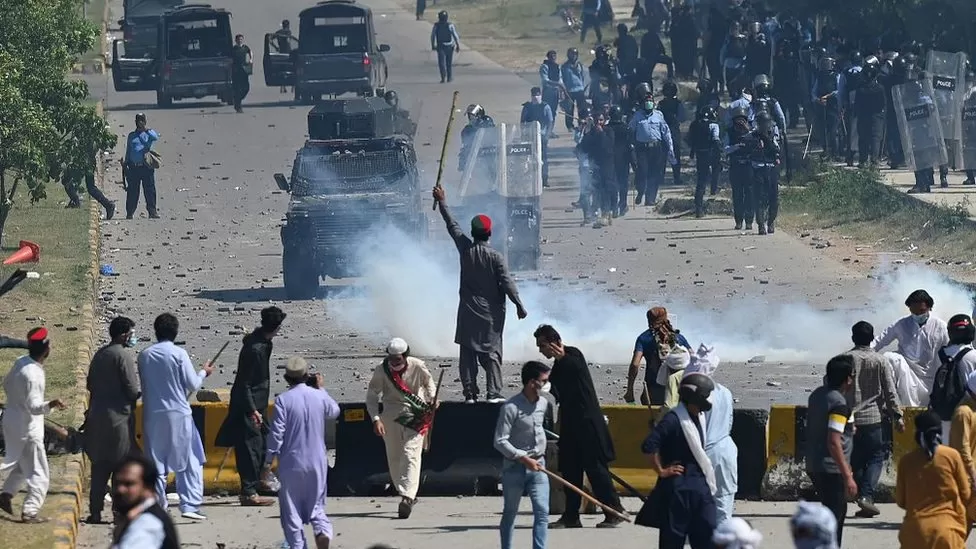
On Wednesday, the BBC witnessed clashes between protesters and the police in the middle of one of Islamabad’s main motorways. More than 145 policemen have been wounded in these confrontations, the police said.

“We came to do a peaceful protest, but these police are shelling us,” one man, who was holding stones and a stick and wearing a surgical mask, told the BBC.

“Until our death we will continue this protest or until they free Imran. Otherwise we will shut the whole country.”

Mr Khan’s supporters overseas have also organised protests in the two days since his arrest.

In a televised address to the nation, Pakistan’s Prime Minister Shehbaz Sharif warned that violent protests would not be tolerated.

“The perpetrators who take the law into their own hands will be dealt with an iron hand,” he said.

PTI supporters had torched vehicles and hurled petrol bombs at Mr Sharif’s residence in Lahore in the wee hours of Wednesday, local media reported.Imran Khan at his residence in Lahore in March

Pakistan’s army described Tuesday as a “dark day” and warned protesters of “severe retaliation” against further attacks on military and state properties.

Among the protesters arrested were two senior PTI leaders, including its secretary-general Asad Umar.

Mr Khan was ousted in a parliamentary no-confidence vote last April, less than four years into his term as prime minister.

In November 2022, he was shot in the leg while leading a protest march in the eastern city of Wazirabad demanding early elections.

Mr Khan had accused a senior intelligence officials of carrying out the attack – which the military has strongly denied.

Imran Khan, Pakistan’s hugely popular former prime minister, was arrested on Tuesday on corruption charges – a moment he had successfully avoided for several months.

Previous attempts had ended in near misses. In March, a court order to detain him was thwarted by pitched battles between his supporters and police outside his home in Lahore.

His arrest, which happened while he was in court in the capital Islamabad, was no less dramatic. The 70-year-old is barely visible among a swarm of officers in riot gear as they escort him outside and bundle him into a vehicle.

Mr Khan has faced dozens of charges, from corruption to sedition, since he was ousted after losing a confidence vote last year. So his arrest is not unexpected.

But it has enraged his supporters and even shocked a country that was hoping for an end to the political stand-off that has pushed Pakistan to the brink.

Why was Khan arrested?

Pakistan’s government says he was taken into a custody for not co-operating with authorities in an ongoing corruption investigation.

The case alleges that Mr Khan, while he was the PM, received land as a bribe in exchange for political favours. It revolves around an investigation conducted by Britain’s National Crime Agency into “laundered” money by Pakistan’s biggest property tycoon Malik Riaz Hussain.

Mr Hussain allegedly gave the land to the Al-Qadir Trust, which was set up by Mr Khan’s third wife, Bushra Bibi. Mr Khan, who denied the charges, said that the land had been donated for charitable purposes.

Mr Hussain denied laundering money. But his position on the question of land for favours is not known – he appeared before Pakistan’s National Accountability Bureau investigators earlier this year and recorded a statement in the Al-Qadir Trust case, but it has not been made public or reported in the media.

Since his arrest Mr Khan has been indicted in another graft case. This one alleges he did not disclose money he earned by selling gifts he had received on foreign visits as PM. A hearing in this case saw charges pressed for the first time against Mr Khan on Wednesday and he pleaded not guilty.

Mr Khan’s arrest on graft charges has sparked protests across Pakistan

Analysts believe that now that he is in custody, courts might indict him in a series of cases – a fate he has repeatedly avoided by either missing the appointment, or appearing in higher courts, heavily guarded, only to apply for protective bail. He was, in fact, in court on Tuesday to seek protective bail against arrest when he was finally whisked off into custody.

Mr Khan himself seemed to have been prepared for it. After he was detained, he released a video that had been recorded earlier, saying it was likely he would be arrested by the time his supporters saw the message.

But it’s possible neither he nor his lawyers expected him to be arrested on the court premises because Mr Khan has appeared in court for bail before. But this time the executors of the warrant were not police, but a paramilitary force, the Punjab Rangers.

Leaders and supporters of Mr Khan’s Pakistan Tehreek-e-Insaf (PTI) party argue this is proof of the army’s involvement. They say the arrest has little to do with corruption charges and everything to do with Mr Khan’s ongoing public battle with the army. He has accused the army and the spy agency, the Inter-Service Intelligence (ISI), of conspiring to assassinate him – he survived a shooting last year.

The country’s generals, who have seized power three times since Pakistan’s independence in 1947, have long played a prominent role in politics. Mr Khan too was believed to have their support as he rose to power. But the privilege of his birth, his fame born of cricketing glory, and his charisma drove his popularity far higher than anything Pakistan has seen in recent year

Watch: Peacocks abducted as Khan protesters damage army sites

When he was ousted as PM, many believed it was as much the result of his poor track record in office, as it was a falling out with the army. But he quickly went on the offensive, criticising the army and embracing a populist narrative that resonated with people. And he did this loudly, holding rallies and marches that drew massive crowds and campaigning for local elections, most of which his party went on to win.

This continued for months even as Mr Khan managed to evade arrest. Then he publicly accused an intelligence official of trying to assassinate him. Infuriated army officials denied the charge, and just the day before his arrest, warned him not to repeat it.

Now, with the military’s gloves off, Mr Khan’s supporters say the army has crossed a “red line” – that of the former PM himself. And as public anger turns against the army, Pakistan is witnessing an unprecedented moment.

In a statement the military said 9 May would be remembered as “a dark chapter” and warned of an “extreme reaction” if protesters carried out more attacks on military and other state installations.

What is at stake now?

The uncertainty surrounding Mr Khan has paralysed Pakistan for months.

The nuclear-armed state of 231 million people is already battling soaring food prices, a long-running economic crisis and extremist violence. Talks with the IMF over a much-needed bailout have stalled, and elections, due this year, are also caught in the political stalemate.

Analysts believe that Mr Khan’s arrest only adds to the growing instability and diminishes any chance of a resolution between the former PM and the establishment, be it the government or the army.

The 13-member coalition which is in power – led by Prime Minister Shabaz Sharif – says it has “nothing to do with the arrest”, which followed due process.

But others say Mr Khan’s arrest benefits the government because if he is found guilty, he would be disqualified from contesting elections, possibly for life.

Mr Khan’s rise to the top of Pakistani politics was almost as meteoric as his sporting career. He even managed to recast himself from a playboy cricketing icon into a pious politician as he sought the top job in the country.

But the army – which many believe had allied with him on his route to the PM’s chair, despite denials from both parties – now appears to be on the other side.

What that means for Mr Khan and Pakistan is still unclear because the country finds itself in uncharted waters.

Turkey elections: Young voters who could decide Turkey’s future

He was jailed and spent almost two months in solitary confinement for taking part in a protest at the prestigious Bogazici University over the appointment of a pro-government dean.

Perit has voted only once before, and his friends Sude and Emru are among five million first-time voters who have known no other Turkish leader but Recep Tayyip Erdogan.

Life for young people in Turkey has become increasingly difficult, Emru complained, pointing to soaring inflation of currently 44% according to official figures.

“You can’t afford to just study, you also have to get a full-time job to get by.”

Perit (L), Sude and Emru (R) are planning to vote for the opposition in the upcoming elections

Like her friends, Sude plans to vote for the opposition in Sunday’s presidential and parliamentary elections.

“I don’t feel safe for expressing my emotions or opinions. Because whenever I do I get attacked,” she said. She was handed a suspended jail sentence of 12 months earlier this year, for attending protests at Bogazici University.

Perit believes that after 20 years of Mr Erdogan and his AK Party in power, the time for change has come.

“Two decades is such a long time to change people’s mentality: people’s understanding of democracy and human rights. If Erdogan wins again this could be our last election. Regime could change.”

Female voters initially backed Mr Erdogan in big numbers

The election race is very tight and President Erdogan is facing his biggest challenge yet from opposition candidate Kemal Kilicdaroglu, who represents a bloc of six parties and has also secured the backing of more opposition groups.

The millions of of first-time voters make up almost 8% of the electorate, and many in Turkey see them as the largest group of undecided voters.

For Salih aged 20, the choice could not be clearer. “I think Recep Tayyip Erdogan is a charismatic leader, it’s important to have such charisma in Turkish politics,” he told the BBC.

He believes Mr Erdogan can build on his previous achievements, investing in Turkey’s future.

“Previously there were problems over energy supply and Turkey was dependent on other countries militarily. But now we are producing our own cars, UAVs (drones) and aircraft. Mr Erdogan solved all our problems,” he said.

Mr Kilicdaroglu’s heart-shaped hand gesture translates well with young voters

Unsurprisingly all the candidates challenging for the presidency have tried to woo young voters.

While Mr Erdogan has emphasised advances in defence and technology, Mr Kilicdaroglu has promised greater freedoms and better employment prospects.

But Gizem, 20, argues it is the president who has improved freedoms in Turkey.

“Everyone is free to do whatever they like now. It was the opposition who curbed freedoms decades ago. Girls wearing headscarves like I do were not allowed in universities,” she said.

One of Mr Erdogan’s landmark reforms was to lift a decades-old ban on Islamist headscarves in universities and the civil service.

“If we have teachers, doctors, engineers wearing headscarves in this country today, that is all thanks to the freedoms Mr Erdogan has granted. If it wasn’t for him, we would still be oppressed in the name of secularism,” she explained.

Gizem is grateful to the president for lifting the headscarf ban

Mr Kilicdaroglu introduced a bill in parliament last year to secure the right of female public servants to wear headscarves. Mr Erdogan responded by offering to take the issue to a referendum instead. The issue has since been shelved.

Two other candidates are challenging for the presidency: Muharrem Ince, a nationalist centre-left politician and Sinan Ogan, from the nationalist right.

Recent polls suggest that both of them appeal mainly to young voters, so supporters of the main opposition bloc fear they could erode Mr Kilicdaroglu’s vote and force the elections into a second round run-off two weeks later.

To win outright on Sunday, a candidate will have to secure more than half the vote.

Protests have taken place in Turkey

The votes of women will also be decisive, and they make up 50.6% of the whole electorate.

It is thought that conservative women helped bring Mr Erdogan to power two decades ago, but that support is now dwindling.

His decision to pull Turkey out of the Istanbul Convention – an international accord designed to protect women against domestic violence – has alienated many women and prompted large protests.

In the past he has referred to women who are not mothers “half a woman”. He advised women to have at least three children and said men and women could not be treated equally.

One of the party’s in his People’s Alliance is an extreme Islamist party called Huda Par (Free Cause) and that has raised concerns among female MPs in his own AK Party.

Feminist Gulsum Kav argues the government does not believe in sexual equality and says women’s freedoms have been curbed: “They get attacked for wearing shorts, female musicians are threatened with jail terms because of how they dress, and artists get sentenced for criticising a sex assault case.”

“They want women to sit at home and do nothing. But women have changed. They will change Turkey too.”

Israel has killed the head of Palestinian Islamic Jihad’s (PIJ) rocket launching force in a pre-dawn air strike on an apartment in Gaza.

It said the commander and two other PIJ militants killed in the hit on the fifth floor of a building near Khan Younis in the south of the territory.

On Wednesday militants in Gaza fired more than 500 rockets at Israel.

The Israeli military hit more than 130 militant targets in Gaza, in the heaviest fighting in nine months.

Twenty-five people have been killed in Gaza since Tuesday morning when Israel began its operation against the PIJ, the Palestinian Ministry of Health there says. Those killed include at least 10 civilians and three other PIJ commanders.

The Israeli military said four people, including three children, had been killed in Gaza by rockets falling short, though this has not been corroborated by Palestinian sources.

There have been no fatalities in Israel, though some rockets have hit homes and buildings. Most have landed in open areas or been intercepted.

The armed wing of the PIJ confirmed that the head of its missile unit, Ali Hassan Ghali, also known as Abu Muhammad, had died in Thursday morning’s attack.

The PIJ is the second biggest militant group in Gaza after Hamas, and has been responsible for many of the rocket attacks on Israel in recent years

Israel’s military confirmed it had targeted Ghali and what it called two “other Islamic Jihad operatives in Gaza”.

They described the commander as a central figure in the PIJ who had been “responsible for the recent rocket barrages launched against Israel”.

Israel hit a fifth floor apartment, killing the commander and two other militants

On Wednesday night, Israeli Prime Minister Benjamin Netanyahu warned that Israel’s campaign was not over.

“We have hit Islamic Jihad with the most significant blow it has ever suffered,” he said, referring to the killing of the three PIJ commanders on Tuesday.

Egypt is reported to be working to try to secure a truce between the two sides.

This week’s air strikes were the deadliest since three days of hostilities between Israel and PIJ last August, in which 49 Palestinians were killed in Gaza.

More than 460 rockets have been fire at Israel

There was a serious flare-up last week, as PIJ and other groups fired more than 100 rockets into Israel over two days, following the death in an Israeli prison of a Palestinian hunger striker. The Israeli military carried out air strikes on sites it said were linked to Hamas in response.

Tensions also remained high in the occupied West Bank on Wednesday, after Israel carried out arrest raids.

Three Palestinians were killed in the town of Qabatiya by Israeli forces, who said the pair had fired at them. An Israeli soldier was also seriously wounded during a separate exchange of fire with Palestinian gunmen in Tubas.