

Strong winds and heavy rain are set to hit parts of Scotland on Saturday.

Storm Betty, named by the Irish meteorological service, is set to bring severe weather across the UK as it moves in from the Atlantic.

The Met Office has issued a yellow wind warning for Dumfries and Galloway where gusts could reach 50mph.

Meanwhile, three yellow rain warnings will also be in place across 17 local authorities from 03:00. Both warnings expire at midday on Saturday.

Forecasters warn the conditions could cause disruption and possible cancellations to bus and train services as well as a possible flood risk to homes, businesses and roads.


The rain warnings apply to Angus, Clackmannanshire, Dundee, Fife, Perth and Kinross, Stirling, Aberdeen, Aberdeenshire, Moray, Dumfries and Galloway, East Lothian, Midlothian, Scottish Borders, Argyll and Bute, North Ayrshire, South Lanarkshire and West Dunbartonshire.

Thousands will be travelling across the country for major events on Saturday, including the final day of the World Pipe Band championships on Glasgow Green and Viaplay Cup football matches, starting with Rangers v Morton at 12:30.

Organisers of the Hazelhead parkrun in Aberdeen announced the cancellation of Saturday’s planned 5k.

The event director said the move was part of an agreement with Aberdeen City Council not to stage the race when storms or high winds were predicted.

Watch: The latest UK weather forecast for where you are

The forecast is expected to improve on Saturday with sunny spells and showers for the rest of the weekend.

The Scottish Environment Protection Agency (Sepa) has issued nine flood alerts and warned of flooding from surface water and small watercourses.

Its stated: “Particularly at risk are urban areas and the transport network. Impacts may include flooding to low-lying land and roads with difficult driving conditions. Isolated properties may also be at risk.”

The Met Office has warned people living and working on the coast to take extra care during windy and stormy weather, and to be prepared for the weather changing quickly.

Stormy Betty, named by Met Eireann, is the second named storm in August following Storm Antoni earlier this month.

Forecasters expect Saturday to see the remnants of Storm Betty move north and bring some showers in western parts of the UK, and more persistent rain in western Scotland.

For Sunday and next week, sunshine and showers are expected.

Please include a contact number if you are willing to speak to a BBC journalist. You can also get in touch in the following ways
‘Deeply concerned’ US urges Pakistan probe into church attacks

The United States on Wednesday called on Pakistan to probe the mob attacks against churches and Christian homes that broke out in Faisalabad’s Jaranwala amid blasphemy rumors.

Hundreds of men attacked a predominantly Christian area on the outskirts of the industrial city earlier in the day after allegations spread that the Holy Quran had been desecrated.

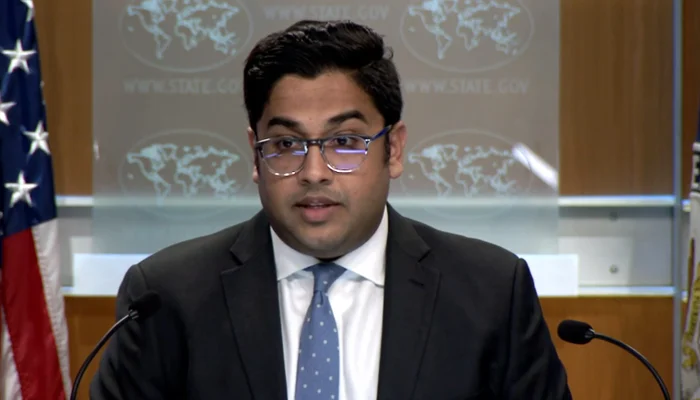
“We are deeply concerned that churches and homes were targeted in response to reported Quran desecration in Pakistan,” State Department spokesman Vedant Patel told reporters.

He said that while the United States backed free expression, “violence or the threat of violence is never an acceptable form of expression.”

“We urge Pakistani authorities to conduct a full investigation into these allegations and call for calm,” he said.

Blasphemy is a sensitive issue in Muslim-majority Pakistan, where anyone deemed to have insulted Islam or Islamic figures can face the death penalty.

Critics say that rumors of insults to Islam are often fanned as a way to settle scores against non-Muslims.

The anti-Christian violence is the latest unrest in the world’s fifth-most populous country, where on Monday a little-known senator, Anwaar-ul-Haq Kakar, was sworn in as caretaker prime minister to see through elections.

Secretary of State Antony Blinken on Wednesday offered congratulations to Kakar in a post on social media site X, formerly known as Twitter.


“As Pakistan prepares for free and fair elections, in accordance with its constitution and the rights to freedom of speech and assembly, we will continue to advance our shared commitment to economic prosperity,” Blinken said.

Kakar, who earlier promised “stern action” against the Faisalabad attackers, thanked Blinken in his own post on X.

“The interim government will be assiduously working to facilitate a free and fair election process in Pakistan,” his post said.

“We place importance on our partnership with the US and deeply value the shared commitment to economic prosperity, democracy and stability in the region,” added Kakar.

Pakistan has been wracked by instability after Imran Khan, the country’s most popular politician, was removed as prime minister and more recently jailed on corruption charges that his supporters call an attempt to bar him from office.

Khan has accused the United States of working to oust him, claims strongly denied by Washington, which says that it had policy disagreements with Khan.

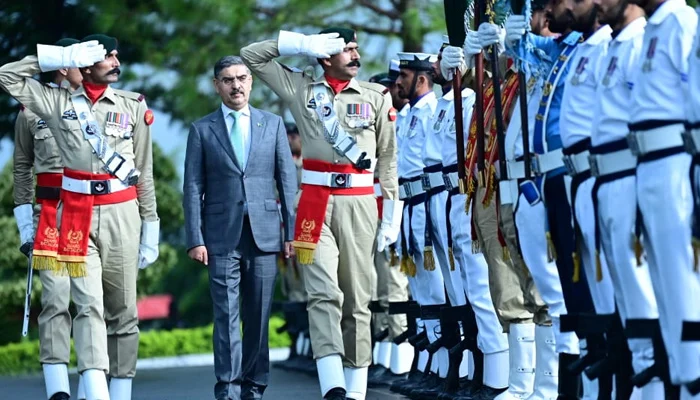
Caretaker PM Kakar’s cabinet to take oath today

ISLAMABAD: Caretaker Prime Minister Anwaar-ul-Haq Kakar’s cabinet is expected to take the oath today at 5pm after an official announcement for the names of selected members

The interim premier completed the consultation regarding his cabinet members on Wednesday, with several known names being tipped for key posts in the caretaker setup.

Sources said that former governor State Bank of Pakistan (SBP) Dr Shamshad Akhtar is likely to be appointed as finance minister, The News reported, while former foreign secretary Ambassador Jalil Abbas Jilani is being considered for the post of interim foreign minister.

Earlier this week, Dr Akhtar — who was also finance minister in the caretaker government prior to the 2018 general election — was conferred Nishan-i-Imtiaz by President Dr Arif Alvi on Independence Day.

She served as the SBP governor from January 2, 2006, for a three-year term, becoming the first woman to head the country’s central bank.

Meanwhile, Jilani has 38 years of bilateral and multilateral experience as a public servant and career diplomat, having served as Pakistan’s Ambassador to the United States, Belgium, Luxemburg, the EU, and Australia.

Jilani was appointed foreign secretary in 2012, and while serving the post, he was closely involved in negotiations and finalisation of China Pakistan Economic Corridor (CPEC), signing the key agreements for the project during the visit of Chinese Premier Li Keqiang under the then Pakistan Peoples Party (PPP) government.

Top sources in the Prime Minister Secretariat said that eminent textile industrialist and Chief Executive of Ejaz Group of Companies Dr Gohar Ejaz is likely to be appointed as interim federal minister for commerce and industries.

All Pakistan Textile Mills Association (APTMA) confirmed that Dr Ejaz will take oath as minister for commerce and industries today.

Earlier, sources confided to Geo News that defense analyst Syed Muhammad Ali is being considered for the information ministry.

It was further revealed that prominent banker Sultan Ali Allana was earlier tipped for the caretaker finance minister; however, due to his dual citizenship, two other names were now under consideration for the post.

According to the sources, the names of former finance minister Hafeez Sheikh and ex-SBP Raza Baqir are not being considered for the caretaker finance minister.

Furthermore, the name of Senator Sarfraz Bugti is likely to be finalised for interior minister, as previously he held the portfolio of minister of home and tribal affairs of Balochistan.

It was earlier reported that the interim prime minister would retain three senior aides to his predecessor Shehbaz Sharif.

It was also learnt that the interim prime minister had retired principal secretary to the prime minister (PSPM) Dr Syed Tauqir Hussain Shah, former advisor to the PM Ahad Cheema, and joint secretary Mohib Ali.

Shah would continue as PSPM till October this year after which he would move to the World Bank where he would serve as group executive director of Pakistan for four years.

Furthermore, Cheema is likely to be assigned a post equal to a federal minister, whereas Press Secretary to the PM Abdul Akbar would also be among the officers who would continue in the office.

Meanwhile, sources revealed that Arshad Muneer Khan, who has been promoted to grade-21, would be posted as principal information officer (PIO).

Military Secretary (MS) to the Prime Minister Brigadier Tajdeed Mumtaz would also continue to perform his duties.

The caretaker federal cabinet is expected to be short. Sources said it had been decided to only include reputable people in the caretaker cabinet.

The caretaker prime minister will also give special tasks to his cabinet ministers based on their portfolios.

Death toll rises to 25 in Dominican Republic explosion

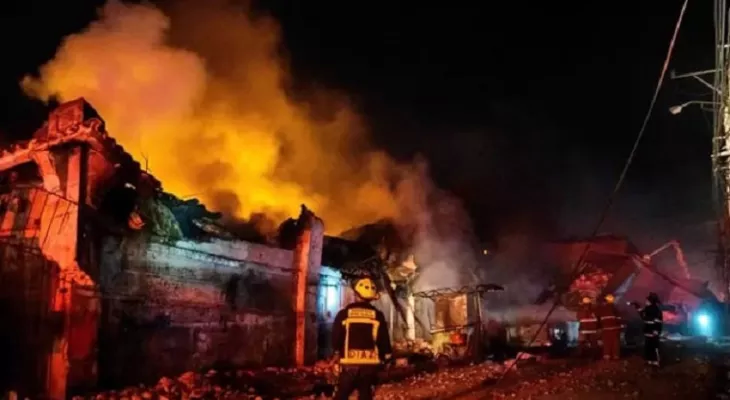
The death toll from an explosion that ripped through a commercial area of a town in the Dominican Republic has risen to 25, a civil defense official said Wednesday.

The blast on Monday shook the commercial area of San Cristobal, less than 30 kilometers (18 miles) from the capital Santo Domingo, sparking a fire that burned for hours, and a huge column of smoke.

The official, Delfin Antonio Rodriguez told local news channel SIN that there were 25 victims who had either died at the scene, or later in hospital.

An official death toll will be announced later in the day.

Of the 59 people injured, 37 remained hospitalized, emergency officials said.

Local media reported that some of the wounded had suffered burns on up to 40 percent of their bodies.

Authorities said Monday that a four-month-old baby was among the dead.

The cause of the explosion has not been determined, nor has its exact origin.

The blast and resulting fire affected nine buildings, and partially destroyed four.

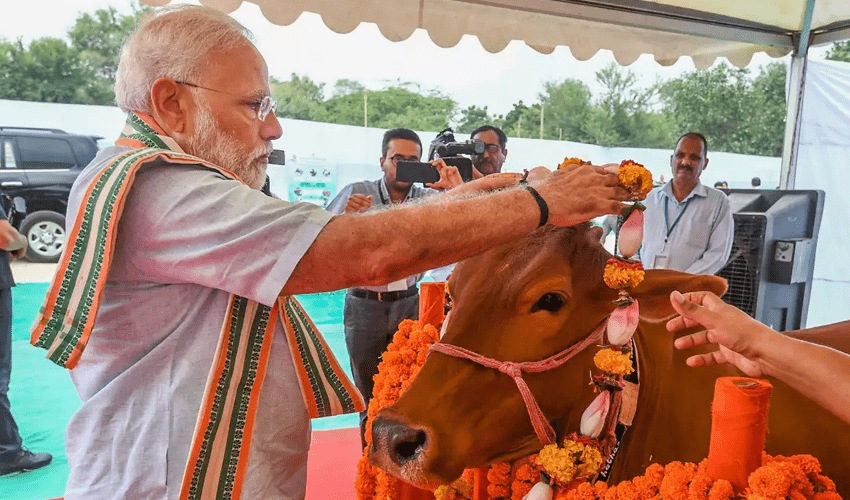
In Modi’s India, cow vigilantism takes priority over human lives

India’s sacred cows have taken precedence over human lives under the tenure of Narendra Mod

International organizations are sounding alarms as reports emerge detailing a string of horrifying incidents involving the martyrdom of hundreds of Muslims in the name of “Gau Raksha,” or cow protection.

According to data compiled by Reuters, a staggering 850 Muslims have lost their lives at the hands of Hindu extremists who claim to be protecting cows. The rise in these incidents has been exponential since Modi took office in 2014.

Between 2014 and 2018, there were 63 attacks by self-proclaimed “Gau Rakshaks,” resulting in the deaths of 44 Muslims and injuries to 124 others. However, these numbers have seen a horrifying escalation, with over 200 attacks recorded by August 2022 and the death toll reaching a shocking 850.

Disturbingly, this wave of violence shows no signs of abating.

The Indian Express reports the presence of around 200 Go Rakshak Brigades solely in Delhi, while an earlier 2016 investigation by The Guardian suggested that there are more than 5,000 such groups across the nation.

These groups, often aligned with or supported by the Bharatiya Janata Party (BJP), have taken it upon themselves to be self-appointed defenders of the cow.

What’s more unsettling is the complicity of media silence on these grave matters.

Between 2015 and 2018, there were a staggering 71 attacks by cow vigilantes. However, the Modi-controlled media reported only a mere four of these incidents.

One particularly heinous incident that sent shockwaves through the nation and the world occurred earlier this year in Rajasthan’s Bharatpur district. In February, two Muslims were mercilessly burnt alive by extremists, casting an alarming light on the extent of the brutality committed in the name of cow protection.

With mounting evidence pointing towards BJP support or alliance with such groups, questions arise about the nation’s leadership and their commitment to preserving India’s secular fabric.

In a symbolic gesture of state-endorsed extremism, the government of Haryana in 2021 officially entrusted the task of protecting the revered “Cow Mata” to the Cow Rakshak Brigade of the controversial Mono Maser Bajrang Dal.

Who is a Gau Rakshak?

The first organized Hindu cow protection movement in India started with a Sikh group in Punjab around 1870.

In 1882, a Hindu religious leader named Dayanand Saraswati founded the first cow protection committee, as reported by the BBC in 2015.

The Bhartiya Gau Raksha Dal (BGRD), an organization focused on protecting cows, has around 6,000 full-time members, mostly men and mostly from the Brahmin community.

They work all over India, especially in states like Haryana, Punjab, Uttar Pradesh, and Gujarat.

Sometimes, these cow protectors use violence, which has made the news since the Bharatiya Janata Party (BJP)-led government came to power in May 2014.

On July 11th, in Gujarat’s Una town, cow protectors tied up and beat four Dalit men with iron rods because they were skinning a dead cow.

This kind of vigilantism turned deadly in September 2015 when a mob killed a 55-year-old Muslim man and seriously injured his son, accusing them of slaughtering a cow.

Since then, these cow protectors have been making frequent headlines.

Just in March, there were at least eight cases of violence reported to the police in Gurgaon, where vigilante groups were involved. In June, a video came out showing members of a group called the Gau Rakshak Dal in Gurgaon forcing two men to eat a mixture made from cow dung, urine, milk, curd, and ghee because they were suspected of transporting beef.

The BGRD was established in 2012 and claims to have saved the lives of 11,000 cows in Delhi, Maharashtra, Bihar, and Uttar Pradesh. It’s even registered as a company by the Union Ministry of Corporate Affairs. One of the things they want to do, as mentioned on their website, is to create a research center and a practicing center for treating critical ailments using cow urine.

In Gujarat alone, about 200 cow vigilante groups have emerged, as reported by The Hindu on July 22.

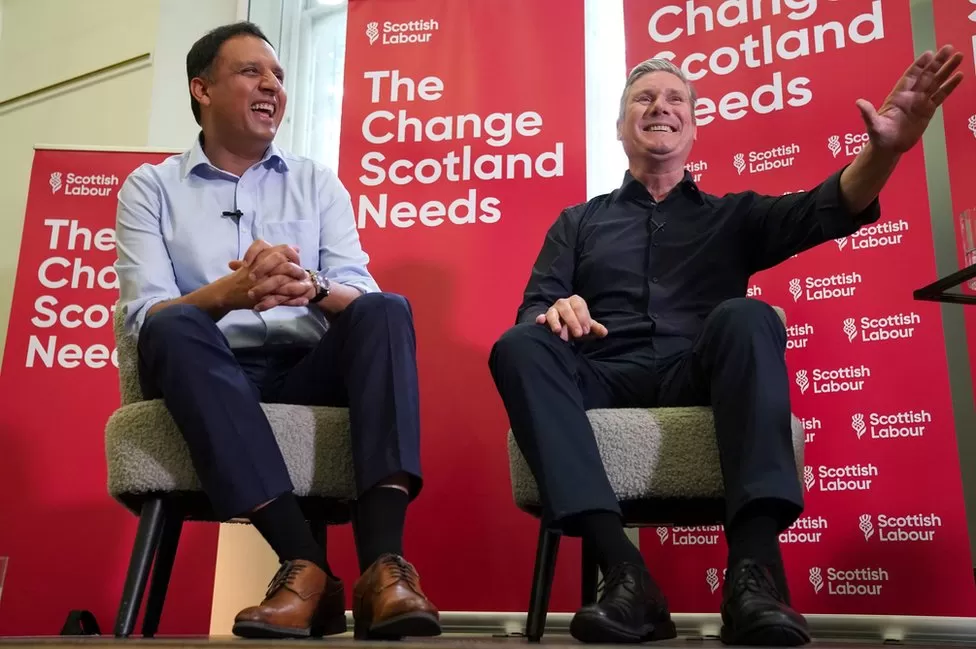
Labour leader Sir Keir Starmer and his Scottish counterpart Anas Sarwar have denied they are divided ahead of a key by-election.

Sir Keir told a party event in South Lanarkshire that the pair had “real clarity about shared objectives”.

Mr Sarwar also played down differences over issues such as the two-child benefit cap.

Meanwhile, the SNP described Labour’s Rutherglen and Hamilton West campaign as an “unfolding disaster.”


Earlier this month Margaret Ferrier, who was was suspended for breaking Covid lockdown rules, lost her seat after a petition by constituents.

A date has yet to be set for the by-election but the earliest it could happen would be 5 October.

On Tuesday the Labour leaders held an “in conversation event” with supporters in Rutherglen.

After some questions from activists the leaders were asked by BBC Scotland News if their differences over the two-child benefit cap amounted to an “open goal” for political opponents.

Scottish Labour has said it opposes the cap – which blocks applicants from claiming Universal Credit or Child Tax Credit for a third child – despite UK leader Sir Keir insisting he would not scrap it.

The two child benefit cap is a reserved matter but Scottish Labour has said it remains opposed to it

In response, Mr Sarwar said: “There is no division. There is no divide.

“There is of course a change in emphasis, you could argue, but it goes back to the point I made earlier on.

“Devolution is not about disagreement, division, fighting or two governments battling with each other to try and pull communities apart.”

Mr Sarwar said that he accepted the party could not go into elections with unfunded commitments but that Scottish Labour MPs would “expect” UK Labour to fight poverty.

He added: “My view has not changed that Labour was right to oppose the two child limit, it was right to campaign against it.

“But I’m also honest about accepting that we cannot go into an election making unfunded spending commitments.

“It would be wrong to say to people that we’re going to make promises that we can’t keep.”

Anas Sarwar said there might be a change of emphasis but denied they were divided on key issues.

Sir Keir said the session demonstrated the “shared objectives” of the UK and Scottish leaders “about where we want to get to and the change we want to bring about”.

“There is no difference between us on that,” he added.

“And when it comes to anti-poverty strategies I genuinely believe we have to be more ambitious than simply saying it is about a particular welfare payment.”

Last month Sir Keir said he would not commit extra money to benefits without first growing the economy.

But ahead of his campaign visit, he promised Labour would “smash the glass ceiling” that holds working people back.

“It means striking a new deal that will strengthen workers’ rights and finally make work pay. No more zero hour contracts, no more fire and rehire, and a real living wage for everyone,” he said

“Singing from the same hymn sheet.”

“Exact same wavelength.”

“Welded together.”

Just in case you didn’t pick up on the message, these were a few of the phrases deployed by the Starmer/Sarwar double act this morning when stressing that there’s no division between them.

Broadly speaking, this is true. These are two leaders who are obviously comfortable with each other’s politics.

But in a few policy areas they take different positions. And we’re in the white heat of a by-election where differences are put under the microscope.

The two child benefit cap is one such policy. It’s not a devolved issue, but Scottish Labour oppose it.

Sir Keir Starmer won’t pledge to scrap it if he’s prime minister.

Today it appeared that the two leaders found a form of words acceptable to both.

Anas Sarwar accepts that the UK Labour Party can’t make unfunded pledges. And Sir Keir is promising that any government he leads will prioritise tackling poverty.

The UK Labour leader also says that he’s open to making any policy work more fairly.

So, although fundamental position of both leaders hasn’t changed, the pair seem to now have a response that works for them both and stresses unity.

But don’t expect the SNP to accept this explanation as we head towards an important by-election.

Presentational grey line

At the Rutherglen event, the UK Labour leader said the SNP, which won the seat back from Labour in 2019, had “imploded and run out of road”.

Sir Keir also told the audience the constituency had UK-wide significance ahead of the general election and was a “stepping stone to the battle than we will have next year”.

And he vowed his government would be “ambitious” not just when it comes to “a welfare payment or two” but would aim grow the economy across the UK. He insisted this would help to lift people out of poverty.

Sir Keir, a former director of public prosecutions, and ex-dentist Mr Sarwar also shared personal stories about how they had been shaped by their backgrounds and their experiences working in the public sector.

SNP depute leader Keith Brown has defended the party’s record on transparency

Earlier, SNP deputy leader Keith Brown described Labour’s campaign as an “unfolding disaster.”

He told BBC Radio’s Good Morning Scotland programme: “What they are offering is the same as the Tories. It’s austerity. It’s Brexit. It’s the biggest fall in living standards in a generation.”

Mr Brown said the scrapping the two-child cap would affect nearly 1,500 people in the constituency.

Asked about divisions in his own party, he said he would support the Bute House Agreement with the Scottish Greens being debated at its forthcoming conference if such a motion was brought forward – though he still backs the deal.

On Monday the SNP’s former Westminster leader Ian Blackford said the party’s pact with the Greens would remain in place until 2026.

Mr Brown told the programme: “There is no question the SNP has challenges now on a number of issues.

“I understand that point and that is probably no different from any other party at any given time.

“But what we are is united in the fact that we believe the future in Scotland is not one portrayed by the Labour and Conservative parties, which is the ever increasing pressure on working families.”

In alphabetical order, the candidates confirmed for the Rutherglen and Hamilton West by election are data analyst Gloria Adebo (Scottish Liberal Democrats); Glasgow Shettleston councillor Thomas Kerr (Scottish Conservatives); Cambuslang councillor Katy Loudon (SNP); trade union official Chris Sermanni (Scottish Trade Unionist and Socialist Coalition) and teacher and activist Michael Shanks (Scottish Labour).

US ‘ready’ to work with Pakistan’s interim setup on ‘free and fair’ polls

WASHINGTON: The United States said Tuesday it is looking forward to working with the Anwaar-ul-Haq-led interim government, which will see the country through to an election due in months.

“We look forward to working with the interim prime minister and his team as they prepare to hold elections,” State Department Principal Deputy Spokesperson Vedant Patel said during a press briefing.

The deputy spokesperson acknowledged that the United States was aware of the allied government’s dissolution and the appointment of Kakar as the caretaker prime minister.

“We, of course, will continue to partner with Pakistan on areas of mutual interest, including our interest on Pakistan’s economic stability, prosperity, and security, and the conduct of free and fair elections and the respect for democracy and the rule of law.”

Politicians from both sides — the former government and opposition — had welcomed the appointment and hoped that the interim PM would ensure free and fair polls in the country.

Kakar’s first task — as he takes charge of a country that has been wracked by political and economic instability for months — is to choose a cabinet to run the country as it heads into an election period that could last for months.

Parliament was officially dissolved last week, with elections due within 90 days according to the constitution.

But data from the latest census was finally published earlier this month, and the outgoing government said the election commission needed time to redraw constituency boundaries.

There has been speculation for months that the vote would be delayed as the authorities struggle to stabilise a country facing overlapping security, economic and political crises.

Terrorism and Afghanistan

Responding to a question, the spokesperson underscored that the US was in regular conversation with Pakistani leadership to discuss Afghanistan in detail including through the two countries’ counterterrorism dialogue and other bilateral consultations.

“We have a shared interest with Pakistan, quite candidly, in combating threats to regional stability and remain ready to work with Pakistan to combat militant and terrorist groups.”

The spokesperson said the US also supports the government’s own efforts to combat terrorism and ensure the safety and security of its citizens in a manner that promotes the rule of law.

His response was to a statement by Pakistan’s Ambassador to the United States Masood Khan, who stated that weapons worth $7 billion left behind by the American forces were now being used against Pakistan.

The ambassador said terrorist groups based in Afghanistan were not only problematic for Pakistan but the issue was also equally concerning for the US.

“Today Pakistan is coming under attack and tomorrow its neighbours could meet the same fate. Proscribed organisations, including Daesh and Tehreek-e-Taliban Pakistan, have got hold of the latest weapons,” said the Pakistani ambassador.

He said talks had been continuing with the US for getting the latest weapons for combating terrorists equipped with modern arms.

“The US has agreed to give the latest weapons and communication gadgets to Pakistan. We have informed America that there is a need to enhance the capacity of Pakistani forces in their fight against the terrorists.”

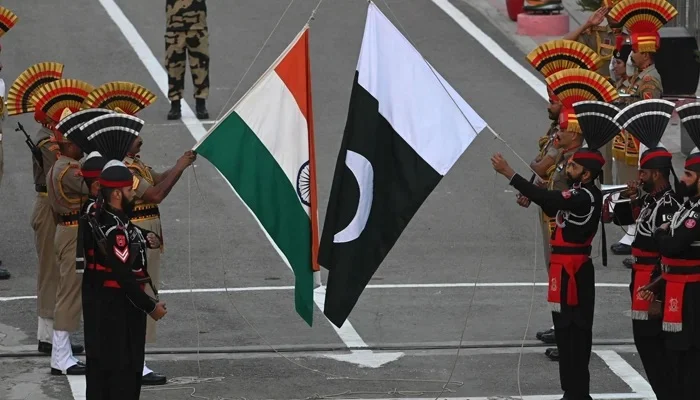
In a first during peacetime, no Independence Day greetings exchanged between Pakistan, India

The relationship between Pakistan and India further deteriorated as the nuclear-armed neighbours did not keep up with the tradition of exchanging formal greetings on their respective independence days for the first time during peacetime,

Pakistan celebrated its 77th Independence Day on August 14 whereas India observed its a day later.

August 14 also marked the last day of Shehbaz Sharif as prime minister. The outgoing government did not receive a message of felicitation from Indian Prime Minister Narendra Modi.

On the same day, Anwaar-ul-Haq Kakar took oath as the eighth caretaker prime minister of Pakistan. He reciprocated the gesture and opted not to send India salutations on its independence day.

Another diplomatic courtesy was also given a miss by the Indian prime minister — that of greeting a head of government who assumes office.

Today is Interim PM Kakar’s third day in government and there has been no message from New Delhi as of yet.

The Ministry of Foreign Affairs (MoFA) did not offer any comment regarding these new ‘trends’ in the diplomatic relations between the two countries, which had been worsened by the incumbent Indian leadership.

The Foreign Office has, however, confirmed that no greetings were exchanged by Pakistan and India on the occasion of their Independence Days.

Relations between the two countries had been sour mainly due to the constant belligerent attitude of India’s leadership but had deteriorated even more ever since the Bharatiya Janata Party’s (BJP) Modi came to power nine years ago.

Modi subverted Saarc by scuttling its summit that was to be held in Pakistan in November 2016; India also continued to promote terror activities on Pakistan soil. Indian spy-cum-terrorist Kalbhuhshan Jadhav is glaring evidence of India’s interventionist role in Pakistan; Jadhav was caught red-handed in Pakistan as an Indian spy.

In August 2019, New Delhi annexed Occupied Kashmir and merged it into the Indian Union, doing away with the special status of Jammu and Kashmir which is an internationally recognised disputed territory between Pakistan and India.

The dispute is still pending on the agenda of the United Nations Security Council. In February 2019, India initiated blatant aggression against Pakistani territory but the armed forces of Pakistan shot down the intruding Indian warplanes and captured one of the Indian pilots Abhinadan Varthaman.

Pakistan reduced diplomatic relations with India in the wake of the events of 2019, and since then the two countries have charge d’affaires looking after their respective missions after the expulsion of each other’s envoys in Islamabad and New Delhi. The number of diplomatic staff has also been reduced by the two countries.

Pakistan recently designated Aizaz Khan as its charge d’affaires in its New Delhi high commission after Salman Sharif’s return to Islamabad. India is also reportedly changing its charge d’affaires as Apoorva Srivastava could replace Suresh Kumar who was posted in Islamabad in December 2020.

The Indian High Commission in Islamabad held a ceremony to commemorate its Independence Day on Tuesday morning but no Pakistani guest was invited.

The Pakistan High Commission in New Delhi too hosted a limited reception but the Indian government hindered Kashmiri leaders from joining it.

Diplomatic observers are of the view that for the Indian general elections next year Modi’s BJP will contest the polls on an anti-Pakistan and anti-Muslim agenda. In the midst of all this, the scope for any improvement of relations is minimal for the time being — at least till the polls are held in India.

PM Shehbaz hopeful of finalising caretaker PM today

Prime Minister Shehbaz Sharif has indicated that the name of the caretaker prime minister is expected to be finalised following his last round of consultations with Opposition Leader Raja Riaz in Islamabad today (Saturday).

If the premier and Riaz do not agree on a name today, the matter will then be referred to a parliamentary committee, as Saturday is the third and the last day to make a decision in the wake of the National Assembly’s dissolution on August 9.

The prime minister, in his address to the leaders of the coalition parties during dinner last night, spoke about his expected meeting with the opposition leader to consult him for finalising the name for the top government post.

“[I] met Raja Riaz yesterday. I will meet [him] tomorrow,” he said, informing that his second round of the meeting, which was to be held on Friday, was postponed due to his busy schedule and Lahore visit.

According to reports, Raja Riaz has suggested the name of Senate Chairman Sadiq Sanjrani as the interim prime minister with general elections expected to take place early next year.

The prime minister’s comment comes after President Dr Arif Alvi wrote a letter to him, reminding him and the opposition leader to suggest a “suitable person” for the interim premier by August 12 (Saturday).

In a letter to both PM Shehbaz and Riaz, the president informed them that under Article 224A they are supposed to propose a name for interim prime minister within three days of the dissolution of the National Assembly.

“As provided in Article 224 (1A) of the Constitution of Pakistan, the Prime Minister and leader of the Opposition in the outgoing National Assembly may propose a suitable person for the appointment of care-taker Prime Minister not later than 12th August,” said President Alvi in the letter.

Commenting on the letter by President Alvi, PM Shehbaz said: “It is a pity that the president of Pakistan has written a letter.”

The premier added that the president has asked him to send the name of the caretaker prime minister by 12am.

PM Shehbaz said the matter of finalising an interim premier’s name spans eight days.

As per the country’s Constitution, if the prime minister and the NA opposition leader fail to agree on the name within three days, the matter goes to the parliamentary committee for the appointment of a caretaker PM.

As per the law, the premier and the opposition leader will send their respective preferences for the coveted post to the parliamentary delegation.

The parliamentary committee will then have to finalise the name of the caretaker prime minister within three days. But if the committee also fails to reach a consensus on the name, then the Election Commission of Pakistan (ECP) will pick the caretaker prime minister within two days from the names proposed by the opposition and the government.

The premier, while speaking with journalists in Islamabad on Friday, said that the coalition partners would be taken into confidence over the matter before taking a final decision.

‘Nawaz Sharif for country’s interest’

Meanwhile, Pakistan Muslim League-Nawaz (PML-N) leader Ahsan Iqbal spoke about the first meeting held between the premier and Riaz on Thursday (August 10) for deciding the name for the interim premier following which PM Shehbaz consulted with the allies.

“It is hoped that the decision will be taken by consensus, which requires a lot of consultation,” he said, maintaining how the process can slow down due to deliberations.

The former minister, when speaking during Geo News programme ‘Aaj Shahzeb Khanzada Kay Sath’, said that the matter of the caretaker prime minister would be resolved amicably.

He also clarified that PML-N supremo Nawaz Sharif had not insisted on a certain name. The party, in fact, wanted the decision to be taken in the interest of the country, which was to continue the Shehbaz-led government’s policy following Pakistan’s economic state.

“Continuity is essential in the economic situation of the country,” Iqbal said.

Iqbal’s clarification came in response to assumptions that his party is pushing for its own members for the coveted post.

Meanwhile, no names had been officially floated by the PML-N, but mere mentions of former finance minister Ishaq Dar and former premier Shahid Khaqan Abbasi had been doing the rounds for the last few weeks.

The former minister asserted that the caretaker prime minister would choose their caretaker cabinet on their own.

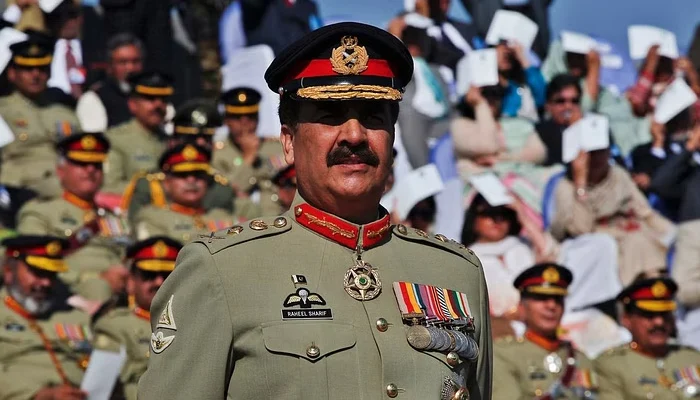
Gen (retd) Raheel Sharif receives lifetime achievement award

A lifetime achievement award was conferred upon former army chief and incumbent Commander-in-Chief of the Islamic Military Counter Terrorism Coalition (IMCTC), General (retd) Raheel Sharif

Government College University Lahore Vice-Chancellor Prof Dr Asghar Zaidi presented the award to the retired military leader, who spoke to the students about the importance of three Cs in life: Character, Courage, and Competence.

Prof Zaidi mentioned that some students make their alma mater proud, and Gen (retd) Sharif was one of them.

Meanwhile, General (retd) Sharif spoke about his own journey, including his family’s legacy at GCU and the influence of his Old Ravian elder brother, Major Shabbir Sharif Shaheed (Nishan-e-Haider, Military), who was a fearless soldier, embodying the ideals of courage and sacrifice.

The event highlighted Gen (retd) Sharif’s role in eradicating terrorism from the country and his position as the first military commander of the IMCTC, representing 42 countries in the pursuit of global peace and security.

Gen (retd) Sharif was Pakistan’s 9th chief of army staff (COAS) who led the country’s military from 2013 to 2016. He played a huge role in the eradication of terrorism through major anti-terrorism operations across the country.

The most significant of them was Operation Zarb-e-Azb in North Waziristan which obliterated the Taliban strongholds in the region, resulting in the stability of the entire country.

After his retirement, he was appointed to lead the multinational alliance IMCTC at the time of its inception in 2017 and still holds the office.