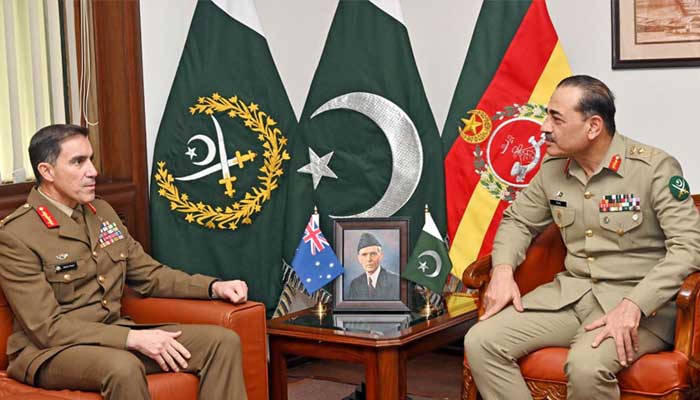
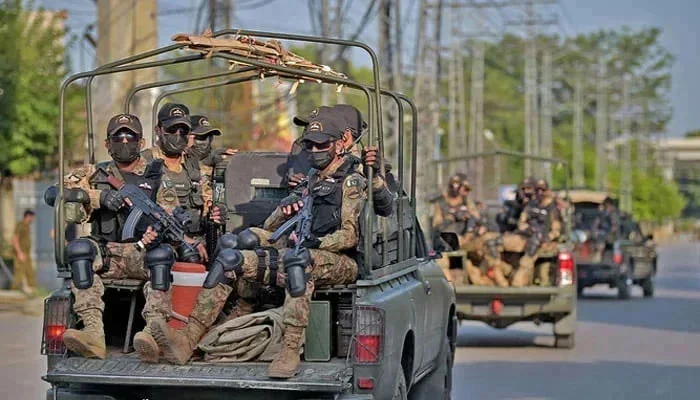
RAWALPINDI: Chief of the Australian Army, Lieutenant General Simon Stuart, called on Chief of Army Staff (COAS) General Asim Munir and commended Pakistan’s efforts in countering terrorism, the military’s media wing said on Monday.
According to a statement issued by the Inter-Services Public Relations (ISPR), the two personalities engaged in discussions covering matters of mutual interest, particularly the global and regional security environment.
During the meeting, COAS Munir emphasised Pakistan’s appreciation for its ties with Australia, noting the importance of strong bilateral relations in promoting shared goals of peace and stability.
Both sides reiterated their commitment to further strengthen cooperation in defence and security, recognising the value of continued collaboration for regional and global peace, the ISPR further said.
Meanwhile, Lieutenant Stuart commended Pakistan’s efforts in countering terrorism and expressed his resolve to deepen bilateral defence and security cooperation between the two countries.
Earlier, upon his arrival at GHQ, the chief of the Australian Army laid a floral wreath at the Yadgar-e-Shuhada to honour Pakistan’s martyrs.
He was accorded a warm welcome, with a smartly turned-out contingent of the Pakistan Army presenting a guard of honour to him.
Earlier in August this year, Commander of the People’s Liberation Army Ground Forces General Li Qiaoming expressed admiration for Pakistan’s concerted efforts in combating terrorism and extremism during his meeting with COAS Munir at the General Headquarter in Rawalpindi.
The Chinese commander also acknowledged the unwavering professionalism and dedication of the Pakistan army during the meeting.
“The meeting afforded an opportunity for in-depth discussions on matters of mutual interest, regional security, military training, and measures to further augment bilateral defence cooperation,” the military’s media wing had said.
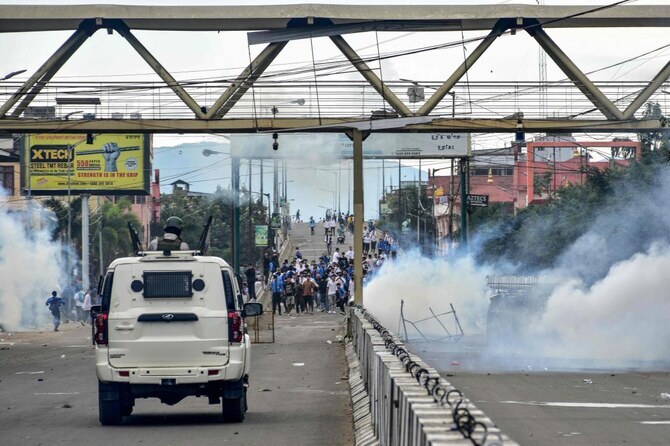
One officer was wounded as they “repulsed an attack on a police station”, Krishna Kumar, deputy commissioner of the state’s Jiribam district said, adding that “10 bodies of miscreants have been recovered so far”.
The violence is the latest in a simmering conflict that broke out in Manipur in May 2023, between the predominantly Hindu Meitei majority and the mainly Christian Kuki community.
Those killed come from the Hmar people, a smaller group within the Kuki.
The violence comes after the burned corpse of a Kuki woman was found in the district last week, sparking fury.
At least 200 people have since been killed in the violence, and communities have splintered into rival groups across swaths of the state, which borders war-torn Myanmar.
After months of relative calm, an uptick in violence in September killed at least 11 people, including by insurgents reportedly firing rockets and dropping bombs with drones.
Longstanding tensions between the Meitei and Kuki communities revolve around competition for land and public jobs.
Rights activists have accused local leaders of exacerbating ethnic divisions for political gain.
Manipur is ruled by Prime Minister Narendra Modi’s Hindu nationalist Bharatiya Janata Party.
Residents said Israeli tanks opened fire as they rolled into that sector of the camp, one of the Gaza Strip’s eight historic refugee sites, causing panic among the population and displaced families.
One resident, Zaik Mohammad, said the tanks’ advance was a complete surprise.
“Some people couldn’t leave and remained trapped inside their homes, appealing to be allowed out, while others rushed out with whatever they could carry as they fled,” Mohammad, 25, who lives one kilometre away from the targeted area said.
Hamas, allies claim to have carried out ambushes, anti-tank rocket attacks, killing several Israeli soldiers
Tens of thousands of Palestinian residents have been told to evacuate the areas, fueling fears that they may never be allowed to return.
The already slim chances of a ceasefire receded further at the weekend when mediator Qatar said it was suspending its efforts until both Israel and Hamas showed greater willingness to reach an agreement.
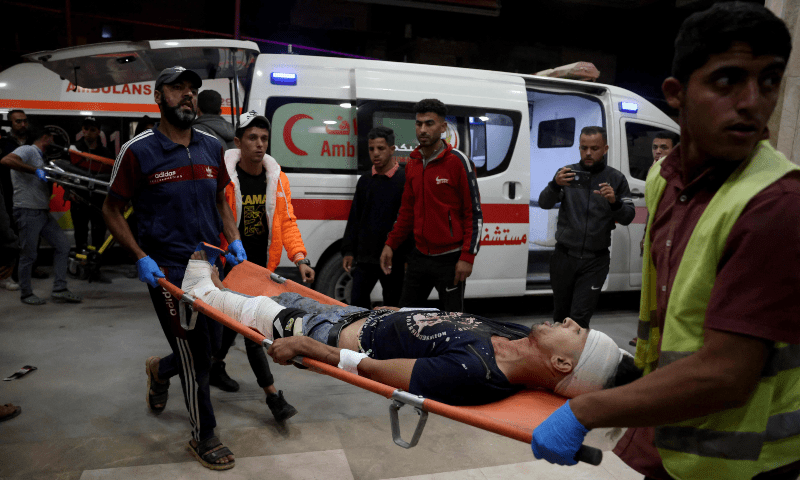
In attacks overnight and into Monday, health officials at Al-Awda Hospital in Nuseirat said 20 people were killed in a series of strikes from air and the ground, one that hit a tent encampment.
In the northern Gaza town of Beit Lahiya, where Israeli forces have operated since Oct 5, medics said four people were killed in an Israeli air strike. Others were killed in Israeli air strikes in Gaza City at Kamal Adwan Hospital near Beit Lahiya, medics said. Israeli drone strike wounded three medical workers in the facility.
There was no Israeli comment on Monday’s attacks.
While the Israeli military earlier claimed it killed an ally of Hamas, Mohammad Abu Skhail, in a strike on Saturday at a command centre inside a school in Gaza City, Palestinian medics said the attack killed six people.
Hospital siege
Meanwhile, Israeli forces have besieged the three hospitals in and around Jabalia for several weeks as hospital officials have refused orders to evacuate the facilities or leave their patients unattended despite the lack of food, medical, and fuel supplies.
The Israeli military accuses Hamas of exploiting Gaza’s civilian population for military purposes, a charge the group denies. The Israeli army sent tanks into Beit Lahiya, Beit Hanoun, and Jabalia camp in northern Gaza over a month ago. It claimed to have killed hundreds of militants in Jabalia and around it since then.
On the other hand, Hamas and its allies claimed to have carried out ambushes, mortar fire, and anti-tank rocket attacks, killing several Israeli soldiers.
On Monday, the Israeli military said it had expanded the “humanitarian zone” in the enclave.
Palestinian and United Nations officials say there are no safe areas in the enclave, home to more than 2.1 million people and now largely in ruins.
Terminally ill adults who are expected to die within six months would be able to request assistance to end their own life under proposed legislation for England and Wales.
Under a bill published on Monday, two independent doctors would have to be satisfied someone is eligible and has made their decision voluntarily. Requests would also have to be approved by a High Court judge.
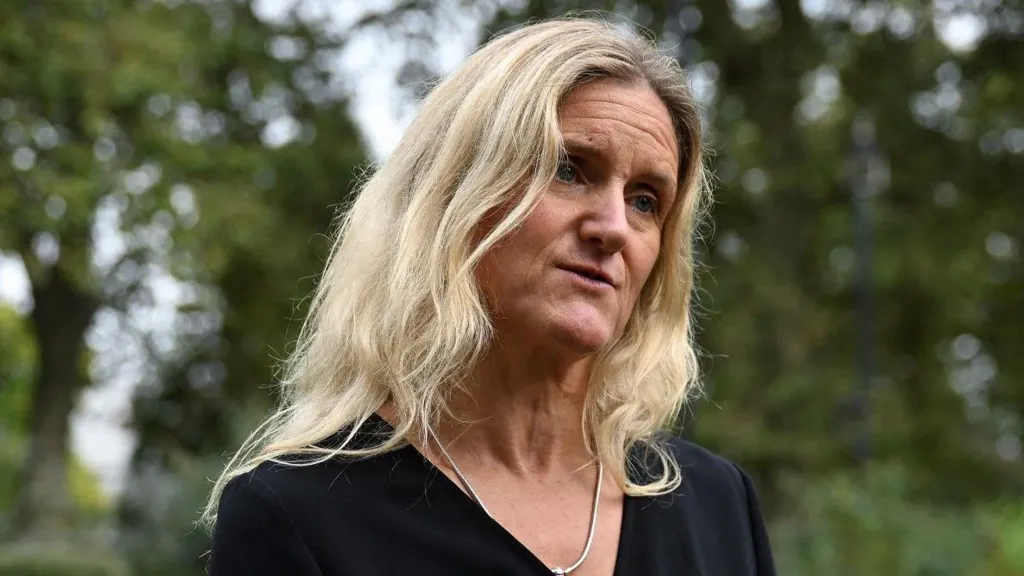
Labour MP Kim Leadbeater, who has put forward the bill, said it includes “the strictest safeguards anywhere in the world”.
However, opponents of assisted dying have raised concerns that people could feel pressured into ending their lives.
MPs will take part in an initial debate and vote on the Terminally Ill Adults (End of Life) Bill on 29 November.
It will be the first time since 2015 that the House of Commons has voted on the issue of assisted dying. Back then, MPs rejected proposals to allow some terminally ill adults to end their lives with medical supervision.
If the bill passes the first vote, it will receive further scrutiny from MPs and peers, who could choose to amend it.
A final version would require approval by both the House of Commons and Lords to become law.
The government has taken a neutral stance, allowing MPs to have a free vote on the matter – meaning they can make their own choice and do not have to follow the party line.
Current laws in the UK prevent people from asking for medical help to die.
The bill for England and Wales requires those who apply for assisted dying to:
Be over the age of 18, a resident in England and Wales and registered with a GP for at least 12 months
Have the mental capacity to make a choice about ending their life
Express a “clear, settled and informed” wish, free from coercion or pressure, at every stage of the process
There would have to be a period of at least seven days between two doctors making their assessments and another 14 days after the judge has made a ruling, unless the person’s death is expected imminently.
The individual would be allowed to change their mind at any time and no doctors would be obliged to take part in the process.
If all the criteria and safeguards are met, the substance to end someone’s life must be self-administered.
A doctor may prepare the substance or assist the individual to ingest it but the final act of doing so must be taken by the person themselves.
It would remain illegal for a doctor or anybody else to end a person’s life.
Under the proposed legislation, it would also be illegal to pressure or coerce someone into making a declaration that they wish to end their life.
The offence would carry a sentence of up to 14 years in jail.
Campaigners supporting the bill, including broadcaster Dame Esther Rantzen, argue terminally ill people should get a choice over how they die to avoid unnecessary suffering.
Leadbeater said the current law in the UK was “not fit for purpose” and was “leading to people having horrible deaths, taking their own lives, having to go to other countries if they can afford it”.
She told the BBC she hoped MPs would be reassured by the bill’s safeguards, adding: “What I would say to colleagues is, if you vote against the bill, or even if you abstain, you’re saying that the status quo is OK and it’s not OK.”
Dame Esther, who revealed last year she had joined Dignitas after a terminal cancer diagnosis, described the new bill as “wonderful” and said reform would stop more people having to go through “agonising deaths”.
She said unless her current medication turns out to be “totally miraculous” and extends her life by a few years “there’s no way an assisted dying law can come into force in time for me”.
Elise Burns, from Kent, is terminally ill with breast cancer and wants the option of an assisted death.
“I’m not scared to die but I am scared of a bad death – a long, drawn out, brutal, horrific death. That terrifies me,” she told the BBC.
“But also I’m concerned for my family and friends. I don’t want them to see me go through that.”
Conservative MP Kit Malthouse, who is co-sponsoring the bill, told the BBC’s World Tonight he felt a lot of the concerns raised by other MPs had been addressed by the bill’s safeguards, calling the status quo a “horror show”.
“People wanted to see a bill that was well drafted, tightly drawn, had safeguards in it requiring third party validation, but in particular these periods of reflection that allow someone to think about the decision they’re taking and to record their thinking,” he said.
However, Nik Ward, who lives in Surrey and has motor neurone disease, is against changing the law.
He told the BBC he might have sought help to die if it had been an option after he was diagnosed, but now says life is precious and he is opposed to assisted dying.
“It redefines the norms of our society, in a way that is, I think, terribly dangerous,” he said.
Groups who oppose changing the law say vulnerable people could feel under pressure to end their lives for fear of being a burden on others and that the focus should be on improving palliative care.
Dr Gordon Macdonald, chief executive of Care Not Killing, said: “The safest law is the one we currently have.
“This bill is being rushed with indecent haste and ignores the deep-seated problems in the UK’s broken and patchy palliative care system.”
Dr Gillian Wright, a former palliative care doctor and campaigner, told the World Tonight there were concerns the bill contains “arbitrary criteria” to define terminal illness.
“It’s actually difficult at times to determine that someone has six months to live,” he said.
“It’s essentially an arbitrary criteria. Why should those with nine or 10 months to live not also have access [to assisted dying]. Perhaps they would suffer more.
“You can see that, right at the beginning, with the way this bill is designed…, it sets you up for extension, because it will almost immediately be challenged.”
Conservative MP Danny Kruger told the BBC that, despite the efforts that have been made to add safeguards to the bill, he was concerned that in practice judges and doctors would end up “rubber-stamping” decisions.
He said he agreed with Leadbeater that “the status quo is not OK”, but added the focus should be on delivering better quality palliative care.
“Due to innovations in medicine, pain relief and treatment… it should not be necessary for anybody to die in unbearable, physical agony anymore,” he said.
Health Secretary Wes Streeting, who has said he will vote against the bill, has raised similar concerns, saying end-of-life care is currently not good enough to give people a real choice.
In response to such fears, Leadbeater said: “This is not about either improving palliative care or giving people the choice at the end of life that I believe they deserve.
“We have to do both, and they have to run in parallel.”
The MP for Spen Valley said there would be “checks against coercion or pressure” at every stage, as well as a code of practice and “robust training” for doctors involved.
She added that if the bill did become law, there would also be a “period of implementation”, which would most likely be up to two years.
ISLAMABAD: Imran Khan government’s Task Force on Civil Service Reform, after two years consultations with more than 3,000 participants from all walks of life holding 68 sessions throughout the country, had developed a comprehensive set of recommendations for modernising the civil service structure, processes and incentives.
However, most of the reform proposals despite the cabinet’s approval remained unimplemented during the PTI government. A major reform to cleanse the bureaucracy of deadwood was though implemented, it was later reversed by the last PDM government.
However, most of the reform proposals despite the cabinet’s approval remained unimplemented during the PTI government. A major reform to cleanse the bureaucracy of deadwood was though implemented, it was later reversed by the last PDM government.
Now the present government’s civil service reform committee is considering introducing reforms, similar to those of PTI government.
Dr Ishrat Husain-led Task Force on Civil Service Reform had proposed the overhaul of the present CSS competition scheme. The Task Force had recommended to introduce preliminary screening test, domain specific cluster-based exam, psychometric evaluation, structured interviews and system automation.
It was not implemented by the PTI government. The Task Force had also proposed new training scheme for the civil servants. It was recommended that middle career management and senior management courses to be split in general management and specialised training courses. It was implemented.
However, the proposal regarding reorganisation of specialised training institutes and mandatory training for ex-cadre and non-cadre civil servants was not implemented.
In regard to performance management, it was proposed to replace the subjective ACR system by an objective PER with goals specified and key performance indicators agreed with the reportee. Performance agreements between the PM and ministers were signed but the application of the new system to the civil servants remained unimplemented although the new proformas were designed.
The old system of seniority-cum fitness was replaced by a quantitative evaluation of each candidate’s performance, training outcomes, assessment of potential and integrity by a selection board.
Mandatory retirement of non-performers after 20 years service was introduced and also upheld by the High Court but it was reversed by the PDM government.
In regard to compensation and benefits, the task force had proposed monetisation of all perks, allowances, housing and transport for grade 17 to 22 officers. It was also recommended that annual increments should be based on ratings in performance evaluation in place of across-the-board equal increment. This proposal was also not implemented by the PTI government.
It was also recommended by the task force that technical experts and technical advisers with subject matter expertise to be appointed in 16 federal ministries through an open, competitive process. It was partially implemented. Only recently, the secretary IT was recruited from the private sector.
During the PTI government and on the recommendations of task force, selection of CEOs/MDs of 62 public sector bodies and corporations through an open, merit based competitive process was completed and 16 expatriate Pakistanis were appointed to head various organisations with positive results.
Regarding pension reform, it was proposed to switch from defined benefits to defined contribution for new entrants. This has been implemented by the present government.
It was also proposed that to provide equality of opportunity and remove reservations for some cadres, all public servants after attaining Grade 19 can be promoted to higher grades in the Federal Secretariat only after they appear before the Public Service examination and are selected through an open, competitive process.
Each selected candidate would be allocated to either one of the four cluster based streams of ministries – Economic, Social Sector, Technical, and General Management. This proposal was not approved by the PTI government.
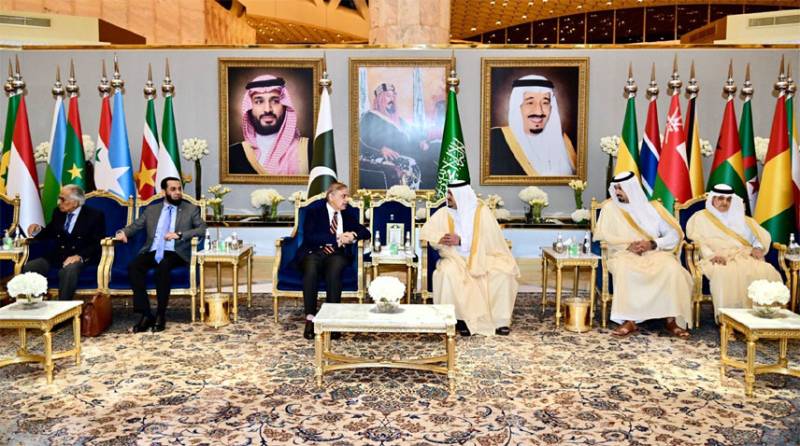
Upon his arrival at Riyadh’s Royal Airport Terminal, Prime Minister Shehbaz was warmly received by Prince Muhammad bin Abdul Rahman bin Abdulaziz, the Deputy Governor of Riyadh, along with Pakistan’s ambassador to Saudi Arabia and other senior diplomatic staff.
Federal Minister for Information and Broadcasting Attaullah Tarar and Special Assistant to the Prime Minister Tariq Fatemi accompanied the prime minister.
Prime Minister Shehbaz Sharif in his post on X wrote “…I will join the leaders of the Muslim Ummah at the Joint Arab Islamic Summit being convened to discuss the rapidly deteriorating situation in Gaza and speak with one voice for the rights of the Palestinian people and reaffirm our collective call for regional peace”.
PM Shehbaz Sharif is set to address the second Joint Arab-Islamic Summit today that was convened to discuss the situation caused by the escalating violence in the Palestinian and Lebanese territories, including the brutal Israeli aggression.
Accompanied by the cabinet members, the prime minister will present Pakistan’s viewpoint on Israel’s barbarism in Gaza, Palestine and other areas.
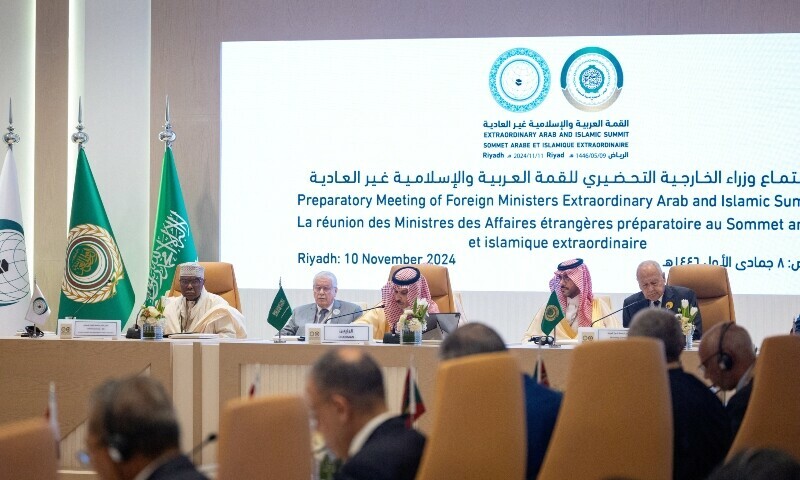
The Summit is preceded by the preparatory session of the Council of Foreign Ministers (CFM) held on Sunday and also participated by Deputy Prime Minister and Foreign Minister Senator Mohammad Ishaq Dar.
The heads of state and government and senior officials from the Arab League and the OIC member countries are participating in the event.
At the Summit, the prime minister will call for an immediate end to the genocide in Gaza; an urgent and unconditional ceasefire; immediate cessation of the ongoing Israeli adventurism in the region that is endangering the security of the countries in the Middle East.
He will also advocate for providing international protection for the Palestinian people; and for the establishment of an independent State of Palestine on the borders of 4 June 1967, with Al-Quds Al-Sharif as its capital.
On the sidelines of the Summit, Prime Minister Shehbaz is expected to hold bilateral meetings with Saudi Arabia’s Investment Minister Khalid A Al-Falih and Secretary General of the Muslim World League Sheikh Dr Mohammed Al-ssa.
Prime Minister Shehbaz Sharif, who left for Riyadh on Sunday, is also scheduled to address the Second Arab-Islamic Summit.
Addressing the Council of Foreign Ministers Preparatory Meeting for the summit a day ago, Deputy Prime Minister Ishaq Dar expressed hope that the incoming US administration would lend its weight to reinvigorate efforts for peace in the Middle East.
The Saudi foreign ministry announced plans for the summit in late October during a meeting, also in Riyadh, of a new “international alliance” to press for the establishment of a Palestinian state.
It comes one year after a similar gathering in Riyadh of Cairo-based Arab League and Jeddah-based Organisation of Islamic Cooperation (OIC) during which leaders condemned Israeli forces’ actions in Gaza as “barbaric”.
This time around, Trump’s election last week for a second term in the White House is likely to be on leaders’ minds, said Anna Jacobs, senior Gulf analyst for the International Crisis Group think tank.
“This summit is very much an opportunity for regional leaders to signal to the incoming Trump administration what they want in terms of US engagement,” she said.
“The message will likely be one of dialogue, de-escalation and calling out Israeli military campaigns in the region.”
Israel’s retaliatory campaign against Hamas’s attack last year on Israel has killed more than 43,600 people in Gaza, most of them civilians, according to data from the territory’s health ministry that the United Nations considers reliable.
The Oct 7, 2023 attack on southern Israel had resulted in 1,206 deaths, mostly civilians, according to an AFP tally of Israeli official figures.
Lebanon-based Hezbollah began firing on Israel after the October 7 attack. The regular cross-border exchanges escalated in late September when Israel intensified its air strikes and sent ground troops into southern Lebanon.
Despite criticism of the impact Israel’s military campaign has had on Gaza civilians, outgoing US President Joe Biden ensured that Washington remained Israel’s most important military backer during more than a year of fighting.
In his first term, Trump’s actions showed him as an even firmer supporter of Israel.
He defied international consensus by recognising Jerusalem as Israel’s capital and moving Washington’s embassy there.
He also endorsed Israeli settlements in the occupied West Bank, which are illegal under international law.
Under the Abraham Accords, Trump oversaw the establishment of diplomatic relations between Israel, the United Arab Emirates and Bahrain, as well as Morocco.
Though Saudi Arabia did not join those agreements, Trump cultivated warm ties with the Gulf kingdom while in office and has deepened his business connections to the region during the Biden years.
Saudi Arabia has pressed pause on a US-brokered deal where it would recognise Israel in return for security and economic benefits, insisting there will be no diplomatic ties without a Palestinian state.
Umer Karim, an expert on Saudi politics at the University of Birmingham, said Riyadh will use Monday’s summit to signal to the incoming Trump team that it remains a strong partner.
The message is that Trump “can rely on the Saudis as being representatives of the Muslim world”, and that “if you want to extend American interests in the region, Saudi Arabia is your bet”, he said.
The 57-member OIC and 22-member Arab League include countries which recognise Israel and those firmly opposed to its regional integration.
Last year’s summit in Riyadh saw disagreement on measures like severing economic and diplomatic ties with Israel and disrupting its oil supplies.
Karim said the post-summit statement on Monday will likely “strongly condemn Israel […] while also pushing for greater American leverage and diplomacy on the issue”.
The November 2023 meeting featured an appearance by Iran’s then-president Ebrahim Raisi, highlighting how regional diplomacy has changed since Trump was last in office.
In March 2023, Iran and Saudi Arabia announced a China-brokered rapprochement after seven years of severed ties.
The Middle East heavyweights have maintained regular high-level contact as part of efforts to contain the ongoing conflicts.
Iranian state media said the chief of staff of the Saudi armed forces was to arrive in Tehran on Sunday for talks, a rare high-level visit.
Prime Minister Sir Keir Starmer is expected to discuss European security and the likely impact of a second Trump presidency as he holds talks with French President Emmanuel Macron in Paris on Monday.
Ahead of attending a ceremony at the Tomb of the Unknown Soldier, Macron and Starmer are expected to discuss Russia’s ongoing invasion and the humanitarian situation in Gaza, Downing Street said.
Their meeting comes as questions are being asked about US President-elect Donald Trump’s support for Ukraine after he said he could end the war with Russia “in one day”.
Trade will also be on the agenda, with Trump saying he will impose a blanket 20% tariff on imports into the US.
Sir Keir – who is believed to be the first British leader to attend the ceremony on the Champs Elysee since Winston Churchill in 1944 – will also meet French Prime Minister Michel Barnier.
Among the topics likely to be discussed in the meeting are Ukraine, the Middle East, migration and the government’s push for a “reset” of relations with the EU.
On Ukraine, the leaders are expected to talk about how to ensure its forces are in the best possible position ahead of the winter. One possible topic of discussion is whether Ukraine could use long-range Storm Shadow missiles deep into Russian territory.
But after months of discussion on this issue the key decision-maker as far as London and Paris are concerned remains President Biden, so no breakthrough is expected today.
Questions have been raised following Trump’s US presidential election victory about what his second term could mean for US support for Ukraine and Nato.
Over the weekend, the Washington Post reported Trump has already spoken to Vladimir Putin – urging the Russian leader not to further escalate the war.
The Kremlin denied a phone call took place, claiming the Washington Post’s article “does not correspond at all to reality”.
UK Defence Secretary John Healey said if the reports of the call were correct “then President Trump is exactly right to warn Putin against escalation in Ukraine”.
Speaking to BBC Breakfast, he said he expected the United States to “remain steadfast” in its support of Ukraine due to the strength of “bipartisan support” in the country.
“We have stepped up our support of Ukraine, we’re speeded up the delivery of aid, and we’re spending more now on Ukraine and supporting Ukraine than we ever have done before,” he added.
The UK and France have said backing Ukraine against Russia is essential when it comes to to protecting the European continent as a whole.
Trump has previously told Nato members to increase defence spending, saying he would let aggressors such as Russia do “whatever the hell it wants” to those that do not.
During his election campaign, Donald Trump declined to specify how he would end the war between Russia and Ukraine in a day – but it could involve imposing a deal on both sides.
Bryan Lanza, who worked on Trump’s 2024 presidential campaign, told the BBC that Ukrainian President Volodymyr Zelensky had to have a “realistic vision for peace”, which would not involve ending the Russian annexation of Crimea.
However, a spokesperson for Donald Trump distanced him from the remarks, saying Mr Bryan “does not speak for him”.
The Armistice Day meeting between Starmer and Macron comes as fighting between Ukraine and Russia intensifies.
Exchanges at the weekend saw the largest drone attacks by both sides against each other since the start of the war, and Russia’s defence ministry said it intercepted 84 Ukrainian drones over six regions, including some approaching Moscow.
However, he did not say when the target would be reached or whether it would be met before the next election, which could be held in 2029, at the latest.
Sir Keir joined other political leaders and members of the Royal Family, including the Prince and Princess of Wales, for the annual National Service of Remembrance ceremony at the Cenotaph in London on Sunday.
As on Remembrance Sunday, two minutes of silence will be held on Armistice Day at 11:00 GMT.
It marks the moment World War One ended, at 11:00 on the 11th day of the 11th month, in 1918.
Sign up for our Politics Essential newsletter to read top political analysis, gain insight from across the UK and stay up to speed with the big moments. It’ll be delivered straight to your inbox every weekday.
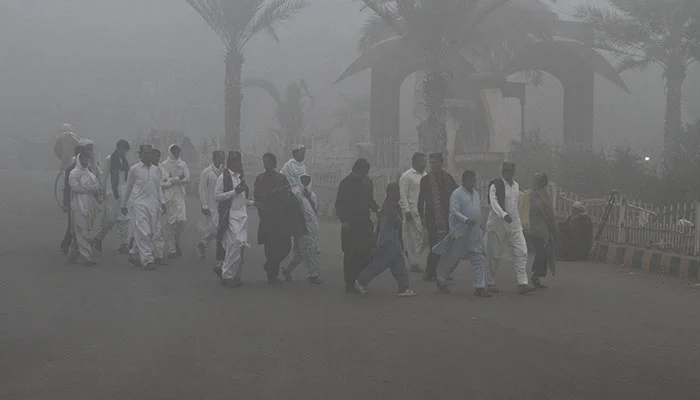
The ongoing smog crisis in Pakistan has intensified as the air carrying toxins from India engulfed various districts of Khyber Pakhtunkhwa after Punjab, where Lahore retains its position on top of the global pollution charts.
The air quality index (AQI) in the provincial capital was 613 around 10am on the real-time list of most polluted cities in the world by Swiss group IQ Air.
Meanwhile, (PM2.5) pollutants — the fine particulate matter in the air that causes the most damage to health — was recorded at 382.2, which is 76.4 times higher than the World Health Organisation’s (WHO) annual air quality guideline value.
After affecting various cities in Punjab, smog spread beyond the province, blanketing some of the districts in KP, where citizens complained of eye and throat infections and breathing issues.
After Punjab’s Multan — where the AQI was recorded at 587 last night — KP capital Peshawar ranked the third most polluted city in the country, with an AQI of 587, a level deemed hazardous by the Swiss air quality monitor.
The cities worst hit by air pollution after Lahore and Multan were Bahawalpur, Faisalabad, Sargodha where air quality was poor.
Connecting arteries and thoroughfares including Lahore-Sialkot Motorway, Motorways M1, M2 and M5 were blocked at various points causing traffic disruptions in Punjab. Moreover, roads connecting Punjab with Sindh and inter-provincial border areas were also hit by smog.
Multiple casualties were reported in separate road accidents due to dense smog and consequent low visibility.
In Ghotki, a woman was killed and a man was injured in an accident on National Highway near Ghotki, while another woman and her two children were killed in a separate accident in Gojra, when a tractor trolley ran over a motorcycle.
Meanwhile, two others were killed and nine people were injured when a passenger bus rammed into a trailer truck parked on the roadside in Bhakkar.
In the wake of these accidents, traffic police has advised commuters to be extra cautious and only travel during the day hours, while ensuring road safety with the use of fog lights.
As the country battles air pollution, the most populated province of Punjab has ordered public spaces closed and banned all outdoor activities in smog-hit main cities till November 17.
As per a report by The News, a meeting of the smog steering committee, headed by Senior Minister Marriyum Aurangzeb, on Saturday decided that the government will present a dossier smog mitigation orders before the Lahore High Court, which has ordered various measures to bring down levels of pollution in smog hit cities.
The government has attributed this year’s particularly high pollution levels to toxic air from neighbouring India, where air quality has also reached hazardous levels.
Today, the AQI level in Indian capital New Delhi was 275, which is much lower than the statistics from the past couple of weeks, but the megapolis remained the second most polluted city in the world on IQ Air’s list.
RAWALPINDI: Security forces have killed at least six terrorists and injured as many others in an intelligence based operation (IBO) in general area Spinwam of District North Waziristan, the Inter-Services Public Relations (ISPR) said on Sunday.
A statement by military’s media wing said that the operation was conducted on Saturday on the reported presence of “khwarij”.
“During conduct of the operation, own troops effectively engaged khwarij’s location, as a result of which, six khwarij were sent to hell, while six khwarij got injured,” the statement read.
The ISPR said that weapons and ammunition were also recovered from the slain khwarij, who remained actively involved in numerous terrorist activities against the security forces as well as killing of innocent civilians.
“Sanitisation operation is being carried out to eliminate any other Kharji found in the area, as security forces of Pakistan are determined to wipe-out the menace of terrorism from the country,” it maintained.
Pakistan continues to battle with militancy as terrorist activities grow across the country, especially in KP and Balochistan, since the Taliban takeover of bordering Afghanistan.
The latest incident of terrorism came on Saturday, when a suicide bomber blew himself up at a railway station in Quetta, killing at least 27 people and injuring over 60 others.
As per a report issued by the Centre for Research and Security Studies (CRSS), third quarter (July-September) of 2024 saw a sharp increase in fatalities of terrorist violence and counter-terrorism campaigns, with a 90% surge in violence.
A total of 722 people were killed, including civilians, security personnel, and outlaws, while 615 others were wounded in as many as 328 incidents recorded during the period under review.
Nearly 97% of these fatalities occurred in KP and Balochistan — marking the highest percentage in a decade, and over 92% of these incidents of terror attacks and security forces’ operations were recorded in the same provinces.