
Sindh cabinet reshuffle: CM Appoints new ministers, advisors, SACMs

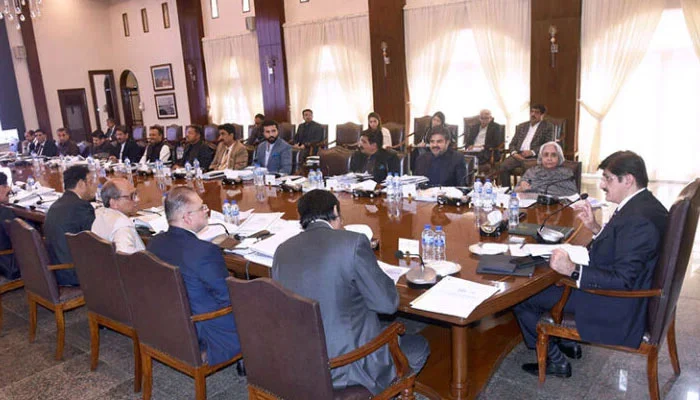
KARACHI: The Sindh cabinet has witnessed a significant reshuffle as Chief Minister Syed Murad Ali Shah has allocated or reallocated several portfolios, including the appointment of three advisors to the CM and ten special assistants.

The provincial government issued a notification detailing the changes to the cabinet late on Friday.

Mukesh Chawla has been appointed the provincial minister for Excise, Taxation and Narcotics Control. The portfolio was previously held by Sharjeel Inam Memon, who has been relieved of the responsibility.

Memon, a senior minister, will continue as provincial minister of Information while also managing the Transport and Mass Transit portfolio.

Mohammad Ali Malkani, who previously held the Boards and Universities portfolio, has now been assigned the role of Minister for Fisheries and Livestock, a position previously held by Advisor to the CM Syed Najmi Alam. He will continue serving with the portfolio for Katchi Abadis.

Saeed Ghani and Jam Khan Shoro will continue as ministers for Local Government and Housing Town Planning and Irrigation, respectively.

Also, Minister Muhammad Bux Khan Mahar will continue to serve with the portfolios for Agriculture, Supply and Prices, Sports and Youth Affairs, and the Enquiries and Anti-Corruption Establishment.

Prominent PPP leader Allah Dino, also known as Babal Khan Bhayo, who had earlier resigned amid allegations of smuggling ammunition in Jacobabad, has rejoined the cabinet as the Chief Minister’s advisor. He has been entrusted with the Forests and Wildlife portfolio.

Bhayo resigned from his post in April this year after an alleged attempt was made to bring a large quantity of weapons from Balochistan to Jacobabad. In a statement issued on 20th April, Bhayo announced his resignation from his post “to allow a fair and transparent inquiry to be conducted” into the alleged arms smuggling attempt.

In his statement, Bhayo said he had requested the CM to accept his resignation immediately and begin an inquiry.

Ten special assistants to the Chief Minister have also been appointed to roles in the provincial cabinet.

Saleem Baloch will oversee the Public Health Engineering and Rural Development department. Saeed Ghani previously held the portfolio.

Abdul Jabbar Khan has been assigned the portfolio of Food, while Lal Chand Ukrani will take on the Minority Affairs’ portfolio.

The recent changes also saw Mohammad Bux Mahar lose the portfolio of the Bureau of Supply and Prices, which has been reassigned to Usman Hingoro.

Qasim Shah is tasked with Public-Private Partnerships and Investment, while Sarfaraz Rajar has been handed the portfolio for Social Protection.

Waqar Mehdi, the PPP’s provincial general secretary, has been appointed to head the Chief Minister’s Inspections, Enquiries, and Implementation Team (CMIE&IT).

Rajvir Singh has been appointed as Special Assistant with the portfolio for Human Rights, while Mansoor Shahani has received the portfolio for Student Affairs and Junaid Buland has been assigned the portfolio for the Sindh Technical Education and Vocational Training Authority (STEVTA).

Dost Ali Rahimoon, who previously served as Minister for Environment, Climate Change, and Coastal Development, has been made an advisor with the same portfolio.
Army dismisses possibility of deal with Imran Khan: UK newspaper

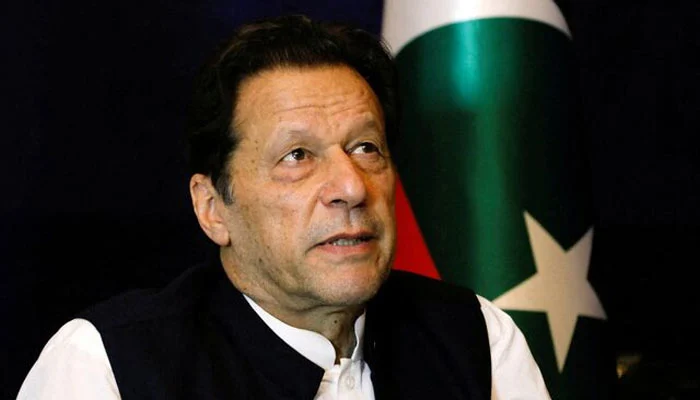
LONDON: Pakistan’s military has firmly ruled out the possibility of negotiating or striking a deal with imprisoned Pakistan Tehreek-e-Insaf (PTI) founder Imran Khan.

The statement comes after the former prime minister expressed a willingness to engage in talks with the military leadership from his prison cell.

As per the report, the newspaper had sent questions to Khan via his legal team, and in his responses, the cricketer-turned-politician confirmed he had not had any direct interaction with the military since his arrest and imprisonment in August of the previous year.

However, he said he would not rule out doing a deal with the establishment, despite previously accusing them of bringing down his government and being behind his incarceration.

Behind the scenes, senior military leadership said that for the past few months, Khan has been applying pressure for discussions with the military and had offered “unconditional” talks as he sought a deal to ensure his release.

However, senior military figures are said to be resolute in refusing to enter into any negotiations with Khan.

“Khan has to face the court cases against him, and can’t expect any deals from the military. Khan wants everyone to follow the rule of law, but he does not want this rule of law for himself,” said one military source.

“With regards to doing a deal with the military, any engagement would be based on principles and in the interest of the people, not personal gain or compromises that undermine Pakistan’s democratic values,” Khan told the newspaper.

He added that he would “rather live the rest of my life in prison than compromise on my principles.”

Khan now faces upwards of a hundred cases he claims are trumped up. Nonetheless, as his time in jail has dragged on and the cases against him have mounted, the former prime minister’s rhetoric towards the current military establishment has taken a more conciliatory tone.

The government has still yet to confirm if they intend to try Khan in a military rather than civilian court, on some charges. He denies all charges.

“How can any civilian ever be tried in a military court, let alone a former prime minister?” said Khan. “It’s ludicrous. The only reason to try a civilian in military court is simply, because no other court of justice would convict me. The very idea of it is alarming.”

Xi inaugurates South America’s first Chinese-funded port in Peru

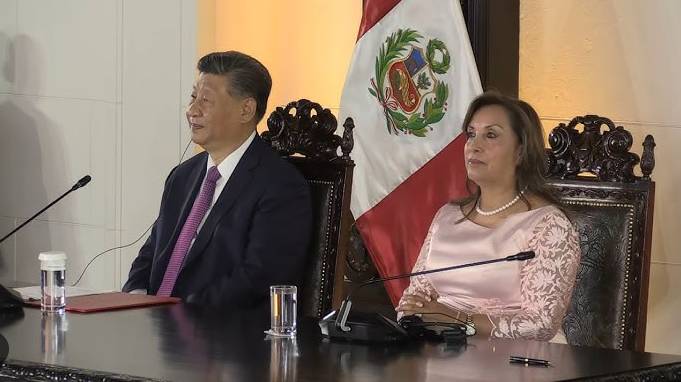
Chinese President Xi Jinping on Thursday inaugurated Latin America’s first Beijing-funded port in Chancay, Peru — a symbol of the Asian superpower’s growing influence on the continent as it prepares to face off with a new Donald Trump administration.

The $3.5-billion complex, about 50 miles (80 kilometers) north of Lima, is meant to serve as a hub for Chinese trade as the country is under threat of major tariff hikes once Trump reenters the White House for a second term.

The port was officially opened in a ceremony overseen virtually by Xi and Peruvian counterpart Dina Boluarte from Lima, where they will attend an Asia-Pacific Economic Cooperation (APEC) summit on Friday and Saturday.

“China plays a major role in the growth of our economy,” Boluarte said at the event, even as a US official warned Latin American nations should be vigilant on Chinese investment.

“We believe it is essential that countries across the hemisphere ensure that PRC (People’s Republic of China) economic activities respect local laws as well as safeguard human rights and environmental protections,” Brian Nichols, the top US diplomat for Latin America, said in Lima.

Xi, for his part, said the port would help “promote connectivity” between South America and China.

“We are witnessing… the birth of a new land-sea channel between Asia and Latin America in the new era,” Xi said

US President Joe Biden also arrived Thursday to attend the APEC summit in Peru, which Nichols described as a “crucial ally.”

– Belt and Road –

Peru — one of Latin America’s fastest-growing economies over the past decade — is China’s fourth-largest Latin American trading partner, with bilateral flows of nearly $36 billion in 2023.

Chancay port will also serve Chile, Colombia, Ecuador and other South American countries, allowing them to skirt ports in Mexico and the United States as they trade with Asia.

Chancay is the latest addition to a vast collection of railways, highways and other infrastructure projects built under China’s massive Belt and Road Initiative to stimulate trade and boost Beijing’s political clout.

Hong Kong-listed Cosco Shipping Ports, which owns 60 percent of the port, has a 30-year concession to operate the terminal and has forecast it will handle up to a million containers in its first year of operation.

Cosco Shipping Ports is a subsidiary of China’s COSCO Shipping Corporation.

The port’s maximum depth is 17.8 meters (58.4 feet), allowing it to handle the world’s biggest container ships.

Chancay, a fishing town of some 50,000 inhabitants, was chosen for its strategic location in the heart of South America.

It is now expected to become a major hub for imports of Asian electronics, textiles and other consumer goods and for the export of minerals — including lithium and copper.

Xi described the complex as South America’s “first smart and green port.”

Once completed, he said, it will reduce the transit between China and Peru by more than 10 days, and cut logistics costs by over 20 percent.


North Korea orders ‘mass production’ of attack drones

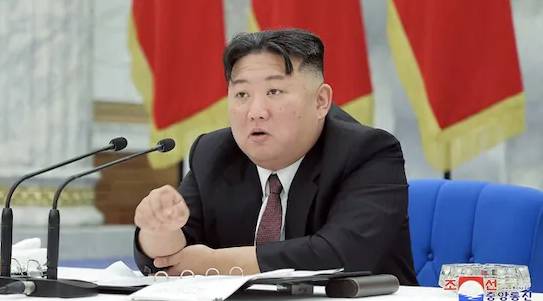
North Korean leader Kim Jong Un has ordered the “mass production” of attack drones, state media reported Friday, as concerns mount over the country’s deepening military cooperation with Russia.

Pyongyang first unveiled its attack drones in August, with experts saying the capability may be attributable to the country’s budding alliance with Russia.

The nuclear-armed country has ratified a landmark defence pact with Moscow and is accused of deploying thousands of troops to Russia to support its war in Ukraine, prompting South Korean President Yoon Suk Yeol to warn about the potential transfer of sensitive Russian military technology to North Korea.

Kim on Thursday oversaw the tests of drones designed to hit both land and sea targets, produced by North Korea’s Unmanned Aerial Technology Complex, the Korean Central News Agency (KCNA) said.

“He underscored the need to build a serial production system as early as possible and go into full-scale mass production,” KCNA said.

The unmanned drones are designed to carry explosives and be deliberately crashed into enemy targets, effectively acting as guided missiles.

Thursday’s test saw the drones “precisely” hit targets after flying along predetermined paths, KCNA reported.

“The suicide attack drones to be used within different striking ranges are to perform a mission to precisely attack any enemy targets on the ground and in the sea,” the agency said.

Kim said the drones were an “easy to use… component of striking power” due to their relatively low production cost and expansive range of applications, according to KCNA.

He said the North had “recently attached importance” to developing unmanned hardware systems and to integrating them with the country’s overall military strategy.

– Russian tech? –

Experts said the drones — in images released by state media in August — looked similar to the Israeli-made “HAROP” drone, Russian-made “Lancet-3” and Israeli “HERO 30”.

North Korea may have acquired these technologies from Russia, which in turn likely obtained them from Iran — with Tehran itself suspected of accessing them through hacking or theft from Israel.

In 2022, Pyongyang sent drones across the border that Seoul’s military was unable to shoot down, saying they were too small.

This year, North Korea has been bombarding the South with trash-carrying balloons, in what it calls retaliation for activists in the South floating anti-regime propaganda missives northwards.

The North has also accused Seoul of violating its sovereignty by flying drones over its capital Pyongyang to drop propaganda leaflets.

By mentioning the “production and practical deployment of various drones”, North Korea may be hinting it could follow suit, Yang Moo-jin, president of the University of North Korean Studies in Seoul, told AFP.

Pyongyang could be “suggesting the possibility of using balloons to disseminate leaflets to the South with such drones,” Yang said.

“Considering the effectiveness of drone attacks observed in the war in Ukraine, they could also be effectively utilised in the ongoing conflict there,” he added.

South Korea launched a drone operation command last year to better address the growing threat.

In October, the North amended its constitution to define South Korea as a “hostile” state, an illustration of a sharp deterioration in ties since Kim in January declared Seoul his country’s “principal enemy”.

The North has continued to carry out UN sanctions-defying ballistic missile tests, and last month blew up its roads and railways linking it to the South.

Billions at stake in court battle over North Sea oil

How much oil – and how much profit – remain beneath the waters that buffet the British Isles?

Going by the number of lawyers packed into the Court of Session in Edinburgh this week, it must be a decent amount.

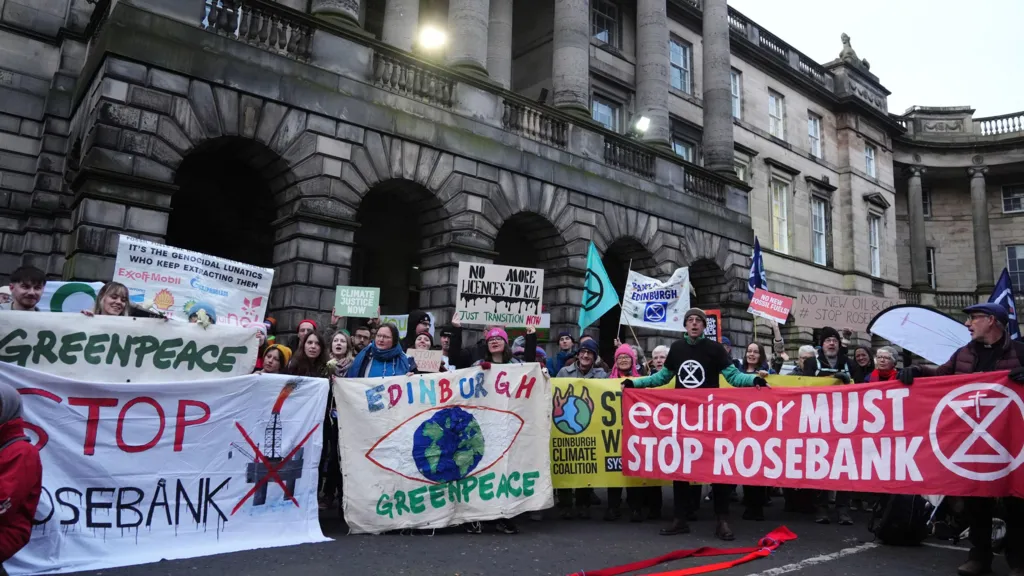
Seven advocates squeezed into the front row of courtroom number one where environmental campaigners are challenging the government’s approval of the Rosebank and Jackdaw fields.

Behind them, a further three rows were also packed with lawyers, tapping on laptops and scribbling in notebooks. Such an army obviously does not come cheap.

Remarkably they all agree on one basic fact – the Rosebank oil field in the Atlantic and the Jackdaw gas development in the North Sea were approved unlawfully.

However, the lawyers disagree sharply about what, if anything, should be done about it.

The person who must decide is Andrew Stewart, better known by his judicial title, Lord Ericht, who is presiding over this judicial review of the UK government’s decisions to approve the fields.

The previous Conservative administration and the oil and gas regulator consented to Jackdaw in summer 2022, with its owner Shell saying the field would be able to provide gas to 1.4 million British homes.

Rosebank, located west of Shetland and estimated to contain between 300 and 500 million barrels of oil, was given the green light the following autumn.

Operated by Norwegian state energy giant Equinor and Aberdeen-based Ithaca Energy, it is believed to be the largest untapped field in UK waters and its oil is to be taken off by tanker and sold on the international market, with some gas being piped to Shetland.

Among many other requirements, consent was granted on the basis of environmental impact statements submitted by the companies.

As was standard practice at the time, these assessed the climate impact of emissions caused by the process of extracting oil and gas but did not assess the impact of the greenhouse gases which would be released when the fossil fuels were eventually burned, known as downstream emissions.

Consent in hand, the owners of the fields raced ahead with work to get ready for drilling, striking deals with suppliers and hiring staff.

All week the court has heard repeated references to the vast sums of money that are being spent on the two projects.

Equinor says it will invest £2.2bn in Rosebank and provide employment for 4,000 people

Counsel for Equinor said it was investing £2.2bn in Rosebank, providing employment for 4,000 people.

Shell’s lawyer said it was investing £1.1bn in the Jackdaw gas field in the North Sea, employing “at least 1,000” people between 2023 and 2025.

Production is scheduled to begin at Jackdaw in 2026 and at Rosebank in 2026/27.

But this June a victory for climate campaigners in the UK Supreme Court sent a shiver through all three firms and the wider industry.

In Finch v Surrey County Council, which involved a dispute about drilling oil wells near London’s Gatwick Airport, the court ruled that an environmental impact assessment must include downstream emissions.

On the eve of the judicial review, Sarah Finch, the environmental campaigner after whom the Surrey case is named, told me that “the exact same thing happened at Rosebank.”

“It was granted permission with no assessment of the impact of burning the oil or gas to come out of it,” she said, adding: “So, a much bigger site, but exactly the same argument.”

The three companies involved in the Court of Session accept the Finch ruling means that, in retrospect, their licences were granted unlawfully.

However, they insist they provided all the environmental information required at the time of their applications; they were told by the industry regulator not to assess downstream emissions; and they should not be “punished” for a Supreme Court decision which they say they could not have foreseen.

Lord Ericht appeared to sum up their position succinctly on Friday, when he suggested it amounted to them asking him to say: “I accept this decision is unlawful but I give it lawful effect.”

The campaign groups Greenpeace and Uplift strongly object to any such idea.

They disagree that the decision in Finch could not have been predicted with one lawyer suggesting the oil companies had simply lost a bet.

Both groups now want the judge to pause work on Rosebank and Jackdaw while the fields’ downstream emissions are assessed.

Then, they argue, the Energy Secretary, Ed Miliband, and the government’s North Sea Transition Authority (formerly known as the Oil and Gas Authority), could make a fresh decision about the fields’ licences, armed with a fuller understanding of their contribution to climate change.

Even then, there may be a snag. Lawyers for the government, who were also in court, say they have doubts that Mr Miliband has the necessary legal power to revisit the decisions at all.

If Mr Miliband does have the power, and if it does come to the crunch, it is not clear what he would do. In court, the UK government’s lawyer was reluctant to be drawn on the matter.

At times he sounded as if ministers very much wished the whole affair would simply go away.

After all, in campaigning against the Tories in the general election this summer, Labour had carefully crafted a policy which appeared designed to minimise controversy, and to avoid becoming dragged into the debate about Rosebank.

It went like this — Labour was committed to tackling climate change by reducing greenhouse gas emissions but also recognised the importance of the oil and gas industry.

As such it would not grant any new exploration licences in UK waters but it would allow existing projects — including Rosebank and Jackdaw — to continue.

Ministers spoke of domestic energy production as critical for keeping bills down; helping to ensure the nation’s energy security; generating taxes; and for assisting with the transition from fossil fuels to renewable energy.

Many of those claims are contested by environmentalists.

Campaigners hope Energy Secretary Ed Miliband will be able to make a fresh decision on licensing, but he may not have the legal authority to do so

Tessa Khan, executive director of Uplift, said 80% of the UK’s oil was exported.

“There’s no world in which you could have a robust environmental assessment that takes into account those downstream emissions and decide that those environmental impacts are acceptable,” she told me.

In Aberdeen though, the heart of the UK’s energy industry, there is a great deal of nervousness about the potential impact of the decision in this case, and about the wider impact of government policy on the sector.

Just last week, one US oil firm said it would end all North Sea operations by the end of 2029 because of high levels of taxation.

Now, the eyes of climate campaigners, politicians, and oil companies alike are on Lord Ericht.

Perhaps he will find a compromise, for example by allowing the oil firms to proceed with preparatory works – as long as they don’t extract any oil and gas – while at the same time requiring them to provide the government with information on downstream emissions to enable them to revisit the decision.

The companies’ lawyers bridled at the suggestion that they were in the business of gambling but, in such a case, maybe they would have little choice but to bet that the politics of pulling the plug would be too painful for Sir Keir Starmer’s government.

Late on Friday afternoon, the judge retired to consider his decision, a process which could take several weeks or even months.

Thanking the many lawyers for their “excellent contributions,” he concluded the hearing by saying: “It’s a very difficult matter and it’s a very important matter,” adding, “I shall issue my judgment in due course.”

Pakistan rejects ‘agenda-driven report’ asserting China seeks joint security for its citizens

Pakistan has categorically rejected a media report suggesting Beijing urging Islamabad to allow its own security staff for the protection of thousands of Chinese citizens working in the South Asian nation following the Karachi airport bombing.

Beijing had asked Pakistan to “allow its own security staff for Chinese citizens” during talks after a car bombing in Karachi that was seen as “a major security breach”, Reuters reported this on Monday quoting sources.

Two Chinese citizens among three people were killed in a suicide blast near Karachi airport last month and a banned outfit — Balochistan Liberation Army’s (BLA) Majeed Brigade — claimed its responsibility via social media.

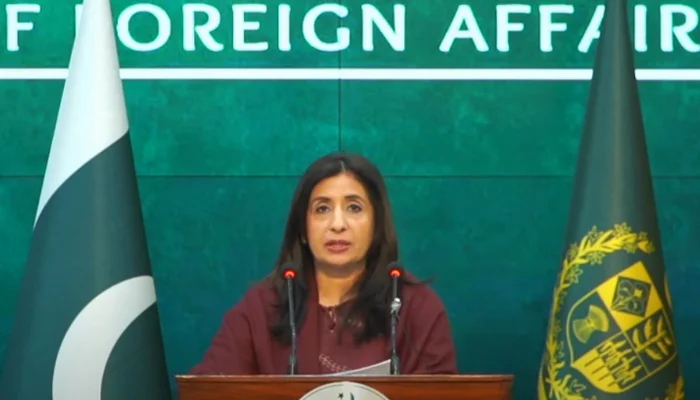
Reacting to the report at her weekly press briefing on Thursday, Foreign Office Spokesperson Mumtaz Zahra Baloch rejected the news report as “speculation” and “motivated by agenda”.

She urged the media to ascertain the motives behind such stories. Baloch added that both Pakistan and China had robust dialogue and cooperation based on mutual cooperation and respect for each other’s sovereignty as being the iron brothers and strategic partners.

“Both countries had the resolve and capabilities to foil any attempt to harm their bilateral relations,” she added.

The Reuters report claimed that a series of attacks on Chinese citizens have “pushed Pakistan to begin formal negotiations for a joint security management system”.

As Pakistan witnessed a surge in terrorist attacks since the Taliban returned to power in neighbouring Afghanistan in 2021, Islamabad has reiterated its call for the Afghan authorities to take action against the groups or individuals involved in terror activities against Pakistan, warning that they should not test the patience of the Pakistani people.

“We urge Afghan authorities to take Pakistan’s repeated requests seriously and ensure that action is taken against these terror groups,” Baloch said in today’s media briefing today.

“The patience of Pakistani people must not be tested with respect to the terror threat we continue to face from entities and individuals in Afghanistan,” she added.

As per a report issued by the Centre for Research and Security Studies (CRSS), third quarter (July-September) of 2024 saw a sharp increase in fatalities of terrorist violence and counter-terrorism campaigns, with a 90% surge in violence.

A total of 722 people were killed, including civilians, security personnel, and outlaws, while 615 others were wounded in as many as 328 incidents recorded during the period under review.

Nearly 97% of these fatalities occurred in KP and Balochistan — marking the highest percentage in a decade, and over 92% of these incidents of terror attacks and security forces’ operations were recorded in the same provinces.

Army officer, soldier martyred during operation in Balochistan’s Harnai

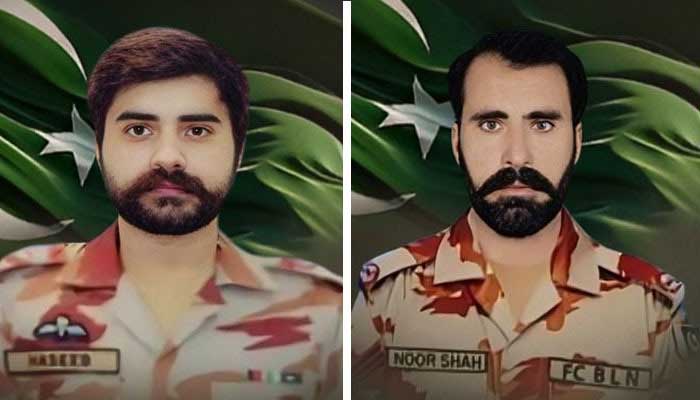
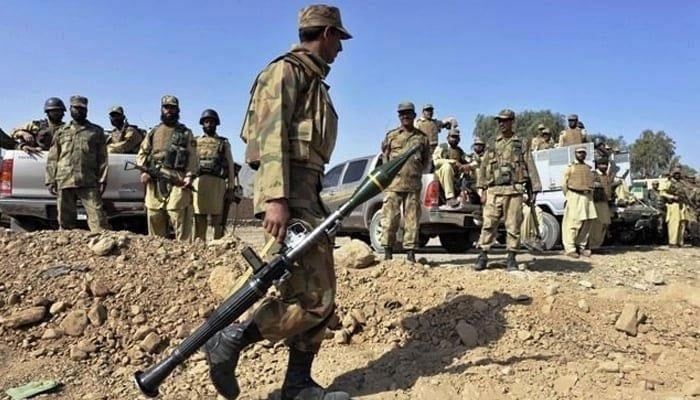
RAWALPINDI: Two soldiers including an army officer were martyred after an improvised explosive device (IED) exploded on the leading vehicle during an operation in Balochistan’s Harnai district, said the military’s media wing on Thursday.

According to the Inter-Services Public Relations (ISPR), security forces were immediately mobilised to sanitise the area on reported presence of terrorists who were planning to target innocent civilians in Harnai.

The Pakistan Army troops effectively engaged the terrorists’ location and resultantly killed three of them, the statement said.

“However, during the operation, an improvised explosive device exploded on the leading vehicle of security forces, resultantly, Major Muhammad Haseeb (age: 28 years, resident of district Multan), a brave officer, who was leading his troops from the front, along with Havildar Noor Ahmed (age: 38 years, resident of District Barkhan), having fought gallantly, made the ultimate sacrifice and embraced Shahadat,” said the ISPR.

It further said that the security forces of Pakistan, in step with the nation, remain determined to thwart attempts at sabotaging peace, stability and progress of Balochistan, and such sacrifices of the brave soldiers further strengthen our resolve.

The funeral prayer for Major Muhammad Haseeb Shaheed was held at Chaklala Garrison, Rawalpindi.

Chief of Army Staff General Syed Asim Munir, Planning Minister Ahsan Iqbal along with senior military and civil officials, officers, soldiers, and family members of the martyr attended the ceremony.

COAS Munir expressed that the sacrifice being made by the valiant officers and soldiers exemplify the unwavering dedication towards defending the country against the menace of terrorism. He highlighted that the nation stands in solidarity with the Armed Forces and law enforcement agencies in the fight against Fitna al Khawarij and all those who hold their reins.

Pakistan continues to battle militancy as terrorist activities spiked across the country, especially in KP and Balochistan, since the Taliban takeover of bordering Afghanistan.

The latest incident of terrorism came last week, when a suicide bomber blew himself up at a railway station in Quetta, killing at least 27 people and injuring over 60 others.

As per a report issued by the Centre for Research and Security Studies (CRSS), third quarter (July-September) of 2024 saw a sharp increase in fatalities of terrorist violence and counter-terrorism campaigns, with a 90% surge in violence.

A total of 722 people were killed, including civilians, security personnel, and outlaws, while 615 others were wounded in as many as 328 incidents recorded during the period under review.

Nearly 97% of these fatalities occurred in KP and Balochistan — marking the highest percentage in a decade, and over 92% of these incidents of terror attacks and security forces’ operations were recorded in the same provinces.

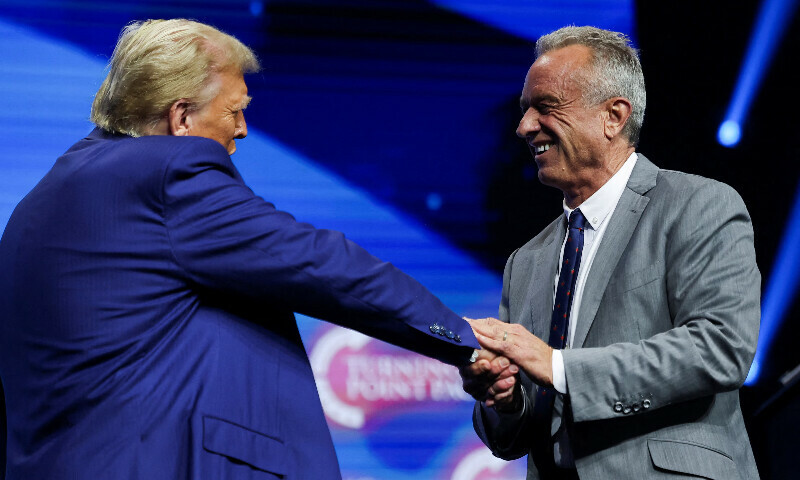
Trump selects RFK Jr to lead top US health agency

In a post on X, Kennedy vowed to work to end chronic disease, clean up corruption and provide Americans with the data they need to make informed decisions, vowing to Trump he would work to “Make America Healthy Again.”


Kennedy ran for president in this year’s election as an independent before dropping out in August and endorsing Trump in exchange for a role in the Republican administration.

Kennedy, the son and nephew of two titans of Democratic politics, has frequently talked about tackling what he calls the “chronic disease epidemic” of conditions including obesity, diabetes and autism, and reducing chemicals in food.

“The safety and health of all Americans is the most important role of any administration, and HHS will play a big role in helping ensure that everybody will be protected from harmful chemicals, pollutants, pesticides, pharmaceutical products, and food additives that have contributed to the overwhelming health crisis in this country,” Trump said in a post on social media.


Later on Thursday during a speech at his Mar-a-Lago home in Florida, Trump praised Kennedy, saying he would do “unbelievable” things in his new position. “We want you to come up with things and ideas and what you’ve been talking about for a long time,” Trump said, without elaborating.

The Department of Health and Human Services oversees drug regulation, public health agencies including the Centres for Disease Control and Prevention and health insurance for more than 140 million people including the poor, those aged 65 and older, and the disabled through Medicare and Medicaid.

HHS had a $3.09 trillion budget for fiscal year 2024, representing 22.8 per cent of the US federal budget.

Drew Altman, president of health research firm KFF, described the move as historic and said what Kennedy, if confirmed, would ultimately do in the role remains to be seen, given he has not often discussed programs like Medicaid and Medicare, which account for much of the US health budget.

“Historically, secretaries have been people with real experience and standing in national healthcare and he certainly is not that, and has views from outside the mainstream, and is a renegade appointment,” Altman said.

The appointment, which had been seen as a possibility for weeks, raised concern among some public health advocates who said Kennedy could have a negative role in Americans’ health given his power over these agencies. The Democratic Party decried the decision.

Some politicians and business groups supported the nomination, such as the National Community Pharmacists Association, which said it was encouraged by his willingness to take on corporations.

Kennedy has been a part of Trump’s transition team and has been reviewing candidate resumes for the top jobs at US health agencies.

Kennedy has suggested he would gut the 18,000-employee Food and Drug Administration — which ensures the safety of food, drugs and medical devices — and replace hundreds of employees at the National Institutes of Health.

“FDA’s war on public health is about to end,” he wrote on X in late October, adding that includes its “aggressive suppression” of psychedelics, peptides, stem cells, raw milk, sunshine, and other items.


“If you work for the FDA and are part of this corrupt system, I have two messages for you: 1. Preserve your records, and 2. Pack your bags,” he wrote.

In early November, he said he would recommend fluoride be removed from public water supplies, falsely claiming on X that the chemical is associated with bone fractures and cancer.

In a New York Times opinion article published in September, Kennedy criticised the popular Novo Nordisk weight loss drug Ozempic, saying, “Instead of fixing our food system and addressing the obesity crisis at its root, the author focuses on a drug that may palliate the symptom and gladden the wallets of distant Big Pharma execs.”


Dr Ashish Jha, former White House Covid-19 Response Coordinator and dean of the Brown University School of Public Health, said: “Most people don’t realise this is not about fluoride in water, or even vaccines, as important as they are. The HHS Secretary oversees Medicare. He and his appointees will decide what medicines are available to the American people.”

James Capretta, senior fellow at the American Enterprise Institute and a former White House staffer under George W. Bush, said it is not clear what impact Kennedy will have but that it will not be immediate.

“There’s lots of constraints on policy-making on the agency level, even at the secretarial level,” he said.

Shares of vaccine makers including Pfizer Inc and Moderna fell after news of Kennedy’s appointment and were down in after-hours trading by as much as 2pc.

Kennedy has been criticised for making false medical claims, including that vaccines are linked to autism. He opposed state and federal restrictions imposed during the Covid-19 pandemic and was accused of spreading misinformation about the virus.

He disputes the anti-vaccine tag, saying he wants more rigorous testing of vaccines instead. However, he chaired the Children’s Health Defence, a nonprofit organisation that focuses on anti-vaccine messaging.

In an interview in March, when he was still running for president, Kennedy said Americans who want a vaccine for themselves or their children would continue to have access to them if he were to be elected. But he said he doubted the efficacy of measles vaccines.

Measles is one of the most contagious human viruses and is almost entirely preventable through vaccination. It requires 95pc vaccine coverage to prevent outbreaks among populations. US coverage rates have fallen below that level among young children, the CDC said this month.

Vaccines have saved over 154m lives in the 20th century — the equivalent of six lives every minute of every year for the past 50 years, said Michael Osterholm, an infectious disease expert from the University of Minnesota.

“Immunisation has continued to be the single greatest contributor of any health intervention to ensuring that babies not only see their first birthdays, but they continue leading healthy lives into adulthood,” he said.

Six-member constitutional bench begins hearing pending cases

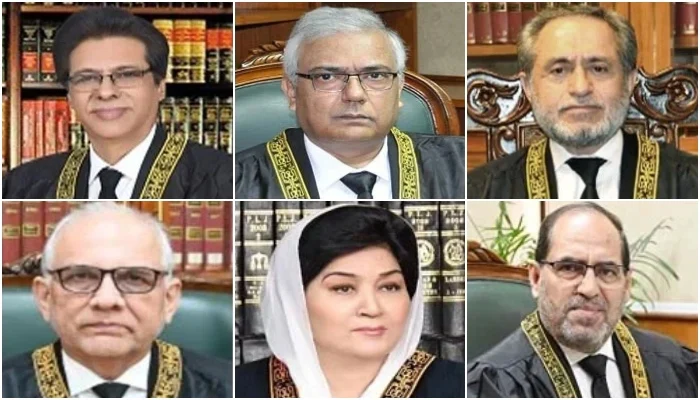
ISLAMABAD: The six-member constitutional bench on Thursday began hearing the cases, pending in the Supreme Court for years, in Court Room No 3.

The cause list for November 14 and 15 states that about 34 cases would be heard by the six-member constitutional bench led by Justice Amin-ud-Din Khan.

This marks the first hearing of the new bench, created under the 26th Constitutional Amendment.

Eighteen of these cases will be heard by the bench today and the remaining 16 will be heard on Friday (tomorrow).

Apart from Justice Amin, the constitutional bench comprises Justice Jamal Khan Mandokhail, Justice Muhammad Ali Mazhar, Justice Syed Hasan Azhar Rizvi, Justice Musarrat Hilali, and Justice Naeem Akhtar Afghan.

In view of the unavailability of Justice Ayesha A Malik on November 14 and 15, a relevant committee had decided that a bench comprising all available judges shall be constituted to proceed with cases on these dates.

The bench will hear environment-related cases including the one that has been pending with the Supreme Court since 1993 as well.

A review petition against the dismissal of a case challenging the nomination of Justice Qazi Faez Isa as chief justice of the Balochistan High Court, filed by Riaz Hanif Rai Advocate, is also being heard by the bench.

The bench will also take up a plea seeking a rescheduling of the 2024 elections as it was prayed before the court that the elections should be held between February and March.

Similarly, the constitutional bench will also take up cases related to pleas seeking disqualification of lawmakers, possessing business and assets abroad besides taking up cases related to pleas seeking a ban on government servants for contracting marriages with foreign nationals as well as suo motu a case taken up by former chief justice Isa regarding use of Conventional Centre, Islamabad for private purposes.

In today’s hearing, Justice Mazhar stated that all environmental matters would be overseen, while Justice Musarrat Hilali emphasised that housing societies are being constructed everywhere in the country.

The Supreme Court noted that a letter had been received regarding plans to convert Islamabad into an industrial zone. Justice Mandokhel pointed out that environmental pollution is a nationwide issue, not limited to Islamabad, and highlighted that vehicle smoke is a major cause of pollution.

He also questioned whether efforts are being made to reduce this smoke.

During the hearing, Justice Naeem Akhtar expressed concern about the destruction of fields and farms due to housing societies and stressed that farmers need protection.

He further remarked that while nature has provided fertile land, it is being destroyed. He questioned what actions are being taken for future generations.

Justice Mandokhel remarked that the state of Punjab is evident, and that Islamabad had similar conditions just a few days ago. Justice Mazhar asked why the Environment Protection Authority is not fulfilling its role, noting that the issue has been ongoing since 1993 and needs to be resolved.

He also pointed out that the entire country is facing serious environmental challenges.

Justice Mandokhel mentioned that something being mixed into petrol is contributing to pollution. Justice Hilali raised concerns about the proliferation of poultry farms and marble factories in Mansehra, as well as the pollution affecting some of Swat’s beautiful locations.

Justice Mazhar questioned the need for institutions if the court itself has to oversee the matter.

Further, Justice Hilali pointed out that no construction can take place without the Environmental Agency’s approval, yet housing societies continue to spread despite the agency’s presence.

She also highlighted the problem of marble factories being located next to school buildings in Khyber Pakhtunkhwa. Justice Hilali noted that officers of the Environmental Agency in Islamabad rarely leave their offices, and that smog has become a significant issue.

Justice Mandokhel asked about the causes of smog and how it can be eliminated. The Director General of the Environmental Agency reported that important actions had been taken following court orders.

Justice Afghan remarked that housing societies are replacing farms, with Lahore’s pollution now reaching Sheikhupura. He noted that Islamabad is also facing an overabundance of housing societies, which are destroying fertile land.

Justice Afghan questioned why flats are not being promoted instead of housing societies, adding that farming is being destroyed, and the environment is worsening.

The constitutional bench then requested reports from all provinces regarding measures to combat environmental pollution and postponed the hearing for three weeks at the request of the Additional Attorney General.

The court also sought information on actions taken to eliminate pollution and consolidated all related cases.

Meanwhile, the bench also dismissed the case related to narcotics on the grounds that it had become ineffective.

Similarly, the petition challenging the appointment of Qazi Jan Mohammad was also dismissed due to its ineffectiveness.

In another case, the court disposed of the petition against the appointment of Muhammad Sohail as the Director General of the Malir Development Authority.

Moreover, the review petition filed against former top judge Qazi Faez Isa’s appointment as Chief Justice of the Balochistan High Court was also dismissed.

Twelve terrorists killed in separate KP, Balochistan IBOs: ISPR

Security forces killed 12 terrorists during separate intelligence-based operations (IBOs) in Khyber Pakhtunkhwa’s North Waziristan and Balochistan’s Kech districts, the military’s media wing said on Wednesday.

In a statement, the Inter-Services Public Relations (ISPR) said on November 12-13, security forces conducted IBO in North Waziristan’s Miran Shah area on reported presence of terrorists.

“During conduct of the operation, own troops effectively engaged khwarij’s [terrorists] location, as a result of which, eight khwarij were sent to hell, while six khwarij got injured,” it added.

Separately, the ISPR said at least four terrorists, including a “high-value target”, were killed during an intelligence-based operation in Kech district.

The statement said security forces, on the night between November 12-13, conducted the IBO in the general area Balgatar of Kech district on the reported presence of terrorists.

During the conduct of the operation, an intense fire exchange took place between the security forces and the terrorists, as a result of which “four terrorists including the HVT, terrorist ring leader Sana @ Baru” were killed.

“He was a focal recruitment agent, especially suicide bombers, for the so-called Majeed Brigade in district Kech and was highly wanted by the law enforcement agencies.”

The ISPR further said that weapons and ammunition were also recovered from the killed terrorists.

Security forces also launched sanitisation operations to eliminate any other terrorists found in the KP and Balochistan areas, said the military’s media wing adding that forces are determined to wipe-out the menace of terrorism from the country.

It is pertinent to mention here that the third quarter (July-September) of 2024 saw a sharp increase in fatalities of terrorist violence and counter-terrorism campaigns, with a 90% surge in violence, according to a report issued by Center for Research and Security Studies (CRSS).

A total of 722 people were killed, including civilians, security personnel, and outlaws, while 615 others were wounded in as many as 328 incidents recorded during the period under review.

Nearly 97% of these fatalities occurred in KP and Balochistan – marking the highest percentage in a decade, and over 92% of these incidents of terror attacks and security forces’ operations were recorded in the same provinces.

The total fatalities from three quarters of this year have now surpassed the total fatalities recorded for the entire 2023; the number of fatalities rose to at least 1534 in the first three quarters compared to 1523 in 2023.

Meanwhile, terrorist groups continue to reorganise and beef up their ranks. Most of the terror attacks remained unclaimed by terrorist or insurgent groups, likely for tactical reasons, as per the report.