
PM Shehbaz announces petrol price relief ahead of Eid ul Adha

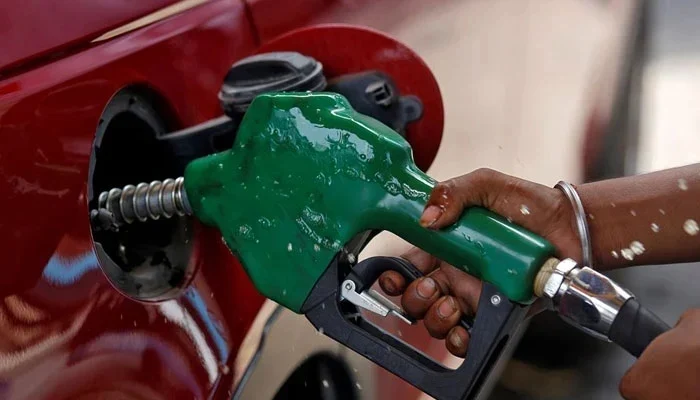
ISLAMABAD: The petrol price in Pakistan has been slashed by Rs10.2 per litre in the latest price cut announced by Prime Minister Shehbaz Sharif’s Office on Friday as a major relief for the inflation-hit masses ahead of Eid ul Adha.

Federal Minister for Information Attaullah Tarar confirmed the development, saying that the new petrol prices will be effective from midnight (June 15).

Sources privy to the development told Geo News that the application of new POL prices was made on the 14th day of this month due to closure of some government departments, including Finance Division.

An official statement released by the Prime Minister’s Office said that the price of high-speed diesel has also been slashed by Rs2.33 per litre to Rs267.89 from the previous price of Rs270.22 per litre.

Later, the Finance Division issued an official notification for the latest price cuts, stating that the new prices will be applicable for the next fortnight.

Products Existing price New price Increase/Decrease
Petrol Rs268.36 Rs258.16 -10.20
High Speed Diesel (HSD) Rs270.22 Rs267.89 -2.33

“The prices of petroleum products have seen a mixed trend in the international market during the last fortnight,” the notification read.

It further stated that the Oil and Gas Regulatory Authority (Ogra) had worked out the consumer prices, based on the price variations in the international market.

The Finance Division usually reviews the fuel prices every 15 days and the next review was due on Saturday (June 15).

The government had reduced the prices of petrol and HSD by Rs4.74 per litre and Rs3.86, respectively, in its third consecutive fortnightly review, on May 31.

The fuel prices have been witnessing a downward trend and have been reduced thrice consecutively in the past one-and-a-half-month in light of a drop in the rate of global oil prices.

The new fuel prices was the second relief announced by the prime minister today, as a reduction of Rs10.69 per unit in electricity price was also notified by the PM House for industries earlier in the day.

The said reduction was made on the National Electrical Power Regulatory Authority (Nepra) recommendation. The measure would help in increasing exports and cutting production prices in the industrial sector.
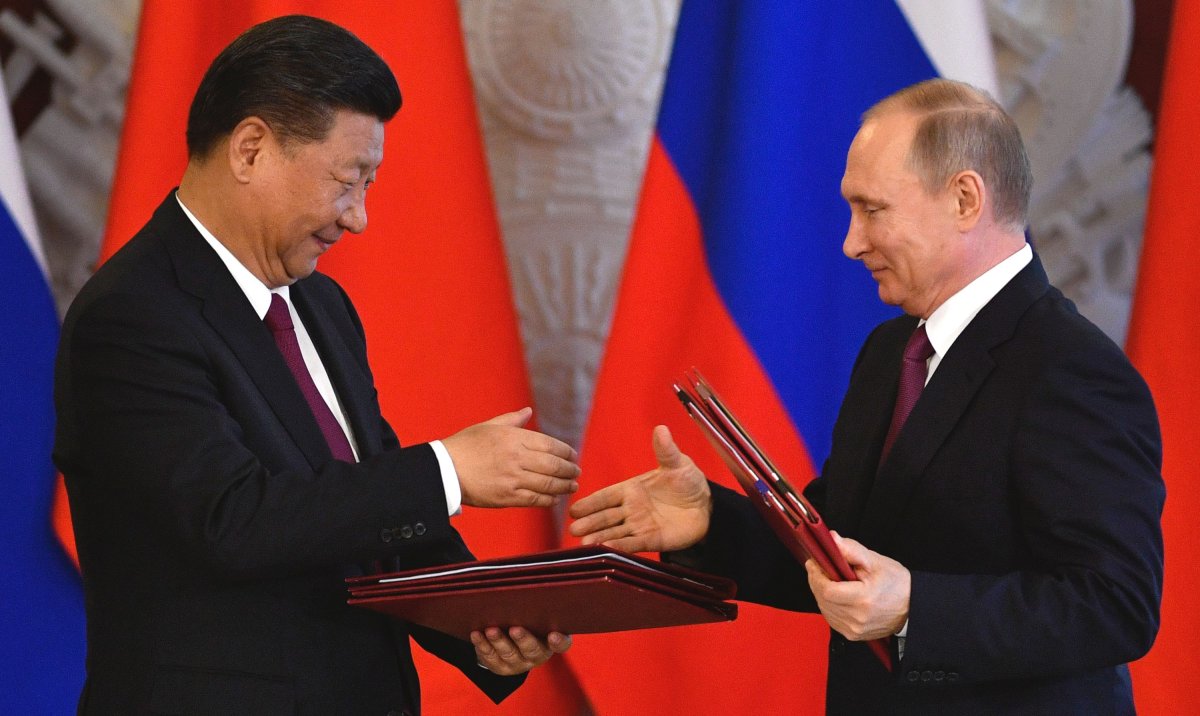
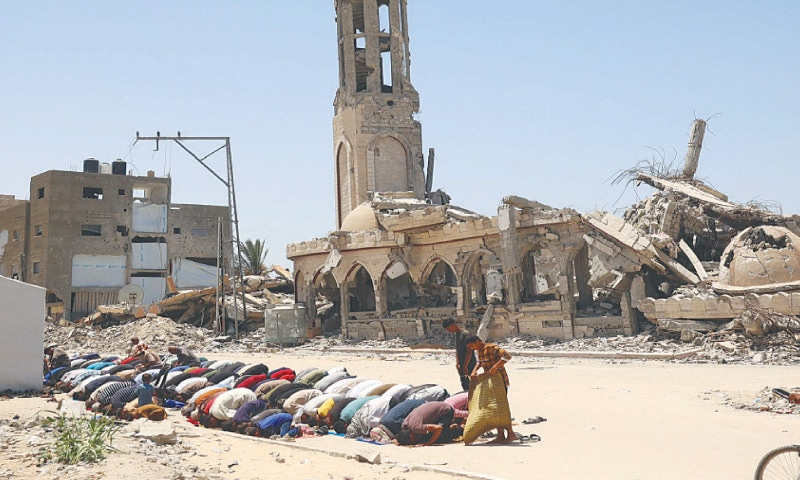
G7 slams China over Russia ties, ‘harmful’ trade

China has been a key focus of the Group of Seven talks in Puglia, amid souring trade relations between Beijing and the West and concerns that its supplies of equipment to Moscow are fuelling Russia’s war in Ukraine.

“We call on China to cease the transfer of dual-use materials, including weapons components and equipment, that are inputs for Russia’s defence sector,” according to a draft statement seen by AFP.

The Group of Seven also took aim at what it called “dangerous” incursions by China in the South China Sea, where worries of a military escalation between Beijing and its neighbours are rising.

Says UN agencies must work unhindered in Gaza Strip

“We oppose China’s militarisation, and coercive and intimidation activities in the South China Sea,” the statement read, using stronger language than at last year’s summit in Japan.

After a first day dominated by Ukraine, US Presi­dent Joe Biden and the leaders of Japan, France, Germany, Cana­da, Britain and host country Italy turned their focus to the world’s second-largest economy, a superpower whose oversized influence on geopolitics and global trade cannot be underestimated.

“G7 countries are on the same page vis-a-vis China,” a Japanese government source told AFP.

Thursday’s talks, attended by Ukrainian President Volodymr Zelensky, were marked by a strong show of G7 support for Kyiv, with an agreement to use profits from frozen Russian assets to provide a new $50-billion loan to Ukraine.

With the war in its third year, the G7 statement said the deal sent an “unmistakeable signal” to Russian President Vladimir Putin that they would back Kyiv for “as long as it takes”.


The G7 leaders said the UN Palestinian refugee agency must be allowed to work unhindered in Gaza. “We agree it is critical that UNRWA and other UN organisations and agencies’ distribution networks be fully able to deliver aid to those who need it most, fulfilling their mandate effectively,” they said.

They called for all parties to facilitate “rapid and unimpeded passage of humanitarian relief for civilians in need” in Gaza, particularly women and children.

“Securing full, rapid, safe, and unhindered humanitarian access in all its forms — consistent with international humanitarian law, and through all relevant land crossing points, including the Rafah crossing, through maritime delivery routes, including through Ashdod Port — and throughout all of Gaza remains an absolute priority,” they said.

UNRWA, which coordinates nearly all aid to Gaza, has been in crisis since January, when Israel accused about a dozen of its 13,000 Gaza employees of being involved in the October 7 attack.

That prompted many governments, including top donor the United States, to suspend funding to the agency, threatening its effo­rts to deliver aid in Gaza, although several have since resumed payments.

In the draft statement, the G7 leaders repeated concern at the “unacceptable number of civilian casualties” in the Gaza conflict, now into its ninth month. They again endorse a truce and prisoner release deal.

Lebanon village shaken by deadly Israeli strike

Jannata had been largely spared more than eight months of clashes between Hezbollah fighters and Israeli forces as war rages in Gaza, but the Lebanese village was shaken by an overnight strike that officials say killed two civilians.

“We were sitting on the balcony at night, and we felt a rocket fly over our heads. Then the world started to shake,” resident Khadija Husseini told AFP.

On Friday morning, she found that her clothing store had been damaged in the strike which targeted a building about 200 metres (650 feet) away. “There was shattered glass everywhere” from the shop window, she said.

Hezbollah launches rocket barrage against targets in Israel

Lebanon’s official National News Agency said a building was hit in Jannata, 20km from the Israeli border. The village’s deputy mayor, Hassan Shur, told AFP that two civilians, both women, were killed in a nearby building.

Rescuers said at least nine people were wounded in the strike on Jannata, including an infant and two children.


The strike, which the Israeli military has not commented on, comes on the heels of a major Hezbollah attack.

Hezbollah launched barrages of rockets and drones on Wednesday and Thursday targeting Israeli military sites across the border, after an Israeli strike earlier this week killed a senior commander.

Israeli forces struck Gaza and battled Hamas fighters on Friday as truce efforts failed to make progress. Witnesses reported strikes on the southern city of Rafah and central areas of the Gaza Strip.

At Al-Aqsa Martyrs Hospital in the central city of Deir al-Balah, men gathered over the body of an 11-year-old boy who died during a bombardment of nearby Bureij refugee camp.

In a black singlet, the child lay on a floor smeared with fresh blood, a white bandage covering the top half of his face, AFP images showed.

The Israeli military said troops continued operations in central Gaza, where warplanes struck a fighters’ cell in the Zeitun area.

Witnesses in Rafah, on Gaza’s southern border with Egypt, reported helicopter fire on the city’s west and centre, while Hamas’s armed wing said its fighters fired mortar rounds at Israeli troops near the Tal al-Sultan neighbourhood.

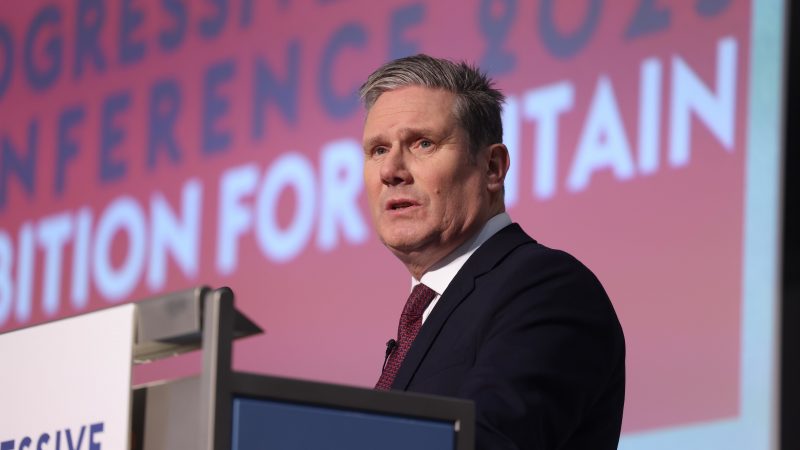
Sir Keir Starmer has said he’s prepared to make enemies to grow the economy, including driving through contentious planning applications.

Sir Keir also told Nick Robinson he was “not hostile” to people who used private healthcare, and ruled out rejoining the European Union.

Meanwhile, speaking to journalists at the G7 summit in Italy, Prime Minister Rishi Sunak said he was “going to fight for every single vote until the last day”.

Asked why he thought opinion polls were suggesting some Conservative voters were turning to Reform UK, Mr Sunak said “we’re only halfway through this campaign”.

He also repeated his insistence that “the Conservatives had a “tax-cutting manifesto” whereas Labour was “going to put your taxes up”.

Earlier this week at Labour’s manifesto launch, Sir Keir said his was the party of economic growth and would boost wealth creation.

Nick Robinson suggested the party was trying to disguise an £18bn hole in Treasury funds – equivalent to 10% of the NHS budget – which would need to be filled either by tax rises or spending cuts to public services.

However, Sir Keir said he rejected the choice was simply being “boxed in” between tax and spend because there was another lever, which he said was growth.

“My manifesto is about wealth creation,” he said. “This is a party of wealth creation, of growth.

“Therefore this boxing in that everybody is trying to do… that the only levers available to a Labour government or a Labour prime minister is to put up tax or pull down spending – I reject that – growth is the lever that I intend to pull.”

Asked if he was trying to “wave the magic wand of growth”, Sir Keir said “it’s not a wand, it’s a plan” and outlined how Labour was focused on how to get rid of blocks to business needs that were preventing economic growth.

The Labour leader gave the example of a wind turbine that could be built in two years but would instead be held up by the planning process for five years – suggesting he would be willing to override objections to new developments.

When Nick Robinson asked if he was prepared to make enemies in order to drive economic growth, Sir Keir replied: “Yes – we’re going to have to be tough.

“We’re going to have to change the way things are done.”

Following the first leaders’ debate, where Sir Keir said he would not use private healthcare himself under any circumstances, Mr Robinson suggested there was some concern the Labour leader thought people who did were “queue jumpers”.

“I’m not hostile in the slightest,” Sir Keir said. “I completely understand why people would go private… because they wanted to get an operation more quickly or get back to work or something else.”

But he defended the NHS as the best performer on acute care saying it was “the very best place to be” for the treatment of life-threatening illness, adding that private hospitals “refer into the NHS for acute care” for that reason.

On Brexit, Sir Keir was pressed on whether he wanted to re-join the European Union having campaigned for Remain and also calling for the option of a second referendum as Shadow Brexit Secretary, before ruling out a re-entry last year.

The Labour leader ruled out re-joining, saying he respected the vote and that membership of the EU was “not a silver bullet”.

The post-Brexit trade deals were “botched”, he said, and Labour would negotiate a better Brexit trade deal if it wins 4 July’s general election, but many issues around growth could be fixed without undoing Brexit.

“I do think we can do better than the botched deal that we’ve got under Boris Johnson,” he said. “I think every business thinks that.”

He added: “If you look at the problems for growth over the last 14 years, they were there, or many of them were there, before Brexit, so the idea that the sort of single silver bullet is simply the relationship with the EU is not something I accept.”

At the G7, Mr Sunak said there was a clear choice between the two parties and he would “continue fighting very hard to make sure everyone understands the choice that’s ahead of them”.

He claimed that electing Labour would give Sir Keir “a blank cheque” to hike taxes, whereas, if the Tories were re-elected, “we will be able to cut taxes for people at every stage of their lives”.

Turning to the single opinion poll which put Reform ahead of the Conservatives, the Prime Minister said the only poll that mattered was the one on July 4th. Other opinion polls have put the Tories ahead of Nigel Farage’s party.

Mr Sunak also pledged to stay on as an MP for a full five-year parliamentary term even if the Conservatives lost on 4 July.

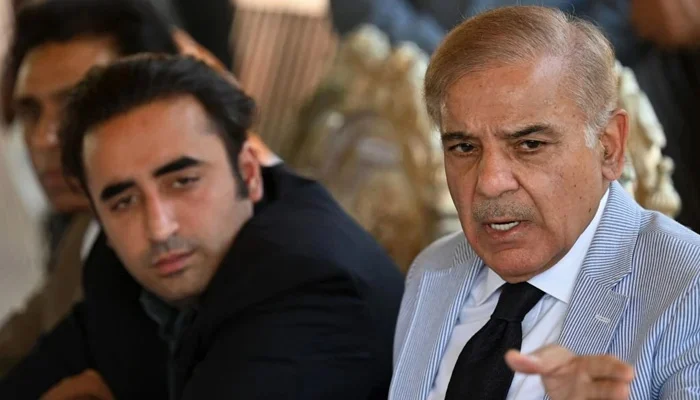
PM Shehbaz proposes resolving political issues in meeting with Fazl

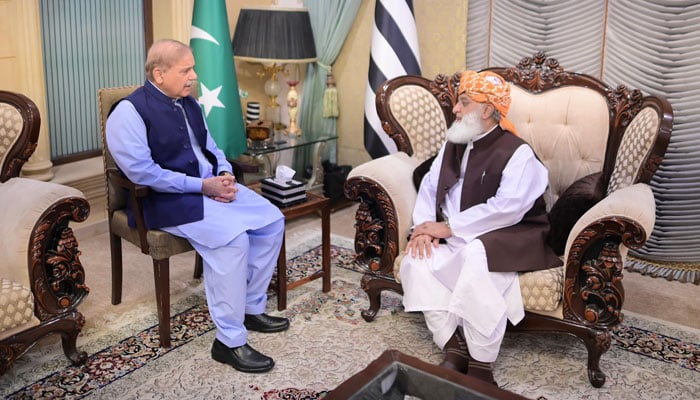
Prime Minister Shehbaz Sharif has proposed forming a committee for finding solutions political issues through collaboration in meeting with Jamiat Ulema-e-Islam Fazl (JUI-F) chief Maulana Fazlur Rehman in Islamabad.

The visit comes as the prime minister expedites his efforts to win back Maulana’s trust, inviting him to join the ruling coalition.

Fazl, on the other hand, continues to refute the results of the February 8 general elections after his party faced defeat, terming the polls “rigged”.

According to a statement released by the PM’s Office on Thursday, the premier visited Maulana’s residence to inquire about his well being.

In his meeting with the JUI-F chief, PM Shehbaz acknowledged the veteran politician’s role in promoting peaceful struggle to protect democratic values as well as appreciated his religious services for the nation.

Addressing a presser in Multan last month, the politician, whose party has remained a traditional ally of the PML-N but didn’t join the government this time around, said that the country would constantly move towards “slavery’ if the nation didn’t protect the votes.

Since his defeat in the polls, the JUI-F chief has also softened his stance towards Pakistan Tehreek-e-Insaf (PTI), stating that he doesn’t have any personal enmity with the Imran Khan-founded party.

Maulana Fazl has also spoke about negotiations with the PTI and encouraged an environment for talks.

Khyber Pakhtunkhwa (KP) Chief Minister Ali Amin Gandapur, who is also PTI’s president in the province, said that the party should benefit from Maulana Fazl’s “experience”.

Pakistan envoy urges US to follow balanced approach in South Asia

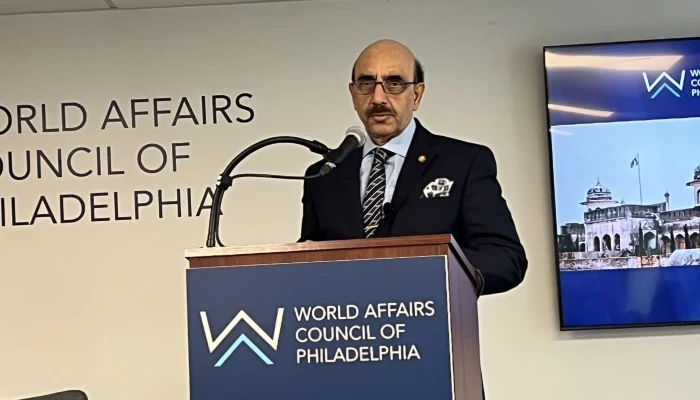
WASHINGTON: Pointing out a strategic imbalance in South Asia and Washington’s tilt towards New Delhi, Pakistan’s Ambassador to the United States Masood Khan urged the Biden administration to follow a balanced approach.

“US heavy tilt towards India is accentuating strategic imbalance which is fraught with serious risks,” he said on Thursday while addressing a gathering of scholars, policy-makers, legislators, and professionals at the World Affairs Council of Philadelphia, Washington.

The ambassador also emphasised on full restoration of Foreign Military Financing (FMF) and Foreign Military Sales (FMS) and assistance to fight continued threats from terrorists in the region.

Khan gave a detailed perspective on Pak-US relations, war on terror, re-calibration of Pak-US relationship post-withdrawal period, Pakistan-India relations and the issues of regional stability.

While highlighting existing investment and trade opportunities, Ambassador Khan offered US companies to manufacture in Pakistan, where they could find 240 million consumers.

“Pakistan is a big market for American manufacturers. If you manufacture state-of-the-art products, you have 240 million consumers in Pakistan,” he said.

Referring to the historic role played by Pakistan in bringing China and the US closer to each other in the early 70s, Khan has said Pakistan was willing to play the role of economic bridge between the two countries in the present age.

The envoy reiterated that Pakistan’s relations with China were not at the expense of its ties with the US.

Adding his perspective to the most recent collaboration of the two countries in the war against terror, Masood Khan said: “Pakistan was blamed at times for the Mission failure. Although, I personally believe that we have accomplished a lot in the war against terrorism. We collaborated and together we broke the backbone of terrorist organisations.”

“al-Qaida is not where it was in 2001-02. There is awareness all around the world about the asymmetric threat of terrorism to international civilisation and how to tackle it,” he said.

He said that in late 2021 and early 2022, the leadership of the two countries decided to recalibrate their relationship.

They decided that “while we will continue our cooperation in counter-terrorism, promote regional stability, maintain a dialogue, we would like to secure the region from any nuclear instability and so on.”

He also said the number of Pakistani students in the US had significantly risen.

“When I came here in 2022, the number of Pak students in American universities was 7,000. Now it is more than 10,000,” he said.

Fire at Iraqi oil refinery injures 13: official

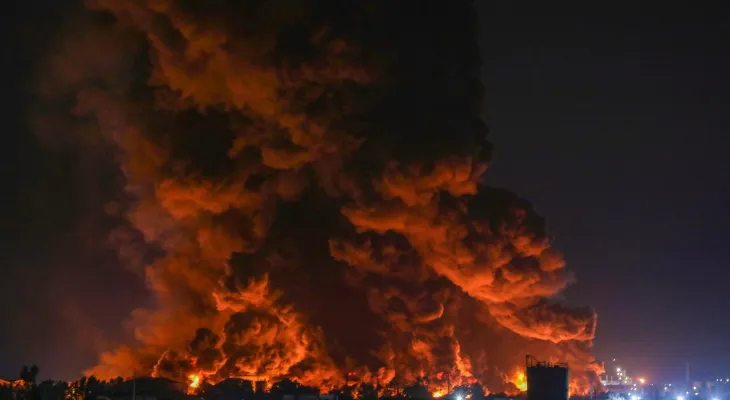
A massive fire at an oil refinery in Iraqi Kurdistan injured at least 13 people including firefighters battling to control the blaze, which was ongoing Thursday, an official said.

The fire broke out in a major crude oil tank on Wednesday night before spreading to a second refinery on a road southwest of Arbil, capital of the autonomous Kurdistan region, the civil defence agency said.

Thick plumes of black smoke and balls of orange flame rose into the sky above the facility, an AFP photographer reported.

The civil defence agency said the fire “started in one refinery before spreading to another”.

“More than 10 people were injured, mainly men from the Arbil civil defence,” it said in a statement, adding four fuel tanks and three fire trucks were burned.

Arbil governor Omed Khoshnaw said three rescuers were being treated in hospitals for burns and another 10 suffered breathing difficulties.

The main tank that was impacted contained over 5,000 tonnes of fuel, he said, putting the estimated cost of the damage caused at $8 million.

“So far, we don’t know what caused it,” said Khoshnaw, adding it could have been an electrical short circuit.

The fire still was still raging on Thursday afternoon despite the deployment of 30 rescue teams who were trying to prevent it from spreading further, the civil defence agency said.

With Iraq experiencing scorching summers, the country has seen multiple fires in recent weeks, affecting shopping centres, warehouses and hospitals.

Iraq is one of the world’s biggest oil producers and crude oil sales make up 90 percent of Iraqi budget revenues.

But exports from the Kurdistan region have been halted for more than a year in a dispute over legal and technical issues.


PPP recants decision to boycott federal budget session

ISLAMABAD: The Pakistan Peoples Party (PPP) on Wednesday recanted its decision to boycott the federal budget 2024-25 session in the National Assembly as the ruling Pakistan Muslim League-Nawaz (PML-N) managed to convince its major ally.

Deputy Prime Minister Senator Ishaq Dar held multiple meetings with the PPP’s top leaders to convince them to attend the federal budget session which seemingly remained successful.

Following the consensus, some PPP leaders went into the session as a “token attendance”.

Ahead of the announcement of federal budget 2024-25, the PPP — a key political ally of the ruling PML-N — announced not to attend the budget session.

PPP Information Secretary Shazia Marri confirmed the major decision taken by the Bilawal-led party while talking to Geo News ahead of the federal budget for FY25.

She said that PPP lawmakers will not attend the budget session and urged the ruling Nawaz-led party to fulfil the contents of the agreement made with her party.

Marri complained that her party was not consulted on Public Sector Development Programme (PSDP) by the PML-N-led federal government.

She added that the party lawmakers expressed serious reservations for not being included in the budget-related consultations by the federal government.

Sources closer to the PPP told Geo News that the PPP lawmakers recommended not to attend the budget session in a parliamentary party’s session chaired by Bilawal Bhutto-Zardari — a crucial occasion when the coalition government is going to unveil its direction for bringing the country out of severe financial crisis.

However, the Bilawal-led party has also not fully stepped back from supporting Prime Minister Shehbaz Sharif-led administration in the Centre and decided to “provide maximum support to the PML-N to pass the budget and vote in its favour despite all reservations”, the sources added.

It was also learnt that the PPP lawmakers will assist the federal government to pass the budget despite lodging protests and delivering speeches over the weak sections of the federal budget in the Parliament.

The sources said that the PML-N government assured its major ally to make the latter’s recommendations part of the budget.

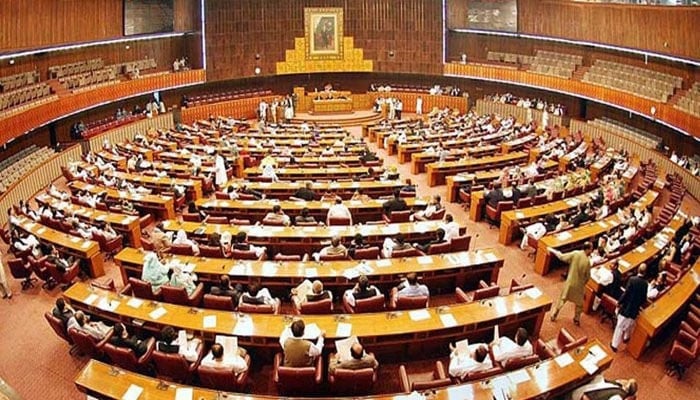
First 100 days of National Assembly ‘slow-paced’: Fafen

The performance of Pakistan’s 16th National Assembly, which concluded its first 100 days following the oath-taking of legislators on February 29, has been described as “slow-paced despite high attendance”.

According to a report published by the Free and Fair Election Network (Fafen), the assembly’s focus on “parliamentary transparency and gender responsiveness” was described as a defining characteristic of NA’s first 100 days.

The report added that the House encouraged bipartisanship by allocating nearly 54% of the time used for points of order to the opposition.

Following the February 8 general elections, the Pakistani government descended into instability as no political party secured a clear majority. However, several of the winning parties formed an alliance with the Pakistan Muslim League-Nawaz (PML-N), forming a coalition government at the Centre.

The PML-N, therefore, formed the federal government with the support of eight parties, including the Pakistan Peoples Party Parliamentarians (PPPP), Muttahida Qaumi Movement-Pakistan (MQM-P), Pakistan Muslim League Quaid (PML-Q), Istehkam-e-Pakistan Party (IPP), Pakistan Muslim League Zia (PML-Z), Balochistan Awami Party (BAP) and the National Party (NP).

The House, however, still remains short of 26 members.

Plenary proceedings

According to Fafen, at least 23 sessions have been conducted in the lower house of the Parliament up until now, spanning over 66 hours and 33 minutes. The speaker and deputy speaker chaired 84% of the proceedings.

Prime Minister Shehbaz Sharif has, so far, attended only two sessions, which makes up 10% of his attendence as compared to former premier and Pakistan Tehreek-e-Insaf (PTI) founder Imran Khan’s 29% in the first 100 days of his ousted government.

Fafen added that the assembly elected its standing committee on May 17 after a month-long delay. In the first 100

The Fafen report highlights that at least 159 members, or 51%, actively participated by sponsoring agenda items or participating in discussions out of the 310 members, 61% of which were females and 49% males.

On average, 230 members were present in one session, with a maximum attendance of 302 and a minimum of 176.

The House addressed 76% of its business, including 20 legislative bills, 93 questions, 28 calling attention notices (CANs), and 11 resolutions.

In his maiden speech, PM Shehbaz outlined his government’s plans for foreign relations, agriculture, economic affairs, tax reforms, energy, human development, and law and order, the Fafen report maintained.

Specific commitments, it added, included providing high-quality seeds to farmers, creating export zones, broad tax reforms, renewable energy projects, scholarships for students, and addressing terrorism as well as the issue of missing persons in Balochistan.

The report underscored that the details from the assembly proceedings are available on the National Assembly’s website, but live streams or video recordings remain limited and largely restricted.

Additionally, the citizens’ access to the Common Man’s gallery has been restricted on the pretext of security concerns, read the report.

The NA, in general, displayed a gender-sensitive and responsive outlook towards female issues, stated the Fafen report, while the House censored the use of inappropriate language against women lawmakers by adopting a Treasury-sponsored resolution.

The lower house of the Parliament also constituted a Parliamentary Committee on Gender Mainstreaming to solicit recommendations on women’s empowerment.

Dozens of nations blast North Korean human rights abuses

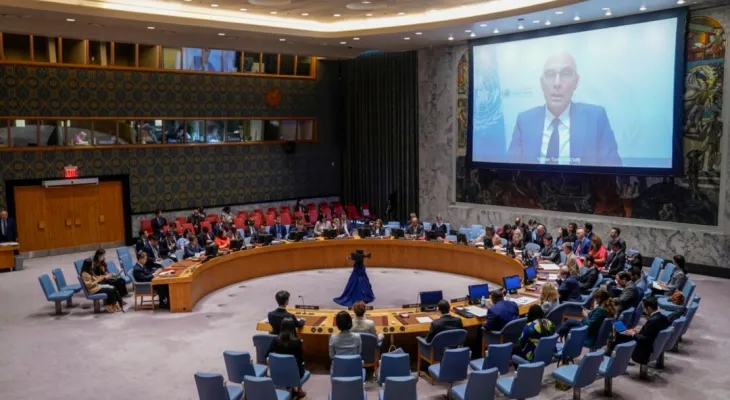
Dozens of countries at the United Nations blasted North Korea’s human rights record Wednesday, overriding objections from China and Russia to even raising the issue on the Security Council.

South Korea’s UN ambassador, Joonkook Hwang, said the isolated dictatorship in Pyongyang “continues to commit systematic, widespread and gross human rights violations and abuses.”

Laying out a joint statement signed by 57 countries, which included the United States, he said that violations have increased in tandem with North Korea’s growing focus on building its military.

“The abysmal human rights and humanitarian situation… is closely intertwined with the advancement of its weapons programs, like two sides of the same coin,” he said.

Pyongyang “is diverting its scarce resources towards development of nuclear weapons and ballistic missiles, in violation of UN Security Council resolutions, at the expense of the well being of people…, alongside political impunity for its human rights violations.”

UN High Commissioner for Human Rights Volker Turk echoed this, saying that “it is not possible to divorce” the human rights situation from the country’s militarization.

North Korea is “a country sealed off from the world, a stifling, claustrophobic environment, where life is a daily struggle devoid of hope,” Turk said.

However, the world body has only limited influence over North Korea, with China and Russia backing Pyongyang on the UN Security Council.

The council has not been able to pass any resolution on North Korea since 2017, with Beijing and Moscow both using their veto to stop a 2022 resolution on imposing new sanctions over the regime’s ongoing missile testing.

On Wednesday, China and Russia attempted to prevent the discussion in the Security Council, but failed.

North Korea’s human rights situation “does not constitute a threat to international peace and security,” China’s deputy ambassador, Geng Shuang, said.

Russian Ambassador Vasily Nebenzya cited “a shameful situation where a narrow group of states is attempting to exploit the Security Council, the United Nations, as a tool for the advancement of their own geopolitical agenda.”