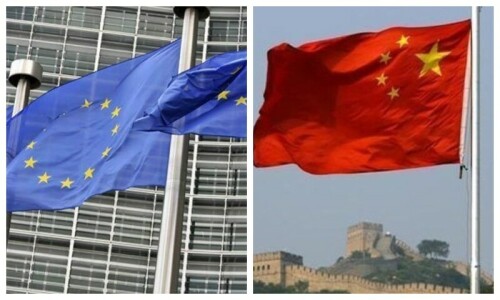
Europe risks trade war, China warns before talks with Germany

Robert Habeck’s three-day trip to China is the first by a senior European official since Brussels proposed hefty duties on imports of Chinese-made electric vehicles to combat alleged excessive subsidies. That has unleashed countermeasures by China and harsh criticism from Chinese leaders.

In an unexpected twist, Habeck — from the ecologist Greens Party that is a junior partner in Germany’s fractious three-way coalition — issued a statement criticising Berlin’s 11-month-old China strategy document as already out-of-date and not in sync with the evolving EU position on China.

This week alone, Chinese automakers urged Beijing to hike tariffs on imported European petrol-powered cars and the government launched a dumping probe into EU pork imports in retaliation for the EU Commission’s move.

“The European side continues to escalate trade frictions and could trigger a `trade war’,” a statement attributed to the Chinese commerce ministry’s spokesperson said.

“The responsibility lies entirely with the European side.” It said that with its dumping probe, the European side had “intimidated and coerced Chinese enterprises, threatened to apply punitive high tariff rates, and demanded overly broad information”.

Habeck’s visit is seen as an opportunity for Germany, Europe’s biggest economy, to explain to Chinese officials the recent tariff announcement while allaying the risk of retaliation from China that could harm German businesses.

Germany’s voice carries particular weight, and its leading car manufacturers have vociferously opposed the EU tariffs. Berlin has urged dialogue while expecting China to compromise.

The country’s carmakers would be the most exposed to any countermoves from China, as almost a third of their sales came from the $18.6 trillion economy last year.

The EU’s move on EV tariffs plunged trade ties with the world’s second-largest economy to a new low.

But Chinese state media portrayed his visit as a chance to defuse tensions. Germany should seek consensus, some experts said, according to state-controlled tabloid Global Times.

On his arrival in Beijing on Friday, Habeck met ambassadors of several EU countries at the start of a trip due to include talks with Premier Li Qiang and other officials, with stops in Shanghai and Hangzhou.

At a reception at the German embassy in Beijing, Habeck expressed dissatisfaction with Berlin’s current China strategy, as outlined by a document released last July after months of coalition wrangling.

The 64-page document accused Beijing of increasing assertiveness and “unfair practices”, but was vague on policy measures to reduce critical dependencies.

‘Saudi state did not fail’ after hundreds dead during hajj: official to AFP

A senior Saudi official defended the Gulf kingdom’s management of the hajj pilgrimage on Friday after various countries reported more than 1,100 deaths, many attributed to high heat.

“The state did not fail, but there was a misjudgement on the part of people who did not appreciate the risks,” the official told AFP in the government’s first comments on the deaths.

An AFP tally on Friday, compiling official statements and reports from diplomats involved in the response, put the toll at 1,119, more than half of them from Egypt.

The Saudi official said officials had confirmed 577 deaths for the two busiest days of hajj: Saturday, when pilgrims gathered for hours of prayers in the blazing sun on Mount Arafat, and Sunday, when they participated in the “stoning of the devil” ritual in Mina.

“This happened amid difficult weather conditions and a very harsh temperature,” the official said, while acknowledging that the 577 figure was partial and did not cover all of hajj, which formally ended on Wednesday.

The hajj is one of the five pillars of Islam, and all Muslims with the means must complete it at least once before they die.

Saudi officials had earlier said 1.8 million pilgrims took part this year, a similar total to last year, and that 1.6 million came from abroad.

Hajj permits are allocated to countries on a quota system and distributed to individuals via a lottery.

Even for those who can obtain them, the steep costs make the irregular route — which costs thousands of dollars less — more attractive.

“We can estimate the number of the unregistered pilgrims at around 400,000,” the Saudi official said Friday.

“Almost most of them from one nationality,” the official added, an apparent reference to Egypt.

Arab diplomats told AFP earlier this week that Egypt accounted for 658 deaths, 630 of them unregistered pilgrims.


Modi’s remarks on status of Kashmir stir up debate

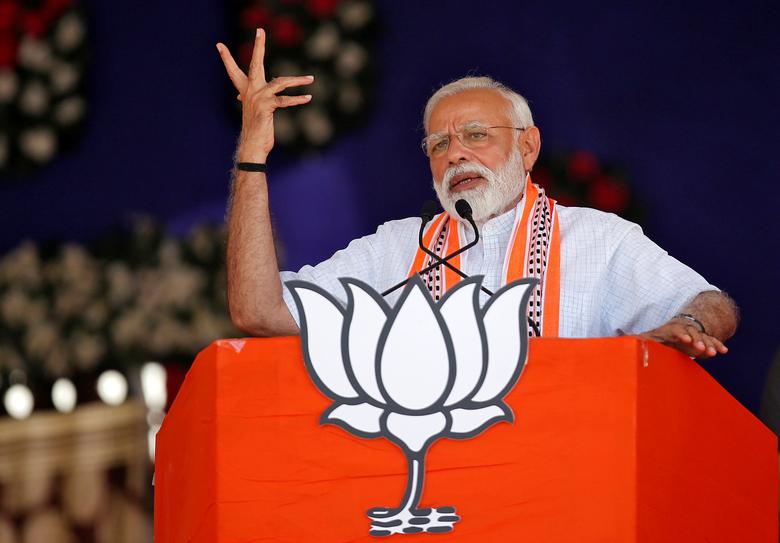
NEW DELHI: Prime Minister Narendra Modi’s remarks in Srinagar that early elections were expected in occupied Jammu and Kashmir, and that the Delhi-administered province would get statehood soon, sent opposition parties scrambling on Friday to figure out his real intention.

Dr Karan Singh, former Sadre Reayasat of erstwhile State of Jammu and Kashmir and former union minister, said the key thing is the restoration of statehood, and that should be done ahead of the state election.

“Else, the elected government will only be a glorified municipality,” he told NDTV.

Preparations are on at the Election Commission for the assembly polls, for which the Supreme Court has given a September 30 deadline. Though no date has been announced yet, Mr Modi, on his first visit to held Jammu and Kashmir after the election, said on Thursday that they were “not far off”.

“I think the government wants to do it after the election,” Mr Singh said. But he had some advice. “Having an election for a Union Territory is not the same as having an election for a full-fledged state. If you are giving an election to the people, give them a proper state election,” he said.

On the other hand, Ghulam Nabi Azad-led Democratic Progressive Azad Party (DPAP), considered close to Mr Modi, and Apni Party welcomed the announcement. The main regional forces — the National Conference (NC) and the People’s Democratic Party (PDP) — reacted cautiously.

The Congress termed the announcement vague. “We welcome PM Modi Ji’s statement on conducting elections and restoring statehood in Jammu and Kashmir,” the DPAP’s chief spokesperson Salman Nizami said in a statement.

Senior vice president and chief spokesperson for Jammu and Kashmir Pradesh Congress Committee (JKPCC), Ravinder Sharma, said the prime minister was “vague as usual” regarding the timeline of the restoration of statehood and holding assembly polls.

The disputed state’s bifurcation took place in 2019, part of a two-pronged plan of the Modi government that also included scrapping Jammu and Kashmir’s special status granted under the Article 370 of the Constitution.

Five years, Mr Singh indicated, is a long time in politics, pointing to the Ayodhya Ram temple, which the BJP hoped would bring them massive support in Uttar Pradesh. But the calculation went awry. Not only did the party slide from 62 seats of 2019 to 33, it also lost Faizabad, under which Ayodhya is located.

“After building the temple, the new railway station and the airport…,” Mr Singh said.

About the bifurcation of the state where he used to be regent, the 93-year-old said, “There is no use being over-sentimental… We have to accept reality and work with whatever we have”.

Addressing a gathering in Srinagar, Mr Modi expressed excitement about his visit to occupied Jammu & Kashmir and mentioned two specific reasons for it. “Firstly, today’s event is related to the inauguration and foundation stone laying of developmental projects in Jammu & Kashmir and secondly, this is the first meeting with the people of Jammu & Kashmir after the Lok Sabha elections.”

Recalling his recent visit to Italy for the G7 Summit, Mr Modi said he highlighted the impact of continuity of the government for three terms as it has changed the outlook of the world towards India. He also said that all time high aspirations of Indians are the nation’s biggest strength.

He saw the role of the people of Jammu & Kashmir in this strengthening of democracy. “We are witnessing Atal Ji’s vision of Insaniyat, Jamhooriyat aur Kashmiriyat, turning into a reality today,” he said.

He said he was delighted that people of Jammu and Kashmir were now living under the Constitution of India. “Through the Constitution, we are finding new ways to change the face of Kashmir for good.”

“I am committed with full dedication and honesty to ensure that a way out of the past generation’s miseries may be found. We are making all possible effort to remove all distances whether of the heart or of Delhi (Dil ya Dilli).

“What can be better than the people of Jammu & Kashmir selecting their representative and tackling their problems through them. That is why preparations for the assembly elections have started. The day is not far when you will select the new government of Jammu & Kashmir with your own vote. The day will come soon when Jammu & Kashmir will shape its future as a state once again,” Mr Modi said.

Labour raised nearly 15 times as much as the Tories in large donations in the second week of the general election campaign, latest figures show.

According to the elections watchdog, Labour raised nearly £4.4m between 6-12 June, way ahead of the Conservatives on £292,500.

It considerably widens the gap between the parties in the first week of the official campaign, which stood at just under £352,000.

Latest Electoral Commission filings also confirm former Neighbours actor Holly Valance donated £50,000 to Nigel Farage’s Reform UK.

The Australia-born former pop star, who sprang to fame in Britain with her 2002 hit Kiss Kiss and now lives in the UK, attended the press conference earlier this month where Mr Farage announced he would be standing as a candidate in the Essex seat of Clacton.

The figures mean the Conservatives raised £889,000 in the first two weeks of the official campaign, which began when Parliament was shut down on 30 May.

This is significantly down on the more than £8.6m the party raised in the first two weeks of the campaign in the last election in 2019.

The £292,500 it raised in the latest reporting period was less than the £335,000 posted by the Liberal Democrats.

It was also less than Reform UK, which raised £742,000, thanks largely to £500,000 donated by former leader Richard Tice through his company Britain Means Business Limited.

It stands in stark contrast to the £5.3m raised by Labour so far, including £926,908 during the first week of the campaign.

The Green Party posted a single £20,000 donation during the period.

The Scottish National Party (SNP), which raised £127,998 in the first week of the campaign, did not post any donations above the £11,180 declaration threshold.

The nearly £4.4m posted by Labour in the second week came largely from a huge £2.5m donation from former supermarket boss Lord David Sainsbury.

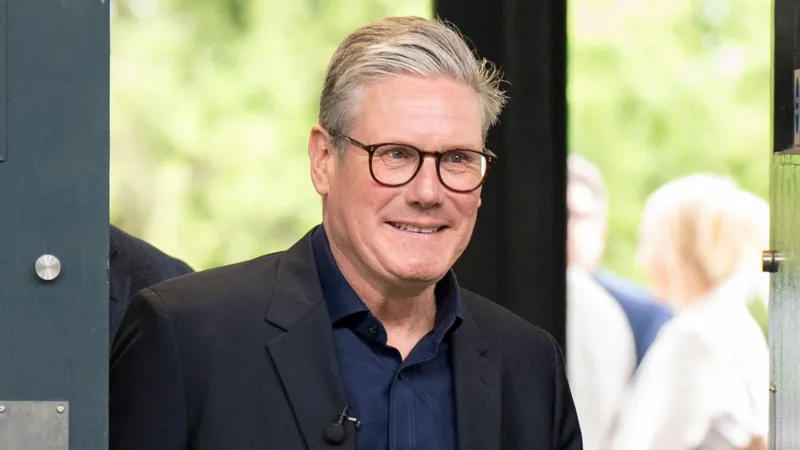
One of New Labour’s biggest donors, the Labour peer has previously given to both Labour and the Liberal Democrats, but resumed donations to Sir Keir Starmer’s party last year.

Other big Labour donations included £900,000 from Gary Lubner, the boss of Autoglass, who gave millions to the party last year, and £700,000 from hedge fund manager Martin Taylor.

The latest figures are further evidence of the party’s pivot towards wealthy individuals and companies in its funding model under Sir Keir.

It claimed the £13m it raised last year amounted to its “best fundraising year ever” – although it lagged far behind the £48m raised by the Conservatives in 2023.

The Election spending limit for parties has nearly doubled at this election from £19m to £34m, following a decision by the Conservative government last year to increase it.

After ex-COAS Bajwa, PTI ‘trying to hold someone else’s feet now’: Khawaja Asif

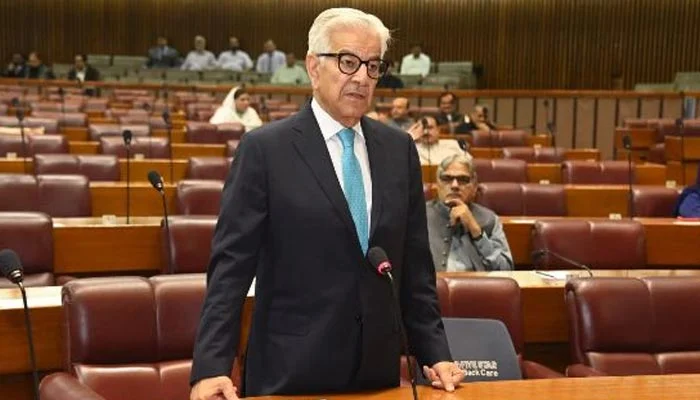
Pakistan Muslim League-Nawaz (PML-N) senior leader Khawaja Asif has fired a broadside at the Pakistan Tehreek-e-Insaf (PTI), saying after former army chief General (retd) Qamar Javed Bajwa, the opposition party is begging “someone else” for relief now.

Addressing on the floor of the National Assembly, the defence minister cited Istehkam-e-Pakistan Party (IPP) leader Aun Chaudhry as saying he hid PTI founder Imran Khan in car’s trunk to take him to General (retd) Amjad Awan’s house.

At the former general’s home, Asif claimed that according to the IPP leader the jailed PTI founder except holding former army chief General (retd) Bajwa’s feet made every kind of desperate request to seek relief.

“After Bajwa sahib, they [PTI] are now trying to hold the feet of someone else. Hardly anyone has ‘licked’ as many shoes as the PTI founder,” the federal minister remarked.


His hard-hitting statement comes in response to PTI Secretary-General Omar Ayub Khan’s address in the lower house of parliament wherein he slammed the federal government for presenting a budget against the interests of the nation and the country.

“This budget was made by an economic hitman,” said Ayub, who is also the Opposition Leader in the National Assembly.

Taking a jibe at Ayub, Asif said his speech reminded him of his 20-year-old statements wherein he would praise PML-N leaders Nawaz and Shehbaz Sharif in the same way he was hailing PTI founder Imran Khan.

The defence minister said that the PML-N would welcome the PTI if it apologised for the May 9 events referred to the violent protests that broke out in many parts of the country in reaction to the arrest of former PM Imran Khan last year.

The PML-N stalwart also slammed the opposition party for writing a letter to the International Monetary Fund (IMF), asking the global lender to link funding to the audit of alleged rigging in the elections.

After being ousted from power, the PTI wanted the country to go default, he added.

Chinese minister arrives in Islamabad to co-chair JCM meeting

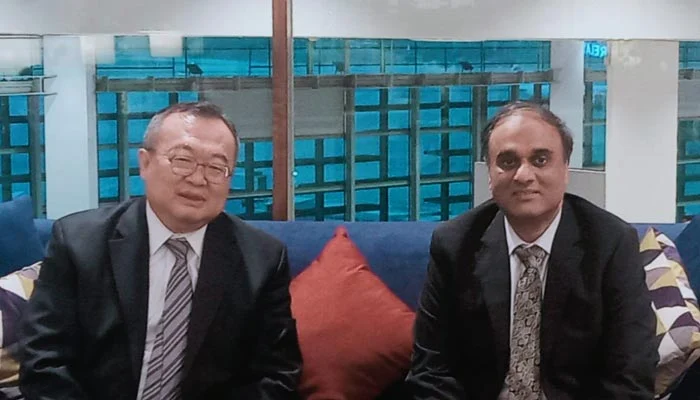
Minister of the International Department of the Central Committee of the Communist Party of China (IDCPC) Liu Jianchao arrived in Islamabad on a three-day visit, according to a statement issued by the Foreign Office on Thursday.

He was received at the Islamabad International Airport by Additional Foreign Secretary (Asia & Pacific) Ambassador Imran Ahmed Siddiqui.

Minister Liu Jianchao will call on Prime Minister Shehbaz Sharif and hold extensive bilateral talks with Deputy Prime Minister and Foreign Minister Senator Ishaq Dar.

Deputy Prime Minister Dar and Minister Liu will also co-chair third meeting of the Pakistan-China Joint Consultative Mechanism (JCM) of the political parties on China-Pakistan Economic Corridor (CPEC).

Established in 2019, the JCM of Political Parties on CPEC is a regular consultation mechanism between the Communist Party of China and the political parties of Pakistan. Previous meetings were held on 19 March 2019 in Beijing and on 20 August 2020 virtually.

At the Third Meeting of the JCM, Pakistan and China will review the progress of CPEC projects, CPEC’s contribution to Pakistan’s socio-economic development, and its up-gradation and extension for regional connectivity.

The visit is a part of high-level exchanges between Pakistan and China including between the Communist Party of China and the political parties of Pakistan.

It reflects upon the importance attached by the two countries to further deepen their “All-Weather Strategic Cooperative Partnership”, reaffirm mutual support on issues of respective core interests, advance high-quality development of CPEC and enhance communication and dialogue on important regional and global developments.

‘Current IMF deal will be last in Pakistan’s history’, vows PM Shehbaz

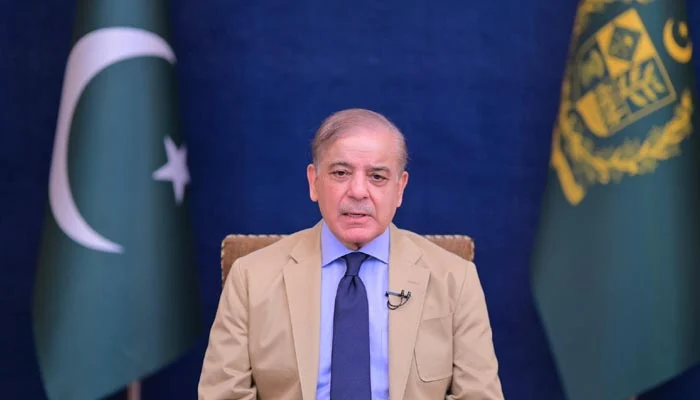
ISLAMABAD: Prime Minister Shehbaz Sharif on Saturday pledged to rid the country of the International Monetary Fund (IMF), saying that the next deal for a bailout package with the global lender will be the last in the country’s history.

“The current IMF programme will be the last in Pakistan’s history,” the PM vowed while addressing the nation on Saturday.

The highlight of PM Shehbaz’s address, which was the first since the launch of the federal budget for fiscal year 2024-25, was his pledge to put an end to Pakistan’s dependence on foreign aid and bailouts.


The government is currently in talks with the Fund for a loan estimated to be anything between $6 billion to $8 billion, as Pakistan strives to secure a loan programme to avert a default for a slow-paced economy.

PM Shehbaz Sharif mentioned that there were countries in the world that sought assistance from the International Monetary Fund (IMF) once and never needed it again.

“We have approached the IMF 24 to 25 times. I assure you today, if we adhere to our programme and targets, the next IMF agreement will be the last in Pakistan’s history,” PM Shehbaz said.

He expressed optimism that Pakistan would surpass its neighbouring countries in terms of stability and self-sufficiency.

The PM urged the entire nation to steer the country towards progress and prosperity.

The premier also vowed to abolish all institutions, ministries, and other departments that are burdening the national exchequer and have nothing to do with public service, asserting this move alone would save taxpayers’ billions and foster prosperity.

“The abolition of all ministries and department which, instead of serving [nation], have become a burden on the masses is indispensable,” the premier stated while addressing the nation on Saturday.

“It is the prime obligation of the government to end all the extravagant expenses and shut down institutions that are not serving the public in any way.

“One such department is Public Works Department (PWD). It is known as the “most notorious” one in terms of corruption,” the premier added.

PM Shehbaz slammed the PWD’s perks and privileges, including salaries, which he claimed amounted to no less than Rs2 billion annually.

“The funds this department receives from various ministries and departments for developmental works could total several hundred billion rupees.”

“If the department had a pool of a hundred billion rupees for developmental funds, then 50% or more of that was claimed by corruption,” he said.

The premier said that a ministerial committee had been formed for this purpose and promised the nation positive results in this regard within a few months.

He added that this move would not only save billions of rupees but also serve as a milestone on the path to prosperity for Pakistan.

The Prime Minister also announced that one of the world’s top companies had been tasked with the complete digitization of the Federal Board of Revenue (FBR).

“Inefficient personnel within the FBR have been sidelined,” he said.

“When we came to power, the economic conditions at that time were evident to everyone, and we saved the country from default,” he said in the televised address that also marked the completion of one hundred days of government this evening.

He said that the government’s responsible policies had yielded positive results and now the economy was gradually stabilising.

The PM also noted that all economic indicators were blinking green.

He credited the former Pakistan Democratic Movement (PDM) alliance and the Pakistan Peoples Party (PPP) leadership including President Asif Ali Zardari and Bilawal Bhutto Zardari, and alliance chief Maulana Fazlur Rehman for pulling the country out of the difficult economic situation.

PM Shehbaz said inflation dropped to 12% from 38% as a result of the government’s policies. Similarly, he noted that the interest rate on loans had been reduced to 20.5% from the previous 22%.

“This would encourage investment and stimulate business activities and put the country the trajectory of fast-paced prosperity,” PM Shehbaz said.

PM Shehbaz then referred to the latest petrol and diesel price cuts as a “relief” to the inflation-hit masses.

He, however, admitted that these steps were still not enough amid the “storm of inflation” during the last four years that “broke the backbone” of the poor class.

Appreciating his government’s prudent economic policies, PM Shehbaz said the country was now moving on a path of progress after coming out of economic difficulties.

“However, this way is not only difficult and long but also requires sacrifice from higher-ups in the government and the elite.

“The entire nation’s eyes are set on the government to see how it steers Pakistan out of the economic crisis and brings about a revolution of prosperity in the country,” he added.

PM Shehbaz promised the nation more measures to provide relief, bring down inflation, expand investments, and create opportunities for higher education for the youth.

Talking about his visits to China and other countries, Prime Minister Shehbaz Sharif said that a system had been established to fully benefit from investments by friendly nations.

He stressed creating an environment that is conducive to both domestic and foreign investments, ensuring the public sees solid results.

He also announced plans to train 300,000 Pakistanis in information technology through collaboration with China and to expand IT infrastructure across the country.

PM Shehbaz promised that the dream of Quaid-e-Azam Mohammad Ali Jinnah and those who sacrificed so much for this country would be realised if the entire nation united to prioritise ending hatred and ego.

He urged everyone to rise above personal interests and dedicate themselves to serving the poor and destitute.

“We are committed not only to fulfilling Quaid’s dream but also to assuring the nation that no obstacle will be able to deter us if we  tirelessly work together with the spirit of sacrifice and selflessness,” he added.

The prime minister said: “Lamenting the past serves no purpose; instead, we must learn from it to reclaim Pakistan’s lost glory.”

He emphasised the commitment to realising the vision of Quaid-e-Azam, saying that with a spirit of sacrifice and dedication, “no one can impede our progress.”

The Prime Minister underscored the need to narrow the gaping divide between the rich and the poor, remarking that “the elite are living like royals while salaried class is crushed under the dead weight of taxes”.

In a bid to boost the literacy rate in the country, he said his government had declared an emergency in the education sector to address urgent needs.

He further stated that institutions dealing billions of rupees of losses annually to the national exchequer over the last many decades were being sold to generate resources. By adopting austerity, the government aims to save money.

“Instead of establishing factories, we will encourage private sector investment to boost trade,” the PM said.

He noted that all the past attempts of PML-N governments to put the country on the path of progress had always been scuppered by out-of-the-blue disasters or obstacles.

The PM minced no words as he dubbed terrorists, robbers, electricity pilferers, profiteers, tax evaders, and corrupt officials antagonists of national development and stability and added that “anyone” who disrespected martyrs and veterans was a foe to the nation’s progress and prosperity.

Summing up his address, the PM in his concluding remarks said: “A clear path for the future has been chosen, with no extravagance on public funds and every penny of the nation will be spent on the country’s development.”


Eid ul Adha being observed in Saudi Arabia, UAE, other countries

Muslims in some parts of the world are sacrificing animals today (Sunday) to celebrate the religious festival of Eid ul Adha, also known as the festival of sacrifice.

This festival is celebrated in the 12th Islamic month which is called Zil Hajj. It is the last month of the Islamic lunar calendar during which Muslims perform the annual Hajj pilgrimage.

Today, Muslims across the Middle East, the United Kingdom, United States, Canada, and Australia are marking the first day of the three-day celebration of Eid ul Adha.

The Middle Eastern countries include Saudi Arabia, the United Arab Emirates, Qatar, Jordan, Syria, Yemen, Kuwait, Oman, and Iraq.

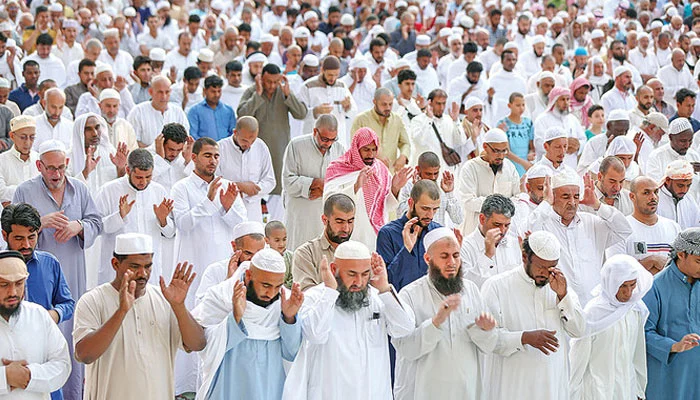
According to the Saudi Gazette, Muslims in Saudi Arabia attended the Eid prayer on Sunday in over 12,000 mosques, including the Grand Mosque of Makkah and Prophet’s Mosque in Madinah.

Meanwhile, over 1.5 million pilgrims from around 180 countries attended the dawn prayer on Sunday, after staying overnight at the holy site of Muzdalifah following their descent from Arafat on Saturday after sunset, as part of the Hajj rituals.

They will now throw pebbles at Jamarat Al Aqabah and perform the sacrifice ritual, men will shave their heads and then leave for Makkah to perform Tawaf Al Ifada and Sai’, two other pillars of Hajj, Saudi Gazette reported.

Meanwhile, Muslims across the UAE kicked off Eid ul Adha celebrations with prayers and greetings on Sunday morning, Khaleej Times reported.

UAE President Sheikh Mohamed on Saturday sent cables of congratulations to the kings, emirs, and presidents of Arab and Islamic nations on the occasion.

Sheikh Mohamed wished them and their people continued progress, prosperity and stability.

Residents in the UAE are marking the celebration with a four-day weekend that began on Saturday and will last until Tuesday.

Additionally, residents of Abu Dhabi and Dubai are set to enjoy stunning fireworks displays at different locations at 9pm on Sunday

Hajj 2024: Over 1.5 million Muslims to pray on Mount Arafat today

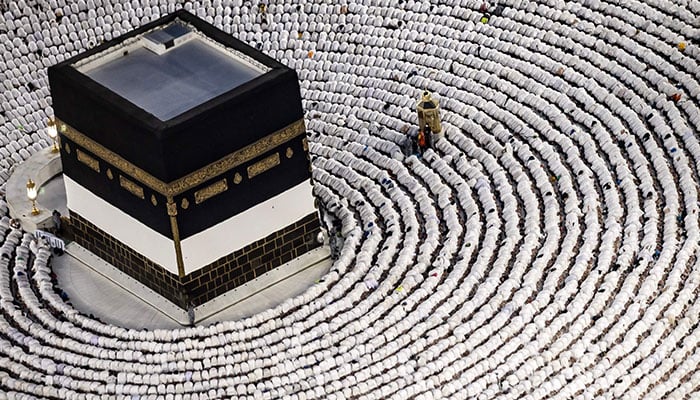
Over 1.5 million Muslims from around 180 countries on Saturday have begun praying on the mount Arafat to mark the “Day of Arafah” — considered the pinnacle of the grand holy pilgrimage — on the ninth day of Zil Hajj, a day after marking the start of Hajj 1445 from the tent city of Mina on the Day of Tarwiyah.

Worshippers from all over the world will climb the rocky, 70-metre (230-feet) hill, about 20 kilometres (12 miles) from Makkah, where the Prophet Mohammed (PBUH) gave his last sermon, reported AFP.

At least 160,000 Pakistanis are also performing the grand pilgrimage this year, joining hundreds of thousands of international and domestic pilgrims amidst soaring temperatures.

The pilgrims have reached Jabal al-Rahmah and will hear the Hajj sermon at Masjid-e-Nimrah with translation in 50 different languages, including Urdu. They will also offer Zuhr and Asr prayer in Arafah.

The Hajj sermon will be delivered by Sheikh Maher Al Muaiqly, an imam at the Grand Mosque in Makkah.

The pilgrims will then spend the whole day praying in the field of Arafah and leave for Muzdalifah at sunset.

After offering the Maghrib and Isha prayer in Muzdalifah, they will perform Rami al-Jamarat by collecting pebbles to carry out the symbolic stoning of the devil ritual in Mina on Sunday (tomorrow).

The pilgrims will then return to Makkah to celebrate Eid ul Adha and perform sacrificial.

The desert summer heat is expected to hit 43°C. The Hajj, which takes at least five days to complete and is mostly outdoors, “is not easy because it is very hot”, said Abraman Hawa, 26, from Ghana.

“We have sun… but it is not as hot. But I will pray to Allah at Arafat, because I need his support,” she added.

Saudi authorities have urged pilgrims to drink plenty of water and protect themselves from the sun. Since men are prohibited from wearing hats, many carry umbrellas.

More than 10,000 heat-related illnesses were recorded last year, 10% of them heat stroke, a Saudi official told AFP this week.

The Hajj, one of the world’s biggest religious gatherings, is increasingly affected by climate change, according to a Saudi study that said regional temperatures were rising 0.4°C each decade.

But Mohammed Farouk, a 60-year-old Pakistani pilgrim, was not put off by the Gulf kingdom’s scorching summer sun.

The Hajj is “very important for me as a Muslim”, he said.

The enormous crowds of worshippers spent the night in a giant tented city in Mina, a valley several kilometres outside Makkah, Islam’s holiest city.

Many of them were tightly packed in the air-conditioned tents, lying close together on narrow mattresses.

They were grouped by nationality and price, depending on how much they had paid for their Hajj packages — usually several thousand dollars.

The Hajj is said to follow the path of the Prophet Mohammed’s (PBUH) final pilgrimage, about 1,400 years ago.

It is an important source of legitimacy for the Al Saud dynasty, whose monarch has the title “guardian of the two holy mosques”, in Makkah and Madina.

It is also a major financial windfall for the conservative country, which is trying to develop religious tourism as part of a drive to reduce its dependence on crude oil.

The kingdom received more than 1.8 million pilgrims last year for the Hajj, around 90% of whom came from abroad.

It also welcomed 13.5 million Muslims who came to perform Umrah, the small pilgrimage that can be done all year round, and aims to reach 30 million by 2030.

This year’s Hajj takes place in the shadow of the Gaza war, after eight months of bloodshed that is an open wound for many in the Muslim world.

Addressing a press conference in Makkah on the first day of Hajj at the Ministry of Information’s Media Centre, the spokesperson of the Saudi Arabia’s Interior Ministry said that the first stage of Hajj 1445 has been successfully completed.

The process of transferring the Hajj pilgrims to Mina was carried out as per the fixed schedule.

The spokesperson maintained that any attempt to disturb the peace of pilgrims and Hajj during the holy pilgrimage will not be tolerated.

“So far, 160 fake Hajj service establishments have been sealed, while 6,135 violators of Iqama rules were detained,” the spokesperson added.

US envoy Andrew Schofer visits Karachi to bolster maritime security, cultural ties

KARACHI: Chargé d’affaires (CDA) of the United States Mission in Pakistan Andrew Schofer highlighted the strong US-Pakistan partnership and the United States commitment to enhancing maritime security, supporting religious freedom, and cultural heritage preservation during his visit from June 12 to 14.

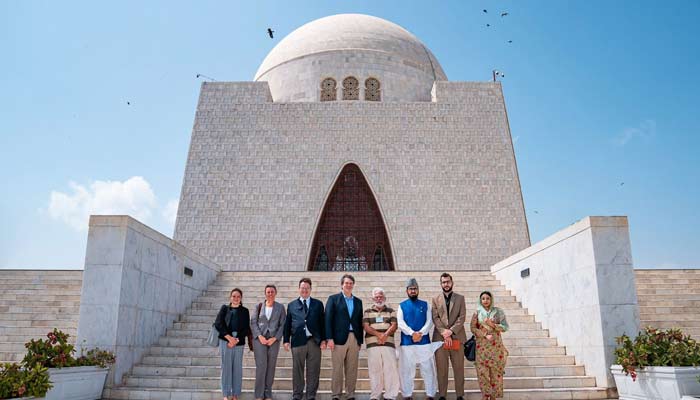
CDA Schofer visited Mazar-e-Quaid to honour Pakistan’s founder, Quaid-e-Azam Muhammad Ali Jinnah, a statement from the consulate issued on Friday said.

“This visit symbolised the United States’ long and steadfast relations with Pakistan, reminding us of Jinnah’s vision for a unified, democratic Pakistan, one in which equality, social justice, and economic opportunity prevail. Both our nations hold the ideas dear and continue to perfect them through our many areas of cooperation.”

A highlight of CDA Schofer’s Karachi visit was attending the launch of the $1 million Global Maritime Crime Program (GMCP) Phase-2.

Funded by the US government’s Bureau of International Narcotics and Law Enforcement Affairs (INL), the United Nations Office on Drugs and Crime (UNODC) leads this initiative, which will enhance maritime security and combat transnational maritime crime in Pakistan.

The programme also develops technologies to improve Maritime Domain Awareness (MDA) for effective maritime activity monitoring and management.

In Karachi, CDA Schofer also visited the shrine of Sufi saint Manghopir, honouring Pakistan’s rich cultural and religious diversity. He had the unique opportunity to observe and participate in the traditional ritual of feeding crocodiles at the adjoining ponds.

This centuries-old practice is a significant cultural and spiritual ritual for the local community. This visit emphasised the US priority of promoting religious tolerance and support for Karachi’s Sheedi community.

CDA Schofer stated: “Freedom of religion is a fundamental human right essential for global stability and security.”

With the goal of promoting diversity, equity, inclusion, and accessibility (DEIA), the DCM met with various individuals from the transgender community.

They talked about their experiences, challenges, and their work to improve social and economic inclusion and opportunities for their community in Pakistan.

CDA Schofer’s visit to Makli Necropolis, one of the world’s largest and oldest funerary sites, demonstrated the US commitment to preserving Pakistan’s cultural heritage and fostering mutual respect.

Through the Ambassadors Fund for Cultural Preservation (AFCP), the US government has supported more than 32 projects in Pakistan since 2001, investing $7.6 million to restore sites like Varun Dev Temple, Frere Hall, tombs of Sultan Ibrahim and Amir Sultan Muhammad at Makli Necropolis, Mehrgarh Museum in Balochistan, and many more across Pakistan.

CDA Schofer visited Aisha Islamic Academy, a madrassah affiliated with Jamia Islamia Clifton’s madrassah for boys that educates 300 girls, including more than 100 orphans who reside on the property.

This visit marks the first official US delegation visit to the girls’ madrassah, underscoring the US government’s dedication to inclusive education and women’s empowerment.

CDA Schofer’s trip to Karachi reflects the US government’s broader approach to strengthening its partnership with Pakistan.

By promoting climate resilience, human rights, maritime security, women’s empowerment, religious tolerance, and cultural heritage preservation, the US Mission in Pakistan supports sustainable development and deepens bilateral ties.