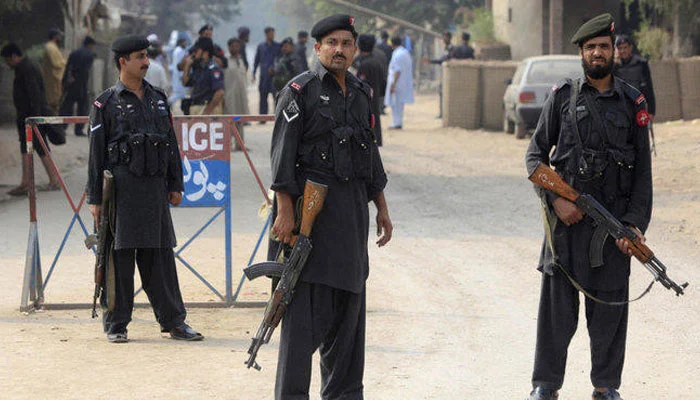
DI KHAN: Terrorists rammed an explosive-laden car into a building in Dera Ismail Khan district’s Daraba area, martyring three security forces personnel and injuring 16 others, Geo News reported citing police Tuesday.
Daraban came under militant attack as Khyber Pakhtunkhwa bears the brunt of surging terror incidents.
The security forces also gunned down three terrorists during an exchange of fire.
Terror attacks in KP
The outgoing year witnessed an alarming rise in terror-related incidents in the country in general and in Khyber Pakhtunkhwa in particular as at least 470 security personnel and civilians were killed in the province, so for.
According to statistics available with Geo News, 470 people were killed in 1,050 terror-related incidents in one year alone.
As per the record of the provincial home department and tribal affairs, 698 security personnel and citizens were killed in 1,823 terror-related incidents during the past three years.
Seven areas along the Pak-Afghan border in KP remained “terrorism hotspots” during the outgoing year. The areas include Peshawar, Khyber, North Waziristan, South Waziristan, Dera Ismail Khan, Bajaur and Tank.
Out of the 1,050 terror-related incidents, 419 were reported in bandobasti, 631 in the erstwhile Fata, 201 in North Waziristan, 169 in Khyber, 121 in South Waziristan, 98 in DI Khan, 62 in Bajaur, 61 each in Tank and Peshawar.
The New York Times, CNN and Ha’aretz reported that from 2012 to 2018, more than $1.1bn reached Gaza from Qatar, with the Israeli government’s approval.
Last year Qatar gave Gaza $200 million for aid, fuel and government salaries — and could provide hundreds of millions more this year, the reports claimed.
The information on the money was collected by an international organisation and was presented to the Israeli security cabinet in January.
NYT report claims Israel hoped money would enable group to ‘establish order’ in Gaza, reduce pressure to create a Palestinian state
“Since the Oct 7 Hamas attack on Israel, the Gulf state of Qatar has come under fire by Israeli officials, American politicians and media outlets for sending hundreds of millions of dollars in aid to Gaza, which is governed by the Palestinian militant group,”
“But all that happened with Israel’s blessing.”
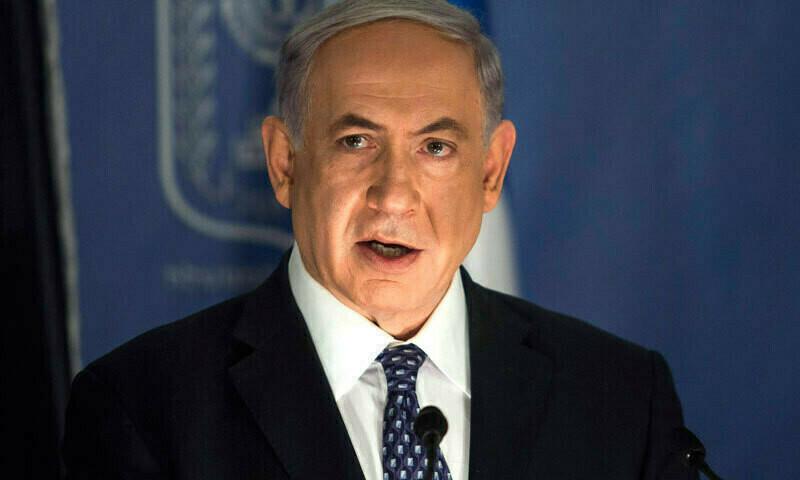
In a series of interviews with key Israeli players conducted in collaboration with Israeli investigative journalism organisation Shomrim, CNN was told Israeli Prime Minister Benjamin Netanyahu continued the cash flow to Hamas despite concerns raised from within his own government.
the Israeli government allowed the payments because it hoped the money would help Hamas maintain order in the Gaza Strip and reduce political pressure to create a Palestinian state.
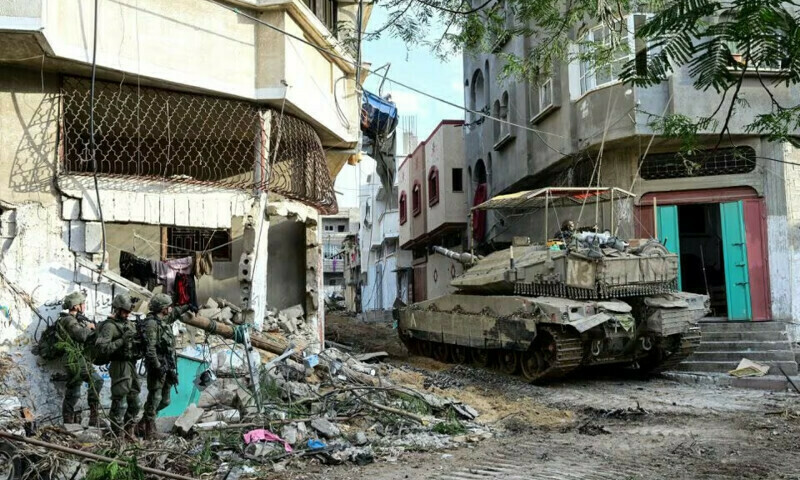
The reports also claimed that the Israeli government and Hamas agreed to a brief ceasefire in Gaza to allow for the release of 50 Israeli prisoners. The ceasefire deal allowed aid into Gaza, but conditions there remain dire.
Qatar has denied that the money was misused, and the Israeli government has rejected the suggestion that it allowed aid to Hamas as “ridiculous”.
The report outlined a series of decisions made by the Israeli government, particularly under Mr Netanyahu, regarding financial aid from Qatar to the Gaza Strip.
The payments from Qatar were intended for humanitarian purposes, but were now being scrutinised for their possible role in supporting Hamas military operations, the report added.
Political motivations
The NYT also touched on the political motivations behind these decisions, with critics accusing Mr Netanyahu of a strategy to “buy quiet” and avoid addressing the underlying issues with Hamas and Palestinian discontent.
According to the report, the Qatari government funnelled millions of dollars monthly into the Gaza Strip over the years, bolstering the Hamas government. Mr Netanyahu not only tolerated but actively endorsed these payments. During secret talks in September, Mossad chief David Barnea affirmed Israel’s desire for the payments to continue.
Mr Netanyahu gambled on this financial support, aiming to maintain peace in Gaza and steer Hamas toward governance rather than conflict. The substantial Qatari funds, though officially clandestine, were widely known and debated in Israeli media, criticised by opponents as a strategy of “buying quiet”.
Activists had called for a strike in solidarity with the besieged territory covering businesses, public workers and education.
Many Palestinians took part and rallies were staged in the West Bank, according to Essam Abu Baker who coordinates Palestinian factions in Ramallah.
He described the protest as part of a global effort to put pressure on Israel to stop the aggression, reporting strikes taking place in parts of Jordan and Lebanon.
Protests also take place in Jordan and Lebanon
In Lebanon, public institutions, banks, schools and universities closed after the government decided on a nationwide strike in solidarity with Gaza and with border areas in the south, which have seen intensifying exchanges of fire, mainly between Israel and Hezbollah.
The stoppage was also observed in Istanbul’s western Esenyurt district, where many businesses are owned by residents from the Palestinian territories, Syria, Yemen and Iran.
“The strike today is not only in solidarity with Gaza, but also against the USA which used its veto in the Security Council against a truce,” Abu Baker said in Ramallah, referring to the US rejection of a ceasefire resolution on Friday.
At a rally in Ramallah, seat of the Palestinian Authority, demonstrators unfurled a huge list of names of the victims in Gaza. Whole families came out to protest, with parents carrying children on their shoulders.
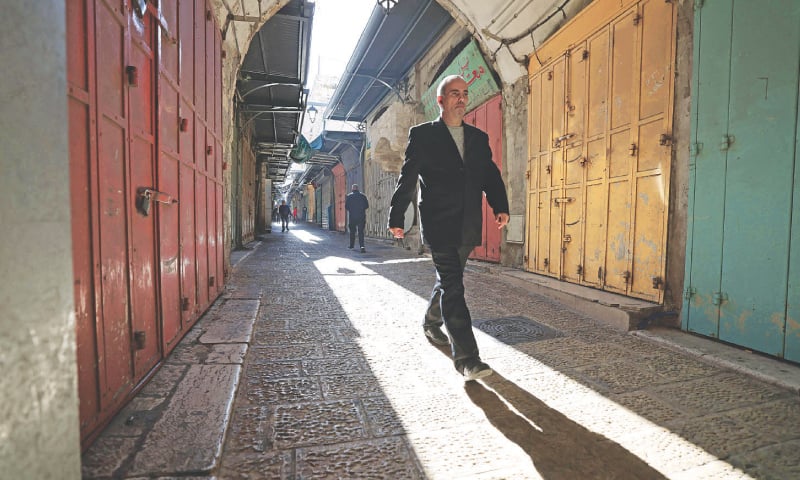
In east Jerusalem’s Old City, many shops were closed. The sound of keys echoed in the bazaar as Palestinian business owners locked their brightly painted doors.
“We want the war to stop,” said Nasser, a 65-year-old coffee shop owner who gave only his first name.
He said he had little to lose by closing his shop along the Via Dolorosa, a Christian pilgrimage route.
“We’ve had no business anyway since the war started,” he said, after the outbreak of violence prompted visitor numbers to plummet. The few shopkeepers who did open said they had strong reasons for doing so.
Florist Raja Salama, 62, came to work to prepare wreaths of white roses for an elderly relative’s funeral. “I’m only open because the funeral is today,” he said.
• Orders elections to Jammu and Kashmir Assembly by Sept 30; Justice Kaul proposes reconciliation commission
• Mirwaiz calls verdict ‘sad’ but ‘expected’; Mehbooba sees the idea of India defeated; Abdullah vows legal fight
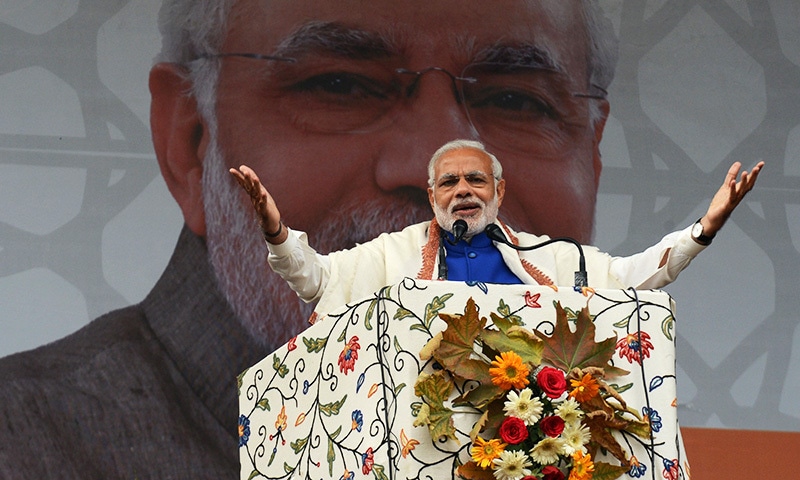
NEW DELHI: Four years after PM Narendra Modi’s Hindu nationalist government abrogated the special constitutional status of India-held Jammu and Kashmir, India’s Supreme Court on Monday endorsed the measure that had angered China and Pakistan and brought pain and misery to its predominantly Muslim population.
A Constitution bench of the Supreme Court unanimously upheld the power of the president to abrogate Article 370 in August 2019, leading to the re-organisation of the full-fledged State of Jammu and Kashmir to two Union Territories and stripped it of its special privileges.
The five-judge bench, headed by Chief Justice of India D.Y. Chandrachud, confirmed that the president could “unilaterally issue a notification that Article 370 ceases to exist”. The court held that the president had power to abrogate Article 370 if “special circumstances warrant a special solution”.
“The court cannot sit in appeal over the decision of the president on whether the special circumstances which led to the arrangement under Article 370 have ceased to exist,” the chief justice asserted.
The court said the abrogation of Article 370 was the culmination of a “gradual and collaborative exercise” spread over the past 70 years between the Centre and the State to integrate Jammu and Kashmir with the Indian Union. The objective of the integration process was to make the entirety of the rights and obligations enshrined in the Indian Constitution applicable to the people of Jammu and Kashmir.
Justice Sanjay Kishan Kaul, in an epilogue, referred to witnessing the inter-generational trauma caused by violence and mass migration during his travels to Jammu and Kashmir. He proposed the setting up of a Truth and Reconciliation Commission to reach out to the people. The court accepted the assurance of the Modi government to restore statehood to the Union Territory of Jammu and Kashmir “at the earliest”.
It directed the Election Commission of India to hold the Jammu and Kashmir Assembly elections by September 30, 2024.
“The fact that the abrogation of Article 370 through an executive order by the president happened after the dissolution of the Jammu and Kashmir State Legislative Assembly by the governor on November 21, 2018, and the subsequent proclamation of president’s rule under Article 356 on December 19, 2018, did not deter the court,” The Hindu noted.
“The State of Jammu and Kashmir does not have ‘internal sovereignty’ distinguishable from the powers and privileges enjoyed by other States in the country,” Chief Justice Chandrachud held.
The decision is not believed to make material difference to the disputes Pakistan and China have continued to raise over India’s claims on all or parts of the territory. The court’s verdict is expected to spur Mr Modi’s campaign for a third successive term in general elections due in May.
The Supreme Court had earlier handed his government a trophy by unwittingly endorsing the Hindu nationalist quest to build a Hindu temple at the site of the razed Babri Masjid whose destruction the court had opposed.
While the temple is due to be inaugurated with fanfare next month, the lot of the Kashmiri Muslims was in the balance until Monday. Even as they are upset, their leaders promised to continue what they see as a long haul to peacefully restore the special status.
Reaction from Kashmiri leaders
In Srinagar, rival opposition leaders Mehbooba Mufti and Omar Abdullah said they were put under house arrest, but J&K Lieutenant Governor Manoj Sinha rejected the claim.
“Rather than our loss,” Mehbooba Mufti said in a video address to her party workers after the SC verdict, “It is the idea of India which has suffered a defeat today. The betrayal has come from them, not us”.
Alleging that she was put under house arrest on Monday, Ms Mufti likened the verdict to “a death punishment for the idea of India. But we will continue to fight peacefully for our rights”.
Former J&K chief minister Abdullah also claimed he was put under house arrest on Monday morning ahead of the Supreme Court’s verdict. In a live broadcast on X (formerly Twitter), Mr Abdullah said: “We knocked on the doors of SC with the hope of justice. I respect the court’s decision. We may have failed, the decision may be disappointing, but it is a temporary setback. Ours is a political fight and we will fight it within the ambit of law,” he said.
He added: “The BJP succeeded in achieving its political objective after 70 years. We too will continue to strive politically so that whatever was snatched from us on August 5, 2019, is given back.”
How would the verdict play out with the wider opposition parties? Most of them were already of the view that it was a “done deal” but hoped the court would restore statehood to Jammu and Kashmir and direct holding of elections.
The Hurriyat Conference reacted stoically to the verdict.
In a message, Hurriyat chief Mirwaiz Umar Farooq said: “It’s sad but the verdict was not unexpected particularly in the present circumstances. Those people who at the time of the partition of the subcontinent, facilitated the accession of J&K and reposed their faith in the promises and assurances given to them by the Indian leadership must feel deeply betrayed.”
“For the rest the state as it existed in August 1947 remains divided on the ceasefire line, and hence continues to be a bleeding humanitarian and political issue, begging redressal
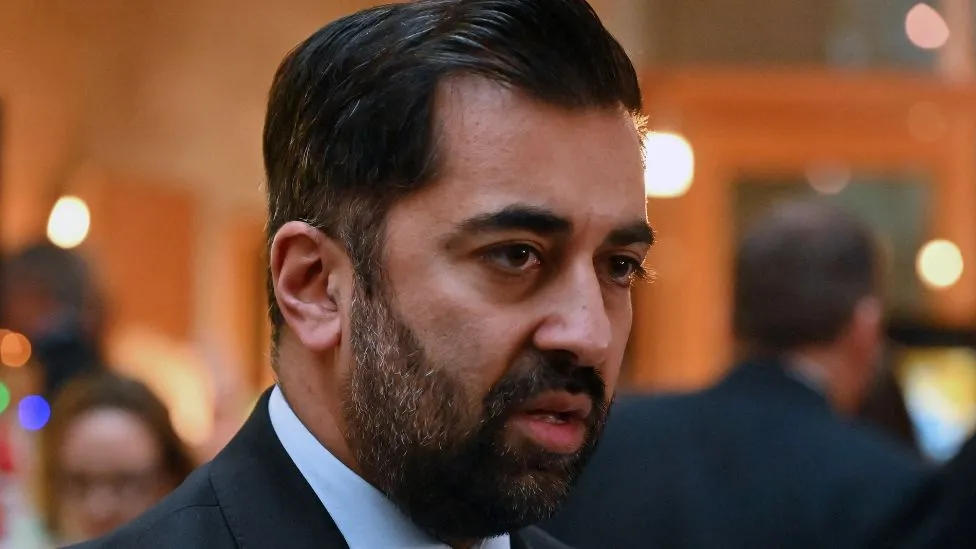
The first minister responded to claims from the foreign secretary that he breached protocols by meeting Turkish president Recep Tayyip Erdogan without a UK official present.
The SNP leader dismissed the criticism from an “unelected lord”.
Lord Cameron has also threatened to close Scottish offices in UK embassies.
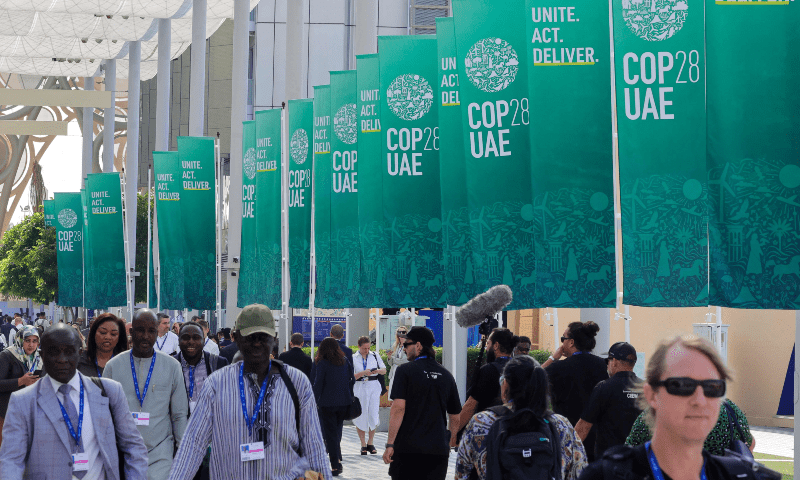
The former prime minister, who returned to the cabinet as foreign secretary last month, said in a letter to the Scottish government that ministers had failed to provide “sufficient advance notice” of the meeting with Mr Erdogan at COP28 in the United Arab Emirates.
Scottish Secretary Alister Jack has accused the Scottish government of five breaches of protocol during the climate summit.
Mr Yousaf said the meeting had been rearranged at short notice by the Turkish president’s team but that he would have “no problem” with a UK government official – including Lord Cameron himself – attending.
He said a Foreign, Commonwealth and Development Office (FCDO) official “chose not to stay with the Scottish delegation the whole day, and because of that they ended up missing the meeting”, which was described as a brief “brush-by”.
Mr Yousaf said that a UK representative had been at the “vast majority” of discussions he held during the climate summit.
“Nothing was discussed that hadn’t been discussed at other meetings, such as the climate crisis, and in this particular meeting the issue of the Israel-Gaza conflict,” the first minister said.
He warned Scotland’s economy would be harmed if the FCDO withdrew support for the Scottish government overseas.
Foreign Secretary David Cameron threatened to close Scottish offices in UK embassies
“For Lord Cameron to say he’s basically going to stop Scotland’s international engagement because of one meeting, where one FCDO official wasn’t able to attend – because, of course, at events like COP, diaries can change quite last minute – is really petty, really misguided,” Mr Yousaf told reporters.
“I suggest to Lord Cameron that next time, if he has an issue like that, he should just pick up the phone, I’m sure it can be resolved.”
In his letter, the foreign secretary warned there would be no further FCDO “facilitation of meetings or logistical support” for the Scottish government if there were any “further breaches” of protocol, adding he would also “consider the presence of Scottish government offices in UK government posts”.
Scottish Secretary Alister Jack told MPs on the Scottish Affairs Committee that the Erdogan meeting had not been the first minister’s only “offence” during COP28.
‘Wholly unacceptable’
He said Mr Yousaf also met four other foreign ministers – European Commission President Ursula von der Leyen, European Council President Charles Michel, Lebanese Prime Minister Najib Mikati and Pakistan Caretaker Prime Minister Anwaar ul Haq Kakar – without FCDO officials present.
“Foreign affairs is reserved under the Scotland Act and it’s important for the UK to speak on the world stage with one consistent voice,” Mr Jack told MPs.
“It is wholly unacceptable for the Scottish government to promote foreign policies which are at odds with those of the United Kingdom government. It risks causing confusion and it damages the UK’s standing in the world.”
The Conservative minister said FCDO officials had only been given “very last minute” notice that the Erdogan meeting had been rescheduled, and claimed Scottish officials had more advanced warning of the change.
Humza Yousaf met the Turkish president Recep Tayyip Erdogan at COP28
Former foreign secretary James Cleverly made a similar threat to cut diplomatic support to the Scottish government after Mr Yousaf met the Icelandic prime minister in August without UK diplomats present.
However a UK government source said this latest intervention represented and “escalation” over the issue and the foreign secretary wished to take a “harder line” approach than Mr Cleverly.
Mr Yousaf posted on X, formerly Twitter, that he had discussed the climate crisis and the Israel-Gaza conflict with Mr Erdogan and the Lebanese prime minister during their meeting on 1 December.
He said he had called for an immediate ceasefire in the region. BBC Scotland News understands this contradiction of the UK government position has caused particular concern in the foreign office.
A Scottish government source said Lord Cameron’s letter was a “gross overreaction”, adding: “You can hardly say to a president, ‘Can you wait a second while we find our chaperone?'”
They said that the FCDO representative was “very late” for a couple of meetings at the summit, but that was “the nature of fast moving things like COP”.
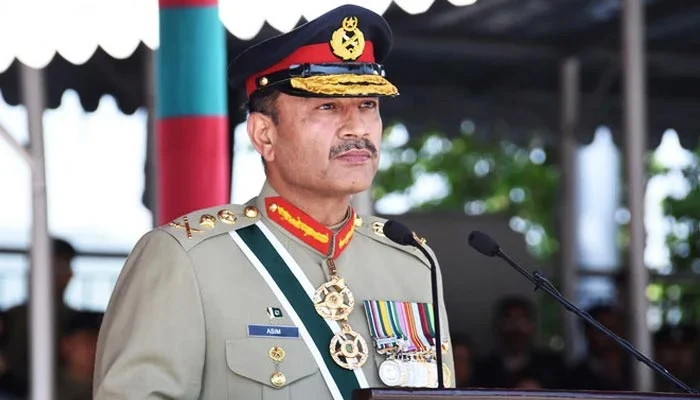
Chief of Army Staff (COAS) General Asim Munir has left for the United States (US) on his maiden official visit since his assuming office in November last year, the Inter-Services Public Relations (ISPR) said in a statement on Sunday.
In a brief statement, the military’s media wing said the army chief is scheduled to meet senior military and other government officials in the US.
The army chief’s visit came a day after the conclusion of a two-day stay of US Special Representative for Afghanistan Thomas West in Pakistan.
The American envoy conveyed Washington’s resolve to “stand with Pakistan” in its fight against terrorism and the challenges posed by the Tehreek-e-Taliban Pakistan (TTP).
Concluding his crucial visit to Islamabad, West said he held meetings on regional security and protecting Afghan refugees, among other important matters.
Taking to his official account on X, formerly Twitter, the American diplomat also shared the details of his meetings with Caretaker Foreign Minister Jalil Abbas Jilani, army chief Gen Munir, Pakistan’s Special Representative on Afghanistan Asif Durrani, and Interior Secretary Aftab Akbar Durrani.
West, in another post, mentioned Washington’s resolve to stand with Islamabad against terrorism in the region as well as touched upon matters about the ongoing repatriation of illegal foreigners.
“We are also grateful for close communication with Islamabad re: refugee protection issues, including collaboration with IOs and humane and dignified treatment,” the official added.
To discuss the issues surrounding the Afghan refugees in Pakistan, who make up a large number of “illegal foreigners,” the US envoy also spent valuable time with the leadership of the United Nations High Commissioner for Refugees (UNHCR) and the International Organisation for Migration (IOM) in Islamabad during which supporting the most vulnerable and at-risk Afghans came under discussion.
As a percentage of GDP, the deficit over the previous 12 months rose to 3.4 per cent in November — 62.3 billion shekels — from 2.6pc in October, it said.
A ministry source said the deficit for 2023 would finish at about 4pc of GDP, above a target of 0.9pc, or 16.9 billion shekels, in the budget approved by lawmakers in May.
The ministry noted that revenue fell by 15.6pc last month, partly because of tax deferments resulting from the unrest that began on Oct 7.
November revenue was 30.3 billion shekels, the lowest monthly level this year. For the first 11 months of the year, revenue reached 401.5 billion shekels, 6.2pc lower than the same period last year.
Overall, due to the offensive on Gaza is expected to weigh on growth in 2023 and 2024. The ministry and central bank project growth of 2pc this year and 1.6pc and 2pc respectively in 2024.
Expenses reached nearly 47 billion shekels, with about 6 billion attributable to the Israeli aggression, helping to push up January-November spending by 11.5pc to 445.3 billion shekels.
Israel’s deficit in October was 22.9 billion shekels and in November 2022 it was 1.7 billion shekels.
Last week parliament gave its initial nod to budget for aggression against Gazans that would add more than 30 billion shekels to spending on the unrest for the rest of 2023. The plan still requires final approval.
Over 80 countries, including the US, European Union and members of Pacific Island states threatened by rising seas have been some of the most vocal in calling for a phase-out of oil, gas and coal.
COP28 President Sultan Al Jaber urged negotiators on Sunday to work harder to find consensus, inviting ministers to give their views at a majlis-style consultation.
He said he was asking all countries to suggest wording for a consensus on fossil fuels, adding: “Now, the time has come for all parties to constructively engage… Failure is not an option”.
The main obstacle to an agreement has been the entrenched stance of OPEC members, led by Saudi Arabia, who argue that the focus of the COP28 should be on reducing emissions, not on targeting the fuel sources that cause them.
Riyadh said on Sunday that its “perspectives” and “concerns” must be taken into account at the COP28 climate talks, with its energy minister saying he would “absolutely not” agree to a phase-down.
China’s top climate envoy, Xie Zhenhua, said on Saturday that a COP28 deal can only be considered a success if it includes an agreement on fossil fuels, though he did not say whether Beijing would back a phase-out deal.
“The majority here wants fossil-fuel language, language that takes us away from fossil fuels, that indicates a desire for us to move according to the science, according to the 1.5 degree target,” Ralph Regenvanu, Vanuatu’s climate change minister, told AFP.
“We need the small minority of countries that is blocking progress to shift the position, and that’s what we’re working on for the next couple of days,” he said. Scientists say the world must end its use of fossil fuels if it is to limit warming to 1.5 degrees Celsius and avoid the most catastrophic climate scenarios.
After the meeting, EU climate commissioner Wopke Hoekstra said there was “a majority, some would say a supermajority, of countries here present who want to push forward for more ambition”.
At the majlis, China’s representative said climate action was a “marathon, not a sprint”. He said developed nations are ahead of the pack and should help developing countries by providing the funds needed for their energy transitions.
Britain and Australia were among the few countries to offer a glimmer of compromise, saying flexibility on the fossil fuel language was possible as long as there were enough safeguards.
Bolivia denounced the “hypocrisy” of countries that press the developing world on climate change while expanding their own production of fossil fuels.
Standing in the middle of the circle, Jaber closed the meeting by urging countries to make the event be known as a “change-makers majlis”. To deliver the “very balanced, ambitious outcome, we need you to act as the change-makers,” he said, adding: “I hope that you won’t let me down”.
A third draft of a deal, released on Friday, offers various ways to phase out fossil fuels but also includes the option to avoid the issue entirely. A new text is expected on Monday.
Javier Milei warned Argentines “there is no money” and recommitted to a programme of harsh austerity measures.
The populist outsider won a surprise election victory in November with radical pledges to overhaul the South American nation’s ailing economy.
Mr Milei’s inauguration was held in Buenos Aires on Sunday.
In a day of pomp and ceremony, the 53-year-old capped his extraordinary rise to power with a speech which left Argentines in no doubt he intends to embark on an economic path unlike any previous president.
He said he would undo “decades of decadence” with deep spending cuts, designed to slash huge public debts and drive down inflation, which is now higher than 140%.
Javier Milei in a car as part of a procession
IMAGE SOURCE,REUTERS
“The bottom line is that there is no alternative to austerity and there is no alternative to shock treatment,” Mr Milei said.
“We know that in the short term the situation will worsen. But then we will see the fruits of our efforts.”
Mr Milei waved to supporters during a procession to the presidential palace alongside his sister Karina, the confidant who is expected to play an influential role behind the scenes in his new administration.
He addressed the crowd and chanted campaign slogans from the balcony, and was presented with the blue and white presidential sash and baton – which he had personalised with engravings of his five dogs.
Mr Milei has risen rapidly from relative obscurity to Argentina’s highest office on a right-wing platform which includes restricting abortion rights, liberalising gun laws and climate change denial.
He was frequently pictured wielding a chainsaw on the campaign trail, and his unflinching statements have been likened to former US President Donald Trump and former Brazilian President Jair Bolsonaro.
During the campaign he said he would replace Argentina’s currency with the dollar and abolish the country’s central bank, along with a host of government departments.
But while the presidency comes with sweeping powers, Mr Milei will face political limitations as he attempts to fix a set of daunting problems.
PODCAST: Will Argentina’s new president deliver his radical promises?
The peso – Argentina’s embattled currency – is in long-term freefall, poverty levels have soared to 40% and, according to IMF data, the economy is in a deep recession.
Mr Milei will likely face opposition in Argentina’s Congress, where the coalition of small right-wing and libertarian parties he leads has only minority representation.
Mr Milei was seen embracing Ukrainian President Volodymyr Zelensky at the inauguration
It remains to be seen how the new president will approach the job in practice – and some observers have noted a more moderate tone since his victory was confirmed.
However, hours into the job, the new president signalled he intends to govern as he campaigned by signing a decree to reduce the number of departments from 18 to nine, making good on a key pledge.
Among the guests at the swearing-in ceremony was Ukrainian President Volodymyr Zelensky, who has met several Latin American leaders as he seeks to shore up global support for his country’s war effort.
The pair were pictured embracing and Mr Zelensky later told reporters they had discussed ways Argentina could support Ukraine.
Hungary’s President Viktor Orban – who Mr Milei has been likened to ideologically – was also in attendance.
“The state of Jammu and Kashmir does not have internal sovereignty different from other states,” Chief Justice DY Chandrachud said while reading out the judgement.
In his concurring judgement, Justice SK Kaul recommended that an “impartial truth and reconciliation commission” be set up in Kashmir to investigate human rights violations by both “state and non-state actors” over the past few decades.
The revocation was one of Mr Modi’s poll promises in 2019 and the court’s decision comes months before he seeks a third term. Local politicians in the region have expressed disappointment over the order.
A teacher in Mumbai carries a painting depicting the Supreme Court’s verdict on Kashmir
Former Chief Minister Omar Abdullah posted on X (formerly Twitter) that he was “disappointed but not disheartened”.
The scenic Jammu and Kashmir region was once a princely state which joined India in 1947 soon after the sub-continent was divided up at the end of British rule.
Nuclear-armed neighbours India and Pakistan have since fought two wars and a limited conflict over Kashmir. Each has come to control different parts of the territory with a ceasefire line agreed.
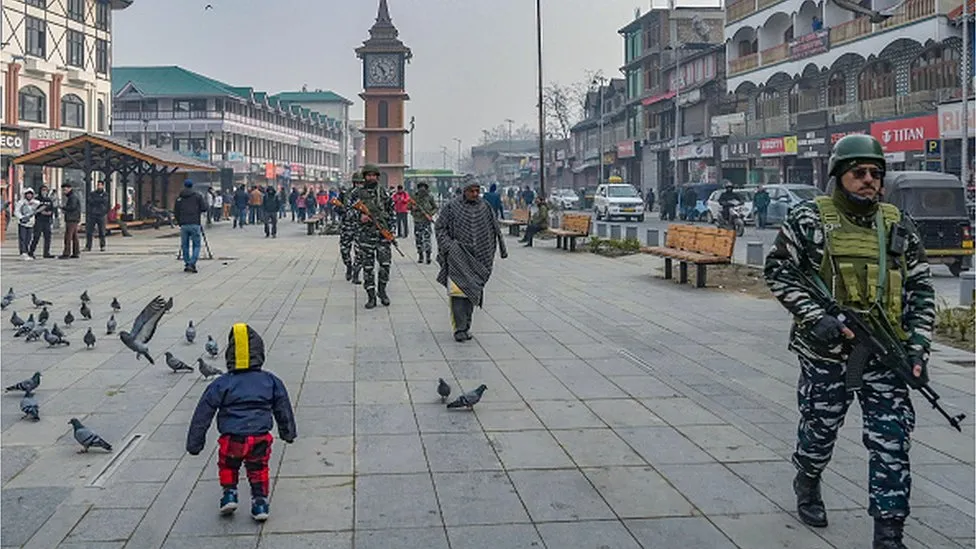
Security has been tightened in Kashmir since Monday morning.
“We are duty-bound to ensure that peace prevails in the [Kashmir] valley under all circumstances,” VK Birdi, the inspector general of Kashmir zone, told PTI news agency.
Security was also beefed up and the region witnessed a communication blackout when the revocation happened.
On 5 August 2019, the Indian government revoked nearly all of Article 370 of the Indian constitution, which granted special privileges to the people of Jammu and Kashmir state.
A 2018 protest by Kashmiris against the planned revocation of Article 370
The assembly, overseeing the state’s budget, spending, employment, education, and economic activity, was dissolved. A lieutenant governor was appointed to govern the region until local elections were conducted. Several activists and senior opposition leaders in the region were detained.
Article 370 allowed the state its own constitution, a separate flag and freedom to make laws. Foreign affairs, defence and communications remained the preserve of the federal government.
As a result, Jammu and Kashmir could make its own rules relating to permanent residency, ownership of property and fundamental rights. It could also bar Indians from outside the state from purchasing property or settling there.
The constitutional provision had underpinned India’s often fraught relationship with Kashmir, the only Muslim-majority region to join India at partition.
Mr Modi and his Hindu nationalist Bharatiya Janata Party (BJP) had long opposed Article 370 and revoking it was in the party’s 2019 election manifesto.
They argued it needed to be scrapped to integrate Kashmir and put it on the same footing as the rest of India. After returning to power with a massive mandate in the April-May general elections in 2019, the government lost no time in acting on its pledge.
Critics say the BJP ultimately wants to change the demographic character of the Muslim-majority region by allowing non-Kashmiris to buy land there.
In August this year, the constitution bench of the Supreme Court began hearing nearly 23 petitions challenging the government’s decision.
The government frequently imposes communication restrictions in the region for security reasons
The petitioners had stressed the unique nature of Kashmir’s relationship with India, and said Article 370 “acted as a bridge” between the constitutions of India and Jammu and Kashmir.
The state comprised the Muslim-majority Kashmir valley, the Hindu-dominated Jammu region and the high altitude Buddhist enclave of Ladakh.
The petitioners argued that the state’s reorganisation into Jammu and Kashmir and Ladakh as federally administered territories violated India’s constitution, which requires the state legislative assembly’s approval to reduce a state to a union territory.
The petitioners said that the abrogation of Article 370 also took away the region’s internal sovereignty without considering the will of its people. But the government had claimed this sovereignty was surrendered to India in 1947.
Many of the restrictions imposed after the scrapping of the special status have been eased and the picturesque Kashmir valley attracted more than 16 million tourists in 2022. The government has said it is ready to hold state elections and restore statehood.
However, the government frequently imposes communication restrictions in the region for security reasons, criticised by rights groups as measures to suppress dissent.