
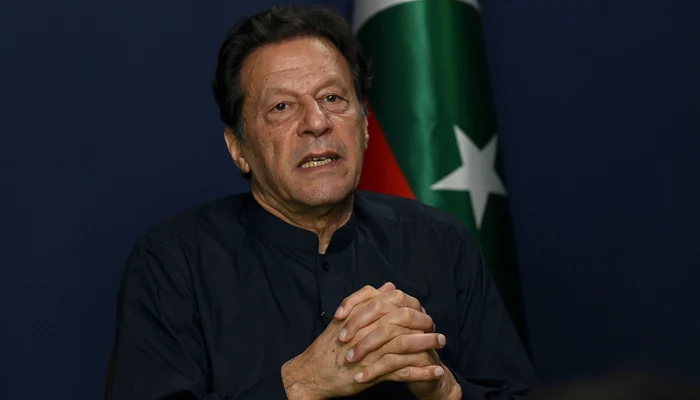
PTI chief ready for ‘minus-Imran’ formula in broader interest of Pakistan

Pakistan Tehreek-e-Insaf (PTI) Chairman Imran Khan said Saturday that he was ready for a “minus-Imran” formula if it benefitted the country or saved it from destruction.

“Minus Imran, but tell [me] how this will benefit the country,” he said in an address to supporters as the crackdown on the party and criticism over the recent riots continued.

He claimed that the countrywide riots that erupted following his arrest on May 9, in which supporters attacked military installations including the Lahore Corps Commander House and General Headquarters (GHQ) entrance, were “orchestrated under a well-thought-out conspiracy” to destroy the PTI.

Khan claimed that the ruling coalition knew it could not win the general elections, which was why it “conspired” against the former ruling party.

Speaking about the days-long violence, the former prime minister questioned why the Radio Pakistan office in Peshawar was burnt down when the PTI’s protest was being held in a different area.

“Who was the person who incited people to vandalise the Lahore Corps Commander House? He disappeared afterwards,” he added.

Khan alleged that the Pakistan Democratic Movement-led government wanted to hold the general elections only after PTI had been destroyed.

Referring to Prime Minister Shehbaz Sharif’s earlier statement that elections would be held in October, Khan asked: “Will our economy get better and inflation disappear in October?”

“What is the benefit of holding elections in October?”

Criticising the government, the former premier claimed the government was “destroying the entire country in order to destroy one political party”.

“They have crushed the institutions. They are not obeying court orders. The police are entering homes.”

The PTI chairman’s comments come after scores of party leaders and workers were arrested following the days-long riots.

The violent protests incurred severe damage to public property and led to the death of at least eight people and injured several, with severe condemnations from the government and the army.

The military then decided to try the protesters who attacked military installations under the Pakistan Army Act and Official Secrets Act, while the National Security Committee endorsed the decision.

But Khan has repeatedly denied responsibility and said his party had no role in the violence.
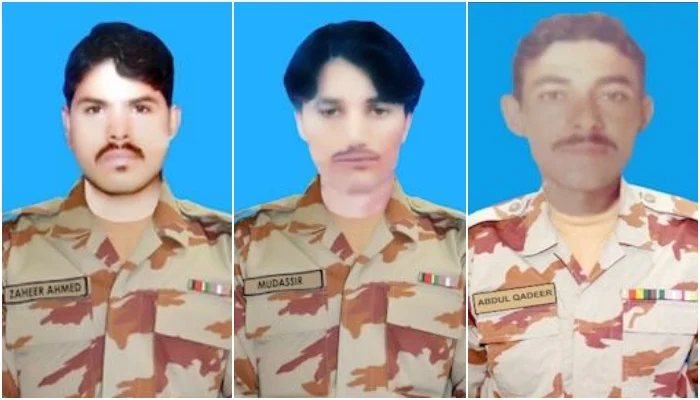
3 soldiers martyred, one terrorist killed in Balochistan shootout: ISPR

RAWALPINDI: Three soldiers were martyred while one terrorist was killed in a heavy exchange of fire between the security forces and militants in Zarghoon, Marget area of Balochistan, the Inter-Services Public Relations (ISPR) said on Saturday.

As per a brief statement issued by the military’s media wing, a group of terrorists attacked a security forces check-post, which had recently been established to prevent extortion efforts targeting coal mines in the area, this morning.

“The troops on the post retaliated readily to the fire raid thereby, pushing back the terrorists. However, in the ensuing heavy exchange of fire three soldiers embraced shahadat while one terrorists was sent to hell by the security forces,” the statement read.

The martyred soldiers were identified as Sipahi Zameer Ahmed, Sipahi Mudassir Shaheed, and Lance Naik Abdul Qadeer.

The ISPR said that the forces have identified a likely hideout of fleeing terrorists near the mountains on the basis of a follow-up Intelligence, Surveillance, and Reconnaissance (ISR) effort. In response, a deliberate blocking and sanitisation operation has been launched, it added.

It further stated that the anti-terrorist operation was progressing well and security forces were maintaining pressure to deny the militants a chance to escape from the area.

“Security forces, in step with the nation, remain determined to thwart attempts at sabotaging peace, stability and progress of Balochistan,” the statement concluded.

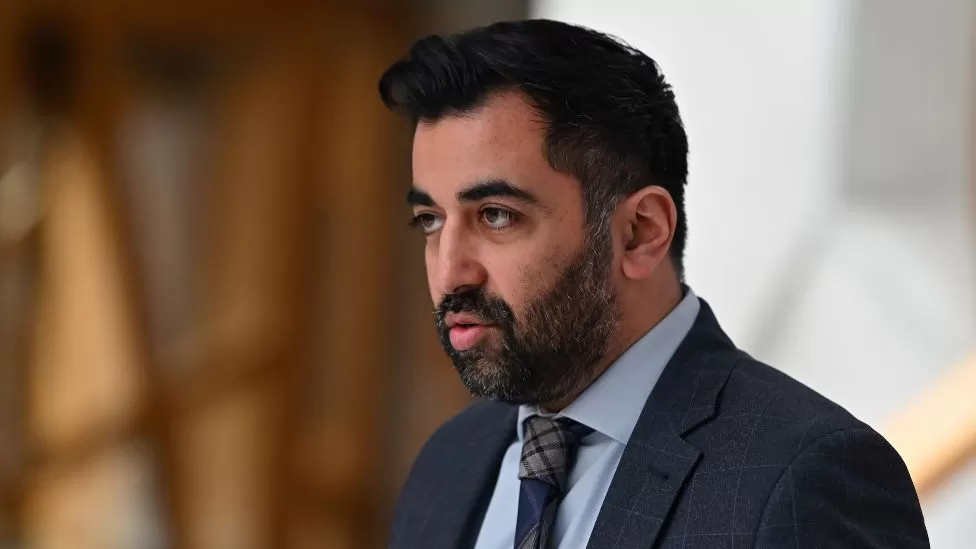
Humza Yousaf has said he expects businesses to demand compensation from the UK government if Scotland’s deposit return scheme does not go ahead.

The first minister said Westminster had put his government in a “really difficult position”.

Circular economy minister Lorna Slater has warned that without a Scottish exemption from the UK’s Internal Market Act, the Scottish scheme could be axed.

The UK government is still considering the exemption request.

The deposit return scheme – which is aimed at increasing the number of single-use drinks bottle and cans that are recycled – requires Westminster to grant an exemption to the UK-wide Internal Market Act, given its possible implications for business elsewhere in the UK.


Mr Yousaf told BBC Scotland the scheme “could be unviable” if the exemption request is not granted by the end of the month.

He said: “If we don’t get it this month we have been told by Circularity Scotland, the operator of the scheme, that the scheme could be unviable.

“There’s no reason for the UK government not to grant that exemption. They are playing politics with what is the climate emergency.”

Asked if the Scottish government would compensate businesses who have already prepared for and spent money on the scheme, he said: “If the UK government end up pulling the plug on the scheme, because they don’t give the Internal Market Act exemption, then I wouldn’t be surprised at all if companies are asking for compensation.

“And I think the UK government would have a real challenge on their hands.”


Ministers say Scotland’s deposit return scheme could prompt a big increase in recycling

A UK government spokesman previously said it received a formal request for an exemption on 6 March and it has not yet been possible to fully assess the impacts of the exclusion request on cross-UK trade, firms and consumers.

The Scottish government had been due to launch in August this year but was delayed until next March after Mr Yousaf became first minister.

The scheme has faced opposition from many small breweries and distillers.

It will see 20p added to the price of a single-use drinks container in Scotland, which will be refunded to people who return the container for recycling.

Ongoing uncertainty

Some retailers will accept returns over the counter while larger stores, shopping centres and community hubs will operate automated receiving points known as reverse vending machines.

Recycling schemes are currently operated by local authorities, with glass collections being a source of income for councils.

Circularity Scotland, a not-for-profit company established to administer the new scheme, has said the ongoing uncertainty was causing a crisis for its future.

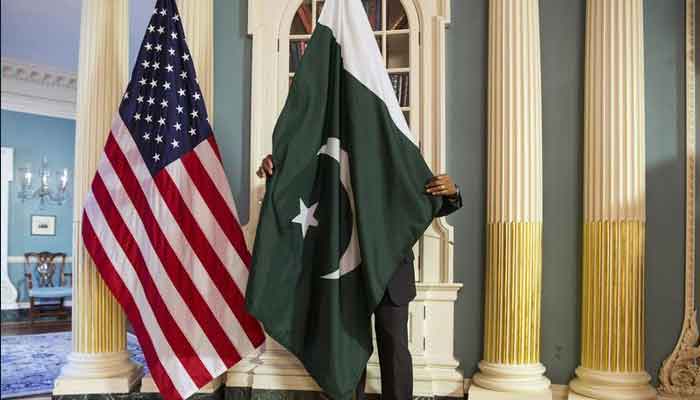
‘No comments’: US avoids remarks on Pakistan-Iran bilateral ties

As Pakistan made a major breakthrough in its ties with bordering Iran by inaugurating a cross-border marketplace, the United States refrained from commenting on the bilateral ties between the neighbouring countries.

Prime Minister Shehbaz Sharif and Iran’s President Seyed Ebrahim Raisi held a meeting on Thursday after jointly inaugurating the Mand-Pishin border sustenance market in a step aimed at boosting bilateral trade.

“We are aware of this meeting. We do not have any comment to provide on the engagement,” said a US State Department spokesperson in response to Geo News’ question regarding the development in Pakistan-Iran relations.

Washington, however, reiterated the importance of its ties with Islamabad, saying that ensuring Pakistan’s economic growth, energy security and environmental sustainability remained a priority for US’ bilateral relationship with Pakistan and “cornerstone” of the Green Alliance.

For the past 20 years, US has been at the forefront of investing in Pakistan, with direct foreign investments of $250 million during the last fiscal year, 2021-22, said the spokesperson.

The State Dept said that the investments by US firms were helping Pakistan to get expanded access to a cleaner, more resilient energy supply.

The spokesperson went on to say that the wind turbines, control systems and equipment of General Electric (GE), which is a US-based multinational conglomerate company, are widely used in Pakistan.

Use of these devices will increase Pakistan’s renewable energy potential, said the spokesperson.

The official further stated that it was for the first time that American technology was being installed at Mangla Power Station. Moreover, GE Hydro France was supplying eight 135 MW generation units, he added.

The spokesperson said that the same equipment could be used for other larger dams under construction, adding that US was also working for the restoration and construction of Mangla and Tarbela dams.

The inauguration of Mand-Pishin border sustenance marketplace is expected to provide a thriving platform for increasing cross-border trade, fostering economic growth, and opening up new avenues of opportunity for local businesses.

It should be noted that this is one of the six border markets which has been constructed along the Pak-Iran border.

After the inauguration, PM Shehbaz Sharif and Iranian president held a meeting to discuss bilateral ties and cooperation.

Following the “very productive and positive” meeting, the prime minister told a gathering of local elders that the two sides had decided to move forward in the areas of trade, investment, information technology, agriculture and other sectors.

The two leaders also decided to exploit the potential for cooperation in the power transmission.

He told the gathering that on his suggestion, the Iranian president also assured to move forward for enhancing cooperation in the solar energy sector.

The prime minister said that during the meeting, he also put forward suggestions regarding the China-Pakistan Economic Corridor (CPEC) and that the two sides would take measures for implementation of the decisions taken in the meeting.

Moreover, a 100MW electricity transmission line stretching from Iran to Gwadar was also inaugurated by the two dignitaries.

The prime minister said the project faced immense delay in the past but the incumbent government ensured its completion in the record time. Iranian President Raisi also took keen interest in the project, he added.

He said the matter related to the power tariff has also been settled amicably with Iranian government, he added.

“This is a great day for Pakistan-Iran friendship and will prove a milestone for the development of the two countries,” the prime minister remarked.

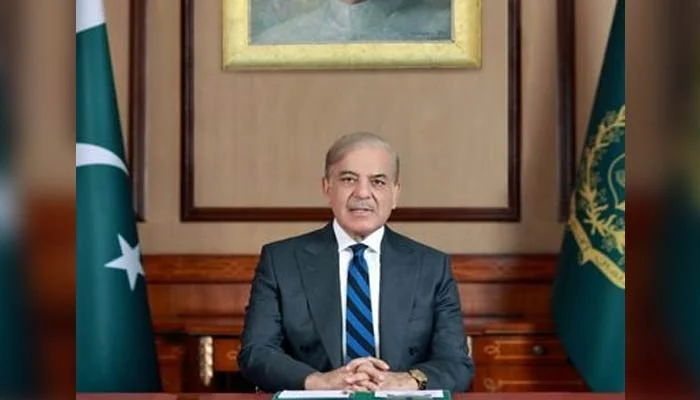
NAB declares PM Shehbaz Sharif ‘innocent’ in Ashiana Housing scandal

LAHORE: The National Accountability Bureau (NAB) on Saturday declared Prime Minister Shehbaz Sharif “innocent” in the Ashiana Housing case, adding that no evidence of corruption was found in the contract of the scheme.

According to a report issued by the accountability bureau, there was no loss to the national kitty nor did PM Shehbaz get any financial benefit from the project.

“It is proved beyond any doubt that the treasury didn’t suffer any loss,” the anti-graft body concluded in its report.

Moreover, it asserted: “No evidence of misuse of powers was found against Shahbaz Sharif.”

The NAB report — which is likely to spark controversy over the impartiality of the corruption watchdog — stated that no aspect of malice was proven against the prime minister in the scandal.

Furthermore, the report stated that Kamran Kayani, brother of former army chief General (retd) Ashfaq Parvez Kayani, also didn’t cause any damage to the treasury.

Moreover, the report found that Fawad Hasan Fawad — who at the time was Secretary Implementation to then-Punjab chief minister Shehbaz — took no bribe to award the contract.

The report added that PM Shehbaz had sent Ashiana case to the anti-corruption watchdog as per the law.

“The accountability court should decide on Shehbaz Sharif’s plea for acquittal according to the law,” the report concluded.

It must be noted that this is the second major NAB case against the prime minister in which he was found innocent.

Earlier this month, the anti-graft watchdog had declared Prime Minister Shehbaz, his son Hamza Shehbaz and others “innocent” in Rs7 billion references against them for assets beyond means and money laundering filed against them.

What is Ashiana Housing scandal?

When it was launched in 2011, the Ashiana-e-Iqbal Housing Scheme was touted as a low-cost housing scheme.

However, soon accusations of irregularity started to pop up as inexplicable delays in ballots and the allotment of completed units began to crop up.

After several years, in 2018, several high-profile politicians came under fire for alleged corruption and misuse of fire, leading to an inquiry by the anti-graft watchdog.

Amongst those accused was PM Shehbaz, who had allegedly misused his powers during his stint as Punjab chief minister in an inquiry pertaining to the Punjab Land Development Company (PLDC).

An inquiry conducted in 2018 claimed that Shehbaz Sharif as the chief minister of Punjab had unlawfully assumed powers of the Board of Directors of Punjab Land and Development Company (PLDC), misused his authority, and acted in connivance with Fawad and others.

Contracts awarded to M/s Ch. A Latif and Sons for the development and infrastructure of the Ashiana Iqbal Housing Project were illegally cancelled and awarded to Lahore Casa Developers (LCD), a proxy group of Paragon City Private Limited.

Moreover, it was alleged that in a meeting on October 21, 2014, the former CM unlawfully directed PLDC to entrust the project of Ashiana Iqbal Punjab to the Lahore Development Authority (LDA) — which was headed by his close aide Ahad Khan Cheema.

This decision of Sharif was considered mala fide as the PLDC was the company that was established for undertaking such housing projects.

All three of the main accused were among those arrested — and subsequently released — during the investigation in 2018.

In September last year, the accountability court — on the PM’s application — granted him a permanent exemption from appearance in the reference.

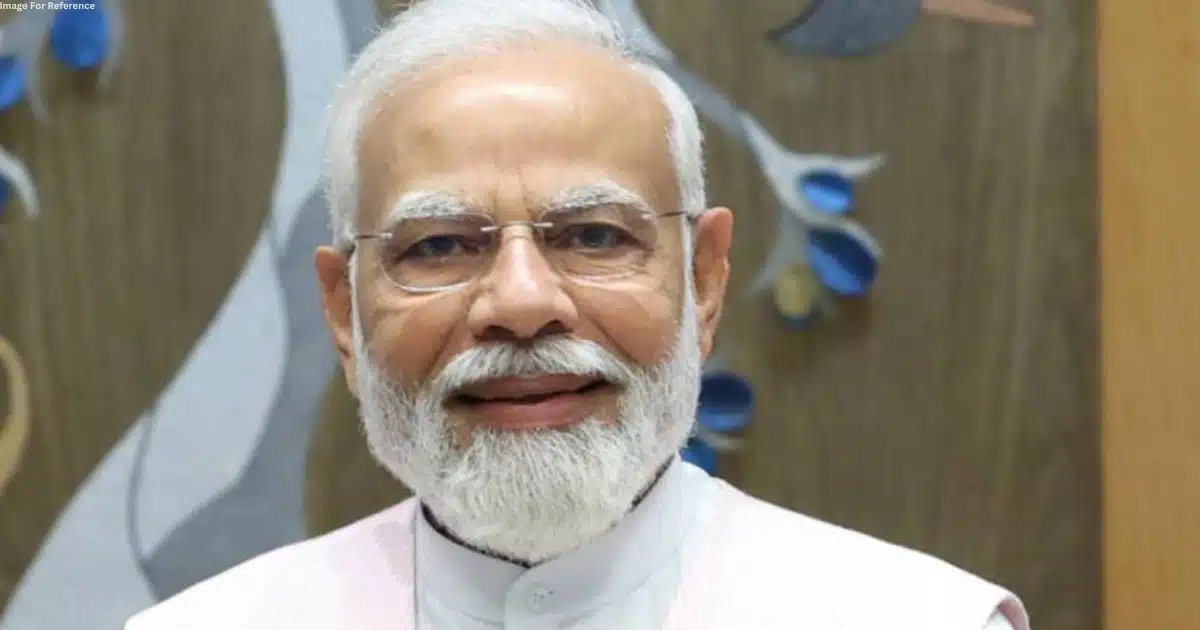
Modi ‘wants’ normal ties with Pakistan

However, he reiterated India’s oft-repeated position on the issue, saying the “onus is on Islamabad to create a conducive environment free from terrorism and hostilities”.

Pakistan has rejected the Indian stance and earlier this month told India, “Let’s not get caught up in weaponising terrorism for diplomatic point-scoring”.

Mr Modi, while speaking to Japanese publication Nikkei Asia, also mentioned the India-China standoff in eastern Ladakh, saying “Peace and tranquility in the border areas are essential for normal bilateral ties with China”.

He noted that “normalising” the ties would benefit the wider region and the world.

Speaking on India’s economy, the prime minister noted that it has been one of the world’s fastest-growing economies and stressed that the country has moved from being the 10th-largest economy in 2014 to now being the fifth-largest globally.

He added that his government’s aim was to transform India into a developed nation within the next 25 years.

On the Russia-Ukraine conflict, Mr Modi told the publication that India’s position on the Ukraine conflict “is clear and unwavering”.

“India stands on the side of peace and will remain firmly there. We are committed to supporting those who face challenges in meeting their basic needs, especially in the face of rising costs of food, fuel, and fertilisers. We maintain communication with both Russia and Ukraine,” he said.

“Cooperation and collaboration should define our times, not conflict,” he stressed.

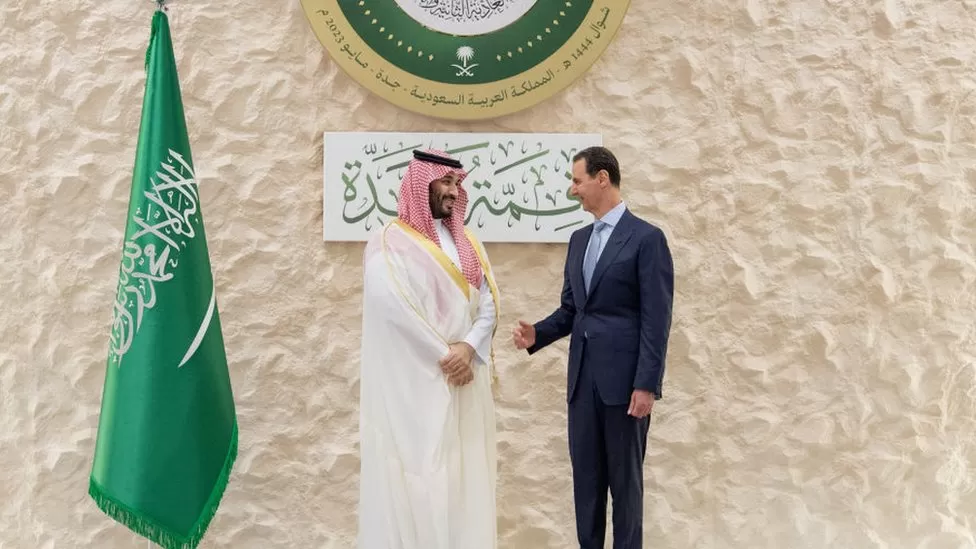
President Bashar al-Assad strode into the Arab League summit in Jeddah, relishing the clearest recognition yet that he has won his war for Syria.

He was embraced by the Saudi Crown Prince Mohammed bin Salman. A decade ago, the Saudis funded anti-Assad militias. Now the prince, known as MBS, wants to remake the Middle East, and he needs Syria onside.

In a speech, President Assad insisted that Syria would always belong to the Arab world. But other countries should not interfere with what happened inside its borders.

“It is important to leave internal affairs to the country’s people as they are best able to manage them,” he said.

By the people, President Assad meant the leader and his supporters. Between them, the princes and presidents at the summit have locked up many thousands of their opponents.

Events in Jeddah are being viewed with dismay by Syrians who blame the Assad regime for destroying their country, including all the Syrian refugees I have spoken to in Lebanon.

Lebanon, small and poor, has had to tolerate well over a million Syrians fleeing the war. That is the equivalent of a quarter of the Lebanese population – something like the UK accepting over 15 million refugees.

Now many Lebanese have had enough, making Syrians a convenient scapegoat for their own country’s chronic economic and political problems.

More than one million Syrians have fled to Lebanon, to escape 12 years of war in their home country

In the last few weeks, the army has deported around 1,500 of them back over the border at gunpoint, sometimes leaving children behind in Lebanon or forcing children out without their parents.

A refugee family speaking on condition that their identities were kept secret talked about life in a town near Beirut where a curfew has been imposed on Syrians.

The children have been thrown out of school. The turmoil in their lives is clear in their teenage daughter’s anguished artwork. Their father views the authoritarian Arab leaders embrace of Bashar al-Assad with contempt – and fear.

“The Assad regime is a dictatorship – the same as the other Arab regimes. They’re helping each other, cooperating against the people.”

In a refugee camp in Lebanon’s Bekaa Valley, Assad’s presence in Jeddah was another crushing blow. Nasser and Marwa, a couple who’ve been here since 2013, fear Assad’s return to the Arab League might be an excuse for more deportations.

Marwa said she woke up every morning thanking God she hadn’t been deported.

“Now we’re always afraid of the raids. I always imagine that they will come and take all the men and deport them.”

Nasser said he faced being drafted into the army if he went back. He escaped Syria to avoid fighting for the regime. He’s desperately worried about what would happen to his wife and their 18-month-old daughter Lillas if they are forced back.

Nasser, Lillas and Marwa live in fear of deportation back to Syria

Nasser was disgusted with the Arab League’s decision to readmit Assad’s Syria.

“After everything that he’s done, they’re hosting him. I don’t understand it, after all the killing and destruction, and the misery in Syria – it’s not acceptable.”

Syria, and the Assad regime, remain under US and European sanctions. Amnesty International, the human rights group, said that the president “turned Syria into a slaughterhouse”.

The UK government, Amnesty said, should “strenuously oppose any attempt to bolster Assad’s international standing”.

Some members of the Arab League agree. Qatar, which also funded the armed opposition in Syria, does not approve of Assad’s gradual return to Arab respectability.

But as well as the wider geopolitical plans of Saudi Arabia and the United Arab Emirates (UAE), who believe the Assad regime is a Middle Eastern reality and Syria a country they need to influence, there are other reasons for wanting to court Assad.

Jordan, as well as the Saudis, are fighting the spread of a narcotic drug called Captagon, which is made in Syria and smuggled into their countries. It is an amphetamine that was given to fighters to boost their endurance but is now widely used as a recreational drug.


The US and UK have imposed sanctions on named members of the Assad family who they say are heavily involved in the Captagon trade. Some estimates say the business is worth more than $50 billion (£40bn) a year.

Other Arab states are fighting the trade in Captagon, made in Syria and smuggled abroad

At the United Nations, which runs a huge relief operation in Syria and Lebanon, there is cautious hope Syria’s readmission to the Arab League might somehow become a circuit breaker that allows diplomatic progress.

Imran Riza, the UN’s deputy special coordinator for Lebanon, tried to find a positive.

“If what’s happening now in the region is going to help to get us to a political solution then it’s a good thing.”

But the UN does not support forced repatriation. It insists that Syrian refugees cannot return home until their country is safe and secure. That is a long way off.

President Bashar al-Assad broke his country to save his regime. There has been no justice for his victims.

But there is a lesson for ruthless, authoritarian leaders, not least his close ally, Russia’s President Vladimir Putin, whose decisive military intervention in 2015 helped the Assad regime to victory.

Wait out the storm and you can outlast your enemies.

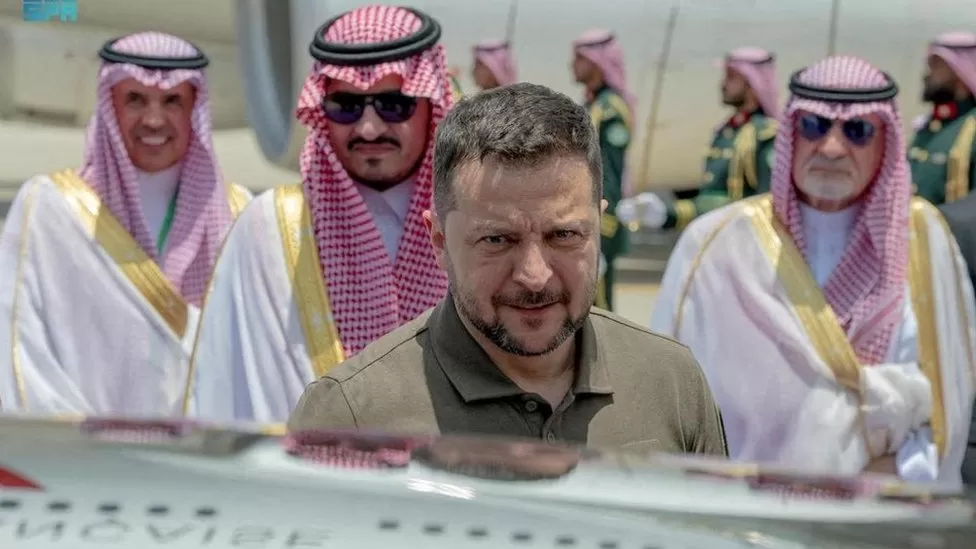
Volodymyr Zelensky has accused some Arab leaders of “turning a blind eye” to Russia’s invasion of Ukraine, ahead of his trip to the G7 in Japan.

The Ukrainian president made the comments while attending an Arab League summit in Saudi Arabia on Friday.

Of the Arab League nations, only Syria has openly supported Russia’s invasion. Others have sought to maintain good relations with Moscow.

But some states must reflect on their ties with Russia, Mr Zelensky said.

“Unfortunately, there are some in the world and here among you who turn a blind eye to those [prisoner of war] cages and illegal annexations,” said Mr Zelensky.

“I’m here so that everyone can take an honest look, no matter how hard the Russians try to influence, there must still be independence.”

Mr Zelensky also told the assembled leaders in Jeddah that his country was defending itself from colonisers and imperialists, appearing to invoke the Arab world’s own history of invasion and occupation.

Host nation Saudi Arabia has walked a delicate line on the conflict – on the one hand supporting a UN resolution calling for Russia to withdraw its troops and pledging $400m in humanitarian aid to Ukraine, while on the other hand resisting imposing sanctions on Russia, preferring to see itself as neutral on the conflict.

Saudi Crown Prince Mohammed bin Salman renewed his offer for Saudi Arabia to mediate between Moscow and Kyiv to end the fighting at the summit.

Syria meanwhile has only just been readmitted to the Arab League – its leader Bashar al-Assad told the summit there was an historic opportunity for the region to reshape itself without foreign interference.

Mr Zelensky also took aim at Iran, which is not a member of the Arab League, for supplying Shahed drones to Russia. Iran denies supplying drones for the conflict.

The Ukrainian leader will travel from Saudi Arabia to the G7 summit on Sunday, Japan confirmed on Saturday morning. Officials said he will take part in the summit’s leaders’ session and take part in a bilateral meeting with Japanese Prime Minister Fumio Kishida.

Earlier, Mr Zelensky’s office also told Ukrainian media that he would meet with US President Joe Biden “in the next few days” in Japan.

The summit kicked off on Friday with a renewed condemnation of Russia and an announcement of further sanctions.

The group of seven nations, made up of the US, UK, France, Italy, Germany, Canada and Japan, represent the world’s richest democracies. This year, eight other countries including Australia and India have also been invited.

G7 leaders slapped more sanctions on Russia on the summit’s opening day

The trip to Japan will be the furthest Mr Zelensky has travelled from Kyiv since the war began in February 2022.

In the past few days Mr Zelensky has visited Italy, Germany, France and the UK, where he nailed down promises of military support. He also continues to push allies to provide advanced fighter jets to Ukraine, but so far no country has committed to directly providing them.

Once he reaches Hiroshima he will probably try to persuade more cautious leaders to provide aid, such as Mr Kishida and Indian leader Narendra Modi.

“By showing up in person, it is a chance for him to ensure he does not come away empty-handed, and that he will head back to Kyiv his arms full with the weapons deals that he wants”, including a promise of lethal weapons from Japan, said John Kirton, director of the G7 Research Group think tank.

Though Japan has been hugely sympathetic to Ukraine, its strict military laws have meant that so far it has only given non-lethal defence equipment.


Earlier on Friday, G7 leaders were welcomed by Mr Kishida at the Hiroshima Peace Memorial Park where they laid wreaths to honour those who died in the US atomic bombing which hastened the end of World War Two.

The summit’s first day ended with a statement in which member countries pledged “new steps” to stop the war in Ukraine and promised further sanctions to “increase the costs to Russia and those who are supporting its war effort”.

They said they would “starve Russia of G7 technology, industrial equipment and services that support its war machine” and limit Russia’s revenue from energy and diamond sales.

Separately, British PM Rishi Sunak told the BBC the UK would sanction the Russian diamond industry, and would target more people and companies connected to Russian President Vladimir Putin.

In response to what it termed “anti-Russian” US sanctions, the Russian foreign ministry announced its own set of sanctions on 500 US citizens, including former US President Barack Obama.

The G7 summit, which ends on Sunday, is expected to end with a communique on the war in Ukraine.

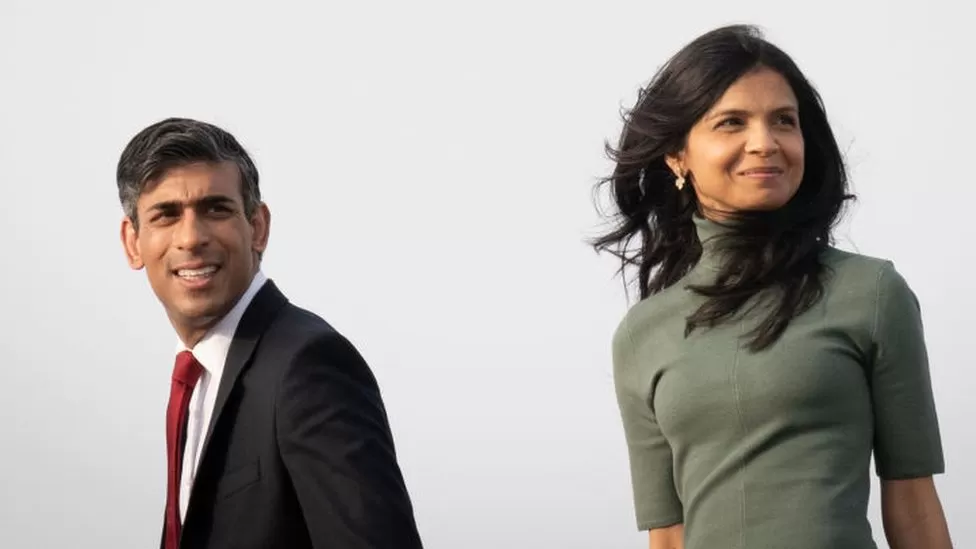
Prime Minister Rishi Sunak has said personal attacks from Labour on him and his family “don’t bother me”.

Mr Sunak told reporters the public were more interested in whether the government was improving their lives.

Labour’s attacks on the PM have become increasingly personal in recent weeks, with the party accusing him of being out of touch because of his wealth.

It has also criticised Mr Sunak’s wife, Akshata Murty, for previously benefitting from non-dom tax status.

Asked by journalists during his visit to Japan for the G7 summit whether comments about his wealth and upbringing were fair game, Mr Sunak said: “These things generally don’t worry me.

“I don’t think most people sitting at home actually are much bothered about these things either. What they care about is what am I doing for them to make their lives better.”

He added: “I think we’ve moved beyond judging people by what’s in their bank account. I think they’re interested in whether I’m going to deliver for them and their families.”

Asked whether it was hurtful when Labour leader Sir Keir Starmer talked about his family, Mr Sunak said: “These things don’t bother me.”


In recent sessions of Prime Minister’s Questions, Sir Keir has accused the prime minister of being “clueless about life outside his bubble”.

In the run-up to the local elections in England earlier this month, Labour also put out a number of adverts on Twitter attacking Mr Sunak personally.

The most controversial claimed the prime minister did not think adults convicted of child sexual assaults should go to prison.

Sir Keir defended the advert, saying it highlighted the government’s failures on crime, but there was uneasiness about the move among some in Labour.

Another advert criticised Mr Sunak for raising taxes on working people, while his family benefitted from “a tax loophole” – a reference to his wife’s non-dom status.

Last year, it emerged that Mr Sunak’s wife had non-dom status, which allows people living in the UK to avoid paying UK tax on money made abroad.

At the time Mr Sunak, who was then chancellor, described criticism of his wife as “unpleasant smears”, arguing it was unfair to attack a private citizen.

He has also previously admitted he found it “very upsetting” when his wife faced criticism over shares she owned in a tech company operating in Russia.

CM Naqvi shares proof of political party’s involvement in May 9 attacks with ECP

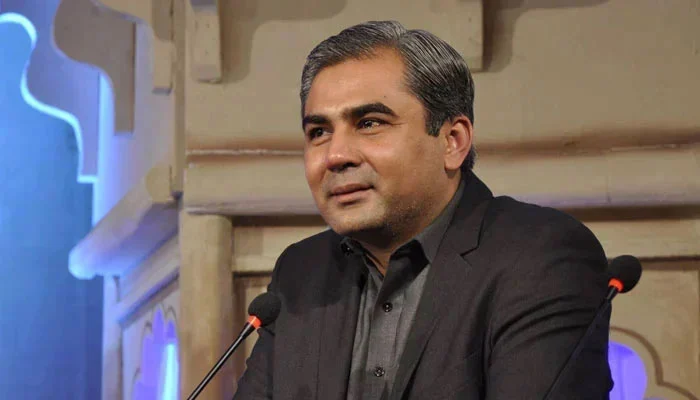
LAHORE: The interim government in Punjab shared solid proof including pictures, videos and messages about the involvement of a political party in the May 9 incidents with the Election Commission of Pakistan (ECP) members

They met Chief Minister Punjab Mohsin Naqvi at the CM Office on Thursday and strongly condemned the terrorist incidents, expressing complete solidarity with the Pakistan Army.

CM Mohsin Naqvi told the meeting, which was also attended by Chief Election Commissioner (CEC) Sikandar Sultan Raja, that a political party brought disgrace to the whole nation on May 9, adding that attacks on military installations were carried out under a planned strategy.

He added that the investigators were able to find proof of contact between the attackers and the political leadership at Zaman Park through geo-fencing.

The CM claimed that according to initial estimates, the country suffered Rs6 billion losses due to the May 9 attacks.

On the other hand, the CEC acknowledged that the Punjab government undertook excellent steps for the protection of the masses amid the current situation.

He said the ECP was fully satisfied with the provincial government, as it was performing its duties with honesty. The ECP wants to ensure a fair, just and peaceful general election in the country, he added.

“We are not affiliated with any political party and we have no political motives,” he reiterated.

Raja underscored that the ECP had always made decisions on merit, adding that the caretaker government was also impartial, and holding free and fair elections was also its mandate.

The CEC said the security steps for holding the general election would be reviewed again and the ECP would provide all possible assistance to the Punjab government for the elections.

He said the provincial authorities should not succumb to any pressure as the ECP was fully supporting it.

During the meeting, Inspector General of Punjab Police (IG) Dr Usman Anwar briefed the ECP officials about details of attacks at the Lahore corps commander’s house (Jinnah House) and other military installations on May 9.