

The Scottish government spent more than £250,000 on the Supreme Court case about holding another independence referendum, new figures show.

The Supreme Court ruled in November that the Scottish government cannot hold an independence referendum without the UK government’s consent.

Scottish government figures show £251,728.69 was spent on the court case.

The bulk of this outlay was on legal fees for the two-day hearing.

The Scottish government said the Supreme Court case had achieved its aim of bringing legal clarity on the issue of legal powers to hold a referendum.

But critics claim it was a waste of money.

Scottish Conservative constitution spokesman Donald Cameron said: “Taxpayers will be appalled that this significant sum of their money has been frittered away by the SNP.

“The fact legal experts said they were destined to lose makes it all the worse.

“It is a disgraceful waste of public money at a time when Scots are grappling with the cost-of-living crisis and our NHS is totally overwhelmed.”

Rallies were held in several towns and cities across Scotland on the day of the Supreme Court ruling

First Minister Nicola Sturgeon had set out plans to hold a referendum on 19 October next year.

The legal right to do this was tested by the Supreme Court and it ruled unanimously that she does not have the power to do so because the issue is reserved to Westminster.

The UK government has refused to grant formal consent for a referendum.

The bulk of the Scottish government’s costs in the case went on external counsel (£222,869.45).

Travel and subsistence for the case cost £19,711.25, while £8,049.99 was spent on “professional services”.

Filing fees for the Supreme Court were £350 and other costs for the court were £748.

During the Scottish budget last week, Deputy First Minister John Swinney announced £20m earmarked for a second referendum next year would instead go towards tackling fuel poverty.

A Scottish government spokeswoman said: “As the first minister has previously set out, there has long been debate over whether the Scottish Parliament has the powers to legislate to hold a referendum.

“The Lord Advocate’s reference of this question to the Supreme Court was intended to achieve legal clarity on this point, which it has done so.

“In light of majority support within the Scottish Parliament for an independence referendum, Scottish ministers remain ready to engage with the UK government at any point on delivering a referendum.”
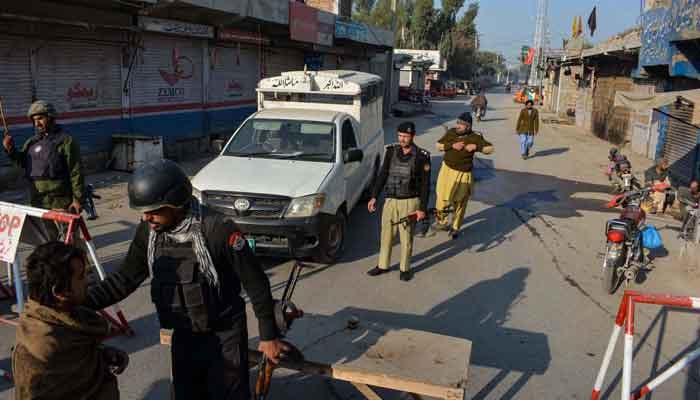
State will not surrender before any terror outfit, says PM after Bannu CTD operation

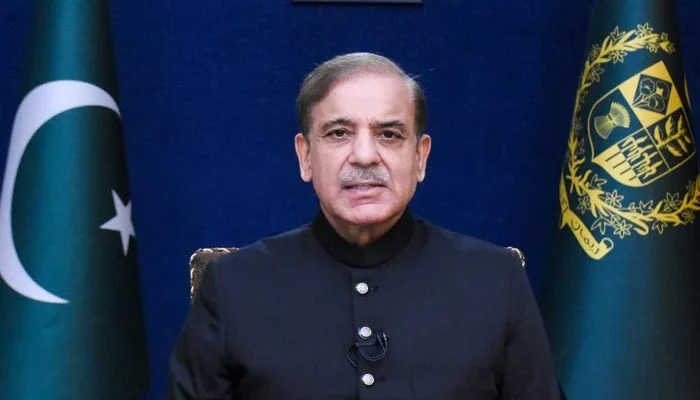
Prime Minister Shehbaz Sharif made it clear that the state will not surrender or bow down before any terrorist outfit or organisation after 25 terrorists were killed in an operation in Bannu.

A hostage crisis took place at the Counter-Terrorism Department’s (CTD) compound in Bannu, Khyber Pakhtunkhwa when TTP terrorists took over the center and made several security personnel hostages.

The security forces carried out a successful operation, killing 25 militants three days after the incident.

Condemning the terrorist incidents taking place in different parts of Khyber Pakhtunkhwa, PM Shehbaz said that nefarious attempts to spread chaos in Pakistan will be dealt with strictly according to the law and Constitution.

The government will deal and address the terrorists and their external facilitators who disseminate and support it in Pakistan, he added.

The prime minister termed terrorism as a sensitive issue of national security, saying that collective thinking and action plan are needed in this regard.

Paying tribute to the armed forces fighting against terrorism, PM Shehbaz said that nation will end terrorism by supporting its brave forces. He added that the sacrifices made by the armed forces and other law enforcement agencies will not be forgotten.

The premier said that the operations — Zarb-e-Azb and Radd-ul-Fasaad — were important measures to eradicate terrorism from Pakistan. He also said that the sacrifices of the martyrs will not go to waste.

PM Shehbaz said that the main responsibility of peace lies with the provinces, however, the government cannot turn blind eye to these issues.

He added that the federal government will work with the provinces to fight against terrorism.

The premier said that in order to end terrorism, it is important to increase the capacity and the efficiency of the provincial authorities and for that, the government will assist in improving the professional capacity of counter-terrorism departments in all provinces.

PM Shehbaz said that the Centre will also help the Khyber Pakhtunkhwa government with the restructuring of its CTD, adding that they will be provided with all the facilities including modern weapons.

25 terrorists killed in Bannu CTD operation: DG ISPR

ISLAMABAD: Inter-Services Public Relations (ISPR) Director General (DG) Major General Ahmed Sharif Chaudhry, while sharing details of the hostage operation on Tuesday, said that security forces stormed the Counter-Terrorism Department’s (CTD) compound in Bannu, killing 25 terrorists, arresting two and forcing seven to surrender.

A junior commissioned officer and two sepoys were martyred while 10 soldiers, including three officers, were injured in the action.

Speaking in Geo News programme Aapas Ki Baat, the military spokesperson said that on December 18, a detained terrorist overpowered the duty constable, snatched his weapon and freed 34 other terrorists, adding they grabbed more weapons from the armoury and started firing.

A CTD constable was martyred while another was injured and died at a hospital, he told the anchorperson.

Maj Gen Sharif said the terrorists took a junior commissioned officer hostage.

“Upon hearing the firing, security forces from Bannu Cantt promptly reached the complex and put the area under siege.”

The ISPR chief said that right after the terrorists occupied the complex on December 18, the security forces killed two of the terrorists and arrested three of them while two security personnel sustained injuries.

He said that while attempts were made over the next two days to convince the terrorists to surrender unconditionally, an effective siege foiled terrorists’ every bid to escape.

The terrorists had demanded safe passage to Afghanistan, but they were told it was out of the question, Maj Gen Sharif added.

He said that on their refusal to surrender, the security forces stormed the complex, killing 25 terrorists in a heavy exchange of fire.

Maj Gen Sharif said that besides three arrests, seven terrorists surrendered, and three sons of the nation — Subedar Major Khursheed Akram, Sepoy Saeed and Sepoy Babar — embraced martyrdom. Ten soldiers, including three officers, were injured.

The military spokesperson expressed the security forces’ resolve to wipe out terrorism, adding sacrifices by the brave martyrs further firm the resolve.

The situation remained tense in Bannu on the third day on Tuesday amid the operation to clear the CTD compound of the militants.

Maj Gen Sharif further said that the latest wave of terrorism from the western border will not be allowed to emerge. “Whoever comes against us will be crushed,” he warned.

While speaking on the policy related to the banned TTP, he said that no terrorist group will be allowed to flourish and writ of the state will be established at all costs.

US plans new Israel-Arab meeting, hopes for Netanyahu restraint

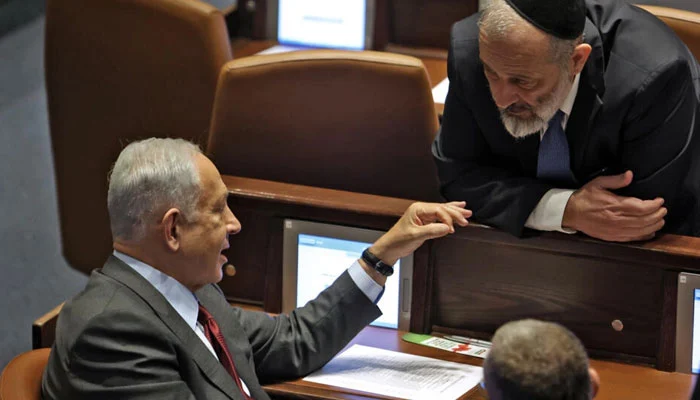
WASHINGTON: The United States plans a meeting early in 2023 between Israel and Arab nations that recognise it as it pushes the incoming right-wing government of Benjamin Netanyahu to show restraint, a US official said Tuesday.

Netanyahu is set to take office with the most right-wing government in Israel’s history including figures from the extreme fringes who staunchly back expanding settlements in Palestinian areas.

A senior US official said the United States plans a meeting “probably in the first quarter” of 2023 of foreign ministers from the so-called Negev summit in March.

The meeting, with Israel’s then centrist government, brought to the Israeli desert the foreign minister of Egypt, the first Arab state to make peace with Israel, and his counterparts from the United Arab Emirates, Bahrain and Morocco, which normalized relations in 2020 in the so-called Abraham accords.

The accords, also hailed by then US president Donald Trump as a signature achievement, are “near and dear to the heart of Prime Minister Netanyahu and so I imagine that he wants to continue to see that move forward,” the US official said on condition of anonymity.

“I think Israel has to factor that in,” the official said.

“Depending on some of the things that Israel does, that may make it harder or easier for these countries to actually engage and participate and move forward, nevermind bringing new countries into the process.”

The United Arab Emirates jumpstarted the Abraham accords in return for a promise by Netanyahu’s then government not to move ahead with annexation of the West Bank.

President Joe Biden’s administration has warned that it opposes annexation and the expansion of settlements and has backed the creation of a Palestinian state, while stopping short of any major diplomatic drive towards a goal seen as having little chance of success.

Thousands without power after quake rattles California

The earthquake struck at 2:34am local time and was about 10 miles (16.1 km) deep, the US Geological Survey (USGS) said. It struck about 7.4 miles (12 km) west-southwest of Ferndale, California, a Humboldt County town home to about 1,400 people and located 261 miles (420 km) north of San Francisco and just south of Eureka.

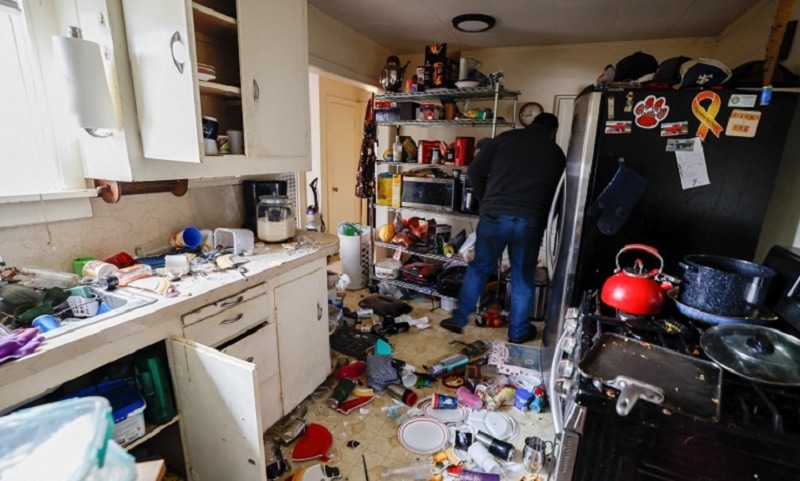
The earthquake caused numerous gas leaks, downed powerlines and at least one structure fire in Ferndale, local media reported.

Two people were injured in Humboldt County, where widespread damage to roads and homes was reported, the sheriff’s office said on its website. One of those injured was a juvenile with a head injury and the other an older person with a broken hip, according to local media citing the sheriff’s office. It is unclear if the earthquake caused any deaths.

“Be prepared for aftershocks. Check gas and water lines for damages or leaks. Exercise caution if traveling,” the office said on Twitter.

Police have closed the Ferndale bridge over the Eel River in and out of Ferndale because of four large cracks in the bridge and the roadway is at risk of sliding, the California Highway Patrol said.

Officials have closed at least four roads in Humboldt County because of large cracks, some with the smell of natural gas in the area from a possible gas line rupture, the highway patrol said. One road section was reportedly sinking, the patrol said. Highway 101 and Highway 299 remained open through Humboldt County, State Senator Mike McGuire said on Twitter.

J. B. Mathers, a Eureka, California, resident told CBS News his home “shook and shook and shook.” “Anything that was on the walls broke off the walls — fish tank and all,” Mathers also said. “It’s still pretty dark here. We can’t assess the damage.” The earthquake likely produced light to moderate damage, according to the USGS, which uses a seismometer to measure the time, location and magnitude of a tremor. An earthquake’s intensity depends on its distance from a fault, its direction and the local geology.—ReutersSAN FRANCISCO: A strong 6.4-magnitude earthquake that struck off the coast of northern California on Tuesday injured two people, damaged a bridge and several roads and left thousands of homes and businesses without power.

The earthquake struck at 2:34am local time and was about 10 miles (16.1 km) deep, the US Geological Survey (USGS) said. It struck about 7.4 miles (12 km) west-southwest of Ferndale, California, a Humboldt County town home to about 1,400 people and located 261 miles (420 km) north of San Francisco and just south of Eureka.

The earthquake caused numerous gas leaks, downed powerlines and at least one structure fire in Ferndale, local media reported.

Two people were injured in Humboldt County, where widespread damage to roads and homes was reported, the sheriff’s office said on its website. One of those injured was a juvenile with a head injury and the other an older person with a broken hip, according to local media citing the sheriff’s office. It is unclear if the earthquake caused any deaths.

“Be prepared for aftershocks. Check gas and water lines for damages or leaks. Exercise caution if traveling,” the office said on Twitter.

Police have closed the Ferndale bridge over the Eel River in and out of Ferndale because of four large cracks in the bridge and the roadway is at risk of sliding, the California Highway Patrol said.

Officials have closed at least four roads in Humboldt County because of large cracks, some with the smell of natural gas in the area from a possible gas line rupture, the highway patrol said. One road section was reportedly sinking, the patrol said. Highway 101 and Highway 299 remained open through Humboldt County, State Senator Mike McGuire said on Twitter.

J. B. Mathers, a Eureka, California, resident told CBS News his home “shook and shook and shook.” “Anything that was on the walls broke off the walls — fish tank and all,” Mathers also said. “It’s still pretty dark here. We can’t assess the damage.” The earthquake likely produced light to moderate damage, according to the USGS, which uses a seismometer to measure the time, location and magnitude of a tremor. An earthquake’s intensity depends on its distance from a fault, its direction and the local geology.

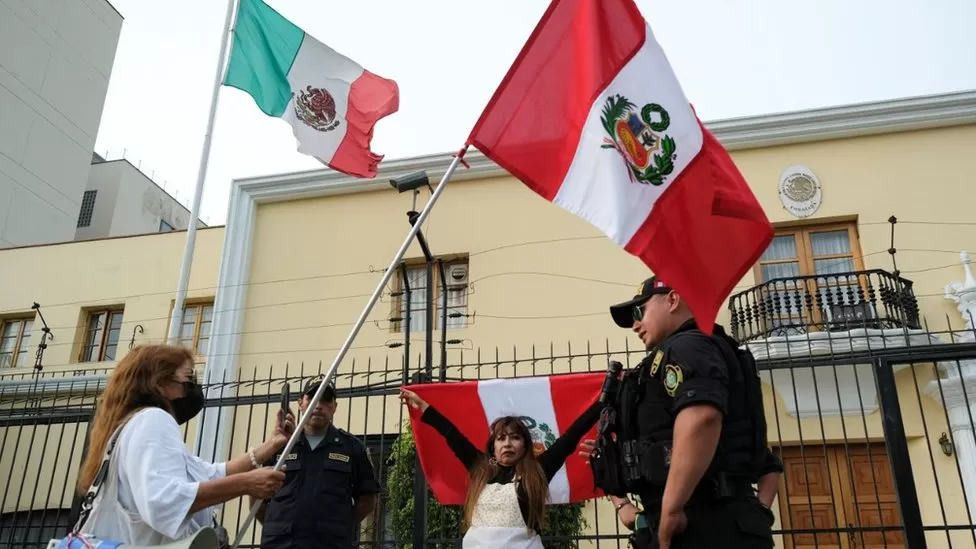
Peru has ordered the Mexican ambassador to leave within 72 hours after Mexico granted asylum to the family of ousted Peruvian President Pedro Castillo.

Mr Castillo was removed from office earlier this month after he tried to dissolve Congress.

He is being investigated in Peru on charges of rebellion and conspiracy.

But Mexico has been supportive of the ousted president, and said early on that it was considering granting him asylum.

Mexican President Andrés Manuel López Obrador has called the removal of Mr Castillo undemocratic.

Mexican Foreign Minister Marcelo Ebrard said on Tuesday the government was negotiating safe passage for the family of Mr Castillo, who were inside Mexico’s embassy in the Peruvian capital Lima.

His Peruvian counterpart, Ana Cecilia Gervasi, said safe passage had been granted.

But Mexico’s decision to grant asylum caused further anger in Peru, and Mexican Ambassador Pablo Monroy has now been declared “persona non grata” by the government.

Peru’s foreign ministry said in its social media accounts that it was expelling Mr Monroy because “of the repeated statements by that country’s highest authorities about the political situation in Peru”.

Peruvian opposition legislator Maria del Carmen Alva accused Mexico of “sheltering the corrupt”.


Mr Castillo, who is in custody in Peru, was removed from office after he tried to dissolve Congress.

Facing an impeachment vote, Mr Castillo had announced he was dissolving the opposition-controlled legislative body.

But Congress defied him, voted overwhelmingly to remove him from office, and his bodyguards stopped him from seeking refuge at the Mexican embassy in Lima.

Just hours later, Congress swore in his vice-president, 60-year-old Dina Boluarte, as the new president.

She has been pushing for early elections, and they edged closer on Tuesday as lawmakers voted in favour of the proposals.

This would bring elections forward to April 2024, two years ahead of elections currently scheduled for 2026.

There have been violent protests in which demonstrators have called for fresh general elections. Supporters of Mr Castillo have also taken to the streets to demand his release.

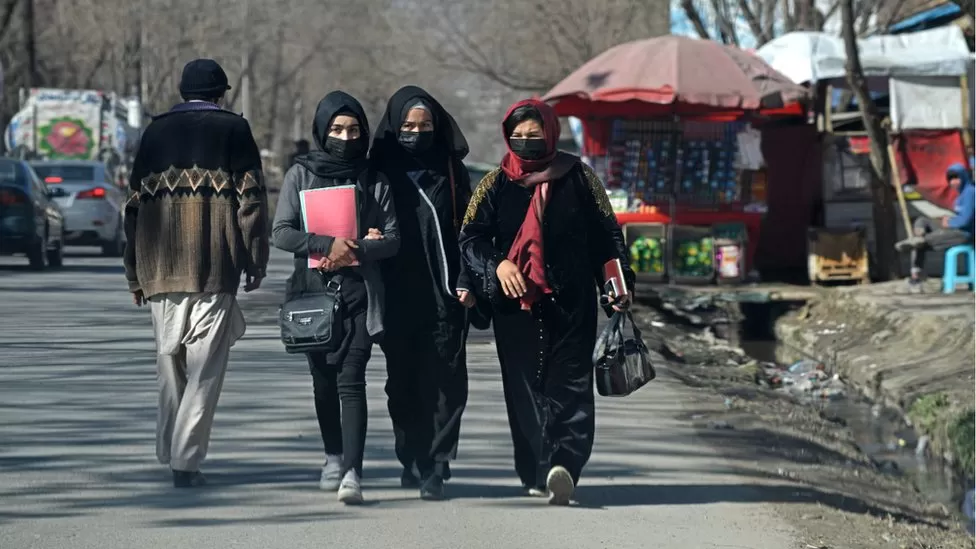
The Taliban have banned women from universities in Afghanistan, sparking international condemnation and despair among young people in the country.

The higher education minister announced the regression on Tuesday, saying it would take immediate effect.

The ban further restricts women’s education – girls have already been excluded from secondary schools since the Taliban returned last year.

In Kabul, female students have told the BBC about their anguish.

“They destroyed the only bridge that could connect me with my future,” one Kabul University student said.

“How can I react? I believed that I could study and change my future or bring the light to my life but they destroyed it.”

Another student told the BBC she was a woman who had “lost everything”.

She had been studying Sharia Islamic law and argued the Taliban’s order contradicted “the rights that Islam and Allah have given us”.

“They have to go to other Islamic countries and see that their actions are not Islamic.” she told the BBC.

The United Nations and several countries have condemned the order, which takes Afghanistan back to the Taliban’s first period of rule when girls could not receive formal education.

The UN’s Special Rapporteur to Afghanistan said it was “a new low further violating the right to equal education and deepens the erasure of women from Afghan society.”

The US said such a move would “come with consequences for the Taliban”.

“The Taliban cannot expect to be a legitimate member of the international community until they respect the rights of all in Afghanistan,” said Secretary of State Antony Blinken in a statement.

“No country can thrive when half of its population is held back.”


Western countries have demanded all year that the Taliban improve female education if they wish to be formally recognised as Afghanistan’s government.

However in neighbouring Pakistan, the foreign minister said while he was “disappointed” by the Taliban’s decision, he still advocated engagement.

“I still think the easiest path to our goal – despite having a lot of setbacks when it comes to women’s education and other things – is through Kabul and through the interim government,” said Bilawal Bhutto Zardari.

‘The last thing they could do’

The Taliban had promised a softer rule after seizing power last year following the US’ withdrawal from the country. However the hardline Islamists have continued to roll back women’s rights and freedoms in the country.

The Taliban’s leader Hibatullah Akhundzada and his inner circle have been against modern education – particularly for girls and women.

There has been opposition to this stance from more moderate officials, and analysts say this issue has been a point of factional division all year.

Yet on Tuesday, the education ministry said its scholars had evaluated the university curriculum and environment, and attendance for girls would be suspended “until a suitable environment” was provided.

It added that it would soon provide such a setting and “citizens should not be worried”.

However in March, the Taliban had promised to re-open some high schools for girls but then cancelled the move on the day they were due to return.

The crackdown also follows a wave of new restrictions on women in recent months. In November, women were banned from parks, gyms and public baths in the capital.

A university lecturer and Afghan activist in the US said the Taliban had completed their isolation of women by suspending university for them.

“This was the last thing the Taliban could do. Afghanistan is not a country for women but instead a cage for women,” Humaira Qaderi told the BBC.

The Taliban had just three months ago allowed thousands of girls and women to sit university entrance exams in most provinces across the country.

But there were restrictions on the subjects they could apply for, with engineering, economics, veterinary science and agriculture blocked and journalism severely restricted.

Prior to Tuesday’s announcement, universities had already been operating under discriminatory rules for women since the Taliban takeover in 2021.

There were gender segregated entrances and classrooms, and female students could only be taught by women professors or old men.

However, women were still getting education. Unesco noted on Tuesday that from 2001 and 2018 – the period between Taliban rule – the rate of female attendance in higher education had increased 20 times.

Several women have told the BBC they gave up after the Taliban regained rule because of “too many difficulties”.

2px presentational grey line

Issue splits Taliban

Analysis by Yogita Limaye, BBC South Asia correspondent

There has been speculation for over a month now that the Taliban government would ban university education for women.

One female student predicted it a few weeks ago. “One day we will wake up and they will say girls are banned from universities,” she had said.

And so, while many Afghans might have expected that sooner or later this decision would be taken, it still comes as a shock.

Last month women were barred from parks, gyms and swimming pools. In March this year, the Taliban government did not deliver on its commitment to open secondary schools for girls.

From conversations with Taliban leaders over the past year, it is evident that there is disagreement within the Taliban on the issue of girls’ education.

Off the record, some Taliban members have repeatedly said they are hopeful and working to try and ensure girls get an education.

Girls were allowed to sit for graduation exams for secondary schools two weeks ago, in 31 of Afghanistan’s 34 provinces, even though they haven’t been allowed to be in school for more than a year.

That provided a glimmer of hope, which has now been extinguished.

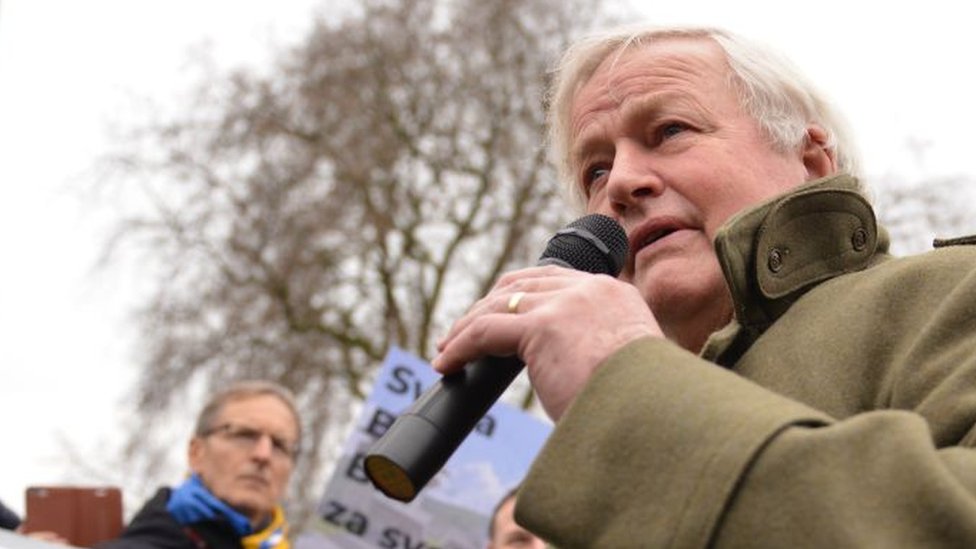
Police are investigating an allegation of racial abuse after Tory MP Bob Stewart told a human rights activist to “go back to Bahrain”.

Scotland Yard said they had opened the case following a complaint from Sayed Ahmed Alwadaei, who had a confrontation with the MP in central London.

The Beckenham MP also told the campaigner to “get stuffed”.

Mr Stewart said he regretted the comments but insisted he was “not being racist in any way”.

Mr Alwadaei, the director of advocacy at the Bahrain Institute for Rights and Democracy, challenged Mr Stewart on his connections with Bahrain outside an event to mark the National Day of Bahrain last Wednesday.

Footage of the incident outside the Foreign Office’s Lancaster House shows Mr Stewart responding: “Bahrain’s a great place. End of.”

He later added: “Go away, I hate you. You make a lot of fuss. Go back to Bahrain.”


After being repeatedly asked if he had accepted any money from the Bahraini government, Mr Stewart said: “You’re taking money off my country, go away!”

Mr Stewart, a former Army officer who was stationed in Bahrain in the 1960s, later expressed contrition for his original remarks.

“The protesters persistently taunted me by saying I had taken money from Bahrain,” he said.

“That deeply offended me. I certainly have not and told them so repeatedly.

“I admit I fell for the taunts and should not have responded which I regret. My comments were meant to tell them they could protest safely in Bahrain… Bahrain gets a very unfair press and I feel that strongly.

“I am sorry if anyone thought I was being racist in any way. Honestly I was not. I wish now I had not been drawn by the taunts (a mistake) but I was and I repeat, I apologise for that. The last thing I meant to be was racist as I have so many good Bahraini friends.”

Mr Alwadaei fled Bahrain in 2011 after being arrested for taking part in anti-government protests and was able to claim political asylum in the UK in 2012.

Speaking following the incident with Mr Stewart. Mr Alwadaei said: “I still have the scars from where the authorities kicked me in the head, and if I went back to Bahrain I would face further torture and imprisonment. My family members are still suffering from reprisals.”

He added: “I don’t believe I would have been told to ‘go back’ to the country that violently tortured me if it weren’t for the colour of my skin. No-one should be subjected to racial abuse.”

Mr Alwadaei said he had also complained to the parliamentary commissioner for standards, Kathryn Stone and the Conservative party chairman Nadhim Zahawi.

A Conservative Party spokesman said: “We have an established code of conduct and formal processes where complaints can be made in confidence. This process is rightly confidential.”

Nawaz Sharif urges govt to plan low-cost electricity for poor

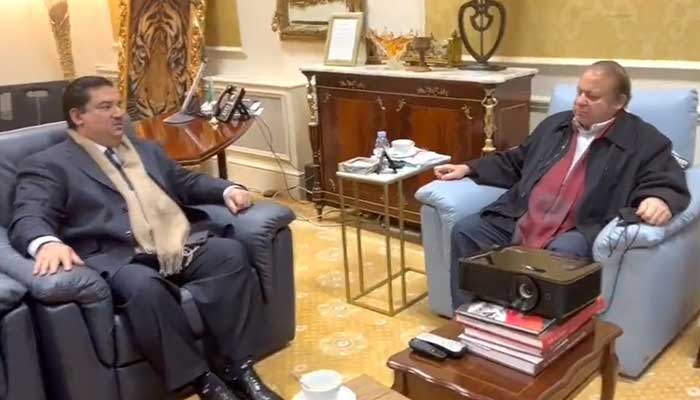
Pakistan Muslim League-Nawaz (PML-N) supremo Nawaz Sharif on Monday directed to devise a low-cost electricity consumption plan for utilisation of up to 300 units, Minister for Energy Khurram Dastgir said speaking with journalists in London, United Kingdom.

The federal minister, after his meeting with the three-time prime minister, said that the purpose of such a plan is the provision of relief to the poor people.

The PML-N supremo also received a briefing about renewable energy projects while the country’s overall political situation also came under discussion, Dastgir added.

“We request Nawaz Sharif to come to Pakistan soon, and bring the country on the highway of development,” the minister said.

Commenting on the possibility of assembly dissolution in Punjab during his conversation with journalists, Dastgir said that it is most likely that the Punjab assembly will survive.

Earlier today, Prime Minister Shehbaz Sharif also directed relevant officials not to impose any additional burden on gas and electricity consumers.

FCA for KE consumers

Earlier this month, the National Electric Power Regulatory Authority (NEPRA) approved reduction of Rs2.45 per unit for K-Electric (KE) consumers on account of fuel cost adjustment (FCA) for electricity consumed in October, changes of which will reflect in December’s bills.

In its notification for adjustment in electricity rates of KE, NEPRA said the negative FCA — a system by which the price of electricity is adjusted as fuel prices fluctuate — would be applicable to all consumer categories except:

  • Lifeline consumers
  • Domestic consumers using up to 300 units
  • Agriculture consumers
  • Electric vehicle charging stations

FM Bilawal defends remarks against Modi, terms it a ‘historical fact’

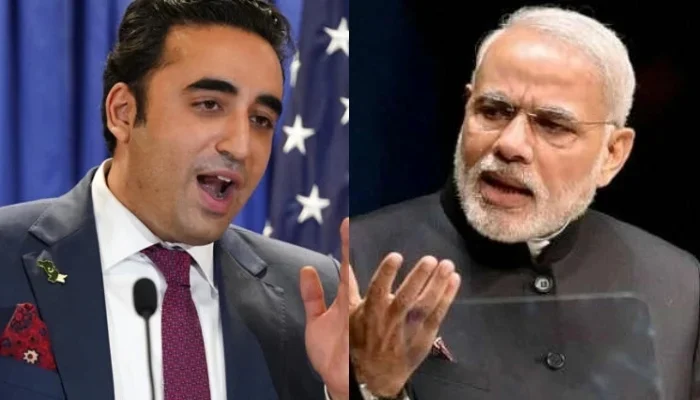
WASHINGTON DC: Foreign Minister Bilawal Bhutto-Zardari, in an interview to a US channel, defended his remarks against Indian Prime Minister Narendra Modi, saying he has only stated a historic reality.

Foreign Minister Bilawal reached Washington DC on Tuesday, where he met with members of the US Congress to discuss Pak-US relations.

In an interview with a US TV channel Bloomberg, the foreign minister said that Pakistan needs the international community’s support to overcome challenges posed by unprecedented floods. He added that the Russia-Ukraine conflict has also affected the region’s economic situation.

The minister, when questioned about his recent remarks about the Indian PM, defended his stance and said that he has only repeated a proven historic fact. He added that not him but the people of Gujrat invented the term of “the butcher of Gujrat” for Modi.

He said that Indian Muslims, especially in Gujrat, face violence under the Modi government. He added that he had heard that BJP had put money on his head.


In a press talk on December 16, the foreign minister Bilawal said that Osama Bin Laden had died, but the butcher of Gujarat — Narendra Modi — is still alive and has become the prime minister of India.

Indian media had reported that BJP leader Manupal Hansal had announced bounty of Indian rupees 20 million on Bilawal’s head following the comment.


He said that the global community would have to ensure food safety amid war and global recession. He added that they had just agreed to IMF’s strict terms just before the flooding started now they are finding themselves in an incredibly difficult position. The Pakistan government is struggling to provide imminent relief to flood-affected people while fulfilling the terms of the IMF.

On a question about early elections in Pakistan, the foreign minister said that they are not in the country’s favor. “Imran Khan is damaging the country with his pointless ‘tantrum’ just because he is not the prime minister anymore,” he said.

Pakistan’s top diplomat added that in a time when one-third of the country is affected by floods, they should not be thinking about elections.

In Washington, the foreign minister also attended an honourary dinner arranged at the residence of Pakistan’s Ambassador to the US. The minister met with leaders of the Pakistani-American community and appreciated their support in the development of the country.

The foreign minister is expected to address a local think tank today.