
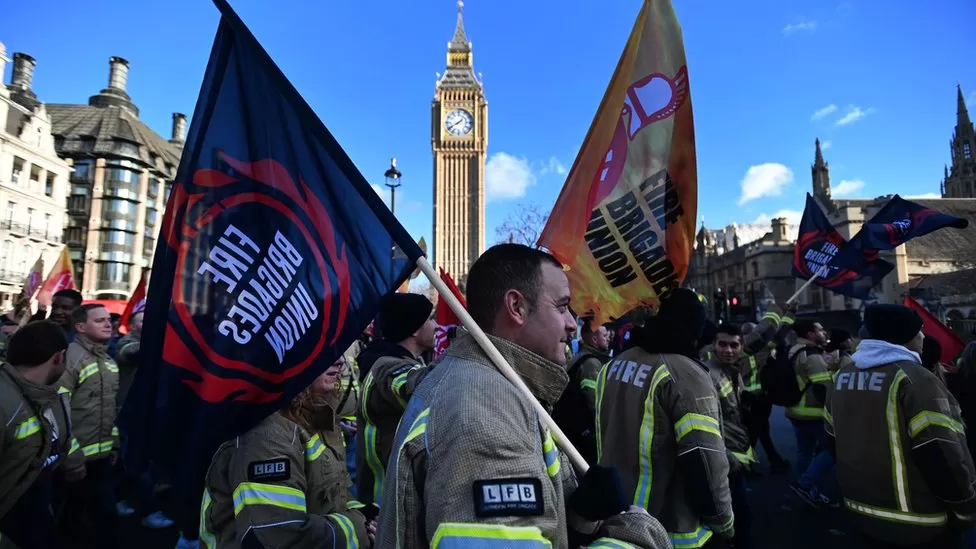
The government is exploring the idea of significantly restricting or even banning the right of ambulance workers and firefighters to go on strike.

A number of government departments are working up a range of options to toughen up new legislation designed to reduce the impact of industrial action.

I am told the prime minister hasn’t made any decisions yet on precisely what he wants to do.

He wants to bring forward planned new laws as quickly as possible.

The timeframe for doing so is expected soon, but no specific timetable is being committed to publicly yet.

Introducing new legislation isn’t likely to be feasible before January and it wouldn’t reduce the impact of industrial action due to happen imminently.

Ministers are thinking of extending existing plans to introduce what are known as Minimum Service Level Agreements to public transport to other sectors, including the emergency services.

These would allow strikes to happen, but impose a legal floor on how limited the resulting service on a strike day would be.

Nurses, paramedics and rail staff are among those set to strike this winter.

The latest strikes to be announced are by Border Force staff at several airports, who are walking out over Christmas in a row over pay, jobs and conditions.


Officials at the Department of Health are expected to meet trades unions as soon as Thursday to discuss broadening the range of emergencies they would be willing to respond to while a strike was under way.

As things stand, they would attend life-threatening emergencies but not others.

If there wasn’t a willingness from the unions to volunteer to broaden the list of what are known as “derogations” or exceptions during a strike, there is a growing appetite within government to legislate to do this.

Senior ministers met on Wednesday, I understand, to discuss the options on the table.

Government figures insist they want to be “reasonable,” as they put it, in dealing with the waves of strike action being announced, but if trades unions behave in what they see as an “unreasonable” way, they have a duty to respond.

Rishi Sunak has told the BBC: “It is my responsibility to make sure everyone can be kept safe and we can minimise the disruption on their day-to-day lives, and I will do what I need to do to make sure that is the case.”

He added that he had to ensure “people can go about their day-to-day lives free of the enormous disruption these strikes are going to cause.”

Sharon Graham, general secretary of the trade union Unite, has said if the government “put more hurdles in our way, then we will jump over them. We are ready industrially and financially. I will continue to fight and win for workers.”
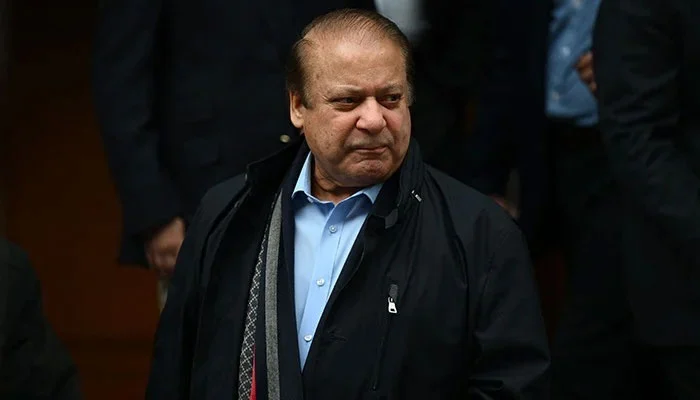
PML-N supremo Nawaz Sharif will return to Pakistan next month: Ayaz Sadiq

Pakistan Muslim League-Nawaz (PML-N) senior leader and Economic Affairs Minister Sardar Ayaz Sadiq Tuesday claimed that the party supremo Nawaz Sharif would return to the homeland in January 2023.

The PML-N leader made the claim while speaking on Geo News programme “Capital Talk”. The PML-N supremo has been living in London in self-exile for the past almost four years.

Nawaz will allocate tickets to the candidates for the next general elections, the PML-N leader said, adding that the polls would be held in the country in 2023.

“It seems that the assemblies would be dissolved between March-June 2023,” he predicted.

The PML-N supremo had left for London in November 2019 following his illness as then prime minister Imran Khan had permitted him to go abroad for medical treatment.

In 2018, an accountability court sentenced Nawaz to seven years in prison in the Al-Azizia Steel Mills corruption reference, while he was also sentenced to a total of 11 years in prison and slapped an £8 million fine (Rs1.3 billion) in the Avenfield properties reference.

Subsequently, in 2019, the Lahore High Court (LHC) after suspending his sentence, allowed Nawaz to go abroad for medical treatment.

A timeline of Nawaz Sharif’s case

  • On the night between October 21 and 22, 2019, Nawaz Sharif’s condition deteriorated and he was shifted to a hospital.
  • On October 25, Nawaz Sharif was granted bail on medical grounds in the Chaudhry Sugar Mills case.
  • On October 26, Nawaz Sharif was granted interim bail on humanitarian grounds in the Al-Azizia reference.
  • On October 26, Nawaz Sharif suffered a mild heart attack, Punjab Health Minister Yasmeen Rashid confirmed the development.
  • On October 29, Nawaz Sharif’s sentence was suspended for two months on medical grounds in the Al-Azizia reference.
  • He was discharged from Nawaz Sharif Services Hospital and was shifted to Jati Umra.
  • On November 8, Shahbaz Sharif requested the Interior Ministry to remove Nawaz Sharif’s name from the Exit Control List (ECL).
  • On November 12, the federal cabinet gave Nawaz Sharif conditional permission to leave the country.
  • On November 14, the PML-N challenged the condition of indemnity bond in the Lahore High Court.
  • On November 16, the Lahore High Court allowed Nawaz Sharif to go abroad for medical treatment.
  • On November 19, 2019, Nawaz Sharif left for London for his treatment.

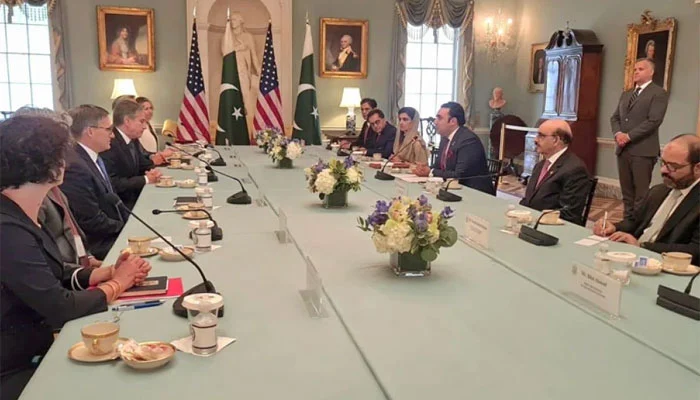
Pak-US to discuss trade, cooperation in Washington talks on Dec 19

ISLAMABAD: Pakistan and United States will hold delegation-level talks in Washington from December 19-21, as the authorities on both sides have agreed on a bilateral dialogue,

The Pakistani delegation will be led by Foreign Minister Bilawal Bhutto-Zardari, sources said.

Matters including economic cooperation, trade and other will be brought under discussion during the talks. The two sides will also discuss the national security, situation in Afghanistan and terrorism.

The sources said Bilawal will also visit New York where he will preside over a G77 programme.

He is also scheduled to tour Indonesia and Singapore for three days. In Indonesia, FM Bilawal will meet his counterpart Rento Marsudi. Bilawal Bhutto will discuss bilateral matters with Singapore President Halima Yacob and Foreign Minister Dr Vivian Balakrishnan during his visit.

The US is Pakistan’s largest bilateral trade partner and one of its largest sources of foreign direct investment, with US investment in Pakistan increasing more than 50% in the past year.

During his visit to Karachi last month, US Ambassador to Pakistan Donald Blome emphasised on strong Pak-US ties and the need to further strengthen the robust economic partnership and public health cooperation between the two countries.

Blome said that he is committed to boosting bilateral trade and investment between the two countries under the US-Pakistan Green Alliance that seeks to promote climate-smart agriculture and private sector-led growth in Pakistan.

Bilawal says US, Pakistan in talks to boost trade

FM Bilawal also advocated boosting bilateral trade between Pakistan and US, saying that the ties between the two countries were no longer hyphenated with Afghanistan and India as Washington and Islamabad were discussing ways to enhance trade and economic cooperation.

“Not only I am presently surprised but I am absolutely impressed by the new foreign policy approach of the US towards Pakistan,” said Bilawal while responding to a question related to Pakistan-US ties at the Wilson Centre in Washington, reported foreign media.

Bilawal said Pakistan and the US have for a long time seen each other through the prism of Afghanistan.

While responding to a question that some sections of the media were reporting that “US schooled Pakistan” on maintaining ties with India and China, Bilawal dismissed the reports, saying “he (Blinken) is an incredible human being and can never talk in such tone”.

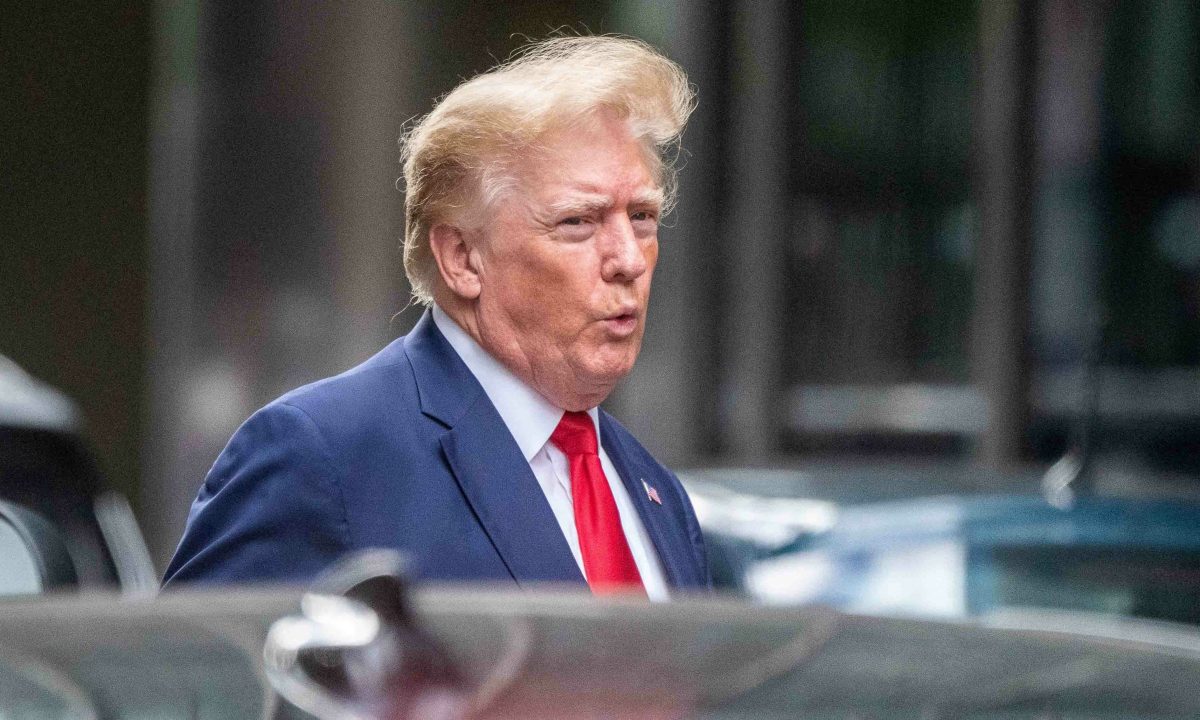
Trump’s company convicted of scheme to defraud tax authorities

The Trump Organisation, which operates hotels, golf courses, and other real estate around the world, faces fines over the conviction. The exact amount will be determined by the judge overseeing the trial in New York state court at a later date. The company pleaded not guilty. Trump himself was not charged in the case.

While the fine is not expected to be material for a company of the Trump Organization’s size, the conviction by a jury could complicate its ability to do business by spooking lenders and partners.

The case centred on charges that the company paid personal expenses like free rent and car leases for top executives, including former chief financial officer Allen Weisselberg, without reporting the income, and paid them bonuses as if they were independent contractors.

“The smorgasbord of benefits is designed to keep its top executives happy and loyal,” prosecutor Joshua Steinglass told jurors during his closing argument on Friday.

The Trump Organization separately faces a fraud lawsuit brought by New York state Attorney General Letitia James.

Trump himself is being investigated by the U.S. Department of Justice over his handling of sensitive government documents after he left office in January 2021 and attempts to overturn the November 2020 election, which he lost to Democrat Joe Biden.

Weisselberg, 75, testified as the government’s star witness as part of a plea deal with prosecutors that will allow him to spend no more than five months in jail.

The Trump Organization argued that Weisselberg carried out the scheme to benefit himself. He is on paid leave from the company and testified that he received more than $1 million in salary and bonus payments this year.

“The question here is not whether as a byproduct the company saved some money,” Susan Necheles, a defense lawyer, said in her closing argument on Thursday. “(Weisselberg’s) intent was to benefit himself, not the company.” Trump wrote on his Truth Social platform on Nov. 19. that his family got “no economic gain from the acts done by the executive.” Republican Trump, who on Nov. 15 announced his third campaign for the presidency, has called the probe a politically motivated “witch hunt.” Both Manhattan District Attorney Alvin Bragg and his predecessor who brought the charges, Cyrus Vance, are Democrats.

Weisselberg, who pleaded guilty in August to concealing $1.76 million in income from tax authorities, testified that Trump himself signed the Christmas bonus checks and personally paid hundreds of thousands of dollars in private school tuition for Weisselberg’s grandchildren.

He also said Trump’s two sons – who took over the company’s operations in 2017 after Trump became president – gave him a raise after they knew about his tax dodge scheme,

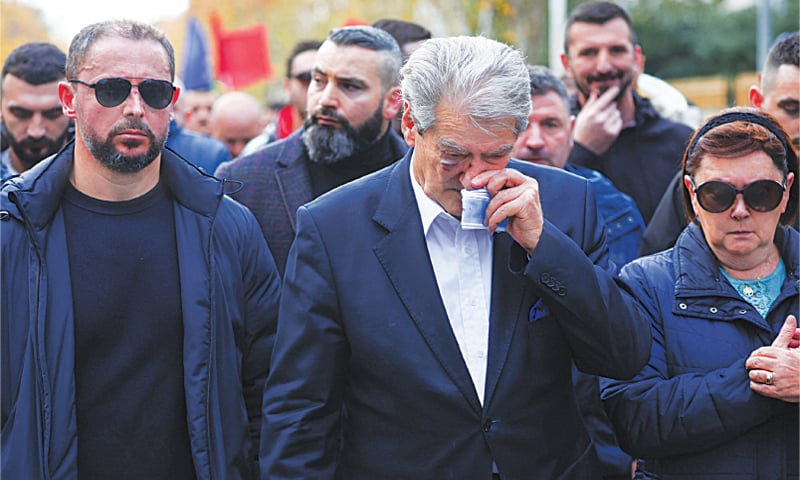
Ex-Albanian PM punched in face during anti-govt march

Thousands of opposition supporters gathered in the city on Tuesday as Albania hosts its first EU-Balkans summit, attended by leaders of European Union member states, to protest against the government of Prime Minister Edi Rama and demand early elections.

As Berisha, who leads the centre-right Democratic Party, walked in front of his supporters waving Albanian and EU flags, a man approached him and punched him in the face. Berisha had blood on his face but was later due to speak at the rally. The attacker was beaten by Berisha supporters and arrested by the police.


Berisha, a former president and prime minister, is banned from entering the United States over alleged corruption. He denies the charges.

EU seeks to reassure Western Balkans

A summit of European Union and Western Balkan leaders yielded few concrete steps on the region’s future in the wealthy EU but offered it hope for some progress next week, amid a better atmosphere in talks than previously.

European Council chief Charles Michel said he hoped there would be a “positive signal” at an EU summit on Dec 15-16 on Bosnia’s bid for EU candidacy status and German Chancellor Olaf Scholz said visa liberalisation for Kosovo was necessary. At a previous summit in June, Balkan leaders publicly and harshly criticised the EU for the lack of progress in accession talks amid disillusion that negotiations have not started or are stalled, years after they were promised eventual EU membership.

While reluctance to further enlarge the EU is still rife among the 27 member states, Russia’s invasion of Ukraine has led them to devote more energy to enhancing relations with the six Balkan countries of Albania, Bosnia, Kosovo, Montenegro, North Macedonia and Serbia.

Fears of spreading Russian and Chinese influence in the Western Balkans is also a key factor. Scholz spoke of a new mood in the EU regarding the region.

At the end of the summit in the Albanian capital Tirana, EU leaders reaffirmed their “full and unequivocal commitment to the EU membership perspective of the Western Balkans and call for the acceleration of the accession process”.

“We had our frustrations … but we never gave up on this faith in the EU,” said Albanian Prime Minister Edi Rama, the summit host who in June had said slowness in the EU accession process for the region was a “disgrace.” “The progress made in the last years, no doubt also because of the war (in Ukraine) as an accelerator, is immense,” Rama said, speaking in English.

Serbia and Kosovo

On the sidelines, the EU drafted a new proposal for normalisation of ties between Serbia and Kosovo, its former rebellious province, with a clear timeline of actions, a senior EU diplomat said.

In moves towards integration, telecoms operators within the EU agreed to cut data roaming charges in the Western Balkans from Oct 2023, and Brussels pledged 1 billion euro in grants for energy. Balkans leaders would like to see much more, however.

“Kosovo will be submitting its application for EU membership by the end of this year,” its president, Vjosa Osmani-Sadriu, said, adding that she hopes next week’s EU summit would approve visa liberalisation for her country.

Belgian Prime Minister Alexander De Croo hinted that the path to accession will still be long for the region. “We know that there is progress, we know that there is an ambition to make this progress work faster… But there is no shortcut.”

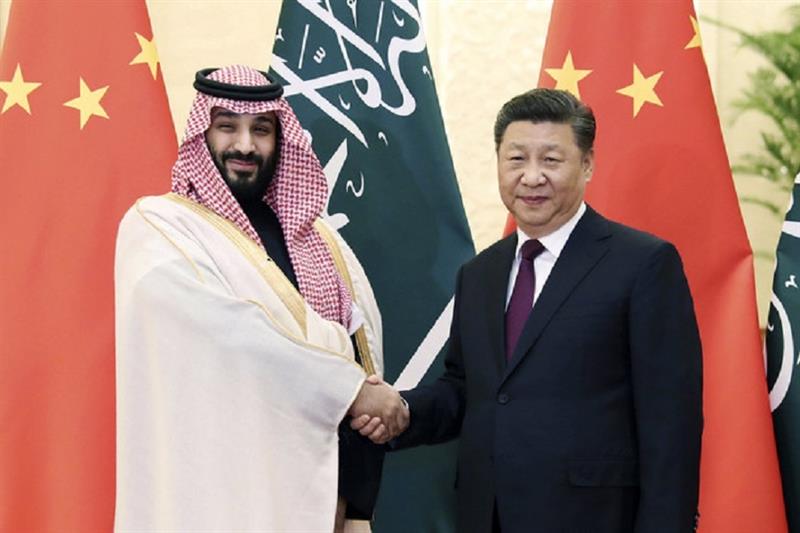
China’s Xi to visit Saudi Arabia from Wednesday

Xi, head of the world’s number-two economy, will also attend a summit with rulers from the six-member Gulf Cooperation Council and talks with leaders from elsewhere in the Middle East, strengthening China’s growing ties with the region.

The Chinese leader will arrive on Wednesday, the official Saudi Press Agency said, for only his third trip abroad since the coronavirus pandemic began and his first to Saudi Arabia since 2016.

His bilateral summit, chaired by King Salman and attended by Crown Prince Mohammed bin Salman, the kingdom’s de facto ruler, comes after Xi secured a historic third term in November.

Xi’s visit reflects “much deeper relations developed in recent years” between the two countries, said Ali Shihabi, a Saudi analyst close to the government.

“As the largest importer of Saudi oil, China is a critically important partner and military relations have been developing strongly,” he said, adding that he expected “a number of agreements to be signed”.

The visit also coincides with heightened tensions between Saudi Arabia and the United States over issues ranging from energy policy to regional security and human rights.

The latest blow to that decades-old partnership came in October when the OPEC+ oil bloc agreed to cut production by two million barrels a day, a move the White House said amounted to “aligning with Russia” on the war in Ukraine.

On Sunday, OPEC+ opted to keep those cuts in place.

Shihabi said the timing was “a coincidence and not directed at the US”.

In from the cold

Xi last visited Saudi Arabia in 2016, the year before Prince Mohammed became first in line to the throne, on a trip that also featured stops in Egypt and Saudi rival Iran.

Prince Mohammed visited China and met with Xi on an Asia tour in 2019, the year before the coronavirus pandemic took hold.

This week’s meeting will cap a year in which Saudi Arabia, and specifically Prince Mohammed, have come in from the cold following the fierce international outcry that erupted over the 2018 killing of Saudi journalist Jamal Khashoggi inside the kingdom’s Istanbul consulate.

This year, Prince Mohammed has already welcomed Britain’s then-prime minister Boris Johnson, French President Emmanuel Macron and US President Joe Biden, who greeted the crown prince with a fist bump in Jeddah, reversing a 2019 pledge to make Saudi Arabia “a pariah”.

China purchases roughly a quarter of Saudi oil exports.

The oil market was thrown into turmoil with Russia’s invasion of Ukraine in February.

The G7 and EU on Friday agreed a $60-per-barrel price cap on Russian oil in an attempt to deny the Kremlin revenues to keep up the war, stoking further uncertainty.

“Oil will probably be higher up the agenda than it was when Biden visited,” said Torbjorn Soltvedt of the risk intelligence firm Verisk Maplecroft.

“These are the two most important players in the oil market — Saudi on the supply side and then China on the demand side.”

Beyond energy, analysts say leaders from the two countries are expected to discuss potential deals that could see Chinese firms become more deeply involved in mega-projects that are central to Prince Mohammed’s vision of diversifying the Saudi economy away from oil.

Those projects include a futuristic $500 billion megacity known as NEOM and a so-called cognitive city that will depend heavily on facial recognition and surveillance technology.

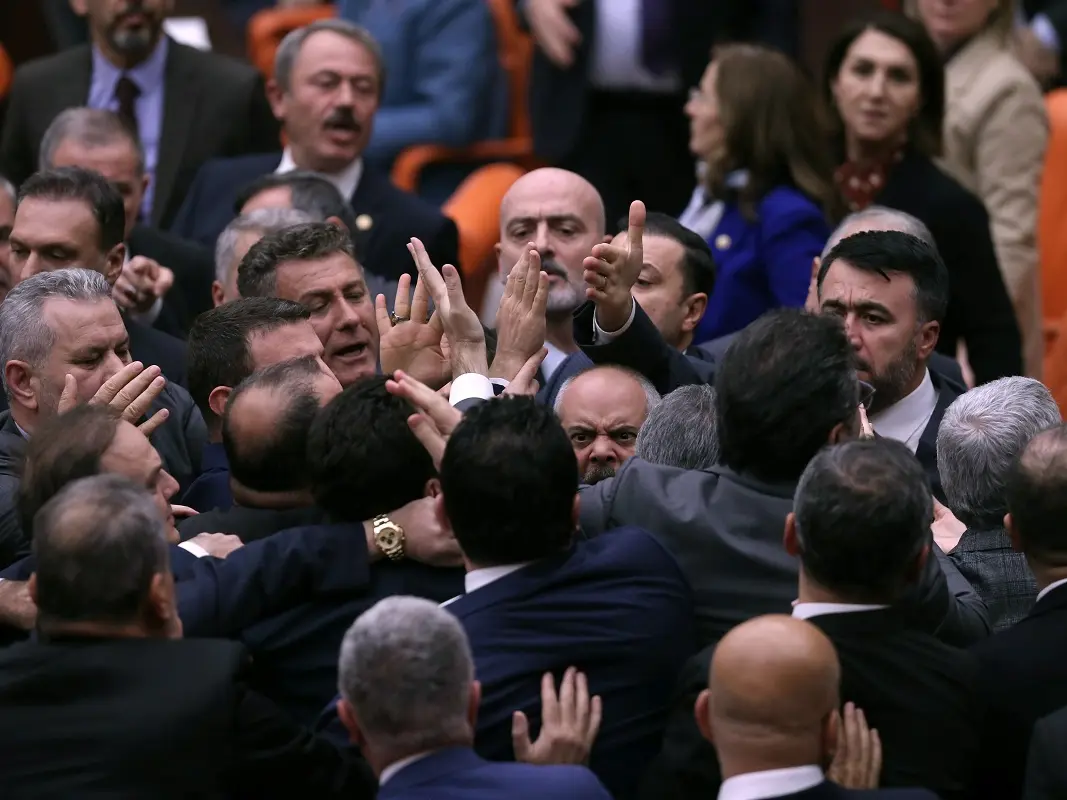
Turkish MP in intensive care after fight in parliament

Images released by the DHA news agency showed Iyi (Good) Party lawmaker Huseyin Ors, 58, being struck by ruling AKP parliamentarian Zafer Isik. Several other lawmakers fell to the ground during the brawl.


Fellow Iyi Party lawmaker Aylin Cesur, a doctor by training who administered first aid on the chamber’s floor, said Ors’s condition remained critical. “He is still being treated in intensive care,” DHA quoted Cesur as saying.

“I am very sad,” she said. “His general condition was not good after the blow to the head.”

Turkiye’s lively parliament has witnessed numerous fights during particularly sensitive debates. In 2020, a fistfight erupted during tense discussions over Turkiye’s military involvement in Syria.

This year’s budget debates come with lawmakers of all stripes trying to defend their interests six months before the next scheduled parliamentary and presidential polls.

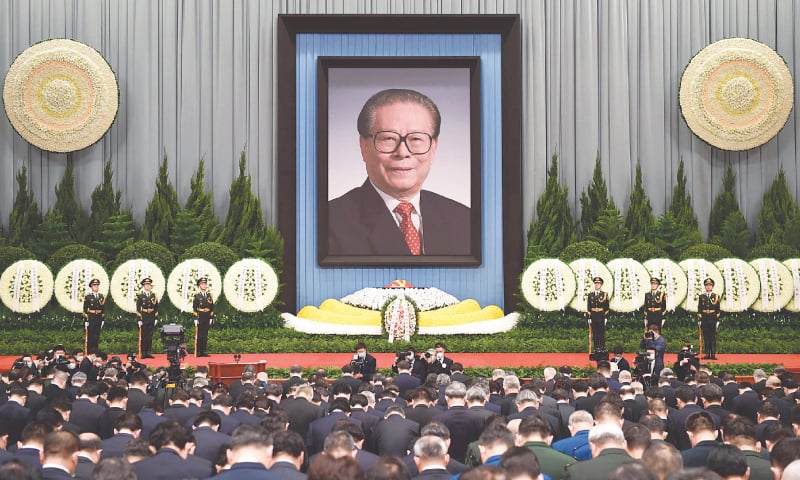
China comes to standstill for late leader Jiang’s memorial

Jiang, who died in Shanghai last Wednesday at the age of 96, oversaw a transformational era from the late 1980s into the new millennium.

He took power in the aftermath of the 1989 Tiananmen Square crackdown and led China towards its emergence as a powerhouse on the global stage.

A public memorial service began at 10am on Tuesday in Beijing’s Great Hall of the People and was broadcast live across the country. A nationwide “three-minute silence” was held, as sirens sounded. Flags across the country were at half-mast as well as at Chinese government buildings overseas.

Stock markets in Shanghai and Shenzhen were set to suspend trading for three minutes, as was the Chinese Gold and Silver Exchange in Hong Kong.

Hong Kong’s bourse suspended the display of data on external screens at its offices while senior executives observed the silence. Public entertainment is also suspended on Tuesday, with some online games such as the popular League of Legends announcing a day’s pause.

Jiang’s role in crushing the 1989 protests and repressing other political activism, as well as the flourishing of corruption and inequality during his tenure, means he leaves a mixed legacy.

Beijing’s state media has hailed Jiang as a great communist revolutionary, highlighting his part in quelling “serious political turmoil”. “Jiang Zemin was an outstanding leader enjoying high prestige,” read a Xinhua biography titled “Jiang Zemin’s great, glorious life”.

“During his revolutionary career of more than 70 years, he remained unswervingly firm in communist ideals, utterly loyal to the party and the people, and resolutely committed to the cause of the party and the people.” Jiang died of leukaemia and multiple organ failure after medical treatments failed, according to state media.

Democrats have cemented their control of the US Senate by winning a bitterly fought seat in Georgia, according to projections.

Raphael Warnock fended off Republican challenger Herschel Walker in a race that had been left undecided after last month’s midterm elections.

President Joe Biden’s party now holds the upper chamber of Congress by 51-49.

The result caps a disappointing round of midterm election results for the Republicans.

The party underperformed expectations last month by winning only a slender majority in the US House of Representatives, Congress’ lower chamber.

Mr Walker, an American football legend and political newcomer, joins a string of defeated candidates endorsed by former President Donald Trump, who is currently seeking the Republican White House nomination again in 2024.

Georgia’s contest had to be settled by a run-off vote because no candidate passed 50% of the vote in November, although Mr Warnock had led Mr Walker by 37,000 votes cast.

Mr Warnock – who became the first black senator in the Deep South state when he first won his seat in January 2021 – told his victory party at an Atlanta hotel ballroom: “It is my honour to utter the four most powerful words ever spoken in a democracy: the people have spoken!”

The 53-year-old southern Baptist preacher, whose Atlanta church was once led by civil rights leader Martin Luther King, gave a special thank you to his mother.

He said she had grown up in the 1950s “picking someone else’s cotton” in Georgia. Tonight, he said, she had “helped pick her youngest son to be a United States senator”.

Mr Walker did not explicitly concede as he took to the stage to address supporters at the College Football Hall of Fame in central Atlanta.

But he said: “There’s no excuses in life, and I’m not going to make any excuses now because we put up one heck of a fight.”

Mr Walker’s campaign was dogged by claims – which he denies – that he paid for two former girlfriends’ abortions, despite his calls for the procedure to be outlawed.

The 60-year-old also had to acknowledge during the campaign that he had fathered three children he had not mentioned publicly, after having long railed against absentee fathers.

Republicans, meanwhile, ran an attack ad reminding voters of an allegation by Mr Warnock’s ex-wife that he ran over her foot in a car during a March 2020 domestic dispute.

Herschel Walker is a longtime friend of Donald Trump

Voting numbers in Georgia on Tuesday alone reached 1.4 million, election official Gabriel Sterling said after polls closed, adding there had been “record turnout across the board”.

A record 1.9 million Georgians had already cast early or postal ballots.

Mr Warnock’s campaign enjoyed a big fundraising advantage, spending about $170m (£140m), compared with Mr Walker’s nearly $60m, according to federal filings.

Both President Biden, who has had low approval ratings, and Mr Trump largely avoided wading into the race.

Mr Walker’s Senate bid was the last Republican opportunity to flip a Senate seat after Trump-backed candidates lost in New Hampshire, Nevada, Arizona and Pennsylvania. Other Senate contenders Mr Trump championed won in Ohio, Wisconsin and North Carolina.

Tuesday night’s victory means that although most legislation will still need Republican support, it will be slightly easier for Mr Biden to appoint judges and members of his administration.

If Democrats had lost Georgia, the party’s control of a 50-50 Senate would have depended on US Vice-President Kamala Harris’ tiebreaking vote.

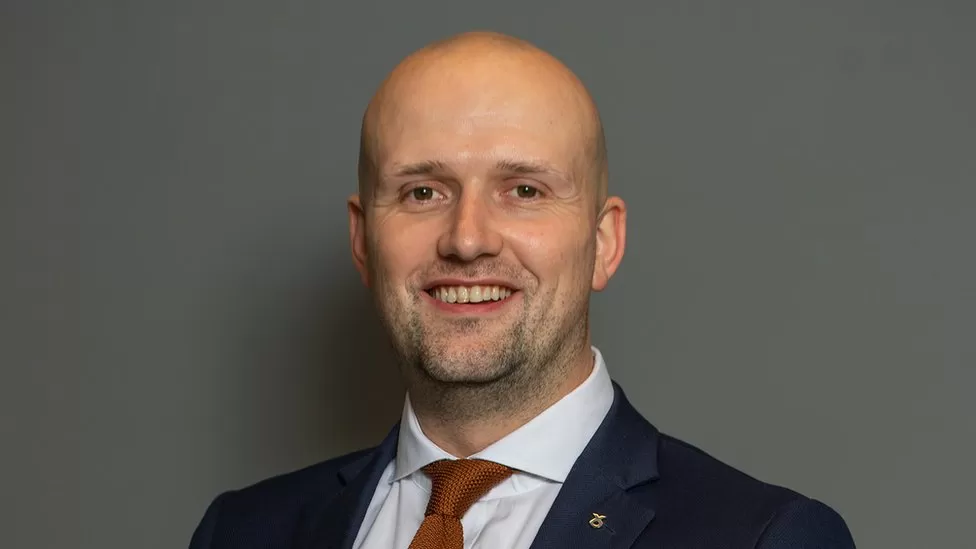
Stephen Flynn has been elected as the SNP’s new Westminster leader following the resignation of Ian Blackford.

The Aberdeen South MP defeated Alison Thewliss – who is seen as being closer to First Minister Nicola Sturgeon – by 26 votes to 17 in a vote of the party’s MPs.

Mr Blackford announced last week that he was standing down amid rumours that Mr Flynn was plotting to replace him.

Mr Flynn will face Rishi Sunak at Prime Minister’s Questions on Wednesday.

He has already said that he will appoint Mhairi Black as his deputy.

Mr Flynn, 34, had initially been expected to be the only candidate to replace Mr Blackford, who was also regarded as being a close ally of Ms Sturgeon.

But Ms Thewliss unexpectedly threw her hat in the ring after sources close to Mr Flynn were quoted in the media as saying he intended to replace much of the party’s front bench team in the Commons.

There had also been speculation that he could return Joanna Cherry – an outspoken critic of Ms Sturgeon – to a prominent role.

But she posted on social media that her position as chairwoman of the UK Parliament Human Rights Committee made a return to the SNP front bench “impossible”.

Alison Thewliss is seen as being closer to SNP leader Nicola Sturgeon than Mr Flynn

Mr Flynn had been the party’s business, energy and industrial strategy spokesman.

He told the BBC that he aimed to “build on the legacy” of Mr Blackford, who he described as being a “giant of the Scottish independence movement”, and pledged to work closely with Ms Sturgeon.

But he said he and Ms Black could offer a “fresh approach here at Westminster that people in Scotland will certainly buy into”.

Mr Flynn added: “We have a lot to do. We have to make that positive, decisive case for Scottish independence and our democratic right to choose.

“But also to hold the Conservative UK government’s feet to the fire on the fact that we have a cost of living crisis and people in Scotland are struggling”.

Ms Sturgeon tweeted that Mr Flynn and Ms Black would make a “truly formidable team” and said she was looking forward to working with them both.

The SNP is currently the third-largest party in the House of Commons with 44 MPs.

Several SNP MPs were angry at Mr Blackford’s support for former SNP chief whip Patrick Grady, who was suspended for sexual misconduct

Mr Blackford announced last Thursday that he was stepping down after five years in the role but insisted he had not been pressured to do so despite reports that Mr Flynn had gathered enough support among the party’s MPs to defeat him in a vote at the Westminster group’s AGM.

He has said he will continue as the MP for Ross, Skye and Lochaber and has also accepted a new role as a business ambassador for the SNP’s independence campaign.

Many SNP MPs were said to have been angry at Mr Blackford urging them to give “absolute full support” to former chief whip Patrick Grady, who was suspended from the party and the Commons for sexual misconduct earlier this year.

Only last month, Stephen Flynn said he had no intention of standing for the SNP group leadership when he was first linked to efforts to oust Ian Blackford.

Having now successfully secured the post, he faces an immediate test – questioning the prime minister in the Commons on Wednesday.

His supporters expect a robust performance in parliament and in the media but the job is much bigger than that.

Perhaps his biggest challenge will be to manage a fractious group of MPs and tensions with party HQ and the leadership team in Edinburgh.

Alison Thewliss is widely seen as being closer to Nicola Sturgeon than Stephen Flynn is and he may have work to do to build that relationship.

The new Westminster leader has been installed just a fortnight after the Supreme Court ruled that the Scottish government cannot hold a second independence referendum without the UK government’s consent.

Ms Sturgeon had wanted to hold a vote next October but now says she will use the next general election as a “de facto referendum”. – a move that is said to have unsettled some SNP MPs.

Scottish Conservative chairman Craig Hoy said the defeat of Ms Thewliss – widely assumed to be Ms Sturgeon’s preferred candidate – was a “personal humiliation” for the first minister and “lays bare the deep splits within the SNP”.

He added: “It is clear that the first minister’s once-iron grip on her party is slipping.

“This result is sure to lead to increased tensions between the SNP leaders at Westminster and Holyrood, not least over oil and gas policy, where Mr Flynn – a serial flip-flopper on this issue – is, for the moment, at odds with Ms Sturgeon.”

Ian Murray, Labour’s shadow Scottish secretary, described the election of Mr Flynn as a “two finger salute to Nicola Sturgeon” by her own MPs, adding: “The fact is that this is nothing more than shuffling the deckchairs on the Titanic.”

Scottish Liberal Democrat MP Christine Jardine MP said: “Stephen Flynn takes over a divided Westminster group obsessed with completely the wrong priorities.”

Who is Stephen Flynn?

Stephen Flynn recently denied claims he was seeking to replace Mr Blackford as group leader

Mr Flynn was born in Dundee and raised in the city and in nearby Brechin.

He studied politics at Dundee University before moving to Aberdeen – although he still travels back down the A90 to support Dundee United.

His hip gave way when he was a teenager, and he spent 17 years in “constant pain” and facing a “daily physical and mental battle” until eventually having replacement surgery in September 2020.

He was elected to Aberdeen City Council in a by-election in 2015, and served as the SNP’s group leader from 2016 until he became an MP in 2019 when he took Aberdeen South from the Conservatives.

His son Leo was born three days after the election.

Mhairi Black, the MP for Paisley and Renfrewshire South, will be Mr Flynn’s deputy leader

Mr Flynn’s maiden speech in the Commons saw him warn Conservative members that “we will not forget, and we will not forgive this government”, adding: “Scotland rejects your austerity and Scotland rejects your Brexit, just as Scotland rejected your prime minister.”

He became a prominent member of the so-called Tuesday Club of male SNP MPs who regularly meet for five-a-side football, beer and curry nights.

Mr Flynn has previously opposed imposing an windfall tax on North Sea oil and gas firms – a policy enthusiastically backed by party leader Nicola Sturgeon – over the potential impact on jobs in Aberdeen.

He had been linked to the leadership role for some time, with newspaper reports claiming he was “on manoeuvres” to oust Mr Blackford – which he denied at the time.

However Ms Sturgeon has insisted that the change of leadership at Westminster was “not a coup”.