
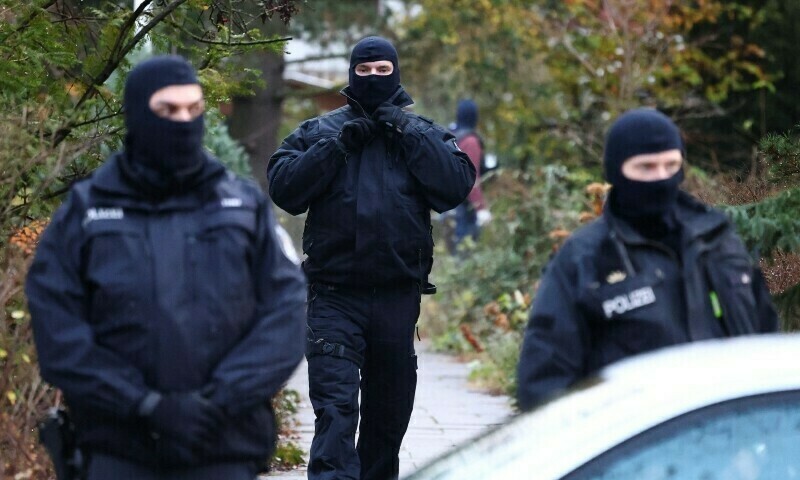
German coup plotters ‘heavily armed and dangerous’, says police chief

Those arrested on Wednesday included “a dangerous mix of people with irrational convictions, some with a lot of money and others in possession of weapons”, Holger Muench told the ARD broadcaster.

They had put in place “a plan that they also intended to carry out… That makes it dangerous and that is why we intervened,” he said.

Weapons were found in 50 of the locations searched, Muench said, including crossbows, rifles, and ammunition.

Fifty-four people are under investigation for links to the group, which prosecutors say was planning to overthrow the German state and install its own government.

Twenty-five people were arrested, including an ex-MP, former soldiers, and aristocrat and businessman Prince Heinrich XIII Reuss, who was reportedly earmarked to be Germany’s new leader after the coup.

However, “We should not assume that a group with a few dozen members, maybe a hundred, is able to really challenge the state system in Germany,” Muench said.

More arrests are likely to be made, he added.

“We have identified other people whose status in relation to this group we do not yet know exactly,” he said.

The group is thought to be made up of supporters of the “Citizens of the Reich” (Reichsbuerger), an ideological movement in Germany that encompasses far-right extremists, conspiracy theorists, and gun enthusiasts.

The Reichsbuerger generally believe in the continued existence of the pre-World War I German Reich, or empire, under a monarchy and several groups declared their own states.

The group planning the plot had been under surveillance since the spring, Thomas Haldenwang, Germany’s domestic security chief, told the RTL broadcaster.

“This is the first time a nationwide network has been set up with very concrete plans,” he added, stressing that there were “plans to overthrow the government, plans to actually implement an overthrow”.

There are around 21,000 Reichsbuerger in Germany, he said, around 10 percent of whom are considered likely to use violence.
Indian opposition turns the corner with key polls

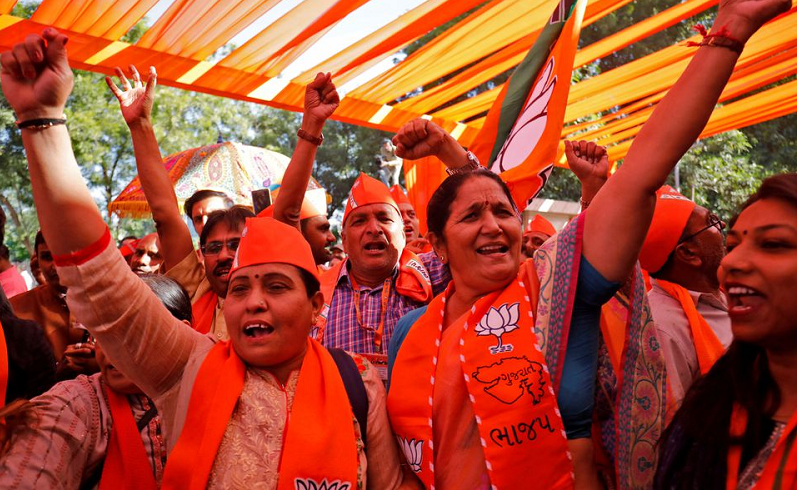
On the face of it, Prime Minister Narendra Modi’s widely advertised “magic” worked for his party in Gujarat where the BJP scored a one-sided victory winning 156 of the 182 seats.

The Congress came a distant second with 17 seats, and the Aam Aadmi Party announced its arrival capturing 5. On the flip side, the Congress emphatically evicted the BJP from power in a straight fight in Himachal Pradesh. It won 40 of 68 seats with the BJP reduced to 25.

To call it Modi magic then would require answers. Why did it work in Gujarat and not in Himachal Pradesh? Biting the BJP even harder was the Aam Aadmi Party’s win in the Municipal Corporation of Delhi where the BJP was dethroned after 15 years in the saddle. The fact that the top most BJP leaders campaigned in Delhi only added insult to the injury.

AAP won 134 seats against the BJP’s 104. The Congress again was a distant third. AAP rules Delhi and Punjab, and its wins in Gujarat have established it as a national party, a calculation based on vote share and the number of states involved.

The MCD sits on a 15,500 crore rupee budget, and AAP is expected to move swiftly to establish how it was being squandered.

Reacting to the MCD victory, AAP’s national convener Arvind Kejriwal said: “This is the fourth election we have won in Delhi on the issues of electricity, water, education and health. Only AAP is practising positive politics in the country today. To make India number 1, we need positivity; we need to focus on schools, hospitals, electricity, water and other issues that affect the common man.”

By contrast the BJP needed the release of 11 convicted rapists and killers in a controversial move on India’s Independence Day to shore up its communal campaign in Gujarat. Together with the divisive politics, the BJP has also benefited the state with the abrupt and questionable transfer of three mega projects from different states to Gujarat.

Two major states where the BJP explains its rule to Modi magic — Madhya Pradesh and Karnataka — were snatched by toppling opposition governments with forced defections, a worry that still looms over opposition parties. But that is different from the attribute of any magic or charm.

A disturbing feature in some unexpected successes for the BJP in Bihar and close calls for the opposition in Gujarat was the presence of the Majlis Ittehadul Muslimeen (Hyderabad-based MIM) that cut into the secular votes. Samajwadi Party won a parliament seat and an assembly seat while the BJP was able to breach Azam Khan’s fortress in Rampur.

The fire-breathing Muslim orator has spent several years in jail under the BJP’s government in Uttar Pradesh. Despondent, he didn’t have much of a say in the polls. Among all the indifferent news from Gujarat, there is something that the opposition can cheer about and it is the victory of the Congress party’s Dalit face Jignesh Mevani from Vadgam. Jignesh had shot to fame in 2016 after the flogging of Dalits in Una, Gujarat, won the election from the same constituency with the support of Congress in 2017.

Notably, reports said, the Congress Dalit leader was not only fighting BJP, he was also contesting AIMIM and AAP. AIMIM fielded Kalpesh Sundhia as its candidate and was expected to cut away Muslim votes of Jignesh. The polls over, the opposition has indicated a change of stance. In a show of unity, the Aam Aadmi Party and the Trinamool Congress, which have been questioning the Congress’s status as the lead Opposition party, participated in a meeting of Opposition parties hosted by Congress president Mallikarjun Kharge on Wednesday, the first day of the Winter Session of Parliament.

One killed in massive fire in Moscow shopping centre

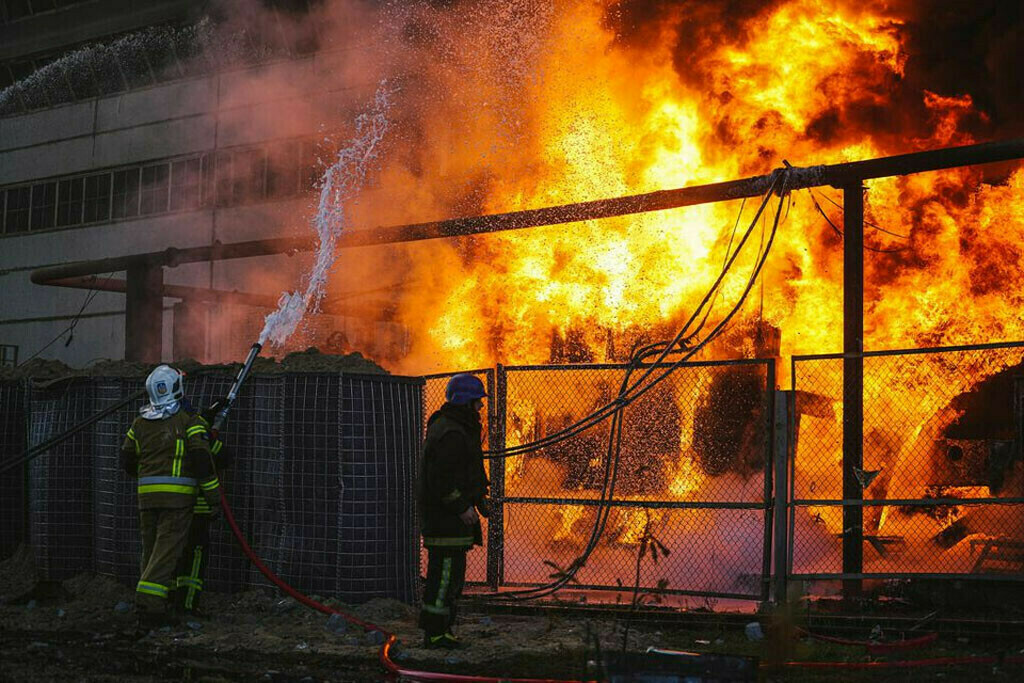
“In the Moscow region, firefighters are putting out a fire the size of 7,000 square metres (75,300 square feet),” Russia’s Ministry of Emergency Situations said on Telegram.

Russian media later reported that one person had been killed in the fire at the Mega Khimki shopping centre, about seven kilometres (four miles) from Moscow’s Sheremetyevo Airport.

More than 70 firefighters and 20 fire trucks were working at the site, emergency services said, adding that their work was hampered due to the design of the building.

“Due to the collapse of the roof, the fire spread instantly to a large area,” the Moscow region’s emergency services said on Telegram.

Russian news agencies quoted sources in emergency services as saying that “arson” was suspected but state news agencies later quoted sources as saying that safety violations were more likely the cause.

Videos on social media showed a huge fire, with people fleeing the burning building into a parking lot.

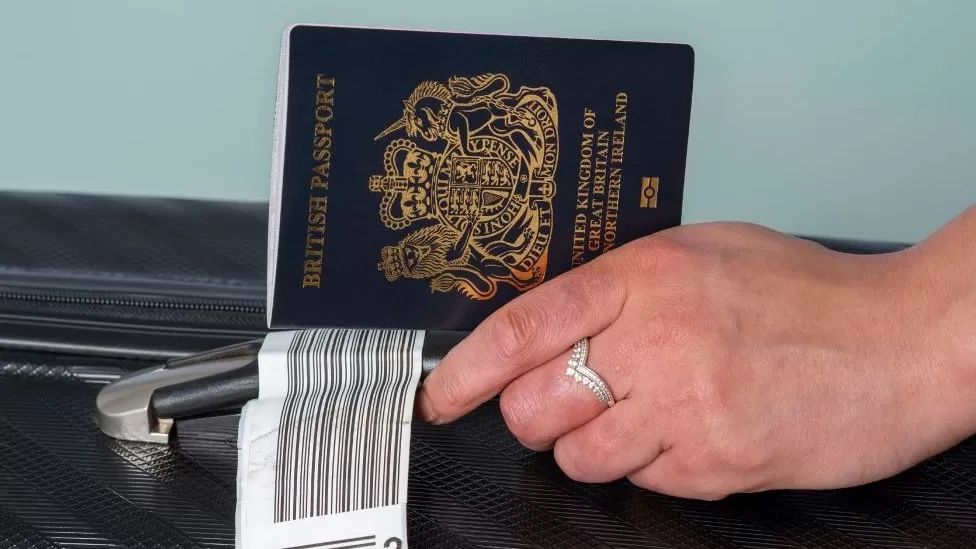
Hundreds of thousands of people were affected by passport-processing delays and many experienced travel disruptions this year, a watchdog has found.

As coronavirus pandemic travel restrictions were lifted, the Passport Office struggled to keep up with an “unprecedented demand”, said the National Audit Office (NAO).

Some 360,000 customers waited more than 10 weeks to receive their passports in the first nine months of 2022.

A similar demand is expected in 2023.

Whitehall’s spending watchdog has urged the Home Office agency to prepare, as up to 10m applications could be made next year.

Despite preparations, the NAO said there were problems with recruitment, system limitations and unsuccessful efforts to deal with the levels of demand this year.

This contributed to “longer than expected waits”, according to findings published on Friday.

Gareth Davies, the head of NAO, said the Passport Office did process a “record number of applications” but dealing with a higher-than-average demand led to “delays for hundreds of thousands of people”.

This created “anxiety” for people with travel plans and hampered people using passports as forms of identity, he said.

“HMPO must now learn the lessons from this year and prepare for similar levels of demand that are expected in 2023.”


This year, between January and September, more than seven million people applied and 6.9m passports were processed by the HM Passport Office (HMPO). This was a 21% increase compared to the same period in 2019.

In May, more than 1.2m applications were received – with the busiest week seeing 340,000 requests submitted.

However, the NAO said in the first nine months of 2022, 95% of customers did receive their passports within 10 weeks.

The report said about three million passport applications are still expected from people who did not renew or apply during the pandemic – meaning a further 9.8m applications could be seen in 2023.

During the coronavirus pandemic, significantly fewer people renewed or applied for passports and officials did plan for an “expected surge” in applications when travel rules were lifted.

In 2022, the HMPO prepared for 9.5m applications – 36% more than an average year. This was based on the missing number of applications from the previous two years.

The Home Office said the impact to passport services is “not unique to the UK” and it has worked to rectify this.

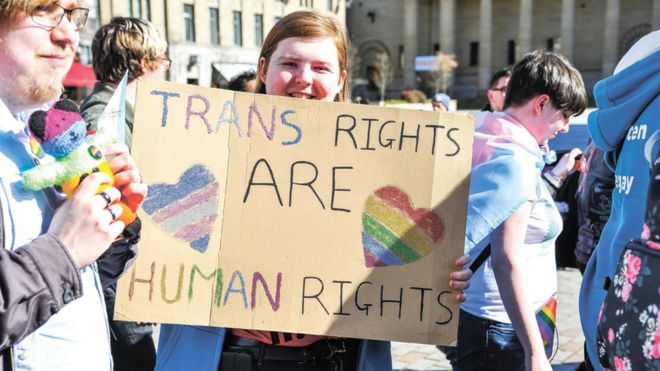
A new law is set to be passed by the Scottish Parliament which will simplify the legal process for anyone in Scotland who wants to change their gender.

But the signs are that the UK government could refuse to recognise it, causing huge issues for people affected who want to relocate elsewhere in the UK.

Since 1998 some laws which apply in Scotland are made by MSPs in Edinburgh, while others are made by MPs at Westminster.

Legislation now in the Scottish Parliament will shorten the timescale for anyone who wants to obtain a gender recognition certificate, a document allowing someone to change their gender on their birth certificate.

Gender recognition certificates allow people to change certain legal documents, and can affect areas such as entitlement to benefits and pensions.

The legislation is currently making its way through the Scottish Parliament and is likely to pass later this month.


UK government ministers are responsible for the law in this area in England and Wales, and have no plans to move in the same direction as the Scottish government.

But they may go further by refusing to recognise documentation issued under the new Scottish system in other parts of the UK.

A UK government source close to the process told the BBC this was “absolutely” possible.

The Westminster government is also not ruling out the prospect of a legal challenge once the legislation is passed by MSPs – it believes the new law may have an impact on areas where policy is decided in London.

Asked if there could be a legal challenge to the Scottish legislation, the source told the BBC “nothing can be ruled out”.

Scottish government ministers have said they are happy to meet their UK counterparts to discuss their concerns – and officials in Edinburgh said they had tried to set up talks in October, without any response.

The SNP-led government believes the bill involves powers held solely in Edinburgh, so the UK government would not have grounds to mount a legal challenge.

Equalities Secretary Kemi Badenoch has written to the Scottish government expressing concerns about the Scottish legislation, and has offered to meet Scottish ministers to discuss it.

‘Nasty Westminster’

A UK government source told the BBC that they had concerns people from elsewhere in the UK may relocate to Scotland to change gender.

And they claimed Scottish ministers wanted to paint Scotland as a “haven of inclusivity” in comparison to a “nasty Westminster”.

The source described the Scottish legislation as a “test case scenario” of how a bill passed by the Scottish Parliament could “undermine Westminster competencies” – in other words, handing Holyrood powers outside Scotland.

A separate UK government official told the BBC there was “genuine concern” about the impact the legislation could have across the rest of the UK. They added that they hoped a legal battle could be avoided.

Scottish Social Justice Secretary Shona Robison has said she would be “happy to meet with Ms Badenoch” to discuss the issue.

5.8-magnitude earthquake jolts Indonesia’s Java island

JAKARTA: A 5.8-magnitude earthquake hit Indonesia’s main island of Java on Thursday with no immediate reports of damage, less than a month after another quake in the same province killed more than 300 people.

The quake struck at 07:50 am local time (0050 GMT) around 15 kilometres from the town of Cianjur, epicentre of November’s devastating tremor, the United States Geological Survey said.

It said there was a low likelihood of casualties or damage following the quake, which struck at a depth of 123 kilometres (76 miles).

No damage was immediately reported in Cianjur or Sukabumi, the city nearest the epicentre, local disaster mitigation agency officials said Thursday.

But schools were temporarily evacuated in Sukabumi, according to local TV.

“The epicenter of the earthquake is in Sukabumi, so it was only lightly felt in Cianjur. No reports of damage to houses or casualties,” said Wawan Setawan, a disaster agency official in Cianjur told AFP.

“We have yet to receive reports of damage caused by the earthquake”, Imran Wardhani, an official in Sukabumi, said soon after the tremor.

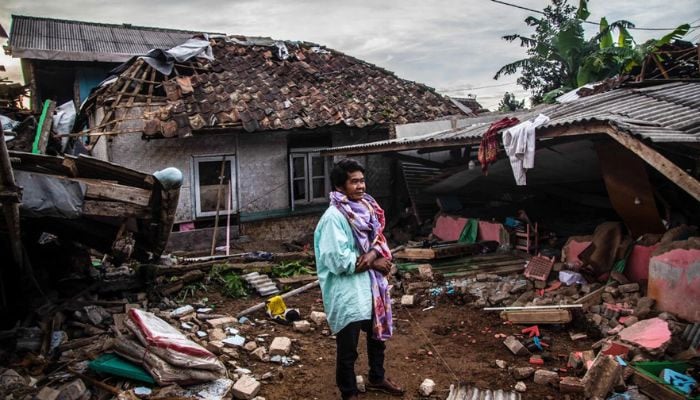
Last month, a shallow 5.6-magnitude earthquake hit Cianjur, triggering landslides and collapsing buildings, killing at least 334 people, injuring thousands and leaving tens of thousands more homeless.

Save the Children warned this week that evacuees faced a “ticking time bomb” of disease and infection due to poor living conditions. Thousands of cases of respiratory infections and hundreds of cases of diarrhoea have been reported.

Indonesian President Joko Widodo is visiting the area on Thursday to distribute aid to affected residents.

The tremor that struck Cinajur on November 21 was the deadliest in the archipelago nation since a 2018 quake and resulting tsunami killed more than 4,000 people on the island of Sulawesi.

Indonesia experiences frequent seismic and volcanic activity due to its position on the Pacific “Ring of Fire”, where tectonic plates collide.

The quake comes days after a volcanic eruption in the country’s Mount Semeru on the main island of Java on December 4. The volcano erupted spewing hot ash clouds a mile into the sky and sending rivers of lava down its side, prompting authorities to raise the alert status to the highest level.

The eruption of the highest mountain on Indonesia’s main island of Java, around 800 kilometres (500 miles) southeast of the capital, Jakarta, sparked over 2400 evacuations of nearby villages exactly one year after its last major eruption killed dozens of people.

President Alvi hopes COAS will reduce trust deficit among institutions

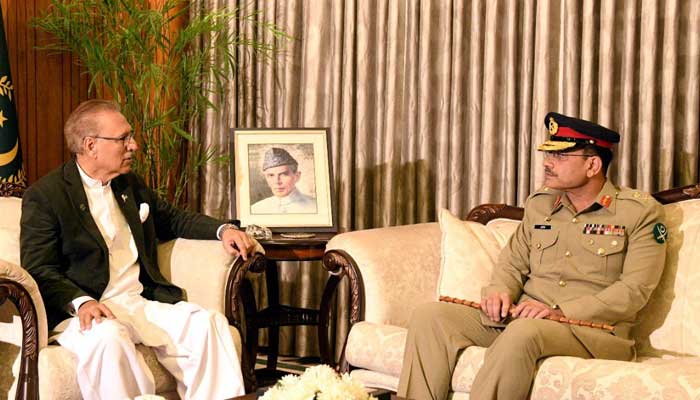
President Dr Arif Alvi Wednesday hoped that newly-appointed Chief of Army Staff (COAS) General Syed Asim Munir would help reduce the trust deficit among institutions, saying the military leadership is committed to steer clear of politics.

In an interview with a private news channel, President Alvi praised the army chief and his viewpoints. “The matter [appointment of army chief] has been settled nicely for the next three years,” he said, maintaining that the COAS appointment was done on merit.

Commenting on his meeting with Pakistan Tehreek-e-Insaf (PTI) Chairman Imran Khan ahead of the crucial military appointment, the president said that the former prime minister was informed about being consulted after the summary is received, therefore, he added that the consultations were held accordingly.

The president, however, said that he should avoid commenting on the army chief’s appointment as this is the right of parliament.

Gen Munir was handed over the command of the military by General (retd) Qamar Javed Bajwa in a ceremony held at the General Headquarters in Rawalpindi on November 29.

‘Double-game’

Regarding Imran Khan’s remarks on former chief of army staff (COAS) General Qamar Javed Bajwa, President Alvi said: “Khan’s comments on ex-COAS Gen Bajwa’s double-game would be based on his own experience.”

Last week, for the first time since spending three-and-a-half years with ex-army chief Gen Bajwa, the PTI chief said: “Giving an extension to him [Gen Bajwa] was my biggest mistake.”

“I would trust whatever General Bajwa said. I would tell him that both of us are [thinking about] the country; our purpose is one — to save the country,” Khan had said.

The former prime minister added that he didn’t know how he was being lied to and betrayed.

‘Dar tried to make things better’

Shedding light on the ongoing debate between the PTI and the coalition government, the president said Finance Minister Ishaq Dar has the talent to reconcile things.

“During the PTI’s sit-in [back in 2014] Dar tried to make things better,” he said, revealing that during his meeting with the financial czar today he was apprised about the economic situation.

Earlier, sources told Geo News that Dar has sought President Alvi’s help in winning over the PTI for the implementation of the International Monetary Fund (IMF) programme.

The sources also said that the finance minister requested the president for the PTI’s cooperation in bringing political stability to the country and the implementation of Pakistan’s agreement with the IMF.

Meanwhile, President Alvi reiterated Dar’s stance that Pakistan will not default. “I gave a proposal to Dar regarding energy conservation. Markets should be closed earlier in order to save three-four thousand megawatts of electricity.”

Dissolution of assemblies

The coalition government and the PTI should sit down and hold talks about the general elections, the president added.

Earlier today, PTI Vice Chairman Shah Mehmood Qureshi said that Imran Khan has decided to dissolve Punjab and KP assemblies within the next few days.

Qureshi revealed that the PTI wants to form new governments in the two provinces before Ramadan.

As per reports, the incumbent government and the opposition have been holding talks regarding the date of general elections as the PTI has been constantly piling up pressure on the government to conduct snap polls.

Hundreds held in Bangladesh after anti-govt clashes

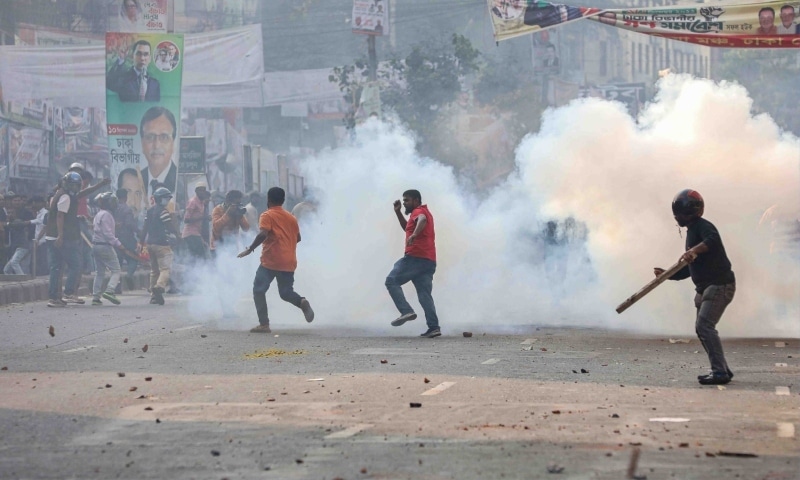
Tension has been building this week after the main opposition Bangladesh Nationalist Party (BNP) called a massive rally on Saturday to force Prime Minister Sheikh Hasina to resign.

Opposition spokesman Shahiduddin Chowdhury Annie said police fired at around 5,000 opposition supporters who peacefully gathered outside the BNP main office in central Dhaka on Wednesday.

“We allowed traffic to move. But police suddenly attacked us, firing at our activists and supporters. At least 100 people were injured,” Annie said. The BNP said at least two of their activists, including a student leader, were killed by police fire.

Live footage shared on BNP’s verified Facebook page — which could not be independently corroborated — appeared to show injured party activists lying on the stairs of the office.

Abdul Hye, a police constable posted at Dhaka Medical College Hospital, said that one dead body and at least eight injured people were brought to the hospital. He could not say whether the body was hit by live or rubber bullets.

Dhaka Metropolitan Police spokesman Faruq Ahmed blamed the BNP for the clashes, saying they were trying to clear roads for traffic when party activists attacked law enforcement officers with rocks and Molotov cocktails. “We fired rubber bullets and tear gas to evacuate the people from the road,” he said.Current BNP chief Mirza Fakhrul Islam Alamgir said “police arrested at least 500 activists from inside the party headquarters”. “This is a breach of human rights and the constitution,” he told reporters.

The activists chanted slogans against Prime Minister Sheikh Hasina while being driven away in prison vans: “It will fall! God willing the Hasina regime will fall”.

The clashes came after BNP officials expressed fears that the police would trigger violence to scuttle Saturday’s rally, which the party expects will draw hundreds of thousands of people.

Rizvi Ahmed, another party spokesman, said at least 1,430 BNP activists and supporters had been arrested since November 30 in an attempt to stop the rally from taking place. The BNP want Hasina to resign and for a caretaker administration to govern until fresh elections are held.

India’s absence from US religious violators list explained

On Friday, Secretary Blinken designated Burma, China, Cuba, Eritrea, Iran, Nicaragua, North Korea, Pakistan, Russia, Saudi Arabia, Tajikistan, and Turkmenistan as Countries of Particular Concern …” for having engaged in or tolerated particularly severe violations of religious freedom.” India, however, was spared.


For the last three years, the US Commission on International Religious Freedom (USCIRF) has demanded that because of widespread discriminations against religious minorities, India should also be put on the violators’ list.

USCIRF is a bipartisan agency of the US Federal Government which monitors religious freedom across the globe and recommends various actions against the violators.

“Secretary Blinken, given the totality of the facts and the circumstances, determined that religious freedom concerns in India do not warrant a Country of Particular Concern designation or placement on the Special Watch List,” said State Department Spokesperson Ned Price when asked why India was excluded.

“But of course, these are conversations that we continue to have with our Indian partners and with partners around the world,” the spokesperson added.

In its 2022 Annual Report, USCIRF recommended that India be designated a “country of particular concern” for engaging in or tolerating “systematic, ongoing, and egregious” violations of religious freedom.

The report noted that in 2022, religious freedom conditions in India remained poor. During the year, the Indian government at the national, State, and local levels continued to promote and enforce policies, including laws targeting religious conversion, interfaith relationships, and cow slaughter, that negatively affect Muslims, Christians, Sikhs, Dalits and Adivasis.

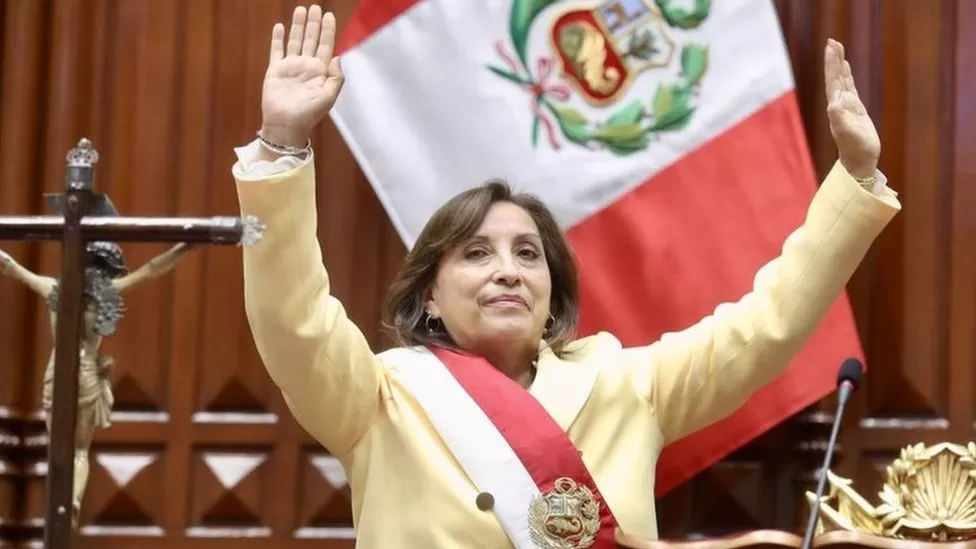
Peru has a female president for the first time, after ex-president Pedro Castillo was impeached – hours after he tried to dissolve parliament.

Dina Boluarte – previously the vice-president – was sworn in after a dramatic day in Lima on Wednesday.

Earlier in the day, Mr Castillo had said he was replacing Congress with an “exceptional emergency government”.

But lawmakers ignored this, and in an emergency meeting impeached him. He was then detained and accused of rebellion.

Reports in local media say he was heading to the Mexican embassy in the capital when he was arrested.

Ms Boluarte, a 60-year-old lawyer, said she would govern until July 2026, which is when Mr Castillo’s presidency would have ended.

Speaking after taking the oath of office, she called for a political truce to overcome the crisis which has gripped the country.

“What I ask for is a space, a time to rescue the country,” she said.

Wednesday’s dramatic chain of events began with President Pedro Castillo giving an address on national television in which he declared a state of emergency.

He announced that he would dissolve the opposition-controlled Congress, a move which was met with shock both in Peru – several ministers resigned in protest – and abroad.

Watch: Three dramatic moments from the day Peru’s president was ousted

The head of the constitutional court accused him of launching a coup d’etat, while the US “strongly urged” Mr Castillo to reverse his decision.

Peru’s police and armed forces released a joint statement in which they said they respected the constitutional order.

Mr Castillo tried to dissolve Congress just hours before it was due to start fresh impeachment proceedings against him – the third since he came to office in July 2021.

In his televised address he said: “In response to citizens’ demands throughout the length and breadth of the country, we have decided to establish an exceptional government aimed at re-establishing the rule of law and democracy.”

He said that “a new Congress with constituent powers to draw up a new constitution” would be convened “within no more than nine months”.

But Congress, which is controlled by parties opposed to Mr Castillo, convened an emergency session and held the impeachment vote Mr Castillo had been trying to prevent.

The result was overwhelming: 101 voted in favour of impeaching him, with only six against and 10 abstentions.

Former President Pedro Castillo seen inside a police car in Lima
There were skirmishes between police and angry Castillo supporters in the capital Lima

After the impeachment, Mr Castillo was seen on police premises.

In the photos – which were shared by police on Twitter but subsequently deleted – he could be seen sitting, seemingly relaxed, and chatting to others. Footage was then released of Mr Castillo signing papers with prosecutors.

He was later detained and accused of rebellion for breaking the constitutional order.

Peru has been going through a rocky political period, with multiple presidents ousted from office in recent years. In 2020, it had three presidents within the space of five days.

Mr Castillo, who is a left-wing former school teacher, was elected in June 2021 in a polarising election in which he defeated his right-wing rival Keiko Fujimori.

He had recently been fighting allegations of corruption, which he said were part of a plot to oust him.