Indian lawmakers lambast PM Modi’s barbaric policies

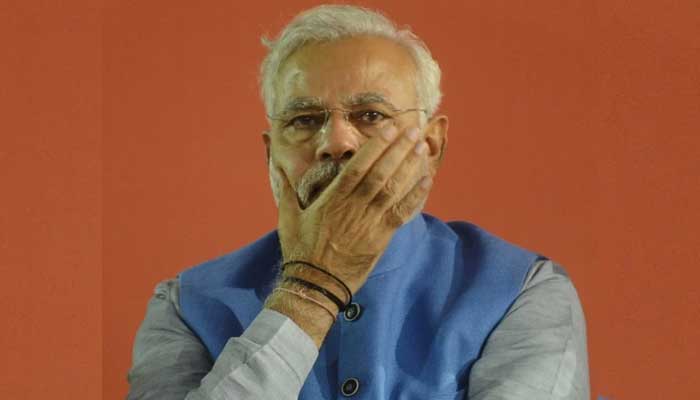
ISLAMABAD: Indian parliamentarians, poets and columnists Sunday criticised and mocked Prime Minister Narendra Modi’s atrocities and barbaric policies against minority communities particularly Muslims in Indian Illegally Occupied Jammu and Kashmir (IIOJK).

Asaduddin Owaisi, the All India Majlis-e-Ittehadul Muslimeen (AIMIM) chief, slammed Narendra Modi for violating all the constitutional norms by implementing hegemonic, autocratic, and barbaric policies and laws to crush voices condemning his authoritative rule.

“I will always oppose Modi and his draconian laws till the last breath. Revoking Article 370 moves a breach of the constitutional promise made by [Jawaharlal] Nehru and [Sardar Vallabhbhai] Patel regarding Jammu and Kashmir,” he said expressing his commitment toward the Kashmir cause.

Despite the Modi government’s sanctions and curbs on freedom of expression, several Indian columnists have valiantly criticised the Indian government and its brutal policies against the Kashmiri people to suppress their voice. They remain convinced that the Indian premier will not succeed in his nefarious motives.

Imran Pratapgarhi, an Indian revolutionary poet, highlighted the Mode-led administration’s atrocities and tyranny against the oppressed Kashmiri people in his poetic verses titled ‘I am Kashmir’. He has uploaded videos of his poem’s recital on YouTube and other social media platforms.

Pratapgarhi said that the fascist Modi government was perpetrating gruesome human rights violations against minorities and Kashmiri Muslims. “Modi is a tea seller, who has no moral ethics and political norms,” the poet reasoned.

He added that the Indian premier was involved in the massacre of innocent Muslims of Gujarat and Kashmiris. “Kashmiri students are detained and made missing persons from various universities of India,” Pratapgarhi said.

Six martyred, 17 injured in cross-border firing from Afghanistan

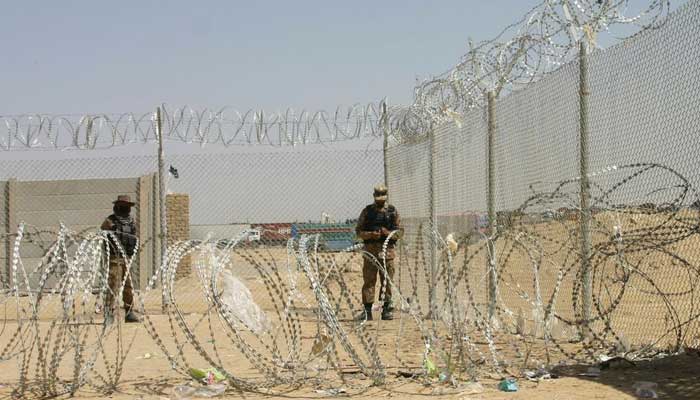
RAWALPINDI: Using heavy weapons, the Afghan border forces opened unprovoked and indiscriminate fire at the civilian area in Balochistan’s Chaman city resulting in the martyrdom of six people and injuries to 17 others, a statement issued by the Inter-Services Public Relations (ISPR) said Sunday.

According to the military’s media wing, the Afghan border forces used artillery and mortar in the attack.

The ISPR said that Pakistan’s troops at the border gave a befitting albeit measured response against the uncalled-for aggression, but avoided targeting innocent civilians in the area.

The statement added the Pakistani border forces have also approached Afghan authorities in Kabul to highlight the severity of the situation and demanded strict action to avoid any such recurrence of the incident in future.

On December 2, Pakistan’s Head of Mission to Kabul Ubaid-ur-Rehman Nizamani escaped an assassination bid.

In a statement, the Ministry of Foreign Affairs (MoFA) had said the embassy’s compound in Kabul came under attack targeting the head of mission, but “by the grace of Allah Almighty, the head of mission is safe”.

However, a Pakistani security guard Sepoy Israr Mohammad had been critically injured in the attack while protecting Nizamani, the Foreign Office said.

It said that Pakistan’s government strongly condemns the assassination attempt and attack on the embassy demanding the Afghan government conduct an immediate investigation into the incident.

Last month, a Frontier Corps soldier embraced martyrdom and two more sustained injuries in the midst of a cross-border attack from neighbouring Afghanistan to Chaman district.

Afghan security officials allegedly opened fire on the FC personnel while they were deployed on duty on the Pakistani side of the Bab-e-Dosti near Chaman, as per Levies officials. Following the incident, the Pakistani authorities contacted the Afghan government for a ceasefire in the area.

Meanwhile, Bab-e-Dosti has been closed for all kinds of trade and pedestrians’ movement.

On November 29, a high-level delegation headed by State Minister for Foreign Affairs Hina Rabbani Khar visited Kabul to hold talks with Afghanistan’s Foreign Minister Amir Khan Mutaqqi as the Tehreek-e-Taliban Pakistan (TTP) called off their months-long ceasefire with Pakistan.

During her visit, Khar discussed matters of bilateral importance with Amir Khan Mutaqqi focusing on political consultations between the two governments.

According to a Foreign Office statement, Hina Rabbani Khar held political consultations with Amir Khan Muttaqi.

“A range of bilateral issues of common interest including cooperation in education, health, trade and investment, regional connectivity, people-to-people contacts, and socioeconomic projects were discussed.”

It won’t damage ‘gang of thieves’ if Pakistan defaults: Imran Khan

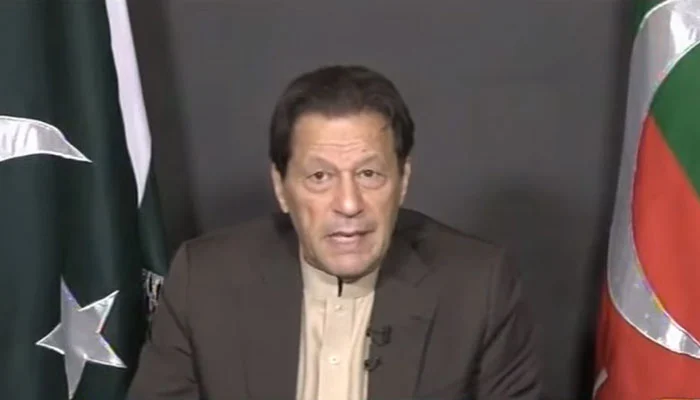
Lashing out at the coalition government, former prime minister and Pakistan Tehreek-e-Insaf (PTI) Chairman Imran Khan has said that it will not damage the interest of the “gang of thieves” if the country defaults.


Addressing a press conference Sunday, Khan said the “gang of thieves” has properties in foreign countries worth billions of dollars, hence they do not care about the economic collapse of the country.

He added that the US dollar will further shoot up and there would be no foreign investment “if Pakistan defaults”.

“A group of thieves has been imposed on us,” the deposed premier said, adding that the gang has been stealing national wealth for the past 30 years. He also said they were laundering the looted money abroad via illegal means including hundi and hawala.

A day earlier, Finance Minister Ishaq Dar reiterated that the “economy is going in the right direction” and it would “not default”. He added that no more experiments could be done with the country’s economy as Pakistan had gone through its “darkest economic periods” during the previous government’s tenure.


People came to know how the Sharif family was laundering the looted money when the Hudaibia Paper Mills case surfaced, Khan added. The Sharif family’s “front man” Ishaq Dar recorded his statement under Section 164 of the Criminal Procedure Code (CrPC) and revealed the details of the money laundering.

Default risk soars to 100%

The PTI chairman warned that Pakistan’s default risk has surged to 100% as the 88% of local investors do not believe in the incumbent government.

As long as this government lasts, the country’s economic instability will increase, warned Khan. “They will leave the country whenever they get a chance.”

Referring to the alleged horse-trading at Sindh House in the past, the PTI leader said that the Constitution suit them only when it benefits them, otherwise they have always flouted the law.

He urged the national security institutions to look into the ongoing situation in the country.

He also accused the Election Commission of Pakistan and the establishment of supporting the ruling alliance led by the PML-N during the recent by-polls in the country.

“Maryam Nawaz reached [homeland] first, then Ishq Day was dry cleaned and now Suleman Shehbaz would be dry cleaned,” Imran Khan said.

“We all knew who gave them NRO-II,” Khan said and asked if Constitution allows NRO-II.

The PTI chairman feared that PML-N supremo Nawaz Sharif and Pakistan Peoples Party (PPP) Co-chairman Asif Ali Zardari would not go into elections.

‘Injustice destroys nations’

Reacting to Suleman Shehbaz’s return to the homeland, the former prime minister said: “An absconder responsible for billions in corruption & money laundering, Salman Shahbaz, is drycleaned & returns to Pakistan.”

Sharing a hadith on his Twitter handle, Khan wrote if anyone wants to understand why Pakistan’s economy is now a disaster, just two incidents provide the answer.

He said that Senator Azam Swati, 75, has been subjected to custodial torture, beaten up in front of his grandchildren, his house vandalised and sealed, and he is being dragged from one province to another under multiple “false FIRs” registered against him in total “violation of all laws and basic human rights” enshrined in the Constitution.

“In contrast an absconder responsible for billions in corruption & money laundering, Salman Shahbaz, is drycleaned & returns to Pakistan,” he added.

ECP warned

Addressing the new military leadership in the presser, the former premier said: “The new regime which has recently taken over should think about the country for God’s sake. National security institutions should see what is happening with the country.”

He also stressed that the nation and army go hand in hand, not separately.

Commenting on the matter of his disqualification at the Elections Commission of Pakistan, the PTI leader said that the ECP will earn more “humiliation if it disqualifies” him.

“The Election Commission has no power to disqualify me. Even if they do so, will the nation vote for anyone else?” Khan said questioning the reputation of the ruling coalition in the Centre.

While speaking regarding the several cases he is confronted with following his government’s ouster in April, Khan said that the incumbent government wants to disqualify him through “fabricated cases” and spoke about challenging them in the Supreme Judicial Council. “We have gone against Chief Election Commissioner Sikandar Sultan Raja in the Supreme Judicial Council.”

Earlier this week, PTI Senior Vice-President Fawad Chaudhry said the ECP and CEC wanted to disqualify Khan. “But the people will not accept the decisions taken behind closed doors. [The government] should accept the people’s decision and move forward. There can be no stability without new elections,” he said.

The CEC, on the other hand, said that the ECP neither has any favourites nor is it against anyone. “Action was taken against those who tried to create chaos and from workers to party chiefs for violating the code of conduct,” he added.

The PTI chief, on October 18, filed a reference against the CEC in the SJC for his removal deeming him unfit to hold the constitutional post. Khan and other PTI leaders have repeatedly demanded that the chief election commissioner resigns from his post and the ECP be reconstituted before the next general elections.

The party had earlier filed a reference in July, but withdrew in August soon after to add more evidence to it against the commissioner.

The PTI chief also expressed concerns regarding the treatment meted out to Azam Swati during his incarceration.

“Given what is happening with Azam Swati, I have never seen such circumstances in the country. In which society does a senator can’t make his viewpoint,” he added.

Khan reiterated his statement regarding Chief Minister Punjab Chaudhry Parvez Elahi giving him the authority to dissolve the provincial assembly. “Parvez Elahi has given me full authority to dissolve the assembly.”

Erdogan asks Putin to ‘clear’ Kurdish forces from northern Syria

Erdogan has been threatening to launch a new incursion into northern Syria to push out Kurdish forces he blames for a November bomb blast that killed six people in Istanbul.

2019 agreement between Moscow and Ankara ended another offensive by setting up a 30-kilometre (19-mile) “safe zone” to protect Turkey against cross-border attacks from Syrian territory.

Erdogan accuses Russia — a key player in the Syria conflict which backs President Bashar al-Assad — of failing to follow through on the deal.

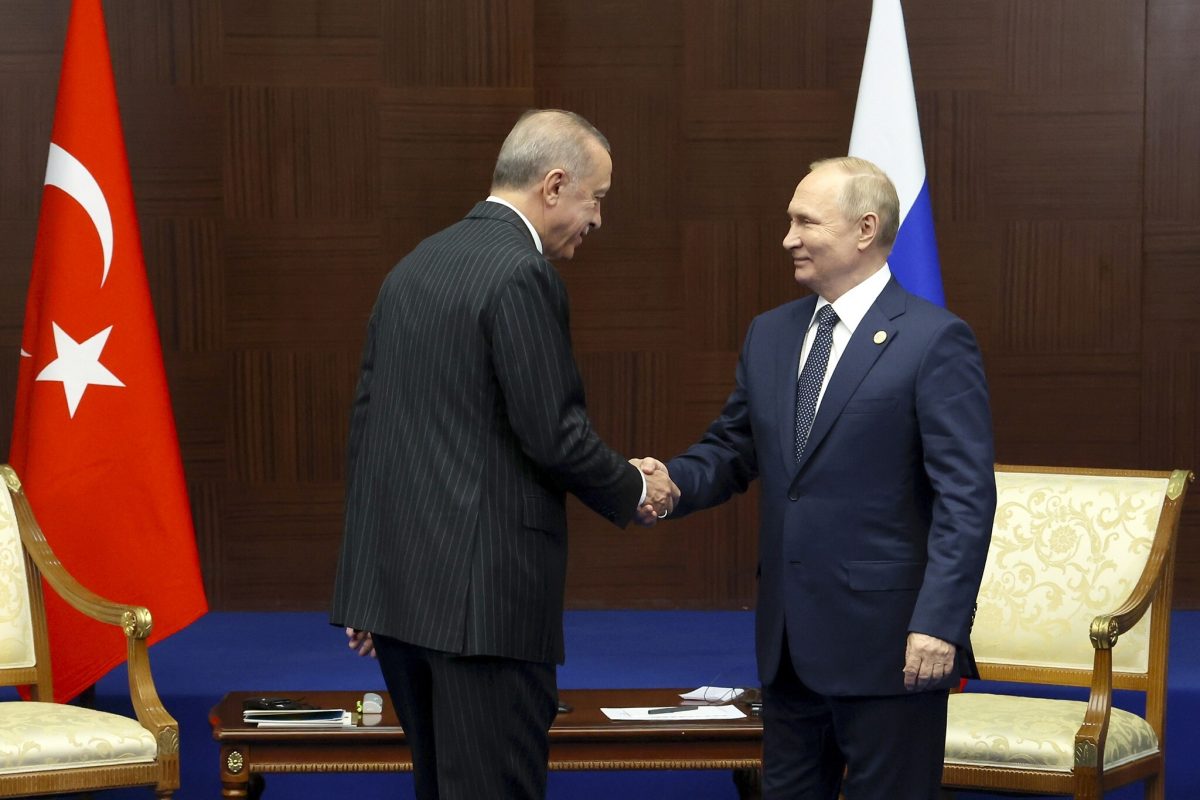
Erdogan told Putin in a phone call it was “important to clear the (Kurdish fighters) from the border to a depth of at least 30 kilometres,” his office said. Erdogan stated it was a “priority”, the Turkish presidency said.

Some of the Kurdish forces are stationed in areas under Russian military control.

Others have been fighting with the United States against jihadists from the militant Islamic State group.

The Kremlin confirmed the 2019 agreement was discussed in the call.

“The two countries’ defence and foreign services will maintain close contacts in this regard,” a Kremlin statement said.

Both Moscow and Washington have been putting diplomatic pressure on Ankara not to launch a new ground campaign.

Turkey has been pummelling Kurdish positions near the border with artillery fire and drone strikes since Nov 20 in response to the bomb blast. But it has not yet poured in any major forces to support ones it already has stationed in the area. Kurdish groups deny involvement in the Istanbul attack.

Black Sea grain deal

Turkish President Tayyip Erdogan also discussed the Black Sea grain export agreement on Sunday with the leaders of Russia and Ukraine, as both sides seek changes that would boost their exports.

Turkey has acted as mediator alongside the United Nations in the grain deal, which opened up Ukrainian ports for exports after a six-month de facto Russian blockade.

Moscow is seeking better guarantees for its own food and fertiliser exports, while Kyiv wants the deal expanded to increase the number of Ukrainian ports it opens for shipping.

After his call with Putin, the Turkish presidency said Erdogan had called for a quick end to the conflict and said Moscow could start work on exporting more food products and commodities through the Black Sea grain corridor.

Russia has urged the United Nations to push the West to lift some sanctions, to ensure Moscow can freely export its fertiliser and agricultural products — a part of the Black Sea grain deal that Moscow says has not been implemented.

“The deal is of complex character, which requires the removal of obstacles for the relevant supplies from Russia in order to meet the demands of the countries most in need,” the Kremlin said in a statement.

Zelenskiy said on Twitter he had “discussed further work & possible expansion of the grain corridor” with Erdogan.

Ukraine and Russia are both among the world’s largest grain producers and exporters. Russia’s blockade of Ukrainian ports following its invasion threatened to cause a global food crisis earlier this year, which was mitigated by the Turkish-brokered deal that unblocked Ukrainian shipments at the end of July.

The Kremlin said Erdogan and Putin also discussed a Russian proposal to create a base in Turkey for exports of Russian natural gas.

Putin suggested the idea in October as a means to redirect supplies from Russia’s Nord Stream pipelines to Europe, damaged in explosions in September. Erdogan has supported the concept.

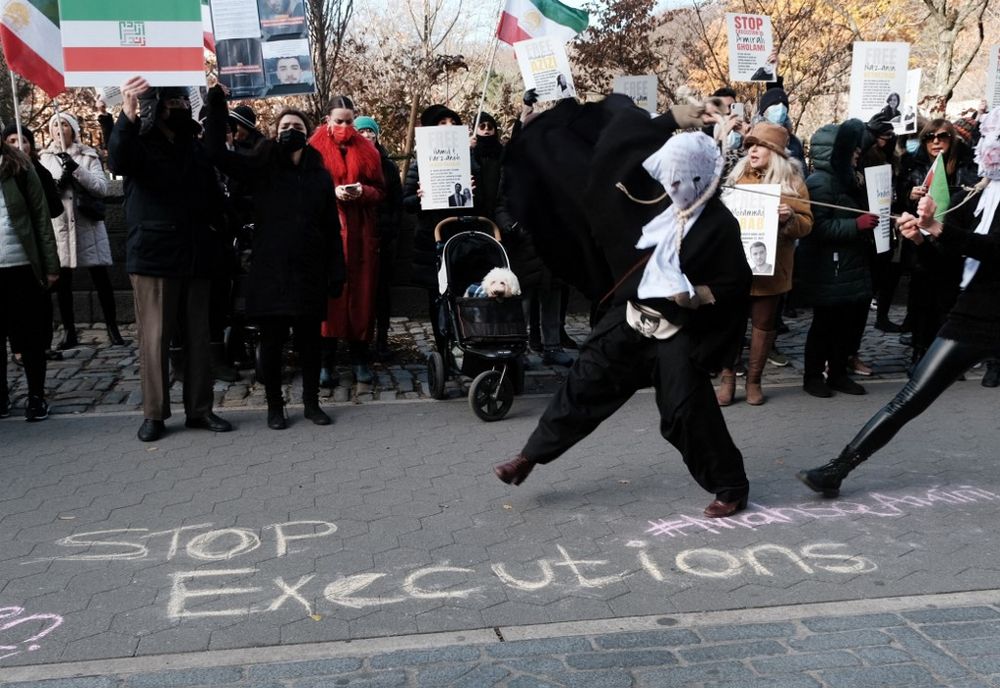
Iran carries out second execution linked to anti-government protests

“Majid Reza Rahnavard was hanged in public in [the holy Shia city of] Mashahd this morning […] he was sentenced to death for ‘waging war against God’ after stabbing to death two members of security forces,” Mizan said.

Iran’s hanging of another man, Mohsen Shekari, on Thursday convicted of injuring a security guard with a knife and blocking a street in Tehran, have been widely condemned by the United States and its allies.


Rights groups have said Shekari was tortured and forced to confess.

Amnesty International has said Iranian authorities are seeking the death penalty for at least 21 people in what it called “sham trials designed to intimidate those participating in the popular uprising that has rocked Iran”.

Nationwide protests that erupted after the death of 22-year-old Kurdish Iranian woman Mahsa Amini on September 16 represent one of the biggest challenges to the Islamic Republic since its establishment in 1979.

Three women including a friend of Italy’s new prime minister were killed when a man opened fire at a cafe in Rome, injuring four other people.

Those inside were meeting as part of a local block’s residents’ committee.

Roberto Gualtieri, mayor of Rome, described the shooting as a “grave episode of violence” and said he would attend an emergency meeting on Monday.

A suspect, 57, is in custody. He has a history of disputes with some of the committee’s board, reports say.

Luciana Ciorba, the committee’s vice-president, was at the cafe in the Fidene district, Italy’s La Repubblica newspaper reports.

She said the gunman had entered the bar on Sunday shouting “I’ll kill you all” before using his pistol. He was reportedly overpowered by other residents before being detained by police.

Of those people injured, believed to be two women and two men, one remains in a serious condition.

Prime Minister Giorgia Meloni named one of the women killed as her friend Nicoletta Golisano. The other dead women were named as Elisabetta Silenzi and Sabina Sperandio.

In a Facebook post, where she sent her condolences to Ms Golisano’s family, Ms Meloni said she would always remember her friend for being “beautiful and happy”.

“Nicoletta was a protective mother, a sincere and discreet friend, a woman strong and fragile at the same time,” she wrote.

“But above all she was a professional with a sense of duty out of the ordinary… Nicoletta was my friend.”

“It’s not right to die like that,” she added. “Nicoletta was happy, and beautiful, in the red dress she bought for her 50th birthday party a few weeks ago. For me she will always be beautiful and happy like that.”

Ms Meloni also said that a shooting range from which the suspect had allegedly stolen the gun used in the attack had been closed and was under investigation.

Police are yet to comment on the motivation of the suspect, who has been named by the Italian press but not officially. The attack is not thought to have been political.

Reports suggest the suspect and the apartment block’s board of residents have been locked in a bitter dispute for some time.

Giorgia Meloni, leader of Italy’s far-right Brothers of Italy party, became the country’s first female prime minister in October.

The government is to discuss contingency plans for upcoming strikes, including using the military and civil servants to cover Border Force staff, at an emergency Cobra meeting later.

The armed forces will also be deployed to hospital trusts ahead of an ambulance strike, the government says.

But industrial action is still expected to cause major disruption.

Cobra is an emergency response committee made up of ministers, civil servants and others.

It comes amid a wave of strikes over pay this month from nurses, paramedics, rail workers, and Border Force staff.

Cabinet Office minister Oliver Dowden, who will chair the meeting on Monday, has urged unions to call off the “damaging” strikes.

“The stance the unions have taken will cause disruption for millions of hardworking people over the coming weeks,” he said.

“The government will do all it can to mitigate the impact of this action, but the only way to stop the disruption completely is for union bosses to get back round the table and call off these damaging strikes.

“I will be chairing a series of Cobra meetings over the coming weeks to ensure our plans are as robust as possible, and that disruption is kept to a minimum.”


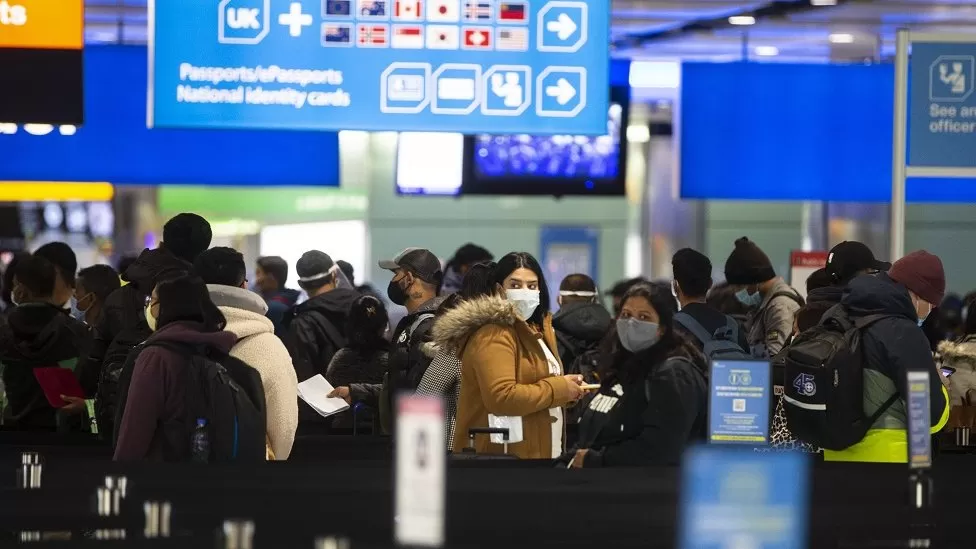
Border Force officers employed by the Home Office are set to walk out at Gatwick, Heathrow, Manchester, Birmingham and Cardiff airports for eight days from 23 December to New Year’s Eve.

Members of The Public and Commercial Services Union (PCS) – who represent 75% of all passport control staff – voted to take action in support of a 10% pay rise which they say will help border workers who are “struggling with the cost-of-living crisis”.

Some military personnel are already being trained up as part of contingency planning in a bid to avoid widespread travel disruption at Christmas.

While armed forces will be sent to hospital trusts to familiarise themselves with vehicles ahead of an ambulance worker strike on 21 December.

Paramedics and control room staff will walk out in coordinated strike action by the three main ambulance unions – Unison, GMB and Unite – in a dispute over pay. The action will affect non-life threatening calls only.

Prime Minister Rishi Sunak has also previously pledged to introduce “new tough” anti-strike laws.

But some of the unions have said instead of meeting each other, ministers should meet them and negotiate pay – arguing wage offers are not enough to keep up with the rising cost of living.

Unison’s head of health Sara Gorton said: “The wage rise given to health workers this year simply hasn’t been enough to stop staff leaving in droves. Without enough employees in the NHS, patients will go on waiting too long for ambulances and for treatment to start.”

“Instead of putting plans in place for the strike days, ministers should be concentrating all their efforts on ending the disputes,” she added.

‘If assemblies dissolved, Nawaz may be asked to return immediately’

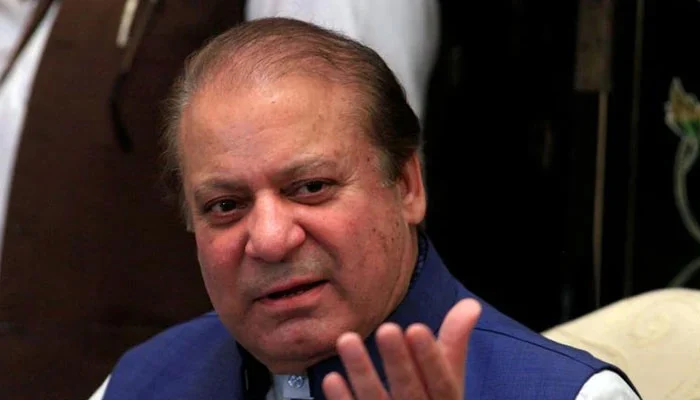
LAHORE: In case of dissolution of assemblies, party supremo Nawaz Sharif would be requested to return to Pakistan immediately, sources in the Pakistan Muslim League-Nawaz (PML-N) said Saturday.

“Nawaz Sharif will be welcomed at the airport,” party sources told Geo News — as the coalition parties are now asking Pakistan Tehreek-e-Insaf (PTI) Chairman Imran Khan to dissolve the assemblies as they are ready to face him in Punjab and Khyber Pakhtunkhwa.

According to sources, the PML-N has expressed its willingness to accept Chaudhry Parvez Elahi as chief minister of Punjab and even PTI’s demand for fresh elections, but conditionally.

“PML-N is in close contact with Chaudhary Shujaat Hussain,” sources said.

“As soon it gets something solid from Shujaat, the PML-N will move ahead with its strategy.”

Moreover, they added that Chaudhry Parvez Elahi and Shujaat were also back in touch; however, no political discussions had so far been reported to have taken place between them.

Quoting the party stance, sources said the PML-N did not want Parvez Elahi’s “double game.” “He (CM Punjab) will have to come out in the open [with what they have on their mind].”

Sources added that the party leadership also directed its divisional presidents during the PML-N Punjab meetings to prepare the lists of expected candidates for their constituencies.

Minister for Interior Rana Sanullah told Geo News that Shujaat was an ally of the coalition parties and it’s not uncommon for two sides to hold meetings.

“We just don’t want a double game like before,” the minister said.

A day earlier, Sanaullah said preparations for a historic welcome to PML-N supremo Nawaz were in full swing.

“We have kicked off work on arrangements from today. Workers from every union council will come to greet the party president holding banners with Nawaz Sharif’s name inscribed on them,” the minister said speaking to the media Friday.

“Nawaz Sharif’s welcome will decide [who will win] the general election.”

PML-N senior leader and Economic Affairs Minister Sardar Ayaz Sadiq had earlier this week claimed the elder Sharif is coming in January next year.

Three-time former prime minister Nawaz Sharif left for London in November 2019 following his illness. He has been living in the UK capital city in self-exile.

Nawaz will allocate tickets to the candidates for the next general elections, Ayaz Sadiq said during Geo News’ programme “Capital Talk”, adding that the polls would be held in 2023.

On December 2, Khan urged the government to hold talks to decide a date for an early election to end an impasse that has stoked political instability since his ousting in April.

The 70-year-old cricketer-turned-politician has been leading a countrywide agitation, demanding an early election following his removal in a parliamentary vote led by his united opposition.

Prime Minister Shehbaz Sharif, who replaced Khan, has rejected the demand for the snap polls, saying that the election will be held as scheduled later next year.

Khan has lately threatened to dissolve parliaments in two provinces, which are ruled by his party and coalition partners.

“Either sit with us and talk as to when the next elections should be held, or else we will dissolve the assemblies,” Khan said in an address to his party members telecast live.

Ties between Chaudhry brothers, Sharifs’ warming up

The latest political developments show a thaw in relationships between the Chaudhrys of Gujrat and the Sharifs’, signaling chances of a new political alliance in coming days

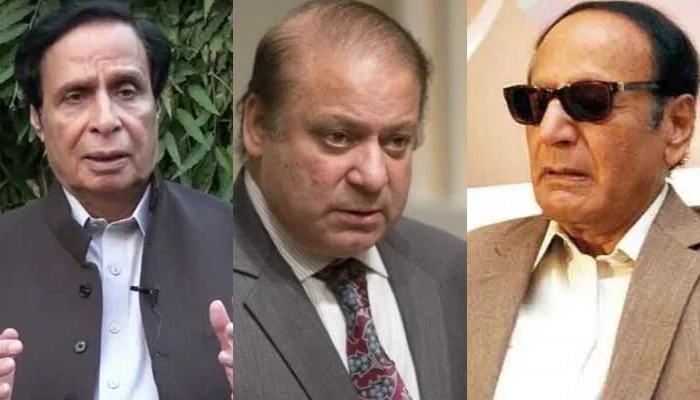
Moreover, there are reports that contacts between the Chaudhry brothers — Punjab Chief Minister Parvez Elahi and former prime minister Chaudhry Shujaat Hussain — are restoring at a certain level which might pave the way for some new political alliances with the political opponents.

Sources said the Shujaat group in Pakistan Muslim League-Quaid (PML-Q) and Pakistan Muslim League-Nawaz (PML-N) have sprung into action to bring an in-house change in Punjab amid claims that six members of PML-Q Parvez bloc are ready to join the Pakistan Democratic Movement (PDM).

An important development took place on Saturday when Minister for Board of Investment Chaudhry Salik Hussain held a crucial meeting with PML-N supremo Nawaz Sharif in London. The two leaders discussed the matters pertaining to Punjab’s political situation and Pakistan Tehreek-e-Insaf’s announcement that it would dissolve the Punjab and Khyber Pakhtunkhwa assemblies.

In a media talk after the meeting with Nawaz, Salik said the deposed premier did not tell him the exact date of his return to Pakistan. He said that in the next general election, Shujaat would lead the PML-Q campaign. He said PML-Q leader Moonis Elahi did not take him into confidence when he joined PTI chief Imran Khan’s bloc. “Chaudhry Shujaat Hussain and I are ready to talk to Moonis Elahi if he wants,” Salik added.

According to sources, the PML-N has expressed its willingness to accept Parvez as chief minister and even PTI’s demand for fresh elections, but conditionally. “The PML-N is in close contact with Chaudhry Shujaat Hussain,” sources said. “As soon it gets something solid from Shujaat, PML-N will move ahead with its strategy.”

Parvez, Shujaat back in touch

Moreover, they added that Parvez and Shujaat were also back in touch. however, no political discussions had so far been reported to have taken place between them. Moonis also disclosed on Saturday that the Punjab CM and Shujaat are back in touch. Talking to online journalists at the Chief Minister’s House, he said he had not met his uncle Shujaat since the day he went to meet him from the assembly.

“There will be no compromise on the demand for snap polls and whatever PTI Chairman Imran Khan says will happen,” sources quoted Moonis as saying. “Elections are the solution for the current political situation,” he added.

As per sources, Moonis said that his party would stand alongside PTI in the future. “Some people do not want PTI and PML-Q to go side by side,” he said, adding that his father wanted to stay beside Khan for a long period of time.

According to sources, Moonis said all the decisions were made after consultations. “We have never done anything that would affect Imran Khan’s politics or respect as he is our benefactor,” he added.

‘Double game’

On the other hand, quoting the party stance, sources said the PML-N did not want Parvez’s “double game”. “He [CM Punjab] will have to come out in the open [with what they have on their mind].”

Minister for Interior Rana Sanullah told Geo News that Shujaat was an ally of the coalition parties and it’s not uncommon for two sides to hold meetings. “We just don’t want a double game like before,” the minister said.

PML-N sources also said that in case of dissolution of assemblies, Nawaz Sharif would be requested to return to Pakistan immediately. “Nawaz Sharif will be welcomed at the airport,” party sources said.

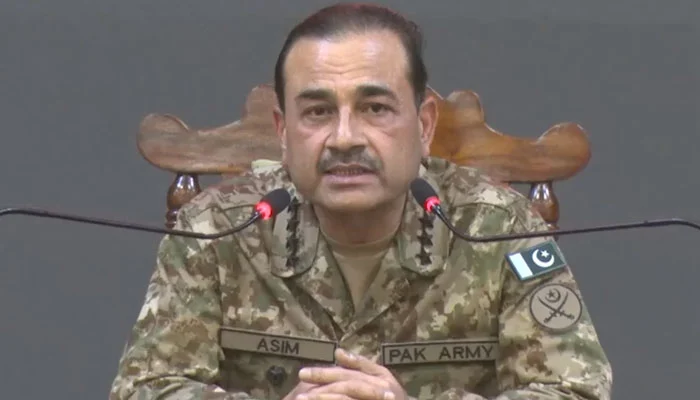
All measures will be taken for sustainable peace, prosperity in Balochistan: COAS

Chief of Army Staff (COAS) General Syed Asim Munir vowed that every effort will be made for the security and safety of the people of Balochistan to ensure a conducive environment for socio-economic development resulting in sustainable peace and prosperity.

The army chief, according to the Inter-Services Public Relations (ISPR), made the remarks while visiting Turbat.

ISPR said that COAS Gen Munir paid a two-day visit to Balochistan (Quetta and Turbat).

“On the first day, [the] COAS visited Corps Headquarters and laid floral wreath at Yadgare Shahuada and offered Fatheha,” read the statement.

Later, the army chief was given a detailed update on operational, training, and other matters of the formation. He also visited the Command and Staff College Quetta and the School of Infantry and Tactics.

During his interaction with young officers and instructors, the army chief advised them to focus on professional excellence to meet future battlefield challenges.

On the second day, the COAS visited Turbat where the IGFC South Balochistan briefed him on the prevailing security situation in Southern Balochistan and measures in place to ensure a safe and secure environment.

Earlier, upon arrival at Quetta, the army chief was received by Quetta Corps Commander Lieutenant General Asif Ghafoor.