
PM Shehbaz consults PDM on army chief’s appointment: sources

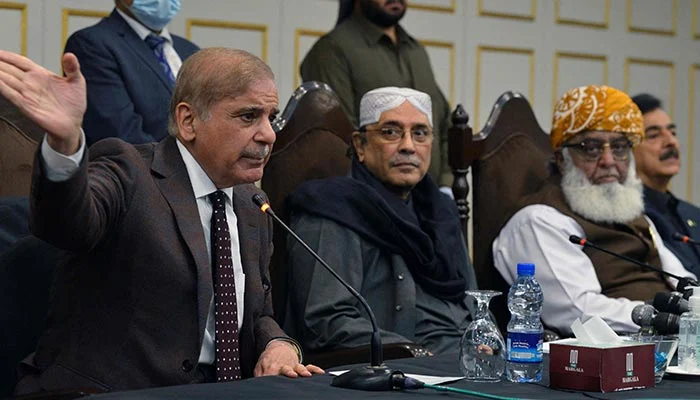
ISLAMABAD: Prime Minister Shehbaz Sharif has started consultations with the senior leadership of ruling parties prior to the appointment of the new army chief, sources said Thursday, as the date for incumbent Chief of Army Staff (COAS) General Qamar Javed Bajwa’s retirement nears.

The allied parties have fully mandated the premier for making the appointment as per set procedures and traditions, the sources added.

According to sources, Pakistan Democratic Movement (PDM) chief Maulana Fazlur Rehman telephoned the prime minister to inquire about his health.

During the telephone conversation, the two leaders exchanged views on the situation in the country and the appointment of the new army chief, the sources said.

Sources said the Maulana threw his weight behind PM Shehbaz, saying he should appoint the new army chief as per the set procedure.

Sources said a majority of the ruling coalition leaders termed the army chief’s appointment an administrative and discretionary power of the prime minister.

PPP and JUI-F leadership fully authorised PM Shehbaz Sharif to appoint the new army chief as per his wishes.

Consulting cabinet

PPP Co-chairman Asif Ali Zardari is also in Islamabad currently, and according to sources, he is likely to meet JUI-F chief Fazl and PM Shehbaz soon.

The federal cabinet sources said that permission was never obtained from the cabinet for the appointment of an army chief in the past. This is the prerogative of the prime minister, added the sources.

Some ministers said no fingers would be pointed from any quarter if approval was obtained from the federal cabinet because approval of any important appointment is obtained from the cabinet in the light of the Supreme Court’s orders.

However, other ministers did not agree to the suggestion and stressed solely relying on the prime minister for the appointment of a new chief of the army staff.

‘No favourites’

Minister for Defence Khawaja Asif earlier this week clarified the PML-N had no favourite name for the army chief’s appointment, The News reported.

Speaking with journalists outside the parliament, the defence minister — when asked about the reports of a deadlock between PML-N supremo Nawaz Sharif and PPP Co-chairman Asif Ali Zardari over the name of the next army chief — said that consultations over the appointment have not yet been held and, therefore, there was no question of a deadlock.

In response to media queries, APP quoted Khawaja Asif as saying: “The process for the appointment of new COAS will start from November 18-19 and the nominations will be shared by the Pakistan Army.”
SHC directs ECP to announce schedule for Karachi, Hyderabad’s local body polls

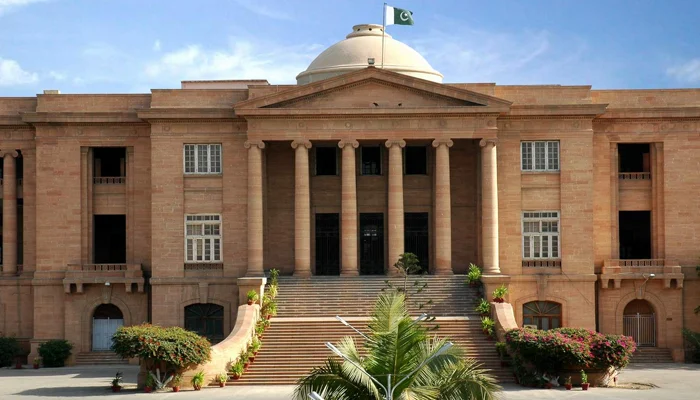
KARACHI: The Sindh High Court Friday morning directed the Election Commission of Pakistan (ECP) to announce a new schedule for the local government elections in Karachi and Hyderabad.

Announcing the decision — which the SHC reserved on November 14 — on the petitions of JI and PTI against the delay in the local body polls, the high court also told the Sindh government to provide security for the elections.

The local government elections have been delayed multiple times since July after the Sindh government repeatedly refrained from providing security for the elections due to floods.

The elections were initially scheduled for July 24, but they were delayed due to “bad weather and rains”. Then, polling was set to take place on August 28 and October 24, but the provincial government refused to provide security.

In its latest move to delay the polling further, the provincial cabinet had earlier this month approved delaying local government elections in Karachi Division for another 90 days under Sindh Local Government Act, 2013.

The ECP had also three days back reserved its ruling on the case of repeated postponement of local bodies elections in Karachi, while it is unclear when will the decision be announced.

‘Victory for the people of Karachi’

JI Karachi chief Hafiz Naeem-ur-Rehman said that the election commission should conduct the local elections as soon as possible and not delay them any further.

“This is not just a victory for JI, but a victory for the people of Karachi because through the elections they will get a leadership that can solve their problems,” the JI chief said as he hoped that his party could help Karachiites.

Rehman then criticised the Sindh government for the delay in the elections and said that the PPP does not want to hold local elections. “They have police to send to Islamabad, but they cannot provide law enforcement officials for the elections.”

“It is time for them to accept their defeat and brace themselves for the elections,” he added.

In conversation with journalists outside the high court after the ruling, PTI leader Khurram Sher Zaman said that his party filed a petition against the delay two months ago.

Zaman said that the Sindh government have made a “drama” out of the local body polls. “The Sindh government and its allies know if the elections take place, it will be the final nail in their coffin,” he added.

The PTI leader claimed that the court has ordered to hold elections within four weeks time.

North Korea fires missile hours after warning of ‘fiercer’ military response

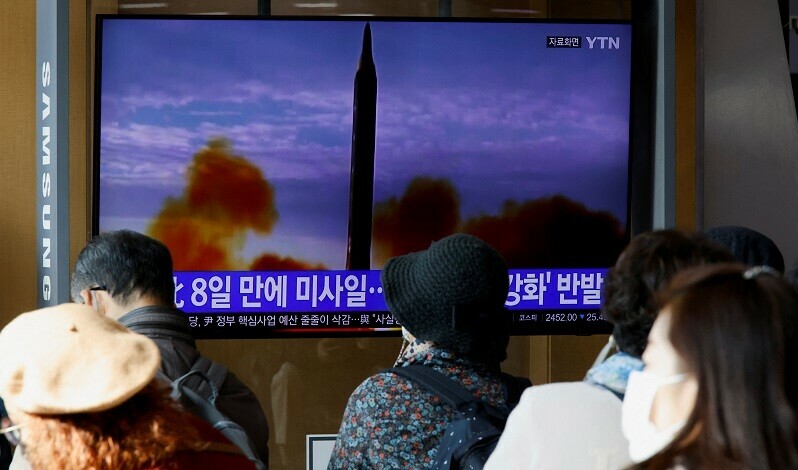
South Korea’s Joint Chiefs of Staff said that the military had “detected around 10:48am (0148 GMT) one short-range ballistic missile fired from the Wonsan area in Kangwon province”.

“The military has stepped up monitoring and guard and are maintaining utmost readiness in close coordination with the US,” it added.

Earlier this week, US President Joe Biden discussed North Korea’s spate of recent missile tests with Chinese counterpart Xi Jinping on the sidelines of the G20 summit in Bali, Indonesia.

The US leader pushed China to use its influence to rein in North Korea after the wave of missile launches raised fears the reclusive regime would soon carry out its seventh nuclear test.

Biden also held talks with his South Korean counterpart Yoon Suk-yeol and Japanese Prime Minister Fumio Kishida on Sunday to discuss ways to address the threat posed by the North’s “unlawful weapons of mass destruction and ballistic missile programs”, the White House said.


On Thursday, North Korea’s minister of foreign affairs, Choe Son Hui, slammed those discussions, saying they were “bringing the situation on the Korean peninsula to an unpredictable phase”.

“The US ‘bolstered offer of extended deterrence’ and the daily-increasing military activities of the allied forces around the Korean peninsula are foolish acts,” Choe said in a statement carried by state news agency KCNA.

The more Washington works to strengthen its security alliance with Tokyo and Seoul, “the fiercer the DPRK’s military counteraction will be”, Choe said, referring to the North by its official name.

Experts said the Thursday missile launch was timed to coincide with the statement from Pyongyang’s foreign minister.

The North “fired the missile after releasing the statement hours earlier in an attempt to justify the launch to send its message to the US and Japan,” Cheong Seong-chang, a researcher at the Sejong Institute told AFP.

UN gridlock

Earlier this month, North Korea conducted a flurry of launches, including a November 2 barrage in which Pyongyang fired 23 missiles — more than during the whole of 2017, the year of “fire and fury” when Kim traded barbs with then US president Donald Trump.

The blitz came as hundreds of US and South Korean warplanes — including B-1B heavy bombers — participated in joint air drills, which have long sparked strong reactions from North Korea, which sees them as rehearsals for an invasion.

Experts say North Korea is seizing the opportunity to conduct banned missile tests, confident of escaping further UN sanctions due to Ukraine-linked gridlock at the United Nations.

China, Pyongyang’s main diplomatic and economic ally, joined Russia in May in vetoing a US-led bid at the UN Security Council to tighten sanctions on North Korea.

Washington has responded to North Korea’s sanctions-busting missile tests by extending exercises with the South and deploying a strategic bomber.

Pyongyang has also been under a self-imposed coronavirus blockage since early 2020, which experts say would limit the impact of any additional external sanctions.

“Choe Son Hui’s threatening statement and North Korea’s most recent missile launch are attempts to signal that Pyongyang won’t back down under international pressure,” said Leif-Eric Easley, a professor at Ewha University in Seoul.

But he said it was clear that Biden, Yoon and Kishida’s summit had taken “substantive steps on trilateral coordination”, even as China’s Xi ended his Covid-linked isolation with a “relative charm offensive” at the recent G20 summit.

“At some point, Chinese interests will prefer exerting pressure on Pyongyang rather than face a more strategically united US, South Korea and Japan,” Eastley added.

US says prosperous Pakistan critical to interests in region, world

WASHINGTON: The United States said it values longstanding cooperation with Pakistan and has always viewed a prosperous and democratic Pakistan as critical to its interests.

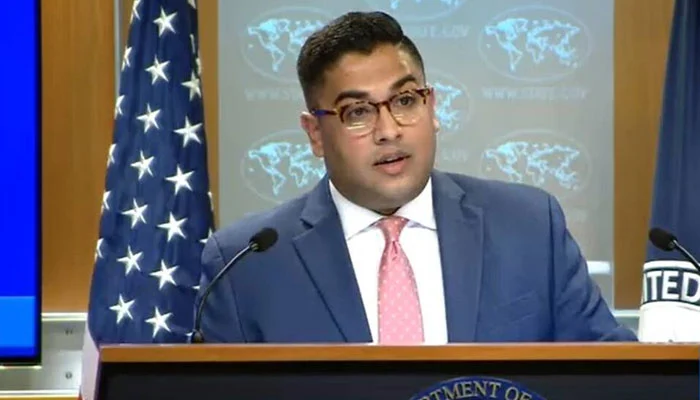
“The US doesn’t have a position on one political candidate of a party versus another. We support the peaceful upholding of democratic, constitutional, and legal principles,” said US State Department spokesman Vedant Patel on Wednesday.

“And ultimately, we will not let propaganda, misinformation, and disinformation get in the way of any bilateral relationship, including our valued bilateral partner with Pakistan.”

Patel’s remarks come after PTI Chairman Imran Khan withdrew his narrative on the “US conspiracy” that allegedly led to his ouster as the prime minister in an interview with Financial Times.

“As far as I’m concerned, it’s over, it’s behind me. The Pakistan I want to lead must have good relationships with everyone, especially the United States,” Khan said while expressing a desire to mend ties with Washington.

Vedant Patel refused to comment on former prime minister Imran Khan’s statement on his visit to Russia. He reiterated that his country has always viewed a prosperous and democratic Pakistan as critical to the US interests not just in the region, but also the world.

LHC turns down plea for army chief appointment on seniority basis

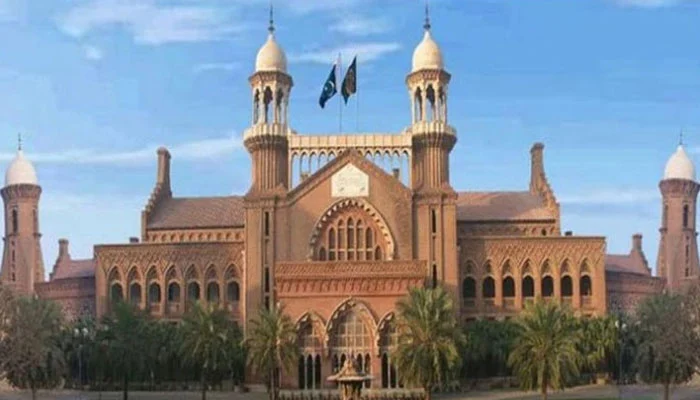
LAHORE: The Lahore High Court (LHC) on Wednesday turned down a plea seeking appointment of the army chief on the basis of seniority and declared it inadmissible, The News reported.

The petition submitted by Advocate Najma Ahmed prayed that the court direct the respondents to appoint the senior-most person as the next army chief.

The petitioner maintained in the plea that Chief of Army Staff (COAS) Qamar Javed Bajwa is retiring on November 29. Keeping the tradition in view, the names of five generals recommended by the Ministry of Defence for the appointment of the army chief are considered for the appointment of the new COAS.

The petitioner stated that according to the rules of business, the prime minister has been given the discretionary power to make one of the five military officials as the army chief.

Referring to Article 243 (4b) of the Constitution which lays down the procedure for the appointment of Chief of Army Staff, the petitioner claimed that the traditional procedure for appointing the new army chief is in conflict with Article 25 of the Constitution, and is illegal and unconstitutional.

The federal government, he said is bound to appoint the new army chief in accordance with the law. The petitioner implored the court to issue directions to appoint the senior-most officer as the army chief.

The petitioner said that senior lawyer Aitzaz Ahsan has also expressed reservations over the appointment of the army chief through the traditional procedure.

However, the court observed that such a matter should be heard by a full court and suggested the petitioner approached the Supreme Court.

It may be noted that after crucial meetings between Prime Minister Shehbaz Sharif and PML-N supremo Nawaz Sharif in London, it was decided that the military’s senior-most officer will be appointed as the next army chief.

PM Shehbaz told journalists after the meeting that the army chief’s appointment is a constitutional matter and would decide in line with the constitution.

Moreover, Defence Minister Khawaja Muhammad Asif said in a press conference last month that anyone from among the five nominated names could be appointed as the next chief of army staff.

Replying to a query regarding the appointment of the army chief on the basis of seniority, the defence minister said: “All three-star generals are eligible for this.”

China’s Xi Jinping has been filmed accusing Justin Trudeau of leaking meeting details, days after they held talks at the G20 summit in Bali.

President Xi told the Canadian PM, via a translator, this was inappropriate and accused him of lacking “sincerity”.

He was likely referring to reports that Mr Trudeau discussed alleged Chinese espionage and interference in Canadian elections at the sit down.

The talks, which happened behind closed doors, were the pair’s first in years.

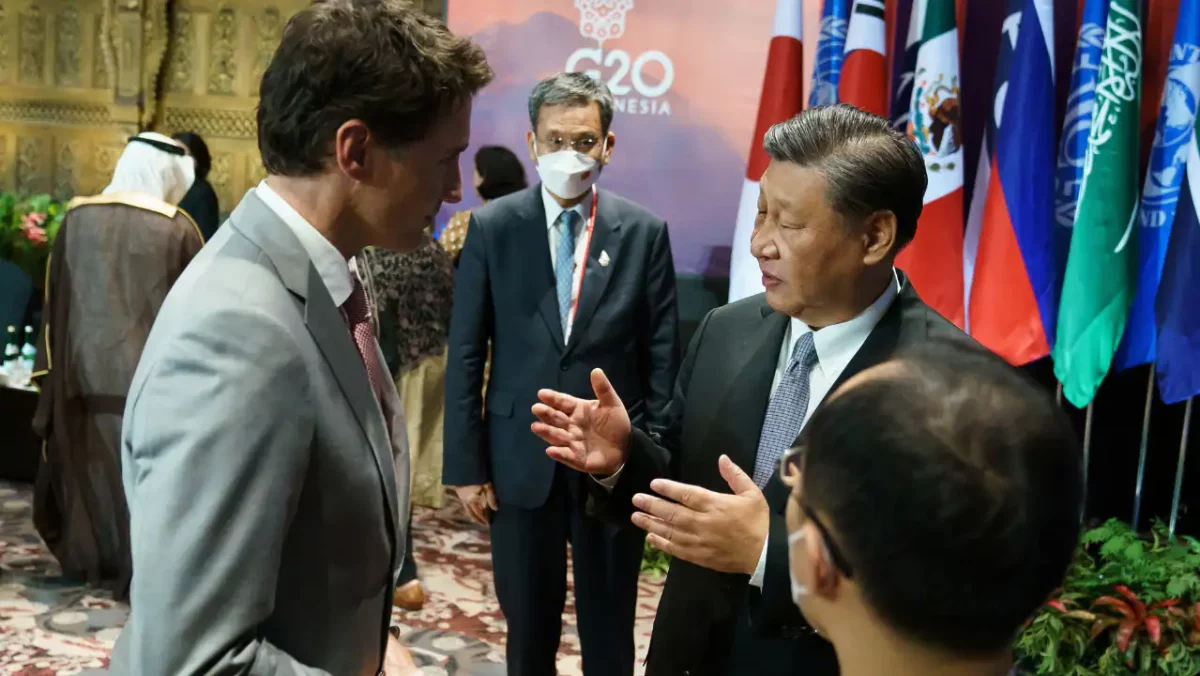
In the footage, filmed by journalists at the now finished gathering of world leaders, President Xi and Mr Trudeau can be seen standing close to each other and conversing via a translator.

“Everything we discussed has been leaked to the papers and that is not appropriate,” the Chinese leader told Mr Trudeau in Mandarin.

It captures a rare candid moment of President Xi, whose image is normally carefully curated by Chinese state media.

After smiling and nodding his head, the Canadian PM responded by saying “in Canada we believe in free and open and frank dialogue and that is what we will continue to have”.

“We will continue to look to work constructively together but there will be things we disagree on,” he added.

Before Mr Trudeau could finish, President Xi cut his counterpart off and asked that he first “create the conditions” – eventually shaking Trudeau’s hand and walking away.

The short but revealing exchange highlighted tensions between China and Canada, running high since the detention of Huawei Technologies executive Meng Wanzhou in 2018 and Beijing’s subsequent arrest of two Canadians on spying charges. All three were later released.

But tensions recently resurged following the arrest of Yuesheng Wang, a public utility worker at Hydro-Quebec, who was charged with espionage.

Mr Wang “obtained trade secrets to benefit the People’s Republic of China, to the detriment of Canada’s economic interests,” Canadian police said in a statement.

At the time, Mr Trudeau and President Xi were at the G20 summit on the Indonesian island of Bali.

Republicans have secured the 218 seats needed for a majority in the lower chamber of Congress a week after the midterm elections

While the party’s margin in the House of Representatives is razor-thin, it is enough to stall President Joe Biden’s agenda for the next two years.

But Democrats will keep control of the Senate when the new Congress convenes in January.

A handful of seats remain to be called.

The Republicans – who had hoped to win back control of both chambers – underperformed expectations in last week’s midterms.

But they won the seat they needed for their House majority on Wednesday when California’s 27th district went to incumbent Mike Garcia.

The Republican party is now projected to win between 218-223 seats in the 435-seat House, according to CBS.

But with votes in several cliff-hanger races still being tallied, their majority may not be clear for days or even weeks.

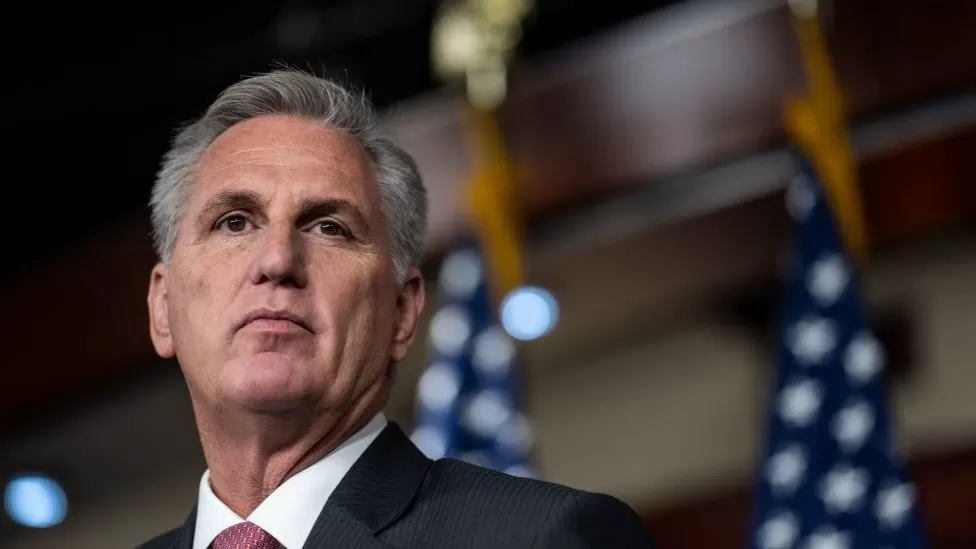
Kevin McCarthy, who was picked by rank-and-file Republicans on Tuesday to be their nominee to replace Democrat Nancy Pelosi as the next Speaker of the House, celebrated having “officially flipped” the chamber.

“Americans are ready for a new direction, and House Republicans are ready to deliver,” the California congressman tweeted on Wednesday night.

In order to be elected Speaker, the House Republican minority leader must win over majority support from the 435 members of the full House.

But Mrs Pelosi signalled she would not relinquish the gavel quietly, vowing in a statement on Wednesday night that her party would exert “strong leverage over a scant Republican majority”.

The first woman to hold the post, Mrs Pelosi, 82, said nothing in her press release about whether she planned to stay on as minority leader, amid speculation in Washington about her future.

Nancy Pelosi was able to accomplish a considerable amount with just a nine-seat margin, but she has proven to be singularly gifted at wrangling recalcitrant Democrats. There’s no guarantee Republicans, who run the gamut from moderates in suburban battleground districts to Freedom Caucus conservative hard-liners, will be equally co-operative with their party’s leadership.

A majority is a majority, however, and assuming Republicans can pull together to elect a speaker when the full chamber votes in January, they will reap the rewards of their midterm victory. House rules give the party in charge control over which legislation gets votes and which languishes in limbo. Republicans will also run all the House committees, with their sweeping oversight and subpoena powers.

While the fractious Republican caucus may not agree on much, they will be able to stop Joe Biden’s agenda in its tracks and force showdowns over federal budget priorities.

For a party that has watched Democrats rack up a string of legislative successes over the past two years, that by itself will be a significant achievement.

Presentational grey line

President Biden congratulated Mr McCarthy and offered to work with Republicans to deliver results for Americans.

“As I said last week, the future is too promising to be trapped in political warfare,” said the Democratic president.

“The American people want us to get things done for them. They want us to focus on the issues that matter to them and on making their lives better.”

Mr McCarthy’s party had hoped that the president’s relatively low popularity, stubborn inflation, and the fact that congressional maps were redrawn by Republican-led state legislatures would add up to midterms victories for them.

The blame for last week’s lacklustre showing has largely landed on two party leaders: former President Donald Trump and Senate minority leader Mitch McConnell.

On Tuesday night, the ex-president formally announced a third bid for the White House in 2024 from a ballroom at his Mar-a-Lago estate in Florida.

In Washington on Wednesday, Mr McConnell was renewed as Senate minority leader, fending off a challenge from fellow Republican Rick Scott of Florida.

Karen Bass (right) won her race for Los Angeles mayor on Wednesday

Non-congressional results are still trickling in more than a week after election day.

On Wednesday, congresswoman Karen Bass was projected to win the race to be the next mayor of Los Angeles, the second largest city in America, after defeating billionaire businessman Rick Caruso.

The Democrat will become the first woman to hold the office and the city’s second ever black mayor.

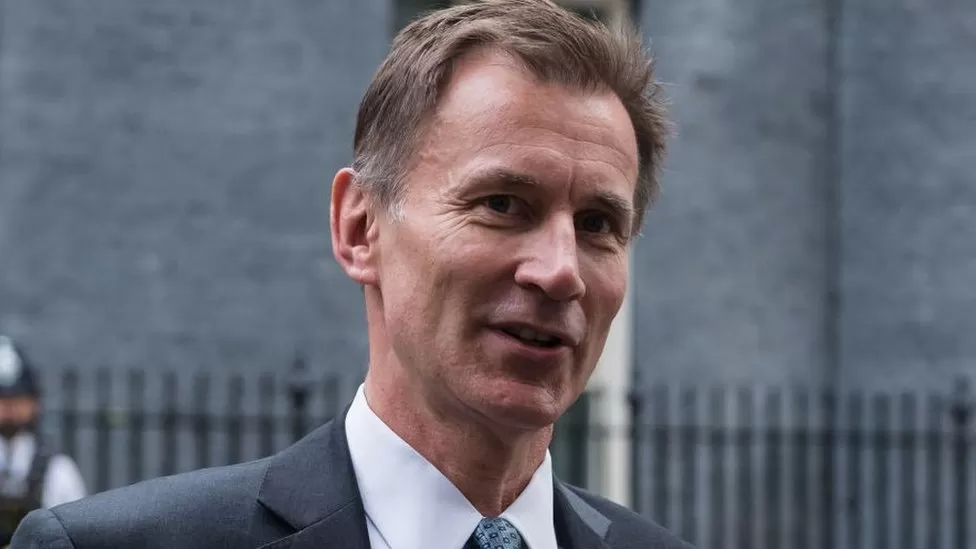
Chancellor Jeremy Hunt will pledge to face into the economic “storm”, as he is expected to confirm widespread spending cuts and tax rises.

He will say “difficult decisions” are needed to tackle soaring prices and limit mortgage costs.

But he faces a potential backlash from some Tory MPs who oppose big tax hikes.

The BBC understands the state pension and benefits will rise with prices. Energy support is likely to continue beyond April but will be less generous.

Labour said the country was “being held back by 12 years of Tory economic failure and wasted opportunities”, with working people “paying the price”

The final figures will be published as the statement is delivered but it is expected that around 55% of the measures will be spending cuts and 45% will be tax rises. This is likely to equate to around £30bn in spending cuts and £24bn in tax rises.

The chancellor is likely to argue that this is not a return to the 2010 Conservative-Liberal Democrat coalition government’s policy of austerity, with the balance of spending cuts to tax rises 80% to 20% under then-Chancellor George Osborne.

The government argues the measures are needed to fill a so-called fiscal black hole – the gap between what the government raises and spends.

However, some have questioned how reliable the forecasts are and the political decisions ministers are making.

The freezing of levels at which people pay various taxes will be a big theme of the statement. As a result of inflation and pay increases, people will end up paying more tax.

The threshold when the highest earners start paying the top rate of tax will be lowered to £125,000 from £150,000.

With inflation – the rate at which prices rise – now running at a 41-year high, many departments will see their budgets squeezed with below-inflation increases.

But it is expected the health budget will be protected and increase in real terms – even when price rises are taken into account.

The government will also save cash by making energy bill support less generous from April.

The Treasury is likely to say an Energy Price Guarantee will remain in place – but be set at a higher level. That means millions of households will see their bills go up by hundreds of pounds a year from April.

Under the current scheme a household using a typical amount of gas and electricity is expected to pay £2,500 annually. This figure is likely to rise to just over £3,000 but without the intervention the typical household bill would have hit £4,000.

Universal support payments will end but there will be targeted support for those on low incomes and pensioners.

The energy industry – including energy generators – will also be hit with a significantly expanded windfall tax to help pay for the support.

The BBC understands the state pension and benefits will rise with inflation – although this has not been officially confirmed.

An increased National Living Wage, from the current level of £9.50 an hour for over-23s, will also be confirmed.

After unexpected announcements in Mr Hunt’s predecessor Kwasi Kwarteng’s ill-fated mini-budget, no big surprises are expected from the chancellor.

Mr Hunt has already reversed almost all the tax rises announced in the mini-budget in a bid to stabilise financial markets.

Unlike Mr Kwarteng, Mr Hunt will publish independent forecasts from the Office for Budget Responsibility (OBR) alongside his statement.

Rishi Sunak: UK’s ‘reputation took a bit of a knock’

In his Autumn Statement, Mr Hunt is expected to say: “We are taking difficult decisions to deliver strong public finances and help keep mortgage rates low, but our plan also protects our long-term economic growth.

“At the same time, we protect the vulnerable, because to be British is to be compassionate.”

He is set to add that the UK is not “immune” to the global economic crisis “but with this plan for stability, growth and public services – we will face into the storm”.

However, some Tory MPs on the right of the party have already expressed concern about the prospect of tax rises.

Former cabinet minister Esther McVey has said putting up taxes is the “last thing” a Conservative government should be doing.

On Wednesday, she warned she would not support tax rises unless the “unnecessary vanity project” of HS2 was scrapped.

Simon Clarke, who was in Ms Truss’s cabinet, warned Mr Hunt not to “throw the baby out with the bathwater and overcorrect” by imposing too many tax hikes.

“I hope they will strike a balance which leans much more to spending reductions than tax rises to balance the books,” he told BBC Radio 4’s PM programme.

But former work and pensions secretary Stephen Crabb said he feared spending cuts could lead to “real risks to the quality of public services”.

He told the BBC the state pension and benefits “absolutely” need to rise with inflation and that the Energy Price Guarantee needed to be broader than just helping pensioners and people on benefits.

He added that he was confident Mr Hunt would make “the right decisions”.

Shadow chancellor Rachel Reeves said the UK needed “fairer choices for working people and a proper plan for growth”.

“Britain has so much potential but we are falling behind on the global stage, while mortgages, food and energy costs all go up and up,” she said.

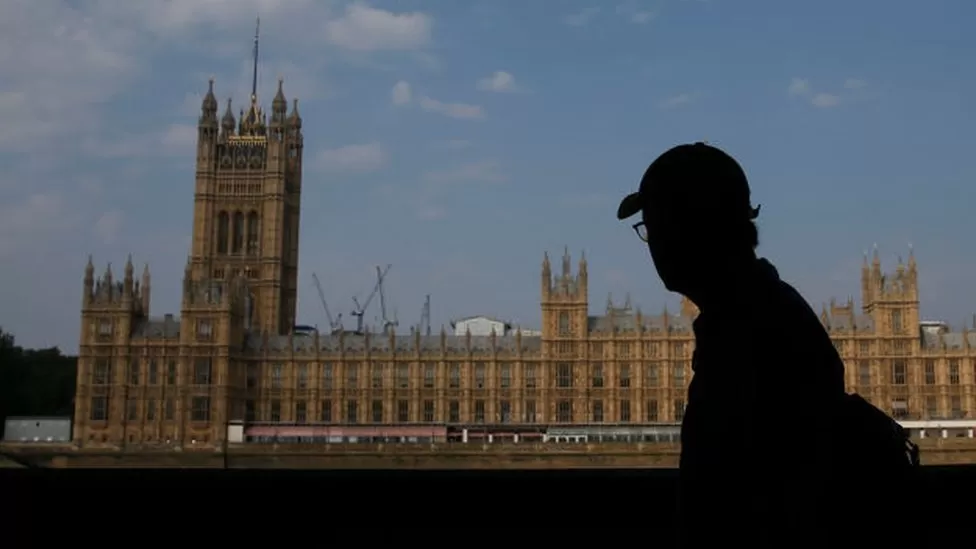
MPs have been warned they are being targeted by “hostile states”, with their mobile phones “a potential goldmine” of sensitive information.

In a letter to MPs, Commons Speaker Sir Lindsay Hoyle urged MPs to avoid using their phone for sensitive conversations or even having it in the same room.

“If hackers have switched on the microphone on one phone everyone in the room might be overheard,” he wrote.

The government is creating a taskforce to defend the UK from hostile actors.

Last month reports emerged that former prime minister Liz Truss’s phone was hacked while she was foreign secretary

The Mail on Sunday reported that private messages between Ms Truss and foreign officials, including about the Ukraine war, fell into foreign hands.

In relation to the letter, which was first reported by HuffPost UK, Sir Lindsay’s office said it did not discuss security matters.

However, it was shared with the BBC by an MP who received it.

In it, Sir Lindsay said: “As recent events have highlighted, hostile states continue to target Parliamentarians to gain insight into, or exert influence over, our democratic processes for their economic, military or political advantage.”

He warned no mobile phone could be made completely secure, but he shared advice from the government’s National Cyber Security Centre to minimise the risk of a phone being compromised.

The advice includes limiting the length of time messages are saved on a device and limiting access to microphones and location services.

One MP told the BBC the warning was necessary because “we are hopelessly slack” about information security.

Another described the advice as “perfect common sense”, adding: “I’m sure we are constantly being surveilled by state actors.”

The letter comes after an the government announced earlier this month that it was creating a special taskforce to defend the UK’s “democratic integrity” in the face of threats from hostile actors.

Security minister Tom Tugendhat said the taskforce would look at issues ranging from physical threats to MPs, to cyber-security.

The government’s National Security Bill, which contains measures designed to tackle threats such as spying, economic espionage, foreign interference and sabotage, is currently going through Parliament.

The bill seeks to make it an offence to interfere with the UK’s democracy and civil society through disinformation or by attacking its electoral processes.

A new Foreign Influence Registration scheme will seek to compel anyone acting for a foreign power or organisation to declare any political influencing activity that they are carrying out.

Terrorist attack in Lakki Marwat martyrs six policemen, including ASI

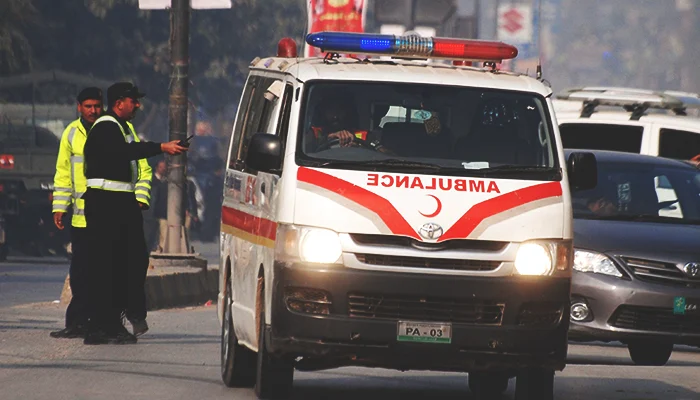
LAKKI MARWAT: At least six policemen — including an assistant sub-inspector (ASI) — were martyred when two terrorists on a motorcycle opened fire on their mobile during routine patrolling, officials confirmed Wednesday.

The incident took place within the parameters of the Dadiwala Police Station when the cops were conducting a routine patrol near a fair in the city, a spokesperson for the city’s police said.

The martyred cops include ASI Ilm Deen, Detective Foot Constable Ahmed Nawaz, Lower Head Constable Zubair, Frontier Reserve Police’s sepoy Usman Ali, Constable Mahmood Khan, and driver Dil Jan.

The spokesperson for the district’s police said that a search operation has been initiated to arrest the terrorists.

In a statement issued shortly after the heinous attack, Prime Minister Shehbaz Sharif condemned it and paid tribute to the martyred policemen. “The nation salutes brave officers who have sacrificed their lives for their motherland.”

Terming terrorists as the enemies of Pakistan, the prime minister vowed that the nation would stand strong against them. He then urged the KP government to provide the “Shuhda Package” to the families of the deceased.

Taking notice of the incident, Interior Minister Rana Sanaullah directed KP Chief Secretary Shehzad Bangash and Inspector-General of Police (IGP) KP Moazam Jah Ansari to submit a report.

Meanwhile, CM KP Mahmood Khan strongly condemned the tragic incident and said such cowardly acts could not diminish the morale of Pakistan’s security forces.

He vowed that the provincial government would not leave the bereaved families alone in this difficult time.

The chief minister also sought a report from relevant officials of the attack on the police van.

In response to the tragic incident, Chief Minister Sindh Murad Ali Shah condemned the attack and offered his condolences to the martyrs’ families.

He said the deceased policemen have received the high status of martyrdom. “The cowardly act of terrorists should be condemned as much as possible.”

The Turkish Embassy in Islamabad also strongly condemned the terror attack.

People in cities across the province have come out on the streets recently and demanded an end to terrorism, but authorities have time and again claimed to have the situation under control.

In light of the incidents, CM KP Mahmood Khan earlier this month approved several proposals for strengthening the police department in the province, especially in the merged districts, and gave the go-ahead to the establishment of counter-terrorism department (CTD) offices in all districts.

He okayed the suggestions while chairing the 10th meeting of the Provincial Task Force, where he pledged to provide all available resources to make the police force strong as per contemporary requirements, a handout had said.