
European Union supports COP27 call to phase down all fossil fuels

India wants countries to agree to phase down all fossil fuels at the UN climate summit in Egypt, rather than a narrower deal to phase down coal that was agreed at COP26 last year.

“We are in support of any call to phase down all fossil fuels,” Timmermans told a news conference. “But we also have to make sure that this call does not diminish the earlier agreements we had on phasing down coal, so if it comes on top of what we already agreed in Glasgow, then the EU will support in this proposal.”

India was among the countries resistant to efforts to eliminate coal at last year’s climate talks in Glasgow when the final deal at the last minute dropped wording calling for a phase out of coal-fired power, replacing it with phase down.

A wider push to phase down use of all fossil fuels would put oil and gas consumers and producers in the spotlight as well as those countries that rely on coal.

The Egyptian COP27 Presidency on Monday night released a two-page sketch of what could become a deal, featuring bullet points outlining many of the issues countries have asked be included — some of which have deeply divided nations.

The document did not refer to fossil fuels, although a COP Presidency spokesperson later said the list was not exhaustive and did not contain the language that would be used in the final version. For daily comprehensive coverage on COP27 in your inbox, sign up for the Reuters Sustainable Switch newsletter here.

Climate misinformation & disinformation

Campaigners on Tuesday urged leaders at the COP27 summit and big tech companies to formally crack down on climate disinformation that undermines efforts to limit the deadly impacts of global warming.

In an open letter, they called on COP27 delegates to adopt a common definition of climate disinformation and misinformation and work to prevent it.

They called on the bosses of seven digital giants, including Facebook, Google and Twitter, to implement tough polices to stop false climate information spreading on their platforms as they did for Covid-19. “We cannot beat climate change without tackling climate misinformation and disinformation,” they wrote.

Misinformation is false information that may be shared in good faith.

Disinformation is spread with intent to deceive.

“While emissions continue to rise, humanity faces climate catastrophe, yet vested economic and political interests continue to organise and finance climate misinformation and disinformation to hold back action.” They demanded “swift and robust global action from COP decision-makers and tech platforms to mitigate these threats”.

The letter was signed by 550 groups and individuals, including former UN climate chief Christiana Figueres and diplomat Laurence Tubiana, one of the architects of the 2015 Paris Agreement, which is the current basis for global targets to curb climate change.

The letter accompanied a survey released Tuesday of how widely false climate information is believed in six big countries.

It found that large shares of the population in Australia, Brazil, Britain, Germany, India and the United States believed false claims about human-caused climate change.

It said at least 20 percent of those surveyed in each country believed that current global warming is natural and not caused by humans.

The human causes of global warming are unequivocally documented in reports by the UN Intergovernmental Panel on Climate Change.

“There is a big gap in public perception and the science on issues as basic as whether climate change exists or whether it is mainly caused by humans,” Tuesday’s survey said.

“This perception gap weakens the public mandate for climate action and undermines the negotiations to achieve the goals of the Paris climate agreement.” The survey was carried out using YouGov panels of respondents and published by two climate content watchdogs, Climate Action Against Disinformation and the Conscious Advertising Net­work.

7m homes without power in Ukraine

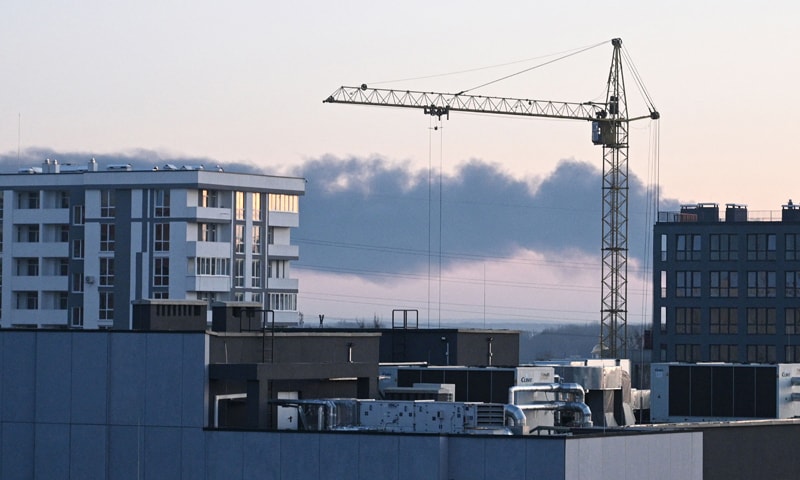
Seven million homes were without power following the latest attacks, the presidency said, dampening jubilation over the recapture of Kherson city as world leaders gather at a G20 summit expected to tackle the violence engulfing Ukraine.

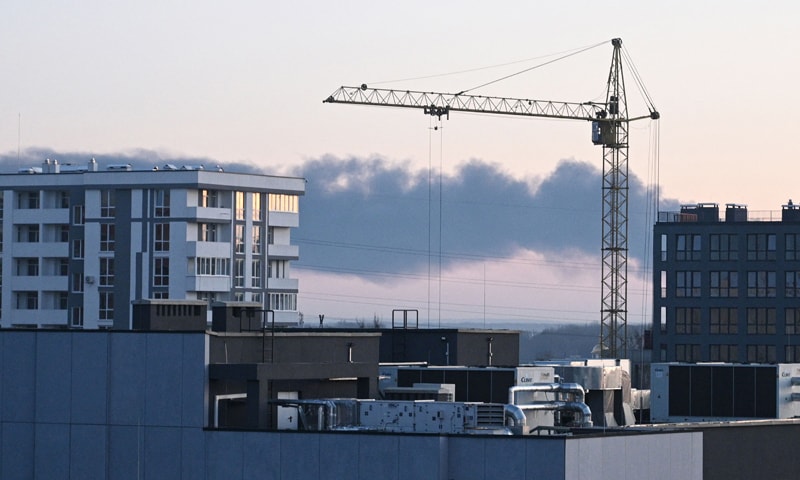
Lviv in the west and Kharkiv in the east were also attacked on Tuesday, authorities said, with Lviv’s mayor reporting 80 percent of the city was without power.

Zelensky said in a video statement that Russia had fired 85 missiles at energy facilities across the country.

“We are working, we will restore everything,” he said as areas across Ukraine reported interruptions to power supplies including the western Ternopil region that said 90 percent of users were cut off. And the Dnipropetrovsk region’s military administration said an energy facility in Kryvyi Rih had been hit, creating a “complicated” situation for the grid.

Moldova, which borders Ukraine, reported power cuts because of the missiles fired at its neighbour and called on Moscow to “stop the destruction now”.

Kyiv’s mayor Vitali Klitschko said at least half of the city’s residents were without power, two residential buildings were hit and “several missiles were shot down… by air defence systems”.

The deputy head of the president’s office Kyrylo Tymoshenko said the missiles had been fired by Russian forces and called the energy situation “critical”.

Bid to condemn Russian invasion divides G20

The war, which Russia has described as a “special military operation”, has overshadowed the meeting despite calls from host Indonesia for unity and a focus on action to resolve global economic problems like inflation, and food and energy security.

“Most members strongly condemned the war in Ukraine and stressed it is causing immense human suffering and exacerbating existing fragilities in the global economy,” a 16-page draft declaration said, according to a copy.

“There were other views and different assessments of the situation and sanctions,” said the draft, which diplomats said had yet to be adopted by the leaders.

Russian Foreign Minister Sergei Lavrov, who is heading his country’s delegation in the absence of President Vladimir Putin, denounced the attempt to condemn Russia as politicisation by Western countries that had tried unsuccessfully to include it in the declaration. Lavrov said Russia had put forward an alternative view and the draft would be completed on Wednesday. A US official said earlier the United States expected the G20 to condemn Russia’s war in Ukraine and its impact on the global economy.

German Chancellor Olaf Scholz said there were encouraging signs of a consensus that Russia’s war against Ukraine was not acceptable.

G20 ministers’ gatherings in the past have failed to produce joint declarations due to disagreement between Russia and other members on language, including on how to describe the war in Ukraine.

Earlier, Ukrainian President Volodymyr Zelenskiy told the summit in a virtual address that now was the time to stop Russia’s war in his country under a plan he has proposed “justly and on the basis of the UN Charter and international law”.

He called for restoring “radiation safety” with regard to the Zaporizhzhia nuclear power plant, introducing price restrictions on Russian energy resources, and expanding a grain export initiative.

“Please choose your path for leadership — and together we will surely implement the peace formula,” he said. Lavrov, who dismissed a news agency report on Monday that he had been taken to hospital in Bali with a heart condition, said he had listened to Zelenskiy’s address, adding that the Ukrainian leader was dragging out the conflict and not listening to Western advice.

Russia’s invasion of Ukraine triggered calls by some Western leaders for a boycott of the summit and for the withdrawal of Putin’s invitation but Indonesia refused to do so.

Former US President Donald Trump has launched his third bid for the White House, declaring: “America’s comeback starts right now.”

At his Florida estate, he said: “We have to save our country.”

Mr Trump’s announcement comes as some fellow Republicans blame him for the party’s lacklustre performance in last week’s midterm elections.

President Joe Biden, who defeated Mr Trump two years ago, has said he may run for re-election in 2024.

Speaking to an invited crowd from the ballroom of his Mar-a-Lago private club in Palm Beach on Tuesday night, Mr Trump, 76, said: “We are a nation in decline.

“For millions of Americans, the past two years under Joe Biden have been a time of pain, hardship, anxiety and despair.”

He continued: “In order to make America great and glorious again, I am tonight announcing my candidacy for president of the United States.”

Shortly before the speech, he filed paperwork with the Federal Election Commission formally declaring his presidential candidacy and setting up a fundraising account.

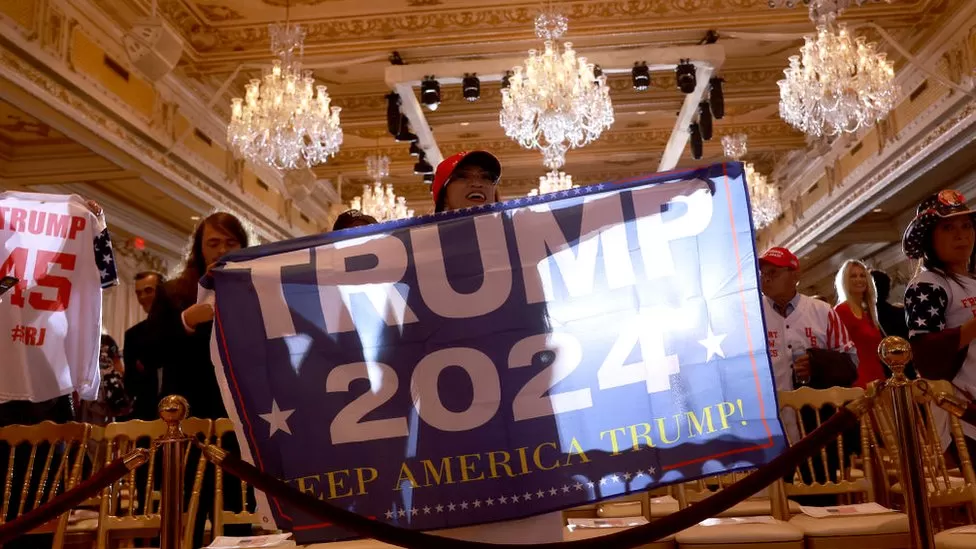
Meanwhile, outside Mar-a-Lago, supporters gathered to wave Trump 2024 flags.

Mr Trump’s speech lasted for more than an hour and touched on many of the same themes he has been repeating on stage for months.

These included border security, energy independence and crime, as well as attacks on Mr Biden’s record in office.

His wife, Melania Trump, joined him on stage at the end of the speech. But there were fewer family members present than at some of his past events and Ivanka Trump and Donald Jr did not attend.

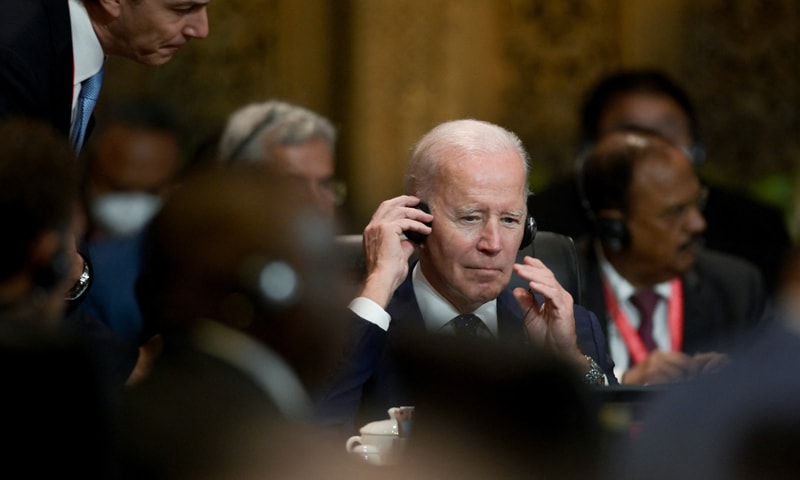
Nearly 11,000 miles (17,700km) away at the G20 summit in Bali, Indonesia, Mr Biden was asked whether he had a reaction to Mr Trump’s announcement.

“No, not really,” the Democratic president said. Last week, he was filmed laughing when a reporter suggested Mr Trump’s support base remained strong.

Supporters celebrated in the Mar-a-Lago ballroom after Mr Trump’s announcement on Tuesday

Mr Trump’s unusually early declaration for the election of 5 November 2024 is being seen as a tactic to steal a march on potential rivals for the Republicans’ White House nomination.

Although Mr Trump is the first to enter the race and instantly becomes the front-runner, he is expected to face challengers.

They may include his own former Vice-President Mike Pence, 63, and rising star Florida Governor Ron DeSantis, 44.

In Tuesday’s remarks, Mr Trump largely steered clear of rehashing his baseless claims that the 2020 election was stolen from him by mass voter fraud.

He left office after one term in 2021, refusing to acknowledge his defeat by seven million votes.

His debunked conspiracy theories riled up supporters who rioted at Capitol Hill in the final days of his presidency as lawmakers met to certify President Biden’s victory.


Mr Trump became the first president ever to be impeached twice, although congressional Democrats were thwarted in their bid to remove him from office by Senate Republicans.

He ploughed ahead with his announcement on Tuesday despite pleas from advisers to postpone until after a run-off election for a Senate seat in Georgia next month, amid fears his candidacy could prove too much of a distraction.

Some conservatives have faulted Mr Trump for the Republicans’ failure to achieve sweeping victories in last week’s midterm elections.

The party is on the verge of holding sway in the US House of Representatives, but it would be by a razor-thin margin.

Meanwhile, Democrats have retained control of the Senate and may even bolster their majority after the December run-off in Georgia.

Last week’s results were decidedly mixed for congressional hopefuls endorsed by Mr Trump.

Candidates he supported in key states such as Pennsylvania, Arizona and Michigan were defeated after echoing his election conspiracies, while others won in Ohio, Wisconsin and North Carolina.

Mr Trump’s White House bid comes as he is investigated on several fronts, including a justice department investigation into the removal of files marked classified from the White House to Mar-a-Lago at the end of his presidency.

He is admired by conservatives for installing three Supreme Court justices and enacting sweeping tax cuts, as well as presiding over a Middle East peace deal and the killing of Islamic State’s leader.

But America’s divisions widened during his four tumultuous years in office as he was accused of governing by tweet, equivocating over far-right violence, a chaotic response to the coronavirus pandemic, and alienating US allies with his “America First” policy.

The Scottish Parliament’s presiding officer has apologised after a woman was ejected from a committee meeting for refusing to remove a scarf in suffragette colours.

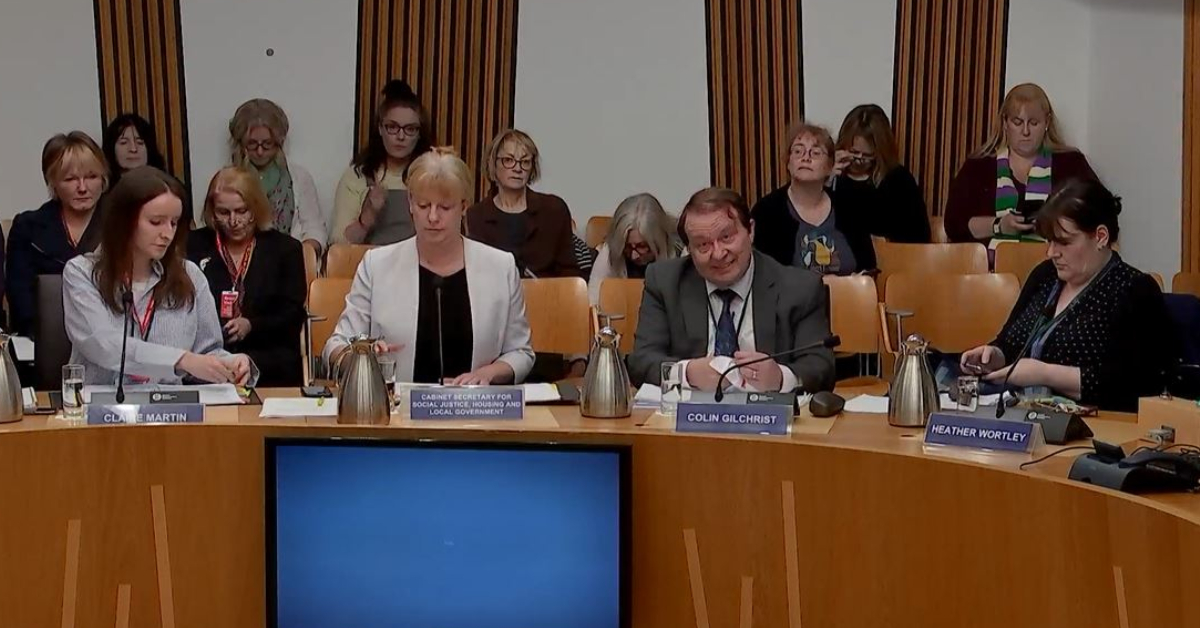
The woman was asked to leave a session of the equalities committee, which was discussing proposed reforms to Scotland’s gender recognition laws.

Presiding Officer Alison Johnstone later said her removal was an error.

She said suffrage colours were not banned from Holyrood.

The woman, who had been sitting in the public seats, tweeted a picture of her green, purple and white scarf shortly after being removed from the meeting of the Equalities, Human Rights and Civil Justice Committee on Tuesday morning.

Under the Twitter handle Obsolesence, she said: “I have just been asked to remove my new scarf. I refused because its lovely & inoffensive.

“Apparently (the Scottish Parliament) believes these colours are unacceptable while several MSPs wear rainbow lanyards.”

The colours have been associated with the suffragette movement, which campaigned for women to be given the right to vote in the early 20th century. More recently, they have also become associated with those opposed to changes to gender recognition laws.

First Minister Nicola Sturgeon wore a suffragette scarf to mark the centenary of women winning the right to vote in 2018, and the Scottish Conservatives said items bearing the colours are on sale in the Scottish Parliament gift shop.

Ms Johnstone later told the Holyrood chamber that staff had removed the woman due to visitor rules on “the display of banners, flags or political slogans, including on clothing and accessories”.

MSPs regularly wear symbols associated with political causes during meetings of the parliament.

First Minister Nicola Sturgeon wore suffragette colours as part of a 2018 campaign

Ms Johnstone told MSPs: “Let me make one thing crystal clear – suffrage colours are not, and never have been, banned at the Scottish Parliament.

“We actively support and promote universal suffrage in a number of ways at Holyrood and will continue to do so.”

The presiding officer said the woman was not ejected as a result of a request from any member of the committee.

She added: “The action taken was an error, and I would like to apologise on behalf of the Parliament. The wearing of a scarf in those colours does not, in itself, breach the visitor code of conduct.

“The parliament wishes people to engage with the democratic process, including observing elected representatives debate and make the law of the country.”

The woman’s removal had prompted criticism from Conservative MSPs.

Rachael Hamilton, who was wearing suffragette colours in the chamber, thanked the presiding officer for making the clarification.

Scottish Conservative MSP Rachael Hamilton welcomed the presiding officer’s comments

She said: “I think it’s important that you have confirmed that MSPs are treated exactly the same way as members of the public and the suffragette colours were not in breach of the guidelines set by this parliament.”

SNP MP Joanna Chery – a vocal critic of the gender reforms – tweeted that the removal of the woman was a “disgraceful episode for Scottish democracy”, adding: “This is not the Scotland I entered politics to promote.

“It’s completely out of step with what the suffragettes fought for, the spirit of the enlightenment and indeed the founding principles of the Scottish Parliament”.

The equalities committee is currently examining the Gender Recognition Reform (Scotland) Bill. which aims to make it easier for people to change their legally-recognised gender.

The bill passed the first stage of the parliamentary process at the end of October, although seven SNP MSPs defied the whip to vote against it and minister Ash Regan quit the government in protest.

Opponents of the bill have raised concerns about the potential impact of the proposals on the rights of women and girls, while supporters say it will have little impact outside the trans community.

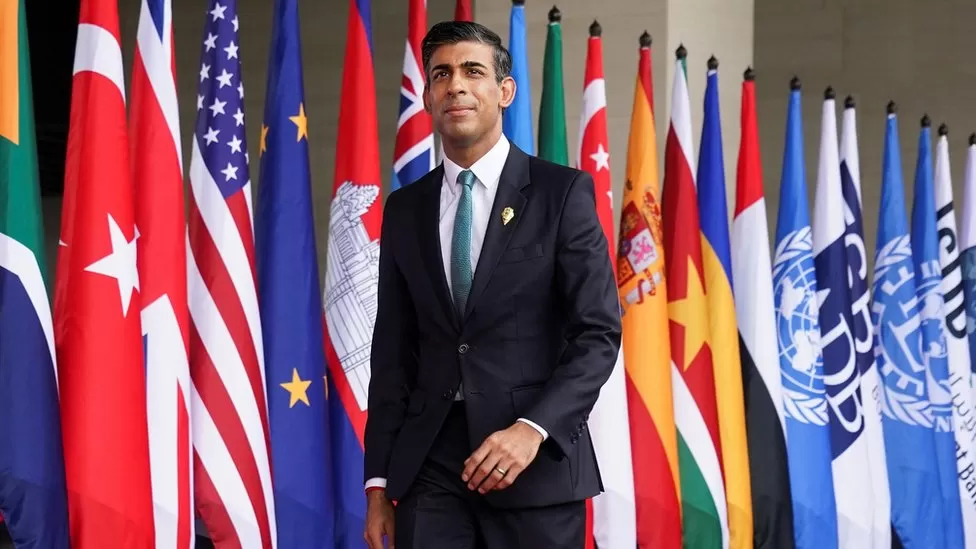
Rishi Sunak will call for a “frank and constructive relationship” with China during a meeting with the country’s President Xi Jinping at the G20 summit.

It is the first time a UK prime minister has met the Chinese president in person since 2018.

No 10 said China had “fundamentally different values to ours”.

But it said issues like the Ukraine war could not be addressed without “co-ordinated action by the world’s major economies”, including China.

Leaders of the world’s biggest economies are meeting in Bali, Indonesia, to discuss global challenges including the economic recovery from the Covid pandemic and the impact of the Russian invasion of Ukraine.

On Monday, US President Joe Biden also met President Xi and promised there would be no “new Cold War” with China.

The prime minister’s official spokesman said the UK government was “clear-eyed” in how it approached its relationship with China.

“The challenges posed by China are systemic, they’re long term, and it’s a country… with fundamentally different values to ours,” he said.

“But equally, none of the issues that we are discussing at the G20 – be it the global economy, Ukraine, climate change, global health – none of them can be addressed without co-ordinated action by the world’s major economies and of course that includes China.”

Downing Street said the prime minister would “encourage China to use its place on the global stage responsibly to resolve geopolitical tensions, ensure regional stability and play its part in tackling the devastating global impact of the war in Ukraine”.

It added that Mr Sunak would stress the UK’s national and economic security was a “pre-condition for any UK-China engagement”.

“And he will underline the importance the UK places on defending human rights and of speaking out and taking action where we have concerns – as we have done over Hong Kong and Xinjiang,” No 10 said.

Some Conservative MPs have called on the government to take a tougher stance on China.

Last year five MPs and two peers were sanctioned by China after raising concerns about human rights abuses against the Uyghur Muslim minority group in Xinjiang.

Mr Sunak’s predecessor Liz Truss was reportedly planning to re-categorise China as a “threat” to the UK as part of a foreign policy review.

On Tuesday, asked whether he would do the same, Mr Sunak told reporters: “I think that China unequivocally poses a systemic threat – well, a systemic challenge – to our values and our interests and is undoubtedly the biggest state-based threat to our economic security.”

But he added that it would not be possible to resolve global challenges like climate change or the war in Ukraine “without having a dialogue with them”.

In response, former Conservative leader Sir Iain Duncan Smith, one of those sanctioned by China, suggested Mr Sunak was softening on his previous position.

He told Talk TV: “It’s time to call [China] out as what they are, a threat, but I hope [the prime minister’s] not about to do a U-turn, it would be completely wrong.”

The last time a UK prime minister met the Chinese president was when Theresa May visited Beijing in 2018.

On Tuesday, Mr Sunak will also meet the leaders of India, Australia and Indonesia, as well as President Biden.

In a meeting with Prime Minister Narendra Modi, he will confirm a new partnership with India, opening in early 2023, to give young professionals the chance to work in the other country.

Under the new scheme, the UK will offer 3,000 places annually to degree-educated Indian nationals aged 18-30 to live and work in the UK for up to two years.

The scheme would be reciprocal, with the opportunity for British nationals to also work in India.

Mr Sunak said the Indo-Pacific region was “increasingly crucial for our security and our prosperity”.

The prime minister, whose parents are of Indian origin and whose wife was born in the country, said: “I know first-hand the incredible value of the deep cultural and historic ties we have with India.”

The UK is currently negotiating a trade deal with India.

Earlier this month, International Trade Secretary Kemi Badenoch denied talks had stalled after Home Secretary Suella Braverman’s made comments about Indian migrants in the UK overstaying visas.

A deal had been expected to be completed by the end of October to coincide with Diwali.

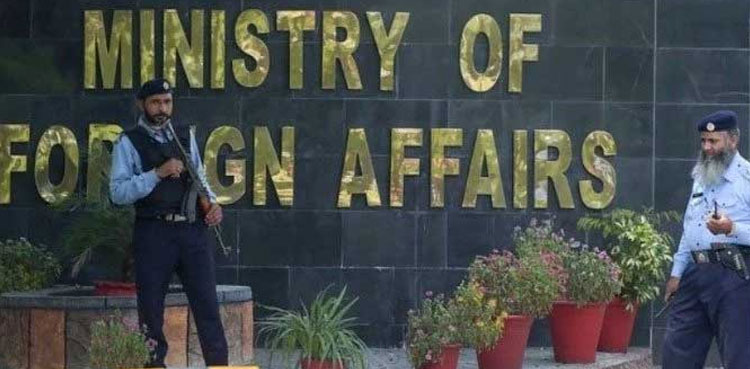
FO says verdict in Dasu bus attack demonstrates Pakistan’s commitment to counter terrorism

The statement from FO spokesperson Mumtaz Zahra Baloch comes days after an anti-terrorism court in Hazara awarded a death sentence to two men after convicting them for planning the attack.

Mohammad Hussain and Mohammad Ayaz of Matta tehsil in Swat district were charged with planning the bus bombing, which killed 13 people, including nine Chinese workers on July 14, 2021.

Responding to a question at a weekly press briefing today, Baloch said that the FO had noted the judgment passed by the relevant court and the details released by the local police.

“While specific queries may be directed to the relevant authorities, the proactive investigation, prosecution, and judgment in this case have once again demonstrated Pakistan’s abiding commitment to counterterrorism,” she said.

The spokesperson extended deepest condolences to the victims’ families and promised that Pakistan remains committed to the safety and security of Chinese workers, projects, and institutions in the country.

“The ironclad Pakistan-China All-Weather Strategic Cooperative Partnership will never be undermined by hostile forces,” Baloch vowed.

The attack

Thirteen people — including nine Chinese nationals, two personnel of the Frontier Constabulary and two locals — were killed and 28 others sustained injuries when a coach carrying them to an under-construction tunnel site of the 4,300-megawatt Dasu hydropower project fell into a ravine in the Upper Kohistan area after an explosion last year.

The Chinese and Pakistani nationals worked on the Dasu hydropower project in the Upper Kohistan district.

Although the Foreign Office had initially termed the incident an accident, the government later said traces of explosives had been found and that “terrorism could not be ruled out.”

China had later announced that it was sending a team to Pakistan to deal with the aftermath of the incident.

After more than a year, on November 11, ATC Hazara judge Sajjad Ahmad Jan announced judgement in the case in the Haripur prison in the presence of the accused.

After the completion of interrogation by police, the ATC had ordered the shifting of the accused to the Haripur Central Jail where they’re tried by the judge via a video link.

The prosecution’s records showed that a car carrying 100-120kg explosives hit the bus, while the bomber’s body parts suggested that he was not a Pakistani national.

The then foreign minister, Shah Mahmood Qureshi, had said that the bombing was carried out by Pakistani Taliban militants backed by the Indian and Afghan intelligence agencies and that Afghan soil was used for its planning and execution.

Sri Lanka budget lays down plans to clinch IMF deal

IMF recommendations have only been looked at to stabilise the economy, Wickremesinghe, who is also the country’s finance minister, told parliament, delivering the first annual budget since he took office in July.

The budget included measures aimed at reducing the government’s deficit as Colombo seeks to secure an IMF bailout package to help the country recover from its worst financial crisis in decades.

Soaring inflation, a weakening currency and low foreign exchange reserves have left the island of 22 million people struggling to pay for imports of essentials such as food, fuel and medicine.

Wickremesinghe laid down several medium-term targets for the government: increasing international trade as a percentage of GDP by more than 100pc, annual growth of $3 billion from new exports over the next 10 years as well as attracting $3bn in foreign direct investment over the same period.

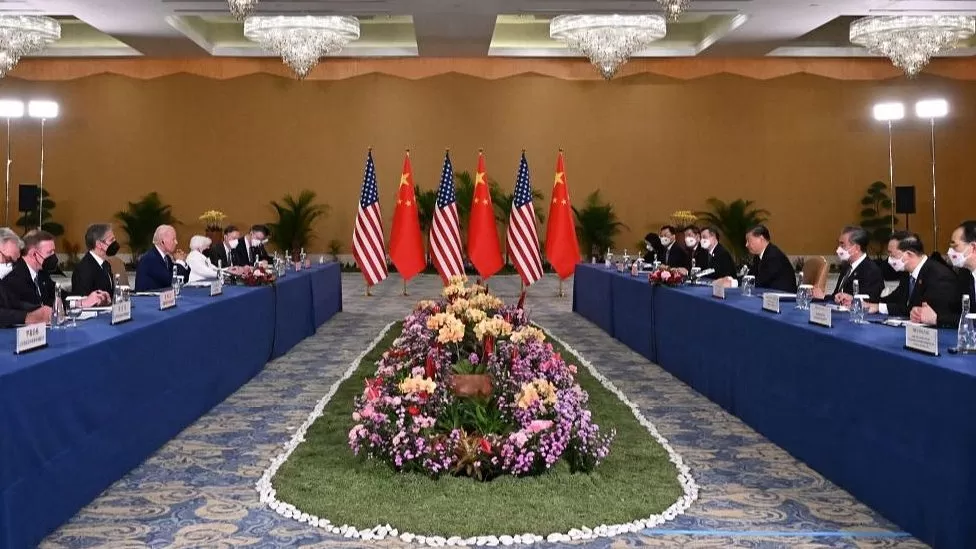
US President Joe Biden has promised there will be no “new Cold War” with China, following a conciliatory meeting with Chinese President Xi Jinping.

He also said he did not believe China would invade Taiwan.

It was the first in-person meeting between the two superpower leaders since Mr Biden took office.

The pair also discussed North Korea and Russia’s invasion of Ukraine at the talks in Bali, a day before the G20 summit on the Indonesian island.

Both said they opposed the use of nuclear weapons in Ukraine. Mr Xi, who has been urged to talk down Vladimir Putin, reiterated China’s calls for peace while adding there was “no simple solution to a complex problem”.

Mr Biden said in his press conference “it’s difficult to say that I’m certain that China could control North Korea”. But he also told Mr Xi that China had “an obligation” to dissuade Pyongyang from engaging in another nuclear weapons test.

Taiwan was a major focus during their three-hour meeting at a luxury hotel shortly after Mr Xi’s arrival.

Claimed by Beijing, the self-governed island counts the US as an ally, and has always been a thorny issue in US-China relations.

Tensions spiked in August when US House Speaker Nancy Pelosi visited Taiwan. China responded with large-scale military exercises around the island, prompting fears of a possible conflict between the US and China.

A readout to Chinese state media on Monday said Mr Xi had stressed that Taiwan remained “the core of China’s core interests… and the first red line in US-China relations that cannot be crossed”.

In recent weeks US officials have warned that China may escalate plans to invade Taiwan.

Reporters on Monday asked Mr Biden if he believed this to be true, and if he thought a new Cold War was brewing.

“I absolutely believe there need not be a new Cold War. I have met many times with Xi Jinping and we were candid and clear with one another across the board. I do not think there is any imminent attempt on the part of China to invade Taiwan,” he said.

“I made it clear we want to see cross-strait issues to be peacefully resolved and so it never has to come to that. And I’m convinced that he understood what I was saying, I understood what he was saying.”

The delegations’ talks lasted more than three hours

Mr Biden said the two leaders had agreed to set up a mechanism where there would be dialogues at key levels of government to resolve issues. Secretary of State Antony Blinken will also be visiting China soon, he said.

He added that he had made it clear to Mr Xi that “our policy on Taiwan has not changed at all. It’s the same exact position that we have had”.

Mr Biden has repeatedly said the US will defend Taiwan if it is attacked by China. It has been seen as a departure from the long-held US policy of “strategic ambiguity” over Taiwan, under which it does not commit to defending the island. Officials have rowed back on his statements.

Mr Xi, in China’s readout, called on the US to “be consistent with its words and actions” over Taiwan.

The US has long walked a tightrope over the Taiwan issue. A cornerstone of its relationship with Beijing is the One China policy, where Washington acknowledges only one Chinese government – in Beijing – and has no formal ties with Taiwan.

But it also maintains close relations with Taiwan and sells arms to it under the Taiwan Relations Act, which states that the US must provide the island with the means to defend itself.

Competition, not conflict

Mr Biden also raised concerns about human rights issues in China, including the treatment of the Uyghurs in Xinjiang, Hong Kong and Tibet.

Both leaders strove to signal to each other – and to the rest of the world watching their meeting – that they were aware that global stability rested on relations between their two countries, and that they would act responsibly.

In recent days Mr Biden and US officials have been at pains to signal their aim of conciliation, stressing repeatedly that the US does not want conflict with China, while maintaining a sense of strong competition.

Mr Xi appeared to be on the same page, acknowledging in the meeting’s opening remarks that “we need to chart the right course for the China-US relationship”, given that “the world has come to a crossroads”.

Later in the Chinese readout, Mr Xi said that “China-US relations should not be a zero-sum game in which you rise and I fall… the wide Earth is fully capable of accommodating the development and common prosperity of China and the United States”.

Wen-ti Sung, a political scientist who teaches with the Australian National University’s Taiwan Studies programme, noted that there were “few substantive agreements”.

Both leaders get a win, he said. “Xi shows he’s not intimidated by Biden, like US and China are true equals.”

Meanwhile Biden is given a pass on “the US pushing the envelope on Taiwan, and the two sides agreeing to improve dialogue reassures other countries”.

Political scientist Ian Chong of the National University of Singapore said: “The tone I think was overall positive. There’s some recognition that there’s common interests, and these include not letting the relationship spiral out of control.

“But I would still be somewhat cautious. Given the volatility in China-US relations, they have starts and stops.”

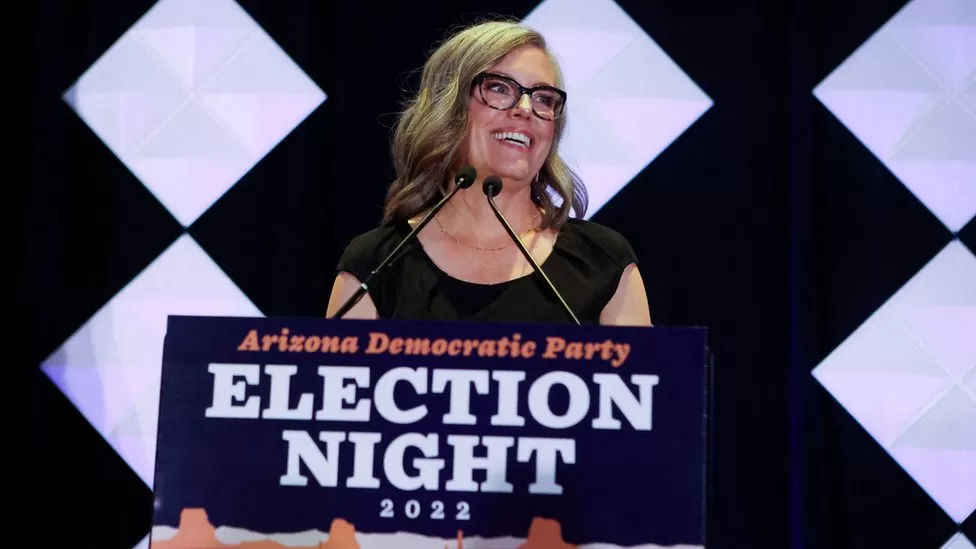
Democratic candidate Katie Hobbs has defeated Republican Kari Lake in Arizona’s race for governor,

The result is a rebuke of Ms Lake, who has peddled the false claim that Donald Trump won the 2020 US election.

In her victory statement, Ms Hobbs said that “in this moment of division” she would work for everyone in the state.

Elsewhere, almost a week after votes were cast, the race to control the House of Representatives remains tight.

Republicans must win at least 218 seats to claim a majority in the House of Representatives, a prospect that has sharply narrowed.

The party has currently won 215 seats while Democrats have won 211, according to race projections from CBS News.

In a midterm election that has further highlighted the stark partisan divisions in America, Ms Hobbs called for unity, saying she would work for those Arizonans who did not vote for her.

“Even in this moment of division, I believe there is so much more that connects us,” she said.

Her opponent, Ms Lake – who was endorsed by Mr Trump – told the BBC during campaigning that the former president should not need to run again in the 2024 election because “he won the last election”. She predicted he would “come back with a vengeance”.

There is no evidence that the 2020 election was stolen.

The midterm elections are for Congress, including all seats in the House of Representatives and one third of those in the Senate.

The Biden administration had feared that a loss of power in Congress would bring the president’s agenda to a halt. But the Democrats have retained control of the Senate.

If the two parties split control of Washington, Democrats will “maintain our positions” but voters should not “expect much of anything”, President Biden said on Monday.

Speaking to reporters in Indonesia, where he is attending the G-20 summit, Mr Biden said the results had “sent a very strong message around the world that the United States is ready to play” and wants to remain “fully engaged in the world”.


He noted there was “a strong rejection” of election denialism, political violence and voter intimidation. But he warned that, without a majority in the House, Democrats would be unable to codify abortion rights through legislation, a key priority for liberal voters.

Out of the 11 House races that still remain to be called, most are in western and southwestern states, including California and Arizona.

The latter’s race for governor is also too close to call, with Republican Kari Lake – a chief proponent of false claims that the 2020 election was stolen from Donald Trump – trailing Democrat Katie Hobbs.

The loss for Ms Lake sees her join the ranks of pre-eminent Trump-backed election deniers who lost last week. But a BBC News tally of results found at least 125 election deniers have won races for the House, Senate and governorships.

Newly elected members of Congress, including the first lawmaker from Generation Z and the first openly gay Republican, have already begun arriving in Washington for orientation.

History suggests the party controlling the White House usually loses seats in a midterm election, and Democrats’ performance this year is considered the best for a sitting party in at least 20 years.

That has endangered leadership bids for the top Republicans in the Senate and House ahead of the party’s internal elections on Tuesday.

House Minority Leader Kevin McCarthy – who hopes to succeed Nancy Pelosi as Speaker in the next Congress – and Senate Minority Leader Mitch McConnell are both reportedly scrambling to garner support from their colleagues.

Divisions within the party have been on full display in recent days as former President Donald Trump, who has received some of the blame for a poor showing, prepares to launch another presidential run later this week.

Mo Brooks, a Republican representative in Arizona and once a strong supporter of Mr Trump, said it would be a “bad mistake” for the party if the former president was their nominee in 2024.

“Donald Trump has proven himself to be dishonest, disloyal, incompetent, crude and a lot of other things that alienate so many independents and Republicans. Even a candidate who campaigns from his basement can beat him,” Mr Brooks told AL.com.