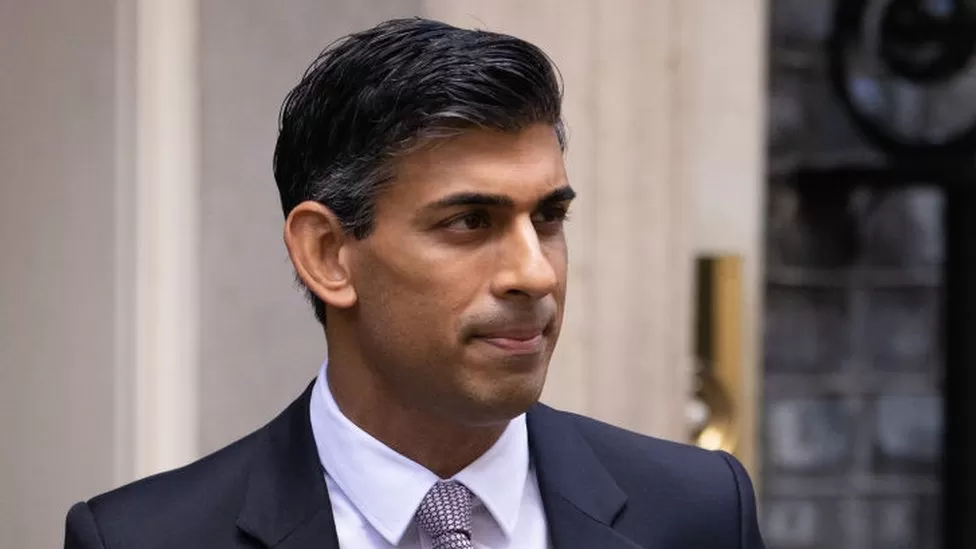

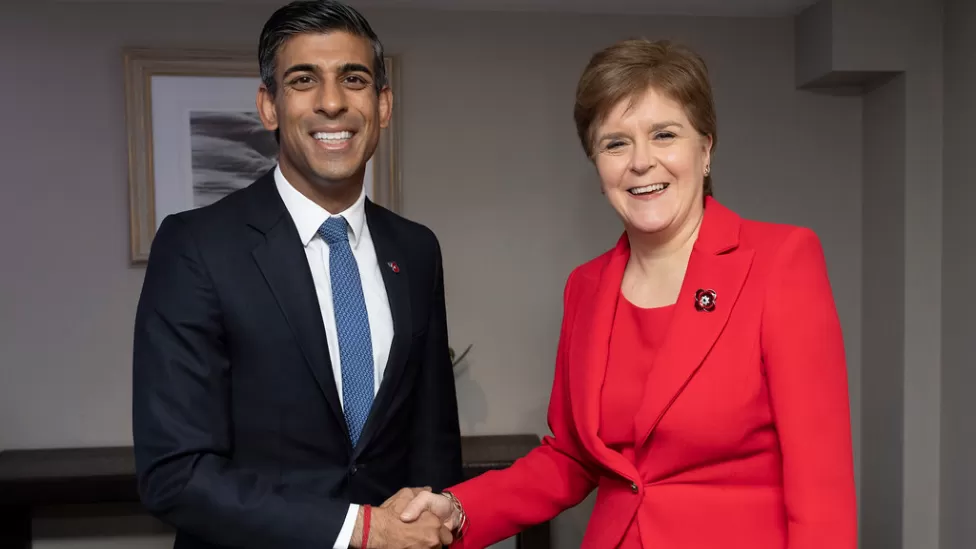
Nicola Sturgeon has met Rishi Sunak for the first time since he became prime minister.

Scotland’s first minister said the meeting was “cordial and constructive” despite the pair having “profound political disagreements”.

She said they discussed the cost of living crisis, the NHS and her desire for a second Scottish independence referendum.

Mr Sunak called on political leaders to unite to tackle shared challenges.

The talks were held in Blackpool ahead of a meeting of the British-Irish Council.


Ms Sturgeon said: “It is good to be able to sit down with the prime minister, as I used to do with Rishi Sunak’s predecessors, and to talk through issues that we are all grappling with.”

Rising inflation and the cost of living crisis were among topics on the agenda.

Mr Sunak said: “The economic challenges we face are similar, whether you are in Belfast or Dublin, Swansea or Edinburgh or indeed Yorkshire.

“So I thought it was important to come here, talk to other leaders about how we can relentlessly focus on coming together to serve the people that we represent across all these islands.”

Afterwards, he used Twitter to say it was “great to meet” Ms Sturgeon and Mark Drakeford, the first minister of Wales.

“Teamwork, absolute focus and collective effort will be required to deal with the shared challenges faced by people across the UK,” Mr Sunak added.

Chancellor Jeremy Hunt and Levelling Up Secretary Michael Gove were also involved in the discussions.

Ms Sturgeon said she spoke about her “profound concerns about the NHS and the fact it is close to breaking point across the UK”.

“It’s my government’s responsibility to manage the NHS in Scotland,” the SNP leader said. “But our ability to invest in it depends on the decisions taken by the UK government and we in Scotland are at the limits of what we can do.”

She called for an “injection of investment” in the health service ahead of the upcoming Autumn Statement.

And she explained their discussion about a second independence referendum, which she wants to hold in October 2023.

The UK Supreme Court is currently considering whether the Scottish parliament has the legal power to hold a referendum without the UK government’s consent.

On a second independence referendum, Ms Sturgeon said she would not allow Scottish democracy to be “held prisoner” by Westminster.

“The right way of doing that would be for the UK government to respect the mandate and agree a process to allow the people of Scotland to decide,” she said.

Mr Sunak has given no indication that he is likely to grant formal consent for a second vote.

He has previously said that ignoring Ms Sturgeon and the SNP would be “dangerously complacent” and described the first minister and her party as an “existential threat to our cherished union”.


While acknowledging “deep and profound political disagreements”, the first minister expressed hopes for a constructive relationship.

It comes after Mr Sunak’s predecessor Liz Truss failed to have any formal talks with Ms Sturgeon during her brief spell in Downing Street.

Ms Truss claimed during the contest to succeed Boris Johnson that the first minister was an “attention seeker” who was best ignored.

Ms Sturgeon said: “There’s been a lack of respect on the part of the UK government or riding roughshod over the powers and responsibilities of devolved parliaments.

“Now, I welcome Rishi Sunak’s words about wanting to reset the relationship and do things differently. I really welcome that.

“But the proof of the pudding will be in the eating. We need to see from the UK government proper respect.

“And if if that is the case, then I do believe that notwithstanding our disagreements, we’ll be able to build a good relationship.”

Rishi Sunak appears to have pushed the reset button on relations with Nicola Sturgeon and the devolved Scottish government.

By making an early effort to meet the first minister, he’s already done more for intergovernmental relations than his predecessor Liz Truss managed in her six-week premiership.

While Nicola Sturgeon has welcomed the chance to discuss shared challenges with the PM and his talk of closer co-operation, she is also putting their relationship to an immediate test.

To solve the pay dispute with nurses and other NHS workers, the first minister has asked for more money from the UK government and will find out in next week’s Autumn Statement whether or not that’s forthcoming.

There are, of course, policy differences on things like independence and nuclear power where there is little scope for agreement but that does not have to mean they can’t do business in other areas.

Rishi Sunak’s expected to visit Scotland in the near future and it’s not impossible that he and Nicola Sturgeon might jointly announce the two successful bids for green freeport status.
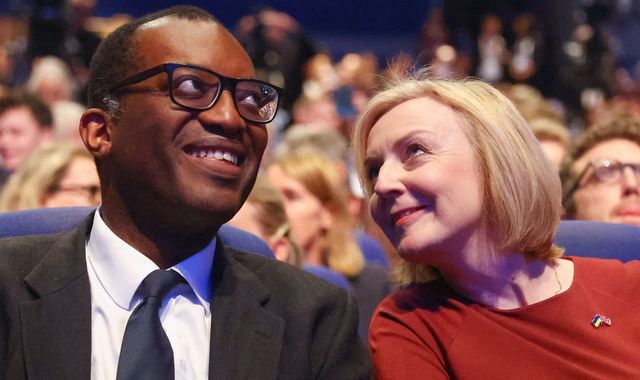
Former chancellor Kwasi Kwarteng has said he warned Liz Truss she was going too fast with her ill-fated economic plans.

In his first interview since he was sacked by the then PM, Mr Kwarteng told TalkTV he had warned her to “slow down” after September’s mini-budget.

He said he told her it was “mad” to fire him, and she would only last “three or four weeks” if she did.

“Little did I know it was only going to be six days,” he added.

Mr Kwarteng was dramatically fired by Ms Truss in October, two weeks after their tax-cutting mini-budget sparked turmoil on financial markets.

She then ditched almost all of the plan in a bid to stay in power, but announced her resignation a few days later – less than seven weeks after taking office – as support from Conservative MPs ebbed away.

Speaking to TalkTV, Mr Kwarteng said that he had warned Ms Truss about going at a “breakneck speed” with economic measures after the mini-budget.

“She said, ‘Well, I’ve only got two years’ and I said, ‘You will have two months if you carry on like this’. And that is, I’m afraid, what happened.”

He also said: “I think the prime minister was very much of the view that we needed to move things fast. But I think it was too quick.”

Mr Kwarteng, a longtime political ally and friend of Ms Truss, revealed the then-PM was “distressed and emotional” when she called him in to be fired, after summoning him back from a trip to the US.

He also revealed he found out he was going to be sacked when he saw a journalist tweeting about it while he was in the car going to Downing Street.

He said he had told her: “This is mad. Prime ministers don’t get rid of chancellors.”

Analysis

By David Wallace Lockhart, political correspondent

Liz Truss and Kwasi Kwarteng once looked like a dream combination to lead a Conservative government: freedom-loving tax cutters who wanted to prioritise growth, who also happened to be long-term friends.

But we know it didn’t work out that way. And now Mr Kwarteng has pointed the finger of blame firmly at his former boss. He claims to have told her to take her foot off the gas after the mini-budget.

This may raise some eyebrows, given that Mr Kwarteng told the BBC a few days after cutting taxes that there was “more to come”. That may not have helped investor confidence.

He insists that he remains friends with Ms Truss. But in this interview he does reveal elements of private conversations during his sacking that Ms Truss may well have preferred had stayed within the walls of Downing Street.

He once toured TV studios insisting she would make a great prime minister. It doesn’t feel like they’re on as good terms now as they once were.

And what next for Mr Kwarteng? It doesn’t sound like he’s going to be an awkward backbencher: he’s pledging complete loyalty to Rishi Sunak.

There was lots of detail in this interview, but it’s important to remember that this is only one side of the events that took place as Ms Truss’s premiership began to crumble. When will she break her silence?

The former chancellor said he did not think the prime minister could fire him “just for implementing what she campaigned on” during her summer Tory leadership campaign.

He highlighted pledges to scrap a planned increase in corporation tax and reverse a rise in national insurance as having been central to her platform.

Mr Kwarteng joined Ms Truss’s in arguing that low taxes and policy aimed at encouraging private investment were the best ways to boost economic growth.

During his time as chancellor, he repeatedly advocated measures of the sort set out in the mini-budget, and two days after delivering it told the BBC there was “more to come” in the way of tax cuts.

The comment, along with a decision to announce the mini-budget without publishing an assessment by the government’s fiscal watchdog, was later seen as key to convincing investors that the government did not have a credible plan to keep debt levels under control.

In the interview, Mr Kwarteng acknowledged he had to “bear some responsibility” for the pace of the changes.

Asked whether he would like to apologise to homeowners facing higher mortgage costs after the mini-budget, he replied: “I don’t want to relive the past, I just want to focus on where we are next week. There was turbulence, and I regret that”.

He insisted he and Ms Truss were “still friends” – adding that they last spoke around a week ago. He revealed he had still not returned a missed call from her two days ago but added “I will call her back”.


Ms Truss is yet to comment on her time in office since quitting Downing Street last month.

In a resignation speech outside No 10, she defended her lower-tax vision for the UK, insisting “We simply cannot afford to be a low-growth country where the government takes up an increasing share of our national wealth.”

In an earlier interview, she said she took responsibility for going “too far, too fast” with the tax cuts in the mini-budget.

Timeline

  • 23 September Mr Kwarteng delivers the so-called mini-budget, announcing the biggest package of tax cuts in 50 years
  • 25 September In an interview with the BBC, he says there is “more to come” in the way of tax cuts
  • 26 September The worst of the market turmoil begins, pushing the pound to record lows against the dollar and sending the cost of government borrowing soaring
  • 28 September The Bank of England announces a £65bn bond-buying programme to stem a mass sell-off
  • 3 October Mr Kwarteng announces that plans to scrap the 45p rate of income tax will not go ahead
  • 13 October He acknowledges there has been “some turbulence” in the markets but insists: “I’m not going anywhere”
  • 14 October After being recalled by Ms Truss from a summit in Washington, he is sacked as chancellor
  • 25 October Having lost the confidence of her MPs, Ms Truss resigns as prime minister

COAS Bajwa directs troops to focus on professional duties, serving nation

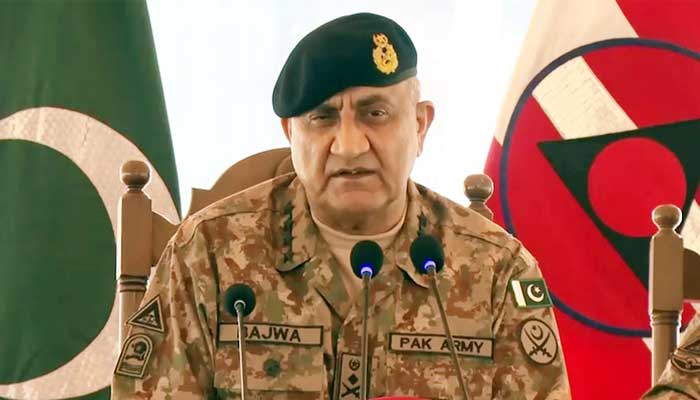
RAWALPINDI: Chief of Army Staff (COAS) General Qamar Javed Bajwa on Wednesday directed his troops to stay focused on professional duties as part of their service to the nation, Inter-Services Public Relations (ISPR) statement read.

Upon his arrival at Peshawar’s Corps Headquarters, General Bajwa laid a floral wreath at the martyrs’ monument.

The military’s media wing added that the COAS addressed officers and men of the Peshawar Corps and appreciated the formation for its monumental efforts in achieving peace and stability.

“We owe it to the sacrifices of our shuhada for providing a secure and enabling environment for socio-economic development in Newly Merged Districts in particular and KP in General,” the COAS said.

Earlier, on arrival at the Corps Headquarters, the army chief was received by Commander Peshawar Corps, Lieutenant General Hassan Azhar Hayat.

France, Italy wrangle over migrant rescue ship

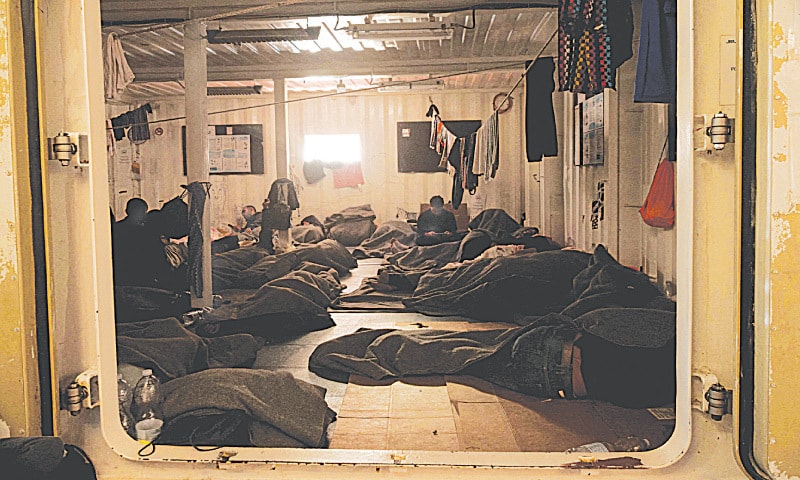
It was the latest European standoff over where to disembark migrants picked up after trying to reach Europe from North Africa, with Italy increasingly frustrated at taking in the bulk of those rescued.

The row centres on the Ocean Viking, a charity ship that has sailed away from Sicilian waters towards France after unsuccessfully waiting for permission to dock in Italy since late October.

Run by the European charity SOS Mediterranee under a Norwegian flag, the ship has appealed to France to accept it as it headed toward Corsica and potentially the French mainland, where it has also asked for access.

“It’s a total blockage on the part of the Italians,” SOS Med director Sophie Beau said, saying it had lodged 43 official requests with no response. As of Wednesday morning it “still had no official response” from French authorities, Beau said.

Italian leaders have claimed that France is ready to accept the migrants, but Paris has warned that the ship was in Italian waters and branded the refusal to let her dock “unacceptable”.

In Brussels, the European Commission urged the “immediate disembarkation, at the nearest place of safety, of all persons rescued and who are on board the Ocean Viking.” It did not single out Italy or France by name, but noted the “clear and unequivocal” legal obligation to rescue distressed persons at sea.

“The situation onboard the vessel has reached a critical level and needs to be urgently addressed to avoid a humanitarian tragedy,” it warned.

‘Arm-wrestling’

The standoff echoes disputes four years ago between Italy and other EU nations, when French President Emmanuel Macron in particular clashed with Italy’s populist, anti-immigrant interior minister Matteo Salvini.

The arrival of Giorgia Meloni at the head of Italy’s most right-wing government in decades could again lead to strained ties that complicate decision-making on a range of subjects at the EU level.

“We’re seeing diplomatic arm-wrestling between France and Italy that could open a breach for similar conflicts, because Italy is clearly challenging a European accord (on migrants) that was in its favour,” said Matthieu Tardis of the French Institute for International Relations (IFRI).

Meloni on Wednesday defended the decision to allow only the most vulnerable migrants to disembark from three other NGO rescue ships in recent days, saying they are “not shipwrecked but migrants”, according to media reports of comments in a closed-door meeting. Italian health authorities later ordered the remaining migrants to be let off as well, a choice “we found bizarre”, Meloni said, according to ANSA.

With regards to the Ocean Viking, Italy’s Foreign Minister Antonio Tajani claimed in an interview that France had offered Marseille as a port of safety.

But Paris has not confirmed this and on Wednesday, government spokesman Olivier Veran said “the current attitude of the Italian government” was “unacceptable.” Volker Turk, the UN High Commissioner for Human Rights, urged a rapid disembarkment and warned that “politics should not be pursued at the expense of people in distress.” “The migrants need our unconditional support — humanity demands it,” he said in a statement.

Hardball

Under international law, ships in distress or carrying rescued passengers must be allow entry in the nearest port of call — which means Italy and often Malta are shouldering the burden of taking in those rescued after trying to cross the Mediterranean from Libya. In June, around a dozen EU countries, including France, agreed to take in migrants who arrive in Italy and other main entry points.

For Tajani, Rome’s reluctance to offer its ports is a signal to European Union nations that they must play an even bigger part.

Rome wants “an agreement to establish, on the basis of population, how migrants with a right to asylum are relocated to various countries,” Tajani said ahead of a meeting of EU ministers next week. So far this year, 164 asylum seekers have been moved from Italy to other nations in the bloc that have volunteered to accept them.

But that is a tiny fraction of the more than 88,000 that have reached its shores so far this year, of which just 14 percent arrived after being rescued by NGO vessels, according to the Italian authorities.

According to the UN’s International Organisation for Migration, 1,891 migrants have died or disappeared while trying to cross the Mediterranean so far this year.

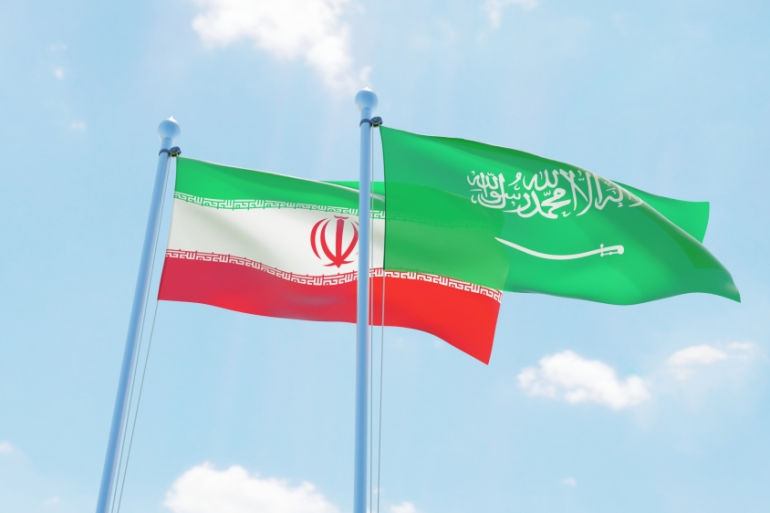
Iran warns Saudi Arabia its ‘patience’ may run out

“Until now, Iran has adopted strategic patience with firm rationality, but it cannot guarantee that it will not run out if hostilities continue,” Fars quoted Esmail Khatib as saying.

“If Iran decides to retaliate and punish, glass palaces will crumble and these countries will not experience stability anymore.” Iran has accused foreign enemies of fomenting unrest raging since the death in police custody of Iranian Kurdish woman Mahsa Amini in September after her arrest for allegedly flouting the Islamic Republic’s strict dress code imposed on women.

The protests by Iranians from all walks of life have mushroomed into one of the biggest challenges to Iran’s clerical leaders since the 1979 Islamic Revolution.

Last month, Iran’s Revolutionary Guards chief Hossein Salami warned Saudi Arabia Riyadh to control its media outlets.

“I am warning the Saudi ruling family…. Watch your behaviour and control these media … otherwise you will pay the price. This is our last warning because you are interfering in our state matters through these media. We told you, be careful,” Salami said, according to Iranian state media.

Last week Iran denied that it posed a threat to Saudi Arabia after the Wall Street Journal reported that Riyadh had shared intelligence with the United States warning of an imminent attack from Iran on targets in the kingdom.

Deadly strike hits pro-Iran militia

A strike on a pro-Iran militia convoy in eastern Syria near the Iraqi border killed at least 14 people overnight, a war monitor said Wednesday, without specifying who carried it out.

The attack hit a convoy of “fuel tankers and trucks loaded with weapons”, in the Albu Kamal area, the Britain-based Syrian Observatory for Human Rights said.

The US-led coalition fighting the remnants of the militant Islamic State group in Iraq and Syria said neither it nor any coalition countries carried out the raid.

A spokesman for the Israeli military said: “We do not comment on foreign press reports.” The Iraqi border official said the trucks were transporting Lebanon-bound fuel from Iran via Iraq and Syria.

He said the convoy consisted of 22 tanker trucks, 10 of which were hit after entering Syrian territory through the Al Qaim-Albu Kamal border crossing.

Four trucks were “completely burnt”, he added, but said there were “no victims”.

US President Joe Biden has expressed relief after Democrats fended off major Republican gains in the US midterms.

Republicans are inching towards control of the House of Representatives, but Mr Biden noted that a “giant red wave” did not materialise on Tuesday night.

Either party could still win the Senate, which hinges on three races that are too close to call.

The party in power, currently the Democrats, usually suffers losses in a president’s first midterm elections.

Republican strategists had been hopeful of sweeping victories, given that inflation is at a 40-year-high and Mr Biden’s approval ratings are relatively low.

But exit poll data suggests voters may have punished Republicans for their efforts to restrict access to abortion.

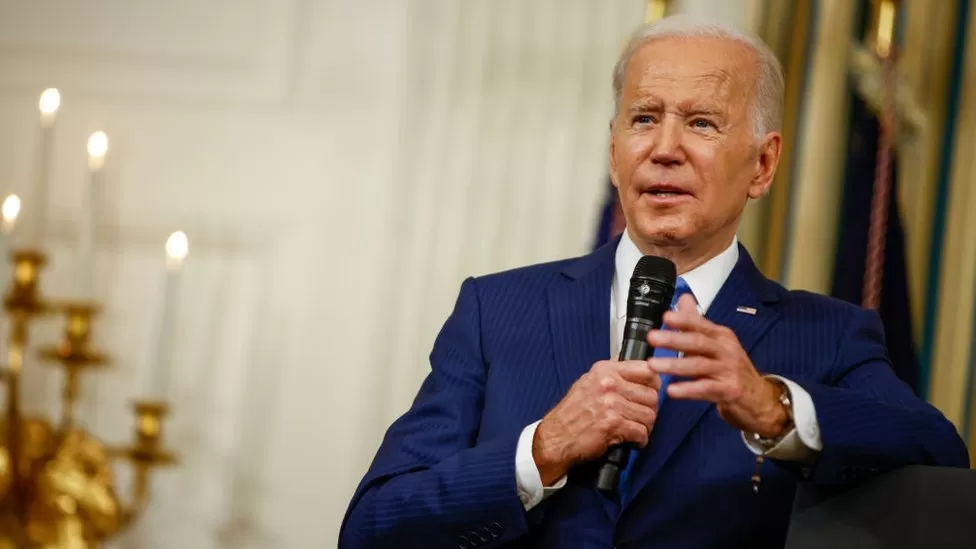
Speaking at the White House on Wednesday afternoon, Mr Biden said the results so far had made him breathe a “sigh of relief”.

“It was a good day, I think, for democracy,” he said.

He added that his optimism had been vindicated, and ribbed journalists who had predicted heavy Democratic losses.

Buoyed by the better-than-expected night, Mr Biden said he plans to stand for re-election in 2024. “Our intention is to run again, that’s been our intention,” Mr Biden, who turns 80 this month, told reporters.

Republicans, meanwhile, were closing in on the 218 seats they need to wrest control of the House from Democrats.

If Republicans win either chamber of Congress, they will be able to block the president’s agenda. The White House is also braced for congressional investigations into the Biden administration.

Mr Biden said he was prepared to work with Republicans and would host bipartisan talks next week.

But the president also said he believed the American people would view any Republican-led inquiries as “almost comedy”.


Whichever party wins two of the three outstanding contests in Arizona, Georgia and Nevada will control the Senate.

Arizona’s Senate race is leaning toward the Democrats, while Nevada is a toss-up, according to estimates by the BBC’s partner CBS News.

Georgia’s contest between Democratic Senator Raphael Warnock and Republican challenger Herschel Walker must be decided by a run-off next month. Neither candidate passed the 50% threshold needed for outright victory.

One of the Republicans’ most prized midterms gains was beating Sean Patrick Maloney of New York, the House Democratic campaign chief.

The biggest trophy of the night for Democrats was flipping a US Senate seat in Pennsylvania.

John Fetterman, who has been recovering from a stroke, beat the Republican, Mehmet Oz, a political newcomer and celebrity doctor.

Mr Oz had been backed by former President Donald Trump, who is being blamed by some analysts for Republicans’ underwhelming night.

The lacklustre results have even placed a question mark over the timing of Mr Trump’s widely expected declaration of a 2024 White House comeback bid. He had promised an announcement next week.

But one of his advisers, Stephen Miller, told conservative network Newsmax he was recommending Mr Trump hold off until the Georgia run-off is decided.

Mr Trump had mixed results out of the more than 300 candidates he endorsed.

Candidates he picked for open Senate seats in Ohio and North Carolina won.

But other contenders Mr Trump hand-picked in the Michigan and Pennsylvania governor’s races lost.

Mr Trump conceded on social media that the election results were “somewhat disappointing”.

But he maintained that “from my personal standpoint it was a very big victory”.

A man has been arrested after eggs were thrown at the King and Queen Consort during a visit to York.

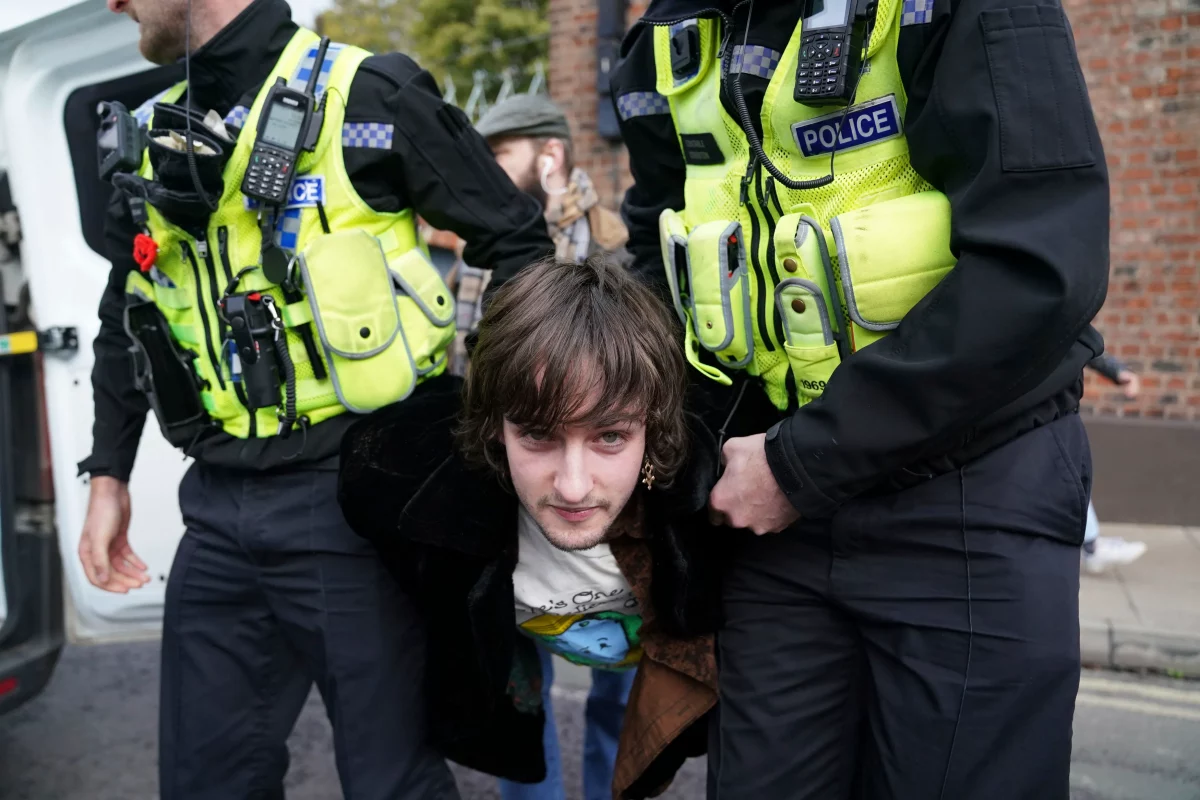
A protester was restrained by police as crowds gathered at Micklegate Bar, the traditional royal entrance into the city, to greet the couple.

The 23-year-old was heard to shout “this country was built on the blood of slaves” as he was restrained.

The man, a University of York student, was held on suspicion of a public order offence and remains in custody.

People in the crowd started chanting “God save the King” and “shame on you” at the demonstrator.

Man detained after eggs thrown at King Charles in York

The incident occurred on the second day of an official royal visit to Yorkshire, during which the King and Queen Consort later travelled to Doncaster.

The university said it was “appalled” by the images and would be reviewing the incident in line with its misconduct procedures.

The royal couple were being welcomed by city leaders in York when several eggs were thrown at them as the protester booed the pair.

Charles continued shaking hands with dignitaries including the Lord Mayor as the eggs flew in his direction, pausing briefly to look at the cracked shells on the ground.

The eggs missed the King and Queen Consort and they were ushered away.

Several officers were seen restraining a man on the ground behind temporary fencing set up for the King’s visit.

Boos from the protester could be heard as crowds gathered to greet the King, who is visiting the city to unveil a statue of his late mother

Witness Kim Oldfield, owner of the Blossom Street Gallery, said she was standing in the doorway of her shop “enjoying” the couple’s arrival when she heard “some booing and eggs flying”.

“I glanced across, [saw] the police just descended on the barrier and tried to drag this chap over the top.

“About five eggs he’d managed to send.

“Camilla sort of flinched a little bit when the booing started but they [police] quelled it really quickly. Just a shame they spoilt what was a lovely moment.”

The near miss with eggs being thrown by a protester shows how vulnerable the King can be on such occasions.

King Charles has been a very accessible figure to crowds of well-wishers. He’s been shaking hands, swapping jokes and literally become a hands-on monarch during his walkabouts.

The King seems to have enjoyed the warmth of the response, such as when he met people in the days following the death of his mother. Yesterday he greeted crowds lining the streets in Leeds, facing a sea of mobile phones recording the moment.

Senior politicians in the UK are unlikely now to be so open to the randomness of such a gathering. And it would be even less likely for the tight security surrounding a US president. Who knows what people may be carrying?

But there’s a trade-off between security and being visible to people, and these can be informal and hard-to-control events, with little separation between the King and the crowds.

In this case it included protestors with a ‘Not My King’ banner. And from only a few yards away, eggs were thrown.

The King seemed unperturbed, the police responded quickly, but by then the eggs had already landed.

2px presentational grey line

Charles appeared unfazed as he continued greeting the crowds in a traditional ceremony which saw the sovereign officially welcomed to the city of York by the Lord Mayor.

The ceremony was last carried out by his late mother Queen Elizabeth II in 2012.

The King and Queen Consort had visited York to unveil a statue of Her Majesty at York Minster, the first to be installed since her death.

The Archbishop of York, Stephen Cottrell, said the incident had not put the royal couple off meeting the public.

He told the BBC: “Those in public life are in positions of vulnerability at times and I certainly want to live in a country, and indeed in a world, where we’re not so surrounded by people minding us that we can’t meet people and chat with people.

“That is certainly what the King and the Queen Consort want. They were out chatting with people [later in the day]. So I don’t think they’ve let it affect them.”

The thrown eggs missed the royal couple
Crowds turned out to see King Charles III and Camilla in York

Later, the King was cheered by crowds as he arrived in Doncaster in South Yorkshire to formally confer its city status.

Charles and Camilla then attended a reception with a menu including egg and watercress sandwiches.

The prime minister is to meet Scotland’s first minister for the first time since he was appointed to the role.

Rishi Sunak and Nicola Sturgeon will hold face-to-face talks in Blackpool on Thursday ahead of a meeting of the British-Irish Council.

The two leaders are expected to focus on the cost of living crisis.

Ms Sturgeon will also raise her demand for another independence referendum.

Mr Sunak spoke to Ms Sturgeon on the phone on 25 October – the day he was formally appointed as prime minister by the King.

The call was described as being constructive, with both leaders saying they would seek to work closely together despite the political differences between them.

Mr Sunak’s predecessor Liz Truss did not have any formal talks with Ms Sturgeon during her brief spell in Downing Street.

Ms Truss claimed during the contest to succeed Boris Johnson that Ms Sturgeon was an “attention seeker” who was best ignored.

The Scottish government said Ms Sturgeon would use her meeting with the new PM to stress the importance of avoiding “damaging austerity” measures in the upcoming Autumn Statement.

She will also highlight the “importance of respecting the right of the people of Scotland to choose their own constitutional future”, a spokesman said.

Ms Sturgeon will raise the cost of living crisis and her plan to hold indyref2 next year with the prime minister

Ms Sturgeon has said she wants to hold a second vote on independence in October 2023, but Mr Sunak has shown no indication that he is likely to grant formal consent.

The UK Supreme Court is currently considering whether the Scottish parliament has the legal power to hold a referendum without that consent being in place.

Mr Sunak has previously said that ignoring Ms Sturgeon and the SNP would be “dangerously complacent” and described the first minister and her party as an “existential threat to our cherished union”.

The prime minister will also hold talks with Irish Taoiseach Micheál Martin and Mark Drakeford, the Welsh first minister, before the 38th meeting of the British-Irish Council opens.

‘Unity and hope’

Mr Sunak will be the first prime minister since Gordon Brown in 2007 to attend the summit, which brings together political leaders from across the British Isles.

He will call on those attending the event to focus on tackling shared issues through closer collaboration, and warn of the “huge challenges” posed by the global economy and the Russian invasion of Ukraine.

And he will reiterate his commitment to restoring the Northern Ireland Executive

Mr Sunak will say: “Let’s deliver for all our people across these great islands – and build a future defined not by division, but by unity and hope.”

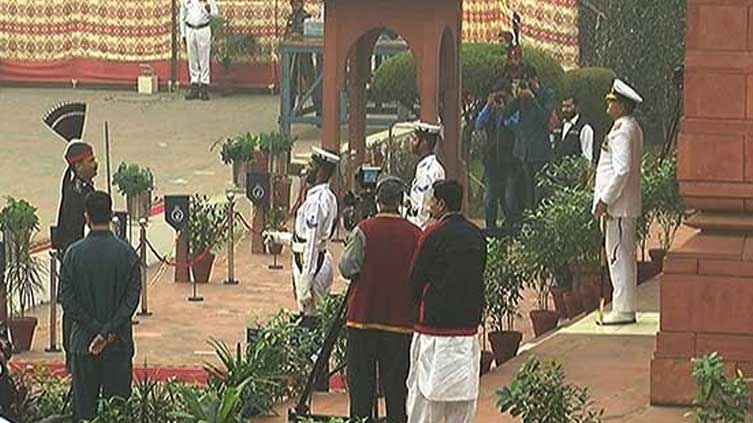
Iqbal Day: Change of Guard ceremony held at Poet of the East’s mausoleum

A prestigious change of guard ceremony was held here on Friday at the mausoleum of Dr Allama Muhammad Iqbal in connection with the 141st birth anniversary of the great poet, philosopher and visionary.

A smartly turned out contingent of Pakistan Navy, clad in immaculate whites, assumed ceremonial guard duties with traditional spirit and enthusiasm.

Governor Punjab Baligh-ur-Rehman and Major General Muhammad Shahbaz Khan Garrison Commander also visited Mazar-e-Iqbal and offered fateha and laid wreaths.

On the other hand, on the occasion of the birth anniversary of Allama Iqbal, a public holiday has been declared across the country today(Wednesday). Federal and provincial institutions will remain closed on this day, while all private and public educational institutions of the country, State Bank and other federal and provincial departments have also been declared a holiday today.

The 145th birth anniversary of national poet Dr Allama Muhammad Iqbal is being observed today (Wednesday) all over the country with traditional zeal and enthusiasm.

The federal government has announced November 9 as a public holiday, in connection with the birth anniversary of the country’s national poet and philosopher Allama Muhammad Iqbal.

Allama Muhammad Iqbal was born in Sialkot on November 9, 1877. He is also recognised as national poet, and known as Muffakir-e-Pakistan (thinker of Pakistan), Shair-e-Mashriq (poet of the east) and Hakeemul Ummat (doctor of the Muslim ummah) and is credited with sparking the pan-Islamic thought among Muslims of the subcontinent.

Allama Iqbal envisioned the idea of a separate homeland for the Muslims of subcontinent‚ which led to the creation of Pakistan in 1947.

It was Iqbal’s dream of a free state but unfortunately, he could not see the independence of Pakistan and died on April 21, 1938.

US once again condemns attack on Imran Khan

The United States has once again condemned the attempted assassination of PTI Chairman Imran Khan and called upon the political parties to stay away from violence.

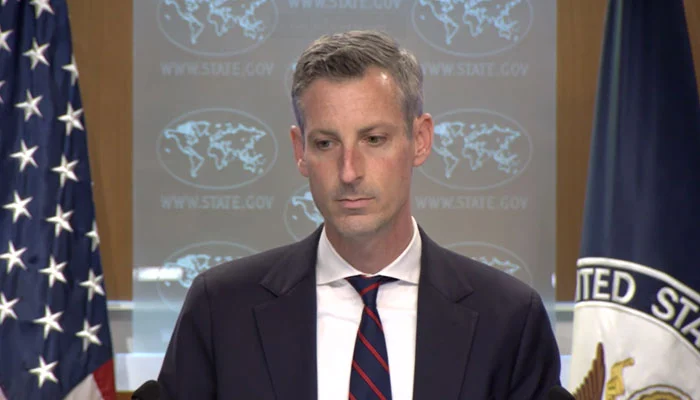
“We continue to strongly condemn the shooting of Imran Khan. We offer our condolences to the family of the individual who was killed. We express our hope for a quick and thorough recovery of all who were injured, including Imran Khan,” the State Department’s spokesman Ned Price said, speaking at a weekly press briefing.

Violence has no place in politics. We’re concerned about these reports of violence. We call on all parties to refrain from violence, harassment, intimidation, and to respect the rule of law. We are deeply committed to a democratic and peaceful Pakistan, and we stand with the people of Pakistan.”

Commenting on political chaos, the State Department spokesman said that the US is concerned about what has happened in Pakistan in recent days. He called upon all parties to never resort to violence and they should express their disagreements peacefully.

“We’re deeply committed to Pakistan. We stand with the people of Pakistan,” he said.

Responding to a question regarding the freedom of the media in Pakistan, the spokesman said that the US routinely raises its concerns about press freedom with all stakeholders around the world, including Pakistan.

“We’ll continue to have those conversations with the Pakistani authorities. A free press and informed citizenry are key to any nation and its democratic future, he said.

US asks India to distance from ‘unreliable’ Russia

Expressing concerns over the proximity of India to Russia, the State Department spokesman said that the US has had a number of high-level engagements with the Indian authorities recently. “Yesterday Deputy Secretary Sherman met with Indian Foreign Secretary Kwatra and had a wide‑ranging discussion about the US‑India relationship. Secretary Blinken met with Foreign Minister Jaishankar here in this building just a couple of months ago,” he said.

“The messages we heard from Foreign Minister Jaishankar in Russia were not dissimilar in some ways from what we heard from Prime Minister Modi at the UN, when he made it very clear that this is not an era of war,” he said.

“India, again, reaffirmed that it stands against this war, that it wants to see dialogue, it wants to see diplomacy, it wants to see an end to this needless bloodshed that Russia is responsible for inside of Ukraine.”

He called upon Russia to hear the message from countries around the world, especially from countries like India that are neighbours that have economic, diplomatic, social, and political might.

The US understands, he said, that India’s relationship with Russia developed and was cemented over the course of decades, really came to be during the Cold War at a time when the United States was not in a position to be an economic partner, a security partner, a military partner to India.

“We have sought to deepen our partnership with India in every sector, including economic, security and military cooperation,” he said. The US has been intentional about exempting oil and gas – the energy sector – from the sanctions that have been imposed on Russia, he said. India has a high demand for energy, that it continues to seek from Russia and it is not something that runs afoul of the sanctions that have been imposed, he said.

Ned Price asserted that it is not the time for business as usual with Russia, and it’s incumbent on countries to lessen their economic ties with Russia and wean their dependence on Russian energy.

He said that there are a number of countries that have learned the fact that Russia is not a reliable source of energy and supplier of security assistance.

“Russia is far from reliable in any realm. So it is not only in the interest of Ukraine, it is not only in the interest of the region, of the collective interests that India decreases its dependence on Russia over time,” he added.