Biden asks world to ‘step up’ climate fight

Biden touted the passage of a massive, $369 billion spending package to green the United States economy as an example for the entire world.

While the US spending on its own renewable energy push has been praised by activists, Washington has come under criticism for falling short on its pledges to financially help developing countries with their own transitions and to cope with intensifying climate-induced impacts.

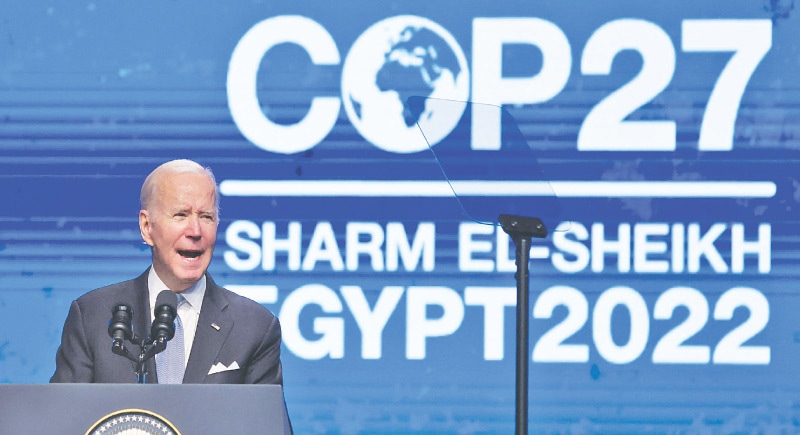
“The climate crisis is about human security, economic security, environmental security, national security and the very life of the planet,” Biden told an audience at the COP27 in the Egyptian seaside resort of Sharm el-Sheikh.

Biden said the United States is “on track” to achieve its pledge of cutting emissions 50-52 per cent below 2005 levels by 2030.

“To permanently bend the emissions curve, every nation needs to step up. At this gathering, we must renew and raise our climate ambitions,” he said.

“The United States has acted, everyone has to act. It’s a duty and responsibility of global leadership.” His speech, which lasted about 22 minutes, was briefly interrupted by unidentified people in the crowd making howling noises and attempting to unfurl a banner protesting fossil fuels.

Biden’s visit to the COP27, lasting only a few hours, came three days after US midterm elections that have raised questions about what the result could mean for US climate policy.

Before his speech, Biden met Egyptian President Abdel Fattah al-Sisi on the sidelines of COP27, where he raised human rights issues with his host amid concerns over the health of jailed dissident Alaa Abdel Fattah, who is on a hunger strike.

Pakistanis, Muslims make history in US mid-term polls

“I graduated from high school only three years ago, so I know what our generation needs,” says Ms Khan, who is the youngest among those elected this year to state legislatures in US mid-term elections.

Her parents migrated to New Jersey from Karachi. “Thank you to everyone who helped make this possible. Together, we made history,” said Salman Bhojani, who is a Pakistani-American, like Alisha and Suleman Lalani.

Mr Bhojani and Mr Lalani made history as the first Muslims and South Asians elected to the Texas legislature. Both are Democrats.

Now, “we build bridges here, not walls,” said Mr Lalani in an apparent reference to the Trump administration’s decision to build a wall along the Texas-Mexico border to prevent immigration.

Their victory is also significant because in the Texas legislature, Muslims haven’t always been met with open arms. In 2007, Dan Patrick, then a state senator, boycotted the Texas senate’s first-ever prayer by a Muslim cleric.

Patrick now presides over the senate as lieutenant governor.

In Tuesday’s mid-terms, 82 Muslims were elected to federal, state, local and judicial offices across the United States. There are a number of Pakistanis among them.  Axios, a news site, reported that a record number of Asian-Americans were elected this year, including several Indians and Pakistanis.

The site did not disclose the exact number, but published several names.  Among them are Shri Thanedar, the first Indian-American elected to the US House of Representatives from Michigan, and Aruna Miller, the first immigrant and first Asian-American elected as Maryland’s lieutenant governor.

Earlier this week, Jetpac Resource Center and the Council on American-Islamic Relations (CAIR) released a final count of 82 local, state legislative, statewide, judicial, and federal American Muslim electoral victories in the mid-term polls.  It is the highest since Jetpac and CAIR started tracking the electoral progress of American Muslims — 71, the previous high-water mark, was set in 2020.

Of the 29 state-level Muslim incumbents, many were the first Muslims elected to their state’s legislature and kept their seats. The results pushed the total number of Muslim state lawmakers nationwide to 43.

Those re-elected include Madinah Wilson-Anton, a Delaware state representative, Iman Jodeh, a Colorado state representative, and Pakistani- American Saud Anwar, a Colorado state senator.

In Georgia, incumbent state senator Sheikh Rahman will no longer be the only Muslim in the legislature as two Muslim women won by flipping Republican-held seats.

Nabilah Islam will become a state senator and Ruwa Romman will represent the state in the House of Representatives.

In a constituency in Indiana, Muslim Democrat Andre Carson made history by getting elected to Congress for a record seventh time.

He received 116,870 votes against his Republican rival Angela Grabovsky’s 53,487 votes.

In Michigan, Democrat Rashida Tlaib was elected for the third time.

She received 196,601, defeating Republican Steven Elliot who received 72,889 votes.

Another Muslim Democrat, Ilhan Omar, was re-elected for the third time from Minnesota. She received 214,217 votes against her Republican rival Cicely Davis’s 70,698 votes.

Keith Ellison, the first Muslim Congressman, was re-elected this year as Minnesota’s attorney general, receiving 1,254,369 votes against his Republican opponent Jim Schultz’s 1,233,571.

Jetpac and CAIR tracked the election results of a record-breaking 146 American Muslim candidates running for local, state, and federal office, including 51 state legislative candidates running in 23 states.

In a statement, CAIR’s National Executive Director Nihad Awad said: “We are witnessing the next step in the American Muslim community’s political transformation from marginalised voices that were sidelined, or worse, to decision makers.”


US President Joe Biden’s Democrats have inched closer to keeping control of the Senate, with a projected win in Arizona following the midterm elections.

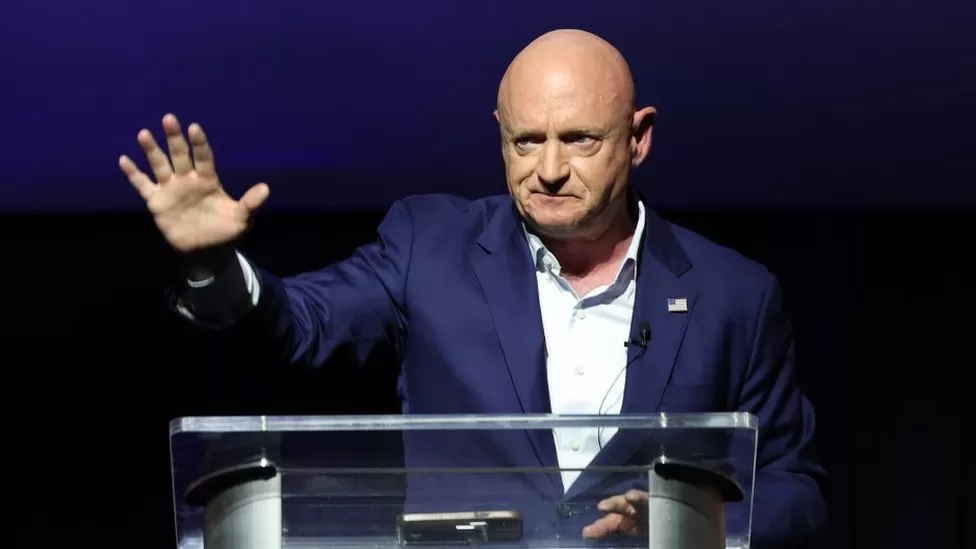
Three days after Americans voted, the BBC’s US partner CBS estimates Democrat Mark Kelly has beaten Republican challenger Blake Masters.

That would leave the Senate at 49 Democratic seats and 49 Republican seats.

Just Nevada and Georgia are yet to be decided.

The vote count in Nevada is neck and neck, while Georgia’s race will be settled by a run-off election next month.

If Democrats win either of the two remaining races they will remain in control of the upper chamber of Congress because the US vice-president can cast a tie-breaking vote on their behalf.

Republicans could still take control of the US House of Representatives as votes continue to be tallied from a handful of districts after Tuesday’s elections.

If the Republicans win either or both chambers of Congress they could thwart much of Mr Biden’s agenda.

Mr Kelly, a former astronaut whose wife, Gabby Giffords, survived an assassination attempt when she was a US lawmaker, was first elected two years ago to serve out the remainder of the late John McCain’s Senate term.

In a statement, Mr Kelly said: “From day one, this campaign has been about the many Arizonans – Democrats, Independents, and Republicans – who believe in working together to tackle the significant challenges we face.

“That’s exactly what I’ve done in my first two years in office and what I will continue to do for as long as I’m there.”

Mr Masters, a 36-year-old venture capitalist, had been endorsed by former President Donald Trump without political experience. He had refused to accept the 2020 election results and repeated false claims of election fraud.

In an email to supporters on Thursday, the Masters campaign said it had seen “troubling” issues during the election and asked for contributions, the New York Times reported.

“We’re expecting a contested road forward and legal battles to come,” it said.

The result is another blow to the Republicans, who were hoping for a “red wave” – an electoral rout which would deliver a harsh rebuke of President Joe Biden and the Democrats.

While the party has made modest gains and remains favoured to win the House of Representatives, the Senate remained hotly contested and the Democrats have performed better than expected.

Mr Biden has said the election was a “good day” for US democracy.


The midterm elections are for Congress, which is made up of two parts – the House of Representatives and the Senate.

Congress makes nationwide laws. The House decides which laws are voted on while the Senate can block or approve them, confirm appointments made by the president and, more rarely, conduct any investigations against him.

These votes are held every two years and when they fall in the middle of the president’s four-year term of office.

Each state has two senators, who sit for six-year terms. Representatives serve for two years, and represent smaller districts.

All the seats in the House of Representatives were up for election in the midterms, alongside one-third of the Senate.

Several major states also have elections for their governor and local officials.

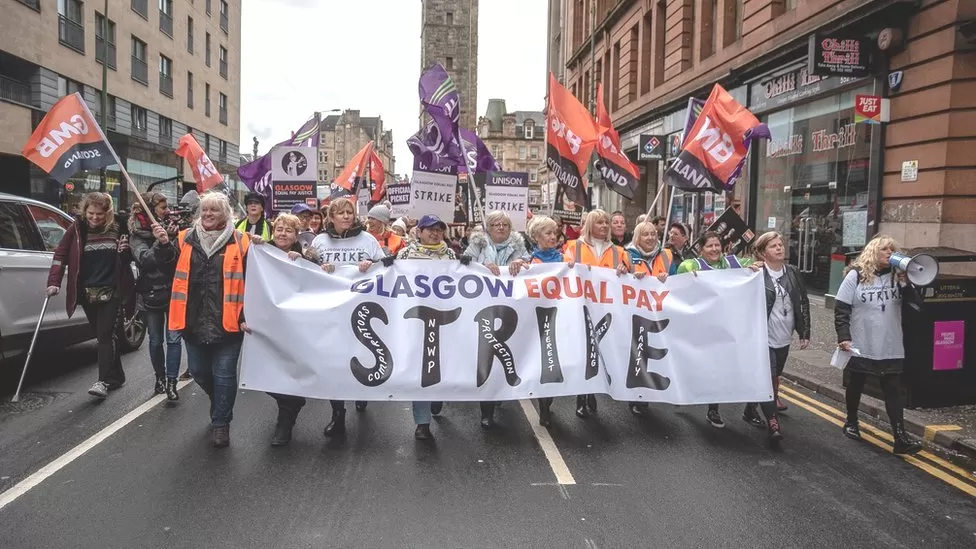
Glasgow City Council has agreed to pay out a total of about £770m to settle a long-running equal pay dispute.

Payments will now be made to about 19,000 claimants, both current and former employees, by the end of 2023.

They will cover the “gap period” between an initial agreement in 2018 and the implementation of the new pay and grading system.

The deal was struck between the council and workers represented by Unison, the GMB and Unite and Action 4 Equality.


Campaigners had said workers in roles such as catering or cleaning were receiving up to £3 an hour less than those in male-dominated areas such as refuse collection.

The case was settled at an estimated cost of £500m in 2019, but some claims were made too late to be included in the earlier deal.

In September, the city council approved a strategy to sell a number of properties, valued at about £200m, to settle the equal pay claims.

Under the plans, the properties – which include Glasgow’s Kelvingrove Museum and Art Galleries and City Chambers – will be sold to a council-owned property firm before being leased back.

Kelvingrove Museum is among council properties earmarked for a sale and lease-back agreement

Speaking after the latest deal was agreed, council leader Susan Aitken said she was delighted the authority could “deliver the final stage of the pay justice that many Glaswegian women have fought long and hard for”.

She said: “We always knew that the lag between the first agreement four years ago and putting in place a new pay and grading structure meant additional payments would be made.”

Ms Aitken said the new pay and grading system would prevent future pay discrimination.

She added: “The complex process of replacing the council’s pay and grading system to make it discrimination-proof is well advanced and will draw a line under the era of pay discrimination in Glasgow City Council.”

Negotiations will now start to finalise the terms of individual settlement offers, including how and when payments will be made.

‘Hard fought victory’

Trade unions welcomed the deal which will see payments issued by the end of next year.

Unite industrial officer Wendy Dunsmore said: “Crucially, the gap between the first agreement in 2018 and the unacceptable delays associated with the implementation of a new pay and grading system has in principle been resolved.

“This will ensure that settlements can now be made before 2024 which was the timeframe originally proposed by Glasgow City Council. There is a cost of living crisis with inflation soaring and this agreement will provide immediate and much needed assistance to families.”

Shona Thomson, GMB Scotland branch convener, welcomed the “hard fought victory” for workers.

“We’ve come a long way in the fight for pay justice,” she said. “However, there still remains the outstanding matter of council-wide job evaluations. GMB Scotland’s focus and efforts will now be on delivering a new, fair pay system which will secure equal pay for the years ahead.”

Unison regional organiser Mandy McDowall hailed the deal as the culmination of a 15-year campaign.

She added: “We now move on to the final stage of eliminating pay inequality in the future through the introduction of an equality proofed new pay and grading scheme. That will require further significant spending by the council in the years ahead.”

Prince Harry ‘always chasing commercial deals’ like Mike Tindall

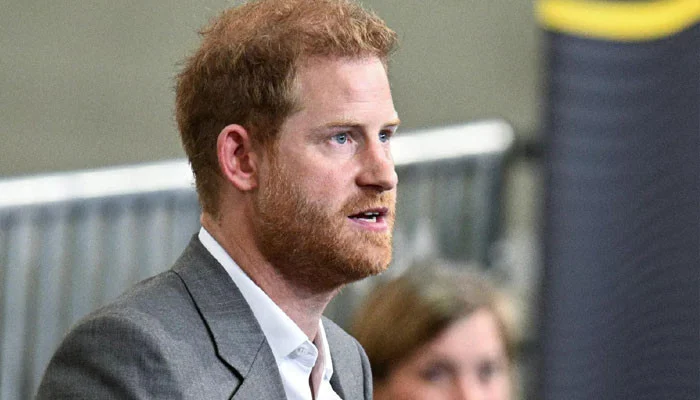
Prince Harry has just been accused of ‘constantly’ trying to chase commercial deals’ like Mike Tindall.

Royal biographer and author Katie Nicholl made these revelations in her interview for True Royalty TV’s The Royal Beat.

She began by saying, “He’s [Mike] making a lot of money out of it. I do think this all leads to the much bigger question about royals and commercialisation.”

“We dedicate so much time to discussing Harry and his commercial deals. How is this any different? It’s not.”

“But I think the point is, this really crystalises Charles’ argument and vision for a slimmed-down monarchy.”

During the course of her interview, Katie also referenced the seeming lack of ‘permission needed’ and claimed, “Knowing Princess Anne…The idea that she’ll be sitting, cheering Mike on is absolutely unthinkable.”

“I think she’ll be thinking, ‘What on earth is he doing?’ And that’s probably the thoughts of most of the senior royals.”

“One wonders if the Queen was still alive, and knowing how close Zara was to her grandmother, whether she might have actually had a conversation [about her husband appearing] saying, ‘Granny, just so you know…’ I think that’s much more likely than not.”

“But the idea that they’d have checked with Wills and Kate? No!” she added before concluding.

Imran Khan wants to ruin Pakistan through agitation: PM Shehbaz Sharif

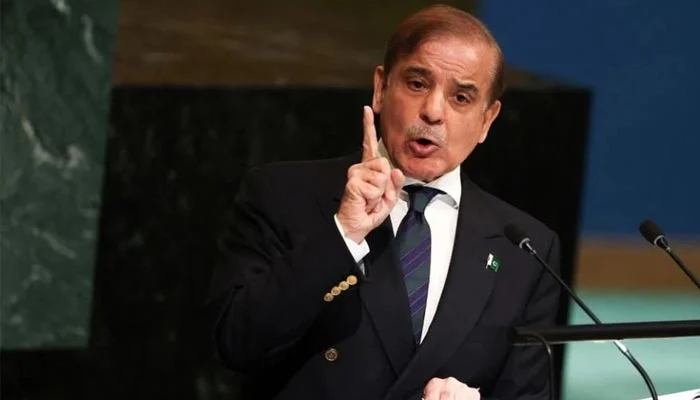
LONDON: Prime Minister Shehbaz Sharif has accused PTI Chairman Imran Khan of attempting to ruin Pakistan through his agitation.

Briefly speaking to the media after holding a third round of talks with PML-N supremo Nawaz Sharif, the premier said that Imran Khan wants to ruin Pakistan but this will not happen.

“Defeat is the destiny of those who are doing the long march,” said the premier.

“Let’s pray for the better of Pakistan. Let’s pray to Allah for guidance on putting Pakistan on the right path. Pakistan is in great difficulty,” said Nawaz.

Nawaz said the rule of mobs will not be tolerated. “We have never listened to the dictation of mobs before and will not do so now.”

He confirmed to Geo News earlier in the day that he has received the diplomatic passport from the Pakistan government. “I have had this passport for a few days now.”

A Sharif family member also confirmed that Nawaz’s passport has arrived in London.

PML-N Vice-President Maryam Nawaz condemned the PTI’s long march, saying that the ordinary people were in great difficulty due to the long march. “People are stuck and facing difficulties. This is bad.”

Both Nawaz nor PM Shehbaz answered questions about the appointment of the next army chief.

Defence Minister Khawaja Asif and Punjab PML-N leader Malik Muhammad Ahmed Khan also attended the two rounds of talks.

Earlier, Nawaz resolved not to come under PTI’s pressure, especially on their key demand of early elections, sources told Geo News.

Nawaz told PM Shehbaz to “continue doing his best to take Pakistan out of the economic crisis and not succumb to any kind of pressure”.

The Sharif brothers resolved that the elections will be held on time and PTI chief’s planned march on Islamabad will be dealt with legally, shared the source.

Shehbaz Sharif is likely to leave for Pakistan on Friday.

Iran says it has developed hypersonic missile

Hypersonic missiles, like traditional ballistic missiles which can deliver nuclear weapons, can fly more than five times the speed of sound.

“This hypersonic ballistic missile was developed to counter air defence shields,” General Amirali Hajizadeh, the commander of the Islamic Revolutionary Guard Corps aerospace unit said, quoted by Iran’s Fars news agency.

“It will be able to breach all the systems of anti-missile defence,” said the general, adding that he believed it would take decades before a system capable of intercepting it is developed.

“This missile, which targets enemy anti-missile systems, represents a great generational leap in the field of missiles.”

The head of the International Atomic Energy Agency (IAEA) Rafael Grossi expressed concerns about the announcement.

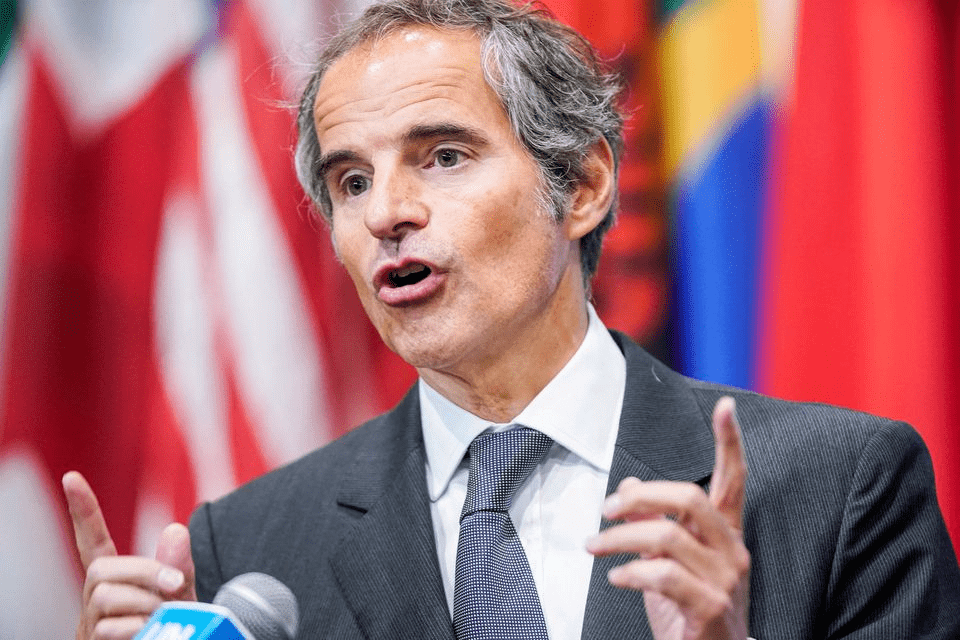
“We see that all these announcements increase the attention, increase the concerns, increase the public attention to the Iranian nuclear programme,” Grossi told AFP on the sidelines of the COP27 climate summit in Sharm el-Sheikh, Egypt.

But he added that he does not see this as “having any influence” on negotiations over the Islamic republic’s nuclear programme.

The announcement comes after Iran admitted on Saturday that it had sent drones to Russia, but said it had done so before the Ukraine war.

The Washington Post reported on October 16 that Iran was preparing to ship missiles to Russia, but Tehran rejected the report as “completely false”.

Stalled nuclear talks

It also comes at a time of protests that have rocked Iran since the September 16 death of Mahsa Amini after her arrest for allegedly flouting the Islamic republic’s dress code for women.

Unlike ballistic missiles, hypersonic missiles fly on a trajectory low in the atmosphere, potentially reaching targets more quickly.

North Korea’s test of a hypersonic missile last year sparked concerns about the race to acquire the technology, which is currently led by Russia, followed by China and the United States.

Both Iran and Russia are targeted by stringent sanctions — Iran after the US unilaterally pulled out of the 2015 nuclear deal, and Russia since it invaded Ukraine in February.

The two countries have responded to the sanctions by boosting cooperation in key areas to help prop up their economies.

Iran on Wednesday hosted Russia’s security chief Nikolai Patrushev for talks on subjects that the Russian side said included “the fight against terrorism and extremism” as well as measures to counter Western interference.

A hypersonic missile is manoeuvrable, making it harder to track and defend against.

While countries like the United States have developed systems designed to defend against cruise and ballistic missiles, the ability to track and take down a hypersonic missile remains a question.

Thursday’s announcement comes against a backdrop of stalled talks on reviving the 2015 nuclear deal.

The deal reached with six major powers — Britain, China, France, Germany, Russia and the US — gave Iran relief from sanctions in return for guarantees it could not develop an atomic weapon.

Iran has always denied wanting a nuclear arsenal.

The deal collapsed after the US’s unilateral withdrawal in 2018 under then president Donald Trump.

Warning to Saudi Arabia

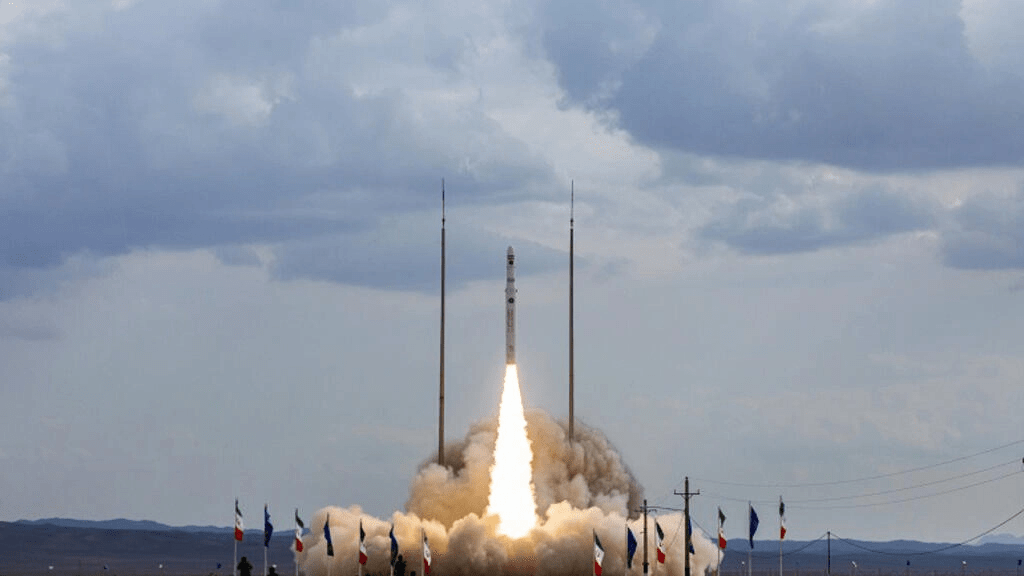
Iran’s claim to have developed a hypersonic missile also follows its announcement on November 5 of the successful test flight of a rocket capable of propelling satellites into space.

The United States has repeatedly voiced concern that such launches could boost Iran’s ballistic missile technology, extending to the potential delivery of nuclear warheads.

In March, the US government imposed sanctions on Iran’s missile-related activities.

Iran on Wednesday warned its neighbours including Saudi Arabia that it would retaliate against moves to destabilise it amid the protests sparked by Amini’s death.

“I would like to say to Saudi Arabia that our destiny and that of other countries in the region are linked to each other,” Intelligence Minister Esmail Khatib said.

“Iran has so far adopted strategic patience but it cannot guarantee that it will maintain this strategic patience if hostilities against it continue.

“If the Islamic republic decides to punish these countries, their glass palaces will collapse and they will no longer enjoy stability,” said Khatib.

The minister has also warned Britain it would “pay” for harbouring hostile Persian-language media reporting on the Amini protests.

UN nuclear chief says radioactive waste recycling is ‘difficult’ technology

The administration of US President Joe Biden sees the expansion of nuclear energy as a critical in tackling emissions linked to climate change in the world’s second-biggest greenhouse gas emitter, and views recycling as a smart way to both boost domestic nuclear fuel supplies and reduce waste.

The US Energy Department’s Advanced Research Projects Agency-Energy, or ARPA-E, aims to develop a dozen projects to recycle spent nuclear fuel. Last month it granted $38 million for reprocessing to companies including GE Research, the development part of General Electric Company.

When asked about the US exploration of reprocessing, IAEA Director General Rafael Grossi downplayed the chances it would become a reality anytime soon.

“I don’t see many really looking seriously into reprocessing,” Grossi said in an interview late on Wednesday at the COP27 climate summit in Egypt.

“Reprocessing is a very difficult technology that requires a lot of infrastructure.” Grossi added that “of course it has a proliferation angle.” Reprocessing involves converting plutonium and uranium in waste into new nuclear fuel. Proliferation experts warn that the practice could provide new targets for militants looking to make a crude nuclear weapon. While France practices reprocessing, supply chains in the United States could be longer and more vulnerable, experts say.

Former US President Jimmy Carter had halted reprocessing of nuclear waste in 1977, citing proliferation concerns. Former President Ronald Reagan lifted the moratorium in 1981, but high costs have prevented plants from opening.

A US Department of Energy spokesperson said the department “examines all sides of the nuclear fuel cycle at the R&D stage to help enhance fuel performance, reduce waste generation, and limit proliferation risks, and beyond research always works with the IAEA to move nuclear forward.” Grossi said if the United States pursues reprocessing, the IAEA will monitor it to ensure it is safe.

“Nobody will be doing reprocessing without the IAEA being involved,” he said, noting that any nuclear waste recycling North Korea is undertaking is an exception.

The United States has spent billions of dollars over decades on a project at Yucca Mountain in Nevada to store nuclear waste. But former President Barack Obama shut Yucca after local opposition. The waste is now stored at reactors across the country in pools and in casks of steel and concrete.

Nuclear power has seen increasing interest from countries and companies looking to cut emissions and boost energy supplies, Grossi said. But he added he does not believe an expansion of the industry would increase threats of proliferation or mishaps.

“Maybe I would have to fight for a bigger budget, I don’t know, and countries are very tight on that,” Grossi said. “But it wouldn’t be a technical problem for us.”

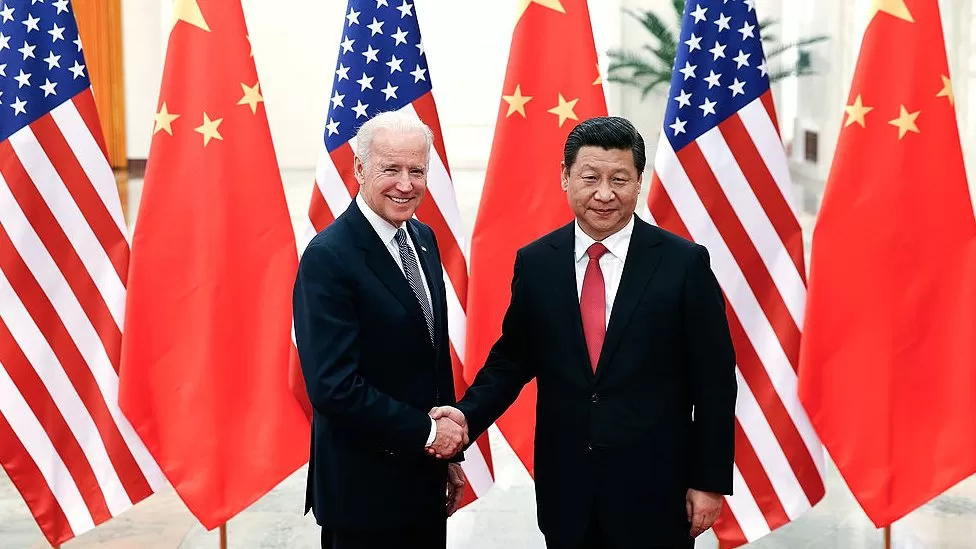
Taiwan is expected to top the agenda when US President Joe Biden and Chinese leader Xi Jinping meet next week – their first in-person encounter since Mr Biden took office in 2020.

The much-awaited meeting comes at a time when relations between the two superpowers have particularly soured.

This has been fuelled by Beijing’s claims over self-ruled Taiwan and its increasing assertiveness in Asia.

The US has responded by restricting access to computer chip technology.

That has hit China’s export-driven economy which uses the tech to make and sell everything from phones to electric cars.

Given the recent spike in tensions and rhetoric, the world – and America’s Asian allies such India, Japan and Australia – will be closely watching the meeting scheduled to take place on Monday in Bali ahead of the G20 Summit.

Mr Xi has spent most of the pandemic in China and only recently began travelling overseas again.

“I’m sure we’ll discuss Taiwan… and what I want to do with him when we talk is lay out… what each of our red lines are,” Mr Biden said at a press conference on Thursday after the White House confirmed the meeting.

This way they can “determine whether or not they conflict with one another… and if they do, how to resolve and how to work it out”, he said.

However, he also added that he was not willing to “make any fundamental concessions” about the US’ policy on Taiwan.

Beijing sees the self-governing island as its own territory that must be united with the mainland. But Taiwan sees itself as distinct.

Mr Biden, unlike previous US presidents, has repeatedly said the US would defend Taiwan in the event of a Chinese invasion.

But the White House has always rolled back his comments, insisting that Washington’s stance of “strategic ambiguity” – under which it does not commit to defending Taiwan but also does not rule out the option – remains unchanged.

Meanwhile Mr Xi has told the People’s Liberation Army (PLA) to “focus all energy on fighting a war… and build the ability to win”, according to state media reports earlier this week.

Mr Xi is reported to have said the army must “strengthen military training in preparation for war” because China was in an “unstable and uncertain” position.

Tensions soared in August when US House Speaker Nancy Pelosi visited Taiwan. China responded with large scale military exercises around the island.

On Thursday the White House said it would brief Taiwan on the results of the Biden-Xi meeting, with national security adviser Jake Sullivan saying the aim was to make Taiwan feel “secure and comfortable” about US support.

Meanwhile, China’s foreign ministry said the US should work together with China to avoid misunderstandings and misjudgements, adding that while it wants peace with the US, “the Taiwan question” is at the core of its interests.

At the Chinese Communist Party congress last month, Mr Xi reiterated China’s position on Taiwan where they would “never promise to renounce the use of force”.

He said they reserved the option of “taking all measures necessary” if “outside forces” interfered with China’s claims.


The US has long been walking a tightrope over Taiwan. A cornerstone of its relationship with Beijing is the One China policy, according to which Washington acknowledges only one Chinese government – in Beijing – and has no formal ties with Taiwan.

But it also maintains close relations with Taiwan and sells arms to it under the Taiwan Relations Act, which states that the US must provide the island with the means to defend itself.

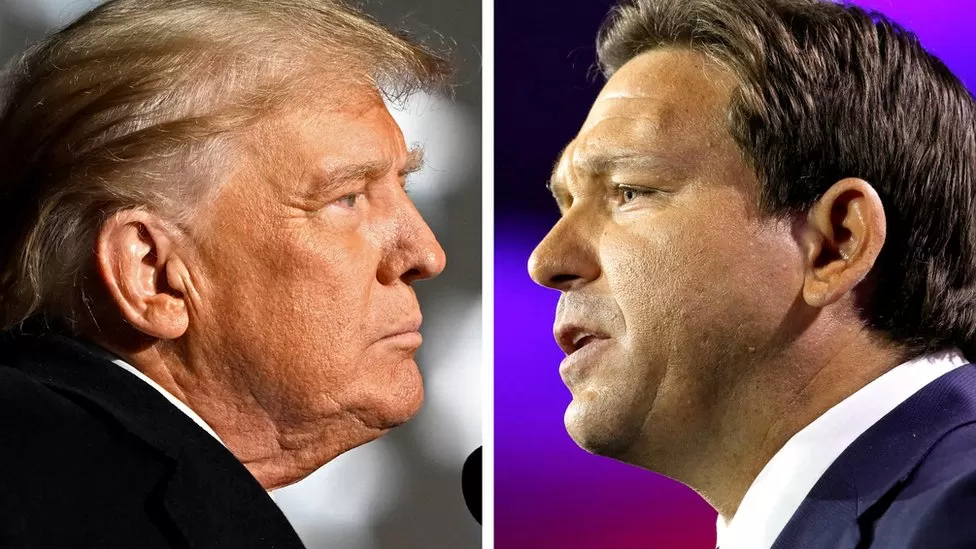
Rivalry between Donald Trump and Ron DeSantis has spilt open after the Republican ex-president came swinging out against his one-time acolyte on Thursday night.

Mr Trump belittled the Florida governor as an “average” politician whose success was owed to his patronage.

Mr DeSantis, 44, stormed to re-election in Tuesday’s midterms, making him the Republicans’ biggest rising star and a clear challenger to Mr Trump.

The ex-president warned him against it.

In a lengthy statement, Mr Trump dismissed Mr DeSantis as a political lightweight who had come to him “in desperate shape” when running for his first term in office in 2017.

“Ron had low approval, bad polls, and no money, but he said that if I would Endorse [sic] him, he could win,” Mr Trump said. “I also fixed his campaign, which had completely fallen apart.”

He went on to complain that Mr DeSantis – to whom he had given the unflattering nickname “Ron DeSanctimonious” – was “playing games” by refusing to rule out a presidential bid in 2024, warning that he would be vanquished should he do so.

Mr Trump is widely expected to announce his own plan to run again – and with the expectation of seizing the Republican nomination unopposed.

However, a disappointing midterms in which Republicans have failed to garner the large majority in the House of Representatives that was expected – and are yet unable to say whether they have seized a majority in the Senate – has left many in the party laying the blame at Mr Trump’s feet.

Voters by and large rejected candidates who backed Mr Trump’s unsupported claims of election fraud in 2020, and many of his high-profile picks for office struggled or lost outright.

Even close allies of the ex-president have called for him to reconsider what he has teased to be a big announcement on 15 November.

“Republicans have followed Donald Trump off the side of a cliff,” one former Trump adviser, David Urban, told the New York Times.

“I think he needs to put it [his campaign announcement] on pause,” Kayleigh McEnany, Trump’s former press secretary, told Fox News.

Mr DeSantis’s 20-point win over his Democratic rival Charlie Crist, has, by contrast, cemented his status as a coming man.

In particular, his margin of victory in Miami-Dade county – one of Florida’s largest, and traditionally a Democratic stronghold – was the largest won by a Republican in four decades.

In 2016, Democratic presidential candidate Hillary Clinton won it by 29 percentage points. On Tuesday, Mr DeSantis won 55% of the vote there.

According to an October Ipsos poll, 72% of registered Republicans said Mr DeSantis should have a great deal or good amount of influence on the future of the party, compared to 64% who said the same of Mr Trump, 76.

The governor did not immediately respond to Mr Trump’s jibes on Thursday.