
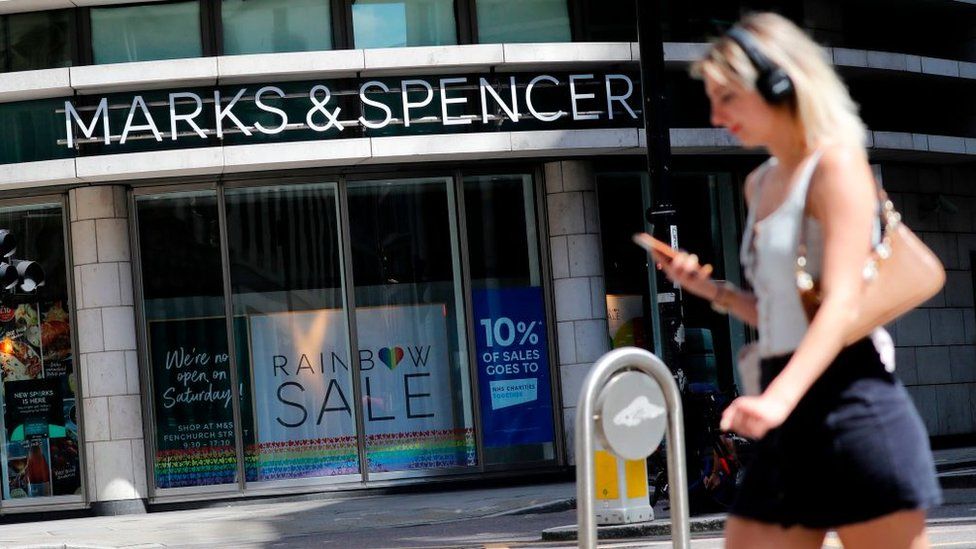
Marks & Spencer has written to the chancellor warning that an online sales tax would damage the High Street.

A three-month government consultation on whether to introduce an online sales tax closes on Friday.

The Treasury said the proceeds would go towards funding a reduction in business rates for shops.

But M&S believes a new online tax would “punish” the very retailers it plans to support and leave them less money to invest in High Street stores.

The chain’s chief financial officer, Eoin Tonge, argued in the letter that traditional retailers have worked hard to diversify and grow their online sales.

He said an additional tax burden would make it harder for them to invest in what is needed to survive and grow in the modern, digital era.

“Introducing an additional tax on retail – already overburdened – will simply mean retailers cut their cloth accordingly,” he said.

“This rationalisation will always start with the least profitable parts of a business – which, in the case of multi-channel retailers, will more often than not be High Street stores,” said Mr Tonge.

“Therefore it is likely that, far from helping the High Street an online sales tax will damage shops and our high streets further, particularly in areas that require new investment to bring them back to life.”

The Treasury has been sounding out the retail industry on an online sales tax since February saying it is keen to hear the arguments for and against, as well as how it could work.

It said no decision has been made.

Overhaul

High Street retailers have been complaining for years about the soaring cost of business rates, a property based tax. They tend to pay far higher rates than online rivals who do not have stores to run.

They want a complete overhaul of the system, which they say is no longer fit for purpose, threatening the economic viability of shops.

Despite widespread calls for a revamp, the Treasury decided last year there was no case for fundamental change. The tax raises roughly £25bn a year. The government said it was reducing the rates burden by some £7bn this year to support the High Street.

But it promised to look at an online tax. According to the consultation document, an online sales tax of 1% could raise about a billion pounds per year to help reduce business rates in England.

The issue is complicated, however, and retailers are divided on the idea.

What counts as an online sale?

For a start, there are questions over which goods should it cover, and whether it should be done as a proportion of a retailer’s sales or a flat fee. Then there is the issue of what counts as an online sale. Many people, for instance, order via the internet and then collect in store.

Some of Britain’s biggest retailers, including Tesco, Sainsbury’s, Gregg’s and Morrisons, recently joined forces to launch a “Cut the Shops Tax Campaign” urging the government to reduce business rates to help mitigate rising costs and keep shops open. They also said they’d be “open” to an online sales tax if it funded a reduction in rates to help create more of a level playing field.

The debate over how best to tax this sector has become even more intense during the pandemic, said KPMG’s UK head of retail, Paul Martin.

“The way we shop has evolved significantly over the last two years with online channels growing the fastest. This has resulted in the need to reconsider how the sector is taxed, with the historic focus on bricks and mortar not timely anymore,” he said.

He believes the future for retailers involves having both online and physical stores in a completely integrated model. Therefore the idea of having separate taxes is not likely to solve the problems.

Right now all of the UK’s big High Street retailers want the pressure to ease on business rates. The government will soon have to decide if an online sales tax is the right way to do it.

ScotRail will cut almost 700 services a day from Monday, due to a shortage of drivers in an ongoing pay dispute.

Evening trains on many routes across Scotland will terminate hours earlier.

It comes just a week after the operator, which was nationalised last month, launched a new timetable.

Hundreds of trains have been cancelled since 8 May when many drivers opted not to work overtime. Drivers’ union Aslef had balloted members for strike action after rejecting a 2.2% pay offer.

The May 2022 timetable had approximately 2,150 weekday services. From next week this will be reduced by a third to 1,456.

Similar cuts are expected to be made to the Saturday and Sunday timetables with details expected to be made public in the coming days.

David Simpson, ScotRail service delivery director, said: “We are very sorry to customers for the disruption of recent days.

“We know what customers want more than anything is certainty and reliability, which is why we are introducing a temporary timetable.

“We want to resolve this dispute with the trade unions and move forward together to provide the safest, greenest, and most reliable railway we can for Scotland.”

Mr Simpson said the company remained open to further talks with the unions. He urged customers to check their journey times.

Evening travel has been affected on many routes, with last trains departing hours earlier.

Edinburgh to North Berwick currently departs at 23:14. From Monday the last train will be at 19:40.

The last train from Glasgow to Stirling is currently 23:51. From Monday it will be at 19:49.

The Aslef union accused the Scottish government of “industrial vandalism” over the cuts.

Kevin Lindsay, Aslef Scotland organiser, said: “This is what happens when you have political interference in industrial relations.

“It’s time the Scottish government allowed ScotRail and Aslef to negotiate in a fair and open manner.

“These cuts will have a devastating effect on passengers and their confidence in our railway.”

ScotRail has been run by a company owned by the Scottish government since 1 April.

The previous operator Abellio had its franchise ended early amid criticism of the quality of the service.

The Scottish government took over ScotRail from Abellio on 1 April

Opposition parties also condemned the service cuts.

Scottish Conservative transport spokesman, Graham Simpson, said: “It is damning, but not surprising, that the first thing the SNP do with the newly nationalised ScotRail is slash almost one third of services.

Scottish Labour’s transport spokesman, Neil Bibby, said: “Services are being plunged into chaos, workers are being treated with contempt, and passengers are being left in the lurch. The SNP must take responsibility for fixing this mess.”

Scottish Liberal Democrat transport spokeswoman, Jill Reilly, said it was an “ill omen” for the newly nationalised service.

She added: “Scotland should be encouraging people onto the most environmentally friendly form of mass transportation. You don’t do that by making rail travel less convenient for users.

‘Absolute shambles’

The new timetable comes after significant number of drivers declined to make themselves available for overtime or Sunday working during a pay dispute.

The Aslef union rejected a 2.2% pay rise and balloted drivers over strike action.

ScotRail had been relying on drivers working extra hours, following delays in training new staff during the Covid pandemic.

On Monday, Mick Hogg of the RMT union, described the situation as an “absolute shambles”.

He said he had recommended that the RMT ballot members for action short of a strike, with any action co-ordinated with Aslef.

Scotland’s transport minister, Jenny Gilruth, described the practice of rest day working as “outdated” and said the Scottish government was looking to phase it out.

She said the delayed driver training was expected to take a few months.

BBC Scotland has approached Transport Scotland for comment.

PTI dissident MPAs case: ECP ruling expected today

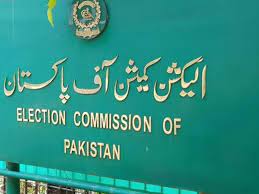
ISLAMABAD: The Election Commission of Pakistan (ECP) reserved its decision on a petition to disqualify PTI’s 25 dissident MPAs on Tuesday, and is likely to announce it today (Wednesday).

Punjab Assembly Speaker Pervez Elahi had filed a reference with the ECP against these MPAs under Article 63(A) of the Constitution for voting in favour of PML-N’s Hamza Shahbaz in the election for the Punjab chief minister.

Both sides had already concluded arguments before the ECP’s three-member bench headed by Chief Election Commissioner (CEC) Sikandar Sultan Raja.

As the bench took up the reference for hearing Tuesday, dissident MPAs’ representative Khalid Ishaq contended the lawmakers had neither received an invitation nor the agenda for the April 1 parliamentary party meeting, adding only two members had received the show-cause notices.

He also said that the dissidents didn’t get the April 18 declaration of disqualification and that his clients weren’t given a chance to explain their position.

He maintained that the PTI parliamentary party’s decision is nowhere to be found, and alleged that a false document was furnished after the parliamentary party’s meeting. However, the lawyer was in agreement with PTI’s counsel Barrister Ali Zafar’s remarks that “floor crossing is cancer,” but noted that party dictatorship is also cancer. He argued that even if party chairman Imran’s instructions were “correct”, the MPAs could not be disqualified. He contended that the legislators were instructed to be present in the House and vote for Pervez Elahi, and that the MPAs were free to vote independently once Elahi boycotted the election.

He emphasised, “Nowhere did the party chairman issue instructions to not vote for the opposite candidate in case of a boycott”.

Responding to the argument that the MPAs were not aware of the directions of the parliamentary party about voting for Pervez Elahi, PTI’s counsel Senator Barrister Syed Ali Zafar remarked, “This reminds me of what we call the sleepwalking defence”. It is a term used for a legal argument that a criminal defendant is not culpable because he or she acted while in a sleep-like state, without consciousness or intent to commit a crime.

Ali Zafar then referred to a case where a person had killed someone in a busy market in broad daylight and he engaged one of the most famous criminal lawyers who took the absurd defence that his client did it while sleepwalking. He said the argument did not work and the judges sent the murderer to the gallows. He said the defectors were doing exactly what the murdered had done.

He remarked, “When the whole world and nation knew about it and the same was being discussed in talk shows and reported in the newspapers, it was like saying that the MPAs were, though awake, yet sleeping all this time.”

He defended the parliamentary party meeting and explained that the parliamentary party met on April 1 and the media reported its decision the next day. Also, he said, all MPAs got notices from the chief whip on April 2, and PTI Secretary-General Asad Umar sent another notice on April 4.

Then, Ali Zafar continued, the party again met on April 5 and reached the same decision, sending the third notice on April 7. The minutes of both meetings were produced. They were reported in the media and discussed in programmes, he added.

“The voting took place in front of the entire nation and was covered live by electronic media”. No one denied the vote. Again, a show-cause notice was issued on April 16, but the MPAs chose not to appear before the party head, hence they were rightly declared to have defected, he explained.

He pleaded to the ECP bench that defectors would have to be de-seated as they had cast their vote against party directions, and any other decision by the bench would mean frustrating the aspirations of the people and defeating the provisions of the Constitution.

However, when he contended that he had also submitted the receipts of courier services as evidence, Advocate Salman Akram Raja, who represented Aleem Khan, raised an objection, and said that additional documents could not be submitted at this stage — a contention accepted by the ECP, refusing to allow the PTI to submit those receipts.

Ali Zafar said that in their written responses to the ECP, the MPAs had admitted defection, and that the purpose of the ECP’s hearing was to remove any shortcomings in the party chairman’s declaration.

The ECP, after hearing both sides, reserved judgment, which is likely to be announced today (Wednesday).

The dissident lawmakers include Abdul Aleem Khan, Raja Sagheer Ahmed, Malik Ghulam Rasool Sangha, Saeed Akbar Khan, Mohammad Ajmal, Nazir Ahmed Chohan, Mohammad Amin Zulqernain, Malik Nauman Langrial, Mohammad Salman, Zawar Hussain Warraich, Nazir Ahmed Khan, Fida Hussain, Zahra Batool, Mohammad Tahir, Aisha Nawaz, Sajida Yousaf, Haroon Imran Gill, Uzma Kardar, Malik Asad Ali, Ijaz Masih, Mohammad Sabtain Raza, Mohsin Atta Khan Khosa, Mian Khalid Mehmood, Faisal Hayat and Mehar Mohammad Aslam.

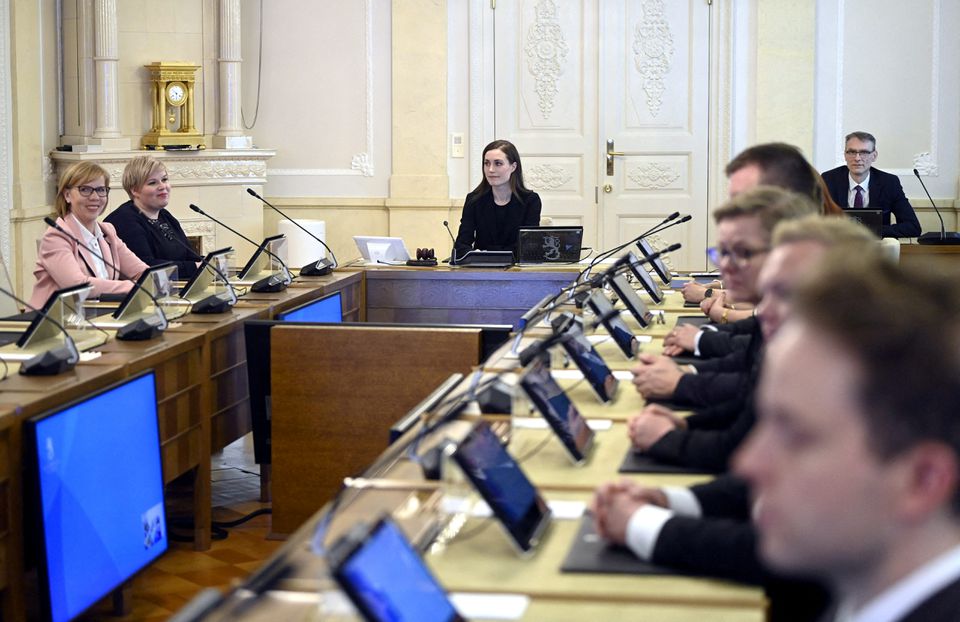
Finland, Sweden hope Turkey’s Nato objections can be overcome

Turkey surprised many Nato allies on Monday by saying it would not support membership for Sweden and Finland after the two countries took the widely anticipated step of agreeing to apply to join the US-led alliance this week.

“Statements from Turkey have very quickly changed and become harder during the last few days,” Finnish President Sauli Niinisto said during an address to Sweden’s parliament. “But I am sure that, with the help of constructive discussions, we will solve the situation.”

Niinisto said he talked by telephone with Turkish President Tayyip Erdogan a month ago and that the message then had been supportive of Finnish and Swedish membership in Nato.

“But in the last week he has said ‘not favourable’,” Niinisto said. “That means we have to continue our discussions. I am optimistic.”

Niinisto and Swedish Prime Minister Magdalena Andersson will travel to the United States to meet US President Joe Biden on Thursday to discuss the applications, the three administrations said separately on Tuesday.

Niinisto said quick ratification by the United States could smooth the path toward membership for the two Nordic neighbours, who joined the European Union together in 1995.

“If you have a quick process there, it helps the whole process and the timetable for the whole process,” Niinisto told a news conference with Andersson in Stockholm.

Both countries are due to submit their formal applications on Wednesday.

Meanwhile, the White House said the administration was confident Nato can reach consensus about the bids.

“We know there’s a lot of support for Sweden and Finland to join Nato,” White House press secretary Karine Jean-Pierre said.

Dialogue

Turkey says Sweden and Finland harbour individuals linked to groups it deems terrorists, namely the Kurdistan Workers Party (PKK) militant group and followers of Fethullah Gulen, whom Ankara accuses of orchestrating a 2016 coup attempt.

Swedish Foreign Minister Ann Linde said on Saturday, ahead of talks with her Turkish counterpart at a Nato meeting in Berlin, that Sweden, just like the rest of the European Union, considered PKK a terrorist organisation.

Speaking at a news conference on Monday, Erdogan also said Turkey would oppose the Nato bids from those who imposed sanctions on it.

Spain, Morocco reopen land borders after two years

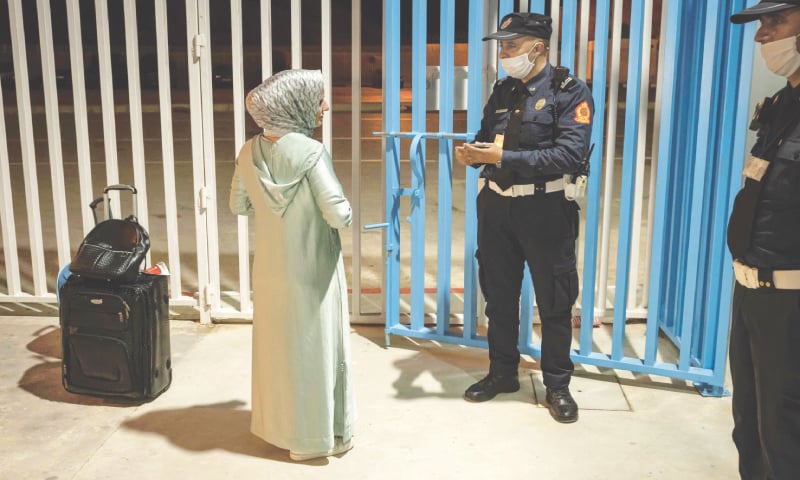
The enclaves on the Mediterranean coast in northern Morocco have the European Union’s only land borders with Africa.

The gates opened shortly after 11pm local time on Monday night, letting dozens of cars and queues of pedestrians pass in both directions.

At the Fnideq border post, smiles lit up the faces of the travellers crossing to see their families on the Moroccan side.

“I was stuck for two years in Ceuta, I’m very happy to be back home,” said Nourredine.

“I am happy that Morocco and Spain have restored their relations, it allows us to see our families,” said one man in his sixties.

The reopening of the borders of the two enclaves initially remains limited to residents of Europe’s open-borders Schengen area and their family members. It will be expanded to cross-border workers after May 31.

The local economies on both sides of the borders depend on the crossing of people and goods. The Ceuta and Melilla crossings were closed during the first wave of the coronavirus pandemic in March 2020.

The borders became the focus of a major dispute last year, when Madrid allowed the leader of a Western Saharan independence movement to be treated for Covid-19 in a Spanish hospital.

Libya capital rocked by battle as rival PM vies for power

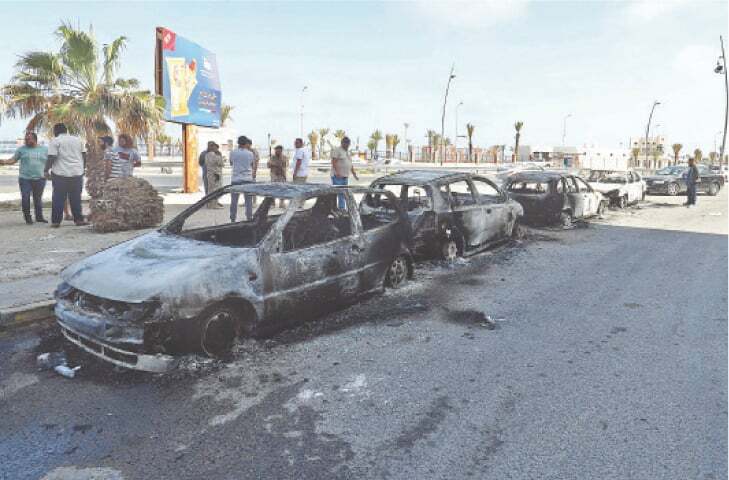
TRIPOLI: Gunfire rocked Libya’s capital for several hours on Tuesday as a rival prime minister attempted to oust interim premier Abdulhamid Dbeibah, threatening another escalation in the war-torn country.

Fathi Bashagha landed in Tripoli in the early hours of Tuesday and tried to take it by force, sparking pre-dawn clashes between armed groups supporting him and those backing Dbeibah.

Libya has had two opposing adminstrations and prime ministers since February, the latest trouble in the oil-rich North African nation since the chaos that followed a 2011 revolt that toppled dictator Moamer Qadhafi.

Hours after landing, Bashagha left citing the “security and safety of citizens”, as the United Nations, European Union and United States appealed for calm.

There were no immediate reports of casualties from the fighting, but correspondents saw burned-out cars and military convoys later on Tuesday morning.

Dbeibah, based in Tripoli in the west, was appointed under a troubled UN-led peace process early last year to lead a transition to elections set for December, but the vote was indefinitely postponed.

In February, parliament based in Tobruk in the east appointed rival premier and former interior ministry Fathi Bashagha to take his place, arguing that Dbeibah’s mandate had ended.

Dbeibah has refused to hand over power except to an elected administration.

Both men come from the western city of Misrata and are backed by different armed groups in the capital.

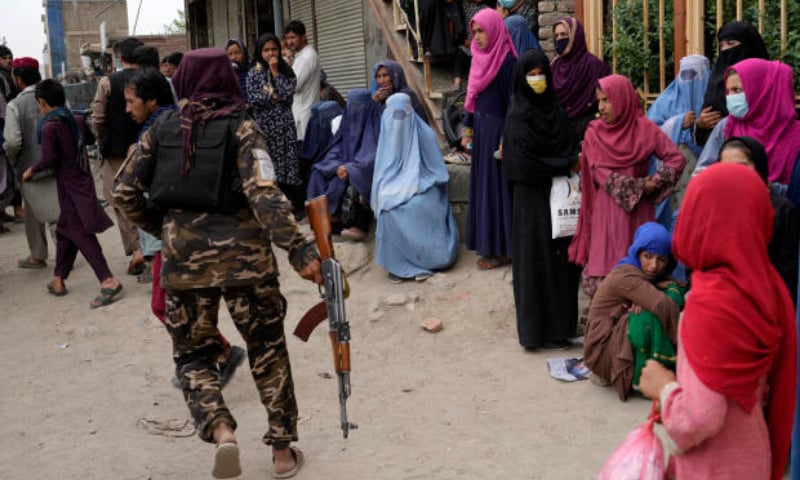
Taliban shut down Afghan human rights body

Since the Taliban seized power last August, they have closed several bodies that protected the freedoms of Afghans, including the electoral commission and the ministry for women’s affairs.

“We have some other organisations to carry out activities related to human rights, organisations that are linked to the judiciary,” deputy government spokesman Inamullah Samangani told AFP, without elaborating.

The work of the rights commission, which included documenting civilian casualties of Afghanistan’s two-decade war, was halted when the Taliban ousted a US-backed government last year and the body’s top officials fled the country.

The National Security Council and a reconciliation council that promoted peace were also shut down at the weekend as the government announced its first annual budget.

“These departments are not considered necessary, so they have been dissolved. But in the future if they are needed then they can resume their operations,” Samangani said.

The Taliban are facing a financial deficit of about 44 billion afghanis (about $500 million) in a country almost entirely dependent on foreign aid.

Heather Barr, associate women’s rights director at Human Rights Watch, said it was shocking to see Afghanistan backslide with the closures.

“It mattered enormously to have somewhere to go, to ask for help and to demand justice,” she tweeted.

The Taliban previously promised a softer rule than their first regime from 1996 to 2001, but have steadily eroded the freedoms of many Afghans, particularly women, who face restrictions in education, work and dress.

US offers strong support to rebuild Pakistan’s economy

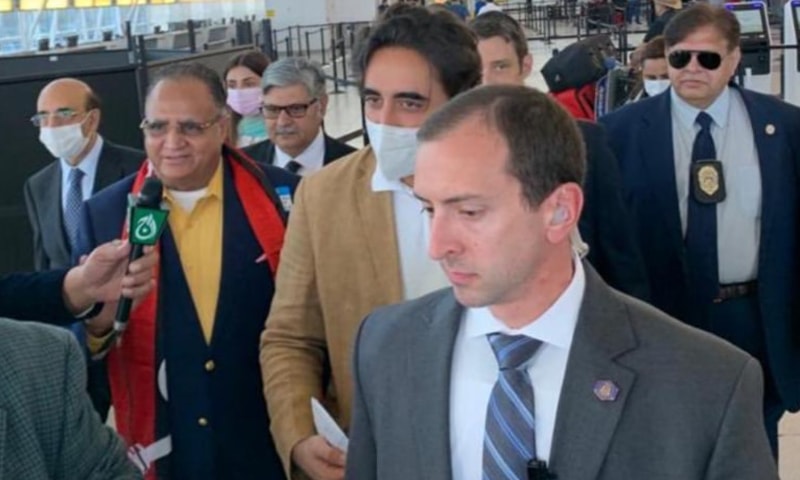
WASH­­INGTON/ISLAMABAD: Hou­rs after Foreign Minister Bilawal Bhutto-Zardari arrived in New York on Tuesday for a series of meetings with US Secretary of State Antony Blinken, a State Department spokesperson assured Pakistan of strong US support for their efforts to rebuild the Pakistani economy.

The United States “will continue to work bilaterally on ways to grow investment and trade opportunities to build a prosperous and stable Pakistan,” the spokesperson told Dawn in Washington.

The United States also “welcomes the ongoing International Monetary Fund (IMF) deliberations with Pakistan,” the spokesperson added.

The week-long review will be an opportunity for Pakistan to convince the IMF to revive a stalled $6bn package for stabilising its cash-starved economy.

A public expression of US support would boost Islamabad’s efforts to revive the programme and could smooth bullish market trends as well.

The spokesperson also confirmed media reports of a one-on-one meeting between Secretary Blinken and Mr Bhutto-Zardari.

“We confirm Secretary Blinken and Foreign Minister Bhutto-Zardari will meet one-on-one and cover a number of bilateral concerns in a follow-up to their May 6 call,” the US official said.

Earlier, the foreign minister told journalists in New York that he would share Pakistan’s perspective on various issues with the international community in his UN engagements.

Mr Bhutto-Zardari is attending a UN ministerial meeting of Global Food Security Call for Action and the Security Council’s open debate on maintenance of international peace, with a focus on conflict and food security.

The US mission to the United Nations initiated both meetings to highlight how the Feb 24 Russian invasion of Ukraine was threatening global food security.

“We are here to share Pakistan’s message with the United Nations,” said Mr Bhutto-Zardari while talking to a group of Pakistani journalists at New York’s JFK airport.

The PTI had earlier planned a protest on his arrival but later they canceled the programme. Even PML-N supporters stayed away from the small PPP crowd that gathered at the airport to welcome their leader.

The foreign minister took an Emirates flight, which was delayed by a medical emergency. Mr Bhutto-Zardari’s entourage included a senior official from his ministry and some members of his personal staff. He was received by Ambassador Munir Akram, Pakistan’s Permanent Representative to the UN, its US envoy Ambassador Masood Khan and other senior officials of the two missions.

Renewal of ties with US

Speaking about Mr Bhutto-Zardari’s maiden official visit to the US, other upcoming overseas trips, and the external policy priorities of the new government at Foreign Office in Islamabad, Minister of State for Foreign Affairs Hina Rabbani Khar told the media the government was committed to renewal of ties with the US.

She said Mr Bhutto-Zardari’s meeting with Secretary Blinken provides “a useful opportunity” for strengthening bilateral engagement with the US.

Sharing the broader contours of foreign policy operations under the new minister, Ms Khar said promoting national interest would be the foremost priority; trust and confidence with partners would be rebuilt; old friendships would be consolidated and new ones would be forged; stability and continuity in policies would be provided while retaining the flexibility to adapt as required; focus would be on immediate neighbourhood as well as on balanced, objective, broad-based, mutually beneficial relations with major powers.

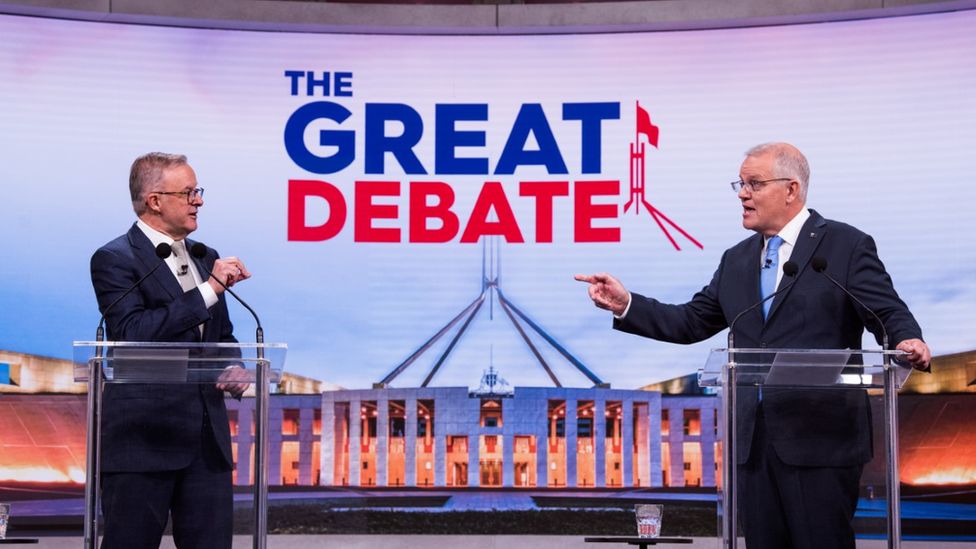
Australians go to the polls on 21 May, for the country’s first election since 2019.

It will decide who serves as Australia’s next prime minister and which political group is in power.

Who is being elected?

Australians will vote for all the seats in the House of Representatives, and just over half the seats in the Senate.

The result in the House of Representatives – where the prime minister sits – will decide which party forms the next government.

One party needs to win at least 76 of the 151 seats there to form a majority government.

If it cannot do that, it must try to win support from independent MPs, or those from minor parties.

Voting is mandatory for over-18s. More than 17.2 million people – 96% of eligible voters – are enrolled for the 2022 election.

Australia does not have a set date for national elections, but the maximum term for the House of Representatives is three years.

Why Australia has compulsory voting

Who is currently in power?

The Liberal-National Coalition holds 76 seats in the House of Representatives, which makes it the ruling political group.

Labor holds 68, and the seven other seats are held by minor parties and independents.

In the Senate, the upper house of Parliament, the Coalition has 35 seats and Labor has 26. Forty Senate seats are up for election.

Who is in the running to be prime minister?

Scott Morrison has been the prime minister since 2018, having taken over from Malcolm Turnbull.

He has been taking credit for adopting a tough closed-borders approach to Covid, which helped Australia achieve one of the lowest death rates globally.

Voting in an electoral seat six times the size of Britain

But the prime minister is facing public perception problems, after criticisms of his character from senior members of his own party and others.

Government senator Concetta Fierravanti-Wells accused him of being “an autocrat” and “a bully with no moral compass” during a row over internal party processes.

Deputy Prime Minister Barnaby Joyce wrote that Mr Morrison was a “hypocrite and a liar” in a text message before he took the post.


Mr Morrison is being challenged by Labor leader Anthony Albanese.

Mr Albanese is one of Australia’s longest-serving politicians and was briefly deputy prime minister under Kevin Rudd in 2013.

Mr Albanese has recently edged from the political left to the centre, and is basing his campaign on “small targets” – modest policy proposals.


What are the key issues?

Australia’s economy grew strongly throughout the pandemic, and is projected to grow a further 4.25% this year.

The unemployment rate has fallen to 4% – its lowest level since 2008.

However, many people are concerned about the rising costs of fuel, electricity and other goods.

Added to this, Australia has just raised interest rates for the first time in a decade – putting pressure on borrowers and those with mortgages.

Climate change is an increasing worry because Australia has recently seen some its its worst ever bushfires and floods.

Both major parties have committed to net zero emissions by 2050. However, both of them have also pledged support to Australia’s coal mining industry.

This may push environmentally aware voters towards parties such as the Greens.


Last year, hundreds of thousands of Australians took part in protests over the treatment of women.

A recent review has suggested that one in three staff working in parliamentary offices have experienced sexual harassment.

Mr Morrison made a formal apology on behalf of the parliament, but his party has been criticised for its response to misconduct allegations.

Has anything changed for Australian women?

Labor says it wants to reduce the “boys’ club” culture of parliament, but the party has also faced accusations of bullying.

China recently signed a security pact with the Solomon Islands, a nation 2,000km (1,400 miles) north-east of Australia.

Labor has accused Mr Morrison of letting China potentially expand its military presence in the region, saying this was “worst failure of Australian foreign policy in the Pacific” in 80 years.

The prime minister has defended Australia’s ties with its “Pacific family”.


Trust in leadershealthcare and education are also big concerns.

When will we know the results?

Most likely late on election day, but it might take longer if the contest is close.

If a major party has to form a pact with minor parties or independent MPs, then the negotiations could take several days. In 2010, it took Julia Gillard two weeks to receive support to put Labor in power.

Opinion polls suggest Labor will win by a narrow majority this time around. However, the polls were wildly inaccurate in the last election.

Flight data indicates a China Eastern Airlines plane that crashed in March was intentionally put into a nose-dive, according to US media reports.

Investigators have so far not found any mechanical or technical faults with the jet, the reports say, citing a preliminary assessment by US officials.

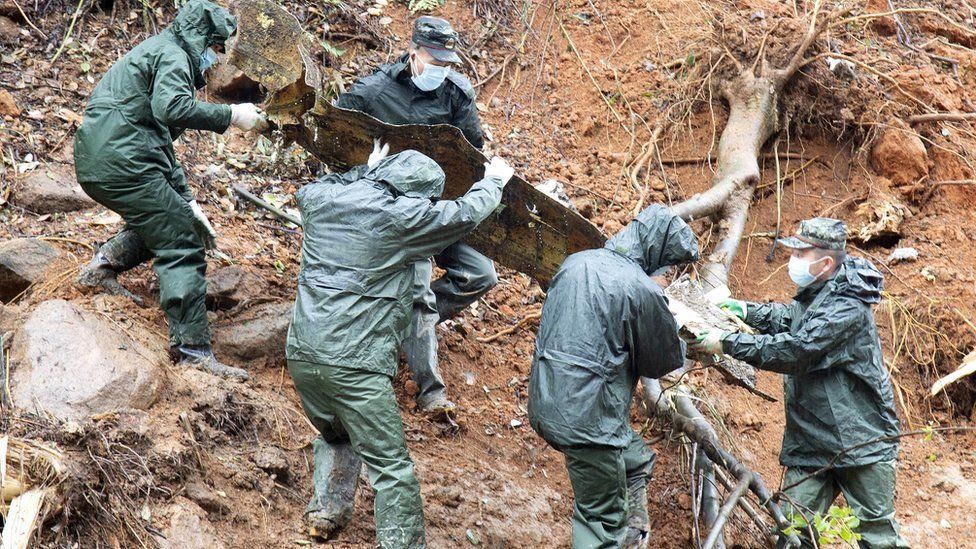
The Boeing 737-800 was flying between the southern Chinese cities of Kunming and Guangzhou when it crashed.

All 132 passengers and crew on board the plane died in the crash.

“The plane did what it was told to do by someone in the cockpit,” according to the Wall Street Journal, which first reported the story, citing a person familiar with US officials’ preliminary assessment of the cause of the crash.

Data from one of the plane’s “black box” flight recorders, which was recovered from the crash site, suggested that inputs to the controls pushed the plane into a near-vertical dive, the report said.

ABC News, citing US officials, also reported that the crash was believed to have been caused by an intentional act.

Investigators looking into the crash are examining whether it was due to intentional action on the flight deck, with no evidence found of a technical malfunction, according to Reuters, which cited two people briefed on the matter.


China Eastern Airlines previously said the three pilots on board were qualified and in good health.

The airline separately told the Wall Street Journal that there was no indication that any of the pilots was in financial trouble.

China Eastern Airlines did not immediately respond to a BBC request for comment.

The Civil Aviation Administration of China (CAAC), which is leading investigations into the crash, also did not immediately respond to a BBC request for comment.

Last month, the CAAC said reports that the plane may have been crashed deliberately had “gravely misled the public” and “interfered with accident investigation work”.

Investigators are still in the process of analysing flight data and the wreckage from the crash, Chinese state media outlet the Global Times reported on Wednesday.

It also said the CAAC will continue to “carry out the accident investigation in a scientific, rigorous and orderly manner”.

The Chinese embassy in Washington, the US National Transportation Safety Board (NTSB), and plane maker Boeing declined to comment on the Wall Street Journal’s report, due to guidelines set out by the United Nations’ International Civil Aviation Organization.

“Under the rules regarding crash investigations… only the investigating agency can comment on an open air accident investigation,” a Boeing spokesperson told the BBC on Wednesday. The company previously said it was assisting investigations in China and communicating with the NTSB.

Chinese airlines generally have a good safety record – the last major accident took place 12 years ago.

The China Eastern Airlines plane that crashed was less than seven years old.