Pakistan and Turkey are two countries but ‘one nation’: envoy

Underlining the deep-rooted Pakistan-Turkey brotherhood, Pakistan’s ambassador to Turkey, Dr Yousaf Junaid, reiterated that the relationship between the two nations epitomises sentiments such as a “heart-to-heart connection” and “two countries, one nation.”

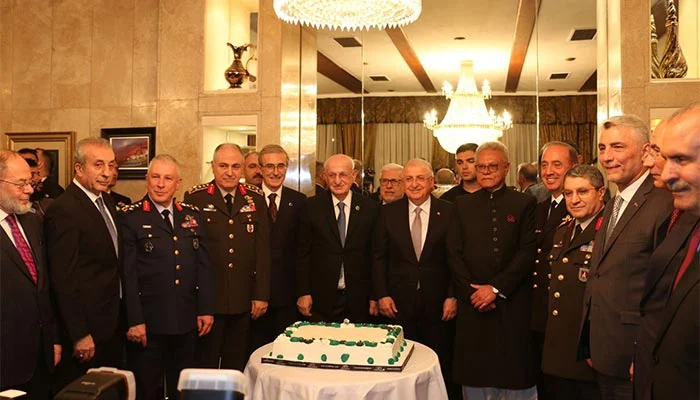
The Embassy of Pakistan in Ankara hosted a grand reception commemorating the 84th National Day of Pakistan. Turkish Minister for National Defence Yasar Guler and Turkish Minister for Trade Prof Dr Omer Bolat graced the occasion as chief guests.

Dr Junaid, in his remarks, elucidated the historical importance of Pakistan Day, highlighting the pivotal role of the Pakistan Resolution adopted on March 23, 1940, for the creation of a separate homeland for Muslims based on the Two Nation Theory.

He paid tribute to the visionary leadership of Quaid-e-Azam Muhammad Ali Jinnah and also reaffirmed Pakistan’s current leadership’s commitment to transforming the nation into a bastion of peace, progress, and human dignity.

The ambassador also expressed gratitude to President Recep Tayyip Erdogan for his stewardship of the bilateral relationship and emphasised the importance of working together to nurture and strengthen these brotherly ties for future generations.

In his address, Turkish Minister for National Defence Guler lauded the exemplary and historic bilateral relations, particularly highlighting the flourishing defence ties and excellent cooperation between the armed forces of both nations.

He also emphasised that the strategic and comprehensive bilateral relations between Pakistan and Turkiye play a vital role in promoting peace and stability, both regionally and globally.

Acknowledging the historical significance of the bilateral relations, Turkish Minister for Trade Prof Dr Bolat underscored the importance of transforming the fraternal ties between Pakistan and Turkiye into economically beneficial multifaceted cooperation.

He also expressed optimism that this friendship would continue to strengthen in the years ahead, based on shared values and mutual interests.

The event was attended by Former speaker Turkish Parliament Ismail Karaman, Chief of Turkish General Staff General Metin Gurak, Turkish Land Forces Commander General Selcuk Bayraktaroglu, Commander Turkish Air Force General Ziya Cemal Kadioglu, Commander Turkish Naval Forces Admiral Ercument Tatlioglu, Deputy Foreign Minister Ahmet Yildiz, Chairman Pakistan-Turkiye Parliamentary Friendship Group Ali Sahin, Mayor Ankara Mansur Yavas, Former deputy prime minister Recep Akdag, former agriculture minister Mehmet Mehdi Eker, former interior minister Efkan Ala, Deputy Commerce Minister Mustafa Tuzcu, Former Chairman SSB Ismail Demir, Members of Parliament, as well as high-ranking Turkish civil and military officials, ambassadors, members of the diplomatic corps, academia, Pakistani community, and media representatives.

Indian govt ordered killings in Pakistan: report

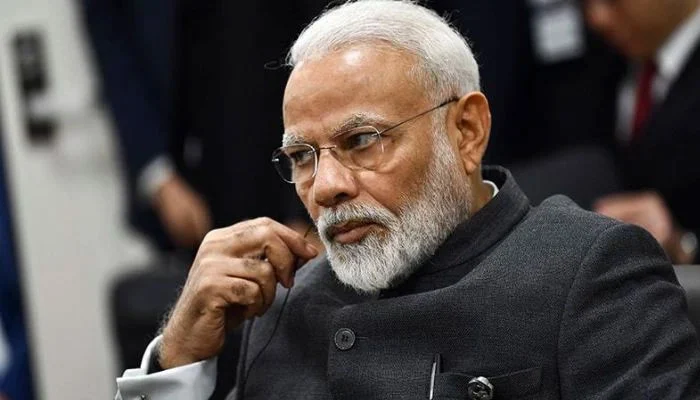
The report cited intelligence officials from both countries as well as documents shared by Pakistani investigators, saying they “shed new light on how India’s foreign intelligence agency allegedly began to carry out assassinations abroad as part of an emboldened approach to national security after 2019”.

It should be mentioned that while India has denied the claims made in the report, there has been no official comment from Pakistan thus far. However, on January 25, Foreign Secretary Syrus Sajjad Qazi had said in a news conference that there were “credible evidence” of links between Indian agents and the assassination of two Pakistani nationals in Sialkot and Rawalakot.

The Guardian report said that the accounts appeared to “give further weight to allegations that Delhi has implemented a policy of targeting those it considers hostile to India”. It noted that India has been publicly accused by Washington and Canada of involvement in the murders of dissident activists.

“The fresh claims relate to almost 20 killings since 2020, carried out by unidentified gunmen in Pakistan. While India has previously been unofficially linked to the deaths, this is the first time Indian intelligence personnel have discussed the alleged operations in Pakistan, and detailed documentation has alleged Research Analysis Wing’s (RAW) direct involvement in the assassinations,” it said.

It further said claims suggested that Sikh separatists in the Khalistan movement were targeted as part of these Indian foreign operations, both in Pakistan and the West.

The report, quoting Pakistani investigators, said, these killings were orchestrated by Indian intelligence sleeper cells “mostly operating out of the United Arab Emirates (UAE)”.

It quoted two Indian intelligence officers as saying that RAW’s shift to “focusing on dissidents abroad” was triggered by the 2019 Pulwama attack which killed scores of security personnel in held Kashmir in February 2019 and which India blamed on Pakistan.

“After Pulwama, the approach changed to target the elements outside the country before they are able to launch an attack or create any disturbance. We could not stop the attacks because ultimately their safe havens were in Pakistan, so we had to get to the source,” The Guardian quoted one Indian intelligence operative as saying.

Conducting such operations “needed approval from the highest level of government”, he said, adding that India “drew inspiration” from intelligence agencies such as Israel’s Mossad and Russia’s KGB.

Meanwhile, the report cited unnamed senior officials from two separate intelligence agencies in Pakistan as saying that Islamabad suspected India’s involvement in up to 20 killings since 2020.

It said that the officials pointed to evidence relating to previously undisclosed inquiries into seven of the cases — including witness testimonies, arrest records, financial statements, WhatsApp messages and passports — which investigators said showcased in detail the operations conducted by Indian spies to assassinate targets on Pakistani soil. The Guardian said it had seen the documents, but they could not be independently verified.

The intelligence sources alleged that targeted assassinations increased significantly in 2023, accusing India of involvement in the suspected deaths of about 15 people, most of whom were shot at close range by unknown gunmen.

Investigators alleged that millions of rupees would often be paid to criminals or impoverished locals to carry out the murders, with documents claiming that payments were mostly done via Dubai. Meetings of RAW handlers overseeing the killings are also said to have taken also place in Nepal, the Maldives and Mauritius, the report said.

“This policy of Indian agents organising killings in Pakistan hasn’t been developed overnight. We believe they have worked for around two years to establish these sleeper cells in the UAE who are mostly organising the executions. After that, we began witnessing many killings,” a Pakistani official was quoted as saying.

The Guardian said that the figures it was given matched up with those collected by analysts tracking unclaimed militant killings in Pakistan.

Meanwhile, India categorically denied the report by The Guardian. India’s Ministry of External Affairs denied the claims, reiterating an earlier statement that they were “false and malicious anti-India propaganda”.

The ministry emphasised a previous denial made by India’s foreign minister, Subrahmanyam Jaishankar, that targeted killings in other countries were “not the government of India’s policy”.

Iran pays homage to Guards killed in Syria strike

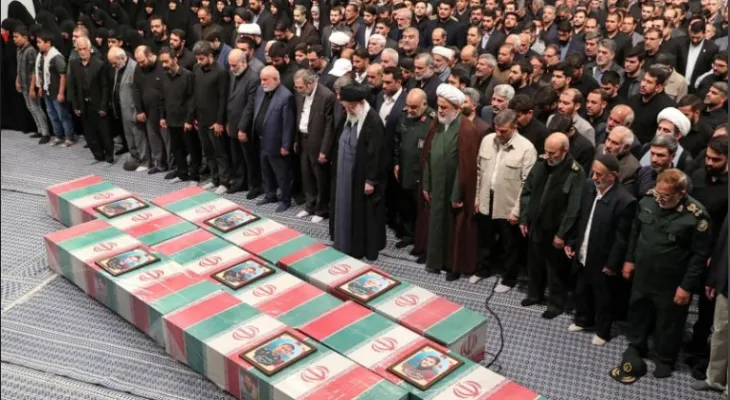
Thousands of people gathered in Tehran on Friday for the funerals of seven members of the Revolutionary Guards killed in a strike in Syria, which Iran blamed on Israel.

The Guards, including two generals, were killed in the air strike on Monday which levelled the Iranian embassy’s consular annex in Damascus.

Israel has not commented on the strike, but analysts saw it as an escalation of its campaign against Iran and its regional proxies that runs the risk of triggering a wider war beyond the Israel-Hamas conflict in the Gaza Strip.

Friday’s ceremony coincides with the annual Quds (Jerusalem) Day commemorations, when Iran and its allies stage marches in support of the Palestinians.

Iran has said that among the dead were two brigadier generals from the Guards’ foreign operations arm, the Quds Force, Mohammad Hadi Haji Rahimi and Mohammad Reza Zahedi.

A Britain-based war monitor, the Syrian Observatory for Human Rights, said Zahedi was the Quds Force commander for Palestine, Syria and Lebanon.

The coffins of the seven were placed on trailers of two trucks in one of the largest squares in the Iranian capital, an AFP journalist said.

Mourners held Iranian and Palestinian flags, as well as those from the Iran-backed Lebanese Hezbollah group.

Pictures of the men killed were displayed on the trucks, accompanied by the slogan “Martyrs on the road to Jerusalem”.

Iran’s supreme leader Ayatollah Ali Khamenei has said Israel “will be punished” for the killings.

The Gaza war began with Hamas’s October 7 attack on Israel. Tehran backs Hamas but has denied any direct involvement in that attack.

One placard on Friday echoed Khamenei’s pledge to strike back after the Damascus strike: “We will make them regret this crime,” it said.

State television broadcast footage of similar gatherings on Friday in other Iranian cities including Mashhad, Qom, Sanandaj and Shahrekord.

Khamenei said on Wednesday the Damascus strike was a “desperate” effort by Israel that “will not save them from defeat” in Gaza.

Monday’s attack in Damascus, which the Observatory said killed 16 people, was the fifth raid on Syria in a week that has been blamed on Israel.

Iran, Israel’s arch foe, has been a major ally of Syrian President Bashar al-Assad during his country’s 13-year civil war.

Israel has long fought a shadow war of assassinations and sabotage against Iran and its armed allies, including Hezbollah and other militant groups, carrying out hundreds of strikes against targets in Syria.

The number of attacks has intensified since the Gaza war between Israel and Hamas began.

After Friday’s funeral ceremony in Tehran, the bodies of the Revolutionary Guards killed in Damascus will be taken to their home towns for burial.

‘We will not tolerate any interference in judicial affairs,’ says CJP Isa

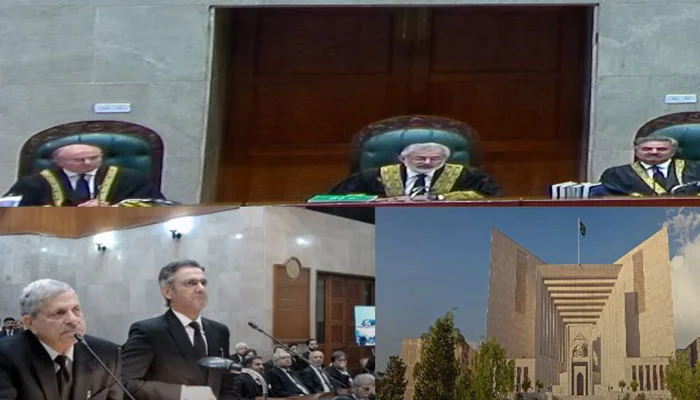
ISLAMABAD: Chief Justice Qazi Faez Isa Wednesday that the Supreme Court will not tolerate any interference in judicial affairs and is taking the letter by Islamabad High Court judges “very seriously”.

The chief justice further remarked that the letter mentions the Supreme Judicial Council, indicating that it does not address the Supreme Court.

CJP Isa’s remark came during the hearing of SC’s suo motu notice taken on the letter written by Islamabad High Court (IHC) judges that cites complaints of interference in judicial affairs by intelligence agencies.

The hearing is being conducted by a seven-member SC bench headed by Chief Justice Qazi Faez Isa and comprising six other judges — Justice Syed Mansoor Ali Shah, Justice Yahya Afridi, Justice Jamal Khan Mandokhel, Justice Athar Minallah, Justice Musarrat Hilali and Justice Naeem Akhtar Afghan.

The SC is conducting live proceedings of the hearing.

“Judges must be sure that they are not in danger,” CJP Isa said during the hearing.

The chief justice said he cannot exercise the contempt power of any other court.

“The court which is in contempt will exercise this power itself.”

“There is zero tolerance on the independence of judiciary,” said the chief justice.

However, the judge questioned lawyers, who demanded a suo motu notice in the aforementioned matter, where they were when not a single meeting of the full court was conducted in four years.

“Full court performs the administrative function, not judicial function.,” he said.

The chief justice said: “My colleagues and I will stand before any attack on the independence of judiciary.”

However, he maintained that the court does “not like interference in the work of the judiciary”.

He further remarked: “If anyone has an agenda…they should become the chief justice. We will not take the pressure; we are working administratively.”

During the hearing, the AGP read out the trail of events following the IHC judges’ letter including the meetings held between CJP Isa and the judges.

The chief justice, in response to the AGP, said: “We did not meet at home by hiding from the executive, we did not meet in the chamber. We held a meeting as an administrator, the difference in law is clear.”

The AGP later apprised the court on the government’s decision to appoint former chief justice Tasadduq Hussain Jillani as head of the inquiry commission.

The CJP was also displeased with the discussion being held on social media regarding Justice (retd) Jilani.

The chief justice later remarked that the SC does not have the power to create a commission in the Constitution.

“The authority to form the commission is with the government, we consulted and gave the names,” he said.

The AGP, meanwhile, said that the law does not allow the government to interfere in the commission of inquiry.

Later commenting on the independence of judiciary, the AGP said: “I assure you that the federal government will not take any action that will affect the independence of the judiciary.”

The CJP, terming social media as a “new epidemic”, spoke about the pressure regarding the letter and the events that have unfolded in its wake.

At the outset of the hearing, the CJP Isa clarified that the three-member committee now decide cases and the chief justice’s will is no longer important. “Neither the committee exercise the authority of the court nor the court override the committee’s power.

The CJP was upset about petitions being published in the media before even being filed in the court. He also shared his displeasure over lawyer pressuring the SC to take suo motu notice.

“Is it [to impose] pressure? I do not come under anyone’s pressure,” said the chief justice.

CJP Isa maintained that lawyers who seek suo motu notice should quit legal practice.

The AGP, following the conclusion of his statement before the court, said that the government stands by the independence of judiciary.

Attorney General for Pakistan Mansoor Usman Awan earlier began his arguments in the matter. The SC has sent a notice for him to appear before the bench.

Addressing the AGP, the chief justice remarked that two things must be ascertained in such matters which include, the conduct of an inquiry and bringing the facts to the fore. “Who should carry out these two tasks?”

During the hearing of the suo motu case, Justice Mansoor Ali Shah said: “We cannot avoid this important issue by hiding our necks in the sand like ostriches.”

He added that the protection of a civil judge, who is under pressure, should be investigated.

“We have to solve this serious matter,” he remarked.

Political engineering continuing: Justice Athar Minallah

“Everyone knows what is happening, but everyone is giving an impression that nothing is happening,” said Justice Minallah.

Referring to the contents of the letter, the SC judge said the judges pointed towards political engineering.

“Political engineering has been going on in the country and the Supreme Court has also been involved.”

The SC judge added that the court cannot close its eyes, as “a lot is happening”.

“All this has been going on since 2017, let’s not open the past,” said Justice Minallah.

CJP Isa, intervening in the matter, said that this case may be heard by a full court in the future.

He further added that the IHC judges, in the letter, mentioned that they referred their matter to their chief justice, but he hasn’t done anything.

The high court has its own powers, why is the chief justice not using them,” he remarked.

The CJP said the apex court doesn’t want to interfere in the matters of the high court but can make it aware of its powers.

The hearing was then adjourned till April 29.

Suo motu notice of letter

Earlier this week, the SC took suo motu notice of the matter after around 300 lawyers, belonging to various bar associations across the country, signed a petition demanding CJP Isa to exercise the apex court’s suo motu jurisdiction under Article 184(3) of the Constitution on the letter.

The lawyers also rejected the formation of an inquiry commission led by former chief justice of Pakistan Justice Tassaduq Hussain Jilani to probe the allegations.

It was learnt that the chief justice had referred the matter to a judges’ committee — comprising himself and three senior most judges of the apex court under the Supreme Court (Practice and Procedure) Act 2023 — for deliberation and constitution of a bench for hearing the matter.

The committee later decided to exercise suo motu jurisdiction under Article 184(3) of the Constitution and fix the matter for hearing on April 3.

Letter by IHC judges

On March 25, six judges of Islamabad High Court (IHC) had demanded Chief Justice of Pakistan Justice Qazi Faez Isa to convene the Judicial Convention to consider the matter of interference of intelligence operatives in the judicial functions or intimidation of judges in a manner that undermined independence of the judiciary.

The IHC judges, including Justice Mohsin Akhtar Kayani, Justice Babar Sattar, Justice Arbab Muhammad Tahir, Justice Tariq Mahmood Jehangiri, Justice Sardar Ejaz Ishaq Khan and Justice Saman Rifat Imtiaz, wrote a letter to the chief justice, who is also the chairman of the Supreme Judicial Council (SJC).

After the letter went viral and considering the gravity of allegations it mentioned, the chief justice called a meeting the same day with the IHC chief justice and all the judges after Iftar at 8pm at his residence during which the concerns of all the judges were heard individually.

The following day, on March 27, the CJP met with the attorney-general and the law minister, and thereafter, the chief justice and the senior puisne judge met with the president of Supreme Court Bar Association (SCBA) and the senior most member of the Pakistan Bar Council in Islamabad.

A full-court meeting of all the SC judges, called under the chairmanship of the chief justice of Pakistan at 4pm the same day, deliberated on the issues raised in the letter.

The full-court developed a consensus by majority that the chief justice may hold a meeting with the prime minister of and raise the issue with him. CJP Isa then met with Prime Minister Shahbaz Sharif in the Supreme Court where he clearly stated that interference by the executive in the affairs and judicial workings of judges will not be tolerated.

During the meeting, constitution of an inquiry commission was proposed under the Pakistan Commissions of Inquiry Act, 2017. The prime minister fully endorsed the views expressed by the CJP and senior puisne judge and assured them that he will be taking other appropriate measures to ensure an independent judiciary.

After further consultations among the CJP and other judges as well as the federal government’s actions in this regard, the announcement of a one-man inquiry commission comprising former CJP Tassaduq Hussain Jillani was made, who recused himself from the opportunity, citing various constitutional reasons.


PTI, JI, other Opposition parties unite for struggle to restore democracy

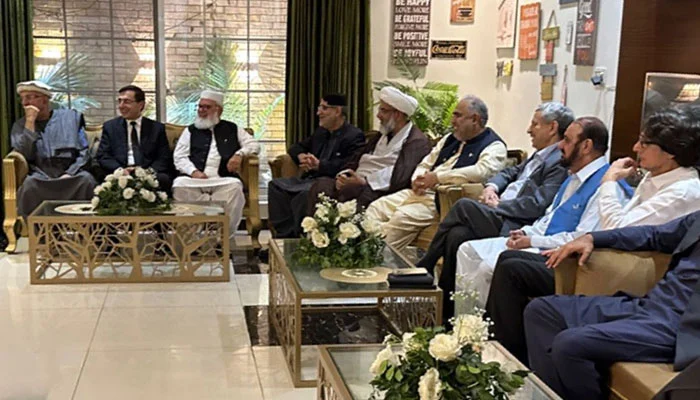
ISLAMABAD: Opposition parties including the Pakistan Tehreek-e-Insaf, Sunni Ittehad Council, Jamaat-e-Islami, Pashtunkhwa Milli Awami Party and other like-minded groups have united to launch a joint struggle for the supremacy of the Constitution and restoration of democracy.

In a consultative meeting hosted by the Majlis Wahdatul Muslimeen (MWM) in Islamabad, all parties joined hands under the same roof to protect the Constitution and democracy from threats, as the state system and democracy remain paralysed due to intervention, their statement read.

The meeting was attended by PTI Chairman Barrister Gohar Ali Khan, Omar Ayub, Asad Qaiser and Raoof Hasan; Pashtunkhwa Milli Awami Party’s Mahmood Khan Achakzai, Abdul Rahim Ziyaratwal, Sardar Shafiq Khan Tareen and Riaz Khan.

Politicians of the Balochistan National Party included Sardar Akhtar Jan Mengal, Sajid Khan and Tarin Parviz Zohoor, while Jamaat-e-Islami leadership comprised Liaquat Baloch and Amir-ul-Azeem.

SIC’s Sahibzada Muhammad Raza as well as MWM’s Allama Raja Nasir Abbas Jafari, Syed Asad Abbas Naqvi and Nasir Shirazi Mohsin Shehryar were also present in the meeting.

During the meeting, the Opposition parties’ leadership expressed their deep concern over the increasing involvement of the establishment in politics and termed it as a threat to the security of the country and national institutions.

“The establishment’s unconstitutional political role and interference has created a terrible distance between the people and the state,” it was emphasised. The leaders then decided that there was a need for a joint struggle to achieve these objectives and also contact other parties of Pakistan in view of these objectives.

The meeting agreed on the basic principles of complete restoration of the Constitution, rule of law, complete restoration of democracy through free and fair elections, independence of the judiciary and civil supremacy. It noted that there were major threats to the country’s future.

“Today’s meeting understands the fundamental reason for all the crises of the country and the deviation from the unanimous Constitution of the country and the disregard to the elected parliament of millions of people.

“That the Constitution will be protected and defended at all costs and there will be no compromise on it and that the real source and centre of the formation of Pakistan’s internal and external affairs will be the truly elected parliament of the people. No decision will be accepted and no one will be allowed to do so without the will and approval of parliament,” the leaders declared.

In the meeting, the politicians rejected the “changed” results of the general elections of February 8, 2024, and condemned the manipulation done “hypocritically”. The politicians also shared their displeasure over the “fake” government imposed on the people.

The forum declared that the present “fake” government has been provided with artificial stability by the establishment and unelected people have been imposed on the people through rigging in the elections. The meeting demanded that the establishment immediately stop all kinds of interference in politics.

The forum said due to the wrong internal and failed policies of civil servants, political instability and global isolation in the country and in order to bring the country out of political stability and global isolation, the formulation of the country’s internal and foreign policy is necessary from the country’s truly elected parliament.

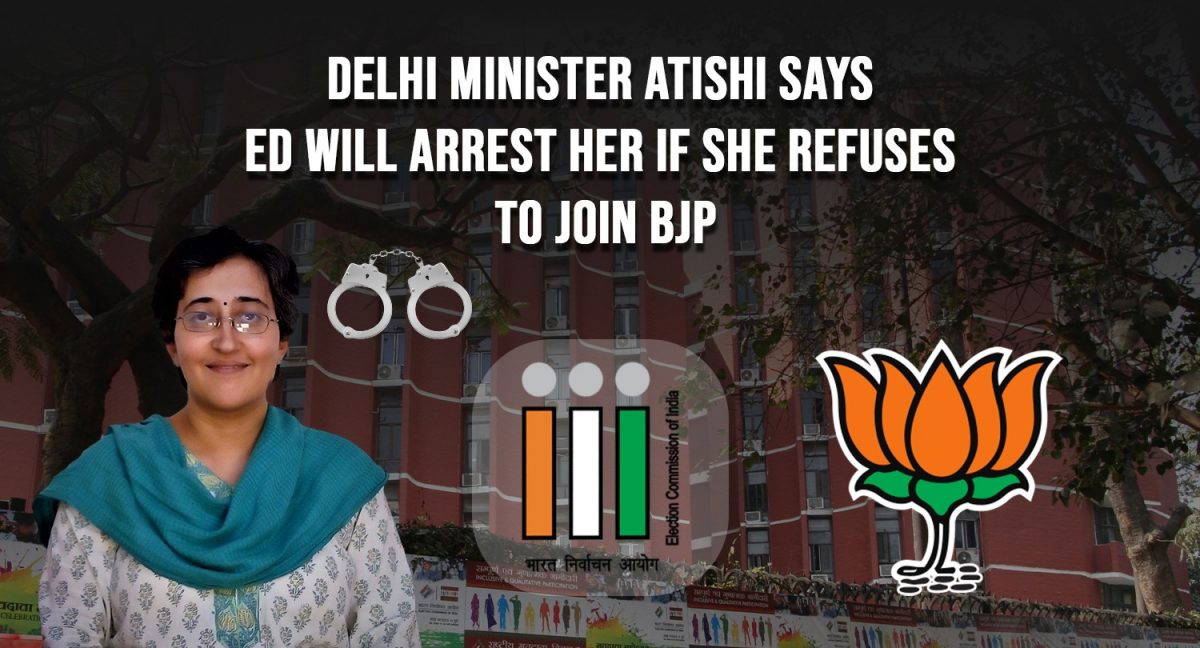
AAP minister alleges she’s under pressure to join BJP or face arrest

The minister was quoted by the Indian Express as saying she was “threatened” to join the BJP if she did not wish to be arrested within the next month.

Meanwhile, the Supreme Court on Tuesday granted bail to AAP’s Rajya Sabha MP Sanjay Singh, curiously after the prosecution did not oppose the bail, reports said.

Accusing the BJP of trying to topple the AAP and the Delhi government, she said: “After arresting four of our senior leaders — Satyendar Jain, Manish Sisodia, Sanjay Singh and Chief Minister Arvind Kejriwal — the BJP is conspiring to arrest four more leaders of the AAP.

Atishi says four more party leaders will be arrested soon

They (BJP), thought AAP will fall with the arrest of CM Arvind Kejriwal and the senior leadership. Now as they have realized, it is not going to happen, they are targeting us.”

The arrests of two serving chief ministers — of Delhi and Jharkhand — by the Modi government’s ‘agencies’ were at the heart of a mammoth opposition rally in Delhi on Sunday.

Atishi added: “They are going to arrest me, Saurabh Bharadwaj, Durgesh Pathak and Raghav Chadha. After the mega INDIA alliance rally on Sunday, the BJP is now scared… So, it is plotting to arrest the four senior leaders of the party that remain.”

The minister also alleged that the ED will soon raid these leaders’ homes and issue summons to them before making the arrests. “I have also been told that soon, the ED is going to raid my personal residence, my relative’s place, and after that four of us will be issued summons and will be subsequently arrested,” she said.

The minister alleges that she was approached by the BJP and “threatened” to join the party. “I have been approached by the BJP, through one of my close aides, to join their party.

They are also threatening me with the fact that if I do not join the party, I will be arrested by the ED in the next one month and my political career and future will end… They reached out to one of my close associates with this offer and said that Prime Minister Narendra Modi and the BJP want to topple and destroy the AAP,” she said.

“I want to tell the BJP that AAP leaders are not going to get scared of your threats. We are soldiers of Arvind Kejriwal and followers of Bhagat Singh!

“We will die and suffer but will fall into your trap and join the BJP. You can arrest all our leaders, all MLAs, but we will not stop our fight.”

Hitting back, Delhi BJP secretary Harish Khurana said, “A new day, a new manohar kahani (beautiful story); Atishi has tried to spread media sensation once again… It is a challenge Atishi-ji — give us a name or a BJP delegation or we will once again file a police complaint against you.”

“You are making such allegations because Arvind Kejriwal, your topmost leader, is in jail for corruption at the honourable court’s directions.

“For 14 months, Manish Sisodia has been in jail as per court directions. Sanjay Singh, Vijay Nair, Kavitha are in jail not because of ED’s orders on the directions of honourable courts,” Khurana added.

7 dead, hundreds injured in most powerful Taiwan quake in 25 years

Officials said the quake was the strongest to shake the island in decades, and warned of more tremors in the days ahead.

“The earthquake is close to land and it’s shallow. It’s felt all over Taiwan and offshore islands,” said Wu Chien-fu, director of Taipei’s Central Weather Administration’s Seismology Centre.

Strict building regulations and widespread public disaster awareness appear to have staved off a major catastrophe for the earthquake-prone island, which lies near the junction of two tectonic plates.

Wu said the quake was the strongest since a 7.6-magnitude struck in September 1999, killing around 2,400 people in the deadliest natural disaster in the island’s history.

Wednesday’s magnitude-7.4 quake hit just before 8:00am local time (0000 GMT), with the United States Geological Survey (USGS) putting the epicentre 18 kilometres south of Taiwan’s Hualien City, at a depth of 34.8 kilometres.

Three people among a group of seven on an early-morning hike through the hills that surround the city were crushed to death by boulders loosened by the earthquake, officials said.


Separately, a truck driver died when his vehicle was hit by a landslide as it approached a tunnel in the area.

The National Fire Agency said all the deaths occurred in Hualien county, and that so far 736 people had been injured in the quake, without specifying how seriously.

Social media was awash with shared video and images from around the country of buildings swaying as the quake struck.

Dramatic images were shown on local TV of multi-storey structures in Hualien and elsewhere tilting after the quake ended, while a warehouse in New Taipei City crumbled.

The mayor there said more than 50 survivors had been successfully plucked from the ruins of the structure.

Local TV channels showed bulldozers clearing rocks along roads to Hualien, a mountain-ringed coastal city of around 100,000 people that has been cut off by landslides.

“It was shaking violently, the paintings on the wall, my TV and liquor cabinet fell,” one man in Hualien told broadcaster SET TV.

President Tsai Ing-wen called for local and central government agencies to coordinate with each other, and said that the military would also be providing support.


Regional impact

In Taiwan, Japan and the Philippines, authorities initially issued tsunami warnings but by around 10am (0200 GMT), the Pacific Tsunami Warning Centre said the threat had “largely passed”.

In the Taiwanese capital, the metro briefly stopped running but resumed within an hour, while residents received warnings from their local borough chiefs to check for any gas leaks.

Taiwan is regularly hit by earthquakes as the island lies near the junction of two tectonic plates, while nearby Japan experiences around 1,500 jolts every year.

Across the Taiwan Strait, social media users in China’s eastern Fujian province, which borders Guangdong in the south, and elsewhere said they also felt strong tremors.

Residents of Hong Kong also reported feeling the earthquake.

China, which claims self-ruled Taiwan as a renegade province, was “paying close attention” to the quake and “willing to provide disaster relief assistance”, state news agency Xinhua said.

Fabrication at Taiwan Semiconductor Manufacturing Company — the world’s biggest chip maker — was briefly interrupted at some plants, a company official told AFP, while work at construction sites for new plants was halted for the day.

The vast majority of quakes around the area are mild, although the damage they cause varies according to the depth of the epicentre below the Earth’s surface and its location.

The severity of tsunamis — vast and potentially destructive series of waves that can move at hundreds of kilometres per hour — also depends on multiple factors.

Japan’s biggest earthquake on record was a massive 9.0-magnitude undersea jolt in March 2011 off its northeast coast, which triggered a tsunami that left around 18,500 people dead or missing.

The 2011 catastrophe also sent three reactors into meltdown at the Fukushima nuclear plant, causing Japan’s worst post-war disaster and the most serious nuclear accident since Chernobyl.

Japan saw a major quake on New Year’s Day this year, when a 7.5-magnitude tremor hit the Noto Peninsula and killed more than 230 people, many of them when older buildings collapsed.

PM Shehbaz renews ‘solemn commitments’ for closer Pak-China ties, CPEC second phase

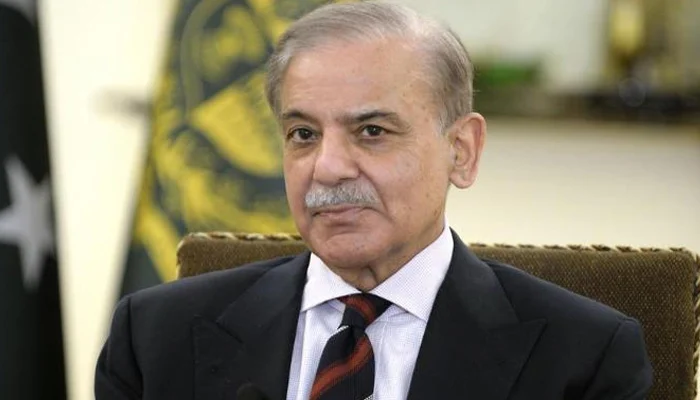
After featuring the China-Pakistan Economic Corridor (CPEC) in his first parliamentary speech after reelection, Prime Minister Shehbaz Sharif renewed call for further strengthening bilateral ties between “iron brothers” by working together through “thick and thin”, and moving towards “second phase” of the multibillion-dollar project.

Premier Shehbaz thanked Chinese President Xi Jinping for extending congratulatory message on his reelection on March 3 and said: “I deeply value his sentiments not only for the people of Pakistan, for our friendship, but our mutual cooperation.”

The premier delivered the remarks while being interviewed with the Chinese state news agency — Xinhua — at the Prime Minister’s Office (PMO) in Islamabad. It was PM Shehbaz’s first-ever interview to any foreign media outlet after assuming the office.

On completion of 73 years of diplomatic relations between both countries, Premier Shehbaz said that the leaders of Pakistan and China have continuously cultivated and promoted bilateral friendship. The two countries have developed into all-weather strategic cooperative partners with a unique friendship like “iron brothers” that has stood the test of time.

He stressed that the friendship now must achieve “higher heights.”

Shehbaz, who also served as Punjab chief minister for three terms, said Pakistan should emulate the model citing modernisation steps adopted by China which lifted hundreds of millions of people out of poverty and providing vast rural populations with access to education, healthcare and employment.

“It is a great success model and success story. Despite challenges in recent years, China’s growth has still gone steadily compared to other countries, which is a remarkable achievement,” he added.

He was of the view that Pakistan could learn from the model to alleviate poverty, boost youth employment, and encourage small and medium entrepreneurship in agricultural, industrial, and information technology sectors across urban and rural areas.

The premier said that Pakistan is now ready to move towards the second phase of CPEC, aiming to promote technological development and agriculture through the corridor.

Pakistan has established the Special Investment Facilitation Council (SIFC), which will cut red tape and remove delays and inefficiencies for CPEC projects, he added.

PM Shehbaz said he looks forward to revisiting China, calling it a tradition for Pakistan’s new leadership after inauguration. “China is our second home,” he said.

“We made solemn commitments that we would work together, and we would be together through thick and thin,” he vowed.

President Zardari underscores Xi Jinping’s ‘indispensable’ support for CPEC’s future

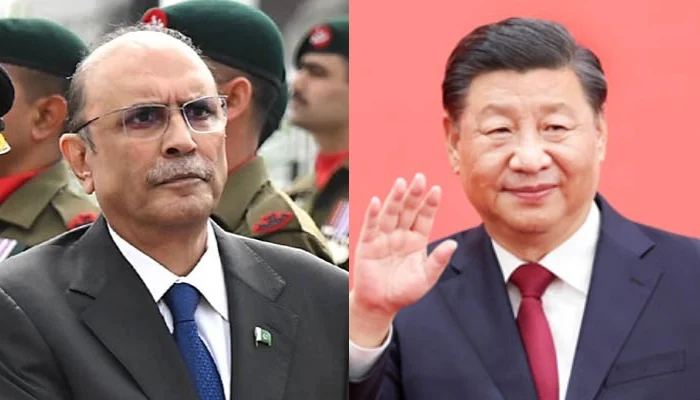
ISLAMABAD: In a letter addressed to Chinese President Xi Jinping, President Asif Ali Zardari Thursday underscored the Chinese head of state’s “indispensable” support for the China-Pakistan Economic Corridor (CPEC).

Expressing gratitude in response to Xi Jinping’s felicitations for assuming charge of the president’s office, Zardari reiterated Islamabad’s commitment to further strengthen practical cooperation with China.

Recalling that both countries have made significant progress in bilateral cooperation including the economic corridor, Zardari stressed that the bilateral relations between the two countries have strengthened over the years due to common ideals, mutual respect and understanding.

“Strong Pakistan-China relations are key to regional peace, stability and development,” the president wrote while referring to the “unique” bilateral relations between the two countries.

Last week, Xi, while congratulating Zardari on his election as the 14th of state, had said that his country was “ready to work” with him after the latter secured 411 electoral votes against his rival Mahmood Khan Achakzai’s 189 to get elected for the president’s office for the second time.

In his message, President Xi said China and Pakistan are good neighbours, good friends, good partners and good brothers, adding that the two countries’ iron-clad friendship is a choice of history and a precious treasure of the two peoples, reported state-run Xinhua.

Xi noted that the two countries have in recent years maintained close high-level exchanges, supported each other on issues concerning their respective core interests and major concerns, achieved fruitful results in the construction of the CPEC, and maintained a high level of development of bilateral relations.

The Chinese president also called for advancing practical cooperation in various fields, pushing for greater development of China-Pakistan all-weather strategic cooperative partnership, accelerating the building of an even closer China-Pakistan community with a shared future in the new era, so as to better benefit the two peoples.

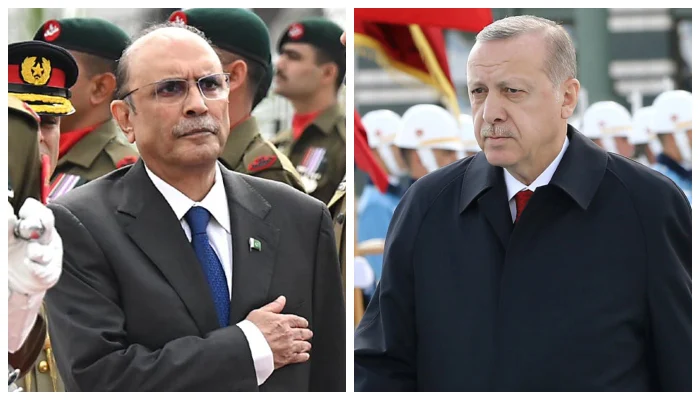
On Tuesday, Turkish President Recep Tayyip Erdogan held a telephonic conversation with Zardari congratulating him on becoming the country’s head of state.

The President’s Secretariat, in a statement, said both presidents exchanged views on matters of bilateral importance and underscored the need for further improving cooperation in all areas of mutual interest.

Meanwhile, President Zardari thanked the Turkish president for his telephone call and warm wishes.

Turkey’s Erdogan congratulates President Zardari on assuming office

Turkish President Recep Tayyip Erdogan called his Pakistani counterpart Asif Ali Zardari Tuesday to congratulate him on assuming the office of the head of the state.

The President’s Secretariat, in a statement, said both presidents exchanged views on matters of bilateral importance and underscored the need for further improving cooperation in all areas of mutual interest.

President Zardari thanked the Turkish president for his telephone call and warm wishes.

“President Asif Ali Zardari wished Happy Ramadan to Turkish nation and desired to see the role of Turkish women in the Islamic world,” read the statement.

He also desired to soon invite President Erdogan to visit Pakistan.

Zardari was elected as the country’s president for the second term last week with an overwhelming majority after securing 411 electoral votes from parliament and all four provincial assemblies.

Besides the Pakistan Peoples Party (PPP), the newly elected president had the backing of Pakistan Muslim League-Nawaz (PML-N), Muttahida Qaumi Movement-Pakistan (MQM-Pakistan) and other smaller parties.

Since his election as the president, several head of states including Chinese President Xi Jingping, Iranian President Ebrahim Raisi, and Tajikistan President Emomali Rahmon among other have congratulated Zardari on assuming the country’s top office.

In his congratulatory message, President Xi said that his country is “ready to work with” newly elected President Zardari and termed China and Pakistan as good neighbours, and partners.

The Chinese president said that the two countries’ iron-clad friendship is a choice of history and a precious treasure of the two peoples, according to state-run Xinhua.

Xi noted that the two countries have in recent years maintained close high-level exchanges, supported each other on issues concerning their respective core interests and major concerns, achieved fruitful results in the construction of the China-Pakistan Economic Corridor, and maintained a high level of development of bilateral relations.