
Pakistan, Saudi Arabia to discuss ‘augmenting’ kingdom’s $3bn deposit: joint statement

Last year, Saudi Arabia deposited $3 billion in the State Bank of Pakistan to help support its foreign reserves. With a yawning current account deficit and foreign reserves falling to as low as $10.8 billion, the country is in dire need of external finances.

Pakistan also welcomed a Saudi decision to extend an agreement to finance exports of crude oil products and oil derivatives, Saudi state news agency SPA reported.

The statement came after a visit by Prime Minister Shehbaz Sharif to Saudi Arabia, where he met with Crown Prince Mohammed bin Salman.

In the statement carried by Pakistan state news agency APP, the Kingdom affirmed its continuous support to Pakistan and its economy “including the discussion of augmenting the $3 billion deposit with the central bank through term extension or otherwise, and exploring options to further enhance the financing of petroleum products and supporting the economic structural reforms for the benefit of Pakistan and its people”.

“Pakistan greatly appreciates the continued strong support of the Kingdom of Saudi Arabia to Pakistan,” the statement said.

The joint statement also said Pakistan and Saudi Arabia affirmed their stance to consolidate security and stability, renounce extremism, terrorism and support the unity and independence of the countries of the region and their territorial integrity.

The two sides also agreed to give priority to political solutions that bring prosperity and progress to the region and its people.

During the PM’s visit, the two sides exchanged views on issues of mutual concern at the regional and international levels, and agreed on the importance to continue coordinating their positions in a way that serves their interests,

The two sides agreed to continue exchanging support and coordination in international organisations and forums and stressed the importance of all countries’ commitment to the United Nations Charter and the principles of international law, adherence to the principles of good neighbourliness, respect for the unity and sovereignty of states, non-interference in internal affairs, and striving to resolve disputes by peaceful means.

The Kingdom of Saudi Arabia welcomed the statements of Pakistan mentioning its keenness to find a solution to all disputes with India, including the Jammu and Kashmir dispute.


The two sides stressed the importance of dialogue between Pakistan and India in order to resolve the issues between the two countries, especially the Jammu and Kashmir dispute, to ensure peace and stability in the region.

During an official meeting between the prime minister and the Saudi crown prince, they reviewed the historical relations between the two countries and the close cooperation in various fields, as well as discussed ways to strengthen relations in all areas, the statement said.

In the bilateral context, the two sides stressed the importance of strengthening work through the Saudi-Pakistani Supreme Coordination Council, diversifying trade exchange between the two brotherly countries and intensifying communication between the private sector in the two countries in order to discuss trade and investment opportunities and turn them into tangible partnerships.

The two sides also agreed to deepen the investment cooperation between the two countries, stimulate partnerships and enable investment integration opportunities between the private sector of the two countries.

They also agreed to join efforts to develop the investment environment in the two countries and support a number of investment sectors of common interest.
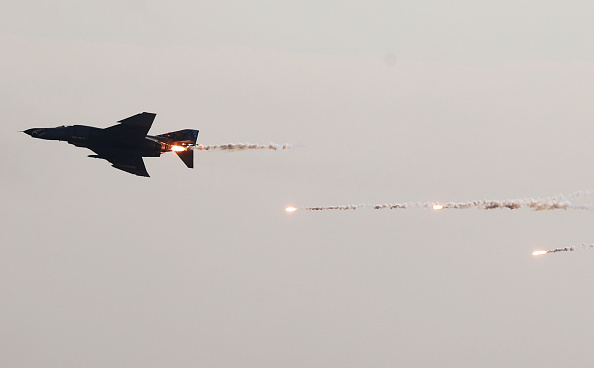
Turkey air force pulls out of military exercise in Athens

The military exercise dubbed “Tiger Meet” is intended to promote solidarity between the participating states’ fleets and is held annually. This year, it will take place in Athens between May 9 and 20.

Turkish security sources said host countries draft a text each year made up of technical regulations ahead of the planned exercise and this year, Greece targeted Turkey in the said document.

The sources accused Greek authorities of making additions into the document that “abuse disagreements between the two countries,” without providing precise details.

According to Turkish authorities, the additions were “intentional” and prompted the air force command to ask for changes. But Greece did not accept them, the sources said.

Turkey decided to snub the event on the grounds that “Greece manipulates Tiger Meet for its political interests” and informed Greek authorities of its move on April 22, they added.

Greece and Turkey, Nato allies but regional rivals in the eastern Mediterranean, often trade barbs over Aegean airspace violations.

Turkey on Friday accused Greek warplanes of violating its airspace over the Aegean Sea, which Turkish security sources said happened 30 times in 72 hours.

Australian leader decries China’s interference

With most polls showing Scott Morrison’s conservative coalition headed for a loss in the May 21 election, it has sought to highlight its national security credentials, such as a tough approach to China.

“We are very aware of the influence the Chinese government seeks to have in this country,” Morrison told reporters in Tasmania. “There is form on foreign interference in Australia.”

He was replying to a query about evidence for a radio statement by Home Affairs Minister Karen Andrews that the timing of China’s revelation of its recent Solomon’s deal was a form of foreign interference in Australia’s election.

China has said the pact was not targeted at any third party and urged Australia to “respect the sovereign and independent choices made by China and the Solomons”.

News of the security pact with the Pacific nation sparked concerns at the prospect of a Chinese military presence less than 2,000 km (1,200 miles) from Australian shores, casting the national security efforts of Morrison’s coalition in poor light.

After Australia’s opposition Labour party this week called the deal a national security failure by Canberra, Morrison’s government has toughened its remarks.

He cited a ban on foreign political donations and a register of foreign representatives, saying, “Any suggestion that the Chinese government doesn’t seek to interfere in Australia, well, we didn’t put that legislation in for no reason.”

In the Solomon Islands a day earlier, Prime Minister Manasseh Sogavare told parliament the country would not participate in any militarisation in the Pacific, and had signed the China deal as a security pact with Australia was inadequate.

No sanctions, but US wants Delhi to break from Russia

“Where we can, it is far preferable to get countries to voluntarily not engage in these practices, and that’s where our diplomacy is focused,” Mr Blinken said at one of his several congressional hearings in Washington this week.

Democratic senators urged Secretary Blinken at these hearings to put more pressure on India for continuing to do business with Russia despite its invasion of Ukraine.

“They go buy oil from Russia. They buy the S-400 [anti-missile system]. They abstain at the United Nations [on votes criticising Russia],” said Senator Bob Menendez, who heads the Senate Committee on Foreign Relations.

“But they are a member of the Quad,” he said, referring to a US-led alliance of like-minded nations for containing China’s influence in the Indian-Pacific region. “So, at some point messages that we send globally here are inconsistent. When we say we’re ‘troubled’ and ‘disappointed,’ that doesn’t cut it.”

Secretary Blinken, who was defending the State Depar­tment’s fiscal 2023 budget request, acknowledged this ‘uncomfortable reality’ but also urged lawmakers to see the broader picture.

“We’re at a very important strategic moment as various countries … are possibly reconsidering some of their other relationships, including with Russia,” he said in his first of four appearances in Congress this week. “As a strategic proposition, I think it’s very much in our interests to encourage that and work with that and see what we can do to … take advantage of other strategic opportunities that may present themselves as a result of Russia’s aggression.”

In another hearing at a Senate Appropriations Subcommittee, Secretary Blinken told the lawmakers that India’s relationship with Russia goes back decades.

“Russia, for India, was out of necessity a partner of choice when we were not in a position to be a partner,” he said in response to a question from Senator William Hagerty.

“Now, we are investing in that effort. I think there is a growing strategic convergence between the United States and India,” Mr Blinken said. “And of course, China is a big part of that,” as Beijing’s growing influence in the region brings India closer to the United States.

Mr Blinken said US President Joe Biden had spent “a lot of time directly engaging with Prime Minister Modi and India’s leadership”.

At the Foreign Relations Committee, Senator Menendez criticised the State Department for not forcefully calling out India’s decision to increase oil purchases from Moscow just as other US allies are curtail their own energy imports from Russia.

Senators said they could suggest sanctioning India if it didn’t stop buying Russian defence equipment, on which India has long relied.

The US media, while reporting their remarks, noted that before the Russian invasion of Ukraine, US lawmakers were more open to giving India a waiver for purchasing a Russian anti-missile system.

The US media reported that since the Russian invasion, India has imported more than double the amount of crude oil from Russia that it did in all of 2021.

“Why aren’t we applying secondary sanctions against countries … that are increasing their imports from Russian commodities?” asked Senator Chris Van Hollen, a Maryland Democrat. “There are countries that are taking advantage of discounted Russian oil prices … which only helps (President) Putin.”

Secretary Blinken said Washington has “engaged with some countries” that are taking advantage of Russia’s discounted commodity exports.” But applying individual sanctions was inadvisable, he added.

Germany has filed a case against Italy at the UN’s highest court over attempts within Italy to claim compensation for Nazi-era war crimes.

In a submission to the International Court of Justice (ICJ), Germany says Italy continues to allow cases in its domestic courts despite a 2012 ruling that such claims were inadmissible.

It says that, since that ruling, over 25 new cases have been filed in Italy.

In some of those, the courts have ruled that Germany should pay compensation.

Berlin says it is bringing the complaint now because of two ongoing cases that could see properties in Rome owned by the German state seized to finance compensation payments.

A court in Italy says it will decide by 25 May whether to force the sale of certain buildings, some of which house German cultural, historical, and educational institutions.

The dispute dates back to 2008, when Italy’s highest court ruled that Germany should pay around €1m (£840,000) to relatives of nine people who were among 203 killed by German forces in Tuscany in 1944.

Germany argues it has already paid out billions of euros to countries impacted by World War II since the conflict ended in 1945.

Its filing cites a part of the 2012 ruling that says that, by allowing the claims in its courts, Italy had “violated its obligation to respect the immunity which the Federal Republic of Germany enjoys under international law”.

It can take years for the ICJ to issue rulings, but Germany has asked the court to take measures to stop Italy auctioning off any property while its broader case is being considered.

The ICJ, based in The Hague, the Netherlands, is the principal judicial body of the UN, with one of its primary roles being the resolution of legal disputes between states.

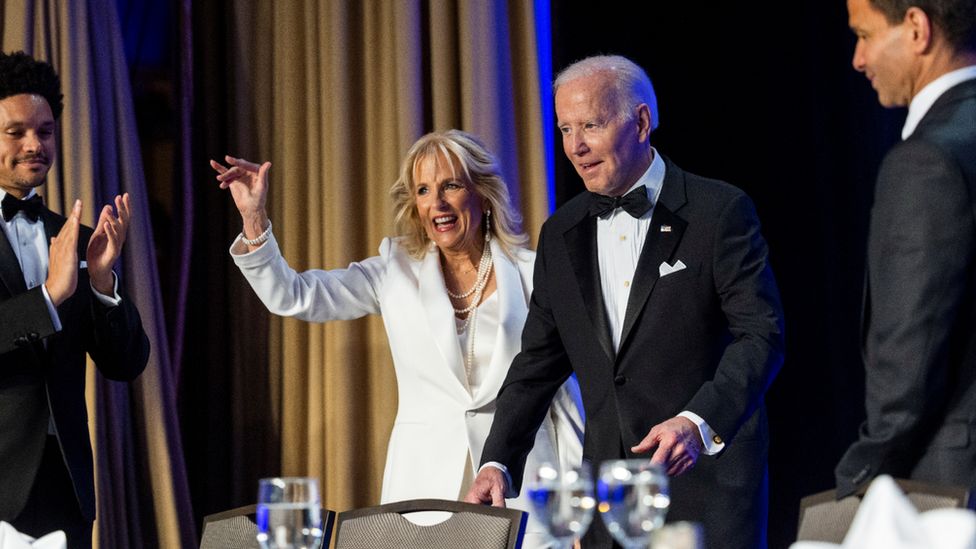
US President Joe Biden has resumed the tradition of speaking at the annual White House Correspondents’ Dinner after a six-year presidential hiatus.

He is the first leader to speak at the event, where the president faces friendly mocking in front of an audience of journalists, since 2016.

It was cancelled for two years due to the pandemic and was boycotted by Donald Trump when he was in office.

Comedian and The Daily Show host Trevor Noah headlined the event.

Celebrities joined renowned journalists and high-ranking US officials for the gala – an American press tradition dating back to 1921.

Kim Kardashian, Pete Davidson, Drew Barrymore and Chris Tucker were among the celebrity guests.

Watch: Celebrities and politicians on the red carpet at the 2022 White House Correspondents’ dinner

Mr Biden addressed the fact that he is the first president to attend the event since 2016 with a barb aimed at Donald Trump.

“This is the first time a president has attended this dinner in six years. It’s understandable, we had a horrible plague followed by two years of Covid,” he said.

When he took to the stage later, Noah added: “It’s actually nice to, once again, have a president who is not afraid to come to the White House Correspondents’ Dinner and hear jokes about himself.”

The president also faced his share of roasts.

Noah told Mr Biden: “Ever since you’ve come into office, things are really looking up. Gas is up, rent is up, food is up. Everything.”

“President Biden’s lack of a filter does get him into hot water sometimes,” he added. Last month he caused a huge international incident saying that Vladimir Putin should be removed from power.

“It was very, very upsetting to Russia. Until someone explained to them that none of the stuff Biden wants actually gets done.”

President Joe Biden and comedian Trevor Noah
US President Joe Biden and First Lady Jill Biden

Covid-19 cases in Washington have risen in recent weeks, according to data from Johns Hopkins University. Organisers have required that guests be tested for the virus, and some top officials, including infectious disease expert Dr Antony Fauci, 81, dropped out.

The president skipped the dinner portion of the evening and attended only the speakers program.

In recent weeks, Mr Biden has mostly not worn a mask at crowded White House events. However, those occasions had lower attendance than Saturday’s dinner, which was expected to seat about 2,600 people.

He poked fun at Fox News hosts in attendance – many of whom have shared scepticism of vaccines on air – by pointing out they had to prove their vaccination status in order to attend.

He could also not resist a jab at Russian President Vladimir Putin in his closing remarks, before handing over to host Trevor Noah.

“Trevor, the really good news is, now you get to roast the president of the United States. And unlike in Moscow, you won’t go to jail.”

The UK’s ambassador to Ukraine has said she is back in Kyiv and feels “comfortable” working there, although she has extra security protection.

“I wasn’t sure I’d make it back to Kyiv so coming back is an extraordinary thing,” Melinda Simmons said in an interview with the Observer.

“It absolutely feels like the right place to be,” she said, although she acknowledged the potential risks.

Russia has previously made threats against diplomats based in Kyiv.

Earlier this week, a Russian statement said forces were primed to carry out strikes against “decision-making centres in Kyiv”. It added that the presence of foreign advisers in those sites “will not necessarily be a problem to Russia deciding to take retaliatory action”.

Britain started withdrawing some embassy staff from Kyiv in January, shortly before the war started. Ms Simmons left Kyiv in late February, although stayed in Ukraine for a little while longer before returning to London.

But Boris Johnson announced last month that the British embassy in Kyiv would be reopening.

Ms Simmons told the newspaper that as she drove into the city on Friday she got “a real sense of what was going on… and it’s truly shocking”.

“But what is equally extraordinary is to see how Ukraine kept Russia out of Kyiv. Every way in which Ukraine has been able to do that is a thing to celebrate and to treasure,” she said.

Russian forces withdrew from around Kyiv after failing to seize the city, and is now instead focusing its assault on the eastern Donbas region.

Ms Simmons said she expected the war would likely last “certainly through this year and probably through next year”, which chimes with other warnings from the West that they must be prepared for the long haul.

And she made clear she was not minimising the risk facing her, adding: “I am here with a heightened level of security protection and bearing in mind that potential risk, but for now I feel comfortable working under those circumstances.”

Presentational white space

Although the PM said the embassy was reopening soon, Ms Simmons said the Kyiv embassy had not yet reopened and they were not running a consular service.

She also repeated the British government’s advice that UK citizens should not travel to Ukraine. Earlier this week, the Foreign Office announced one British national was killed and another was missing.

Meanwhile, Mr Johnson spoke to Ukrainian President Volodymyr Zelensky over the phone on Saturday, and was given an update on the fighting in eastern Ukraine, as well as the situation in the southern port city of Mariupol.

Mr Johnson confirmed the UK would continue to provide additional military aid for Ukraine to defend themselves, Downing Street said.

“The leaders also discussed progress of the UN-led effort to evacuate Mariupol and concern for the injured there. The prime minister offered the UK’s continued economic and humanitarian support,” a Downing Street spokesperson added.

Senior MPs have called for a drastic overhaul of Westminster, following a series of sexual misconduct and bullying claims about politicians.

Speaker of the House Sir Lindsay Hoyle said “radical action” and a review of working practices was needed.

Meanwhile, former leader of the house Dame Andrea Leadsom backed setting up a human resources department.

The calls for reform come amid reports more than 50 MPs are facing allegations of sexual misconduct.

Multiple claims of bullying and sexual misconduct by MPs have emerged in recent weeks, culminating on Saturday in the resignation of MP Neil Parish – after he admitted to having twice watched pornography in Parliament.

Mr Parish told the BBC it had been a “moment of madness” and what he did “was absolutely totally wrong”.

His resignation will now trigger a by-election in his constituency of Tiverton and Honiton in Devon, which is a safe Conservative seat.


Among those calling for change is Ms Leadsom, the former leader of the Commons, who in 2018 spearheaded the creation of the Independent Complaints and Grievance Scheme which looks into claims of bullying and sexual harassment. Mr Parish’s case had also been referred to the ICGS.

Speaking to the Sunday Times, she said she believes the ICGS is still fit for purpose, but one key problem the scheme faces is it has not been able to employ a sufficient number of specialist investigators.

She said: “Things haven’t changed and that’s because there aren’t enough cases coming through and it’s taking too long for investigations to come to and end.

“It’s only when you see people being blind drunk and subject to the appropriate sanctions that people will start to think twice about their behaviour”.

She said Parliament should have a human resources department for staff.

Neil Parish: Porn-watching MP on why he’s resigning

Meanwhile, writing in the Observer, Sir Lindsay said he wanted to ensure Parliament was a “safe and inclusive” place to work and people felt supported and the serious allegations which have emerged must be addressed as a “matter of urgency”.

He also questioned whether MPs should be employers of their own staff and asked whether an outside body or other alternative could act as employer, as long as the MP was able to choose their staff.

This proposal for staff not to be employed by parliamentarians would mean new staff being “employed on standard terms and conditions”, he said.

Sir Lindsay wrote: “In my opinion, it is time to consider radical action, and review structures and processes that could make a difference.

“Some serious allegations have been made, and we must address them as a matter of urgency. It is imperative we do the right thing by staff and MPs as well.”

He added that work was under way to establish a “Speaker’s Conference” as soon as possible to consider these issues and suggested looking at practices in other parliaments around the world.

Meanwhile Oliver Dowden, the Conservative Party chairman, repeated a commitment from Boris Johnson to ensure half of Conservative candidates standing in the next election are women.

He told the Sunday Telegraph the Tories needed to ensure their candidate list “reflects the fact that half the population are women”. About a quarter of Conservative candidates at the 2019 election were women, while more than half of Labour candidates were women.

‘Things haven’t changed’

It has been a turbulent few weeks in Westminster, with three cabinet ministers reportedly among the 56 MPs facing allegations of sexual misconduct that have been referred to the ICGS.

As the beginning of April, Conservative MP David Warburton was suspended from the party pending an investigation into alleged sexual harassment.

A few weeks later it emerged Labour MP Liam Byrne is due to be suspended for two days from the Commons for bullying a former staff member.

And Tory MP Imran Ahmad Khan resigned from parliament after being convicted of sexually assaulting a 15-year-old boy.

People with Covid in Scotland no longer need to self-isolate and contact tracing has come to an end as case numbers continue to fall.

Covid-19 infections have dropped for the fifth successive week, with about one in 25 people having the virus, compared with one in 19 last week.

Following a change in Scottish government guidance, anyone feeling unwell with Covid symptoms is now advised to just stay at home.

Why do we no longer need to self-isolate?

Health Secretary Humza Yousaf says Scotland is now in a “different phase of the pandemic” and is “focused on reducing severe harm of the virus”.

Covid-19 is effectively now being treated in the same way as any other virus.

What is happening with testing?

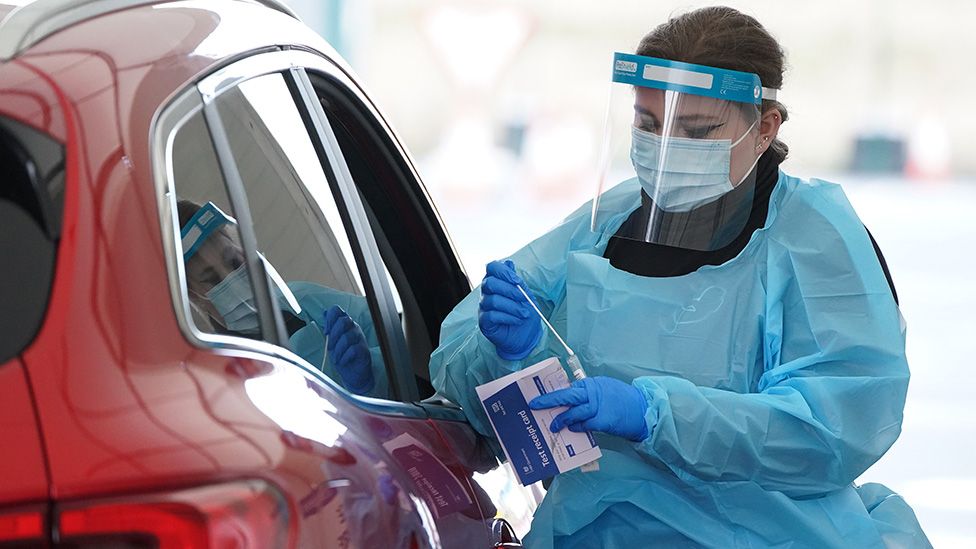
You will no longer be advised to take a PCR test, mass testing has ended, testing sites are closing and test and trace has finished. Free lateral flow tests for the general population have already come to an end.

The Protect Scotland app will be closed down but users are advised to keep the app on their phones in case it is needed again at a future date.

What are the Covid symptoms?

Scotland’s list of official Covid-19 symptoms has now been expanded, bringing it closer in line with guidance in the rest of the UK.

The original signs of a Covid infection that were recognised in the UK were fever, new continuous cough and loss of sense of smell or taste.

Additions to the list in Scotland now include: shortness of breath, unexplained tiredness, lack of energy, muscle aches or pains, unusual hunger, headaches, sore throat, stuffy or runny nose, and diarrhoea, feeling sick or being sick.

What do I do if I have symptoms?

Adults who have symptoms of Covid and other respiratory illnesses and have a high temperature, or do not feel well enough to go to work or carry out normal activities, will be advised to stay at home until their fever has gone or they feel well enough.

Children and young people aged 18 and under with mild symptoms such as a runny nose, sore throat, or slight cough who are otherwise well, do not need to stay at home and can continue to attend education settings.

The Scottish government says this reflects the fact that children and young people generally have a higher likelihood than adults of regular instances of respiratory symptoms from non-Covid illnesses.

How is the NHS affected?

Health and social care workers are among those who can still be tested

NHS Scotland has now also been taken out of emergency footing as Covid cases continue to fall.

However, testing will remain available to certain groups including health and social care workers, care home and hospital visitors, patients groups eligible for treatment, hospital patients, unpaid carers and people in prison.

What is the expert opinion?

Public health expert Prof Linda Bauld says people can still become really unwell with Covid and those with a high temperature are strongly advised to stay at home. If they still have lateral flow tests in the house and test positive, adults should isolate for five days and children for three days.

She warns that the pandemic is not over yet and says measures may need to be reassessed if a new Covid-19 variant “really challenged” the progress made.

Those eligible for the spring booster are adults aged 75 years and over (or who will turn 75 by 30 June 2022), residents in care homes for older adults and individuals aged 12 years and over who have a weakened immune systems.

For some immunosuppressed people this may be their fifth jab, as extra doses were given to those with certain health conditions.

All five to 11-year-olds in the UK are eligible for a low-dose Covid vaccine.

What is the situation with masks?

People in Scotland are no longer legally required to wear face coverings in crowded indoor places such as shops and restaurants, or on public transport. However, the Scottish government and health experts are still strongly advising people to continue to wear masks voluntarily.

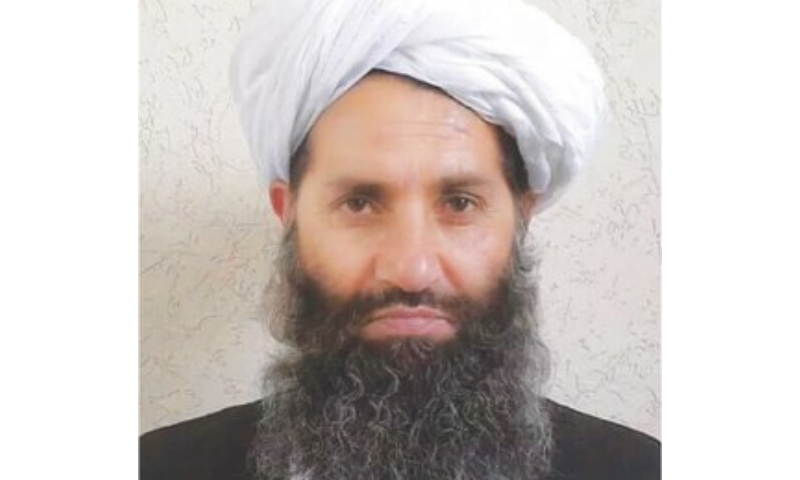
Afghanistan’s supreme leader wants world to recognise Taliban govt

No nation has formally recognised the regime installed by the Taliban after they seized power in August and reintroduced the hardline rule that is increasingly excluding women from public life.

In a written message ahead of Eidul Fitr holiday that marks the end of Ramazan, supreme leader Hibatullah Akhundzada did not mention international sticking points — including reopening secondary schools for girls.

Instead, he said recognition should come first “so that we may address our problems formally and within diplomatic norms and principles”.

“Undoubtedly, the world has transformed into a small village,” said Akhundzada, who has not been seen in public for years and lives reclusively in Kandahar, the Taliban’s spiritual heartland.

“Afghanistan has its role in world peace and stability. According to this need, the world should recognise the Islamic Emirate of Afghanistan.”

Akhundzada made no mention of insecurity, but said the country had been able to build “a strong Islamic and national army”, as well as “a strong intelligence organisation”.

Link aid to rights

Many in the international community want humanitarian aid and recognition to be linked to the restoration of women’s rights.

Tens of thousands of women lost their government jobs after the Taliban takeover, and they have also been barred from leaving the country — or even travelling between cities — unless accompanied by a male relative.

In March, the Taliban prompted global outrage by shutting all secondary schools for girls just hours after allowing them to reopen for the first time since they seized power. Several Taliban officials said the ban was personally ordered by Akhundzada.

Akhundzada’s Eid message didn’t touch on girls’ schools, but he did say authorities were opening new centres and madrasas for both “religious and modern education”.

“We respect and are committed to all the sharia rights of men and women in Afghanistan… do not use this humanitarian and emotional issue as a tool for political ends,” he said.

But he said people should willingly embrace the Taliban ideals, and not be forced.

“The relevant authorities should invite people towards sharia with wisdom and avoid extremism in this regard,” he added.

He said also the government was committed to freedom of speech according to “Islamic values”, although hundreds of news outlets have closed, public broadcasts of music banned, and movies and TV dramas featuring women taken off air.

Akhundzada, believed to be in his 70s, has been the spiritual leader of the hardline movement since 2016, but has remained in the shadows despite the Taliban enjoying largely uncontested power.

His absence from public life has fed speculation he may be dead and his edicts the product of a committee. Still, in October the Taliban released an audio recording they said was him addressing a madrasa in Kandahar.