
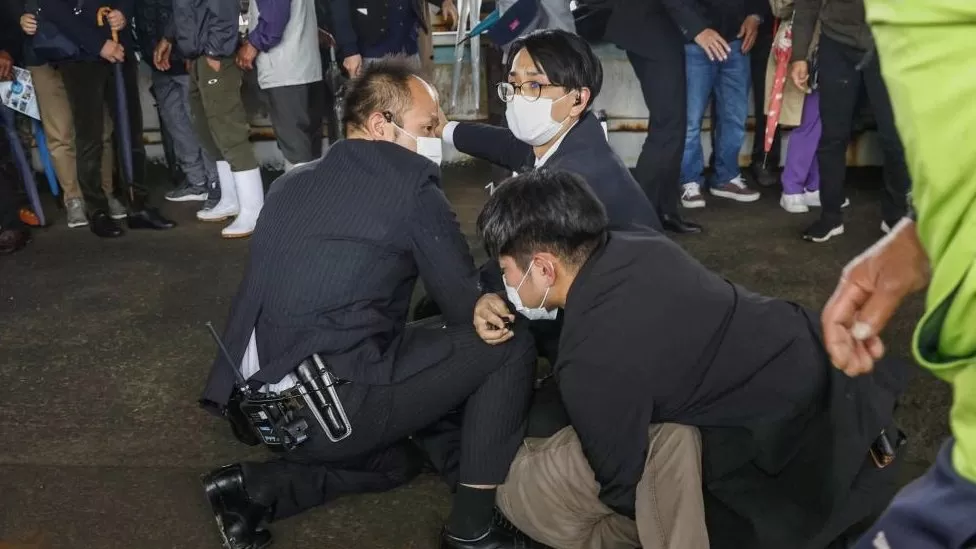
Japan’s Prime Minister Fumio Kishida has been evacuated unharmed from a public event after what appeared to be a smoke bomb was thrown at him.

A man was detained at the scene in Wakayama, where Mr Kishida had been due to give a speech, local media reported.

A witness said they saw a person throwing something, followed by smoke, while another said they heard a big bang. No injuries were reported.

Video showed officers piling on top of a person, believed to be a suspect.

He was arrested on suspicion of obstruction of business and later identified by the authorities as 24-year-old Ryuji Kimura. His motivation is still unclear.

Japan’s public broadcaster, NHK, quoted Mr Kishida as saying there was a “loud blast” at the venue. “Police are investigating details, but I’d like to apologise for worrying many people and causing them trouble.”

NHK broadcast footage in which crowds of people appear to be running away from the scene.

The footage also shows people swarm around one man, hold him down, and then carry him away.

A man believed to be a suspect in the smoke-bomb throwing was held by police officers

Mr Kishida had just started to deliver a speech after touring the fishing harbour in Wakayama for a campaign event when the object was thrown and he took cover.

After the incident, Mr Kishida addressed a crowd in another location and said the incident should not disrupt the electoral process.

A woman at the scene told NHK: “I was stunned. My heart is still beating fast.”

A person who said they saw an object flying through the air said it gave them a “bad feeling, so we ran away unbelievably fast”.

“Then we heard a really loud noise. It made my daughter cry,” they added.

Another witness told NHK that the crowd began to disperse in panic before the blast was heard, as someone said an explosive had been thrown.

Hiroshi Moriyama, a member of Mr Kishida’s Liberal Democratic Party, said: “That something like this happened in the middle of an election campaign that constitutes the foundation of democracy is regrettable. It’s an unforgivable atrocity.”

Violent attacks are extremely rare in Japan. But there is nervousness about security around politicians, after former Prime Minister Shinzo Abe was shot dead while on the campaign trail last year.
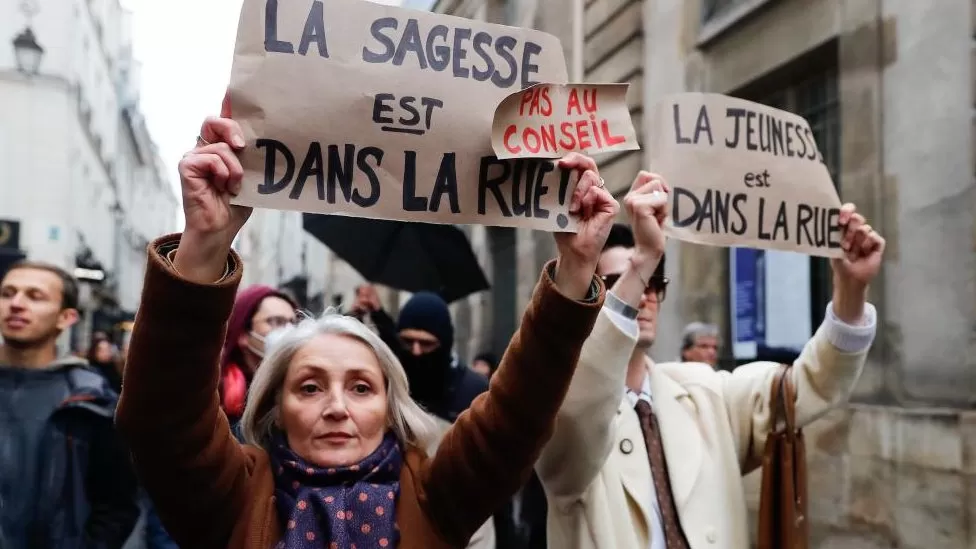
French President Emmanuel Macron has signed into law his government’s highly unpopular pension reforms, which raise the state pension age from 62 to 64.

It happened hours after France’s top constitutional body cleared the change.

The Constitutional Council rejected opposition calls for a referendum – but it also struck out some aspects of the reforms, citing legal flaws.

Following the council’s ruling, protesters set fires across Paris and 112 people were arrested.

Twelve days of demonstrations have been held against the reforms since January.

Unions have vowed to continue opposing the reforms, and called on workers across France to return to the streets on 1 May.

President Macron argues the reforms are essential to prevent the pension system collapsing. In March, the government used a special constitutional power to force through the changes without a vote.

He signed the reforms into law in the early hours of Saturday morning.

The Labour Minister Olivier Dussopt has said he expects the reforms to come into effect by the start of September.

After the Friday ruling of the Constitutional Court, trade unions made an unsuccessful last-ditch appeal to the president not to sign the pension-age increase into law.

The unions pointed out that six concessions that had been added to the reforms were rejected by the court, so what was already unfair was now “even more unbalanced”.

Among the reforms struck down by the nine members of the Constitutional Council was a so-called “senior index” aimed at urging companies with more than 1,000 workers to take on employees over 55.

Mr Dussopt has vowed to improve the employment rates of those aged over 50 in an effort to ease concerns about the financial impacts of the raised retirement age.

The authorities had banned demonstrations in front of the Constitutional Council building in Paris until Saturday morning, but crowds of protesters had gathered nearby on Friday and the ruling was met with jeers.

Watch: Macron’s pension reforms ‘violent’ says Paris protester

Some demonstrators chanted they would continue protesting until the changes were withdrawn.

Later, several fires were set across the city as riot police tried to contain the situation, sometimes using tear gas. A Paris police official said 112 people have been arrested.

Fires were also lit during demonstrations in Rennes and Nantes, while there were tense standoffs at times between protesters and police in Lyon.

Lucy, 21, was among the protesters who gathered outside the City Hall and told the BBC that she was disappointed “we don’t have the power any more”.

“Nobody is listening to us no matter how hard we are shouting,” she added, vowing to keep on speaking out.

Lucy (left) and Raphaëlle (right) are among those who have been protesting against the pension reforms

Raphaëlle, also 21, said she had hoped there would be something in the council’s ruling that would reflect the huge consensus there has been on the streets against the reforms.

Barriers were erected in the streets near the court and riot police were deployed in case of further, potentially violent protests.

Lucas, 27, said he was worried about the future and what Mr Macron intended for the rest of his presidency.


Aerospace engineer, 27
1px transparent line

The left-wing Nupes political alliance was one of the groups that lodged an appeal with the court over the reforms and its leader, Jean-Luc Mélenchon, said the “fight” would continue.

“The Constitutional Council’s decision shows that it is more attentive to the needs of the presidential monarchy than to those of the sovereign people,” he said.

Marine Le Pen of the far-right National Rally, which had also appealed to the court, responded on social media that “the political fate of the pension reform is not sealed”.

Prime Minister Élisabeth Borne tweeted on Friday that “tonight there is no winner, no loser”.

While the court rejected an initial bid for a referendum on the reforms, it will decide next month on a further proposal for a national vote by the left.

French political analyst Antoine Bristielle told the BBC he did not think there would soon be an end to the protests that have taken place across France for the past three months.

“A lot of people were saying that the reforms would pass and that the Constitutional Court would not avoid it so it’s not a surprise,” he said.

“But I think we will see in the upcoming hours and at the weekend a lot of riots and strikes in the country because there are still 70% of the French population against the reform.”

The SNP’s ruling body is set to discuss how to improve the party’s transparency and governance later.

The National Executive Committee (NEC) meeting comes amid a police probe into party finances and a row over the release of membership numbers.

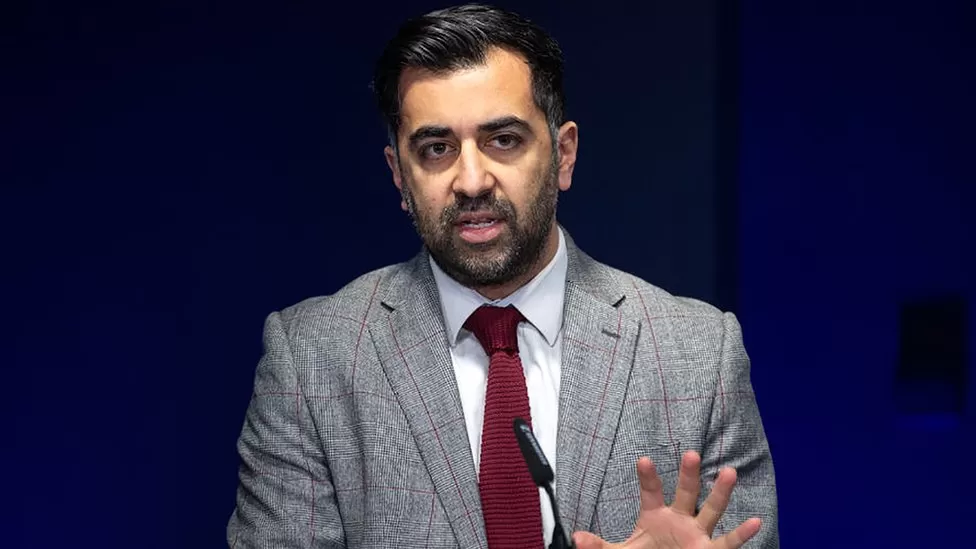
First Minister Humza Yousaf has said the public has “very reasonable” questions to ask over transparency.

He also said he was unware until he became leader that the SNP’s auditors had resigned more than six months ago.

Mr Yousaf said Johnston Carmichael resigned “around October” of last year and would not be able to conduct an audit due in July.

And on Thursday, Mr Yousaf said he had only recently learned that the SNP had bought a luxury motorhome.

It was seized by police from outside a property in Dunfermline last week.


Former SNP chief executive Peter Murrell, Nicola Sturgeon’s husband, was also arrested while their home was searched as part of the police investigation. He was later released without charge.

One NEC member has now suggested he might resign unless “forensic auditors” are appointed to examine the party’s finances

Bill Ramsay, the SNP trade union group convener, said: “I have been raising issues about the governance of the party for some time.

“In June last year, as the world was moving out of governance restrictions imposed by Covid, I was making calls for more transparency.

“I forced a vote to ensure that members of the NEC could see how other members were voting.”

He added: “If the call to appoint forensic auditors is not moved forward, I will have to seriously consider whether I can continue on the NEC.”

Police carried out a search of the SNP’s headquarters in Edinburgh last week

Police are investigating SNP finances in response to complaints about how the party spent more than £600,000 of donations that it had received from activists.

Accountants Johnston Carmichael, which audited its accounts for more than a decade, said the decision to no longer work with the party was taken after a review of its clients.

Meanwhile, Mr Yousaf has said he will set out his “positive, ambitious and radical vision” as he campaigns in an area where the SNP could face a by-election.

The SNP leader will be in the Rutherglen and Hamilton West constituency later, where there is the potential for a recall petition to be used against sitting MP Margaret Ferrier.

Ms Ferrier won the seat for the SNP in 2019 – but was later found to have damaged the reputation of the Commons and placed people at risk by taking part in a debate and travelling by train while suffering from Covid-19.

If she is barred from the Commons for 10 days or more, that could trigger a recall petition, which would result in a by-election in the constituency – although 10% of voters there would need to support this for it to go ahead.

‘Division’ in Supreme Court will be a tragedy for country, warns Imran Khan

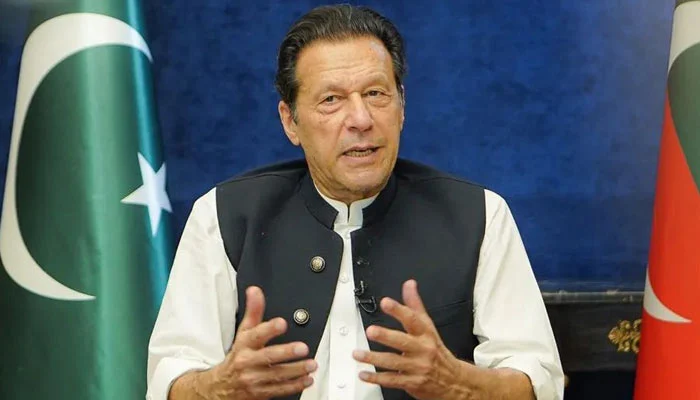
Pakistan Tehreek-e-Insaf (PTI) Chairman Imran Khan on Friday said that everyone should pray for unity among the judges in the Supreme Court and warned that “division” at the top court would be tragic as rifts emerged concerning the top court’s verdict on elections delay case.

Speaking to media persons ahead of hearing at the Lahore High Court (LHC), the former premier said that the division among the Supreme Court would be a tragedy for the country.

“Unless we do not save the Constitution, you cannot save the country either,” said the PTI chief while berating the government for “running away from elections” and not caring about Constitution or the law.

Meanwhile, the LHC granted Khan bail in a case registered against him for putting the “families of army officers at risk”.

During the hearing, Justice Najafi asked Khan’s lawyer if his client wants to appear before the court concerned to seek bail.

At this, PTI chief’s lawyer replied that they want to approach the court concerned.

“We are leaving for Islamabad on April 18 and we want to surrender in the court concerned,” he added.

The court then approved the bail till April 26. Justice Ali Baqar Najafi directed the PTI chief to refer to the court concerned by the next date.

The case was registered against the former prime minister at Islamabad’s Ramna Police Station on April 6. The complaint was lodged by Magistrate Manzoor Ahmed.

The first information report (FIR) stated that the PTI chief in one of his speeches used “inappropriate language” against military officers which includes sections 500, 505 and 138 of the Pakistan Penal Code.

The PTI chief in his petition said that he “is absolutely innocent and has been falsely implicated with ulterior motives and malafide intentions in the above-mentioned case just to tarnish his reputation, harm his growing mandate among masses and victimise him politically”.

“Being head of the largest political party and aggrieved from such malpractice, the petitioner craves for the kind indulgence of this court for the grant of protective bail,” stated the petition.

The deposed prime minister said that “a series of false criminal cases have been registered against him, the senior leadership of PTI and active participants since past few months.”

He added that the PTI leaders had been severely tortured and humiliated during custody in the past and this is another attempt made by the state functionaries.

“That an inordinate and unexplained delay of (18) days in lodging the instant case is concerning and raises questions about the intention behind it. It appears that this time was used for careful planning and seeking instructions to register a malicious case against the petitioner, solely to satisfy their political adversaries,” he contended in the petition.

PM Shehbaz reiterates resolve to foster ties with Iran

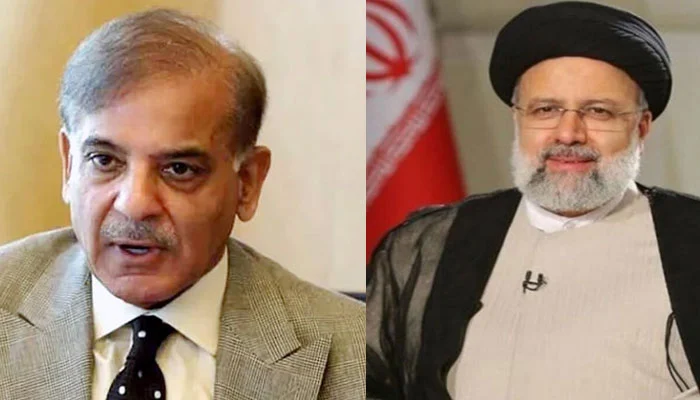
Prime Minister Shehbaz Sharif on Thursday reiterated Pakistan’s resolve to strengthen bilateral relations with Iran in all areas of mutual interest, particularly trade, energy cooperation, security and regional stability.

Premier Shehbaz made the remarks duration a telephone conversation with Iranian President Seyed Ebrahim Raisi. The prime minister expressed satisfaction with the recent operationalisation of Polan-Gabd Electricity Transmission Line and appreciated the Iranian government’s cooperation in that regard.

He also emphasised the need for enhancing people-to-people contacts, including cultural and educational exchanges, to promote mutual understanding and cooperation between the two nations.

PM Shehbaz lauded the Iranian leadership’s efforts in promoting peace and stability in the region and congratulated President Raisi on the historic development of the resumption of diplomatic relations between Iran and Saudi Arabia.

He called for an immediate end to Israel’s human rights violations in the occupied territory and stressed the need for a just and lasting solution to the Israeli-Palestinian conflict, based on the two-state solution, in accordance with the relevant United Nations resolutions and international law.

During the telephone call, both leaders reiterated their commitment to maintain close contact on all matters of mutual interest.

Saudi team leaves Yemen, more truce talks expected: rebel, govt sources

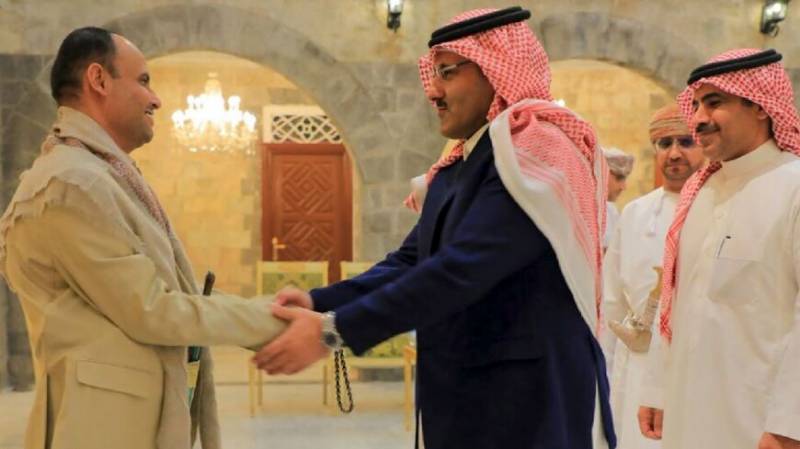
A Saudi delegation has left war-torn Yemen without a finalised truce but with a commitment from Iran-backed Huthi rebels to hold a second round of talks, Huthi and government sources told AFP on Friday.

The team, which was led by ambassador Mohammed al-Jaber, left the rebel-held capital Sanaa late on Thursday, four days after he arrived seeking to “stabilise” a truce that lapsed last year.

“There is an initial agreement on a truce that should be announced later on if finalised,” a Huthi official said on condition of anonymity, in information that was confirmed by a government source.

“There is an agreement to hold another round of talks to further discuss points of difference.”

The Huthis seized control of Sanaa in September 2014, ousting the internationally recognised government and triggering a Saudi-led military intervention the following March.

Hundreds of thousands of people have been killed, directly or indirectly, and two-thirds of the population of 30 million is dependent on aid, according to United Nations estimates.

Fighting has eased dramatically since a six-month, UN-brokered truce last year, even after it expired in October.

A source at the Huthis’ foreign ministry told AFP that the Saudi delegation would communicate the rebels’ “conditions” to the Riyadh leadership.

Huthi political leader Mohamed Ali al-Huthi said the talks were conducted in a “positive atmosphere”, with plans for another round.

On Saturday, before the Saudi visit, a Yemeni government source said the Saudis and Huthis had agreed in principle on a six-month truce to pave the way for three months of talks on establishing a two-year “transition”.

Key Huthi goals include paying salaries of civil servants in areas under their control and lifting operational restrictions on ports and airports they hold.

Britain’s ambassador to Yemen, Richard Oppenheim, said the talks were a “positive development and may be the start of a golden opportunity for peace”.

“Yemen has suffered a lot in the last eight years, which makes grabbing any opportunity for peace a top priority,” he said in Arabic in a video posted on Twitter.

The talks began about a month after a landmark, Chinese-brokered announcement by Iran and Saudi Arabia on March 10 that they would resume ties, seven years after an acrimonious split.

The resource-rich Gulf powerhouses have been long been fierce rivals, vying for influence across the region with Yemen one of their major battlegrounds.

The surprise rapprochement has quickly redrawn the diplomatic map, with Qatar and Bahrain mending ties and Arab countries considering ending Syria’s long diplomatic isolation over its brutal civil war.

G20 members call for global crypto regulations, says India

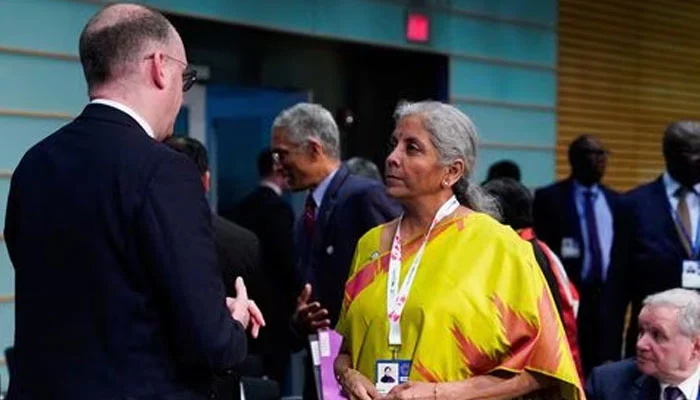
WASHINGTON: Indian Finance Minister Nirmala Sitharaman said on Thursday there was a greater endorsement among the Group of 20 member nations that any new laws regarding the decentralised currency need to be globally coordinated.

She added that the nations agreed that crypto assets not backed by central banks can tumble and cause macroeconomic fluctuation.

Sitharaman told a news conference after the meeting of the G20 finance minister and central bank governors: “The G20 and its members agree that it’s not going to be possible to have an independent, standalone country dealing with the crypto assets.”

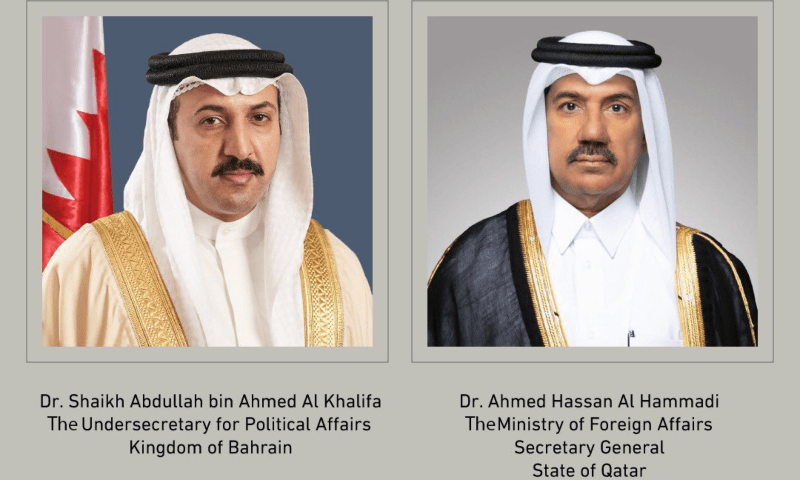
Qatar and Bahrain re-establish relations

Bahrain in 2017 joined Saudi Arabia, the United Arab Emirates and Egypt in imposing a diplomatic blockade on Qatar. The countries’ rivalry goes back even further, however, and Bahrain is the last to renew ties.

Agreement on the reconciliation was reached in talks at the Gulf Cooperation Council headquarters in Saudi Arabia, Qatar’s foreign ministry said.

The neighbours “decided to restore diplomatic relations between the two countries according to the principles of the United Nations charter”, said a foreign ministry statement.

“The two sides affirmed that this step stems from the mutual desire to develop bilateral relations and enhance Gulf unity and integration,” it added. Bahrain’s foreign ministry released a similar statement, the country’s state news agency reported.

Saudi Arabia, the UAE, Bahrain and Egypt imposed a blockade in 2017, accusing Qatar of supporting extremist organisations in the region and becoming too close to Iran. The four countries banned Qatari planes and ships from using their airspace and territorial waters.

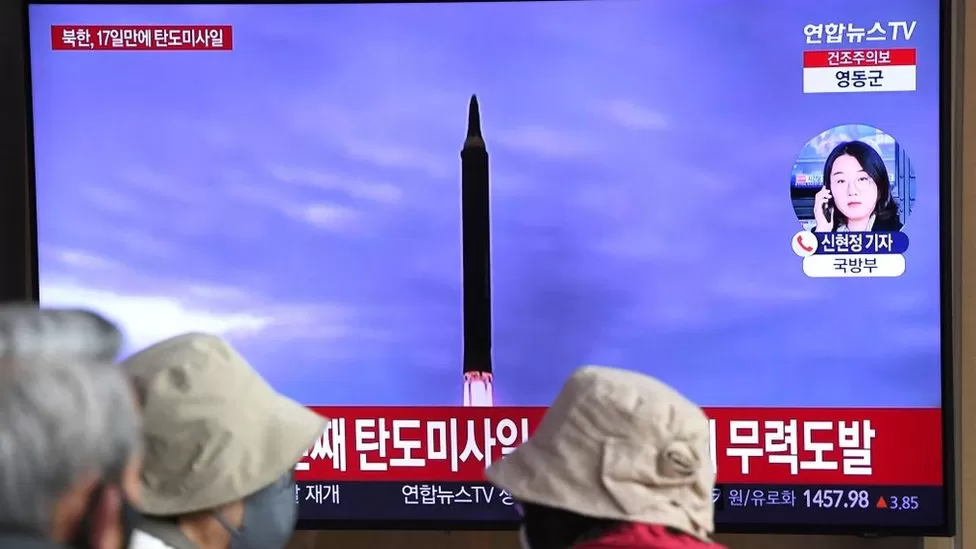
North Korea says it tested a new solid-fuel intercontinental ballistic missile – its “most powerful” missile to date.

State media hailed Thursday’s launch, which led to a brief evacuation order in Japan, a “miraculous success”.

Solid-fuel missiles can be fired more quickly than liquid-fuel ones, making them harder to intercept. But analysts say they are not without downsides.

South Korea maintains that the North will need more time to develop a fully operational solid-fuel ICBM.

This is the first time the North has test-fired a solid-fuel ICBM after years of testing solid-fuel short-range missiles. It has tested various ICBMs, but these were powered by liquid propellants, which must be fuelled directly ahead of launch – a process that can take hours.

Experts describe this is a breakthrough in Pyongyang’s weapons programme, as solid-fuel ICBMs come ready-fuelled, and would therefore enable North Korea to strike the US with far less warning.

South Korea’s Defence Ministry on Friday said the technology is not new, and described North Korea’s test on Thursday as a “middle step” in developing a full-fledged solid-fuel ICBM system.

North Korean leader Kim Jong Un, who supervised the test with his daughter, wife, and sister, reportedly said the test would make rivals “suffer from extreme fear and anxiety”.

He also said the test-fired weapon, known as the Hwasong-18, supports the North’s aggressive military strategy.

Thursday morning’s launch was primarily aimed at “confirming the performance of the high-thrust solid-propellant multistage motors, the stage separation technology and the reliability of various functional control systems”, the state’s Korean Central News Agency said in its report on Friday.

The launch sparked confusion in northern Japan, where an evacuation order was issued and then retracted within 30 minutes. Schools in Japan’s Hokkaido island delayed their start times and some train services were suspended.

Authorities in Japan, South Korea and the US strongly condemned the move, which comes days after Mr Kim reportedly ordered his military to adopt a “more practical and offensive” manner in war deterrence.

Analysts said the North’s launch of a new, more powerful weapon did not come as a surprise.

“Given that North Korea has been testing large diameter solid rocket motors for the Pukguksong-series (a range of medium-range missiles, including submarine-launched missiles) for several years, it’s been clear that since 2020, a test like this could have come at any time,” says Jeffrey Lewis, director of the East Asia Non-proliferation Program at the James Martin Center for Non-proliferation Studies in California.

Long-range solid fuel missiles may be operationally superior to their liquid counterparts, but are harder to maintain and store, says Ankit Panda, a nuclear weapons specialist at the Carnegie Endowment for International Peace. They are more sensitive to humidity, temperature and physical stress, and may degrade over years in storage.

This is an important week for North Korea as it celebrates Mr Kim’s 11th year in power – the country tends to mark these anniversaries with displays of military progress.

North Korea has been working to increase its nuclear arsenal and build ever-more sophisticated weapons. It has also criticised joint military exercises between the US and South Korea, accusing them of escalating tensions.

The latest missile launch also comes two days before the birthday of North Korea’s founding leader Kim Il Sung – the biggest annual holiday on the country’s calendar.

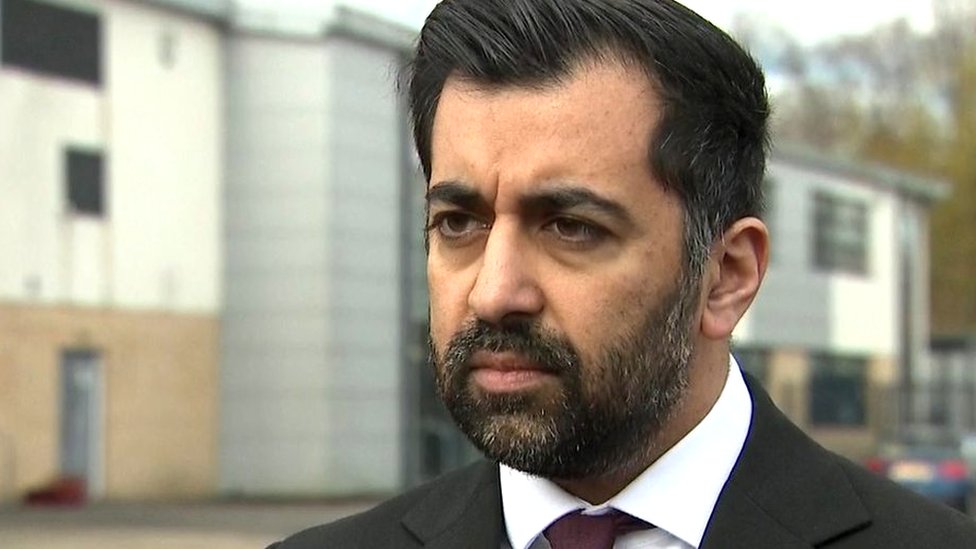
Scotland’s first minister has said he only discovered the SNP had bought a luxury motorhome after he became party leader.

Humza Yousaf said he was shown a police warrant to seize items from the party, which included the vehicle.

The motorhome was seized from outside a property in Dunfermline last week.

Party sources are reported to have said it was intended to be used as a “campaign battle bus” ahead of the last Holyrood election in 2021.

They told the Daily Record that it would have acted as a “mobile campaign room” if Covid restrictions prevented other forms of mixing, but was never used.

Mr Yousaf was asked during a visit to a Glasgow nursery school when he first learned that the party had bought the Niesmann + Bischoff vehicle, which can retail for more than £100,000.

He replied: “Shortly after I became leader of the party”.

The first minister said: “The police of course give us a warrant for items that they are looking to take in their possession.

“I can’t go into the detail of that but of course the police have done the responsible thing and I as leader have seen the warrant in terms of the items that they’ve confiscated, including the motorhome that you referenced.”

The Mail on Sunday reported at the weekend that the vehicle had been parked outside the home of Peter Murrell’s 92-year-old mother since January 2021. Mr Murrell is married to Nicola Sturgeon, and was until recently the SNP’s chief executive.

It was said to have been taken away on the same day that officers searched Ms Sturgeon and Mr Murrell’s home in Glasgow, and the SNP’s headquarters in Edinburgh. Mr Murrell was arrested before later being released without charge.

Campervans similar to the one seized by police can retail for more than £100,000

Officers are investigating the SNP’s finances in response to complaints about how the party spent more than £600,000 of donations that it had received from activists.

Mr Yousaf said the public had “very reasonable” questions to ask regarding the issue of transparency within the SNP.

It has been revealed that the SNP has been without auditors since September. Accountants Johnston Carmichael, which audited its accounts for more than a decade, said the decision to no longer work with the party was taken after a review of its clients.


Mr Yousaf said he had not been aware of the issue until he became leader, adding that “it would have been helpful to have known beforehand” and that “there should have been more transparency around the party finances”.

He said he was now committed to finding replacement auditors for the party as soon as possible.

The first minister was speaking the day after the Scottish government confirmed it would be launching a legal challenge to the UK government’s block on its gender recognition reforms.

Mr Yousaf said he did not “know the full costs” that would be involved in taking legal action, but insisted that “it’s an important principle”.

He said: “Spending taxpayers’ money on defending the will of the Scottish Parliament, on defending devolution, for me that’s important.”

He said he would launch the challenge even if it was a bill he “fundamentally disagreed” with, claiming that if he did not do so then the UK government would “veto legislation after legislation” passed at Holyrood.


However, former Supreme Court judge Lord Sumption told the BBC that the Scottish government’s position was “weak” and the legal challenge would be “very difficult”.

The case for judicial review will initially be heard in the Court of Session in Edinburgh, but is widely expected to end up in the UK Supreme Court for a final decision.

Lord Sumption told the BBC Radio’s Good Morning Scotland programme: “Section 35 empowers the UK government to stop a Scottish bill becoming law if it modifies the law relating to a matter reserved to Westminster in a way that adversely affects how the law works.

“One of those matters is equal opportunities, and what the UK government says is the Scottish bill modifies the law relating to equal opportunities in a way that adversely affects how it works.

“So if you think about it, the result will be that some UK citizens, if this bill comes into force, will have a different legal gender in different parts of the UK depending on where they happen to be.”

Asked if he would resign as first minister if the legal challenge was unsuccessful, Mr Yousaf replied: “No”.