
Sudan fighting: Blinken says US diplomatic convoy fired upon

“This action was reckless, it was irresponsible and of course unsafe,” he told reporters in Japan after G7 talks.

Sudan has been gripped for days by deadly fighting between rival forces.

Earlier, it was reported that the EU’s ambassador in Sudan, Aidan O’Hara, has been assaulted at his home in the capital Khartoum.

Around 185 people have been killed and more than 1,800 injured in three days of fighting in Sudan, according to the UN. The city has seen air strikes, shelling and heavy small-arms fire.

Both the army and a paramilitary group called the Rapid Support Forces (RSF) claim to control key sites in Khartoum, where residents have been sheltering from explosions.

Mr O’Hara was not “seriously hurt”, Irish Foreign Minister Micheál Martin confirmed.

He described the attack as a “gross violation of obligations to protect diplomats”.

Mr Martin described the ambassador as an “outstanding Irish and European diplomat who is serving the EU under the most difficult circumstances”.

Aidan O’Hara became the EU ambassador to Sudan in 2022

“We thank him for his service and call for an urgent cessation of violence in Sudan, and resumption of dialogue,” he said.

Earlier, EU foreign policy chief Josep Borrell tweeted that the security of diplomatic premises and staff was a “primary responsibility” of the Sudanese authorities.

EU spokeswoman Nabila Massrali told AFP news agency the EU delegation had not been evacuated from Khartoum following the attack. Staff security was the priority and security measures were being assessed, she added.

  • Sudan is in north-east Africa and has a history of instability: It fell under military rule in 2019, when long-time leader Omar al-Bashir was toppled
  • Since then, two men have been in charge: The head of the army and his deputy, who is also the head of a paramilitary group called the RSF
  • They disagree on how to restore civilian rule to Sudan: The RSF leader claims to represent marginalised groups against the country’s elites but his forces were accused of ethnic cleansing
US state department spokesman John Kirby said there were currently no plans to evacuate US personnel, despite ongoing security concerns and the closure of Khartoum’s airport but he urged all Americans to treat the situation “with the utmost seriousness”.

The conflict has forced many civilians to shelter in their homes amid fears of a prolonged conflict that could land the country in deeper chaos.

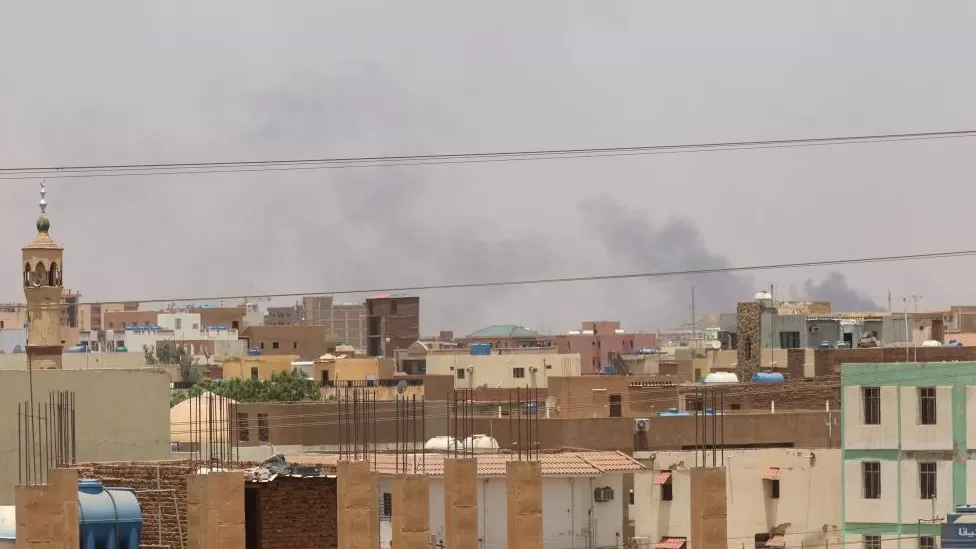
On Monday, clouds of smoke were visible above Khartoum’s main airport, with TV showing images of fires and explosions. Army air strikes targeted RSF bases, some of which are embedded in residential areas.

Hospitals were shelled, doctors say. Damage was reported at al-Shab Teaching Hospital in Khartoum along with two other clinics.

The fighting is between army units loyal to the de facto leader, Gen Abdel Fattah al-Burhan, and the RSF, a notorious paramilitary force commanded by Sudan’s deputy leader, Mohamed Hamdan Dagalo, better known as Hemedti.

Hemedti said on Monday that the international community must intervene, and branded Gen Burhan “a radical Islamist who is bombing civilians from the air”. Gen Burhan has said he is willing to negotiate.

The two sides held a brief ceasefire on Sunday to allow the wounded to be evacuated, although it was not clear how strictly they had stuck to it.

The regional Intergovernmental Authority on Development, or Igad, will send the presidents of South Sudan, Djibouti and Kenya to the country to try to broker peace.

Igad’s executive secretary, Nuur Mohamud Sheekh, told the BBC there were some signs that progress could be made.

“They are preparing to travel to Sudan to meet with the two leaders but they are engaging with them through back channel diplomacy, they are speaking to these leaders to cease hostilities, to stop the fighting and return to the negotiating table,” he said.

“Both these leaders are agreeable to mediation, which by itself is a very positive development over the last few hours. Our leaders have experience when it comes to mediating in conflicts.”
China ready to facilitate Israel-Palestine peace talks, says foreign minister

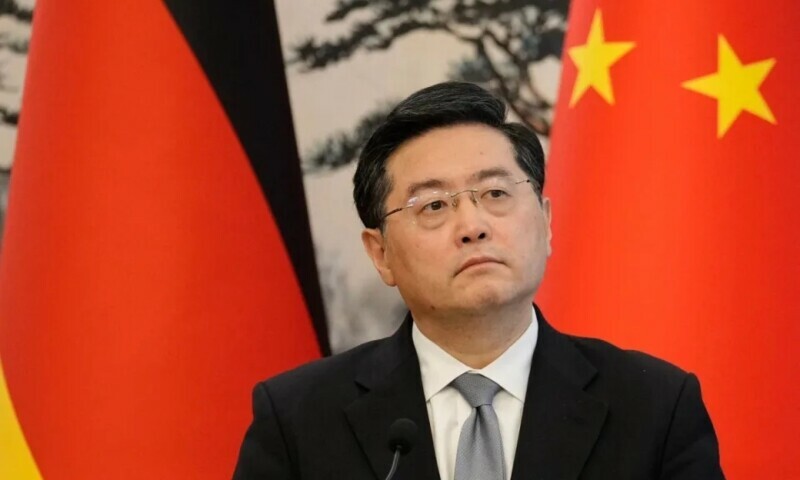
The separate phone calls between Foreign Minister Qin Gang and the Israeli and Palestinian top diplomats come amid recent moves by Beijing to position itself as a regional mediator.

Qin encouraged “steps to resume peace talks,” and said that “China is ready to provide convenience for this,” in a Monday phone call with Israeli Foreign Minister Eli Cohen, Xinhua reported in a summarisation.

And Qin told Palestinian foreign minister Riyad Al-Maliki that Beijing supports the resumption of talks as soon as possible, according to a Xinhua summary.

In both calls Qin emphasized China’s push for peace talks on the basis of implementing a “two-state solution,” Xinhua said.

China has been on a recent diplomatic offensive, brokering the restoration of ties in March between Iran and Saudi Arabia — rivals in a region where the United States for decades has been the main diplomatic powerbroker.

Israeli-Palestinian peace negotiations have been stalled since 2014.

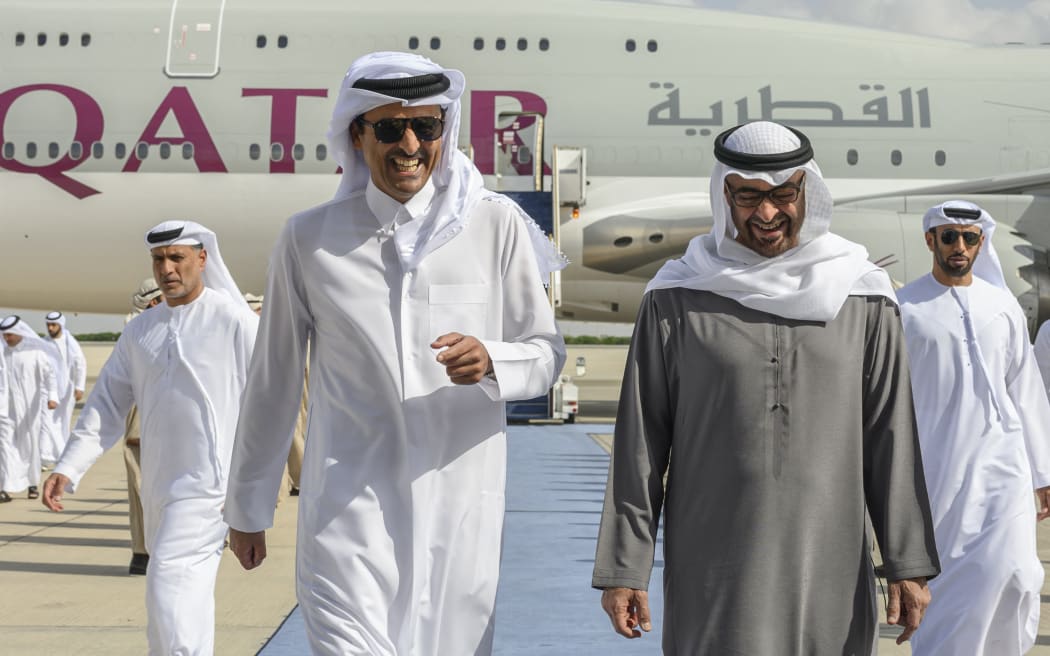
Qatar and UAE in process of restoring diplomatic ties: official

“At present, the activation of diplomatic ties, which will include the reopening of embassies, is under process between both countries,” a UAE official said in a statement in response to a question from Reuters.

A Gulf official said embassies were expected to reopen with new ambassadors in their posts by mid-June. A third source said diplomatic relations would be fully restored within weeks.

The restoration of ties comes amid a broader regional push for reconciliation with Iran and Saudi Arabia agreeing last month to re-establish relations after years of hostility, which threatened instability in the Gulf and stoked the war in Yemen.

In mid-2017, Saudi Arabia, the UAE, Bahrain and Egypt severed all ties with Qatar over accusations it supported terrorism, a reference to Islamist groups, and was cosying up to Iran, accusations Doha denied.

Riyadh and Cairo were the first to reappoint ambassadors to Doha in 2021 after a Saudi-led deal to end the dispute, while Bahrain last week announced it would restore diplomatic ties.

All nations, with the exception of Bahrain, had already restored trade and travel links with Qatar in early 2021, when the UAE had suggested resuming diplomatic ties would take time.

Relations between the UAE and Qatar warmed last year and leaders of both countries met face-to-face.

“The UAE’s foreign policy is primarily focused on building bridges, economic cooperation and regional de-escalation,” said the UAE official, who declined to be identified.

The other Gulf official, speaking on condition of anonymity, said that late last month Qatari and Emirati officials agreed to restore diplomatic ties and that Abu Dhabi has informed Doha who its envoy would be. Qatar has yet to do the same, the official added.

Qatar’s foreign ministry declined to comment when contacted by Reuters.

In the Qatari capital of Doha this week, workers were laying new sidewalks outside the consular section of the UAE embassy and palm trees appeared to have been recently planted in the garden. Across the street, another UAE embassy building seemed abandoned, its garden overgrown and upstairs windows propped open.

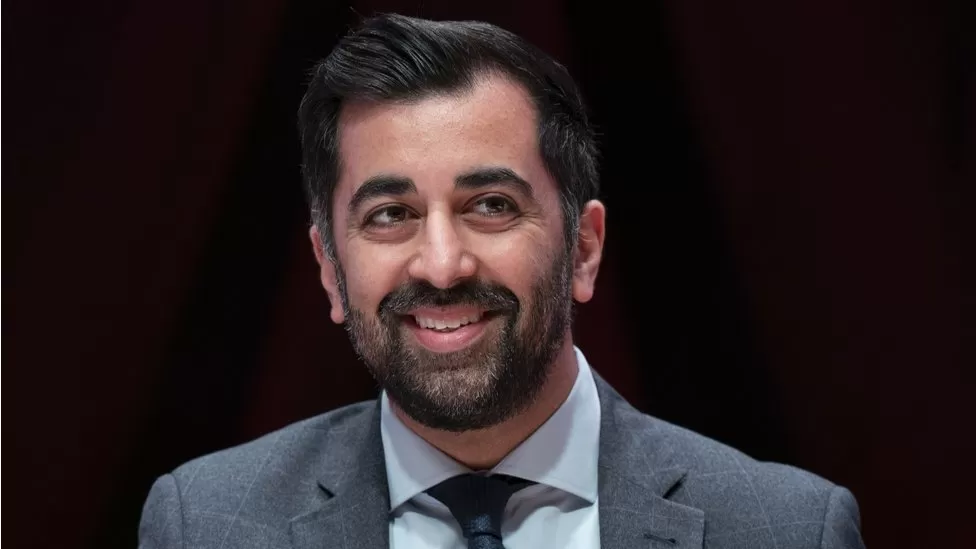
First Minister Humza Yousaf will set out his priorities for the next three years in a statement at Holyrood later.

It will be Mr Yousaf’s first major policy announcement since becoming first minister last month.

He will also publish a policy document listing what the Scottish government plans to deliver for communities and businesses over the period.

Ahead of his statement, Mr Yousaf said he would present a “fresh vision” of how to face challenging times.

And he committed to using the powers of devolution to the maximum, while also making the case for independence.

Mr Yousaf was sworn in as first minister last month when Nicola Sturgeon stood down after more than eight years in the role.

He said in this time his government had already “tripled support” for families struggling with energy bills with a £30m fund, announced £25m in net zero funding for north east Scotland and invested £15m in free childcare.

Mr Yousaf said: “These measures have come as a response to the challenges presented by our ongoing recovery from the pandemic and cost of living crisis – exacerbated by Brexit and the UK government’s economic mismanagement – as well as climate change and Russia’s invasion of Ukraine.

“These challenging times we live in call for us to share a fresh vision of how we face them.

“My cabinet has considered how we can build a better future for Scotland and the outcomes necessary to achieve that.”

The statement and policy paper is expected to fall under three key themes of equality, opportunity and community.

Mr Yousaf said his targets would include reducing poverty, strengthening public services, building a “green wellbeing economy” and supporting businesses.

He added: “We will do so using the powers of devolution to their maximum, whilst making the case that as an independent nation, we can do so much more to make Scotland a wealthier, fairer, and greener country.

“I have promised to lead Scotland in the interests of all our people.”

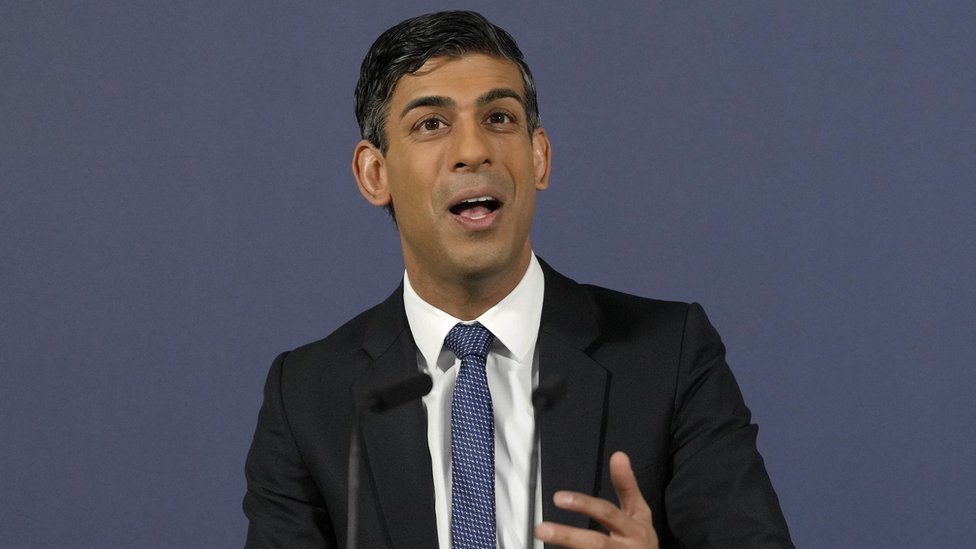
Rishi Sunak has said an “anti-maths mindset” is holding the economy back, as he announced a review of the subject in England.

A group of advisers, including mathematicians and business representatives, will examine the “core maths content” taught in schools.

It will also consider whether a new maths qualification is necessary.

In a speech, the PM blamed a “cultural” acceptance of poor numeracy for skills shortages in various sectors.

He also repeated his ambition to ensure all school pupils in England study some maths until the age of 18.

Speaking in London to an audience of students, teachers and business leaders, Mr Sunak said children risked being “left behind” in the jobs market without a solid foundation in maths.

A “cultural sense that it’s OK to be bad at maths,” he added, had left the UK one of the least numerate countries in the developed world.

Poor numeracy had proved a problem for employers, he said, and was costing the economy “tens of billions a year”.

But opposition parties attacked the government’s record of recruiting maths teachers, with Labour pointing out that targets for teacher recruitment in the subject have been repeatedly missed.

“The prime minister needs to show his working: he cannot deliver this reheated, empty pledge without more maths teachers,” shadow education secretary Bridget Phillipson said.

Liberal Democrat education spokeswoman Munira Wilson said the government lacked a “proper plan” to recruit more maths teachers, adding: “You don’t need a maths A-level to see that these plans don’t add up.”

Recruitment targets

Experts recently told MPs that 12% of secondary school lessons in England are taught by someone who hasn’t studied any higher than A-level themselves.

Targets to recruit new trainee teachers haven’t been met for more than a decade, despite being lowered since 2019.

Mr Sunak said he accepted more maths teachers would be required to deliver his pledges, saying this was “not going to happen overnight”.

Asked for a figure earlier, Education Secretary Gillian Keegan said the number of teachers required would depend on the advisory group’s findings.

The prime minister said the group would report back with recommendations for improving the maths curriculum around July, with a delivery plan then announced later in the year.

Downing Street has said the group will include mathematicians, education leaders and business representatives.

It added that the group would look at how maths in taught in countries with high rates of numeracy, and would also consider how new technology can be used to help teachers.

‘Excessive workload’

Mr Sunak also committed to introducing voluntary qualification for teachers leading maths in primary schools, and extending the 40 or so Maths Hubs across England, which aim to improve the standard of maths teaching.

Dr Mary Bousted, joint general secretary of the National Education Union, said the prime minister’s aim was “laudable” but warned it would be “thwarted unless he faces up to the reality of the state of education in England”.

She said there was a “crisis of teacher retention as a result of low pay and excessive workload” and called on the government to explain how it would recruit more maths teachers.

In the short term, the sector is also set to experience more disruption after unions rejected a government pay offer for 2022.

In 2019, the UK was ranked 18th in the world for attainment in maths, based on tests taken by 15-year-olds.

Almost a third of 16-year-olds in England fail GCSE maths each year and face compulsory resits in college. The resit pass rate is about one in five.

Fighting rages in Sudan as death toll climbs to 97

The violence erupted Saturday after weeks of power struggles between Sudan’s army chief Abdel Fattah al-Burhan and his deputy, Mohamed Hamdan Daglo, who commands the powerful paramilitary Rapid Support Forces (RSF).

The raging battles triggered a wide international outcry with appeals for an immediate ceasefire and dialogue.

“The death toll among civilians in clashes since it began on Saturday … has reached 97,” the doctors’ union said in a statement early Monday, noting the figure does not include all casualties as many could not reach hospitals due to difficulties in movement.

It said hundreds of civilians were wounded in the clashes.

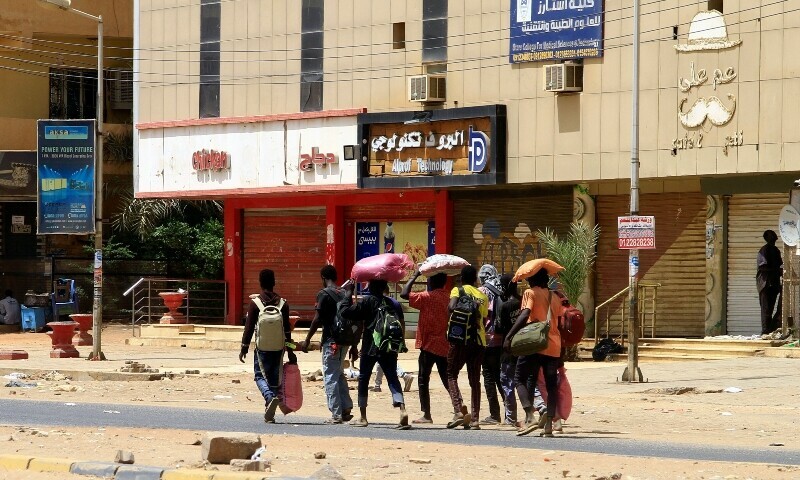
Loud gunfire and deafening explosions echoed across the streets of Khartoum Monday morning as clashes continued, according to AFP journalists.

A stench of gunpowder lingered as plumes of thick black smoke emanated from damaged buildings, according to witnesses.

The fighting broke out after bitter disagreements between Burhan and Daglo over the planned integration of the RSF into the regular army — a key condition for a final deal aimed at ending a crisis since the 2021 military coup they orchestrated together.

The coup has already derailed a transition to civilian rule following the 2019 ouster of President Omar al-Bashir and piled on a spiralling economic crisis in Sudan.

Trading blame

The clashes forced Sudanese to hunker down in their homes with fears of a prolonged conflict that could plunge the country into deeper chaos, dashing hopes for a return to civilian rule.


Since Saturday, the two sides have traded blame over who started the fighting.

Each has claimed the upper hand by declaring control of key sites, including the airport and the presidential palace but none of their claims could be independently verified.

Fighting also raged in others parts of Sudan including the western Darfur region and in the eastern border state of Kassala.

The Saturday killing of three staff from the World Food Programme in North Darfur clashes prompted the agency to suspend all operations in the impoverished country.

Medics have pleaded for safe corridors for ambulances and a ceasefire to treat the victims because the streets are too dangerous for transporting casualties to hospital.

The RSF was created under Bashir in 2013, emerging from the Janjaweed militia that his government unleashed against non-Arab ethnic minorities in Darfur a decade earlier, drawing accusations of war crimes.

The latest violence sparked by the two generals has reflected the deep-seated divisions between the regular army and the RSF.

Despite the wide calls for a ceasefire, the two generals appeared in no mood for talks.

Burhan, who rose through the ranks under the three-decade rule of now-jailed Bashir, has said the coup was “necessary” to include more factions in politics.

Daglo later called the coup a “mistake” that failed to bring about change and reinvigorated remnants of Bashir’s regime ousted by the army in 2019 following mass protests.

Twelve people have died from heatstroke while many others have been admitted to hospital after attending an awards ceremony in India’s Maharashtra state.

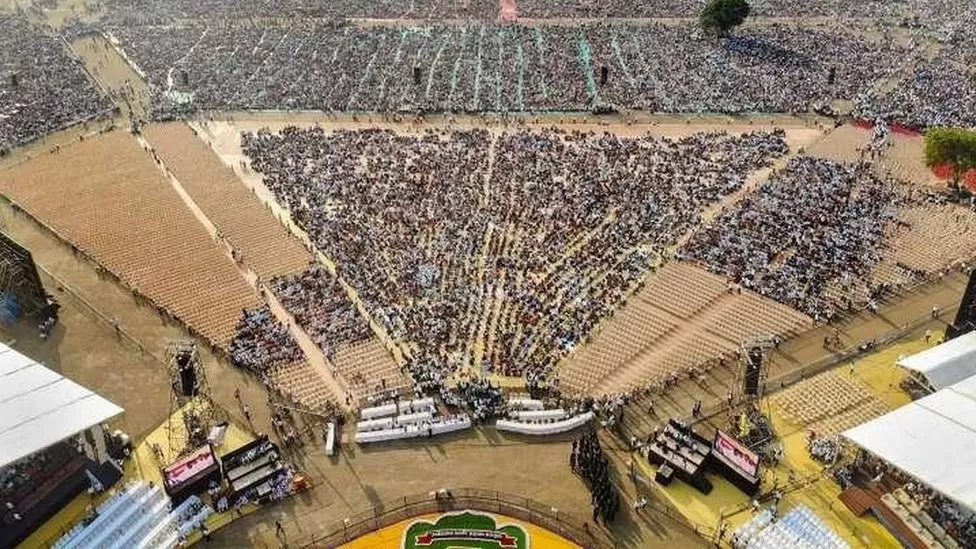
The government-sponsored event took place in an open ground under a blazing sun and lasted for several hours.

Thousands of people attended Sunday’s event, which was held to felicitate a prominent social activist.

Many people complained of dehydration and other heat-related ailments after attending the function.

Navi Mumbai – a city close to financial hub Mumbai – where the event was held, recorded a maximum temperature of 38C (100F) on Sunday. Health experts have advised people to stay out of the sun during the peak heat hours of 11am to 4pm, especially during April, which is considered to be one of the hottest months in India.

Photos of the event show thousands sitting directly under the sun, with no roof or covering providing any kind of shelter.

Officials told the media that refreshments had been provided at the venue through the day and that booths had been set up to provide medical aid to people, but opposition parties alleged that the event was mismanaged and that it should not have been held at this time of the year.

The event was organised at the Kharghar International Corporate Park grounds to confer an award on social worker Dattatreya Narayan Dharmadhikari, popularly known as Appasaheb Dharmadhikari.It was attended by top politicians, including India’s Home Minister Amit Shah and leaders from the state’s governing Bharatiya Janata Party (BJP).

Local media reported that hundreds of thousands of people attended the event and that it went on for over three hours. Numerous people complained of dehydration, high blood pressure and exhaustion, while close to two dozen people were admitted to hospital.

Maharashtra Chief Minister Eknath Shinde called the incident “unexpected and painful” and announced 500,000 rupees ($6,102; £4,913) as compensation to the families of each of the deceased. He said the government would provide free treatment to those who fell ill during the event.

Opposition leaders have accused the government of jeopardising people’s lives. Former Chief Minister Uddhav Thackeray said the event had “not been planned properly” and called for an investigation.

Congress spokesperson Atul Londhe Patil accused the state government of negligence and said people had died because the event was held in April.

India recorded it’s hottest February since 1901 this year, and the country’s weather department has also forecasted an “enhanced probability” of heatwaves between March and May.

BBC News India is now on YouTube. Click here to subscribe and watch our documentaries, explainers and features.

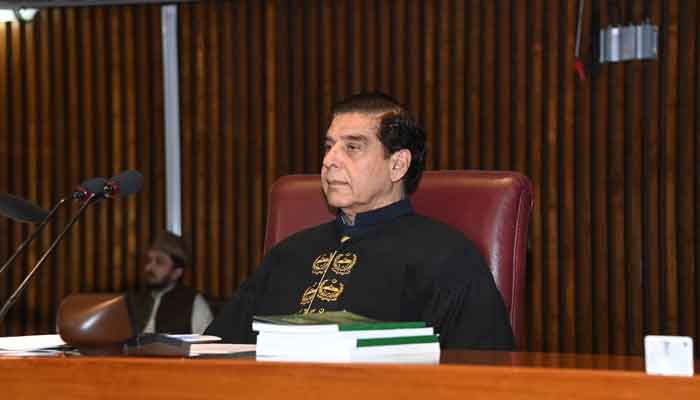
NA Speaker Ashraf warns SC against intruding into parliament’s domain

ISLAMABAD: National Assembly Speaker Raja Pervez Ashraf has warned the Supreme Court against intruding in the parliament’s domain, saying “others will also try to enter your domain”.

In an interview with an American media outlet, Ashraf said they [the superior judiciary] should take over the legislative business if parliament’s lawmaking authority is unacceptable.

Ashraf said the farce of elections should end if parliament has to use its legislative authority according to the will of the Supreme Court or a high court.

Referring to an apex court’s verdict in which it stopped the implementation of a bill clipping the chief justice’s powers even before it becomes a law, he said: “How can you enter the domain of the chosen representatives of the people? Now that you have come, others will also try to enter your domain.”

He said that while the apex court should hear all parties, the government should also shun rigidity, adding political matters should never be taken to the court as it harms not only politics but also weakens the judiciary.

“Division in politics is necessary, but division in Supreme Court is dangerous”, he noted.

The veteran politician said parliamentarians themselves should resolve all political matters in the parliament or at any other forum on their own.

About the army chief’s address to the in-camera session on national security, Ashraf said General Asim Munir’s words and his clarity of thought was very reassuring.

The speaker said the way the army chief expressed his adherence to the Constitution and trust in the supremacy of the parliament was invigorating. “The country needs ideas like this”, he maintained.

To a question about the possibility of any new anti-terrorism operation in Khyber Pakhtunkhwa or Balochistan, the speaker said no new operation, but law-enforcing had already been acting against miscreants.

AJK Assembly session adjourned without electing new PM

MUZAFFARABAD: A session of the Azad Jammu and Kashmir (AJK) Assembly to elect a new prime minister was adjourned on Monday without the poll being held.

The election was announced after Sardar Tanveer Ilyas’ disqualification by the AJK High Court in a contempt case.

The session, which was due to start at 11am, finally began at 3:30pm under the chairmanship of Speaker Riaz Ahmed. However, the session was adjourned till 11am tomorrow without a new prime minister being elected.

The PTI enjoys a majority in the AJK Legislative Assembly, but their path to secure a candidate loyal to Imran Khan as the premier may get difficult.

AJK President Barrister Sultan Mehmood Chaudhry has rebelled against his own party and created a forward bloc in the assembly. According to sources, Chaudhry’s forward bloc has the support of the Pakistan Peoples Party (PPP) and Pakistan Muslim League-Nawaz (PML-N).

However, PML-N AJK President Shah Ghulam Qadir told Daily Jang that as per a “power-sharing formula” their alliance was with the PPP.

“If the candidate for PM was from PPP then we would have been bound to vote for him,” explained Qadir. He added that the PPP did not contact the party when it was negotiating with the forward bloc and neither did the latter contact them.

“If the situation remains like this then PML-N, with its seven votes, will make its own decision,” said the PML-N leader.

However, sources shared that after seeing Qadir’s reaction AJK President Chaudhry reached out to the PML-N to seek support for the forward bloc candidate.

Sardar Tanveer Ilyas disqualified
Last week, in a major setback to PTI, AJK High Court disqualified Sardar Tanveer Ilyas for contempt of court.

The decision of the high court came after Ilyas was summoned to AJK’s supreme court and high court for using a “threatening tone” in one of his speeches.

The court declared Ilyas ineligible from holding any public office and asked AJK’s Chief Election Commissioner (CEC) Abdul Rasheed Sulehria to hold polls for a new prime minister.

Federal minister Mufti Abdul Shakoor dies in road accident

ISLAMABAD: Federal Minister for Religious Affairs and Interfaith Harmony Mufti Abdul Shakoor passed away in a road accident in the federal capital, the Islamabad Police said Saturday.

Police told U News that the incident occurred around iftar (evening) when the federal minister was headed towards Secretariat Chowk from a local hotel.

In a statement, the capital’s police said the minister was driving the car himself when a Toyota Hilux Revo — with five people onboard — smashed his vehicle at the driver’s side.

The federal minister was shifted to Polyclinic Hospital in the federal capital, but due to severe internal bleeding, he succumbed to his wounds, the police said.

Senior police officers, according to the police, have arrived at the scene of the crime, and the people in the vehicle that smashed the federal minister’s car have been arrested. Two of the five men are injured.

Islamabad Inspector-General Dr Akbar Nasir Khan, Minister for Information Marriyum Aurangzeb, and other federal ministers have also reached the hospital, where Shakoor breathed his last.

Interior Minister Rana Sanaullah directed the capital’s police to ensure that a “complete investigation” is conducted regarding the accident.

“Initial information suggests that Mufti Shakoor passed away due to an injury to his head,” Islamabad IG Khan told journalists outside the hospital.

Mufti Shakoor’s funeral prayer will be offered tomorrow (Sunday) at 2 pm in Lakki Marwat, and he will be laid to rest in his native town, a JUI-F spokesperson said in a statement.

The religious scholar was elected as a Member of the National Assembly (MNA) from NA-51 on the ticket of Muttahida Majlis-e-Amal (MMA) in the 2018 general elections.

President Dr Arif Alvi also expressed his regret over the death of the federal minister and paid tribute to the deceased’s services for interfaith harmony.

In his condolence statement, Prime Minister Shehbaz Sharif said Shakoor was a “practical scholar, an ideological political activist, and a decent human being”.

PM Shehbaz said the deceased federal minister was among Jamiat Ulema-e-Islam-Fazl’s ideological leaders.

“Mufti Abdul Shakoor performed his duties with diligence, sincerity and honesty as Minister of Religious Affairs,” the premier said, paying glaring tribute to him.

Pakistan Peoples Partry Co-chairman Asif Ali Zardari expressed sorrow over the demise and prayed for the federal minister’s forgiveness. Senator Sherry Rehman said she stands with his family in their time of sorrow.

Sanaullah also expressed grief over Shakoor’s demise and said JUI-F has been deprived of a dedicated politician.

Pakistan Tehreek-e-Insaf (PTI) leaders Fawad Chaudhry and Faisal Javed also extended their condolences and prayed for the deceased federal minister.