
Tories could campaign to leave European human rights treaty if Rwanda flights blocked

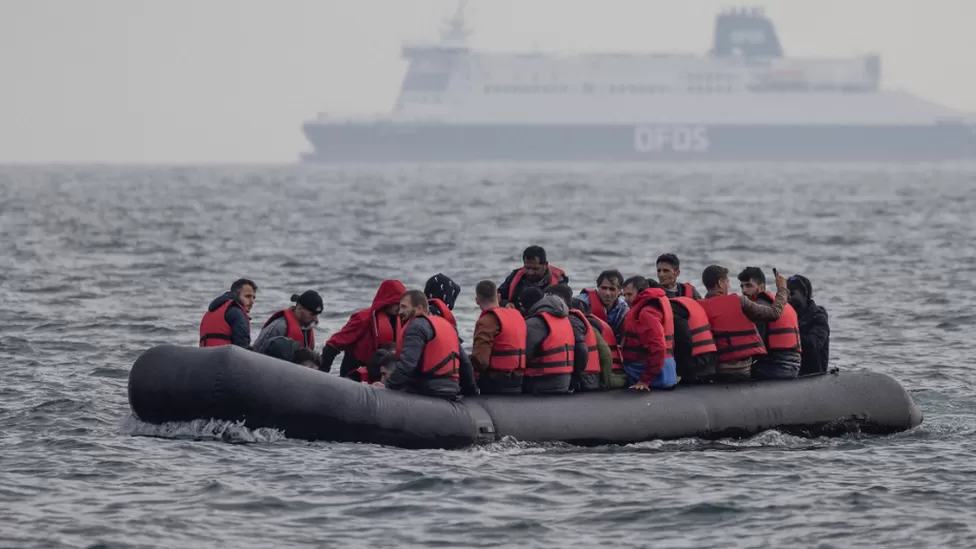
There is frustration at the role of a European court in stopping flights for asylum seekers taking off last year.

The minister told the BBC the UK was “probably” being punished for Brexit.

The government has said the UK will remain in the ECHR.

“The government has been clear that it will abide by its international treaty obligations,” a spokesperson said.

“As we’ve set out previously – we believe our Stop the Boats Bill will deliver the changes necessary to reduce the incentives for people to risk their lives through illegal crossings while remaining party to the ECHR.”

But the comments by senior figures in government are likely to reignite a debate in the Conservative Party about the ECHR – which splits opinion among Tory MPs.

The ECHR was established in 1950 by a number of countries including the UK.

The treaty, which sets out the rights and freedoms people are entitled to in the 47 signatory countries, is overseen by the European Court of Human Rights.

It is separate to the European Union – so the UK remained part of both after Brexit.

Ministers are desperate to show they can deliver on tackling illegal migration to the UK before an election – likely next year.

But so far the Rwanda scheme, which would see the UK send some asylum seekers to the east African country, has not got off the ground and the timetable is slipping.

The first flights were stopped by a European judge in a last minute intervention last year – despite being cleared by UK courts.

Since then, the scheme has become bogged down in legal action.

The UK’s Court of Appeal ruled against the plan last month, to the surprise of the Home Office.

There will now be an appeal in the Supreme Court in the autumn, but senior ministers are privately unsure about whether they can overturn the ruling.

They fear that even if the government does win, it could take many months for deportations to begin because individual legal challenges will take place too.

Alternative plans are being considered, but they would also face legal challenges and take time to deliver.

That is likely to lead to further debate about whether the UK needs to take further action to ensure the policy is delivered.

Legislation passed in recent weeks will put a legal obligation on the government to remove people who have entered the country illegally.

But without comprehensive returns agreements – and with the Rwanda policy stuck in the courts – it is unclear when ministers will trigger the implementation of that responsibility.

The government also now has the power to ignore certain ECHR interim injunctions relating to border security.

But some Conservative MPs wanted the government to go further and remove itself from other ECHR obligations.

A cabinet minister said events could make it “inevitable” the Conservatives end up backing leaving the ECHR.

Some backbenchers have said the Conservatives should campaign to leave at the next election regardless of what happens with the Rwanda scheme.

Jonathan Gullis said: “Time and again we see the quasi-legislative European Court of Human Rights continue to undermine the government’s plan to stop the boats.”

He added the electorate should be given a choice over ECHR withdrawal at the next election.

But a former cabinet minister – strongly opposed to withdrawal – described the idea as “knee jerk nonsense”.

They said those who backed quitting were a “minority” and there would be significant opposition in cabinet.
US believes Imran Khan’s case doesn’t warrant response

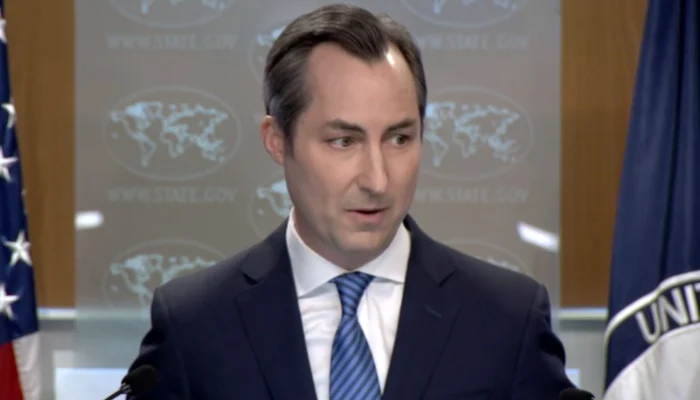
WASHINGTON: The United States said Monday it responds to “obviously unfounded” cases and Pakistan Tehreek-e-Insaf (PTI) Chairman Imran Khan’s arrest in the Toshakhana case was not one of them.

The comment came during US State Department spokesperson Matthew Miller’s press briefing in Washington, where he was asked a slew of questions regarding the PTI chief’s arrest.

“We believe that is an internal matter for Pakistan, and we continue to call for the respect of democratic principles, human rights, and rule of law in Pakistan, as we do around the world,” he said in response to a question.

The spokesperson had also earlier maintained that the US believes the case of Khan — who was arrested last Saturday, sentenced to three years in prison, and disqualified for five years from running for office — was an internal matter of Pakistan.

A journalist then pressed the State Department’s spokesperson further. He said that some people described the response as pretty subdued and muted and wondered whether it was due to Khan’s criticism of the US.

In response to this, Miller said: “I think our response to this arrest and his previous arrests have been consistent at all times in declaring it an internal matter for Pakistan.”

The journalist then asked how was Khan’s arrest different from the case of Russian opposition leader Alexei Navalny — who has been jailed for around two decades in a criminal case. The US called it an “unjust trial”.

Miller responded: “So we believe at times there are cases that are so obviously unfounded that is — that the United States believes it should say something about the matter. We have not made that determination here.”

The journalist then informed Miller that the US had responded to Navalny’s arrest. At this, the spokesperson said that they respond when Russia is clearly violating his human rights.

He then asked the spokesperson about Julian Assange, an Australian journalist who leaked official US documents in 2010 and is now behind bars in London as Washington seeks to extradite him.

“Is it, not Britain’s (or Australia’s) internal matter?” the journalist asked, to which Miller responded: “He has clearly been charged by the US Justice Department.”

“So other countries should say nothing?” the journalist asked.

“We fully respect the right of other countries to make their positions clear on this and other matters […] We respect their right to raise [the issue but] we will make clear our belief [too], … the fact that he was charged with very serious crimes that severely harmed the national security of the United States.”

IHC hears PTI’s petition seeking Imran Khan’s transfer to Adiala Jail

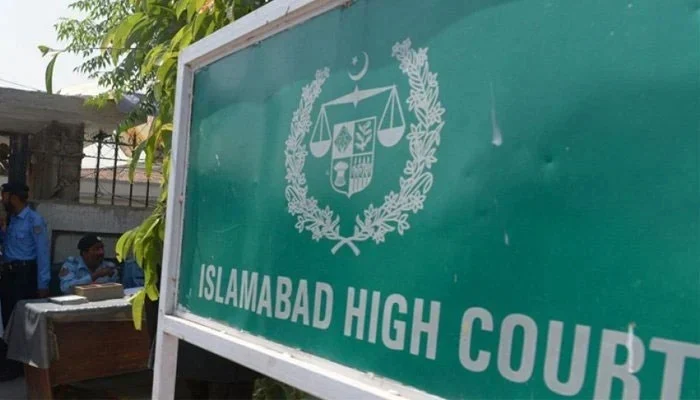
ISLAMABAD: The Islamabad High Court (IHC) is hearing the petition requesting the transfer of Pakistan Tehreek-e-Insaf (PTI) Chairman Imran Khan from Attock Jail to Adiala Jail — where he has been sentenced to three years in jail in the Toshakhana case.

IHC Chief Justice Aamer Farooq is hearing the plea along with the objections of the Registrar’s Office to it today (Tuesday).

The PTI had filed the petition yesterday that given Khan’s “education, habits and social and political status”, he ought to be provided better or A-class facilities in jail.

“Keeping in view the petitioner’s social and political status, his education, and his being accustomed to a better living style, the Petitioner was entitled to A-Class facilities in terms of Rule 243 read with Rule 248 of Pakistan Prison Rules,” the petition read.

It further appealed that the PTI’s chair’s legal team, personal physician, and family members be allowed to meet him.

Khan was arrested on August 5 after a district and sessions court in the federal capital convicted him for corrupt practices related to the state gift depository — allegations which he denies.

Additional and Sessions District Judge Humayun Dilawar sentenced Khan to three years in jail, along with a fine of Rs100,000.

After his arrest, Khan was moved to Attock jail.

No-confidence: Modi to face fierce debate in Lok Sabha for silence on Manipur

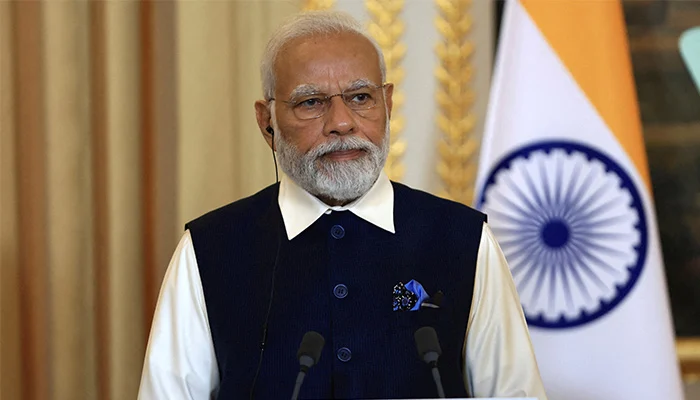
India Prime Minister Narendra Modi is expected to face a heated debate over silence on the deadly violence in the remote state of Manipur, during the ongoing session in the Lok Sabha today (Tuesday), local media reported.

Congress leader Gaurav Gogoi initiated a debate on the no-confidence motion against the country’s Bharatiya Janata Party (BJP) government.

However, a central minister created a ruckus saying that senior Congress leader Rahul Gandhi was earlier said to open the debate.

Modi’s main opponent, Gandhi, returned to Lok Sabha on Monday after the country’s Supreme Court halted his criminal defamation conviction in the 2019 ‘Modi surname case’.

The Lok Sabha took up an extensive discussion on the no-confidence motion — also known as the no-trust motion — moved by the recently formed alliance Indian National Developmental Inclusive Alliance (I.N.D.I.A) last month, which will continue till Thursday.

The debate is expected to be a fierce one, with Prime Minister Narendra scheduled to reply to it on the concluding day, August 10.

The 26 opposition parties’ alliance I.N.D.I.A moved the no-confidence motion against the BJP-led government on July 26, nearly four days after the Monsoon Session began in the Indian Parliament, to force a statement from PM Modi on the Manipur violence.

It may be noted that Modi has maintained silence on what has “come close to a civil war” engulfing the northeastern state, where Modi’s Hindu nationalist BJP is in power.

He had not commented in public about the worst ethnic violence ever seen in the small state of 3.2 million until last week, when videos showing two women being paraded naked and molested by a mob in Manipur surfaced, sparking national outrage.

Modi condemned the mass assault as “shameful” and promised tough action against the perpetrators.

Opposition parties, however, disrupted the monsoon session of parliament which began last week, to demand a detailed statement by Modi on Manipur in parliament.

A no-confidence motion serves as a mechanism to assess the joint accountability of the governing administration.

As per a report by Hindustan Times, a no-confidence motion can be proposed if a Member of Parliament (MP) feels that the incumbent government doesn’t have enough support to stay in charge and do its duties.

This motion needs support from at least 50 other MPs and can only be initiated within the lower house of India’s bicameral Parliament, called Lok Sabha.

“Within a parliamentary democracy, the continuity of a government’s authority relies on its ability to command a majority within the directly elected body, the Lok Sabha. According to Article 75(3) of the Indian Constitution, a Council of Ministers, comprising members of the elected government, bears collective accountability to the Lower House.”

Modi’s BJP has a clear majority of 301 members in the 542-seat lower house of parliament, so the no-confidence vote will not impact its stability.

However, the ethnic tensions in Manipur are seen as a rare security and political failure by Modi’s government, which will face a national election by May 2024.

Death toll from Slovenia flooding climbs to six

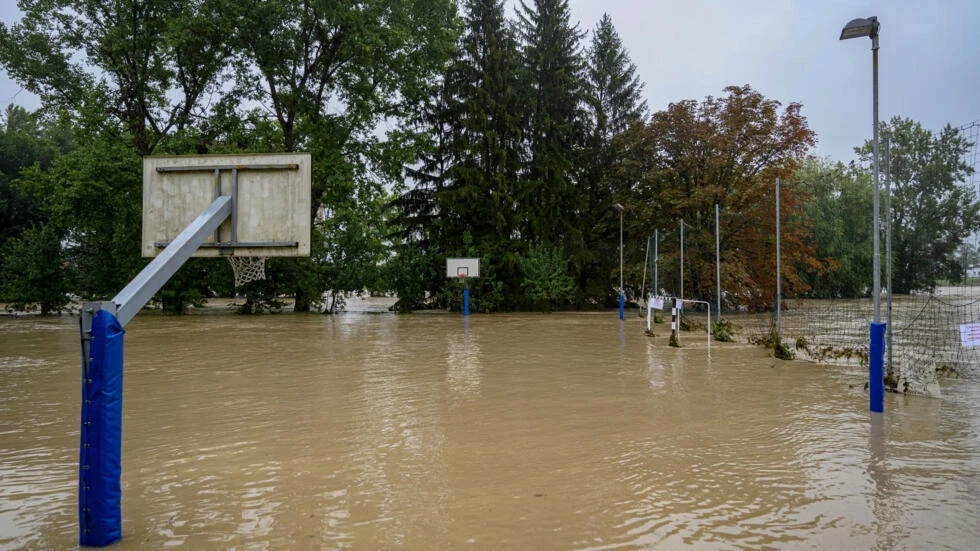
Prime Minister Robert Glob has described the torrential rains and severe flooding that hit the Alpine country of two million as its worst natural disaster since independence three decades ago.

Flash floods and landslides that began Thursday had submerged large swaths of central and northern Slovenia, cutting off access to villages and disrupting traffic.

On Sunday, emergency workers recovered the body of a 35-year-old man in a river near the village of Mirna Perc in the east.

Another man, who was taking part in the clean-up operations, was found dead after falling into a cesspit near the town of Kamnik close to Ljubljana, media reports said.

Police did not immediately confirm the reports when contacted by AFP.

The bodies of two Slovenians and two Dutch citizens had been found earlier.

On Monday, rescue workers tried to reopen roads to the most remote or isolated places, while assessing damages when the government has said could exceed half a billion euros.

Harrowing accounts have emerged of rescue workers and volunteers helping to save locals and tourists from the floods, and sheltering them in community halls and other places.

Slovenia, an EU member, has asked for help from the bloc, seeking in particular heavy machinery such as excavators and prefabricated temporary bridges to deal with the aftermath of the flooding.

Slovenia has also asked NATO to provide transport helicopters and soldiers to help with the recovery efforts.

A first truck with humanitarian help and food arrived from Hungary late Sunday, followed by a helicopter, while Croatia provided a military helicopter to help close and secure a broken levee on the Mura River.

German Chancellor Olaf Scholz said his country was sending emergency workers, expressing “dismay” at the “terrible flood catastrophe in Slovenia and Austria”.

In neighboring Austria, the body of a man was recovered on Sunday from a river in Carinthia state, with heavy rains causing flooding and landslides in the south.

Turkey explosion: Terrifying moment huge blast tears through port caught on camera

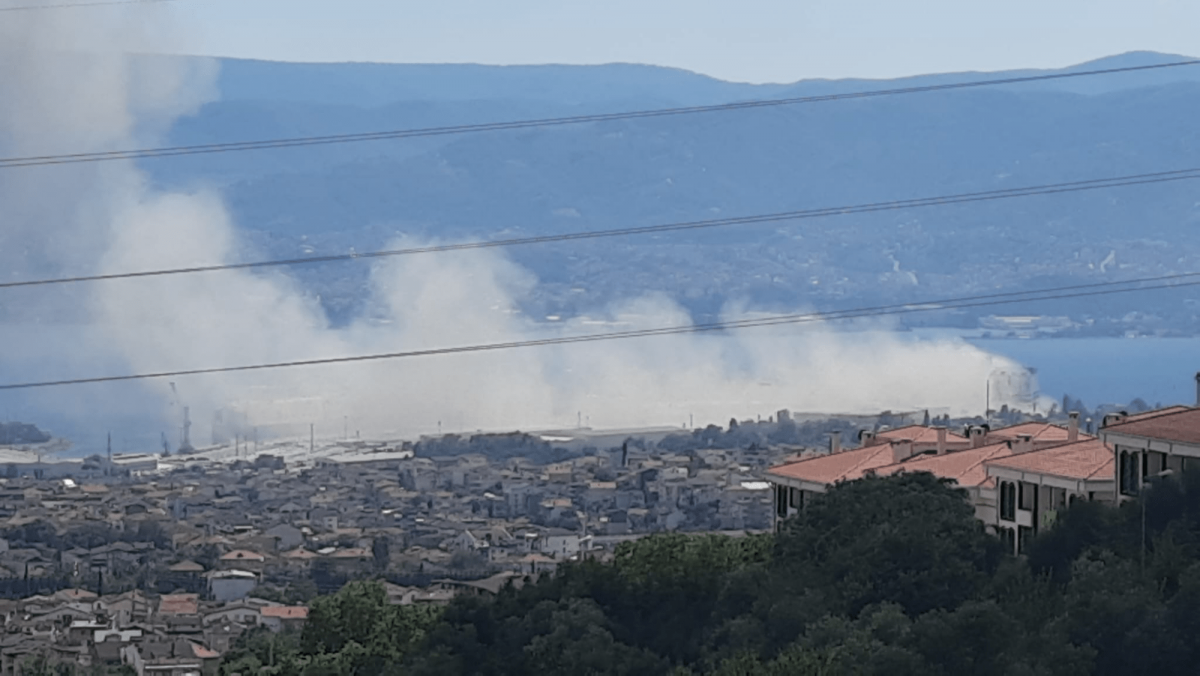
An explosion occurred around 2:40 p.m. (1140 GMT) near Turkish Grain Board (TMO) silos, Yavuz said.

“Initial evaluations show that an explosion occurred due to wheat dust compression during the transfer of wheat from a ship to the silo,” Yavuz said.

“We were told that it is technically possible that a blast could occur due to compression of wheat dust, but we are investigating every possible reason”.

Two of the injured are in serious condition in hospital, and everyone has been accounted for, he added.

The Ministry of Transportation said no ships were damaged due to the explosion.

2 dead, thousands without power after severe storms batter eastern US

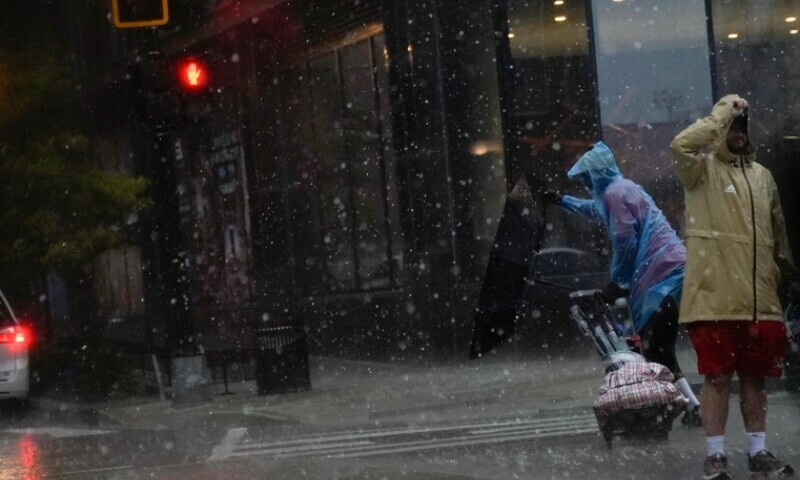
Millions of people were under severe weather alerts, including tornado watches, as rain, strong winds, and hail swept east along nearly the entire eastern seaboard, from Alabama to New York.

The National Weather Service (NWS) had predicted a “moderate risk” of hazardous storms, with gusts up to 80 miles per hour (130 kilometers per hour).

“Stay weather aware and make sure you have multiple ways to receive warnings,” the NWS in Baltimore and Washington said on social media earlier in the day.

As much of the severe weather danger subsided into the late evening, some areas faced flood threats as the rain continued to fall.

Hail as large as 4.5 inches (11.5 cm) in diameter was recorded in Virginia, the NWS said.

In Alabama, a 28-year-old man died after being struck by lightning in an industrial park parking lot, a local ABC station reported.

And in South Carolina, a 15-year-old was killed when he was hit by a falling tree outside his grandparents’ house, according to a local CBS station.

By late Monday, more than 700,000 customers had lost power along the East Coast, according to tracking website Poweroutage.us.

More than 1,700 US flights were canceled on Monday and more than 8,000 were delayed as the severe weather loomed, the website FlightAware said.

In Washington, federal agencies sent employees home early at 3 pm (1900 GMT) in anticipation of the weather.

The storms came as large parts of the southern United States, including Texas, Louisiana, and Florida boiled under excessive heat warnings, with temperatures up to 108 degrees Fahrenheit (42 Celsius) predicted through Tuesday.

Scientists say climate change has amplified the intensity and frequency of extreme weather events around the world.

Civil servants in Scotland used bank cards to make tens of thousands of purchases, including spending nearly £10,000 on VIP airport services.

For a fee former first minister Nicola Sturgeon, and her staff, were given fast-track security and access to lounges at UK and European airports.

Other purchases on procurement cards included yoga classes and nail polish.

The Scottish government said it could not comment on a first minister’s travel plans for security reasons.

An official added that all spending on the cards was subject to “robust authorisation and regular auditing arrangements”.

The Scottish government issues its senior staff with credit-card style electronic purchasing cards for buying goods and services up to a value of £5,000 per transaction.

A summary of purchases over £500 is officially published, but Scottish Labour obtained a full breakdown detailing all values between September 2019 and August last year.

BBC Scotland News has seen the data which included a payment of £4,182 on 8 September 2019 for hospitality and hotel accommodation at the five-star Gleneagles Hotel in Perthshire.

This is listed as being for Scottish Women and Girls in Sport and came prior to the Solheim Cup women’s golf tournament. A £856 payment for “hospitality with UK Sports Minister” at Gleneagles during the Solheim Cup also appeared.

A stay at Gleneagles Hotel in Auchterarder was among the items paid for on the Scottish government procurement cards

The 58,000 transactions on the taxpayer funded cards also showed purchases of Edinburgh Festival tickets.

A breakdown of the airport services paid for by the Scottish government for Ms Sturgeon and her staff highlighted transactions typically around the £500 mark.

However, one entry for February 2020 showed the government spent £1,271 at Schipol Airport in Amsterdam on VIP services which included private security and passport checks, as well as lounge access.

A total of £9,898 was spent on airport services for the former first minister, both in the UK and across Europe, between September 2019 and June last year.

UK government ministers have also previously used VIP airport services and Prime Minister Rishi Sunak has been accused of living an “A-list” lifestyle at taxpayers’ expense for his use of private jets.

A total of £14.2m was spent on the Scottish government procurement cards over the near three-year period.

One of the items was a set of heel stoppers – costing £24.99 – for an event involving Ms Sturgeon in Berlin in 2019 which the transaction description said were required due to the venue’s historic flooring.

What were the more unusual items bought?

  • a driving theory test for member of staff
  • china crockery for a meeting room
  • nail polish
  • a yoga class
  • a £1.59 leaving card
  • a £27 “homedisco” from eBay
  • and £272 on “wellington boots for inspections”

Among the books purchased by civil servants were six copies of “Women hold up half the sky” – a book of speeches by Ms Sturgeon, and a printed copy of the Scottish government’s own 2014 independence White Paper.

A book about Marxism and 21 copies of “How to run a government so that citizens benefit and taxpayers don’t go crazy” were also purchased.

The vast majority of the entries were for everyday purchases needed by civil servants and the period covering the Covid lockdown showed a large number of homeworking items, such as computer monitors.

But elsewhere more than 3,000 entries in the list of purchases have no description against them.

In addition, more than £25,000 of fraudulent transactions occurred on the cards and were flagged up by civil servants for refunds.

Accidental purchases, including a vacuum cleaner and Amazon Prime memberships, that were refunded are also listed in the transactions.

‘Frivolous purchases’

Scottish Labour Finance spokesperson Michael Marra said: “These are the spending habits of an arrogant and entitled government with no regard for taxpayers.

“The SNP government is frittering away public money on frivolous purchases and VIP treatment while services are stretched to breaking point.

“The SNP must end the financial mismanagement that has plagued their government and start delivering for Scotland.”

A Scottish government spokesperson said it was “committed to delivering the best value for money for taxpayers”.

They added: “Spending through electronic purchasing cards is used to support government officials during their usual course of work such as on training, catering, room hire and one-off supplies.

“The cards are not for personal expenditure and there are robust authorisation and regular auditing arrangements are in place to monitor their use.

“For security reasons we cannot comment on the first minister’s travel arrangements.”

National Assembly to be dissolved on August 9, announces PM Shehbaz

KASUR: For the first time, Prime Minister Shehbaz Sharif on Sunday publicly announced that the National Assembly would be dissolved on August 9, three days before the lower house of parliament’s term is scheduled to expire.

The premier made the announcement while addressing a mass public rally in Kasur, a city in south Punjab, after laying the foundation stone for the Taray Garh interchange on the Lahore-Bahawalnagar motorway and Rai Mansab Ali Khan interchange on Abdul Hakim motorway on the Bucheki-Nankana road.

Quoting credible sources, reports started circulating on August 3 over various print and electronic media that PM Shehbaz had told his coalition partners that the summary to dissolve the NA would be moved on August 9.

The assurance was given by the premier during the farewell dinner he hosted for his coalition partners during which the political situation of the country and general elections came under discussion.

The current assembly’s tenure will end on August 12 and if it completes its stipulated time then elections will be held within 60 days. However, the Constitution states that the polls must be held within 90 days if the assembly is dissolved before the completion of its tenure.

If the summary is moved to dissolve the lower house on August 9 that it would be liable to the Election Commission of Pakistan (ECP) to hold polls within 90 days.

However, before the assembly dissolution, the government and the opposition need to agree on a name for a caretaker prime minister.

Addressing the public rally, PM Shehbaz said that Pakistan Muslim League-Nawaz (PML-N) supreme leader Nawaz Sharif would be the next prime minister of Pakistan.

He claimed that the three-time premier — who has been in self-imposed exile in London since November 2019 owing to health reasons — would change the destiny of the country by initiating projects in the sectors of agriculture, industry and infrastructure.

“Nawaz Sharif will serve the people of Pakistan as prime minister for another term if voted to power. He considers the whole of Pakistan as his family and in the past selflessly served the people,” the premier added.

Rs263 billion, he said, would be spent on the construction of the motorway from Lahore to Bahawalnagar and on other projects.

PM Shehbaz recalled that in the past, Pakistan suffered from load shedding of 20 hours every day and then the PML-N supremo came in 2013 and he removed the darkness caused by power shortages by setting up power projects, revived industry and agriculture and brought the CPEC project of $ 30 billion with the collaboration of China.

He said their government provided laptops worth billions of rupees to millions of students, adding he was unfairly criticised for delivering laptops to youth who were now using modern tools of communication and earning livelihoods.

Premier Shehbaz said the PML-N supremo had initiated the project of the Diamer Bhasha and Dasu dams and made Pakistan a nuclear state by conducting six nuclear explosions in response to five explosions by India.

He reminded that Nawaz had rejected the offer of $5 billion by then-US president Bill Clinton and went on with the nuclear explosions while ignoring pressure. He also said that the PML-N supreme leader also started Zarb-e-Azab led by the Pakistan Army to eradicate terrorism and the jawans of armed forces and people from all sections of society rendered sacrifices against terrorism.

Lashing out at the previous PTI-led government, Premier Shehbaz said that terrorists were again allowed to re-enter Pakistan and they took many innocent lives in terrorist acts.

In the era of Nawaz, the PM said Pakistan had good relations with friendly and brotherly countries including China, Saudi Arabia, Iran, Turkey, Qatar and others.

“Then, Imran Niazi was imposed on the country after the rigged election in 2018,” the PM said, adding that his regime caused severe damage to relations with these countries including Islamic countries and he resorted to baseless allegations of corruption against companies of China.

Ties with China were broken by the former government despite the fact that the neighbouring country massively invested in infrastructure, power and road projects, the premier pointed out.

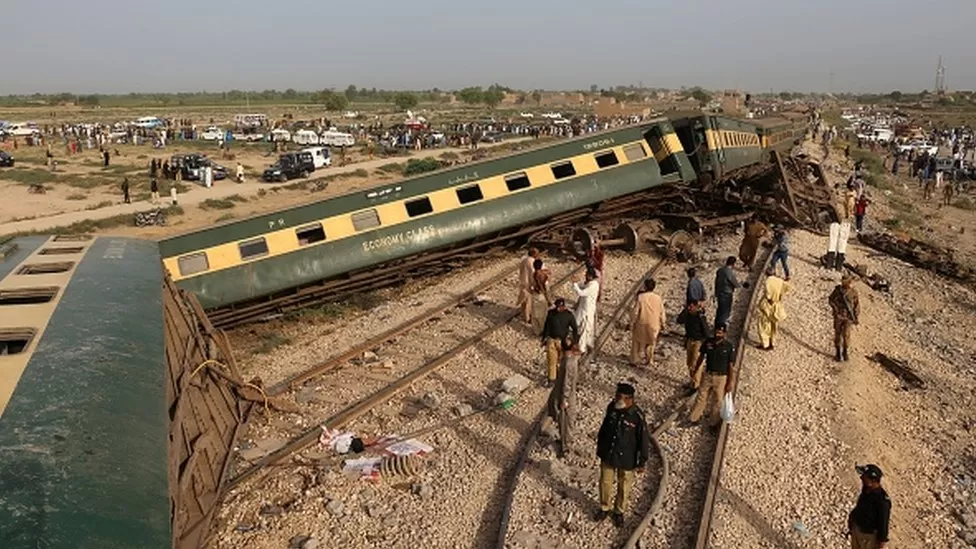
At least 30 people have been killed and 100 injured when a train derailed in southern Pakistan, a police spokesman has confirmed.

Several carriages of the Hazara Express overturned near Sahara railway station in Nawabshah, about 275km (171 miles) from the largest city Karachi.

Wounded passengers were moved to nearby hospitals. Rescue teams are trying to free people from the twisted wreckage.

Accidents on Pakistan’s antiquated railway system are not uncommon.

Videos posted on social media showed dozens of people at the site of the accident, with some passengers climbing out of the overturned carriages.

One passenger who survived told BBC Urdu he had seen many women and children lying on the ground.

“They were shouting and screaming. I didn’t know what to do. I filled my hands with water from this canal nearby and poured it on the faces of those who were unconscious, hoping they would regain consciousness,” Naseer Ahmed said.

Nasser said he survived the accident because he “fell out of the window when the train derailed”.

Aslam, who was on the train with his son, said: “We were sleeping when suddenly the carriage came down and [it felt like] an apocalypse.”

Railway Minister Saad Rafiq said initial investigations showed the train was travelling at normal speed and they were trying to establish what led to the derailment. It could be the result of a mechanical fault or sabotage, he added.

Authorities have dismissed reports the track was flooded.

A railways spokesperson in Karachi said at least eight carriages went off the track.

He said military and paramilitary troops along with rescue workers were on the scene and helped to rescue passengers trapped inside the train carriages.

The most seriously injured passengers were transported to distant, better-equipped hospitals in military helicopters.

Officials said rescue operations were completed in the early evening on Sunday.

Paramilitary rangers and volunteers inspect the carriages at the accident site following the derailment

An emergency has been declared in the main hospitals in Nawabshah and neighbouring districts of Sindh.

Train services to the interior districts of Sindh have been suspended.

Sindh Information Minister Sharjeel Memon told BBC News that the government’s top priority was “the rescue work, which we are totally focused on”.

In 2021, two trains travelling in Sindh province collided, killing at least 40 people and injuring dozens.

Between 2013 and 2019, 150 people died in such incidents, according to local media reports.

Please include a contact number if you are willing to speak to a BBC journalist. You can also get in touch in the following ways: