Hundreds of women protested in Turkey Saturday against a wave of murders of women, the latest rallies in response to a recent double slaying in Istanbul.
A crowd of hundreds in Istanbul chanted slogans denouncing Turkey’s President Recep Tayyip Erdogan and his Islamic-rooted AKP party, an AFP correspondent reported.
“You are a government that lets young girls get killed,” one of the rally’s organisers, Gunes Fadime Aksahin, told the crowd.
Gulizar Sezer, the mother of a young woman who was murdered, also addressed the rally. Her daughter’s body was found in June after being thrown into the sea wrapped in a carpet.
Other protests took place in the capital Ankara and Izmir, another major city, according to photos posted by a women’s rights federation.
There have been similar such protests every day for a week across the country, notably on university campuses.
A man arrested on suspicion of having killed two young women on the same night took his own life last week, sparking the protests.
The suspect and the two women were all aged 19, said Istanbul officials. The women had been killed within 30 minutes of each other, they added.
It was not known if they knew their attacker.
Erdogan, having initially blamed alcohol and social media, on Wednesday promised to toughen the justice system and crack down harder on crime.
Turkey has struggled to contain a wave of killings of women.
One monitoring group says there have been 299 murders of women this year in the country of 85 million people, with more than 160 “suspect” killings officially classed as suicides or accidents.
In 2021, Turkey withdrew from the Council of Europe convention on preventing violence against women, known as the Istanbul convention.
It obliges national authorities to investigate and punish violence against women.
In an interview with BBC’s Newscast to mark 100 days in office,he said so far his new job had been “much tougher than anything I’ve done before, but much better”.
Looking ahead to this month’s Budget he said the central focus would be on living standards, the health service and rebuilding Britain.
He highlighted how as PM he had been buffeted by “side winds” in rows about his ex-chief of staff, Sue Gray, and gifts from donors, and pointed to the government’s early achievements, like settling health service pay disputes.
Speaking to Chris Mason and Adam Fleming on Friday, the prime minister said “there is always going to be choppy days, choppy moments”.
He added: “I have been through this before [as leader of the Opposition]. You get these days and weeks when things are choppy, there is no getting around that. That is in the nature of government.”
“When I look at what it was I wanted to achieve in the first 100 days and ask myself, have we done what I wanted us to do, what I planned for us to do, the answer is yes.”
Claire Ainsley, chair of the Building Back Britain Commission and a former director of policy to Starmer, told BBC Radio 4’s Today programme that it was “daft to deny” the government had seen choppy moments.
But she argued that “some of the big judgement calls I think they have got right” – pointing to Starmer’s international diplomacy efforts and “honest” assessment of the state of the public finances.
Asked about the budget later this month, Starmer said that it would focus on things Labour had made “promises” on, including living standards and making people better off, getting the NHS “back on its feet,” including tackling waiting lists and “rebuilding Britain”.
He said he wanted a health service “fit for the future that we can look back proudly [on] in generations to come”.
Nick Hulme, who oversees the NHS in east Suffolk and north Essex, told the Today programme that the combination of meeting winter needs and processing the patient backlog was providing “a real sense of pressure to staff”.
While the NHS has had to cope with winter pressures in previous years, he said the waiting list for elective care was “a real challenge that perhaps we haven’t faced in the past”.
Matthew Taylor, chief executive of NHS Confederation, said the health service had not been able to invest additional funds in meeting winter needs – leaving it with “high levels of risk”.
He said he would welcome more government funding, but that he understood the pressures on government funding.
Her criticism of the firm stems from its decision in 2022 to sack 800 seafarers and replace them with cheaper workers. It insisted this was necessary for the ferry operator’s survival.
Crucially, Haigh also encouraged others to boycott the firm.
The company’s boss is now thought to no longer be attending an investment summit organised by the government next week – where DP World was expected to unveil the expansion.
The BBC understands discussions between the government and the company are ongoing to try to tempt them to turn up on Monday, with the investment hanging in the balance.
When asked if his transport secretary had been wrong to describe the company as cowboys and suggest a boycott, Starmer said: “Well, look, that’s not the view of the government.”
It is the first time since Labour came to power that the prime minister has publicly taken issue with remarks from one of his cabinet ministers.
Senior figures were incensed at the suggestion from a senior minister of a boycott – at just the point they are trying to claim they lead a “pro business” government.
Starmer added that he believed the investment summit was evidence of a growing confidence from companies in the UK’s economy.
Asked what might seal the deal for firms in choosing the UK, he said: “I think what will convince them is that we have listened to what they’ve told us about economic stability.”
He claimed they had been put off in recent years because of “a lack of confidence in the last government”.
“Prime ministers were changing frequently. Ministers were changing frequently. There was no clarity of strategy and those sticking to the strategy.”
Starmer also reflected on how his life has changed since he moved into No10.
“We’re living in a flat in Downing Street above the shop, and that’s not very normal. Everybody who wants to come and see you has to come through an armed guard. This is odd.”
He said the job meant he saw less of his family than he would like and that he “didn’t have kids to sort of visit them when they’re grown up and find out what they’re really like. I had kids because I want to be with them, enjoy their company.”
Starmer said, though, there had been one unforeseen benefit of living in Downing Street: “When our children come back from school about four-ish, they pop down to my office in Downing Street, and if I’m around, I can see them for 5 or 10 minutes.
“That would never have happened before because they would have gone back home in Kentish Town, I’d have been in Westminster or wherever.”
The Conservative Party said: “From defence to pensions, health to education, Labour have let the country down. The next 100 days are set to be even worse.”
LAHORE: The Punjab government has imposed Section 144 in Rawalpindi till October 17 to maintain the law and order situation during the upcoming Shanghai Cooperation Organisation (SCO) summit.
Exercising powers vested under Section 144, the provincial government prohibited all kinds of political assemblies, gatherings, sit-ins, rallies, demonstrations, pillion riding, aerial firing, pigeon flying, use of drones and use of laser lights from October 10 to 17 in the district.
This came as part of Pakistan’s efforts to ensure the smooth conduct of the high-level summit. Islamabad is set to host the SCO Council of Heads of Government meeting next week with major foreign leaders, including Indian External Affairs Minister S Jaishankar visiting the country.
The Punjab government said it took this decision on the district administration’s request to ensure security of people, installations, buildings and thwart any potential threat or untoward activity.
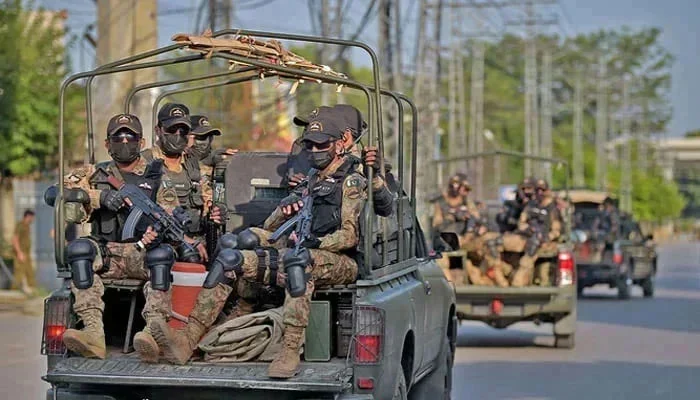
Meanwhile, the federal government has deployed Pakistan Army’s troops in Islamabad from October 5 to 17, under Article 245 of the Constitution, to ensure law and order situation in the federal capital during the SCO summit.
The meeting of the SCO — which comprises nine full members, including China, India, Iran and Russia — is scheduled to take place in Islamabad on October 15 and 16.
A day ago, officials also announced the closure of marriage halls, restaurants, and cafes for a period of five days — October 12 to 16 — in the twin cities of Rawalpindi and Islamabad.
Additionally, notices were issued to traders and hotel owners by the police, warning that any violations will result in penalties.
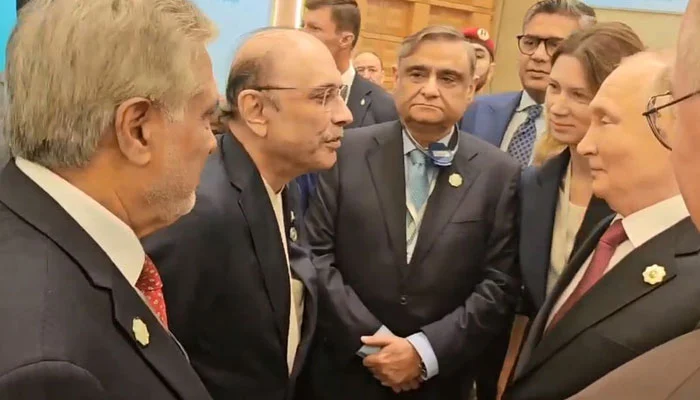
ASHGABAT: President Asif Ali Zardari and his Russian counterpart Vladimir Putin on Friday emphasised further strengthening of bilateral relationship between the two countries.
The development came during an informal meeting between the two leaders on the sidelines of two-day international forum on “Interrelation of Times and Civilisations- Basis for Peace and Development” here in the Turkmen capital.
The moot was held to commemorate the 300th birth anniversary of Magtymguly Faragi, a great Turkmen thinker, poet and philosopher.
Earlier, the president, who arrived here on Thursday for a two-day visit, also addressed the forum which was also attended by Iranian President Masoud Pezeshkian, Russian President Vladimir Putin, Kazakhstan President Kassym-Jomart Tokayev, Uzbekistan President Shavkat Mirziyoyev, Tajik President Emomali Rehmon, Kyrgyz President Sadyr Japarov and others.
In his address, the president stressed need to focus on promoting connectivity among regional countries and help strengthen cultures and economic cooperation.
He said Pakistan and Turkmenistan share a deep rooted bond of brotherhood which is built on a mutual respect, commonality of faith and a shared vision of a better peaceful future.
The president extended his heartfelt appreciation to the government and brotherly people of Turkmenistan for organising prestigious event aimed at promoting understanding, peace and dialogue among cultures.
President Zardari expressed his delight to share that our national poet, Allama Muhammad Iqbal and towering figure of Turkmen literature, Makhdum Gulli Fraghi share several commonalities in their poetry and thoughts on Sufism and nationalism.
He commend the president of Turkmenistan, Sardar Berdi Muhammedov, for organising this event to promote the works of Makhdum Gulli Fraghi as well as providing an opportunity to interact with the leadership of regional countries that would help strengthen our bonds of friendship.
The president also congratulated the Turkmen nation on the announcement of 2024 as the “Year of the great poet and thinker of the Turkic world- Makhdum Gulli”.
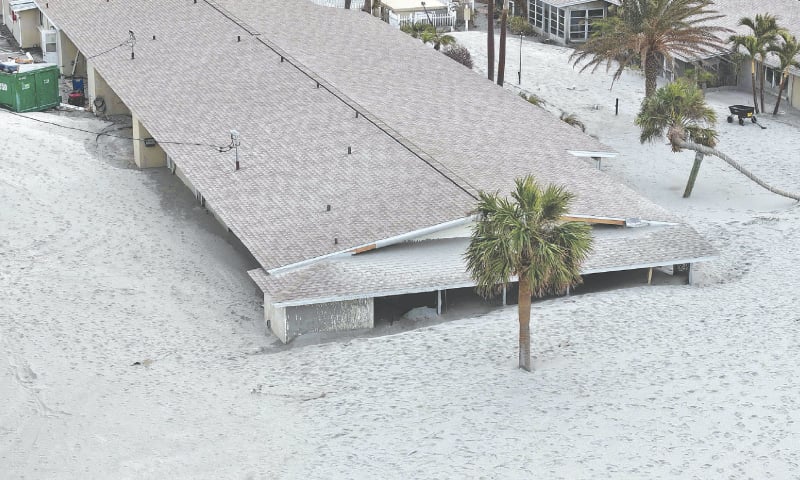
Nearly 2.5 million households and businesses were without power, and some areas in the path cut through the state by the monster storm from the Gulf of Mexico to the Atlantic Ocean remained flooded.
Milton crashed into the Gulf coast late on Wednesday as a category 3 storm, smashing communities still reeling from Hurricane Helene two weeks ago, which killed 237 people across the US southeast, including in Florida.
On Siesta Key, a beautiful barrier island near Sarasota where the storm made landfall, Milton left a desolate landscape.
Some streets were still flooded on Friday. Fallen trees and debris — sofas, beds, chairs and appliances, much of it left behind by Helene — were strewn haphazardly on roadsides.
Resident Mark Horner, who moved there six years ago, said while his house was largely spared, the island “got hit really hard” and people were reassessing the future.
But the 67-year-old sounded a note of optimism: “Our paradise will come back. It’s just a little shocking to absorb it.”
Tornadoes, not floodwaters, were behind many of the storm’s deaths.
In Fort Pierce, on Florida’s Atlantic coast, four people died in a tornado spawned by Milton.
“They did find some people just outside dead, in a tree,” 70-year-old resident Susan Stepp said. “I wish they would have evacuated.”
The storm downed power lines, shredded the roof of the Tampa baseball stadium and inundated homes, but Florida avoided the catastrophic devastation that officials had feared.
“The storm was significant, but thankfully this was not the worst-case scenario,” Governor Ron DeSantis told reporters.
The weather service issued a record 126 tornado warnings across the state on Wednesday.
“It is not easy to think you have everything and suddenly you have nothing,” said Lidier Rodriguez, whose Tampa Bay apartment was flooded.
The coast guard reported the spectacular rescue of a boat captain who rode out the storm clinging to a cooler in the Gulf of Mexico.
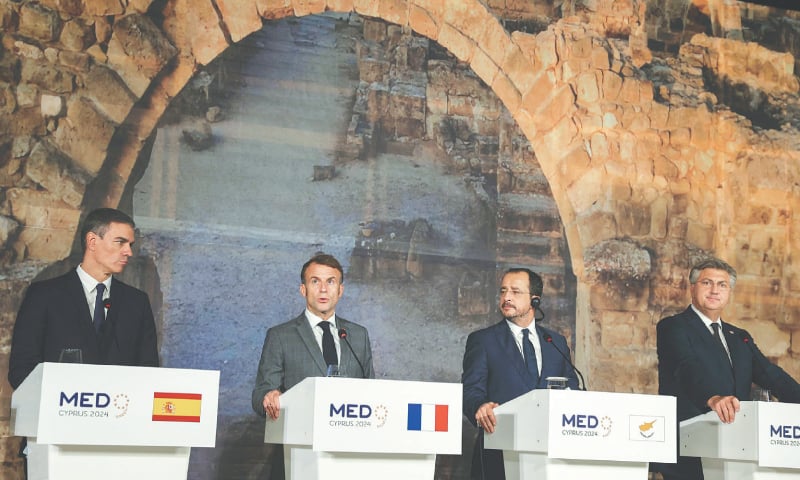
“I do believe that it is urgent that, in light of everything that is happening in the Middle East, the international community stops exporting weapons to the government of Israel,” he told reporters.
“This is an appeal that I will make…to the entire international community,” he said, adding that it was important “not to contribute in one way or another to the escalation of violence and to the war and its expansion in Gaza, the West Bank or, in this case, to Lebanon.”
His comments reflect those of the French president, who said countries should stop delivering weapons to fight in Gaza — prompting outrage from Israel’s Prime Minister Benjamin Netanyahu.
Sanchez is one of the most outspoken critics among European Union leaders of Israel’s attacks in Gaza. He described Israel’s military offensives in Lebanon on Wednesday as an “invasion”, saying that the international community had to act.
Meanwhile, Ireland’s foreign minister Micheal Martin on Friday condemned an attack by Israeli forces in southern Lebanon that left two United Nations peacekeepers wounded.
On Thursday, the UN peacekeeping mission in Lebanon, UNIFIL, said Israeli fire on their headquarters in the country’s south injured two Blue Helmets.
Prime minister Simon Harris said he was “deeply concerned” at the reports but Martin, who is also deputy prime minister, went further, calling it “an extraordinary development, quite shocking”.
“This marks a very serious intensification of IDF hostility towards UN forces and UN posts. Absolutely unacceptable. What happened over the last 48 hours prior to this was reckless and intimidatory,” he said.
Ireland accounts for 347 of the 10,000 soldiers serving in the UNIFIL forces, which are charged with maintaining peace in the south of Lebanon.
Speaking to reporters in southwest Ireland Martin called on the international community to “really put down a marker to Israel that this is unacceptable behaviour”.
“The international community now need to collectively engage with Israel and put pressure on Israel to desist from this activity, to stop it, and to ensure that UN peacekeepers are not put in harm’s way,” he said.
Last weekend, Unifil said it was concerned that Israeli troops were near an outpost manned by Irish troops.
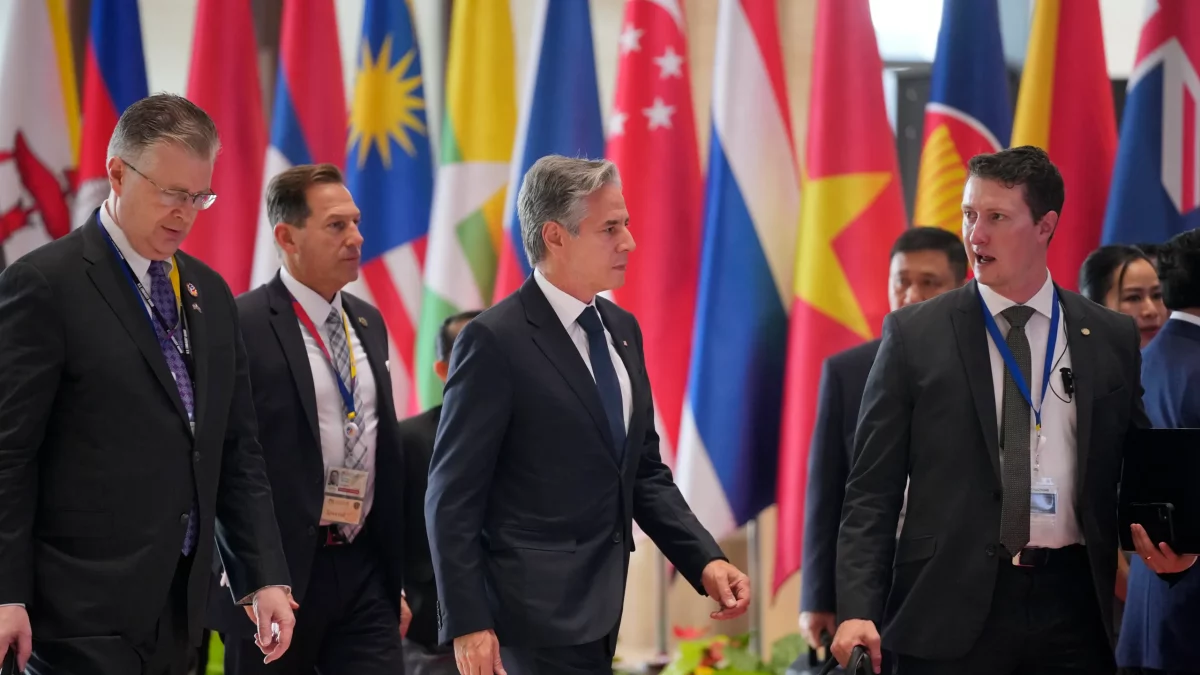
World leaders descended on the normally tranquil, temple-lined streets of the Laotian capital Vientiane, which marked a rare occasion bringing together the top US and Russian diplomats.
US Secretary of State Antony Blinken, meeting Asean leaders before the full summit, reiterated calls for freedom of navigation in the South China Sea.
“We remain concerned about China’s increasingly dangerous and unlawful actions on the South and East China Seas, which have injured people, harmed vessels from Asean nations and contradict commitments to peaceful resolution of disputes,” Blinken said.
Blinken also warned China over Taiwan, where the new leader delivered an annual speech last week in which he vowed that the self-governing democracy would resist annexation.
“China should not use it in any fashion as a pretext for provocative actions,” Blinken told reporters.
US-Russia hostility
Despite disagreements, tensions over the past year have markedly eased between China and the United States, with President Joe Biden supporting dialogue to reduce the potential for conflict.
Biden and his political heir Vice President Kamala Harris, who both skipped the summit ahead of elections, have taken a different approach to Russia, believing Moscow’s diplomatic overtures are insincere.
Blinken, Lavrov spaced apart
Blinken and Russian Foreign Minister Sergei Lavrov were spaced apart by the leaders of South Korea and India at the summit. Blinken said he did not speak to Lavrov but that neither walked out when the other addressed the summit.
“I think it’s safe to say that we heard each other. I didn’t hear anything new, unfortunately, about the ongoing Russian aggression against Ukraine,” Blinken said.
Lavrov told reporters that the United States was “destructive” in Asia.
He also attacked the “militarisation” of Japan, where security-minded new Prime Minister Shigeru Ishiba has in the past called for a Nato-style Asian pact with an unstated goal of deterring China.
“The Japanese are obviously being pushed to such a course by the United States,” Lavrov charged.
Japan’s foreign ministry said that Ishiba, on his first foreign trip since taking over, reiterated “serious concerns” about the “intensification of Chinese military activities in areas surrounding Japan” in a meeting with Premier Li Qiang.
Li made a veiled swipe at Ishiba during an Asean-related meeting on Thursday, warning of the danger of “attempts to introduce bloc confrontation and geopolitical conflicts into Asia”.
In an interview at the summit, EU chief Charles Michel called for disputes to be resolved “through peaceful means” in the South China Sea.
The wide differences between the big players on international issues _ especially the Middle East crisis _ meant it was not possible for the leaders to agree a joint summit statement, an Asian diplomat said.
Push for Myanmar diplomacy
The summit saw participation for the first time in more than three years by military-run Myanmar, which has brushed aside a 2021 Asean plan after its coup that calls for dialogue and an immediate end to violence.
Asean leaders in a statement voiced “deep concern” over Myanmar’s path and stood by the plan, known as the Five-Point Consensus.
The United States, while supporting Asean diplomacy, has urged no let-up in pressure against the junta until it shows signs of progress.
Indian Prime Minister Narendra Modi, who has engaged the junta in the neighbouring country, voiced support for the restoration of democracy but said: “We believe that Myanmar should be engaged rather than isolated in this process.”
Modi has annoyed Washington by refusing to back Western sanctions on Russia.
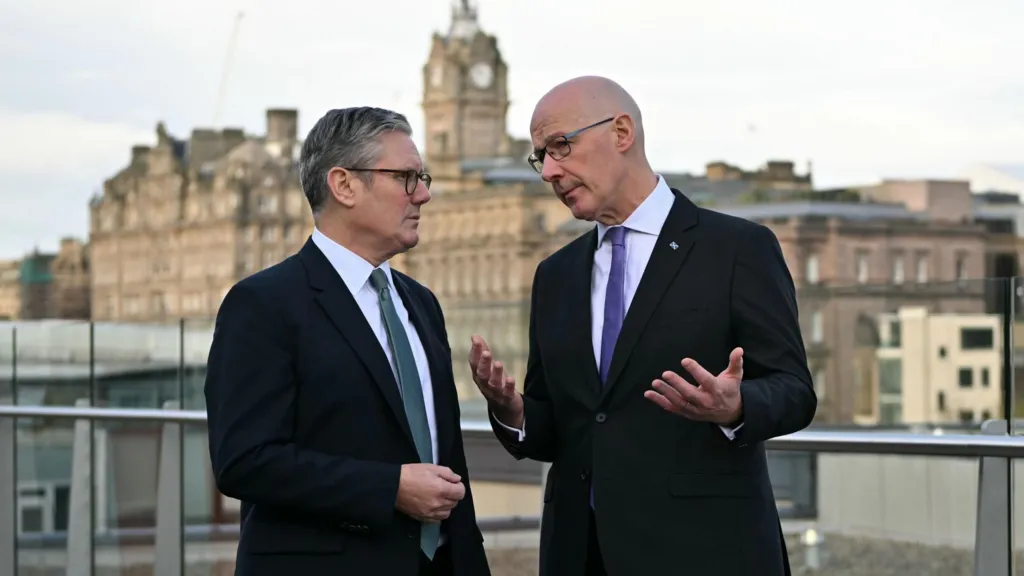
It brought the prime minister together with the leaders of the devolved governments of Scotland, Wales and Northern Ireland, as well as England’s mayors.
Power sharing between the different governments of the UK was bound to cause a degree of tension.
Anyone who thought that would always be a creative and constructive force was probably idealistic, if not naive.
There have been some spectacular rows between the devolved administrations and UK departments over the years.
Fights about funding are probably the most common and sometimes ministers in Edinburgh, Cardiff and Belfast have teamed up to make joint representations to the Treasury in London.
At other times, the struggles have been about where power lies and whether or not that should change.
Relations between the Scottish and UK governments have been particularly fraught at times – not least during the protracted debates over Brexit and the possibility of a second independence referendum.
The new Labour government under Starmer promised a reset to which the SNP first minister, John Swinney said he would also commit.
The early signs have been positive.
Yes, there’s been disagreement over the UK decision to stop funding a universal winter fuel payment for the elderly.
But there has also been serious discussion about how the governments can work together to secure a future for the huge Grangemouth industrial site.
Only this week, the Scottish finance secretary Shona Robison, reported to a Holyrood committee meaningful change in her pre-budget discussions with Treasury ministers.
The first meeting of the Council of the Nations and Regions is a further effort to improve the workings of government.
Speaking as it opened on Friday morning, the prime minister said the council was a “statement of intent on my behalf, and on behalf of the government, about the way in which we want to work with all of you.
“I think that is as important as the substance of what we discuss, is how we collaborate, how we work together.
“Because the UK is really strong, we’ve got so much to offer, particularly when it comes to growth and investment, but we are a bit complicated.”
Despite her move to become the “envoy to the nations and regions”, former Downing Street chief of staff Sue Gray will not appear at the meeting.
Ms Gray took on the role of Sir Keir’s aide when Labour swept to power in July, but she has since been replaced by Morgan McSweeney, who led the party’s election campaign.
Former civil servant Ms Gray, who boasts decade of experience behind the scenes, cited “intense commentary about my position” that risked becoming a “distraction” when she stood down.
Some SNP politicians have complained that Scottish cities like Edinburgh, Glasgow and Aberdeen do not have their own seats at the table.
Labour sources say that’s because the SNP has not devolved powers beyond Holyrood to create regional leadership within Scotland.
The new Council is not quite the “powerful, legally-mandated” body that Gordon Brown envisaged in his commission on the UK’s future.
It’s not clear what decision-making power it will actually have.
However, Downing Street seems determined to avoid giving the impression that this new body will simply be a talking shop.
The inaugural meeting is discussing major investments in renewable energy technology across the UK ahead of a further investment conference on Monday.
These get togethers are expected to be held twice a year.
Ahead of the first full gathering, devolved leaders met the PM individually and as a group – the so-called “quad”.
Scotland’s first minister, John Swinney, said he had pushed Starmer for more public investment when the UK government unveils its budget at the end of the month.
Swinney said it had been a “helpful conversation with the prime minister about the important issues that affect Scotland.”
He added: “This has been a welcome opportunity to raise significant issues that affect the prospects of Scotland, and central to that is the outcome of the budget, where we need to see investment in our public services and in our infrastructure to stimulate the growth that all of us want to see delivered within the economy.”
The first minister also pushed Starmer on a carbon capture, utilisation and storage (CCUS) facility in Aberdeenshire, which has been overlooked by the UK government for funding.
If relations between the Holyrood and Westminster governments are better now than they were before the UK general election, it’s worth pointing out that the baseline was an all time low.
As Scottish Secretary, Conservative MP Alister Jack was quite happy to be seen as a muscular unionist, checking the nationalism of the SNP.
He used the UK internal market act, brought in following Brexit, to block the introduction of a Scottish bottle deposit scheme.
UK ministers also used their reserved powers to stop gender recognition reforms in Scotland and were backed up by the courts.
SNP ministers saw this as outrageous interference in the exercise of devolved power.
From Mr Jack’s perspective he was confronting outrageous overreach by the devolved administration.
In a separate dispute, UK lawyers argued successfully in court that Holyrood could not hold another independence referendum without their approval.
These clashes poisoned relations between the Scottish and UK governments. They could not have gotten much worse.
Not that there was never any cooperation between Conservative governments at Westminster and the SNP at Holyrood.
They managed to agree to work together on freeports and struck a deal to expand Holyrood’s tax and welfare powers after the 2014 independence referendum.
Relations between governments were probably best when the parties of power in Edinburgh and London were the same.
For the first eight years of devolution that was Labour.
As first minister, Jack McConnell was able to secure a role for Holyrood in overseas aid which is a UK responsibility.
Getty Images
Former First Minister Jack McConnell and then PM Tony Blair worked together at the start of devolution
There was also a “fresh talent” deal to allow overseas students graduating in Scotland visa extensions.
But even in those years there were disputes.
When UK authorities carried out “dawn raids” to remove “failed asylum seekers” including children that had become settled in Scotland, the devolved government objected.
They argued that while immigration, asylum and border controls were UK responsibilities, this particular policy clashed with devolved powers to protect the welfare of children.
There was an understanding for a time, then a change of UK ministers reasserted Westminster control.
The switch in Holyrood power from Labour to the SNP in 2007 soon signalled that the level of friction could become a lot greater.
AFP
The extradition of Lockerbie bomber, Abdelbaset al-Megrahi, angered the Scottish government
The SNP first minister, Alex Salmond, was outraged when Labour prime minister, Tony Blair struck a prisoner transfer deal in the Libyan desert with Colonel Gaddafi.
This was at a time when the only Libyan prisoner in Scotland was the Lockerbie bomber, Abdelbaset al-Megrahi and Scottish ministers had not been consulted.
As it turned out, the Salmond administration refused to allow transfer under this agreement but instead released al-Megrahi on compassionate grounds because he had cancer.
These disputes are now part of Holyrood history but they underline that there has been and probably always will be tension in intergovernmental relations.
Starmer and Swinney seem committed to a more constructive relationship.
Maintaining that all the way to the next Holyrood elections in 2026 would be a much bigger ask of one another.
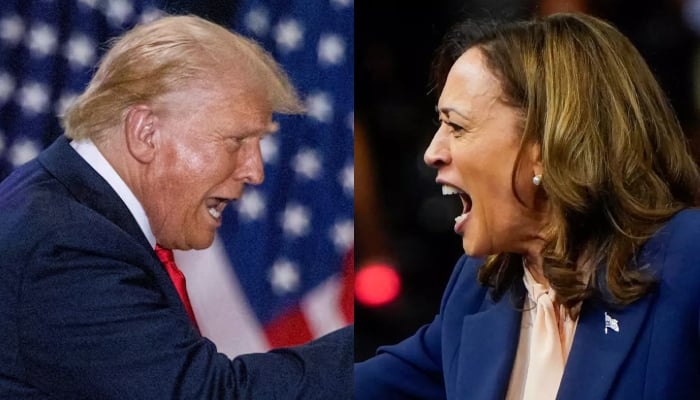
The contrasting poll results with just one month gap indicate a neck-and-neck fight between vice president and former president.
With less than a month remaining in elections the latest polls demonstrate slim progress in favour of the Republicans, exhibiting a tight race between the political contenders.
The comparative surveys conducted by Quinnipiac University indicate that Kamala Harris has an edge over Donald Trump by 49% to 46% in Pennsylvania. Whereas the Republicans take the lead with 50% to 47% in Michigan and 48% to 46% in Wisconsin from the Democrats.
Harris’ 3-point lead in Pennsylvania shrunk from a 6-point edge as compared to the results from last month’s polls. Similarly in Michigan Trump appears to be 3 points ahead of Harris unlike last month’s polls where she was leading by 5 points.
The decisive states including Pennsylvania, Michigan, Wisconsin, Georgia, North Carolina, Arizona and Nevada secured Biden’s presidency in 2020 Elections by a marginal lead, highlighting the detrimental importance of these states in upcoming elections as well.
Located along the economically intensified Rust belt region, Pennsylvania, Michigan and Wisconsin are critical power states targeted by both red and blue adversaries. On the parallel these three states are expected to offer a close contest in Senate elections too, which can entirely overturn the game.
Both the candidates have recently executed their presidential campaigns in Michigan and Wisconsin and are set to further carry out their political operations across states.
Security forces have neutralised four terrorists in two separate intelligence-based operations in Khyber Pakhtunkhwa (KP) districts on October 9 and 10, the Inter-Services Public Relations (ISPR) said on Thursday.
Two terrorists were killed after an intense exchange of fire during an IBO in Janikhel area of Bannu District on October 9, the statement read.
In another operation, security personnel effectively engaged terrorists’ location in Hassan Khel area of North Waziristan district on October 10. After an intense gunfight, two more terrorists were killed in the operation.
Weapons and ammunition were also recovered from killed terrorists, who remained actively involved in numerous terrorist activities against the security forces as well as abductions and target killing of innocent civilians, said the military’s media wing.
Sanitisation of the area is being carried out to eliminate any other terrorists found in the area as security forces are determined to wipe out the menace of terrorism from the country, it concluded.
Pakistan has experienced a spike in terrorism since the Taliban returned to power in Afghanistan in 2021. Most terror incidents are reported in provinces bordering the neighbouring country — Khyber Pakhtunkhwa and Balochistan.
Besides a spike in terrorist activities within the borders, Pakistan has also witnessed a significant surge in cross-border attacks from the neighbouring country targetting security forces in recent months.
Islamabad accuses Kabul’s new rulers of failing to root out militants sheltering on Afghan soil as they prepare to stage assaults on Pakistan.
Against this backdrop, the federal cabinet in June this year approved Operation Azm-e-Istehkam, a reinvigorated national counter-terrorism campaign following the Central Apex Committee’s recommendations under the National Action Plan to root out terrorism.