Prime Minister Shehbaz Sharif Monday announced a day of mourning to honour the death of Iranian President Ebrahim Raisi and Foreign Minister Hossein Amir Abdollahian and other senior officials in a helicopter crash.
“Pakistan will observe a day of mourning and the flag will fly at half mast as a mark of respect for President Raisi and his companions and in solidarity with Brotherly Iran,” PM Shehbaz said in a statement on X, formerly Twitter.
“I along with the government and people of Pakistan extend our deepest condolences and sympathies to the Iranian nation on this terrible loss,” the premier said while praying for the martyred souls.
“The great Iranian nation will overcome this tragedy with customary courage,” the prime minister noted.
Shehbaz’s remarks come as Iran’s Vice President Mohsen Mansouri Monday confirmed Raisi’s death in a statement on social media and on state television.
President Raisi, Foreign MinisterAmirabdollahian and other high officials were returning to Iran after attending an inauguration ceremony of a dam on Iran’s border with the Republic of Azerbaijan when the chopper crashed while flying through a mountainous terrain amid heavy fog in the Varzaqan region of the country’s East Azerbaijan province on Sunday afternoon.
According to the Islamic Republic News Agency (IRNA), East Azarbaijan Province’s Governor Malek Rahmati, and Mehdi Mousavi, the head of Raisi’s guard team were on board the crashed aircraft as well.
A large-scale search and rescue operation in the fog-shrouded mountain area of East Azerbaijan province was launched and the search teams located the wreckage on Monday morning.
Meanwhile, President Asif Ali Zardari has also expressed “profound shock and sorrow” over the tragic accident.
“Pakistan mourns the loss of a great friend […] may Allah Almighty bless his soul and grant patience and strength to his family and the people of Iran in this time of irreparable loss,” read a statement issued by the President House.
The statement also said that the Iranian president “will be dearly missed and fondly remembered in Iran, Pakistan, and the Islamic World for his efforts to enhance relations with regional and Islamic countries.”
Stressing that the deceased Iranian head of state “had a special place for Pakistan and its people,” Zardari recalled his commitment to strengthen bilateral relations between the neighbouring countries.
“President Raisi will be dearly missed and fondly remembered in Iran, Pakistan, and the Islamic World ” the statement added while highlighting his the Iranian head of state’s support for Muslims especially the the Palestinian and Kashmiri people.
Pakistan Peoples Party (PPP) Chairman Bilawal Bhutto-Zardari also expressed sorrow and conveyed condolences over the fatal crash.
“I express my heartfelt condolences to the government and citizens of the Islamic Republic of Iran […] every Pakistani is saddened by this tragic incident and shares the grief of his Iranian brothers and sisters equally,” Bilawal said in a statement.
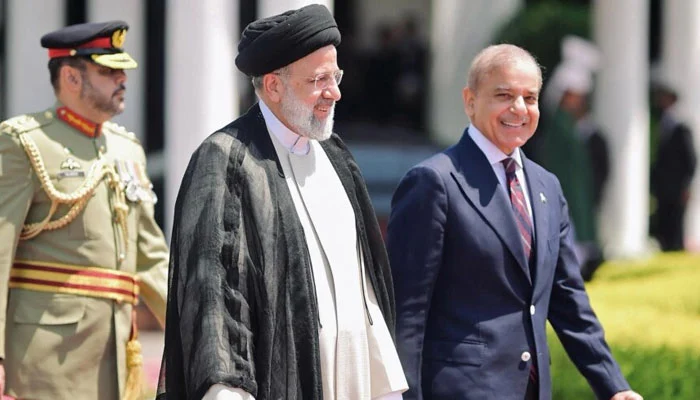
It is pertinent to know that Islamabad and Iran had held productive discussions and agreed to advance bilateral cooperation in multiple domains including in trade, connectivity, energy and people-to-people contacts during President Raisi’s three-day visit to Pakistan in April.
During his three-day visit to the country, the Iranian president held meetings with President Asif Ali Zardari, Prime Minister Shehbaz Sharif, Chief of Army Staff (COAS) General Asim Munir, Senate Chairman Yusuf Raza Gilani, Speaker of National Assembly Sardar Ayaz Sadiq, and the chief ministers and governors of Sindh and Punjab.
The head of state visited Islamabad, Lahore and Karachi accompanied by his spouse and a high-level delegation, comprising the foreign minister and other members of the cabinet, senior officials and a large business delegation.
Iranian state media Monday confirmed that President Ebrahim Raisi died in a helicopter crash, triggering a series of constitutional steps needed to be taken to fill the presidential slot.
According to Iranian law if a president dies in office, article 131 says that the first vice president – who is Mohammad Mokhber – takes over, with the confirmation of the supreme leader, who has the final say in all matters of state in Iran.
Additionally, a council consisting of the first vice president, the speaker of parliament and the head of the judiciary must arrange an election for a new president within a maximum period of 50 days.
Here are some key facts about Mohammad Mokhber, 68, Iran’s first vice president who became interim president on the death of Ebrahim Raisi in a helicopter crash.
— As interim president, Mokhber is part of a three-person council, along with the speaker of parliament and the head of the judiciary, that will organise a new presidential election within 50 days of the president’s death.
— Born on Sept. 1, 1955, Mokhber, like Raisi, is seen as close to Supreme Leader Ali Khamenei, who has the last say in all matters of state. Mokhber became first vice president in 2021 when Raisi was elected president.
— Mokhber was part of a team of Iranian officials who visited Moscow in October and agreed to supply surface-to-surface missiles and more drones to Russia’s military, sources told Reuters at the time. The team also included two senior officials from Iran’s Revolutionary Guards and an official from the Supreme National Security Council.
— Mokhber had previously been head of Setad, an investment fund linked to the supreme leader.
— In 2010, the European Union included Mokhber on a list of individuals and entities it was sanctioning for alleged involvement in “nuclear or ballistic missile activities”. Two years later, it removed him from the list.
— In 2013, the US Treasury Department added Setad and 37 companies it oversaw to a list of sanctioned entities.
— Setad, whose full name is Setad Ejraiye Farmane Hazrate Emam, or the Headquarters for Executing the Order of the Imam, was set up under an order issued by the founder of the Islamic Republic, Khamenei’s predecessor, Ayatollah Ruhollah Khomeini. It ordered aides to sell and manage properties supposedly abandoned in the chaotic years after the 1979 Islamic Revolution and channel the bulk of the proceeds to charity.
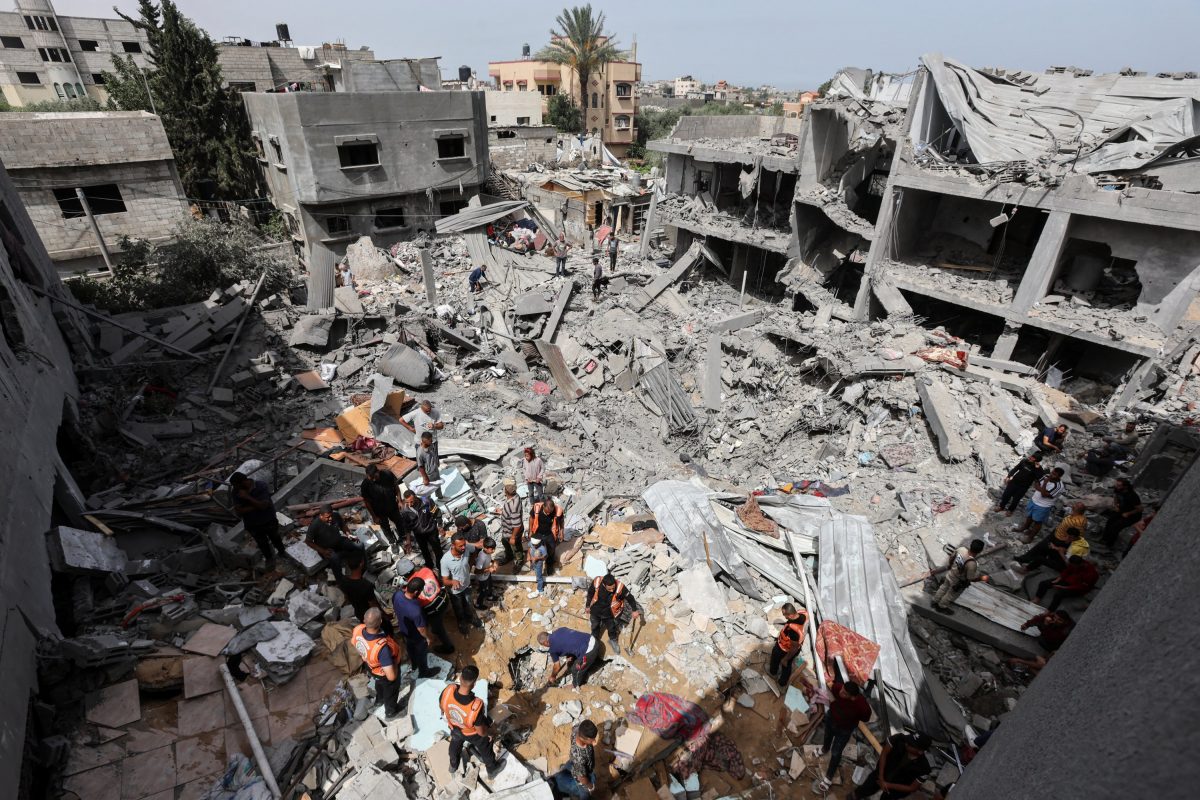
RAFAH: An Israeli strike killed 31 more Palestinians and wounded 20 others in a home in the central Nuseirat refugee camp in Gaza on Sunday, the Palestinian civil defence agency said, as US National Security Adviser Jake Sullivan visited Israel for talks on the conflict.
Witness Yasser Abu Oula said an entire residential complex “was destroyed” and “there are still bodies under the rubble”. Israel has bombed northern and central areas of the coastal territory, sparking US warnings that it could become mired in a lengthy counterinsurgency campaign.
Also, Israeli troops have moved in on the Gaza Strip’s far-southern city of Rafah, where the US says 800,000 civilians have been recently displaced.
Israel’s Prime Minister Benjamin Netanyahu who has vowed to keep fighting Hamas has faced intense opposition and calls to announce a plan for Gaza’s post-war governance — from top ally Washington and from mass street protests, and now also from members of his war cabinet. Centrist politician Benny Gantz threatened him to quit the hard-right coalition unless Netanyahu approves a post-war “action plan” by June 8.
UN aid chief warns of ‘apocalyptic’ consequences of Gaza shortages
Since the escalation in Israeli strikes on Gaza, at least 35,456 Palestinians have been killed in Gaza.
‘Nothing but suffering’
Israel has imposed a siege on the long-blockaded Gaza Strip, depriving its 2.4 million people of normal access to food, water, medicines and fuel, the suffering eased only by sporadic aid shipments.
“We are living through a humanitarian catastrophe in every sense of the word,” said Rafah resident Rinad Joudeh, 41, decrying “destruction, fear and terror” nearly two weeks into the Israeli incursion into the city.
The head of the UN agency helping Palestinians said that “despite all the calls by the international community not to launch an offensive in Rafah, in reality an offensive started on May 6”.
Since then, “we have again about half of the population of Gaza being on the road forced to flee” for safety once more, though “we keep saying there is absolutely nowhere to go,” UNRWA chief Philippe Lazzarini told reporters in Amman.
UN aid chief warning
Warning of famine in the besieged territory, UN’s humanitarian chief Martin Griffiths said on Sunday the stranglehold on aid reaching Gaza threatens an “apocalyptic” outcome.
“If fuel runs out, aid doesn’t get to the people where they need it, that famine, which we have talked about for so long, and which is looming, will not be looming anymore. It will be present,” said Griffiths.
“And I think our worry, as citizens of the international community, is that the consequence is going to be really, really hard. Hard, difficult, and apocalyptic,” the UN’s under-secretary-general for humanitarian affairs and emergency relief coordinator said.
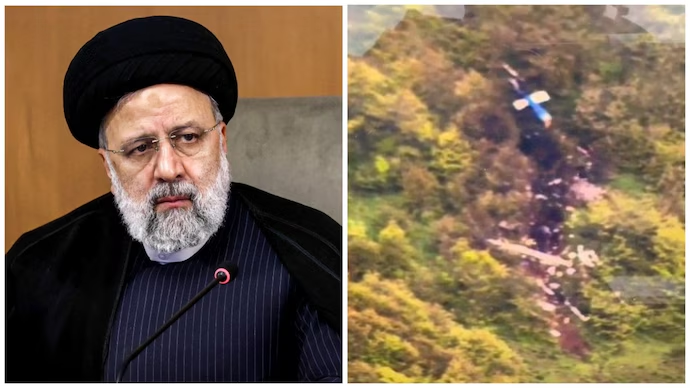
The charred wreckage of the helicopter which crashed on Sunday carrying Raisi and Foreign Minister Hossein Amirabdollahian was found early on Monday after an overnight search in blizzard conditions.
“President Raisi, the foreign minister and all the passengers in the helicopter were killed in the crash,” a senior Iranian official told Reuters, asking not to be named because of the sensitivity of the matter.
Raisi’s death was later confirmed in a statement on social media by Vice President Mohsen Mansouri and on state television.
An Iranian official earlier told Reuters the helicopter carrying Raisi and Foreign Minister Hossein Amirabdollahian was completely burned in the crash on Sunday.
Raisi had been at the Azerbaijani border on Sunday to inaugurate the Qiz-Qalasi Dam, a joint project. Azerbaijan’s President Ilham Aliyev, who said he had bid a “friendly farewell” to Raisi earlier in the day, also offered assistance in the rescue.
Rescue teams fought blizzards and difficult terrain through the night to reach the wreckage in East Azerbaijan province in the early hours of Monday.
A total of nine people were on board the aircraft, according to Tasnim news agency. Raisi’s convoy had included three helicopters, and the other two had “reached their destination safely”, said the news agency.
State TV reported that images from the site showed the aircraft slammed into a mountain peak, although there was no official word on the cause of the crash.
Iran’s Red Crescent chief Pirhossein Koolivand said rescue teams headed towards the site of the crash after locating the aircraft.
“The helicopter has been found. Now, we are moving toward the helicopter,” said Koolivand. “We are seeing the helicopter. The situation is not good.”
“Upon finding the helicopter, there was no sign of the helicopter passengers being alive as of yet,” state TV reported about 15 hours after the aircraft went missing.
Iranian media including Fars news agency shared drone images of what appeared to be the wreckage of the helicopter.
State TV first reported Sunday afternoon that “an accident happened to the helicopter carrying the president” in the Jolfa region of East Azerbaijan province. Interior Minister Ahmad Vahidi said the helicopter “made a hard landing” in bad weather.
Raisi, 63, was elected president in 2021, and since taking office has ordered a tightening of morality laws, overseen a bloody crackdown on anti-government protests and pushed hard in nuclear talks with world powers.
Iranian Supreme Leader Ayatollah Ali Khamenei, who holds ultimate power with a final say on foreign policy and Iran’s nuclear programme, sought to reassure Iranians, saying there would be no disruption to state affairs.
The Iranian government will continue to operate “without the slightest disruption” following Raisi’s death, said a cabinet statement on Monday.
“We assure the loyal nation that the path of service will continue with the tireless spirit of Ayatollah Raisi,” said the statement, stressing that the government’s work will continue “without the slightest disruption”.
President Asif Ali Zardari “expressed profound shock and sorrow over the tragic death” of his Iranian counterpart.
In a statement issued by the president’s office, Zardari “emphasised that the Islamic World has lost a remarkable leader who always supported [the] Muslim cause and deeply felt the sufferings of the Muslims globally, particularly the Palestinian and Kashmiri people”.
“Today, Pakistan mourns the loss of a great friend. Just last month, we had the honour of hosting him in Pakistan. During our discussions, I found him very keen on strengthening our bilateral relations,” President Zardari said, recalling Raisi’s visit to Pakistan last month.
Highlighting that the Iranian president “always had a special place for Pakistan and its people”, Zardari said Raisi will be “dearly missed and fondly remembered in Iran, Pakistan, and the Islamic World for his efforts to enhance relations with regional and Islamic countries”.
Prime Minister Shehbaz Sharif, extending his deepest condolences and sympathies to the Iranian nation, said Pakistan would observe a day of mourning and the flag would fly at half-mast.
“Had been anxiously following developments regarding the reported crash landing of President Raisi’s helicopter. Was hoping for good news. Alas, this was not to be,” the premier said in a post on X.
“The great Iranian nation will overcome this tragedy with customary courage,” he added.
In another post, PM Shehbaz recalled Raisi’s “historic visit” to the country: “They were good friends of Pakistan.”
Interior Minister Mohsin Naqvi also expressed his condolences, adding that his recent meeting with the Iranian president was a memorable one.
Indian Prime Minister Narendra Modi said he was “deeply saddened and shocked by the tragic demise” of Raisi.
“His contribution to strengthening India-Iran bilateral relationship will always be remembered. My heartfelt condolences to his family and the people of Iran. India stands with Iran in this time of sorrow,” he said in a post on
Rescuers participate in what the Iranian Red Crescent Society says is a search and rescue operation following the crash of a helicopter carrying Iranian President Ebrahim Raisi, at an unidentified location in this still image taken from video released on May 20. — Iranian Red Crescent Society via Reuters
Expressions of concern and offers of help came from abroad, including Iraq, Kuwait, Qatar, Saudi Arabia, Syria, Russia, China and Turkiye, as well as from the European Union which activated its rapid response mapping service to aid in the search effort.
Iran’s cabinet held an emergency meeting led by Vice President Mohammad Mokhber after the incident, the IRNA news agency reported.
Army, Revolutionary Guard and police officers were involved in the search, authorities said, as TV stations showed pictures of Red Crescent teams walking up a hill in the mist, while rows of emergency response vehicles waited.
A Turkish drone identified a source of heat suspected to be the helicopter’s wreckage and had shared the coordinates of the possible crash site with Iranian authorities, Anadolu news agency said earlier on X.
Earlier, the national broadcaster had stopped all regular programming to show prayers being held for Raisi across the country.
In the early hours of Monday, it showed a rescue team, wearing bright jackets and head torches, huddled around a GPS device as they searched a pitch-black mountainside on foot in a blizzard.
We are thoroughly searching every inch of the general area of the crash,“ state media quoted a regional army commander as saying. “The area has very cold, rainy, and foggy weather conditions. The rain is gradually turning into snow.”
A US State Department spokesman said: “We are closely following reports of a possible hard landing of a helicopter in Iran carrying the Iranian president and foreign minister”, adding that “we have no further comment at this time”.
US President Joe Biden has been briefed on the crash, an American official said on condition of anonymity.
China said it was deeply concerned. The European Union offered emergency satellite mapping technology.
The crash comes at a time of growing dissent within Iran over an array of political, social and economic crises. Iran’s clerical rulers face international pressure over Tehran’s disputed nuclear programme and its deepening military ties with Russia during the war in Ukraine.
Since Iran’s ally Hamas attacked Israel on Oct 7, provoking Israel’s assault on Gaza, conflagrations involving Iran-aligned groups have erupted throughout the Middle East.
In Iran’s dual political system, split between the clerical establishment and the government, it is Raisi’s 85-year-old mentor Khamenei, supreme leader since 1989, who holds decision-making power on all major policies.
For years many have seen Raisi as a strong contender to succeed Khamenei, who has endorsed Raisi’s main policies. Raisi’s victory in a closely managed election in 2021 brought all branches of power under the control of hardliners, after eight years when the presidency had been held by pragmatist Hassan Rouhani and a nuclear deal negotiated with powers including Washington.
However, Raisi’s standing may have been dented by widespread protests against clerical rule and a failure to turn around Iran’s economy, hamstrung by Western sanctions.
More than 30,000 people were infected with HIV and hepatitis C from 1970 to 1991 by contaminated blood products and transfusions.
About 3,000 of them have since died – many haemophiliacs given infected blood products as part of their treatment.
Prime Minister Rishi Sunak will reportedly issue an apology on Monday.
Chairman Sir Brian Langstaff will deliver his findings after the Infected Blood Inquiry took evidence between 2019 and 2023.
Two main groups of people were caught up in the scandal.
One was people with haemophilia, and those with similar disorders, who have a rare genetic condition which means their blood does not clot properly.
In the 1970s, a new treatment was developed to replace the missing clotting agents, made from donated human blood plasma.
But whole batches of the treatments – Factor VIII and Factor IX – were contaminated with deadly viruses.
Some of the treatments were imported from the US where blood was bought from high-risk donors such as prison inmates and drug-users.
The second group affected include people who had a blood transfusion after childbirth, accidents and during medical treatment.
Blood used for these patients was not imported, but some of it was also contaminated, mainly with hepatitis C.
whether the victims have been supported enough
whether there were attempts by the government or NHS to conceal what happened
what more should have been done to prevent people becoming infected, including whether screening could have been introduced sooner.
Sir Brian’s two interim reports, published in July 2022 and April 2023, made recommendations about compensation for victims and their families.
The government has said it accepts the “moral case” for compensation, and interim payouts of £100,000 each have already been made to about 4,000 survivors and bereaved partners.
Ministers have promised to address the issue of final compensation once the inquiry’s report is published. The total cost is likely to run into billions.
Shadow health secretary Wes Streeting told Laura Kuenssberg there was a “rare moment of consensus”, as Defence Secretary Grant Shapps agreed families had been let down “over decades”.
The Tainted Blood campaign group chairman, Andy Evans, who was infected with HIV and hepatitis C as a child through his haemophilia treatment, said publication of the report would be a “defining” moment after decades of campaigning.
“This is where we pin our hopes, really – we don’t have anywhere else to go after this,” he said.
“From the very beginning, victims have been gas-lit by government saying that the treatment was the best available and every decision was made with the best intention and with the best information they had available at the time.
“Through the course of the inquiry, that’s proven to be false. The testimony that we’ve heard, both from victims and from people in office and the NHS, has shown that that wasn’t true.”
During the four-year inquiry, victims and their families have given evidence alongside former and current ministers, including Lord Clarke, who was health minister in the 1980s, and the current chancellor, Jeremy Hunt, who also gave evidence in his former role as health minister.
Speaking to the BBC’s Westminster Hour on Radio 4, Labour’s Dame Diana Johnson, the leading MP campaigning in parliament for the victims of the scandal, said many of the victims and their families were “apprehensive” and “worried” ahead of the report’s publication, as “so many times before they’ve been let down”.
She said those affected by the scandal had had to “battle and battle” against successive governments who had denied any wrongdoing since the 1980s, and that compensation for them would be “an acknowledgment of what the state did to those individuals and their families”.
She said there was hope that their main questions – “Why was this allowed to happen and why was it covered up for so many years?” – would be answered by Sir Brian.
Speaking on the same programme, former Business Secretary Sir Jacob Rees-Mogg said, “If the state has killed people it has got to pay the price”, and that the government “should not shy away from it being expensive”.
He added that the scandal demonstrated a “defence mechanism within the institutions of the state which we need to break down”.
“For some reason there is a desire to cover up the mistakes made by long since passed government to no benefit of anybody who is currently in government…I do not understand why the state is not more open to saying yes mistakes were made.”
On the issue of compensation for victims and their families, the Conservative MP said: “People deserve this compensation. This is one of the most important bills the government will pay.”
Campaigners have also been critical of how long it has taken to get a public inquiry.
In other countries that faced contaminated blood scandals, including France and Japan, investigations into the medical disasters were completed many years ago.
In some cases, criminal charges were brought against doctors, politicians and other officials.
In the UK, a private inquiry in 2009 – funded entirely by donations – lacked any real powers, while a separate Scottish investigation in 2015 was branded a “whitewash” by victims and their families.
In 2017, following political pressure, then-Prime Minister Theresa May ordered a UK-wide public inquiry.
The findings are set to be presented at 12:30 BST.
Pakistani authorities in Bishkek Saturday said the Kyrgyz government has confirmed that no Pakistani student died in the recent mob violence against international students.
“Moreover, Kygyz Ministry of Internal Affairs has also issued press releases stating that the situation is under control,” the Pakistan Embassy said in a statement.
Earlier the embassy maintained it has “not received any confirmed report” regarding the alleged death and rape of Pakistani students in the Central Asian country despite claims made on social media websites.
However, it added, that there have been reports of light injuries to a number of students from Pakistan.
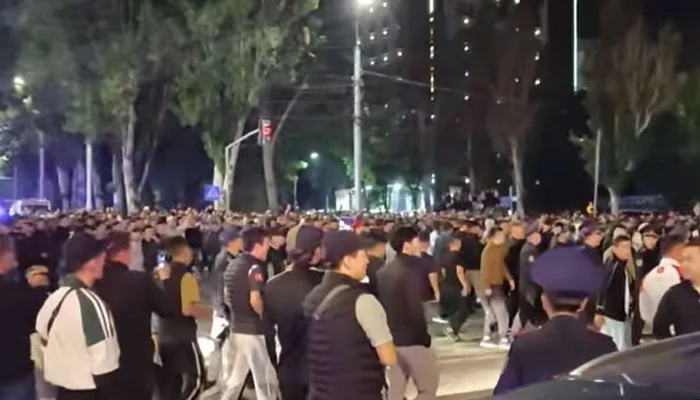
The embassy’s response came in light of the violent mob attacks on international students in the Kyrgyz capital Bishkek. The violence erupted due to a harassment incident involving Egyptian female students on May 13.
The city’s Interior Affairs Directorate chief, on the other hand, said the reports of casualties in the May 13 fighting are false.
Mohammad Abdullah, a Pakistani medical student in Bishkek, told Geo News that the dispute began over the harassment of Egyptian students by those from Kyrgyztan. The riots, however, broke out after Egyptian students confronted them, he added.
Abdullah mentioned that the Kyrgyz students then began attacking foreign students, including Pakistani students, across Bishkek.
Students have also complained about non-cooperation of Pakistan embassy in the midst of the violence unfolding in the capital city.
According to local media in Kyrgyzstan, a fight between local and foreign students broke out in a hostel in the capital city on May 13. At least three foreigners, involved in the dispute, were taken into custody.
On the evening of May 17, the local media reported, locals protested in Bishkek, demanding action against the foreigners involved in the dispute.
The chief of Bishkek’s Interior Affairs Directorate requested to end the protest, while the detained foreigners also apologised later. The Kyrgyz media reported that the protesters refused to disperse, instead more people gathered at the spot after which the authorities detained several of them for violating public order.
As per local media, the protestors dispersed after negotiations with the head of federal police.
Meanwhile, Pakistan’s ambassador to Kyrgyzstan Hasan Zaigham has strongly advised all Pakistani students in the violence-hit city to stay indoors until the situation return to normal.
“We are liaising with the local law enforcement authorities to ensure safety of our student fraternity,” the ambassador wrote in a post on X, formerly Twitter.
The Pakistani embassy, on the other hand, issued a public notice detailing the violent incidents across its social media platforms.
“There have been a number of incidents of mob violence against foreign students in Bishkek since last evening. According to the Kyrgyz press, the matter boiled over yesterday due to sharing online of videos of a fight between Kyrgyz students and medical students from Egypt on 13th of May,” the embassy wrote on Facebook.
It added that so far, a few hostels of medical universities in Bishkek and private residences of international students including Pakistanis have been attacked.
“The hostels are inhabited by students from India, Pakistan and Bangladesh,” the Facebook post read.
The embassy added it has issued an advisory for Pakistani students asking them to stay indoors until the situation returns to normal and has also circulated their emergency numbers on social media.
“The Embassy has been able to contact over 250 students and their family members in Pakistan through these numbers. So far, the violence appears to be directed against all foreign students and not specific to Pakistanis,” the embassy stated.
It maintained to keep the Pakistani community in Kyrgyzstan and their relatives in Pakistan in picture about any further developments, owing to the evolving situation.
The Foreign Office also reiterated the embassy’s advise for Pakistanis to remain indoors until further instructions, while the government follows up with necessary action.
Prime Minister Shehbaz Sharif has contacted the Pakistani ambassador, directing him to provide all kinds of support and assistance to Pakistani students in Kyrgyzstan, the Prime Minister’s Officer said in a statement.
The premier also instructed the envoy to visit the hostels and meet the students.
The ambassador, in conversation with PM Shehbaz, confirmed no Pakistani was killed in the incident. He told the prime minister that the embassy is assisting the injured students.
“Keep in touch with the parents of the students and keep providing them with information,” the premier told Ambassador Zaigham.
The prime minister also instructed the embassy to provide all kinds of medical facilities to the injured students, while also directing arrangements to be made for the immediate return of injured students.
“The government of Pakistan will bear the travel expenses of the injured students. I am personally monitoring the situation in Kyrgyzstan,” the PM said in chat with Pakistani envoy.
The premier maintained that the government won’t leave the students alone in the situation and remains in touch with the Government of Kyrgyzstan.
The Kyrgyz Charge d’affaires Melis Moldaliev was called to the FO for a demarche by ECO & CARs Director General Aizaz Khan to convey the Pakistani government’s deep concerns in light of last night’s incidents against Pakistani students.
“It was impressed on the Kyrgyz Charge d’affaires that the Kyrgyz government should take all possible measures to ensure the safety and security of Pakistani students and citizens residing in the Kyrgyz Republic,” the FO said in a statement.
The statement further read that the Kyrghyz authorities have expressed regret at the incidents of violence against foreign nationals including Pakistanis in Bishkek last night.
“They have also pledged to hold an inquiry and punish the perpetrators,” it added.
FO Spokesperson Mumtaz Zahra Baloch also took to X to share regarding the Pakistani ambassador and his team’s availability to facilitate Pakistani students.
“Amb @hazaigham & his team are available on these emergency numbers (both numbers on WhatsApp). They have responded to hundreds of queries by students and their families,” she wrote, asking Pakistanis in Bishkek to text or WhatsApp if the numbers provided are inaccessible due to phone traffic.
The embassy has provided the following contact numbers for students to get in touch regarding any emergency situation:
+996 507567667, +996555554476, +996507567667, +996550730550 and +996501140874
The US administration has appointed Pakistani-American Dr Asif Mahmood as a member of the US Commission on International Religious Freedom (USCIRF). He is designated as the Commissioner USCIRF.
He is named by US House Minority leader Hakeem Jeffries to the key post. The longtime Democrat, Mahmood is the second Pakistani-American to have such a key role in any US administration.
Earlier, Khizr Khan, a Gold Star father, had served on the Commission from August 2021 to May 2022.
According to a press note issued by the USCIRF, Asif Mahmood is a practising physician, human rights activist, interracial and inter-faith community organiser, and philanthropist. He led the advocacy for many human rights campaigns focused on South Asia. Mahmood was a Delegate for the Democratic National Convention from 2008 to 2016 and held many roles in presidential campaigns. He is also currently the Chair of the Organisation for Social Media Safety (OFSSMS) and Board Member of Hope the Mission, one of the largest homeless shelters in California.
The US commission is an independent, bipartisan government agency which not only issues policy guidelines but also serves as a watchdog.
According to its website, “USCIRF monitors the universal right to freedom of religion or belief abroad; makes policy recommendations to the President, Secretary of State, and Congress; and tracks the implementation of these recommendations.”
Around the world, the commission is better known for its critical annual report or other publications that highlight the violation of religious freedom. Hence, its reports alarm countries on what policy changes to expect in case of severe transgression.
Currently, the commission is headed by Abraham Cooper while Frederick A. Davie is the Vice Chair. Other members include David Curry, Mohamed Magid (a native of Sudan), Stephen Schneck, Nury Turkel, Eric Ueland and Frank Wolf.
Born to a lower-middle-class family, Mahmood is a true example of a self-made person. He was born in a remote village of Kharian in the province of Punjab. In order to study medicine, he moved to Karachi and graduated from Sindh Medical College (SMC).
Since 1999, Mahmood has been living in Pasadena, a city in the US state of California. Professionally, he is a leading pulmonologist and doctor of internal medicine. During Covid-19, he played a crucial role in devising a strategy to fight the pandemic.
He also serves on the largest medical board in the United States of America. Statewide, Dr Asif is also respected for not asking for payment from those who don’t have health insurance. He believes getting health facilities is the birthright of every person.
Dr Asif has also rendered his services to the philanthropic efforts of UNICEF and many other NGOs.
Political career
In the last 10 years, Dr Asif has also tried his luck in politics. He was the first Pakistani-American who contested for Congress in the last Mid-term elections. He lost to incumbent Young Kim in California District 40 but rubs shoulders with top Democrat leaders and key office bearers.
It became more evident when Vice President Kamal Harris endorsed and advocated for his campaign. As a matter of fact, it was payback as during the presidential election primaries, Mahmood had preferred to support Harris over Joe Biden.
Other admirers include former US Secretary of State Hillary Clinton who had honored Mahmood by arranging his political event. It was another first-of-its-kind campaign event for any Pakistani American politician.
Others who endorsed him included State governor Gavin Newsom, US Senator Cory Booker, Alex Padilla, Tim Kaine, Bob Menendez and Adam Schiff. A number of US House Representatives including Greg Meeks, Karen Bass, Lou Correa, Pete Aguilar, Ro Khanna, Ami Bera, Jim Costa, Barbara Lee, Tony Cardenas, Jimmy Levin, Judy Chu, Sara Jacobs, Ted Lieu, Alan Lowenthal, Katie Porter, Brad Sherman, Norma Torres and Eleni Kounalakis equally endorsed his candidacy.
Earlier, he had unsuccessfully contested for the Insurance Commissioner of California. Yet, he bagged more votes than any other Muslim-American in the history of the United States of America.
Pakistan connection
Mahmood enjoys good relations with the leaders of major political parties in Pakistan including PTI, PPP, PML-N and PML-Q.
He is a frequent visitor to his homeland. Last year, Mahmood visited Islamabad, Lahore and Karachi where he met Prime Minister Shehbaz Sharif, Imran Khan, Chaudhry Pervaiz Elahi, Faryal Talpur and Governor Sindh Muhammad Kamran Khan Tessori.
Mahmood is also credited for lobbying for the historic Congressional hearing on Kashmir in 2019. The hearing was held after India took illegal and unilateral steps in the Occupied Jammu and Kashmir to change its status.
Mahmood was the only Pakistani-American who testified before the Congress. He said, “Kashmiris are not alone and we will stand with them till each and every one of them get their basic human rights secured.”
This is one of the reasons why his appointment as a member of the US Commission on International Religious Freedom will raise eyebrows in New Delhi.
North Korea has test-fired a tactical ballistic missile equipped with a “new autonomous navigation system”, state media said Saturday, with leader Kim Jong Un vowing to boost the country’s nuclear force.
Kim oversaw the Friday test-launch into the East Sea, also known as the Sea of Japan, on a mission to evaluate the “accuracy and reliability of the autonomous navigation system”, Pyongyang’s official Korean Central News Agency (KCNA) said.
The launch was the latest in a string of ever more sophisticated tests by North Korea, which has fired off cruise missiles, tactical rockets and hypersonic weapons in recent months, in what the nuclear-armed, UN-sanctioned country says is a drive to upgrade its defences.
The Friday launch came hours after leader Kim’s powerful sister Kim Yo Jong denied allegations by Seoul and Washington that Pyongyang is shipping weapons to Russia for use in its war in Ukraine.
Seoul’s military on Friday described the test as “several flying objects presumed to be short-range ballistic missiles” from North Korea’s eastern Wonsan area into waters off its coast.
The suspected missiles travelled around 300 kilometres (186 miles) before splashing down in waters between South Korea and Japan, the Joint Chiefs of Staff in Seoul said.
“The accuracy and reliability of the autonomous navigation system were verified through the test fire,” Pyongyang’s KCNA said Saturday, adding leader Kim expressed “great satisfaction” over the launch.
In a separate report released on Saturday, KCNA said Kim visited a military production facility the previous day and urged for “more rapidly bolstering the nuclear force” of the nation “without halt and hesitation”.
During the visit, he said the “enemies would be afraid of and dare not to play with fire only when they witness the nuclear combat posture of our state”, according to KCNA.
Pyongyang’s nuclear force “will meet a very important change and occupy a remarkably raised strategic position” when its munitions production plan, aimed to be completed by 2025, is carried out, it added.
Seoul and Washington have accused North Korea of sending arms to Russia, which would violate rafts of United Nations sanctions on both countries, with experts saying the recent spate of testing may be of weapons destined for use on battlefields in Ukraine.
North Korea is barred by UN sanctions from any tests using ballistic technology, but its key ally Moscow used its UN Security Council veto in March to effectively end UN monitoring of violations, for which Pyongyang has specifically thanked Russia.
But leader Kim’s sister Kim Yo Jong said Friday that Pyongyang had “no intention to export our military technical capabilities to any country”, adding that the North’s priority was “to make the war readiness and war deterrent of our army more perfect in quality and quantity”.
She accused Seoul and Washington of “misleading the public opinion” with their allegations that Pyongyang was transferring arms to Russia.
The Friday launches come as Russian leader Vladimir Putin was in China on Friday, the final day of a visit aiming to promote crucial trade with Beijing — North Korea’s most important ally — and win greater support for his war effort in Ukraine.
North Korea’s latest weapons tests were likely intended to attract the attention of Putin while he was in China, said Ahn Chan-il, a defector-turned-researcher who runs the World Institute for North Korea Studies.
The North would benefit greatly from an expected visit by Putin to Pyongyang, and “they want their country to be used as a military logistics base during Russia’s ongoing war (in Ukraine)”, he told AFP.
Yang Moo-jin, president of the University of North Korean Studies in Seoul, said: “China and Russia’s irresponsible handling of North Korea, riding on the new Cold War dynamics, is further encouraging Pyongyang’s nuclear armament.”
Inter-Korean relations are at one of their lowest points in years, with Pyongyang declaring Seoul its “principal enemy”.
It has jettisoned agencies dedicated to reunification and threatened war over “even 0.001 mm” of territorial infringement.
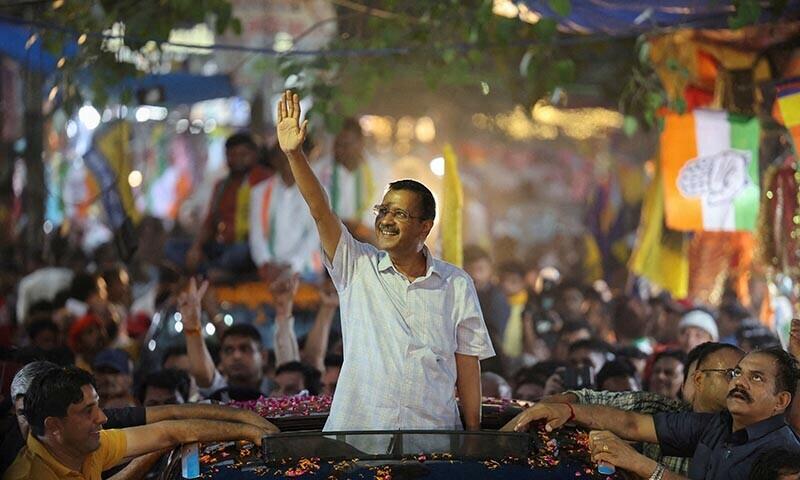
The Supreme Court gave 55-year-old Kejriwal, also the chief minister of the national capital territory of Delhi, bail in a graft case on May 10 and he wasted no time in getting on the campaign trail.
“I have only one request from you, we all have to come together to save the country from dictatorship. I am fighting this dictatorship with all my might,” he told a jubilant crowd soon after walking out of Delhi’s Tihar jail, clearly referring to Modi.
Kejriwal is part of the INDIA alliance led by the Congress party and one of its biggest crowd-pullers. Analysts say while his campaigning will give fresh impetus to the opposition, they are unsure if that will translate into any significant victories against the ruling Bharatiya Janata Party (BJP), which is tipped to return to power.
Kejriwal’s Aam Aadmi Party (AAP) is in power in the Delhi region and in the northern state of Punjab, which together account for just 20 seats in parliament, out of the 543 being contested.
“He may be able to generate some sympathy vote, but would that be enough to change the outcome of the election?” said Rahul Verma, a fellow at the New Delhi-based Centre for Policy Research think tank.
“The BJP led in Delhi by 20 percentage points on an average in each seat, so it needs a substantial amount of swing for BJP to start losing seats in Delhi,” Verma added.
Still, Kejriwal has the ability to embarrass the BJP.
A day after his release, he said Modi, central to the ruling party’s campaign, would not be prime minister beyond 2025 when he turns 75, and would hand over the reins to Home Minister Amit Shah.
“Modi made the rule in BJP that whoever turns 75 will be retired. So I ask BJP, who will be your prime minister?” Kejriwal said.
“Modi is not seeking for votes for himself, but for Amit Shah … who will fulfil Modi’s guarantees then?”
The BJP scrambled to deny the suggestion that flag-bearer Modi would retire.
India began voting on April 19 in the seven-phase election, in which Modi, 73, seeks to be the second prime minister to win a third straight term since independence leader Jawaharlal Nehru. Delhi goes to the polls on May 25 and Punjab on June 1, with results due on June 4.
Kejriwal is an anti-corruption crusader-turned-politician with a reputation of being a street-fighter. He projects himself as a messiah of the working class through AAP’s focus on health care, schools and subsidies, and has a high profile image in the media, allowing him to punch above his weight, analysts say.
The Enforcement Directorate, India’s financial crime-fighting agency, arrested him on March 21 over corruption allegations related to the capital territory’s liquor policy.
Kejriwal has dismissed the graft allegations against him as an attempt by Modi’s government to destroy his party and damage the opposition. Modi and the BJP have denied the charges.
Delhi’s voters had mixed reactions to his campaign.
“Giving bail to Kejriwal is like adding fuel to the fire [for the opposition],” said Irshad, 35, a barber in Delhi’s Jahangirpuri area, who gave only his first name. “He’s a genuine leader.”
In the Model Town locality of the capital, vegetable vendor Surya Bali, 33, asked: “If he was not corrupt, why would they send him to jail?”
Some were undecided about who they would vote for, including Madhuri Akshay Rajput, 30, a tailor in another part of the city. “Whether Kejriwal has done something wrong or not, going to jail dents your image,” she said. “What’s the point of voting? Nothing has changed.”
CAIRO: Israeli forces launched a fresh assault on northern Gaza on Friday in some of the fiercest engagements since they returned to the area a week ago, while in the south Hamas fighters attacked tanks massing around Rafah.
Residents said Israeli armour had thrust as far as the market at the heart of Jabalia, the largest of Gaza’s eight historic refugee camps, and that bulldozers were demolishing homes and shops in the path of the advance.
“Tanks and planes are wiping out residential districts and markets, shops, restaurants, everything. It is all happening before the one-eyed world,” Ayman Rajab, a resident of western Jabalia, said via a chat app.
At the southern end of Gaza, thick smoke rose over Rafah, bordering Egypt, where an escalating Israeli assault has sent hundreds of thousands of people fleeing from what was one of the only places of refuge left.
“People are terrified and they’re trying to get away,” Jens Laerke, the UN humanitarian office spokesperson, said in Geneva, adding that most were following orders to move north towards the coast but that there were no safe routes or destinations.
As the fighting raged, the US military said trucks had started moving aid ashore from a temporary pier built off the coast, the first to reach the besieged enclave by sea in weeks.
The United Nations said it was finalising plans to distribute the aid, while reiterating that truck convoys by land — disrupted this month by the assault on Rafah — were the most efficient way of getting aid in.
“To stave off the horrors of famine, we must use the fastest and most obvious route to reach the people of Gaza and for that, we need access by land now,” deputy UN spokesperson Farhan Haq said.
Jabalia resident Rajab, a father-of-four, said food aid was not the answer: “We want this war to end and then we can manage our lives on our own,” he said.
At least 35,303 Palestinians have now been killed, according to figures from Gaza health ministry, while aid agencies have warned repeatedly of widespread hunger and the threat of disease.
Doctors say they have to perform surgery, including amputations, with no anaesthetics or painkillers as the medical system in the territory has virtually collapsed.
Israel said on Friday that its forces had rescued the bodies of three prisoners from Gaza, without saying where they were found.
‘Tragic war’
Israeli tanks and warplanes bombarded parts of Rafah on Friday, while the armed wings of Hamas and Islamic Jihad said they were firing anti-tank missiles and mortars at forces massing to the east, southeast and inside the Rafah border crossing with Egypt.
UNRWA, the main UN aid agency for Palestinians, said more than 630,000 people had fled Rafah since the offensive began on May 6. Many have crowded into Deir al-Balah, a city up the coast that is the only other one in Gaza yet to be assaulted by Israeli forces.
“They’re moving to areas where there is no water — we’ve got to truck it in — and people aren’t getting enough food,” Sam Rose, director of planning at UNRWA told Reuters on Friday by telephone from Rafah, where he said it was eerily quiet.
At the International Court of Justice, or World Court, in The Hague, where South Africa has accused Israel of violating the Genocide Convention, Israeli justice ministry official Gilad Noam defended the operation.
The South African legal team, which set out its case for fresh emergency measures the previous day, framed the Israeli military operation as part of a genocidal plan aimed at bringing about the destruction of the Palestinian people.