
After record rain in UAE, Pakistan seeks collaboration with Gulf nation on climate change

Calling for joint efforts against climate change, Prime Minister Muhammad Shehbaz Sharif on Friday hailed the United Arab Emirates (UAE) leadership for expeditiously responding to the worst rains and flooding in the Middle Eastern nation.

Over 254 millimetres of rain — about two years’ worth — lashed the Emirates in days that swamped its urban centers, closing down airports, educational institutes, businesses, and highways.

Official media said it was the highest rainfall since records began in 1949, before the formation of the UAE in the year 1971.

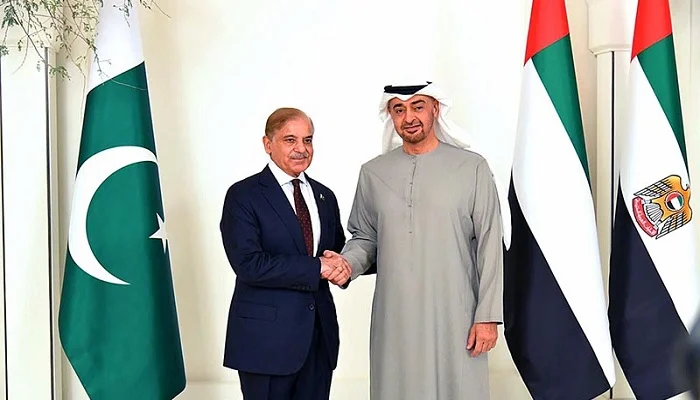
The PM, who held a telephonic conversation with President of the United Arab Emirates (UAE) Sheikh Mohamed bin Zayed Al Nahyan, congratulated him for his government’s timely efforts to control the flooding-related damages that saved lives.

“The Prime Minister’s call was centered on his admiration for the strong resolve and impeccable efficiency with which the UAE leadership had confronted the challenges that had emerged from the recent rains in the country,” according to the statement issued by the PM Office.

PM Shehbaz commended the UAE President for demonstrating his outstanding leadership qualities and his strong commitment to ensuring the welfare of the Emirati people.

“Pakistan has also witnessed heavy rains in recent days, resulting in loss of many precious lives,” the PMO quoted the prime minister as saying.

He called for collective actions to combat the challenge of climate change and suggested that both countries strengthen their collaboration in the field.

“The UAE president expressed appreciation for the prime minister’s good wishes and reciprocated the warm sentiments for the people affected from rains and flooding in Pakistan,” state-run APP reported.

Both leaders reaffirmed their commitment to enhance bilateral cooperation in multifaceted areas.

Deaths from heavy rains earlier this week in the UAE rose to four, authorities said on Friday, as well as flooding roads and jamming Dubai’s international airport, Reuters reported.

The storm first hit Oman at the weekend, killing at least 20 people, before pounding the UAE on Tuesday with its heaviest rains in 75 years of records.

Two Philippine women and one man died in their vehicles during flooding, the government in Manila said. An Emirati man in his 70s had also died when his vehicle was swept away by floods in the northern Ras Al Khaimah emirate.

According to Reuters report, Scientists blame increasingly common extreme weather events, such as the rains in UAE and Oman, on human-led global warming.

Dubai International Airport, one of the world’s busiest and a hub for travel around the Middle East, was still struggling to clear a backlog of flights three days after the storm.

As of Friday morning, 1,478 flights to and from Dubai had been cancelled since Tuesday, approximately 30% of all flights, according to aircraft flight tracking website FlightRadar24.

The main road connecting Dubai, the most populous emirate, with Abu Dhabi remained partially closed on Friday, while an alternative route saw vehicles driving through low water on the hard shoulder past abandoned cars and buses.

In the UAE’s north, including in the emirate of Sharjah, local media reported people were reportedly still trapped in homes. Residents said there was extensive damage to businesses.

Rains are uncommon in the UAE, which is known for its hot desert climate and temperatures that can soar above 50 degrees Celsius in the summer.

The UAE’s National Center of Meteorology said rain may return by late Monday, though predicted it would be light with a chance of heavy rain again on Tuesday in some areas.
North Korea tests ‘super-large warhead’

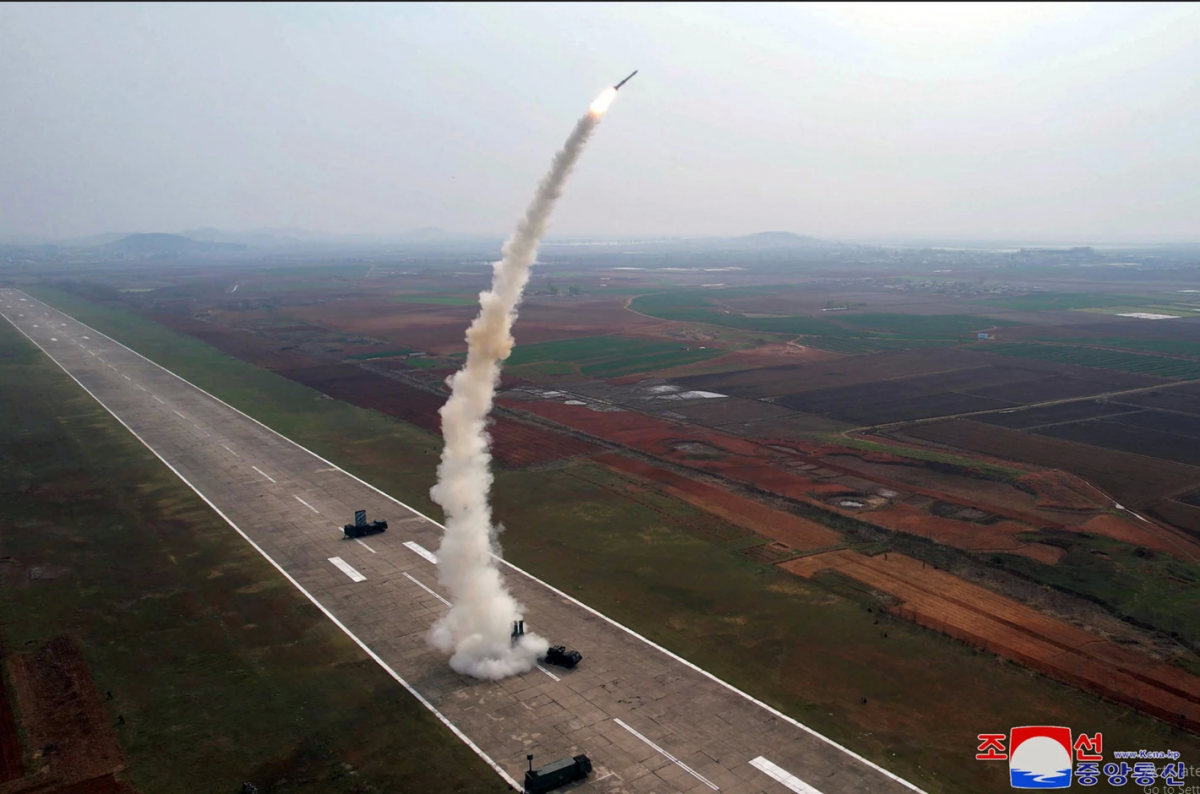
North Korea has tested a “super-large warhead” designed for a strategic cruise missile, state media said Saturday, the most recent test since UN sanctions monitoring against the nuclear-armed nation was upended last month by Russia.

The announcement comes after Russia in March used its United Nations Security Council veto to effectively end UN monitoring of violations of the raft of sanctions on Kim Jong Un’s government for its nuclear and weapons programme.

Analysts have warned that North Korea could be testing cruise missiles ahead of sending them to Russia for use in Ukraine, with Washington and Seoul claiming Kim has shipped weapons to Moscow, despite UN sanctions banning any such moves.

“The DPRK Missile Administration has conducted a power test of a super-large warhead designed for ‘Hwasal-1 Ra-3’ strategic cruise missile”, KCNA news agency said Saturday, referring to North Korea by an abbreviation for its official name.

North Korea also carried out a test launch of a “‘Pyoljji-1-2’ new-type anti-aircraft missile in the West Sea of Korea”, KCNA said, adding that both tests were carried out on Friday afternoon.

Seoul’s military said Saturday it detected “several cruise missiles and surface-to-air missiles” fired toward the same body of water, also known as the Yellow Sea, at around 3:30 pm (0630GMT) Friday.

It added that it was “closely watching” the North’s military activities, and if Pyongyang “commits a provocation, we will punish it overwhelmingly and resolutely”.

This year, Pyongyang has declared South Korea its “principal enemy”, jettisoned agencies dedicated to reunification and outreach, and threatened war over “even 0.001 mm” of territorial infringement.

Unlike their ballistic counterparts, the testing of cruise missiles is not banned under current UN sanctions on North Korea.

Cruise missiles tend to be jet-propelled and fly at a lower altitude than more sophisticated ballistic missiles, making them harder to detect and intercept.


Ahn Chan-il, a defector-turned-researcher who runs the World Institute for North Korea Studies, told AFP that the test announced Saturday appears to involve “a new type of solid fuel, and it seems to be part of the production of exports in response to Russian demand”.

Pyongyang said Saturday the tests were “part of the regular activities” of the country’s missile administration and had “nothing to do with the surrounding situation”.

A “certain goal was attained” through the tests, it added, without giving further details.

Yang Moo-jin, president of the University of North Korean Studies in Seoul, said it appeared that the tests were intended “to determine the type and potency — in terms of weight and destructiveness — of a warhead that can be equipped on a highly maneuverable cruise missile”.

North Korea will continue to “make improvements in the performance of its conventional weapons, as well as its cruise missiles”, on top of its nuclear programme, he told AFP.

Last year, the North conducted a record number of missile tests in defiance of UN sanctions in place since 2006 and despite warnings from Washington and Seoul.

Pyongyang declared itself an “irreversible” nuclear weapons state in 2022.

In early April, North Korea said it had tested a new medium-to-long-range solid-fuel hypersonic missile.

The largely isolated country has recently bolstered military ties with Moscow, and this month it thanked Russia for its veto blocking the renewal of a panel of UN experts that monitored international sanctions against it.

Several casualties as ‘bombing’ hits Iraq military base

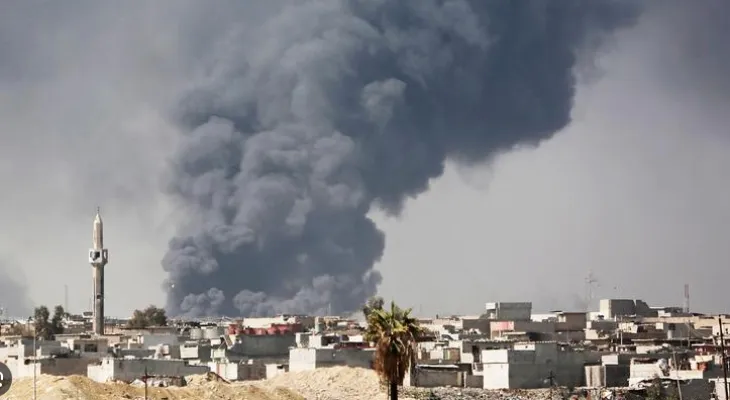
Several people were wounded in a “bombing” overnight on an Iraqi military base housing a coalition of pro-Iranian armed groups, two security sources said early Saturday.

The explosion hit the Calso military base in Babylon province south of Baghdad, where Iraq’s Popular Mobilization Forces, or Hashed al-Shaabi, is stationed, according to an interior ministry source and a military official.

The ministry of interior official said the “aerial bombing” had killed one person and wounded eight others, while the military source reported three Iraqi military personnel had been wounded in a strike.

In a statement, Hashed al-Shaabi said an “explosion” had inflicted “material losses” and casualties, without specifying the number of wounded.

The group confirmed that its premises on the military base had been hit and that investigators had been sent to the site.

Responding to questions from AFP, the security sources would not identify who was responsible, or say whether it had been a drone strike.

“The explosion hit equipment, weapons and vehicles,” said the ministry source.

There was no immediate claim of responsibility.

Shortly after the explosion, the US military said its forces were not behind a reported strike in Iraq.

“The United States has not conducted air strikes in Iraq today,” US Central Command (CENTCOM) posted on social media platform X, adding that reports that American forces had carried out a strike were “not true.”

The Iraqi military official, who spoke on condition of anonymity due to the sensitivity of the subject, said the overnight explosion had occurred in “warehouses storing equipment”.

“A fire is still raging and the search for the injured is continuing,” the source said.

When reached by AFP, the Israeli army said it “does not comment on information published in foreign media.”

Hashed al-Shaabi, an alliance of mainly Shiite armed groups formed to fight the Islamic State group, has been integrated into Iraq’s regular security apparatus.

The explosion on the Iraqi military base comes amid spiralling regional tensions over the war between Israel and Iran-backed Palestinian militants Hamas.

On Friday, strikes blamed on Israel targeted a military base near the city of Isfahan in central Iran.

A senior US Congressional source told AFP there had been retaliatory Israeli strikes but declined to provide any details, saying they were classified.

Israeli officials made no public comment on Friday’s attack and Iranian officials have played down its significance.

Indian polls start without Modi wave

The first of the seven-phase polls saw eight seats in the politically crucial western Uttar Pradesh in the contest. The state sends 80 MPs and is regarded as a must-win for Prime Minister Narendra Modi’s bid for a third consecutive term.

His Bharatiya Janata Party (BJP) had grabbed 62 of the seats in 2019, mainly riding the military standoff with Pakistan, which he exploited with posters seeking votes in the name of the army.

The 2014 elections were buoyed by the communal polarisation instigated in Muzaffarnagar with false stories of Muslims abducting Hindu girls. This time the key BJP plank of Ram temple in Ayodhya has evidently failed to enthuse the voters. Moreover, this time around the Jat community of farmers that stood with the BJP is standing in solidarity with fellow farmers in Haryana and Punjab fighting for rights promised by the Modi government but never implemented.


A discussion in Bijnor by The Wire news portal with a mix of religious and caste representatives revealed a marked absence of a Modi wave. The ‘wave’ delivered him victories in the most populous state, including his own constituency of Varanasi. Now, a Brahmin interlocutor in the discussion described himself as a hardcore supporter of the BJP who would not vote for the party this time.

His young son too will not vote for Mr Modi, citing corruption in the electoral bond scheme and the jailing of Delhi Chief Minister Arvind Kejriwal.

The wife would not vote for Mr Modi over price hike, he said.

A triangular contest in western Uttar Pradesh involves the Bahujan Samaj Party (BSP) of former Dalit state chief minister Mayawati, the Samajwadi Party of the INDIA opposition cluster and the BJP. Ms Mayawati’s decision to go it on her own could damage INDIA candidates in western UP, and that rather than a Modi surge could deliver him several of the seats, though not all.

According to The Indian Express, which filed a spot report from Rajasthan by Neerja Chowdhury, “unlike the last two general elections, when the BJP swept Rajasthan, this time a contest is a possibility in nine to 10 Lok Sabha constituencies”.

An entrepreneur at Mandaava, in Jhunjhunu, told Express: “Had Modi not been there, it would have been difficult for the BJP to win. This time, there is no junoon (enthusiasm).”

A BJP leader articulated the sense on the ground, saying; “It may not change the direction of the wind, but shifts are being felt this time.”

This is how a political observer was quoted as describing it: “When you look at it closely, these fights do not reflect a fight between the BJP and the Congress nationally. It is a heavyweight candidate or a local group rivalry that seems to be overtaking the Modi factor, converting it into a takkar (contest).”

In the last two general elections — which the BJP swept, winning 25 out of 25 seats in Rajasthan — the Modi factor was able to subsume these local issues and may yet do so in many constituencies. “Modi thoda struggle mein aa gaye hain (Modi is struggling a little),” said a shopkeeper, a pro-BJP Brahmin manning a shop near the famous Khatu Shyamji Mandir in Sikar district, where, in the middle of a hot afternoon, hundreds of devotees were trying to catch a glimpse of the highly revered local deity.

Clash, bomb blast

West Bengal has elections in all seven phases, ending with the last on June 1. It recorded a turnout of 66.34pc till 3pm. However, polling was marred by violence in the Cooch Behar seat, The Hindu said. Both the TMC and the BJP clashed and lodged 80 and 39 complaints against each other respectively related to poll violence, voter intimidation, and assaults on poll agents, sources from both parties said.

In strife-torn Manipur, around 63.03pc of the over 1.544 million voters exercised their franchise till 3pm. In Chhattisgarh, more than 58pc of the electorate cast their votes in the first four hours of polling in the Naxal-hit Bastar Lok Sabha constituency where an assistant commandant of the Central Reserve Police Force (CRPF) was killed when an improvised explosive device planted by Naxalites went off in Bijapur district.

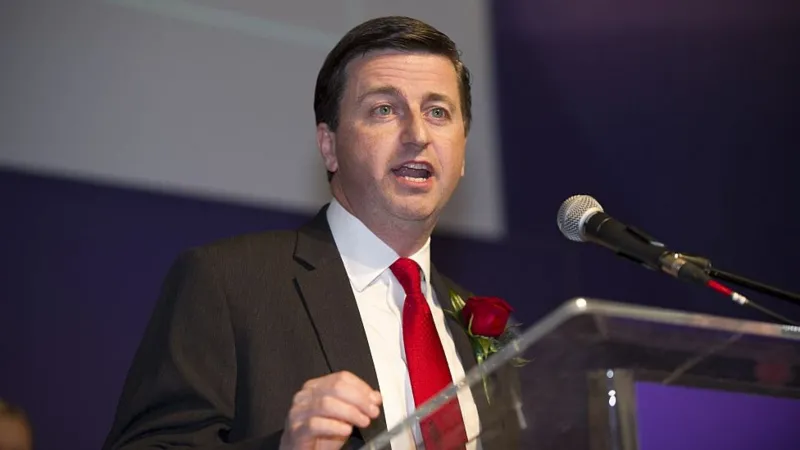
When Douglas Alexander lost his seat in the House of Commons to 20-year-old Mhairi Black in 2015 it was one of the biggest shocks of the night.

The former minister in the Blair and Brown governments had represented Paisley and Renfrewshire South since Labour swept to power in 1997 and was defending a majority of more than 16,000.

Now nearly a decade later the SNP MP is standing down and Mr Alexander is hoping to return to Westminster – this time for East Lothian, a key Labour target in Scotland.

He’ll be fighting the SNP’s Iain Whyte to try to take the seat held by Alba’s Kenny MacAskill, who defected from the SNP in 2021.

With a general election expected later this year – and January 2025 the latest one can legally be held – parties are already selecting their candidates.

Some 100 MPs have confirmed they will stand down at the next election, and new constituencies have also been created by boundary changes, providing opportunities for prospective candidates old and new.

Mr Alexander is one of at least 19 former MPs seeking a comeback.


He says he hadn’t anticipated stepping back into public life, after pursuing a career in academia, but in the autumn of 2022 he was approached by local party members to ask if he would consider standing.

“I don’t miss the game of politics. And I certainly haven’t missed the brutality of social media,” he says.

“But I decided that if I could play a small part in bringing Labour back in Scotland and contributing to Labour returning to government, then that was a worthwhile use of the coming years.”

Only a handful of Labour’s current shadow cabinet have previously served as government ministers so Mr Alexander could provide some valuable experience to Sir Keir Starmer’s top team if Labour win.

However, he insists his “overriding focus” is on getting elected in East Lothian, rather than any ambitions for a government job.

Douglas Alexander served as Scotland and Transport Secretary under Tony Blair

Perhaps unsurprisingly given that Labour are riding high in the polls, fewer former Conservative MPs are standing again at the next election so far.

However, the BBC is aware of two in Scotland, including Luke Graham, who represented Ochil and South Perthshire from 2017 to 2019.

With national polls suggesting the Tories are on course for defeat, more than 60 of the party’s current MPs have already announced they are standing down.

But Mr Graham says in Scotland, where the SNP has been in power for nearly 17 years, it’s a different picture.

He says it was “devastating” to lose his seat to the SNP in 2019, after just two-and-a-half years in the job.

“I’d just figured out how to do it and then they had a snap election,” he says. “So it was very frustrating.”

He’s standing in the new constituency of Perth and Kinross-shire, which replaces his old seat, where he’ll face the SNP’s longest-serving MP, Pete Wishart.

Despite continuing to campaign locally since he was voted out, Mr Graham says the decision to stand again was still a difficult one.

“I’ve turned down two jobs in the last few months because I’m going for this election and I don’t know what’s going to happen,” he says. “So it’s a big risk.”

Tom Arthur
Heidi Alexander was shadow health secretary under Jeremy Corbyn

With Labour riding high in the opinion polls, the bulk of the ex-MPs standing again are from the party.

They include former shadow minister Heidi Alexander (no relation to Douglas Alexander), who quit as the MP for Lewisham East in 2018 to take up a job as deputy mayor of London for transport.

“I did think that I was leaving Westminster politics for good,” she says.

“Having said that, there was this tiny little bit of doubt in the back of my mind about whether there was some unfinished business there.”

Recalling her choice to leave Westminster six years ago, she says she felt the opportunity to work at City Hall was too good to pass up.

But she admits she was also frustrated with the direction of the Labour Party under Jeremy Corbyn. Ms Alexander was among a wave of resignations from his cabinet in 2016, after the Brexit referendum.

“I didn’t anticipate missing the job as much as I actually did,” she says. “It’s a hugely varied job and done well you can really make a difference for the community that you represent.”

However, it wasn’t until she left her mayoral role in 2022 and the selection process opened for the constituency of South Swindon, where she grew up, that she seriously considered standing again.

“At that point it was decision time for me because there wasn’t really anywhere else where I would have wanted to put my name forward,” she says.

A classic bellwether seat with a Tory majority of 6,600, South Swindon is exactly the kind of place Labour will need to win to form the next government.

Her opponent will be Conservative MP Sir Robert Buckland, a former minister who has represented the area since 2010.

There’s been growing concern about the threats facing MPs following the murders of Jo Cox in 2016 and Sir David Amess in 2021.

Ms Alexander says her family do worry about her safety if she returns as an MP and her mum in particular had concerns about her standing again.

“I thought very long and very hard about it because being an MP isn’t just a job, it does actually become your life,” she says. “And it has a big impact upon your family.”

Matthew Green
Since leaving Parliament Matthew Green has set up an architecture consultancy

When the opportunity rose to stand again for Parliament – nearly two decades after he was last an MP – Matthew Green also had doubts.

“I know the effect on other people around you being an MP,” he says. “It’s not something that people should go into lightly.”

He cites the intensity of the job and always being on duty, especially in a rural constituency where “everyone knows who you are”.

Just a month ago he had no intention of making a political comeback.

But when the previous Liberal Democrat candidate for South Shropshire had to step back for health reasons he thought he was the party’s best shot.

“I’m not somebody driven by an ambition to be an MP,” he says. “I’ve been there, I’ve done that.”

Mr Green represented the constituency of Ludlow – South Shropshire’s predecessor before recent boundary changes – from 2001 to 2005.

“Somebody else coming in wouldn’t have the time to build up their profile. And so I knew that at short notice, the only person in the Lib Dems who could put a real challenge in against the Tories would be me.”

It won’t be an easy task. The seat was won by Conservative Philip Dunne, who is standing down at the next election, with a majority of more than 23,600 in 2019.

The Conservatives have selected Stuart Anderson, who is currently the MP for Wolverhampton South West, as their candidate for the seat.

Despite the challenge, Mr Green thinks he has a chance.

Biker dies after being hit by vehicle of Punjab CM Maryam Nawaz’s security squad

NAROWAL: A young motorbike rider was Thursday killed after his bike collided with a vehicle of Punjab Chief Minister Maryam Nawaz’s security squad in Chandowal area of Narowal district.

The district police officer (DPO) said the vehicles were going to Kartarpur for CM Maryam’s security.

The elite security squad’s vehicle hit the motorcycle while trying to overtake it, he said.

The chief minister was visiting the Gurdwara Darbar Sahib in Kartarpur today to address a gathering of pilgrims on the occasion of the Baisakhi Mela.

The youngster’s body was shifted to the Narowal district headquarters hospital, while an FIR was lodged on behalf of the victim’s family, he said.

The DPO said after investigation, an “indiscriminate legal action” would be taken against those responsible.

Police said the case against the incident was filed by the victim’s cousin at the Saddar police station, in which he sought action from the authorities on the “injustice incurred” to them.

In the FIR, he mentioned that he was working at his shop when he came to know that the government vehicle hit his cousin Abu Bakar and ran.

“My cousin succumbed to his injuries and passed away at the DHQ hospital,” said the cousin.

India begins voting in gigantic election as Modi seeks historic third term

The vote pits Modi’s Bharatiya Janata Party (BJP) against an alliance of two dozen opposition parties which is challenging him with promises of increased affirmative action, more handouts and what they say is the need to save democratic institutions from Modi’s dictatorial rule.

The gigantic exercise involving almost one billion voters will be spread over seven phases across the world’s most populous country at the peak of summer. It ends on June 1 and votes will be counted on June 4.

On Friday, in the largest of the seven phases, 166 million voters in 102 constituencies across 21 states and territories will vote, including in Tamil Nadu in the south, Arunachal Pradesh on the Himalayan frontier with China, and the most populous Uttar Pradesh in the north.

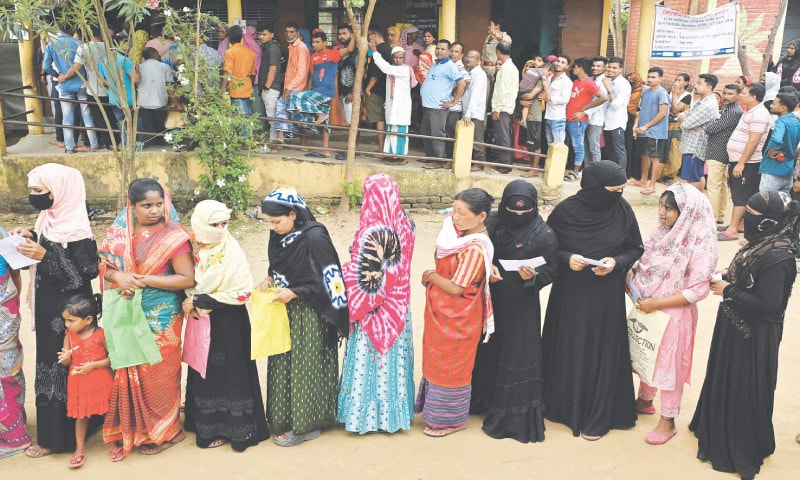
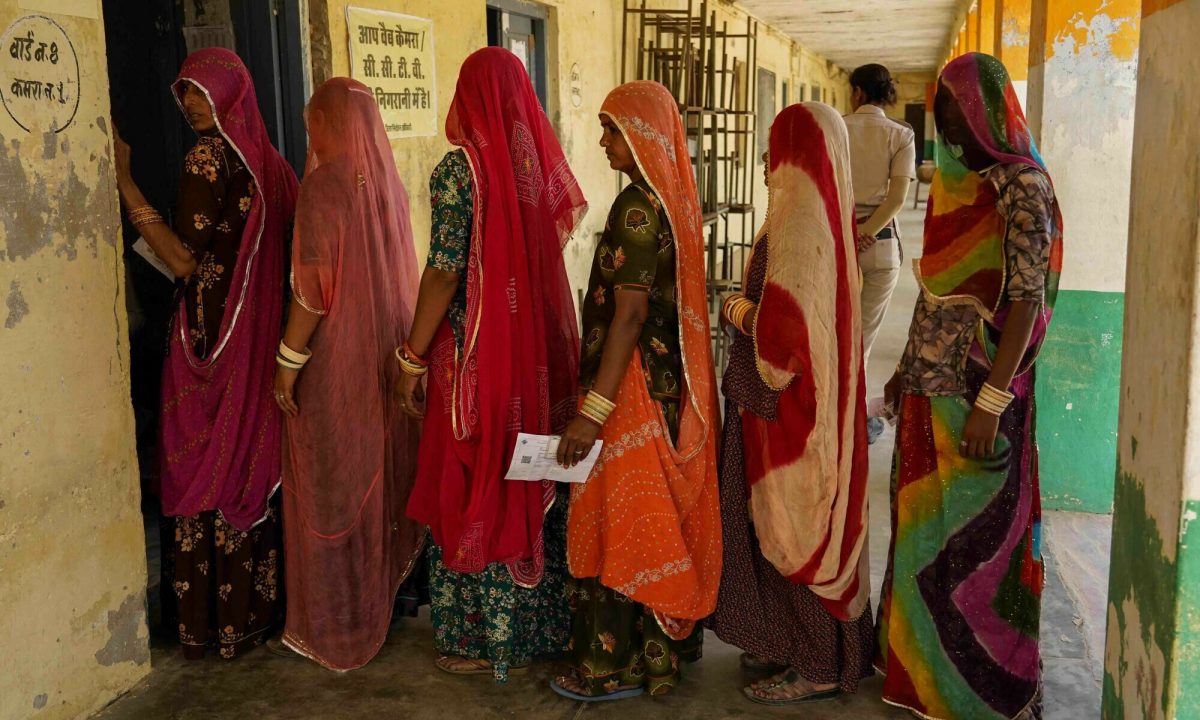
Voters began lining up outside polling stations much before they opened at 7:00am (0130 GMT) amid tight security, including senior citizens who needed help to reach the booths.

“Modi will come back to power, because apart from the religious push, his other work, including on safety and security is good,” said Abdul Sattar, 32, a Muslim voter in Uttar Pradesh’s Kairana, about 100km from Delhi.

Mohammed Shabbir, a 60-year-old driver and father of eight, said unemployment was the main issue for him as none of his children have regular jobs.

Hindu nationalism is not an issue in this election, “because even the Hindus are affected by a lack of jobs”, he said.

Surveys suggest BJP will easily win a majority even though voters have serious concerns about unemployment, inflation and rural distress in the world’s fastest growing major economy, with the spotlight being on whether BJP can improve on its 2019 victory and by how much.


“In the next five years, we will take our nation into the top three economies of the world, launch a final and decisive assault against poverty, open up newer avenues of growth […] unveil the next generation of reforms, and take a number of pro-people decisions and actions,” Modi wrote in the BJPs election manifesto.

The manifesto and the theme of the BJP campaign is titled “Modi Ki Guarantee” or Modis guarantee to fulfill promises made to voters, underlining the unusual leader-centric, presidential-style pitch in a parliamentary system.

“I urge all those voting […] to exercise their franchise in record numbers,” Modi posted on X, minutes before polling began.

“I particularly call upon the young and first time voters to vote in large numbers. After all, every vote counts and every voice matters,” he said.


Opposition weak, fragmented

If he wins, Modi will be only the second Indian prime minister to be elected three times in a row, after post-independence leader Jawaharlal Nehru.

Modi says that his first two terms were appetisers and the main course will be served in the third term. BJP hoardings across towns and cities highlight a range of achievements in his two terms, including India’s historic landing on the moons south pole and fighting corruption to woo voters.


Hindu nationalism is a key theme. Modi’s government and BJP are accused by critics of discriminating against or targeting India’s 200 million minority Muslims to please their hardline Hindu base — charges both deny. Sporadic violence between Hindus and Muslims continues to break out.

The opposition INDIA alliance says the election is an ideological battle being fought to stop the BJP from ending the constitutional and democratic system.

Rahul Gandhi, leader of the main opposition Congress party, said the BJP always seeks to divert attention from major issues such as unemployment and price rise.

“Sometimes the PM goes underwater in the ocean and sometimes he is on a seaplane but does not talk about issues,” Gandhi said, referring to Modi’s widely publicised engagements in recent months.

While the alliance has struggled to forge unity and field common candidates against the BJP, it has accused the government of denying it a level playing field by arresting opposition leaders in corruption cases and making huge tax demands ahead of the vote — charges the government denies.

Chandrachur Singh, who teaches politics at Delhi’s Hindu College, said the BJP has a clear edge but also faces real challenges.

“It’s not an election where there are no issues,” he said. “There are issues which could have led to anti-incumbency. But that is something which is not being channelised or harnessed by a fragmented, divided, weak opposition,” he said.

“That is what is causing some kind of disillusionment among voters and allowing BJP to surge ahead.”

Peter Murrell was a constant in the hierarchy of the Scottish National Party for more than two decades.

He became chief executive as the sun was setting on the last century and as the dawn was rising on the new chapter of devolution.

During the 59-year-old’s tenure the party grew in confidence and became an indomitable election winning machine.

But in the public’s eye he would be remembered for something else – being married to Scotland’s first minister.

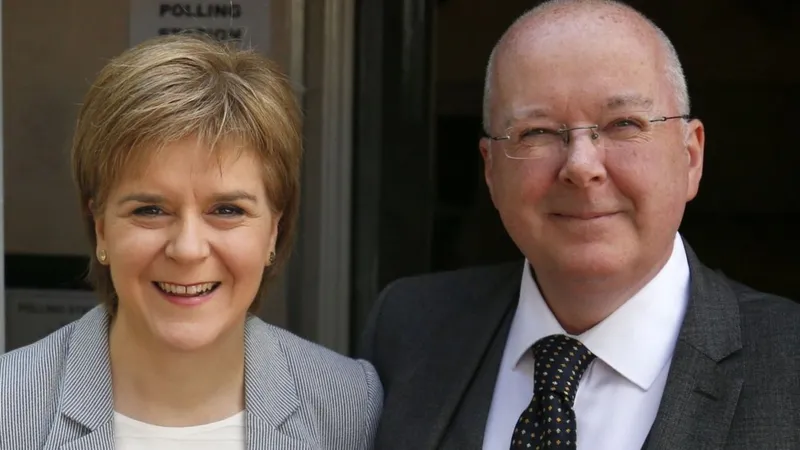
It was on a summer’s day in 2010 when Nicola Sturgeon married her long-term partner Peter at a ceremony in Glasgow.

He had already been SNP chief for 11 years and she was deputy first minister in charge of the health brief for the Scottish government, led by Alex Salmond.

Power couple

Politics played its part in bringing these two together. According to a biography of Ms Sturgeon by David Torrance, they first met in 1988 at an SNP youth weekend and became a couple in 2003.

They never had children but Ms Sturgeon later revealed the painful experience of suffering a miscarriage when she was 40, shortly before the 2011 Scottish parliamentary election campaign.

“Sometimes… having a baby just doesn’t happen – no matter how much we might want it to,” she said.

The powerful couple would be seen together at party conferences, outside polling stations and at official events such as the Queen’s Jubilee concert. But while relaxed in each other’s company, they were not gushy hand-holders who lingered before a gathered media.

On occasions when asked about her husband – notably during her appearance on ITV’s Loose Women – Ms Sturgeon was quick to credit Mr Murrell for his cooking skills.

She has also given insight into how he has supported her political leadership. Ms Sturgeon told the Sunday Times: “One of the things I value is that he’s happy with me having the public role… He’s not one of those guys who would feel threatened by it. He doesn’t have that sort of ego, he’s very self-assured.”

Mr Murrell has similarly spoken of his respect for his wife’s intellect, saying: “She’s very, very sharp and on top of whatever the issue of the day is. That spark is always there. We are constantly having conversations that I’m amazed by.”

In the spotlight

It clearly suited the FM’s husband to be in the background but he, and his role as chief executive, came under scrutiny during the inquiry into the Scottish government’s handling of complaints against former first minister Alex Salmond.

At the Holyrood Inquiry in 2020, Mr Murrell denied plotting against Mr Salmond. But opposition MSPs believed that Mr Murrell contradicted himself, and Ms Sturgeon, over some of the details he gave in evidence.

He was pressed repeatedly about whether the meetings between Ms Sturgeon and Mr Salmond were SNP business, as the first minister had insisted, or government business – which would need to be officially recorded.

PA Media
Under Nicola Sturgeon and Peter Murrell the SNP was an election winning machine

Mr Murrell was back in the media spotlight in December 2022 when it was confirmed he had given a loan of £107,620 to the SNP to help it out with “cash flow” issues.

The SNP had repaid about half of the money by October of that year and the party’s official line was that the loan was a “personal contribution made by the chief executive to assist with cash flow after the Holyrood election”.

These questions were difficult ones for Ms Sturgeon and she had to awkwardly bat away media probes about what she knew of her husband’s financial situation – “that is for him,” she said at an FM’s update at the beginning of last year.

Despite this discomfort, she continued to lead the country and he continued to be in charge of the party machine.

But then Ms Sturgeon announced her decision to resign. Some commentators said it would be inevitable that Mr Murrell would also have to go but his departure has happened before his wife’s.

Pressure mounted on him when two of the three candidates vying to be new party leader and first minister publicly questioned the contest they were taking part in.

Row over member numbers

From the outset, contender Ash Regan said Mr Murrell’s position as SNP chief executive was a “clear conflict of interest”.

And this theme would not go away with another candidate, Kate Forbes, questioning the integrity of the electoral process.

What led the chief executive to go was linked to a row about party membership and who would be voting in this election.

One point of pride for Mr Murrell had been his campaign to increase followers after the failed Scottish independence referendum of 2014 and the coronation of his wife as leader and first minister.

The SNP went from a membership of less than 25,000 in 2013 to more than 125,000 by December 2019.

But that figure had fallen back to 72,000 by March 2023 and the party only reluctantly confirmed this when media and opposition pressure, plus questions from all three candidates, became too much.

The power couple who helped shaped Scottish politics in the first two decades of this century are no more.

Security forces kill seven terrorists trying to infiltrate Pak-Afghan border in North Waziristan

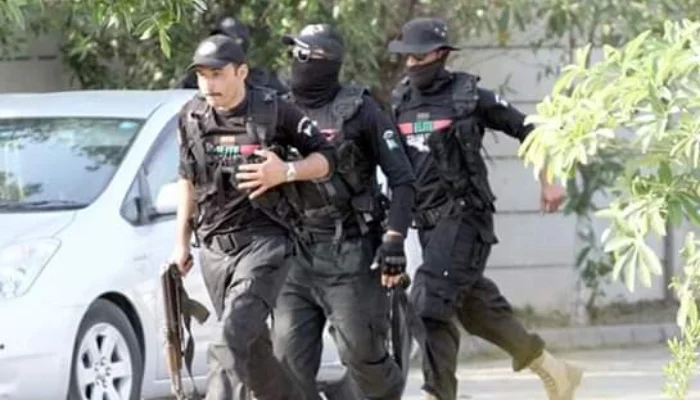
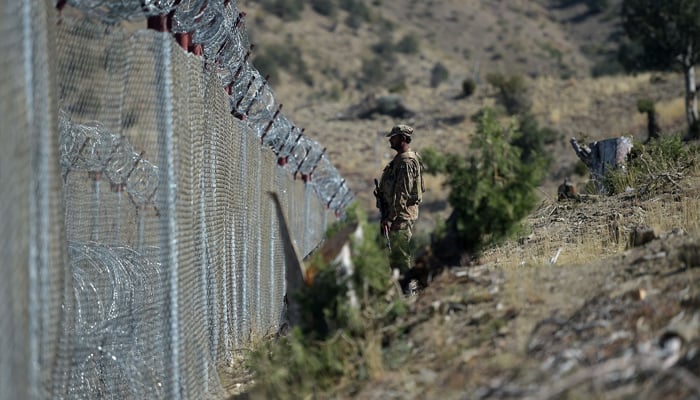
Security forces have killed seven terrorists trying to infiltrate the Pakistan-Afghanistan border in Khyber-Pakhtunkhwa’s North Waziristan district, the military’s media wing said on Wednesday.

In a statement, the Inter-Services Public Relations (ISPR), said the security forces on April 16 (Tuesday) detected a movement of a group of seven terrorists near the Pakistan-Afghanistan border in Spinkai area of Ghulam Khan in the tribal district.

“The infiltrators were surrounded, effectively engaged and after an intense fire exchange, all seven territories were sent to hell,” it added.

A large quantity of weapons, ammunition, and explosives was also recovered from the killed terrorists, the statement added.

The statement highlighted that Pakistan has consistently been asking the Taliban-led interim Afghan government to ensure effective border management on their side of the border.

The military urged the interim rulers to fulfill their obligations and deny the use of Afghan soil by terrorists for perpetuating acts of terrorism against Pakistan.

“Security forces of Pakistan are determined and remain committed to securing its borders and eliminating the menace of terrorism from the country,” read the ISPR’s statement.

Pakistan has time and again urged the Afghan authorities to take meaningful action against terrorists using the neighbouring country’s soil to launch attacks inside Pakistan.

Last month, Pakistan carried out an intelligence-based anti-terrorist operation inside Afghanistan on, whose prime target was the terrorists belonging to Hafiz Gul Bahadur Group along with Tehreek-i-Taliban Pakistan (TTP).

Hafiz Gul Bahadur Group had earlier claimed responsibility for the terrorist attack.

“This group is responsible for multiple terrorist attacks inside Pakistan, resulting in death of hundreds of civilians and law-enforcement officials. The latest attack took place on 16 March 2024 at a security post in Mir Ali in North Waziristan and claimed the lives of seven Pakistani soldiers,” said the Ministry of Foreign Affairs on March 18 after over 13 hours after the operation.

A day earlier, Pakistan Army’s top commanders were briefed on how terrorist groups operating from Afghanistan pose a threat to regional and global security, besides acting as proxies against Pakistan and its economic interests, especially the China-Pakistan Economic Corridor (CPEC).

President Zardari set to address Parliament today

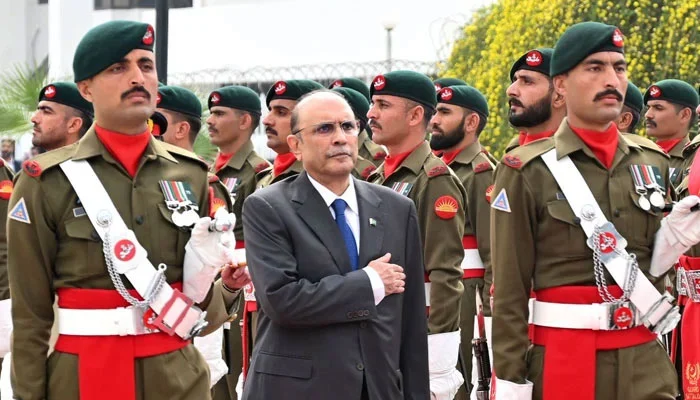
ISLAMABAD: President Asif Ali Zardari is set to address the joint session of parliament to kick off the parliamentary year after the February 8 general elections.

The session, convened by the president under the powers provisioned in Articles 54 (1) and 56 (3) of the Constitution, will commence at 4pm. This will be President Zardari’s seventh address as he has previously addressed the joint session of the parliament six times before during his previous tenure as the country’s head of state from 2008 to 2013.

Additionally, the president has also summoned NA session on Friday (tomorrow) at 10:30 am in exercise of the powers conferred to him under Article 54 (1) of the Constitution.

Earlier, the joint session was convened on April 16 but was rescheduled for today.

It should be noted that this will be the first joint session following the start of the new parliamentary year in the country after both the upper and lower House members were elected.

Despite elections taking place on February 8 and former president Arif Alvi still in office, he was unable to summon a joint session as elections in the Senate were yet to be conducted.

Previously, Alvi had summoned a joint session of the parliament on October 6, 2022 — months after a coalition government led by Prime Minister Shehbaz Sharif was governing the centre.

However, the then-president had called the session to mark the beginning of the last parliamentary year of the then-National Assembly in 2022.

Today’s session is likely to feature a strong reaction from the opposition benches, having a significant number of Pakistan Tehreek-e-Insaf-backed Sunni Ittehad Council (SIC) members, who have recorded strong protests in the previous sessions as well.

Meanwhile, the National Assembly Secretariat has invited the chief justice of Pakistan, governors and chief ministers of all the provinces, including Azad Jammu and Kashmir and Gilgit-Baltistan.

Furthermore, several senior officials and officeholders including the Pakistan Army’s chairman joint chiefs of staff committee (CJCSC), the three services chiefs, speakers, deputy speakers of all provincial assemblies, legislative assembly of Azad Jammu and Kashmir and Gilgit-Baltistan have also been invited to attend the joint session.