

Nicola Sturgeon says she is writing a memoir covering her proudest achievements and regrets from her time in politics.

Scotland’s former first minister said she would “reveal the person behind the politics” in the book, which is due to be released in 2025.

Pan Macmillan has purchased the rights to the book, which it promised would be “deeply personal and revealing”.

Ms Sturgeon’s memoir will be released in hardback, eBook and audio formats.

She said: “I have loved my life in politics, but ever since I was a child I have harboured an ambition to write.

“I am thrilled to be working with Pan MacMillan, a globally-renowned publisher with proud Scottish roots.”

Ms Sturgeon said the prospect of writing the book was exciting and daunting.

It will cover an era in British and Scottish Politics which included the 2014 Scottish independence referendum and the Brexit vote.

Ms Sturgeon added: “I aim to chronicle key events of the past three decades and take the reader behind the scenes to describe how it felt to be ‘in the room’, who else was there, the relationships involved and how decisions were arrived at.”

Ms Sturgeon has been described as a “lover of literature”

She took over as leader of the Scottish National Party after the 2014 referendum and remained in charge until February this year.

The memoir promises to reveal Ms Sturgeon’s rise from being a “shy child from a working-class family in Ayrshire to the steps of Bute House”.

Pan MacMillan is part of the MacMillan Publishers International group, which was founded in the 1800s by Scottish brothers, Daniel and Alexander MacMillan.

The publisher acquired the rights to the book in an auction among nine different publishers. It has not been revealed how much was paid.

Mike Harpley, Pan MacMillan’s non-fiction publishing director, said he was looking forward to working with Ms Sturgeon who he described as a “lover of literature”.

He said: “It is no surprise that the extracts she has already written are notable for their wit, honesty and excellent writing.”

Nicola Sturgeon has always been known for her love of books, so it is no shock that she is already penning one of her own.

And given her prominent position across a tumultuous decade in politics, it is little surprise that there was fierce competition between publishers for the rights.

That tumult means there may be plenty of competition atop the bestseller charts – Boris Johnson and Liz Truss are both reportedly set to follow Matt Hancock and a host of other recent leaders in putting their account down on paper.

And that underlines that there can be a political motive behind these books: Reputation management.

Ms Sturgeon’s exit from the political frontlines has come amid major questions over her independence strategy, and a police investigation of her party’s finances. Meanwhile her successor Humza Yousaf has pressed pause on some of her remaining policy pledges at Holyrood.

The former first minister will hope the dust has settled somewhat by the time her tome comes out in 2025.

But in any case she will be keen to put her side across in her own words – to use what platform she still has to set out her legacy.
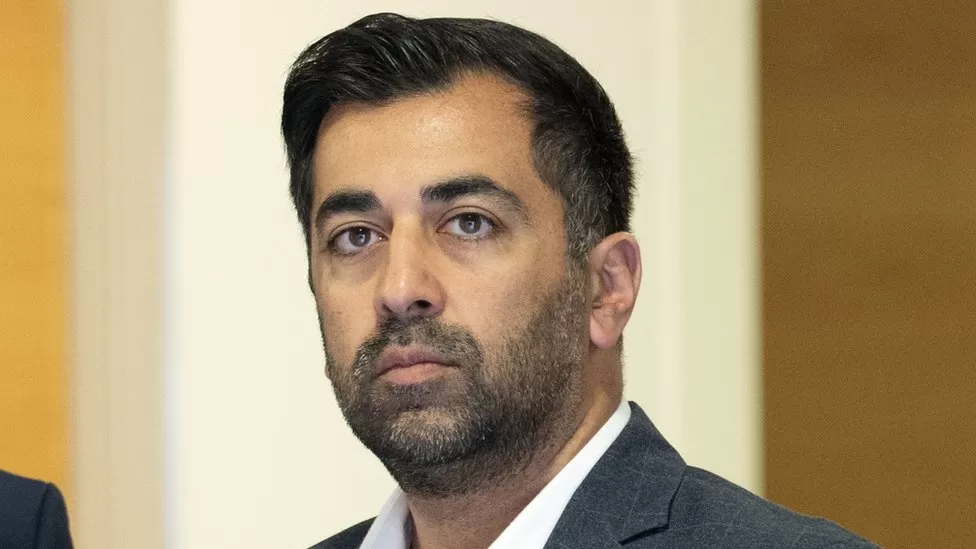
First Minister Humza Yousaf has ordered a review of Scottish government bank card spending by civil servants.

Nearly 60,000 transactions, including spending on VIP airport services, worth £14.2m were made on the procurement cards over a three-year period.

Mr Yousaf said it was “fair to ask the questions” about the spending and has asked his officials to review procedures.

It comes as further details of the spending on the cards is revealed.

Bowling, pottery lessons and yoga classes were among the “away days” for civil servants paid for on Scottish government procurement cards.

Team building events described as away days in the list of spending cost a total of £32,995 between September 2019 and August last year.

The Scottish government said it proactively publishes information about spending to improve openness and transparency – and the review was to provide “additional assurance”.


The Scottish government issues its senior staff with credit-card style electronic purchasing cards for buying goods and services up to a value of £5,000 per transaction.

A summary of purchases over £500 is officially published, but Scottish Labour obtained a full breakdown detailing all values between September 2019 and August last year.

The spending included nearly £10,000 on giving former first minister Nicola Sturgeon, and her staff, fast-track security and access to lounges at UK and European airports.

It also included a payment of £4,182 on 8 September 2019 for hospitality and hotel accommodation at the five-star Gleneagles Hotel in Perthshire.

A stay at Gleneagles Hotel in Auchterarder was among the items paid for on the Scottish government procurement cards

Speaking at an Edinburgh Fringe event with comedian Matt Forde, Mr Yousaf was asked about the procurement card spending.

According to the Daily Record newspaper, he said: “It’s fair to ask the questions that people are asking about. Was this item spent? Why was it spent? Why was it bought by the civil service?

“I will ask the permanent secretary to just review, ‘do we have the right procedures in place when it comes to spend’.”

The first minister added: “I noticed one of the headlines around security through airports and so on and so forth, which again is fair for people to ask a question.

“We absolutely have to be mindful of every penny and every pound that we spend, but we’ve also got to be mindful of people’s security.”

‘Away days’

The vast majority of the 58,000 entries were for everyday purchases needed by civil servants but more than 3,000 entries in the list of purchases have no description against them.

Dozens of transactions had entries with purchases for what are described as “away days”.

This included a £375 bill at Brewhemia in Edinburgh – one of Scotland’s largest pubs – in September 2019, as well as trips to upmarket bowling alleys.

There are also entries for team building events in Escape Rooms, where a group of people are locked in a room and have to solve a series of puzzles to get out, and crazy golf venues.

Civil servants used the procurement cards for an away day event at Edinburgh Zoo

A £1,693 “away day discussion” at the Seamill Hydro hotel in Ayrshire last year is also listed.

Hiring part of Edinburgh Zoo in 2019 cost civil servants just over £2,000, while the same year there is a separate £345 payment was made to a craft pottery firm for an event.

One further away day activity in 2019 saw civil servants purchase ping pong balls, chocolate mice, play dough and paper planes.

‘Concerning’

Scottish Labour deputy leader Jackie Baillie said: “It is deeply concerning that such a large amount of money is being spent on away days at a time when families across Scotland are struggling to make ends meet.

“No one would dispute that away days can be useful and a normal part of working practice, but eyebrows will be raised at the locations – including a jolly to Edinburgh Zoo.”

The Scottish government said: “Spending through electronic purchasing cards is used to support government officials during their usual course of work such as on training, catering, room hire and one-off supplies.

“The cards are not for personal expenditure and there are robust authorisation and regular auditing arrangements are in place to monitor their use.”

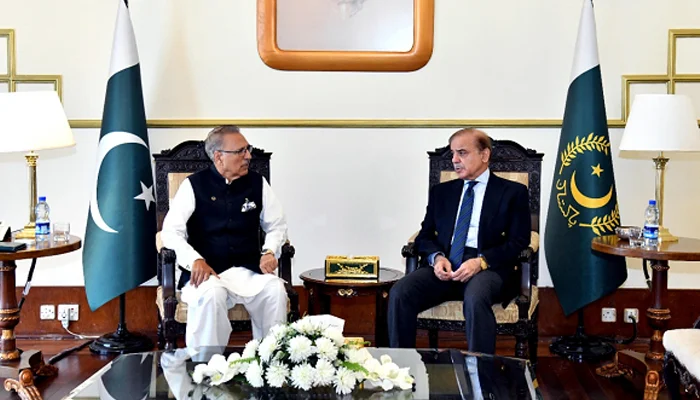
PM all set to advise president for NA dissolution today

Today (Wednesday) is most likely the last day of the coalition government as Prime Minister Shehbaz Sharif is all set to write to President Arif Alvi for the dissolution of the National Assembly.

The government will dissolve the lower house of the parliament earlier than its constitutional term (which ends on August 12) as it seeks to extend the time for elections — which is constitutionally 90 days if an assembly is dissolved prematurely.

Under Article 58 of the Constitution, the premier is bound to advise the president, who then approves it, and if he doesn’t, the assembly stands dissolved within 48 hours.

“The president shall dissolve the National Assembly if so advised by the prime minister; and the National Assembly shall, unless sooner dissolved, stand dissolved at the expiration of forty-eight hours after the prime minister has so advised,” the article reads.

In an interview with a television channel on Tuesday, Prime Minister Shehbaz said that no name had been shortlisted for the caretaker prime minister and a collective decision would be taken in this regard.

The prime minister said that after the coalition government, in consultation with Nawaz Sharif, takes a collective decision, the shortlisted names would be taken up with the opposition leader.

To a question whether the caretaker prime minister could be from the Pakistan Muslim League-Nawaz (PML-N), he said whosoever is finalised for the slot should be acceptable to all.

The prime minister is scheduled to meet Opposition Leader in the National Assembly Raja Riaz at 4pm today.

The elections, which were expected to take place within 90 days, are now pushed to the next year — in February or March.

A delay in elections was confirmed after the Council of Common Interests (CCI) “unanimously” approved the 2023 census last week.

Under the Constitution, the polls are held based on the latest census, and the Election Commission of Pakistan (ECP) is bound to start the delimitation process — which takes around four months.

Israel cuts funds to Arab towns, Palestinian education programmes

JERUSALEM: Israeli Finance Minister Bezalel Smotrich has frozen funds for Arab towns and Palestinian education programmes in East Jerusalem, citing crime and safety fears and prompting accusations of racism.

Smotrich, a key member of Prime Minister Benjamin Netanyahu’s nationalist-religious government, said on Monday some of the budget funds meant for Arab local councils were a political pay-off by the previous cabinet that could end up in the hands of “criminals and terrorists”.

“The priorities of our national government… are different from those of the previous leftist government and we should not apologise for that,” said Smotrich, head of the pro-settler Religious Zionism party.

Lawmaker Mansour Abbas who heads the United Arab List accused Smotrich of racism. “Arab citizens are entitled to those funds, which were meant to close the gaps between Arab and Jewish communities,” he said.

Forces demolish home of alleged attacker; minister brushes off US terrorism label

Demolishes home

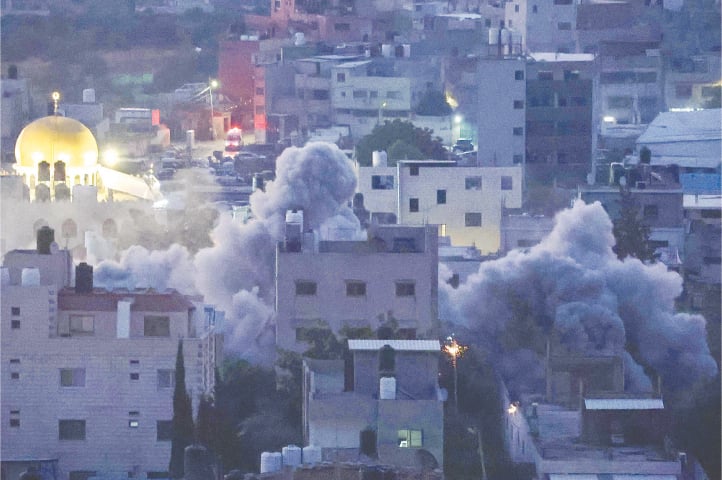
Israel’s army said on Tuesday it demolished the home of a Palesti­nian accused of killing a soldier and his brother in the occupied West Bank.

Overnight incursion by Israeli army to destroy the residence of Abdel Fatah Khroushah in the Askar camp for Palestinian refugees, in the northern city of Nablus, the military said.

After the military blew up his residence, smoke billowed across the densely populated neighbourhood and neighbours inspected the damage.

The Palestinian Red Crescent Society said six Palestinians were wounded. It said Israeli forces targeted one of its ambulances with rubber bullets and tear gas.

The army had accused Khroushah of shooting dead two Israeli settlers in February.

‘Terror attack’

An Israeli official brushed off on Tuesday the rare US use of the term “terror attack” to condemn the killing of a Palestinian in the occupied West Bank.

“We strongly condemn yesterday’s terror attack by Israeli extremist settlers,” the US State Department’s Near East Bureau said on Saturday.

Police initially accused the settlers of “deliberate or depraved-indifference homicide” with a racist motivation, but a member of Prime Minister Benjamin Netan­yahu’s security cabinet argued that culpability for the Burqa death was far from clear.

“I wouldn’t advise treating the US definition as a precise professional definition. At the end of the day, they are not drawing on intelligence, but on media reports,” said Agriculture Minister Avi Dichter, a former counterterrorism chief for Israel’s Shin Bet security service.

The State Department appeared disinclined on Monday to elaborate on its sharpened censure over the Burqa killing.

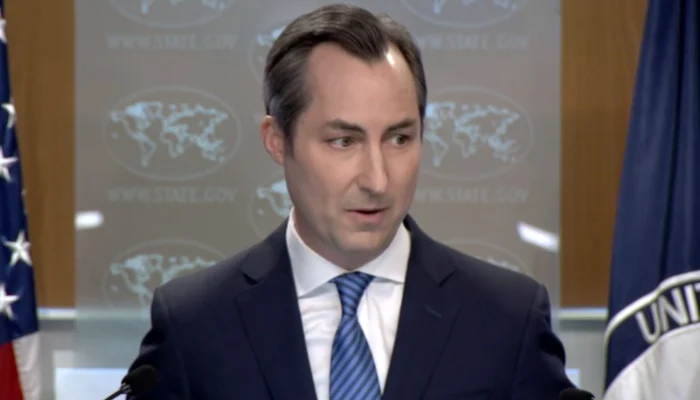
“The thinking is that it was a terror attack, and we are concerned about it, and that’s why we called it that,” spokesperson Matthew Miller told reporters.

33 dead, 18 still missing after record Beijing rains: officials

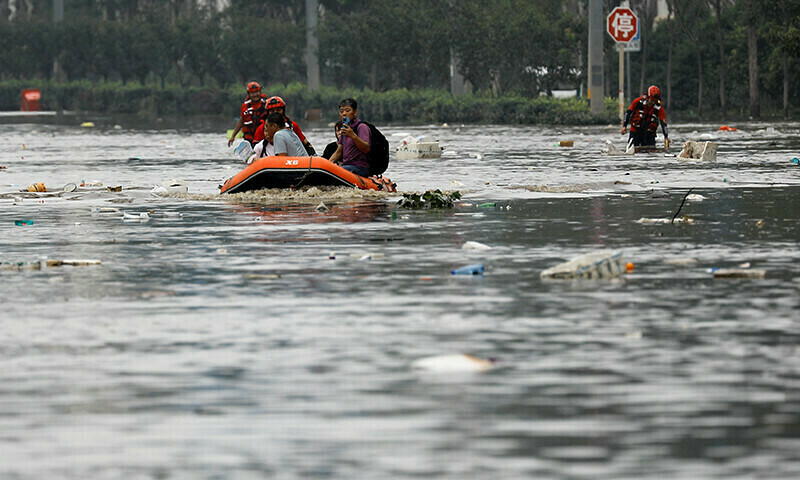
China’s capital has been hit by record downpours in recent weeks, damaging infrastructure and deluging swathes of the city’s suburbs and surrounding areas.


Officials said on Wednesday that 33 had died in the recent bad weather in Beijing, mainly by flooding and buildings collapsing, almost three times the figure given by officials last Tuesday.

“I would like to express my deep condolences to those who died in the line of duty and the unfortunate victims,” Xia Linmao, Beijing’s vice mayor, told a press conference, according to state broadcaster CCTV.

Scores have died in the floods across northern China, with Beijing on Friday saying 147 deaths or disappearances last month were caused by natural disasters.

Of those, 142 were caused by flooding or geological disasters, China’s Ministry of Emergency Management said.

In Hebei province, which neighbours Beijing, 15 were reported to have died and 22 were missing.

And in northeastern Jilin, 14 died and one person was reported missing on Sunday.

Further north in Heilongjiang, state media reported dozens of rivers saw water levels rise above “warning markers” in recent days.

“I still feel scared when I recall the recent flooding,” Zheng Xiaokang, a police officer from the province’s Jiangxi village, told the state-run Xinhua News Agency.

“In the face of the persistent downpour and rising river water, the consequences would have been devastating had we not managed to timely evacuate the villagers,” Zheng said.

Millions of people have been hit by extreme weather events and prolonged heatwaves around the globe in recent weeks, events that scientists say are being exacerbated by climate change.

Marseille police officers arrested over death during rioting

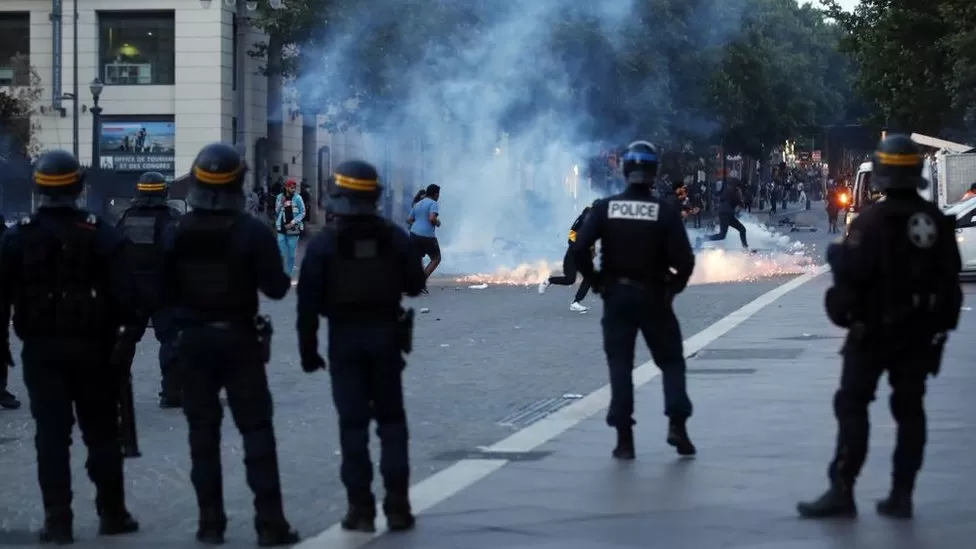
Delivery driver Mohamed Bendriss, 27, suffered a cardiac arrest amid rioting in Marseille on the night of 1 July.

The officers, who are from an elite riot control unit, were placed under investigation after an autopsy revealed Mr Bendriss may have died after being hit by a weapon used by police.

His family said he was an innocent bystander, AFP news agency reported.

Violent disorder broke out across France after 17-year-old Nahel M was shot and killed by a police officer during a traffic stop in the Nanterre suburb of Paris on 27 June.

Hundreds were injured and arrested during clashes between police and crowds in several locations, including the southern port city of Marseille.

French prosecutors said a post-mortem investigation revealed marks on Mr Bendriss’ chest which suggested he had been struck by a so-called flash-ball, or LBD, AFP reports.

The controversial weapons – which fire an exploding rubber or foam pellet – are dubbed “less than lethal,” but campaigners have long said they should be banned and have linked them to serious injuries.

It is thought the married father-of-one may have suffered a heart attack while riding his scooter after being hit by a flash-ball.

In a statement issued to French media, a lawyer representing his pregnant wife said he had not been involved in any violence.

Mr Bendriss’ death would be the first confirmed fatality on the French mainland to have resulted from this summer’s disorder.

In French Guiana, a region of France on the north-east cost of South America, a 54-year-old was reportedly killed on 29 June after the Nahel M protests spread there. Authorities said they were killed by a stray bullet fired by rioters, Le Monde reported.

Marseille’s police force has already been under scrutiny over its conduct during the national unrest after another man suffered life-changing injuries, also allegedly caused by a flash-ball.

Watch: Nahel’s family say violence won’t bring justice for the boy they lost

A 22-year-old North African immigrant identified as Hedi was forced to have part of his skull amputated and lost the use of an eye.

Prosecutors said he was shot in the head with a flash-ball by police on 21 July.

Four officers are under investigation over the incident, including a 35-year-old identified as Christophe, who has denied deliberately injuring the man.

In an unusual move, he has been remanded in custody pending a trial, which has led to widespread controversy across France’s police forces.

Tories could campaign to leave European human rights treaty if Rwanda flights blocked

There is frustration at the role of a European court in stopping flights for asylum seekers taking off last year.

The minister told the BBC the UK was “probably” being punished for Brexit.

The government has said the UK will remain in the ECHR.

“The government has been clear that it will abide by its international treaty obligations,” a spokesperson said.

“As we’ve set out previously – we believe our Stop the Boats Bill will deliver the changes necessary to reduce the incentives for people to risk their lives through illegal crossings while remaining party to the ECHR.”

But the comments by senior figures in government are likely to reignite a debate in the Conservative Party about the ECHR – which splits opinion among Tory MPs.

The ECHR was established in 1950 by a number of countries including the UK.

The treaty, which sets out the rights and freedoms people are entitled to in the 47 signatory countries, is overseen by the European Court of Human Rights.

It is separate to the European Union – so the UK remained part of both after Brexit.

Ministers are desperate to show they can deliver on tackling illegal migration to the UK before an election – likely next year.

But so far the Rwanda scheme, which would see the UK send some asylum seekers to the east African country, has not got off the ground and the timetable is slipping.

The first flights were stopped by a European judge in a last minute intervention last year – despite being cleared by UK courts.

Since then, the scheme has become bogged down in legal action.

The UK’s Court of Appeal ruled against the plan last month, to the surprise of the Home Office.

There will now be an appeal in the Supreme Court in the autumn, but senior ministers are privately unsure about whether they can overturn the ruling.

They fear that even if the government does win, it could take many months for deportations to begin because individual legal challenges will take place too.

Alternative plans are being considered, but they would also face legal challenges and take time to deliver.

That is likely to lead to further debate about whether the UK needs to take further action to ensure the policy is delivered.

Legislation passed in recent weeks will put a legal obligation on the government to remove people who have entered the country illegally.

But without comprehensive returns agreements – and with the Rwanda policy stuck in the courts – it is unclear when ministers will trigger the implementation of that responsibility.

The government also now has the power to ignore certain ECHR interim injunctions relating to border security.

But some Conservative MPs wanted the government to go further and remove itself from other ECHR obligations.

A cabinet minister said events could make it “inevitable” the Conservatives end up backing leaving the ECHR.

Some backbenchers have said the Conservatives should campaign to leave at the next election regardless of what happens with the Rwanda scheme.

Jonathan Gullis said: “Time and again we see the quasi-legislative European Court of Human Rights continue to undermine the government’s plan to stop the boats.”

He added the electorate should be given a choice over ECHR withdrawal at the next election.

But a former cabinet minister – strongly opposed to withdrawal – described the idea as “knee jerk nonsense”.

They said those who backed quitting were a “minority” and there would be significant opposition in cabinet.

US believes Imran Khan’s case doesn’t warrant response

WASHINGTON: The United States said Monday it responds to “obviously unfounded” cases and Pakistan Tehreek-e-Insaf (PTI) Chairman Imran Khan’s arrest in the Toshakhana case was not one of them.

The comment came during US State Department spokesperson Matthew Miller’s press briefing in Washington, where he was asked a slew of questions regarding the PTI chief’s arrest.

“We believe that is an internal matter for Pakistan, and we continue to call for the respect of democratic principles, human rights, and rule of law in Pakistan, as we do around the world,” he said in response to a question.

The spokesperson had also earlier maintained that the US believes the case of Khan — who was arrested last Saturday, sentenced to three years in prison, and disqualified for five years from running for office — was an internal matter of Pakistan.

A journalist then pressed the State Department’s spokesperson further. He said that some people described the response as pretty subdued and muted and wondered whether it was due to Khan’s criticism of the US.

In response to this, Miller said: “I think our response to this arrest and his previous arrests have been consistent at all times in declaring it an internal matter for Pakistan.”

The journalist then asked how was Khan’s arrest different from the case of Russian opposition leader Alexei Navalny — who has been jailed for around two decades in a criminal case. The US called it an “unjust trial”.

Miller responded: “So we believe at times there are cases that are so obviously unfounded that is — that the United States believes it should say something about the matter. We have not made that determination here.”

The journalist then informed Miller that the US had responded to Navalny’s arrest. At this, the spokesperson said that they respond when Russia is clearly violating his human rights.

He then asked the spokesperson about Julian Assange, an Australian journalist who leaked official US documents in 2010 and is now behind bars in London as Washington seeks to extradite him.

“Is it, not Britain’s (or Australia’s) internal matter?” the journalist asked, to which Miller responded: “He has clearly been charged by the US Justice Department.”

“So other countries should say nothing?” the journalist asked.

“We fully respect the right of other countries to make their positions clear on this and other matters […] We respect their right to raise [the issue but] we will make clear our belief [too], … the fact that he was charged with very serious crimes that severely harmed the national security of the United States.”

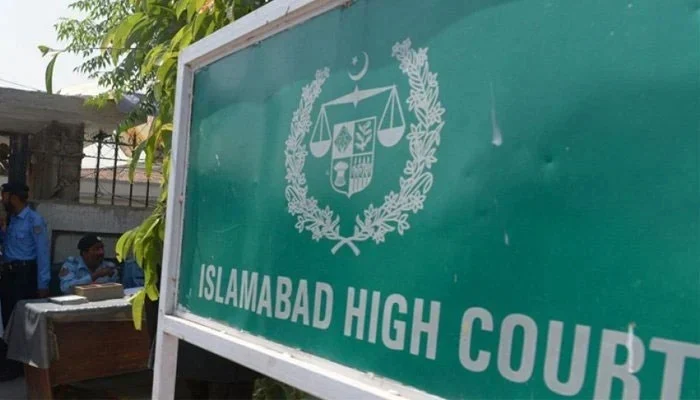
IHC hears PTI’s petition seeking Imran Khan’s transfer to Adiala Jail

ISLAMABAD: The Islamabad High Court (IHC) is hearing the petition requesting the transfer of Pakistan Tehreek-e-Insaf (PTI) Chairman Imran Khan from Attock Jail to Adiala Jail — where he has been sentenced to three years in jail in the Toshakhana case.

IHC Chief Justice Aamer Farooq is hearing the plea along with the objections of the Registrar’s Office to it today (Tuesday).

The PTI had filed the petition yesterday that given Khan’s “education, habits and social and political status”, he ought to be provided better or A-class facilities in jail.

“Keeping in view the petitioner’s social and political status, his education, and his being accustomed to a better living style, the Petitioner was entitled to A-Class facilities in terms of Rule 243 read with Rule 248 of Pakistan Prison Rules,” the petition read.

It further appealed that the PTI’s chair’s legal team, personal physician, and family members be allowed to meet him.

Khan was arrested on August 5 after a district and sessions court in the federal capital convicted him for corrupt practices related to the state gift depository — allegations which he denies.

Additional and Sessions District Judge Humayun Dilawar sentenced Khan to three years in jail, along with a fine of Rs100,000.

After his arrest, Khan was moved to Attock jail.

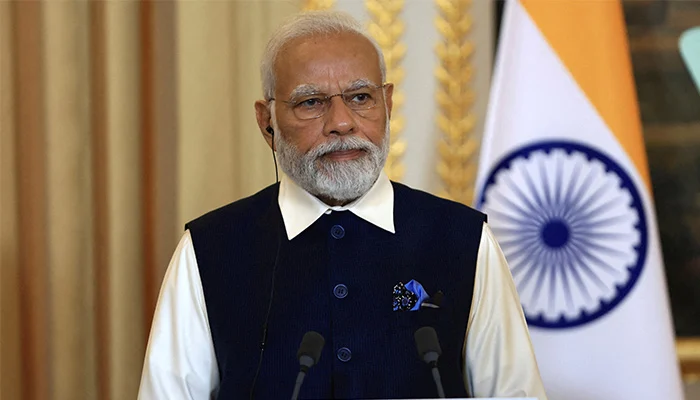
No-confidence: Modi to face fierce debate in Lok Sabha for silence on Manipur

India Prime Minister Narendra Modi is expected to face a heated debate over silence on the deadly violence in the remote state of Manipur, during the ongoing session in the Lok Sabha today (Tuesday), local media reported.

Congress leader Gaurav Gogoi initiated a debate on the no-confidence motion against the country’s Bharatiya Janata Party (BJP) government.

However, a central minister created a ruckus saying that senior Congress leader Rahul Gandhi was earlier said to open the debate.

Modi’s main opponent, Gandhi, returned to Lok Sabha on Monday after the country’s Supreme Court halted his criminal defamation conviction in the 2019 ‘Modi surname case’.

The Lok Sabha took up an extensive discussion on the no-confidence motion — also known as the no-trust motion — moved by the recently formed alliance Indian National Developmental Inclusive Alliance (I.N.D.I.A) last month, which will continue till Thursday.

The debate is expected to be a fierce one, with Prime Minister Narendra scheduled to reply to it on the concluding day, August 10.

The 26 opposition parties’ alliance I.N.D.I.A moved the no-confidence motion against the BJP-led government on July 26, nearly four days after the Monsoon Session began in the Indian Parliament, to force a statement from PM Modi on the Manipur violence.

It may be noted that Modi has maintained silence on what has “come close to a civil war” engulfing the northeastern state, where Modi’s Hindu nationalist BJP is in power.

He had not commented in public about the worst ethnic violence ever seen in the small state of 3.2 million until last week, when videos showing two women being paraded naked and molested by a mob in Manipur surfaced, sparking national outrage.

Modi condemned the mass assault as “shameful” and promised tough action against the perpetrators.

Opposition parties, however, disrupted the monsoon session of parliament which began last week, to demand a detailed statement by Modi on Manipur in parliament.

A no-confidence motion serves as a mechanism to assess the joint accountability of the governing administration.

As per a report by Hindustan Times, a no-confidence motion can be proposed if a Member of Parliament (MP) feels that the incumbent government doesn’t have enough support to stay in charge and do its duties.

This motion needs support from at least 50 other MPs and can only be initiated within the lower house of India’s bicameral Parliament, called Lok Sabha.

“Within a parliamentary democracy, the continuity of a government’s authority relies on its ability to command a majority within the directly elected body, the Lok Sabha. According to Article 75(3) of the Indian Constitution, a Council of Ministers, comprising members of the elected government, bears collective accountability to the Lower House.”

Modi’s BJP has a clear majority of 301 members in the 542-seat lower house of parliament, so the no-confidence vote will not impact its stability.

However, the ethnic tensions in Manipur are seen as a rare security and political failure by Modi’s government, which will face a national election by May 2024.