

Indira Gandhi assassination float in Canada draws India’s anger

LONDON: India’s foreign minister Dr Subrahmanyam Jaishankar has attacked Canada for allowing a float in a pro-Khalistan Sikh parade in the Canadian city of Brampton depicting the 1984 assassination of Indian Prime Minister Indira Gandhi by her Sikh bodyguards.

Video circulated by Sikh activists showed a float from the parade featuring Gandhi wearing a blood-stained white saree with her hands up as turban-clad Sikh men pointed guns at her. A poster behind the scene read: “Revenge”.

Jaishankar said: “It isn’t only one incident, no matter how egregious it may be. I think there is a larger underlying issue about the space which is given to separatists, to extremists, to people who advocate violence. I think it is not good for relationships, not good for Canada.”

India’s external affairs minister argued the incident shows Ottawa’s lax approach to extremism.

He said: “We are at a loss to understand, other than the requirements of vote-buying politics, why anyone would do this.”

Canada’s high commissioner to India also condemned the incident at the parade by Sikh activists in Brampton.

Gandhi was assassinated in 1984 by two Sikh bodyguards after she allowed the storming of the holiest Golden Temple Amritsar, killing thousands of Sikhs who demanded the creation of Khalistan.

India’s condemnation came within days after Prime Minister Justin Trudeau’s national security adviser said India was among the top sources of foreign interference in Canada, directly naming India for exerting improper influence in Canada.

Jaishankar said he found it hypocritical that Canada would call out India for interference.

“If anybody has a complaint, we have a complaint about Canada; the space that they’re giving to Khalistanis and to violent extremists,” he said.

Pro-Khalistan campaign group Sikhs For Justice (SFJ) defended the float rally in Brampton. Its General Counsel Gurpatwant Singh Pannun said the float depicted a harsh reality that Indira’s assassination was the direct outcome of her decision to attack Darbar Saheb, killing over 10,000 Sikhs.

He said: “Indira Gandhi ordered Operation Blue Star in which more than 10,000 Sikh pilgrims including women and children were massacred by the Indian army. The violence started by Indira Gandhi continues against Sikhs today. Sikhs from Canada suffered violence too. Shaheed Talwinder Singh Parmar was accused of Air India bombing and tortured to death. He was killed without a charge because there was no evidence. Mohinder Singh Khalsa from Ontario was also killed by India. India’s weapon is violence but Sikhs believe in using the weapon of the ballot through Khalistan Referendum voting.”

Canada and India openly clashed a few months ago as tens of thousands of Sikhs gathered in Brampton to take part in the Khalistan Referendum voting. India asked Canada to ban voting but the Canadian govt refused saying it cannot ban the democratic political activity of its citizens.

Canada has the highest population of Sikhs outside of Indian Punjab. Earlier this year, India summoned Canada’s high commissioner to convey concern over pro-Khalistan protesters in Canada who breached the security of India’s diplomatic mission and consulates.
Iran and Afghanistan dispute Helmand water rights as climate change deepens crisis

Iranian and Afghan Taliban forces clashed on the border two weeks ago, resulting in two deaths and several wounded as tensions surrounding water rights continue to rise between Tehran and Kabul.

Each accusing the other of firing first, Iran and Afghanistan are increasingly taking a belligerent stance on the sharing of water supplies as a rapidly changing climate exacerbates water insecurity in the region.

The dispute between the two countries mainly revolves around the Helmand River, whose turquoise waters emerge from the Hindu Kush mountains in east-central Afghanistan and flow southwest across more than half the length of the country before emptying into the Helmand swamps on the border with Iran.

Iran depends heavily on this water for farmland irrigation in the southeastern province of Sistan-Baluchistan, and has recently pointed the finger at Afghanistan for limiting the supply.

Tehran in May accused Kabul of violating a 1973 treaty that grants Iranians the right to use 22 cubic metres of water per second with the possibility of an additional four cubic metres.

Claiming that it is receiving only about 4 percent of the agreed amount, Iran issued a warning to the Taliban and demanded access to Helmand waters.

Dry lake and dust storms

“The Helmand is a river of great importance for Iran because it allows the agricultural areas of Sistan and Baluchestan to develop. And this becomes all the more important as we are in a situation where accelerating sequences of drought and reduced rainfall are putting these agricultural regions at risk,” said Jonathan Piron, a historian specialising in Iran for the Etopia research centre in Brussels.

As a country partly made up of arid and semi-arid land, Iran is increasingly threatened by recent phenomena of desertification as it experiences longer bouts of drought due to climate change.

Iran’s Sistan and Baluchestan province is now home to vast expanses of dry land as prolonged droughts have accelerated the shrinking of Lake Hamoun – fed by the Helmand River – which used to be at the heart of the world’s seventh-largest wetlands.

Around the lake, wildlife and vegetation, agriculture and livestock, as well as villages have disappeared, leaving behind a desolate landscape.

To make things worse, the region is turning into a major source of dust storms due to the drop in vegetation cover.

“These dust storms, when they arrive on dry, poor soil, scrape the land even more, raising even more dust, sand and salt, and damaging the good agricultural areas a little further away,” said Piron, who has been conducting water research in Iran for several years.

Afghanistan’s new dams

Water is also a precious commodity in Afghanistan as it is essential to crop cultivation in a country that is threatened by food insecurity.

“There is a desire on the part of the Taliban to regain control of Helmand and to promote water redistribution for their own population in order to assert their legitimacy as rulers,” said Piron.

During the past decades of war that ravaged the country, Afghanistan’s hydraulic infrastructures were neglected, which “favoured the Iranians” despite Afghans’ own water needs.

The former Afghan government accused Tehran of encouraging instability in regions surrounding Afghan dams by supporting armed groups, so that the water could continue to flow beyond the border.

Afghanistan has nevertheless decided to regain control of its hydraulic potential in recent years by speeding up the construction of hydroelectric dams and irrigation systems.

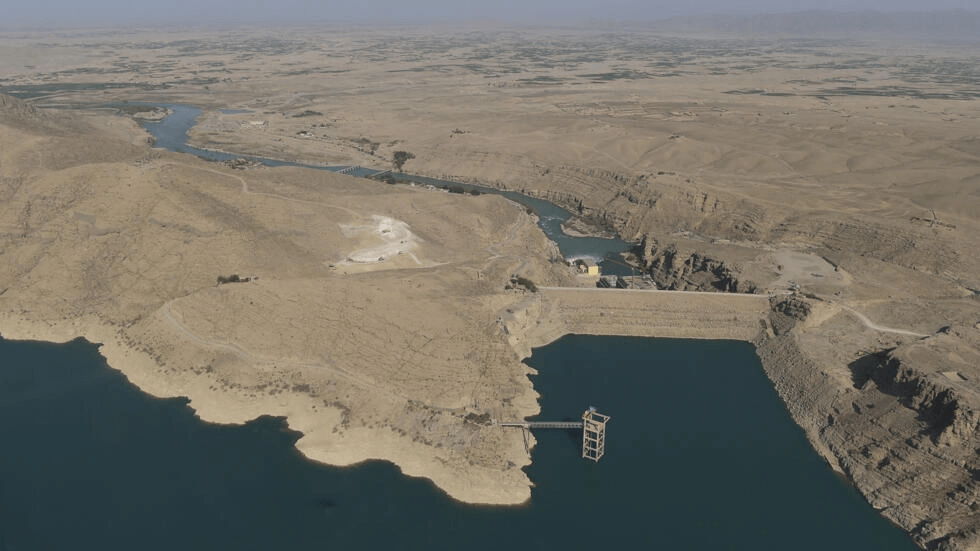
The Kamal Khan Dam, which is situated on the border with Iran, was inaugurated in March 2021 on the Helmand River after six decades of construction work.

In the meantime, the Kajaki Dam, often a bone of contention with Tehran, has also undergone major work and was recently completed.

Originally built in the 1950s, the dam was abandoned in 1979 during the Soviet invasion. It was only after the fall of the Taliban in 2001 that the US got it running again, after a major overhaul that was eventually scaled back. Later, the Afghan government took charge of new construction work in 2013 after calling in a Turkish company to the rescue.

Massive blast rips through Turkish explosives factory; at least 5 killed

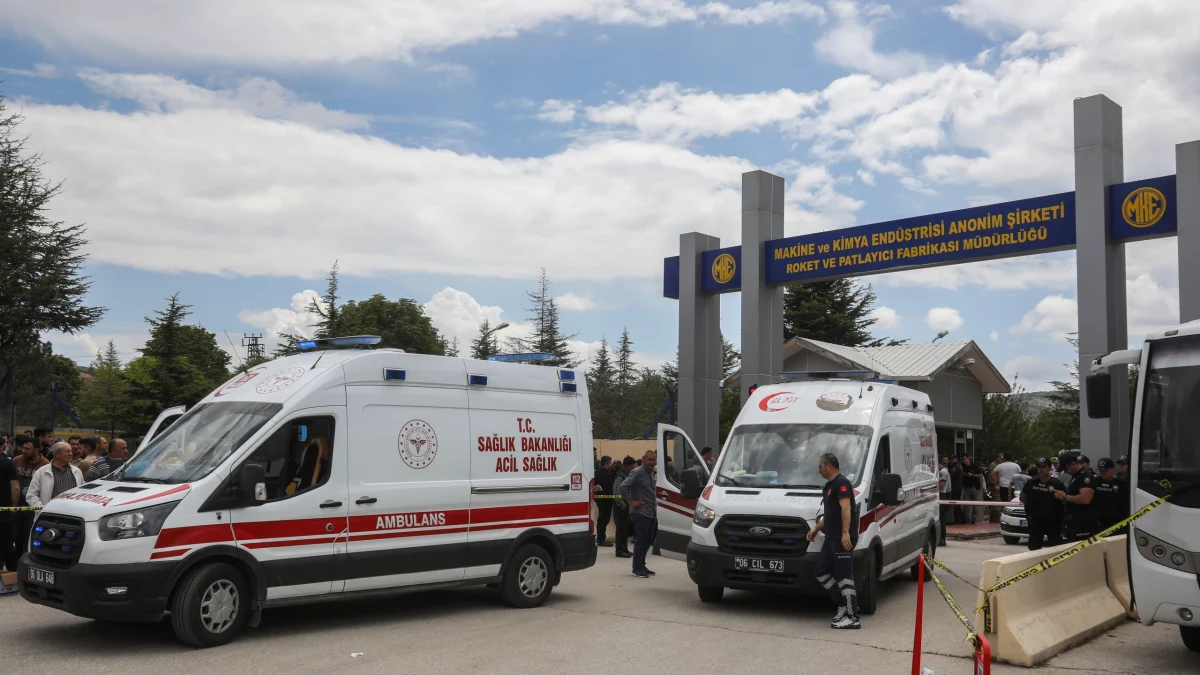
At least five people were killed and dozens injured after a huge blast at an arms and ammunition factory in Turkey, authorities reported Saturday, while ruling out any sabotage amid scanty details released by the country’s defence ministry.


The explosion occurred at a state-owned Mechanical and Chemical Industry Corporation factory in the Elmadag district, located 40 kilometres east of the Turkish capital, Ankara, on Saturday morning.


According to the BBC, the explosion caused several other injuries and broke windows in adjacent homes and businesses.

Authorities said that an accident in the factory’s explosives department was to blame for the explosion.

Meanwhile, state media stated that injured personnel had been transported to nearby hospitals, and regional governor Vahap Sahin said that no more employees or staff members were still trapped in the rubble.

However, many are reportedly in critical condition.

Sahin told reporters that the explosion was the result of a chemical reaction, according to technical staff, and that it happened at 08:45 am local time (05:45 GMT).

Alpaslan Kavaklioglu, the deputy defence minister, said in a statement that investigators had reviewed a video taken inside the structure just before the explosion and found nothing out of the norm up to the moment of the explosion.

“Our workers were carrying out their normal activities, and the explosion happened suddenly,” he added.

Pictures from the plant showed ambulances there, and it’s been reported that firefighters are putting out a number of small fires. Many family members gathered in the interim to get updates on their loved ones.

Regional prosecutors stated they were looking into what happened, and the Ministry of Defence announced that judicial and administrative investigations have begun about the incident.

Turkish Defence Minister Yasar Guler briefed newly re-elected Turkish President Recep Tayyip Erdogan about the incident, according to a statement from his office. President Erdogan expressed his sympathies to the families of the victims, according to the defence ministry.

Furthermore, the factory produces missiles for the Turkish armed forces.

US intelligence confirms China spying from Cuba for years

China has been operating a spy base in Cuba since at least 2019 as part of its global efforts to improve intelligence gathering, according to a US official from the Biden administration.

The US intelligence community has long been aware of China’s spying activities in Cuba and its broader ambitions to establish similar operations worldwide. The Biden administration has intensified its efforts to counter China’s expanding spying operations, making progress through diplomacy and other undisclosed actions.

Confirmation of the Chinese spy base came after The Wall Street Journal reported that China and Cuba had agreed to build an electronic eavesdropping station on the island. However, both the White House and Cuban officials dismissed the report as inaccurate.

US-China relations have been tense during Biden’s presidency, with conflicts arising from visits to Taiwan and the US shooting down a Chinese spy balloon that entered US airspace. Despite these tensions, the White House is eager to resume high-level communication with China.

A Biden administration official confirmed that Chinese spying from Cuba is an ongoing matter and not a recent development. China has been exploring various sites worldwide for intelligence gathering, including existing facilities in Cuba, and upgraded its spying operation on the island in 2019.

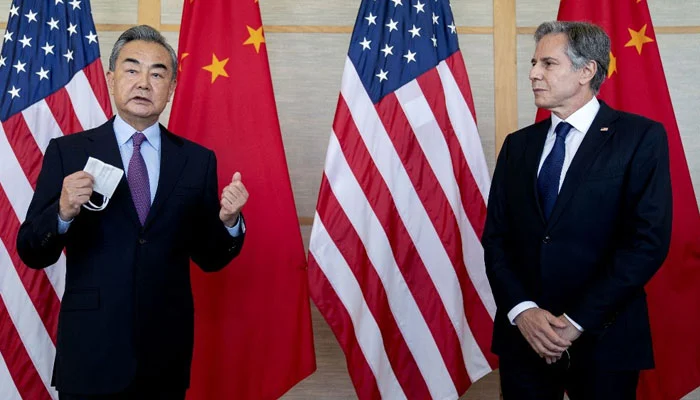
The US and China have made limited efforts to ease tensions, with Secretary of State Antony Blinken planning a trip to China and previous meetings between officials from both countries. However, China rejected a meeting request from US Defense Secretary Lloyd Austin.

China’s presence in Cuba has been documented in the intelligence record, although the Cuban government denies the existence of a Chinese spy base. The reports of a planned base in Cuba coincide with China’s broader push to expand its security presence globally.

US officials believe that their diplomatic efforts have slowed down China’s activities in Cuba, but the situation remains a concern. The rescheduled visit of Secretary of State Blinken to China is seen as a significant step, but the US official acknowledged that China’s ambitions have not been fully curtailed.

The existence of the spy base has been confirmed, despite denials from China and Cuba. Tensions between the US and China persist, and efforts to resume high-level communication are underway. The US believes its diplomatic efforts have hindered China’s activities in Cuba, but concerns remain.

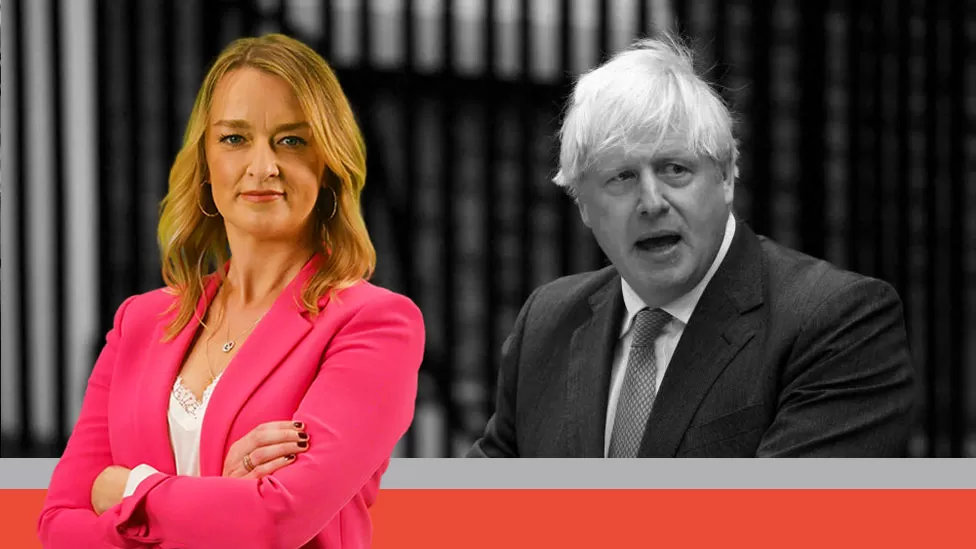
Boris Johnson had to leave Downing Street last summer because a majority of his Conservative colleagues thought he was doing more harm than good.

Now a committee of MPs is set to judge he didn’t tell the truth. That committee is made up mainly of Tory MPs. The former PM has faced the same procedure as other MPs that get into trouble. And while Mr Johnson claims he has been “forced out”, remember he has chosen to quit before we even see the black and white of their verdict.

It is also a fact there are some Conservatives who begrudge him his success. It is also true that during his last few months in No 10 there were internal enemies trying to force him out.

But to dress that up as a grand conspiracy is, candidly, a stretch. One of those who knows him best told me his resignation announcement was “1,000 words that tell you everything about Johnson’s mindset – it’s your fault not mine”.

Rather than confront what has happened or try to defend himself from the judgement that is coming, Boris Johnson made a political choice this week not to stay and fight.

As ever, the line between farce and tragedy is skinny. While most of the headlines screamed of the shock, the former prime minister’s exit from Parliament is entirely on brand.

The timing on a Friday was unexpected, but no surprise. He never much liked Parliament anyway, even though he managed to find a gong for the Commons’ hairdresser.

The idea he would savour being a humble backbencher asking questions about cash for the local hospital or appearing at school fetes was for the birds. And if the Privileges Committee’s findings are as savage as expected he would have faced a by-election.

Clues from his track record tell us there is little chance he would have fought if he hadn’t been sure he could win. He pulled out of the Tory leadership race in 2016 when Michael Gove’s move blew up his status as front-runner.

He didn’t run in 2022 despite a dash back from the Caribbean and fevered claims that he had enough support. One former cabinet ally says he is “more calculating than people think and this will have been a calculation – if he thought he would win the by-election he would stay”. To win and lose does not match brand Boris. To leave like this absolutely does.


The power of his personality – frankly his fame – means he leaves behind some devastated colleagues and a strand of the public who believe he has been hard done by.

One former cabinet minister says: “The party wounded itself when it defenestrated Boris and continues to bleed.”

Some of his hard-core supporters left on the backbenches say his exit is a sad day for democracy and – with some justification believe his leadership is what secured their seats, particularly in parts of the country where the Tories could never have dreamt of doing well before.

Some of his loyal backers do feel like he is the great hero in a tragedy, cast aside unfairly in an epic drama, undone by those who envy his talents.

His exit is arguably a tragedy for those who genuinely believed in and adored him. And there is a political tragedy for the Conservative Party, which many MPs privately believe squandered a once in a generation majority.

2019 gave it one of those rare chances to make radical changes to the country, and while many believe it was thrown away by mismanagement and mistakes, there was of course the unexpected horror of the Covid pandemic too.

For those who deplore Boris Johnson, there is a different kind of tragedy, the damage they believe he did to the UK’s reputation. And several of those who have been close to him over the years identify a fourth element of the mess – the fact they believe it was never going to end well.

In the Greek tragedies so beloved of Mr Johnson himself, fate, and inevitability plays an important role. One of them says: “Boris is a genuine tragedy. This was all inevitable. We knew how it would play out, but we are still surprised and shocked about how dreadful it is. All our hard work pissed away.”

So what happens next? Some MPs are actually cock-a-hoop despite the colossal mess. One tells me: “The man-baby has gone – so pleased!”

But allies talk up his chances of running for another seat some time. One former senior minister tells me “the question is does he plan to get another seat or even Mid-Beds?” – the constituency his close ally and former Culture Secretary Nadine Dorries has just left.

Another former cabinet minister says: “It would be very unwise for him to run again. He has a vociferous 20% in the party who like him but 80% don’t. If he ran in a by-election the Lib Dems would murder him.”

Would party HQ even let that happen? Prime Minister Rishi Sunak has changed the personnel in charge there. One senior figure pours a bucket of freezing water over the idea telling me: “Boris died today.”

What is not clear yet is whether as that MP suggests the manner of his departure could “generate so much unrest I fear there will be an election much sooner than thought”.

Mr Johnson has thrown grenades at No 10 – not just the committee that has judged him – suggesting Mr Sunak is not running a “proper Conservative” government.

One former ally says the ex-PM has “gone full circle, returning to his political home – a hut across the water where he can now lob rocks without any sense of responsibility or accountability – and that is ultimately very dangerous for his party and Sunak”.

PM terms budget start of economic healing after Imran’s dent

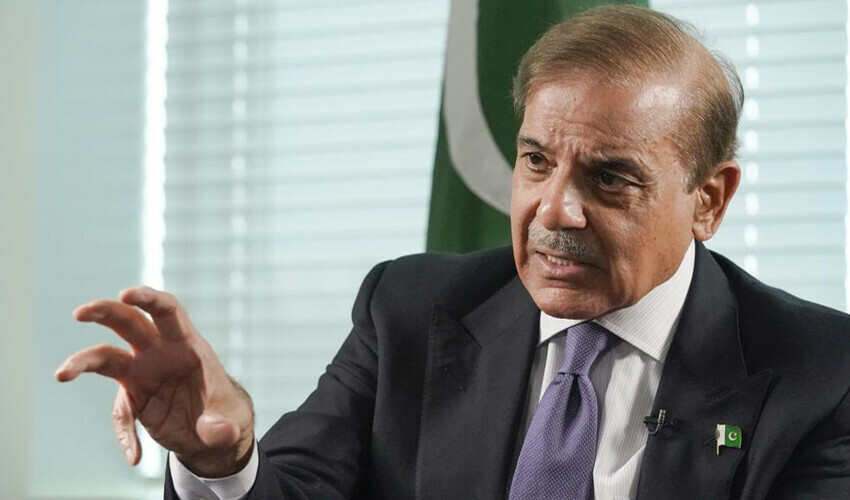
The premier took to Twitter and penned that the Pakistan Democratic Movement (PDM) has prioritized the right areas that have the potential to spur economic growth, attract investment and make the economy self-sufficient

The Prime Minister said making the Budget (FY2023-24) was particularly a difficult task in view of the persistent challenges arising out of the floods-related relief and rehabilitation, global supply chain disruptions, and geostrategic upheavals.

Read also: PM Shehbaz says political, economic stability go hand in hand

Holding Imran responsible for economic woes, PM Shehbaz said never-ending headwinds of political instability created by Imran Niazi damaged the economy and created uncertainty, as the country remained on the boil for well over a year.

He went on to say mindful of the impact of inflation, the government has provided relief to public sector employees and pensioners in the form of pay raise of up to 35 percent and 17.5 percent respectively, and increased minimum wage to 32000 rupees.


The premier added a more balanced budget that levies no new tax could not have been possible within the existing constraints.

He commended all those who remained part of this exercise and played their role in this budget-making exercise.

“The economy direly needs reforms, which, in turn, can be undertaken in a stable political environment, for economic development is intrinsically linked to political stability,” observed PM.

He said it is here that the Charter of Economy appears to be the only way forward for our political parties to achieve prosperity for our people.

Budget 2023-24: Govt allots Rs59.7 billion for HEC schemes

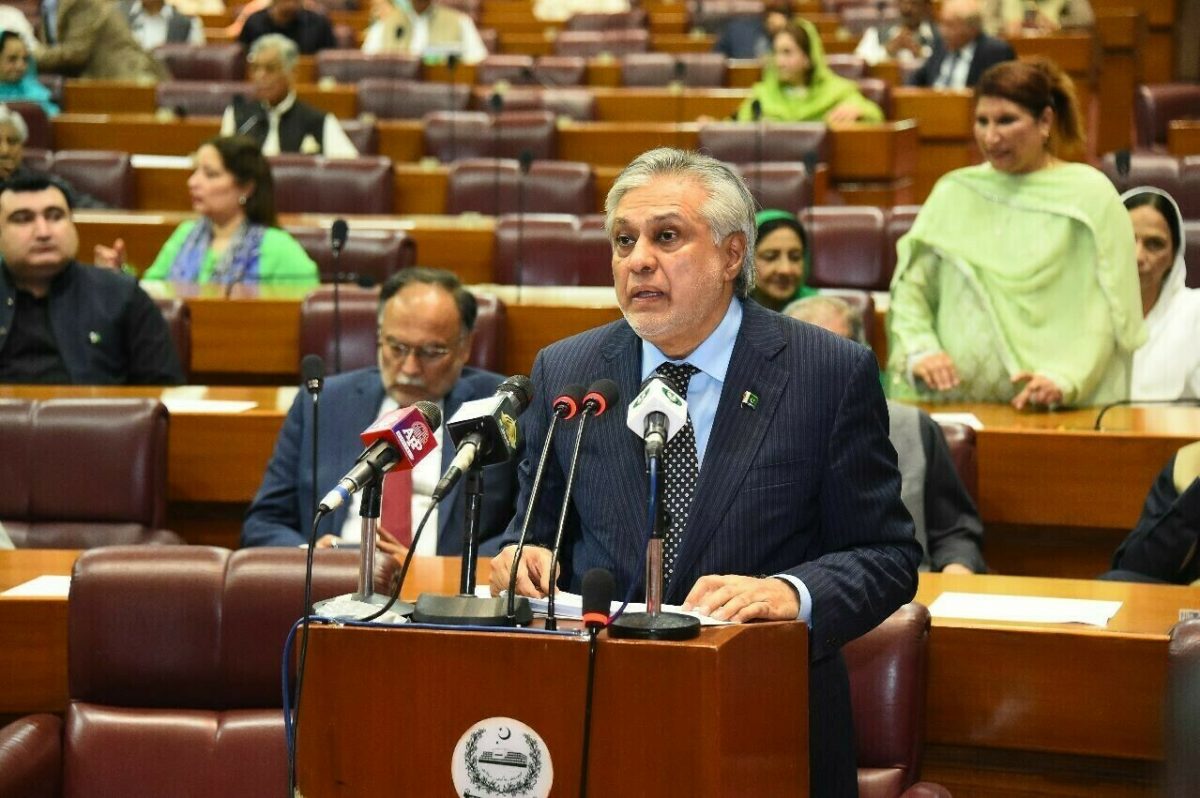
The budget for the upcoming fiscal year, unveiled by Finance Minister Ishaq Dar on Friday, allocates Rs59.7 billion for the ongoing and new schemes of the Higher Education Commission (HEC) under the Public Sector Development Programme (PSDP).

Around Rs52.8 billion and Rs6.9 billion have been designated for ongoing schemes and new schemes respectively.

Ongoing schemes

Among the ongoing schemes, Rs1.5 billion has been allocated for the Award of Allama Muhammad Iqbal 3,000 Scholarships to Afghan students (PM’s Directive), while Rs500 million each for the development of the Main Campus Bacha Khan University in Charsadda, and the development of the University of Buner in Swari (Phase-I).

Moreover, Rs500 million has been earmarked to establish Dr Ashfaq Ahmad Khan Centre in basic sciences, and Rs500 million for University College at Zhob (BUITEMS) (to be revised).

Similarly, Rs1 billion each has been reserved for Fulbright Scholarships Support Programme HEC-USAID (Phase-III), and Innovative Center and Software Park at the University of Engineering & Technology Sub Campus Lahore (Revised).

The government has also earmarked Rs3.23 billion for Overseas Scholarship for MS/M.Phil leading to PhD in selected fields (Phase III)-HEC.

A hefty amount of Rs3 billion has been allocated for Ph.D. Scholarship Programme under the Pak-US Knowledge Corridor (Phase-I)-(Revised); whereas Rs800 million is reserved for Strengthening and Expansion of the University of Gujrat (UN) and Allied Campuses (Revised).

Furthermore, the government earmarked Rs740.902 million for strengthening the Core Network & Expansion of PERN footprints through CPEC Optical Fiber (PERN-III)-HEC, and Rs1.5 billion for the construction of the National Sports City (NSC) at Narowal.

New schemes

For new schemes, the government has allocated Rs1.2 billion for improving lab facilities in five leading Engineering Universities (UET Peshawar, Taxila, Lahore, Khuzdar & NED Karachi).

Additionally, Rs500 million each has been set for providing higher education opportunities to students from Balochistan and tribal areas (Phase-III) and enhancing academic facilities at NED University of Engineering & Technology, Karachi.

Rs500 million has also been allocated for the establishment of the Institute of Sports.

Trump’s bizarre hiding places for classified documents

Former President Donald Trump and his aide, Walt Nauta, are facing serious charges related to classified documents.

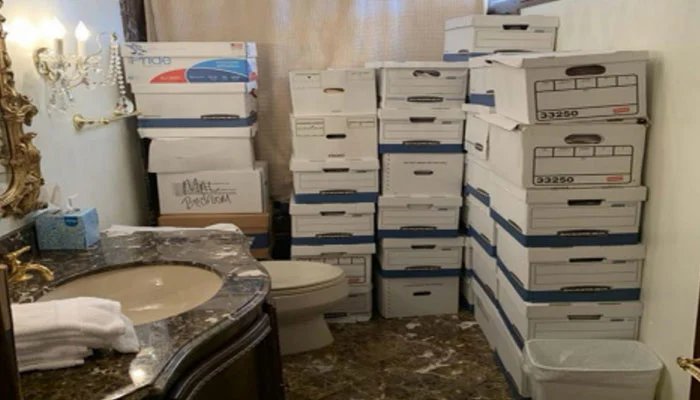
Trump allegedly stored classified information in unconventional places such as bathrooms, showers, ballrooms, and more. The charges against Trump include retaining classified information, obstructing justice, and making false statements. This is the first time in US history that a former president faces criminal charges from the federal government.

According to the indictment, Trump personally moved boxes of documents to his Mar-a-Lago estate in Florida and showed them to others on two occasions. The documents contain sensitive information about US nuclear weapons programs, vulnerabilities of the US and its allies, and plans for military attacks. Trump even showed a document described as a “plan of attack” to someone.

The indictment also implicates Walt Nauta, who faces charges including conspiracy to obstruct justice and withholding and concealing documents. Nauta was caught on camera removing boxes from Mar-a-Lago. Initially, he denied any involvement but later admitted to moving the documents.

The indictment reveals that Trump misled investigators, schemed to hide the records, and instructed his lawyers to defy a subpoena for the materials. He expressed a desire to keep the documents private and even suggested denying their existence. The indictment states that Trump knowingly retained classified documents that he was not authorized to possess.

If convicted, Trump could face imprisonment, with the charge of obstruction of justice carrying the highest penalty of up to 20 years. The indictment emphasizes the gravity of the charges and the importance of enforcing laws that protect national defense information.

Trump maintains his innocence and criticizes the Special Counsel leading the investigation. He argues that he had the authority to access and possess the documents. The case continues as Trump prepares for his court appearance in federal court.

The indictment reveals serious misconduct by a former president, highlighting a breach of trust and potential risks to national security. It underscores the principle that nobody is exempt from the law and that safeguarding the country’s safety and security is paramount.

Italian special forces save Turkish cargo ship from ‘pirates’

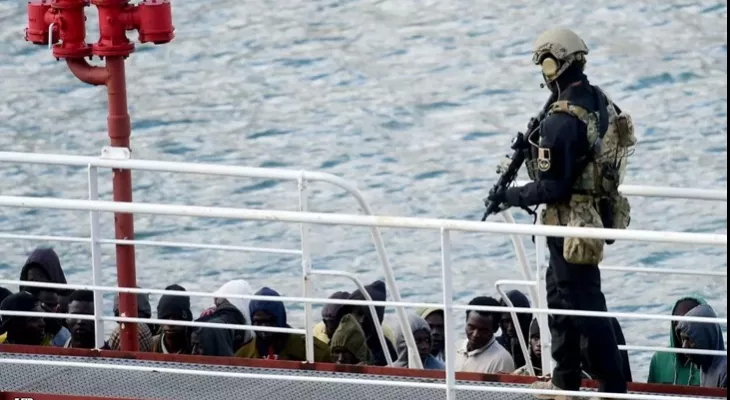
Italian special forces boarded a cargo ship sailing from Turkey to France on Friday, after the crew were threatened by “pirates” off the Italian coast, the defence ministry said.

Marines dropped onto the vessel from helicopters after a number of “stowaways” used knives to threaten the crew, Defence Minister Guido Crosetto told reporters.

The ministry told AFP the aggressors appeared to be migrants, though their nationalities were unknown.

The ship was the Galata Seaways, a roll-on roll-off cargo ship — designed to carry vehicles — sailing under a Turkish flag with reportedly 22 crew members.

It set off from Topcular in Turkey on June 7 and was headed for Sete in southern France.

Some 15 stowaways had boarded the ship in Turkey, in the hope of reaching Europe, but were discovered by the crew, the Repubblica daily said.

“The migrants tried to take some of the crew hostage inside the bridge,” ANSA news agency said.

The drama unfolded as the ship — some 200 metres long and 20 metres wide — was sailing in Italian waters, near the island of Ischia.

The captain managed to radio for help, sending an urgent request to Ankara, which then alerted the Italian authorities, according to reports.

After special forces stormed the ship, some of the stowaways were arrested but others “barricaded themselves in the depths of the hold,” the Repubblica said.

“The ship is very big and it is not difficult to hide,” minister Crosetto told a television show.

“When they heard the helicopter, (some of the stowaways) ran, then probably tried to escape by sea in the dark,” he said.

“However, the ship is surrounded. We will see in the next few hours… who the pirates are and what they wanted to do,” he said.

Italy’s marines “had to take control of the ship, and they did so in a very short time,” he said, adding that the crew was safe.

Coast guard and financial police boats were also involved in the operation, the Italian ministry said.

The cargo ship was escorted towards Naples and anchored just outside the port, where there was a heavy police presence, local media reported.

French President Macron meets victims of Annecy park stabbing, hails backpack hero

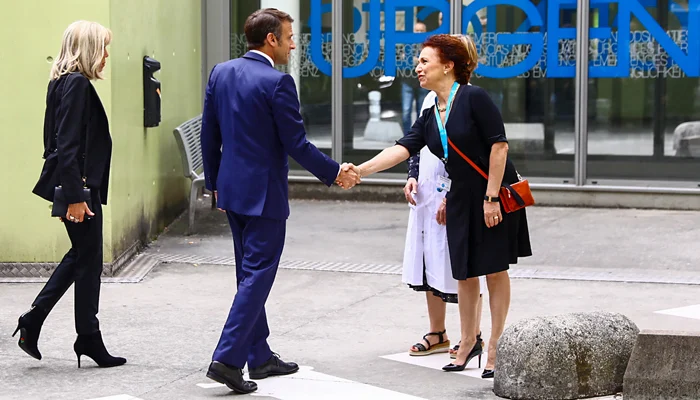
French President Emmanuel Macron met the stabbing victims at a Grenoble hospital that injured four children, including two adults, Thursday in a lakeside park in Annecy.

The president also met with the person Friday — backpack hero — who intervened when the attack occurred.

Macron noted that the two children are stable, and doctors are optimistic about their recovery.

People laid flowers and showed sympathy toward the victims when a 31-year-old Syrian refugee started mass stabbing.

Among the wounded were a British national and a Dutch national.

A video captured by an onlooker showed the assailant jumping a low wall into a children’s playground and repeatedly lunging at a child in a stroller, pushing aside a woman who tried to fend him off.

France hailed the bravery of a 24-year-old Catholic — identified as Henri — who faced the attacker and used his backpack as a shield as he sought to prevent the attack.

Henri told CNews: “All I know is I was not there by chance. It was unthinkable to do nothing … I followed my instincts and did what I could to protect the weak.”

Interrogation

Church authorities said a Mass will be held in Annecy Cathedral in tribute to the victims and their families later on Friday.

Annecy Prosecutor Line Bonnet-Mathis said she was “extending the suspect’s custody for further interrogation.”

She has said: “There was no indication that terrorism was the motivation and that the suspect was under investigation for attempted murder.”

Police have arrested a Syrian national who was granted asylum in Sweden 10 years ago, Prime Minister Elisabeth Borne said Friday.

She said: “He had entered France legally and was carrying Swedish identity documents and a Swedish driving licence. Sweden and France are both members of the Schengen Area, the world’s largest passport-free zone which allows the unrestricted movement of people between 26 European countries.”

The attack has laid bare the tensions between Europe’s free movement rights and the pressure governments in countries like France and Italy are coming under from voters to toughen immigration laws as societies shift rightwards politically.

Interior Minister Gerald Darmanin said late Thursday the suspect had no police record in France, was homeless and had been questioned by police Sunday as he was washing in the Annecy Lake.

The minister said it was “a troubling coincidence” that the assailant’s demand for asylum in France had been rejected just four days before the attack.