
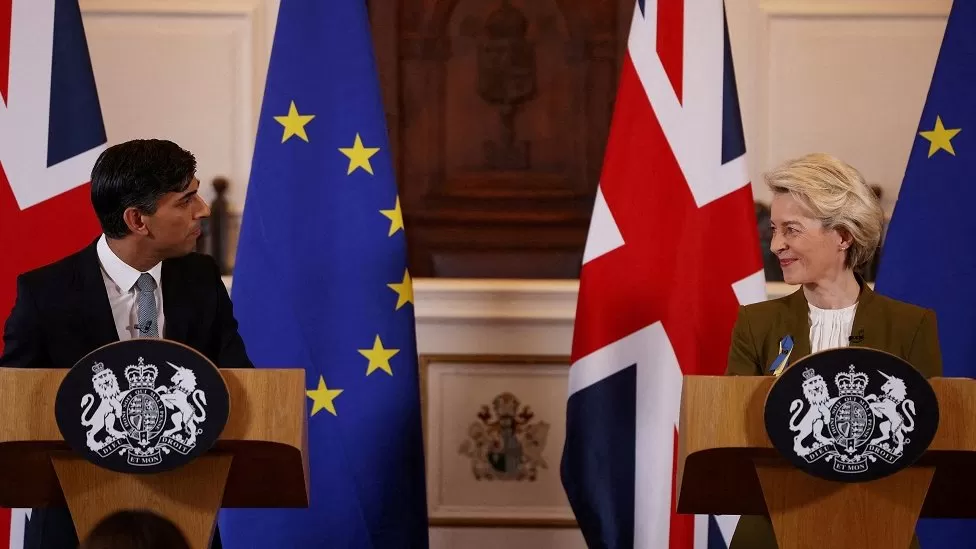
After more than a year of talks, which at times stopped, re-started or even imploded, big parts of the Windsor Framework will be signed off later.

The UK-EU deal is designed to make trade between Northern Ireland and the rest of the UK smoother.

It gives Stormont’s Assembly more say over EU rules, and has been welcomed by most Northern Ireland parties.

However the Democratic Unionist Party (DUP) remains unconvinced and is still refusing to re-enter power-sharing.

Northern Ireland Secretary Chris Heaton-Harris said the party – Northern Ireland’s second largest after Sinn Féin – has yet to come to terms with the significance of Wednesday’s overwhelming parliamentary vote in support of the new Brexit deal.

No renegotiating

The joint UK-EU body that is overseeing Brexit will meet later to ratify the legal changes brought about by the Windsor Framework.

Speaking after meetings with the five main Stormont parties at Hillsborough on Thursday, Mr Heaton-Harris said the deal was done and would soon become international law.

“There is no renegotiating of that deal,” he said.

Mr Heaton-Harris’ comments came a day after MPs voted by 515 to 29 to support the deal agreed by Prime Minister Rishi Sunak.

It will open the door to talks in other areas of cooperation that had been blocked – including financial services and Britain’s access to the EU’s flagship Horizon research scheme.

But the DUP and some Conservative MPs voted against the deal, saying the UK government had to make changes to it.

For the DUP, it is not clear what its next move will be.

It is likely that the UK government will offer some constitutional reassurances to the party.

But Sir Jeffrey Donaldson may put that down as nothing more than tinkering around the edges rather than meaningful negotiation.

Where that would leave a possible return to power-sharing is the question – one without an obvious answer.

Mr Heaton-Harris said he would have to set Northern Ireland’s budget for the coming year within the next few weeks if the executive was not up and running soon.

He added that Northern Ireland’s public finances were “definitely not in a good state”.

Sinn Féin vice-president Michelle O’Neill urged the DUP to stop its boycott of Stormont so that executive ministers could take control of the budget.

Ministers had to be in post to make the case to the Treasury for extra funding for Northern Ireland. ahead of a budget that Ms O’Neill said was set to cause “catastrophic damage to public services”.

Alliance Party MP Stephen Farry said Northern Ireland was “bleeding”, with problems piling up and public services in real crisis, reinforcing the impetus on the DUP to join other parties in ensuring Northern Ireland had “proper governance”.

Ulster Unionist assembly member Robbie Butler said the level of budget cuts put Northern Ireland on a cliff edge and urged the DUP to put the public ahead of its issues with the Windsor Framework.

Social Democratic and Labour Party (SDLP) leader Colum Eastwood said the DUP had to accept that it could not get everything it wanted from the new Brexit deal.

Honeysuckle hassle?

A body representing horticultural businesses has said the framework leaves several issues unresolved for the trade in plants from Great Britain to Northern Ireland.

The Horticultural Trades Association (HTA) has written to the prime minister, complaining that the deal means “several key species of trees and plants will remain prohibited for exporting to Northern Ireland”.

It said this includes popular species such as hawthorn, hazel, honeysuckle and jasmine.

However the government has suggested that those could permitted for Great Britain to Northern Ireland sales at a later date.

The Horticultural Trades Association has written to the prime minister to voice its concerns

The EU has strict rules on plant health and, under the original Northern Ireland Protocol, species it considered high risk were banned from being sent to Northern Ireland from Great Britain.

The framework means some but not all of those species are now permitted.

A government spokesperson said: “We have paved the way for 11 banned plant species to move again by the time of the next planting season.

“Those were priority cases identified by industry itself and we will progress further cases wherever there is industry appetite.”

The HTA is also calling for the establishing of what it calls a British and Northern Irish Horticulture and Seed Potato Traders Forum to identify and work through the outstanding issues.

It is understood the government is planning to step up consultation with businesses in the coming weeks.

That is aimed at finalising the details of the trusted trader scheme and “green lane”, which will be central to easing the flow of goods from Great Britain to Northern Ireland.
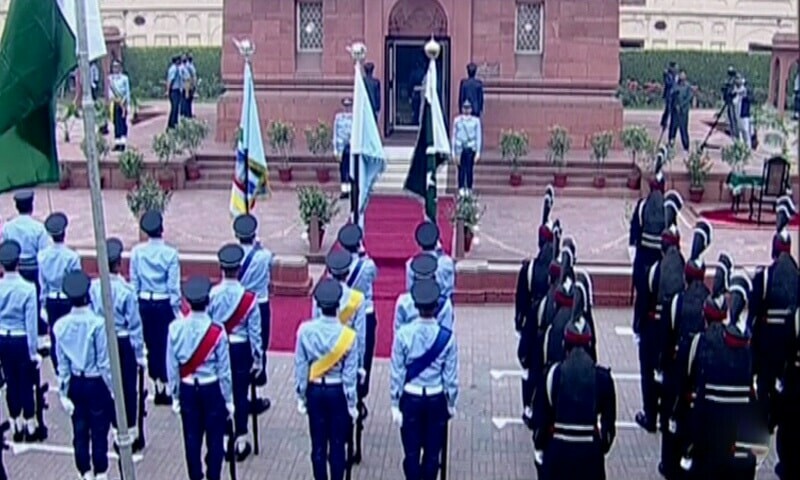
Nation celebrates Pakistan Day as PM, president invoke ‘spirit of service’

Pakistan Day commemorates the passing of the Lahore Resolution on March 23, 1940, when the All-India Muslim League demanded a separate nation for the Muslims of the British Indian Empire.

According to Radio Pakistan, the day started off with a 31-gun salute in the federal capital and a 21-gun salute in the provincial capitals.

A change of guards ceremony was also held at the mausoleums of Quaid-i-Azam Mohammad Ali Jinnah and Allama Iqbal in Karachi and Lahore, respectively.


Special prayers were offered in mosques after Fajr prayers for the progress and prosperity of the country.

However, the Pakistan Day Military Parade of the Armed Forces at the Aiwan-e-Sadr, scheduled to be held today, has been postponed till Saturday (March 25) due to bad weather.

Meanwhile, the prime minister, president and other leaders conveyed their greetings and congratulated the nation.

Foreign Minister Bilawal Bhutto Zardari also conveyed his well-wishes to the citizens on the occasion.

In a tweet today, he wished for the country to “grow, prosper and thrive in peace and harmony consistent with the vision of our founding fathers”


Let us awaken the spirit of service to the nation: PM

PM Shehbaz felicitated the nation on the occasion, saying that today was a reminder that no matter what the challenges, human will was capable of attaining the impossible.

“Today the nation pays homage to Pakistan’s founding fathers for their political wisdom, sagacity & determination to wage a relentless struggle for a separate homeland,” the premier tweeted.


“Living nations put themselves to rigorous audit by comparing their performance to the ideals. This is their way of introspection & accountability,” he said and expressed “unwavering faith” in the idea of the country defeating the odds.

“On 23rd March today, let us awaken the spirit of service to nation,” the PM added.

Earlier, in a message to the nation, PM Shehbaz described March 23 as an “epoch-making day in our national history”, saying that it reminds us of our past, invites us to ponder over our present state of affairs and inspires us to build a prosperous future.

He said this day is also the day to renew our pledges and takes us back to 1940 when Muslims of the sub-continent approved a resolution for the establishment of a separate homeland they could call their own under the dynamic leadership of Quaid-i-Azam Muhammad Ali Jinnah.

The prime minister said it was Allama Muhammad Iqbal’s dream of freedom that manifested itself in the form of a resolution representing Muslims’ demands, and aspirations for a separate homeland.

The consequential seven years witnessed history in the making as the Quaid-i-Azam led a struggle to translate the dream of Iqbal into reality, he said.

He also highlighted that being a member of the international community, Pakistan had played the role of a responsible nation in the resolution of problems facing humanity and in establishing global peace.

He stressed that we should not lose sight of the challenges staring us in the face while celebrating this day and asked the nation to pay tribute to the sacrifices of the country’s founding fathers.

There was no doubt that Pakistan was destined to achieve great heights and said that this day should be used to introspect and hold ourselves to account as only those nations that are capable of analysing their past, learning from their mistakes and making amends can achieve true glory, he added.

A long way to go: President Alvi

In his message to the nation, President Dr Arif Alvi recalled that the country established state institutions, made its defence impregnable, achieved nuclear deterrence, curbed terrorism, overcame the Covid-19 pandemic, and displayed the spirit of sacrifice and cooperation in the face of natural calamities.

However, he said, we still have a long way to go to ensure the rule of law, strengthen democracy, reduce inequalities in our society, empower women, provide the rights of persons with disabilities, eradicate terrorism and extremism, ensure the political and economic stability of the country, and protect the human rights of our citizens.

Today, we pay tribute to the founding fathers of our nation whose struggles and sacrifices led to the creation of Pakistan, he said.

The president said the persecution of minorities, especially the Muslims in India, the rising wave of violence against Muslims, the violation of human rights, and the brutalities being committed by the Indian security forces in the Indian-occupied Jammu and Kashmir proved that the Muslim leadership of that time made a prudent decision.

He recalled that at the time of independence, the country faced many challenges but despite these challenges, it made tremendous achievements in every field through continuous hard work and ability.

Resolution to designate 23 March as ‘Pakistan Day’ introduced in US House of Representatives

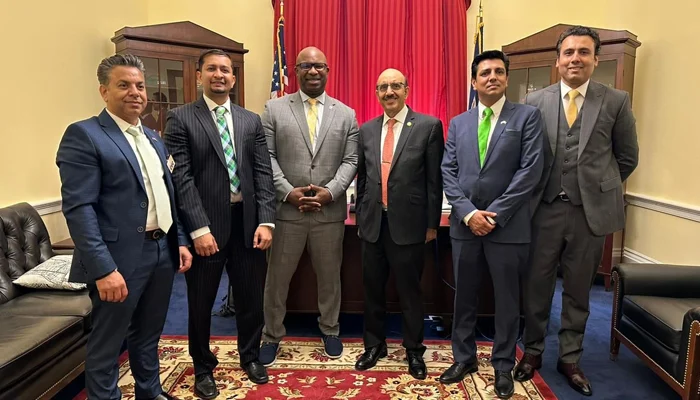
WASHINGTON: For the first time in the history of Pak-US relations, a landmark resolution was introduced in the House of Representatives by Congressman Jamaal Bowman recognising 23 March 2023 as “Pakistan Day“.

According to Radio Pakistan, the resolution was presented to “honour and celebrate the important role played by the Pakistani-American community in strengthening and inspiring the people of the United States.”

The resolution stated that it is proper and desirable for the United States to recognise and pay tribute to those who foster ethnic pride and enhance the profile of cultural diversity which strengthens the fabric of the communities of the United States.

It further said that “Pakistan Day provides an excellent means by which all residents of the United States can learn more about the rich Pakistani heritage while fostering an appreciation for the ancient culture among future generations,”

Meanwhile, Pakistan’s Ambassador to the United States Masood Khan thanked Congressman Bowman for his initiative which he said would not only help further strengthening bilateral relations between the two countries but would also help bring the people of the two countries closer to each other.

He also thanked the leadership of the American Pakistan Advocacy Group, including its president and prominent community leader Ali Rashid and other officer-bearers, who had been working hard, maintaining a close liaison with the congressman for the introduction of the landmark resolution.

He said that recognising 23rd March 2023 as “Pakistan Day” and acknowledging the valuable contributions of Pak-American citizens reflects the importance of Pak-US ties and a desire to further strengthen this relation.

Masood Khan also met Congressman Bowman in his chamber, who received him warmly and shared his views about the importance of the relationship and the critical role being played by the Pakistani diaspora in various fields including education, medicine, science, technology, business and industry.

Meanwhile, talking to media outside Capitol Hill, Congressman Bowman said that it was a matter of an honour for him to have introduced the resolution.

He said: “It is incredibly important for us at this moment, as the United States government, to stand with the people of Pakistan who are dealing with a catastrophe that we have not seen in history. 10 million people still struggle to find access to clean water and energy. A third of the country was destroyed. All of this because of what some would call a natural disaster but as we know is related to the issue of climate change.”

Later, in his message to the people of Pakistan, Congressman Bowman greeted the nation on “Pakistan Day” and the commencement of the month of Holy Ramadan and conveyed his message of “Peace and love to the people of Pakistan.”

He said: “Let us continue to work together to bring our two countries together.”

Erdogan tries to salvage economic credibility before Turkey’s election

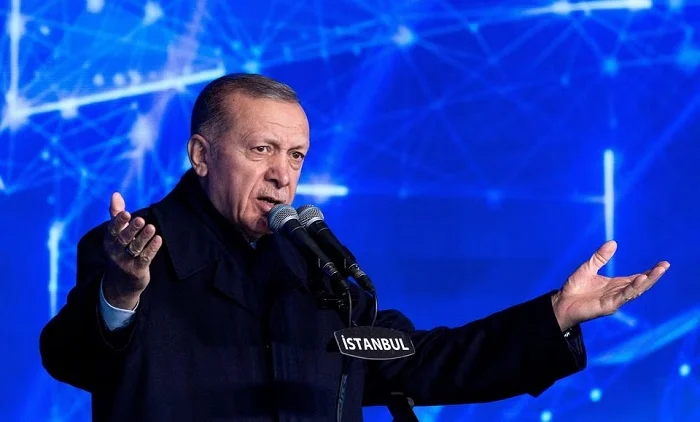
Former Turkish economy tsar Mehmet Simsek’s refusal to return to politics has left President Tayyip Erdogan‘s ruling party scrambling to rebuild its economic credibility less than two months before landmark elections, insiders and analysts say.

Erdogan, who has led Turkey for two decades but is trailing in opinion polls ahead of the May 14 vote, had personally appealed to Simsek to return to the government and take up a top role, several people familiar with the matter said.

Some AK Party (AKP) members had wanted Simsek to champion the party’s latest rhetorical pivot to more free-market policies, after years of unorthodoxy under Erdogan that had hammered the lira currency and sent inflation soaring.

But after a Monday meeting at AKP headquarters, Simsek, well-respected by international investors, said on Twitter he was not interested in “active politics” after having stepped down as deputy prime minister in 2018.

Yet he is ready to provide any type of support in his area, he added.

Separately, in a televised interview on Wednesday, Erdogan downplayed the significance of the meeting with Simsek, saying such meetings were ordinary. He added that Simsek said he would gladly help ahead of the elections.

The episode shows the difficulty of rebranding a government whose policies have set off a cost-of-living crisis and left the economy and financial markets heavily state-managed, analysts and investors say.

“Simsek’s refusal to join the ranks is neither the first nor the final indicator of dwindling support for the government,” said Ertan Aksoy, of Aksoy Research polling company.

AKP spokesperson Omer Celik said after the meeting that Erdogan did not offer Simsek a formal posting but that “all the mechanisms and duties of the party” were open to him.

A senior government official told Reuters the AKP was somewhat divided with some members opposed to Simsek’s return, and described the outcome of the Erdogan meeting as “undesirable”. The party may now need to revise its economic platform ahead of the election campaign, he added.

An AKP official who was not also authorised to speak publicly said Simsek’s return would have boosted the party’s polls. “We are having trouble regarding the economic picture right now. There is no arguing about that,” the person said, adding new steps are needed.

Another party official said its revised election manifesto could include more “balanced” or “mixed” policies, rather than the free-market orthodox approach that some had sought.

The AKP declined to comment on whether it was revising its economic strategy ahead of the vote. Simsek declined to comment on his meeting with Erdogan.

‘Dwindling support’

Erdogan’s determination to slash interest rates to stoke economic growth sent inflation above 85% last year. The lira has shed 80% of its value versus the dollar in five years, a period in which foreign investors largely fled the big emerging market.

The economic cost of the devastating earthquakes that struck Turkey’s south on Feb. 6 is estimated to be around $104 billion, adding to pressures on the economy.

The opposition bloc – which pledges to roll back Erdogan’s economic policies – received a boost on Wednesday when a big pro-Kurdish party said it would not run its own presidential candidate, raising prospects it could unite.

Two recent polls by MAK and Turkiye Raporu show the opposition presidential challenger Kemal Kilicdaroglu between 4 and 9 percentage points ahead of Erdogan.

“The AKP … is surprised and in a state of heavy panic. It is pressing all the buttons at the same time,” Turhan Comez, chief adviser to opposition IYI Party leader Meral Aksener, said on Halk TV on Tuesday.

Though a self-described “enemy” of interest rates, Erdogan has occasionally endorsed free-market policies in recent years. But he then shifted tone again and adopted a model prioritising production, and exports and targeted cheap credit.

Such pivots – including firing market-friendly central bank governor Naci Agbal after only four months in 2021 – have left investors deeply sceptical.

Investors are “extremely cautious” about any pivot by Erdogan’s government given “multiple past head-fakes”, said Blaise Antin, head of EM sovereign research at asset manager TCW in Los Angeles.

Polina Kurdyavko, head of emerging markets and senior portfolio manager at BlueBay Asset Management, said the economic challenge was “not easily solvable regardless of who comes to power and regardless of what policies you implement”.

Saudi, Iran FMs hold Ramazan call, vow to meet ‘soon’: Riyadh

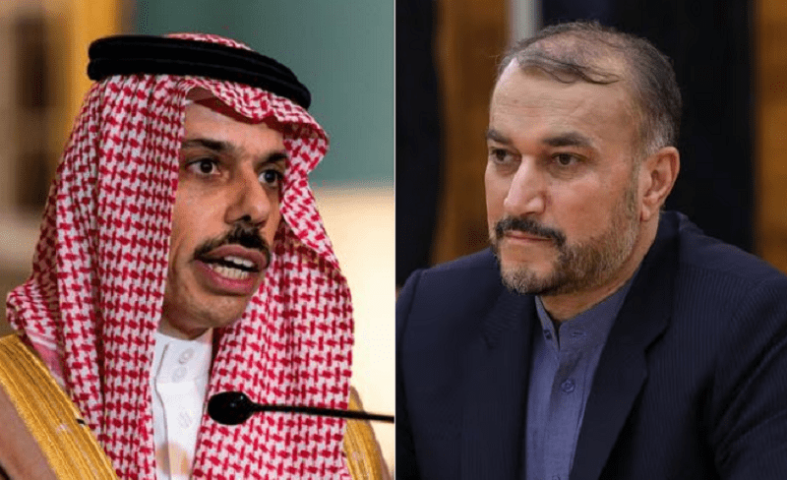
The Saudi minister, Prince Faisal bin Farhan, called Hossein Amir-Abdollahian and the pair “exchanged congratulations on the occasion of the holy month of Ramadan”, which begins Thursday in both countries, the Saudi foreign ministry said in a statement posted on Twitter.

“The two ministers agreed to hold a bilateral meeting soon in order to pave the way for the reopening of embassies and consulates between the two countries,” the statement said.

Saudi officials have said the ministers’ expected meeting is the next step in a surprise Chinese-brokered rapprochement announced on March 10 intended to fully restore diplomatic ties seven years after they were severed.

Riyadh cut relations after Iranian protesters attacked Saudi diplomatic missions in 2016 following the Saudi execution of Shia cleric Nimr al-Nimr — just one in a series of flashpoints between the two longstanding regional rivals.

The deal is expected to see Iran and Saudi Arabia reopen their embassies and missions within two months and implement security and economic cooperation deals signed more than 20 years ago.

On Sunday, an Iranian official said President Ebrahim Raisi had favourably received an invitation to visit Saudi Arabia from King Salman, though Riyadh has yet to confirm.

Amir-Abdollahian told reporters the same day that the two countries had agreed to hold a meeting between their top diplomats and that three locations had been suggested, without specifying which.

The detente between Saudi Arabia, the world’s biggest oil exporter, and Iran, strongly at odds with Western governments over its nuclear activities, has the potential to reshape relations across a region characterised by turbulence for decades.

Indian court convicts Rahul Gandhi of defamation, gives two-year sentence

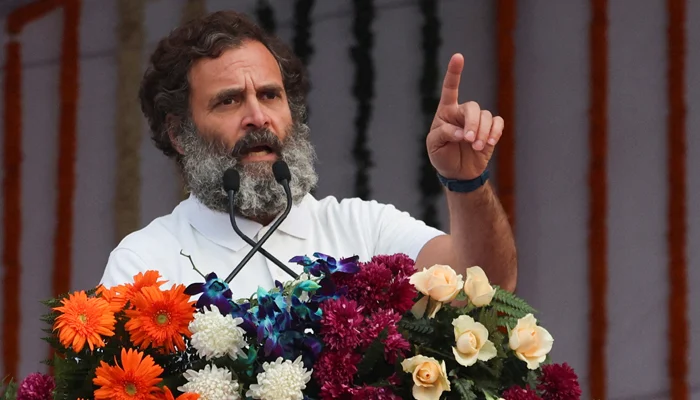
Gandhi was present at the court in Surat, a city in Gujarat, which is Prime Minister Narendra Modi’s home state. He was given bail and the sentence was suspended for thirty days.

The criminal defamation case was filed against Gandhi by a leader of the ruling Bharatiya Janata Party (BJP), after a speech during the 2019 general election in which he referred to the surname Modi and asked how all thieves had the surname.

“The court has found Rahul Gandhis comment to be defamatory. The court found him guilty under IPC section 499 read with 500. He has been sentenced to two years in jail,” Ketan Reshamwala, advocate for complainant Purnesh Modi, said.

Gandhi is one of the main opposition leaders in the country who will go up against Modi when he seeks his third term as prime minister in 2024.

Gandhi’s once-dominant Congress controls less than 10 per cent of the elected seats in parliament’s lower house and has lost badly to the BJP in two successive general elections, most recently in 2019.

Modi remains India’s most popular politician by a substantial margin and is widely expected to win a third victory at the next general election in 2024

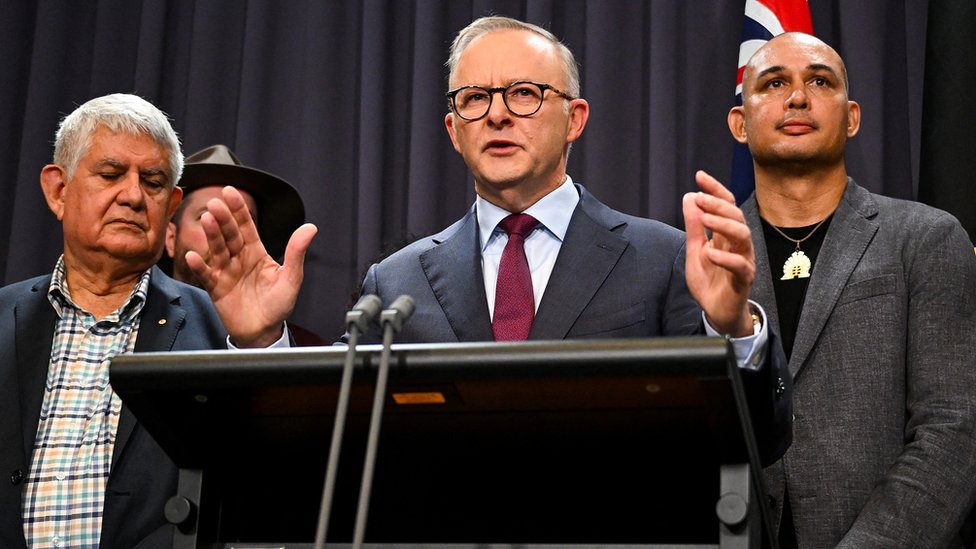
Australia’s leader has unveiled crucial details of a planned referendum which could see it change its constitution for the first time in almost 50 years.

If approved, the vote later this year would establish an Aboriginal and Torres Strait Islander Voice – a formal body for Indigenous people to give advice on laws.

PM Anthony Albanese argues it would be a “very simple” but “momentous” change.

Constitutional referendums are fairly rare – only eight of 44 have succeeded.

The Voice is being fiercely debated with support and opposition across the political spectrum

Drafted by more than 250 Indigenous leaders, the statement is considered the best – though not unanimous – call to action for reforms which affect First Nations Australians.

On Thursday, Mr Albanese announced the proposed wording for a question to be put to Australians in a compulsory vote.

“A proposed law to alter the constitution to recognise the First Peoples of Australia by establishing an Aboriginal and Torres Strait Islander Voice. Do you approve this proposed alteration?”

In an emotional speech, Mr Albanese said the Voice would enshrine “recognition” that Australians “share this great island continent with the world’s oldest continuous culture”.

“Our nation’s birth certificate should recognise this and be proud of it,” he added.

Standing alongside, Indigenous Affairs Minister Linda Burney spoke of how she had spent the first 10 years of her life “not being counted”.

The proposal, still to be debated in parliament, states the Voice will “make representations” to MPs and policy makers “on matters relating to Aboriginal and Torres Strait Islander peoples”.

However, parliament would have the power to decide on the Voice’s composition, functions, powers and procedures.

What’s the case for it?

Indigenous Australians feel a “powerlessness” when tackling structural problems to improve their lives, the Uluru Statement says.

These problems include having a shorter life expectancy than non-Indigenous Australians, disproportionately poorer health and education outcomes, and higher incarceration rates.

Many argue this is often because of a failure to properly consult Indigenous people on solutions.

“Non-Indigenous people [are] making decisions about communities they have never visited and people they do not know,” wrote Prof Megan Davis, an Uluru Statement signatory.

What do opponents say?

Some argue Indigenous people are already represented fairly in parliament. It currently has 11 Indigenous lawmakers – representing 4.8% of the parliament, a slightly higher percentage than the Indigenous Australian population nationwide.

But Voice supporters counter that MPs represent specific constituencies, not necessarily Indigenous interests.

Other critics say it could act like a third chamber of parliament and potentially veto legislation, but the government has ruled this out.

Support is not universal among Indigenous people, either. Some say a treaty with Indigenous people – a legally binding, negotiated agreement – should be the priority. Australia is one of the only ex-British colonies without one.

Senator Lidia Thorpe is among those who want a formal treaty first

Many Indigenous Australians emphasise they never ceded their sovereignty or land. There are fears that being recognised in the constitution could amount to that.

And others argue it’s just a symbolic gesture and that money could be better spent on immediate solutions.

What will the Voice look like in practice?

That’s not yet certain. If Australia votes yes, legislation designing the Voice will then be developed and debated.

One proposal suggests the advisory body could have 24 members – comprised of representatives from each state and territory, the Torres Strait Islands, and remote Aboriginal communities.

Mr Albanese sees the Voice being “an unflinching source of advice and accountability”.

Are there global comparisons?

Voice advocates compare it to the First Nations parliaments in Norway, Sweden and Finland for the Sami people.

They’re not parliaments in the traditional sense – they are mostly consultative bodies which do not have a formal legislative function.

In Finland, for example, the government negotiates with the Sami Parliament on specific matters like land management and legislative or administrative changes affecting Sami culture.

However, Finnish laws don’t prevent government authorities from forging ahead without negotiations.

Why is a referendum needed?

Advocates say the Voice needs to be enshrined in the constitution rather than legislated. Such a change cannot happen without a referendum.

They argue this would give the Voice permanency, insulating it from partisan politics.

For it to succeed, a majority of Australians need to vote yes. There also needs to be majority support in at least four of Australia’s six states.

Polling has shown about three quarters of Australians support a constitutionally enshrined Voice.

The proposal has even won the support of US basketball legend Shaquille O’Neal, who will appear in promotional material.

Shaquille O’Neal will promote the Voice’s power to bring people together, Anthony Albanese says

But the result is far from assured – the last successful referendum was in 1977.

The conservative Liberal Party has previously opposed the Voice, but now says its MPs will vote to decide its position. Its junior coalition partner, the Nationals, oppose the reform.

The Greens party will support the Voice. But its previous Indigenous Affairs spokesperson, Lidia Thorpe, recently left the party over its position – she is advocating for a treaty first.

What next?

Parliament is expected to hold a vote on the proposal in June. If approved, the referendum will happen sometime after September.

If a Voice is established, the Uluru Statement calls for a Makarrata commission – a body to supervise a process of treaty-making and truth-telling about the history of Indigenous Australians.

Implementing a Voice is also seen as likely to create further impetus for an Australian republic. Mr Albanese has already indicated a referendum on the issue is likely if he wins a second term in 2025.

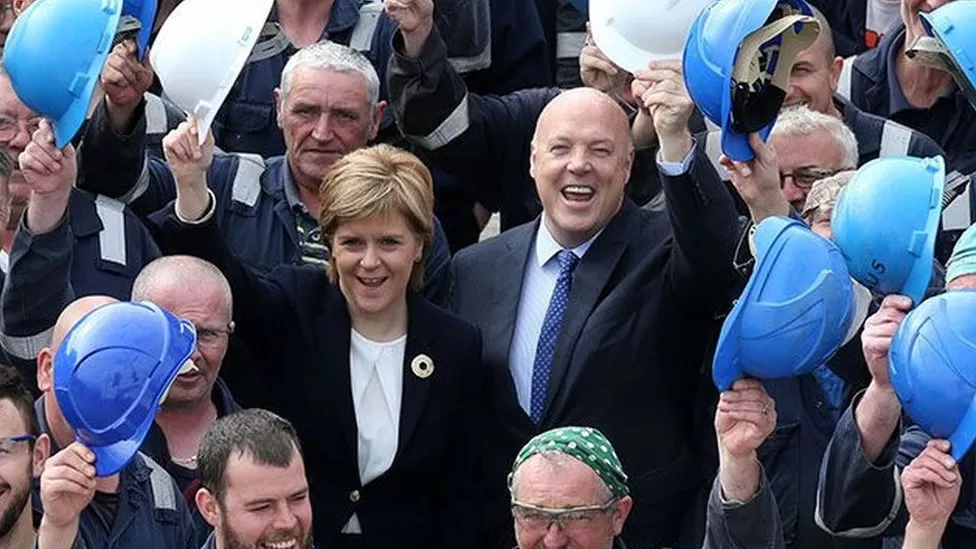
Nicola Sturgeon has been criticised by a Holyrood committee for prematurely naming Ferguson Marine as the preferred bidder to build two new ferries.

Ms Sturgeon made the announcement in 2015 despite “considerable negotiations” still being required, the Public Audit Committee said.

It said this had likely weakened the position of government ferry company CMAL when problems emerged.

The ferries are now five years late and massively over budget.

The criticism of the first minister was backed by a majority of MSPs on the committee in a 124-page report after months of investigations

Its two SNP members, Colin Beattie and Willie Coffey, did not agree with the committee’s conclusions about Ms Sturgeon’s role.

The committee also said there had been a lack of information, delays, incomplete answers and failure to answer from ministers and Transport Scotland during its inquiry.

The Scottish government said it had already made changes to address many of the issues raised by the report, and would respond in full to the committee once it had studied its findings.

The committee’s report said taxpayers and island communities had been badly let down by many of those involved in the project to build the two ferries – the Glen Sannox and the currently unnamed hull 802.

The ferries are meant to serve island communities on CalMac routes in the west of Scotland, but are still not ready despite their price tag nearly tripling to almost £300m.

It emerged last week that both ferries have been hit by a further delay, with the Glen Sannox now not ready until the autumn rather than May of this year and hull 802 now due to enter service in the autumn of 2024 instead of March of that year.

Glen Sannox was launched in November 2017 – complete with “windows” that had been painted on

The decision to publicly announce Ferguson Marine Engineering Ltd (FMEL) – at that point owned by businessman and prominent independence supporter Jim McColl – as the preferred bidder in 2015 came in for particular criticism in the committee report.

Mr McColl has previously said he believes the contract to build Glen Sannox and Hull 802 was awarded for political reasons, claiming that the Scottish government wanted good publicity for its party conference in 2015.

The Scottish government has dismissed that allegation, with Ms Sturgeon saying the shipyard would have closed if it had not been given the ferry contract.

One section of the cross-party committee’s report said: “Given that it was clear that considerable negotiations were still required, we question the first minister’s decision to publicly announce the preferred bidder.

“The committee is not convinced that such a public announcement was necessary or indeed appropriate for this project, especially at that time, given the considerable work and negotiation that was required before CMAL could take a decision to award the formal contract.

“We believe that this almost certainly weakened CMAL’s negotiating position with FMEL, particularly as important details of the contract were still being worked out.”

It was “particularly concerning”, the report said, that no full record exists of a meeting between Ms Sturgeon and Mr McColl from May 2017.

It said it was still unclear how large amounts of public money were spent during Mr McColl’s ownership of the yard.

And the report also said it remained unclear why the first minister led on the preferred bidder announcement and why her press release and associated social media communications did not reflect that there were “significant negotiations to be concluded”.

The launch of the Glen Sannox in November 2017 – which was attended by the first minister – was also described as premature by the report.

It later emerged that windows had been painted on to the ship to make it look more ready than it actually was.

The two ferries were hit by further delays last week

Ministers were not aware of CMAL’s concerns about the launch but should have played a more active role, the report said.

FMEL entered administration in August 2019, with the shipyard being taken over by the Scottish government through its new publicly-owned Ferguson Marine (Port Glasgow) Limited.

Committee convener Richard Leonard, a Labour MSP, said the people of Scotland had been badly let down by the ferry saga, and that it was important for lessons to be learned for similar projects in the future.

He added: “There have been collective failures at government and agency level from the start.

“It has been dogged by a lack of transparency, by ineffective governance arrangements, by poor record keeping within the government and by baffling communication failures”.

Other members of the government and public agencies also came in for criticism in the report.

The committee expressed “serious concern” at then infrastructure secretary Keith Brown’s failure to answer key questions about his role in the awarding of the contract.

It said former transport minister Derek Mackay showed “poor judgment” in sending an email to a constituency MSP, which FMEL interpreted as waiving its requirement to provide a builders refund guarantee.

The auditor general is still investigating the procurement process for the contract, following claims made in a BBC Disclosure documentary.

Documents obtained by the programme indicated that Ferguson Marine benefited from preferential treatment during the tendering process.

The committee was also frustrated by delays in receiving evidence from Transport Scotland officials, leaving MSPs questioning the level of “respect” shown to parliamentary scrutiny.

Transport Scotland “consistently failed to accurately and timeously reflect CMAL’s significant concerns to Scottish ministers”, the MSPs said.

A spokeswoman for the Scottish government said it was “committed to transparency” and had published more than 200 documents relating to the ferry project on its website.

She added: “We have co-operated at every stage of the Public Audit Committee inquiry, as well as those previously undertaken by the Rural Economy and Connectivity Committee and Audit Scotland.

“Ministers have apologised for the delay to the ferries and the distress and difficulty caused.

“We are committed to their completion, securing a sustainable future for the yard and supporting our island communities that rely on this type of vessel on a daily basis.”

German minister on first official visit to Taiwan in 26 years

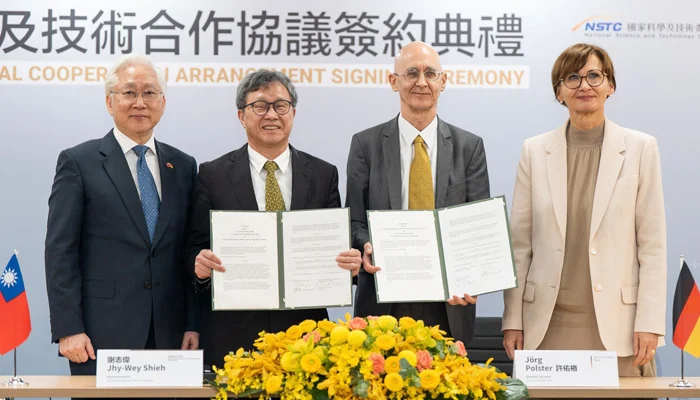
TAIPEI: Germany’s education minister on Tuesday inked a technological cooperation deal with Taiwan, kicking off the first cabinet-level German visit to the island in 26 years.

Bettina Stark-Watzinger signed the Science and Technology Agreement with Taiwan’s National Science and Technology Council (NSTC) on the first day of a trip that is likely to draw criticism from China.

Beijing views the self-ruled democratic island as its territory, to be taken one day — by force if necessary. China routinely opposes official exchanges between Taiwan and its international partners.

It has ratcheted up military, diplomatic and economic pressure in response to a flurry of visits by politicians from the United States, Europe and elsewhere to Taiwan.

At the signing ceremony in Taipei, Stark-Watzinger said “it is a great pleasure and honour” for her to be the first German government minister to visit in more than two decades.

“This arrangement stands for enhancing cooperation on the basis of democratic values, transparency, openness, reciprocity and scientific freedom,” she said.

Her trip comes two months after a high-ranking German parliamentary delegation travelled to Taiwan, a move that was strongly criticised by Beijing.

Stark-Watzinger declined to comment when asked about reported Chinese opposition to the visit.

Germany’s foreign ministry last week reaffirmed its commitment to a “one China” policy, wherein it has formal bilateral ties with Beijing, but also maintains “close and good ties with Taiwan”.

Wu Tsung-tsong, head of the NSTC, said the trip was part of “normal” exchanges.

The agreement covers joint research in several fields, Wu said, including semiconductors and artificial intelligence.

According to media reports, Taiwanese tech giant TSMC, the world’s largest contract chipmaker, is currently in talks to build its first European plant in Germany.

In December, the company said that there was “no concrete plan” for setting up facilities in Germany.

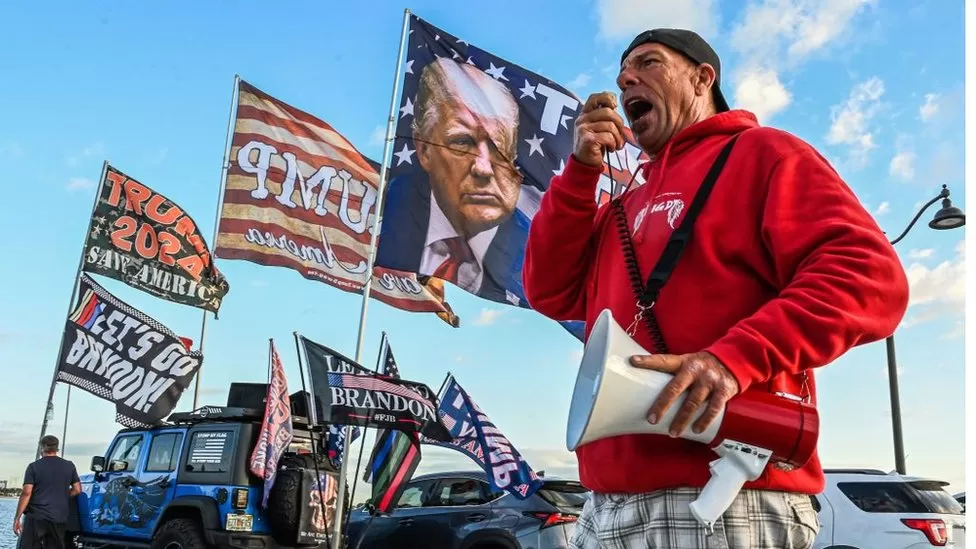
Donald Trump called for protests against his possible imminent criminal indictment, and police in major cities are preparing for unrest.

But the prevailing message from some of his most fervent supporters is: stay home.

It’s a contradiction that makes sense after investigating pro-Trump spaces online.

On mainstream social networks, messaging apps and Trump’s own Truth Social, rumours are swirling.

There’s breathless chatter about double agents and “false flags” – attacks carried out with the intention of blaming opponents for the violence.Watch: Trump supporters gather outside Mar-a-Largo

Many of the former president’s steadfast supporters believe that the Capitol riot on 6 January 2021 was instigated not by Trump fans and far-right groups such as the Proud Boys and Oath Keepers, but instead by federal agents or left-wing “antifa” – anti-fascist activists who hoped to discredit Mr Trump.

They point to the presence, revealed in court documents, of confidential FBI sources in the crowd that day.

But that’s very different to saying there was a plot by federal authorities to spark violence. While there’s no evidence of that – and voluminous evidence that the more than 1,000 people arrested in connection with the Capitol riot were Trump supporters – fringe news sites have been filled with wild speculation and suggestions about “deep state” plots.

Some of the coverage has even filtered up to more mainstream outlets such as Fox News.

The rumours, and fear of a repeat of the events of January 2021, have dissuaded many of those who would be out on the streets protesting over Mr Trump’s possible arrest.

Ali Alexander, a far-right activist who organised protests leading up to the Capitol riot, announced that he wasn’t planning to protest and said that conspiracy theorist Alex Jones of Infowars was also staying home.

Georgia Representative Marjorie Taylor Greene, a Republican known for her loyalty to Mr Trump, repeated similar concerns:

The same sentiments were rife in pro-Trump Facebook groups, on Telegram channels, on sites like 4chan, and on Truth Social.

“Most of the chatter I’ve seen about protests is that they’re all going to be crawling with feds or set ups by the deep state to pull off false flags and make ‘peaceful protestors’ look bad,” says conspiracy theory expert Mike Rothschild.

Mr Rothschild, author of The Storm is Upon Us, a book on the QAnon conspiracy theory, noted that a protest on Monday held by the New York Young Republican Club drew only a few dozen supporters.

“I think some of this is genuine paranoia over being arrested, and some of it is that there’s just fewer people with the fanatical devotion to Trump that drove January 6th,” he says.

In contrast with his messages prior to the Capitol riot, Mr Trump has not been specific about a focal point or timing of any potential protest.

But there are indications that talk of violence against Trump’s opponents is rising. Advance Democracy, a non-partisan research group, found a spike in mentions of violence trebled on Truth Social after Mr Trump declared on Saturday that he would be arrested and urged his supporters to “PROTEST, TAKE OUR NATION BACK!”

Law enforcement seem to be taking such threats and the possibility of large protests seriously.

New York police are bolstering security around the courthouse where Mr Trump would be arrested. Police in Los Angeles are preparing for a pro-Trump protest on Tuesday outside a federal building, the LA Times newspaper reports.

In Washington, police say they have no specific information about pro-Trump protests but civil disturbance officers are on standby.

On Saturday, Mr Trump is scheduled to hold a rally in Waco. The central Texas city was the site of a raid on a Christian cult in 1993 which resulted in the deaths of 82 cult members and four federal agents, an incident that has long been a rallying cry for anti-government and anti-law enforcement groups.