
PM Shahbaz winds up SCO meeting on ‘satisfactory note’

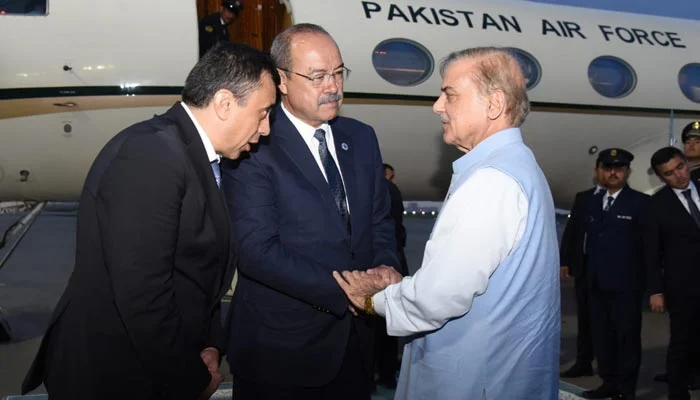
SAMARKAND: Prime Minister Shehbaz Sharif on Friday took off from Samarkand on a “satisfactory note” after the completion of his two-day visit to Uzbekistan to attend the Shanghai Cooperation Organisation’s (SCO) Council of Head of States (CHS) meeting.

Following the conclusion of his visit to Uzbekistan, the premier tweeted about the fruition of his visit, where he met leaders of the member states.

“Leaving Samarkand on a satisfactory note. There is now a renewed awareness about the potent threat of climate change. SCO countries understand it is capable of reversing all our material development and pushing us backward by decades. All the more reason for a united front,” PM Shehbaz tweeted after completing his trip for the high-level meeting.

PM Shahbaz urges to ‘build a wall’ against climate change

Earlier today, PM Shahbaz called on the Shanghai Cooperation Organisation’s (SCO) member states to “build a wall” against climate change as Pakistan deals with flood devastation triggered by torrential rains that have affected over 30 million people and killed over 1,500.

The prime minister made the appeal while addressing the  SCO’s Council of Heads of State (CHS) today as he talked about the environment, peace and security in Afghanistan and economic coordination among the nations.

PM Shehbaz, along with leaders of the eight-member SCO, attended the close-format Council of Heads of States meeting at the Congress Centre, where he was welcomed by President of Uzbekistan Shavkat Mirziyoyev.

Russian President Vladimir Putin, Chinese President Xi Jinping, Uzbekistan President Shavkat Mirziyoyev, Iranian President Ebrahim Raisi, Azerbaijan President Ilham Aliyev, Tajikistan President Emomali Rahmon, Belarus President Alexander Lukashenko and Indian Prime Minister Narendra Modi also attended the session.

Speaking of the devastation caused by the floods, the  Pakistani premier said that the country is paying the price for climate change.

“The devastating floods in Pakistan are most definitely climate change-induced. It is the result of climate change, cloud outbursts, and unprecedented rains, combined with hill torrents coming down. All this put together makes Pakistan look like a sea of water,” the PM said.

Stressing that he has “never seen this kind of devastation” before,  he said that the SCO should plan well for the coming generations.

PM Shehbaz said the calamity has damaged houses as well as washed out crops. He said people are moreover facing diseases in the flood-hit areas. He expressed the hope that the country will overcome the situation.

The prime minister also expressed gratitude to members of the SCO who supported Pakistan in this hour of need.

Afghanistan imbroglio

Highlighting Pakistan’s stance and perspective on regional cooperation, particularly in view of emerging global challenges, the premier cautioned against abandoning Afghanistan again.

“Pakistan is a neighbouring country of Afghanistan, and peace in Afghanistan will ensure peace in Pakistan,” he told the summit, adding that “it will be a big mistake if we ignore Afghanistan this time around”.

The prime minister said the world needs to work collectively to support all good initiatives in Afghanistan for its people.

PM Shehbaz said strengthening Afghanistan in the security and counter-terrorism domain should run parallel to SCO’s support to the Afghan people in the socio-economic arenas.

The prime minister urged the international community to support efforts to build a sustainable Afghan economy and unfreeze its financial assets.

PM Shehbaz said Pakistan has been a victim of terrorism itself and the country has paid huge sacrifices in defeating terrorism.

He urged the members of the SCO to join hands together in fighting against the menace of terrorism, extremism and separatism.

He also reaffirmed Pakistan’s strong resolve in advancing the objectives of the SCO.

Gas talks with Putin

On the sidelines of the SCO summit, the prime minister met Russian President Vladimir Putin, where the North-South gas pipeline came under discussion.

The Russian president said that a pipeline for gas supply to Pakistan is possible, and that part of the necessary infrastructure is already in place.

President Putin said that he was delighted to meet PM Shehbaz as he had a warm recollection of his working meetings with his brother (Nawaz Sharif), with whom he met on the sidelines of SCO meetings in Kazakhstan and Bashkiria, Russia.

Putin said that he would like to note that he sees Pakistan as a priority partner in Southeast Asia and Asia as a whole. Relations between the two countries are developing absolutely positively, and he is pleased about that, he said.

“I would like to begin our meeting by expressing condolences over the loss of life from natural disasters, the unprecedented flooding in Pakistan. For our part, we are willing to help your people. We have dispatched the necessary humanitarian aid there, and we are ready to help you organise assistance to the flood victims,” President Putin said.
PM Shehbaz to attend Queen Elizabeth’s funeral, meet Nawaz in London

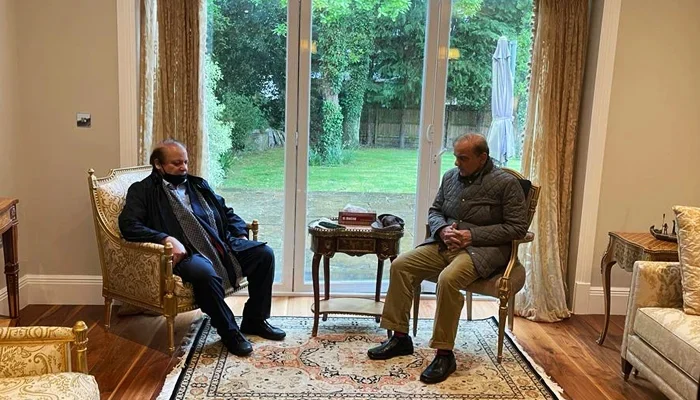
ISLAMABAD: Prime Minister Shehbaz Sharif will embark on a two-day UK visit during which he will represent Pakistan at the funeral of Queen Elizabeth II and meet PML-N supremo Nawaz Sharif.

People familiar with the matter told Geo News that the premier will visit England this Sunday, a day after concluding his Uzbekistan visit, where he attended the Shanghai Cooperation Organisation (SCO) Council of Head of States (CHS) summit.

The prime minister is scheduled to have a three-hour long meeting with the elder Sharif on the day he touches down in the country. He will spend a busy day in the UK capital attending a number of engagements.

PM Shehbaz will return to Pakistan on Monday soon after attending the state funeral for the late Queen — who died at the age of 96 on September 8 at her Balmoral Castle residence.

The coffin of the late monarch has been lying at the historic Westminster Hall since Wednesday.

Some 750,000 people in total are expected to file past the coffin ahead of the state funeral on Monday which presidents, prime ministers, royalty and other world leaders are due to attend.

US President Joe Biden, French President Emmanuel Macron and the leaders of Australia, Canada and Jamaica will join the emperor of Japan among the congregation.

Shehbaz-Nawaz meeting

During the meeting in London, PM Shehbaz is expected to brief Nawaz — his elder brother and PML-N supremo — on the country’s economic and political situation.

The coalition government has not been able to achieve political and economic stability since its formation in April, while decisions like increasing petrol prices and soaring inflation have drawn criticism to Shehbaz Sharif’s government.

Senior analyst Suhail Warraich had revealed — while speaking in the Geo News programme “Aaj Shahzeb Khanzada Kay Sath” in late August — that Nawaz is neither satisfied with the performance of Shehbaz nor Finance Minister Miftah Ismail. Warraich said Nawaz wants Shehbaz to review his policies.

Warraich added that Nawaz repeatedly asked him to call on Shehbaz and ask him to revisit his economic policies. “Shehbaz should take the public into confidence about his economic policies,” the journalist quoted the PML-N founder as saying.

Replying to a question regarding his meeting with Nawaz in London, Warraich said that Nawaz Sharif is absolutely unhappy with the economic policies of the incumbent government. He said Nawaz is not impressed by Miftah’s performance.

The analyst quoted Nawaz as repeatedly saying: “I had already proposed to you not to form the government and go for the general elections.” Warraich said: “It appears that Nawaz Sharif has made up his mind that he wants economic policy from Ishaq Dar alone.

Warraich said Nawaz wants Dar to work on the economy. He also said Nawaz doesn’t seem to be reposing trust in Miftah as he [Nawaz] believes that the finance minister doesn’t know much about economic policies.

PDM bigwigs hold call

Meanwhile, Pakistan Democratic Movement (PDM) leaders Maulana Fazlur Rehman, Asif Ali Zardari, and Nawaz held a telephone contact Friday to discuss the ongoing political situation in the country.

The PDM leaders rejected PTI Chairman Imran Khan’s demand for immediate general elections and made it clear that the ruling alliance would go to general elections next year after economic stability and rehabilitation of the flood-affected people.

They declared election date will not be given due to Khan’s long march. They vowed that scale of justice should be equal for all.

PDM head Fazl had telephoned the PML-N supremo and the PPP co-chairman.

Sources said the three leaders also discussed the strategy to counter Khan’s new protest call.

Modi springs surprise by assailing Putin

Putin has repeatedly said Russia is not isolated because it can look eastwards to major Asian powers such as China and India.

But at the summit of the Shanghai Cooperation Orga­nisation (SCO), concerns spilled out into the open.

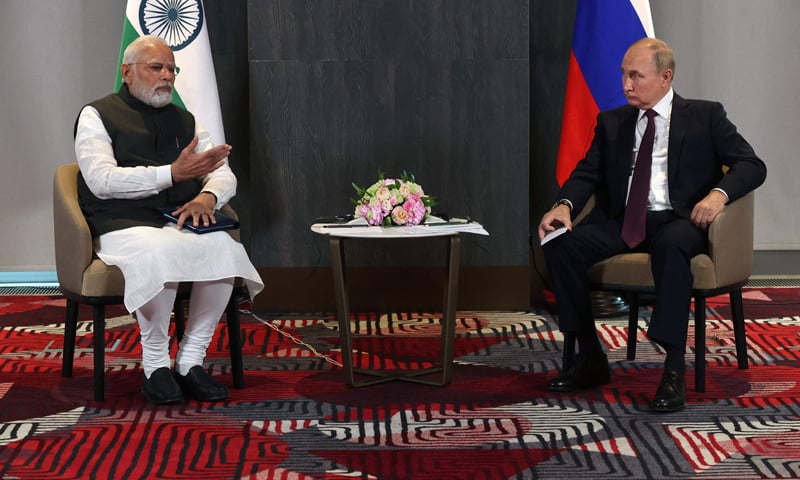
“I know that today’s era is not an era of war, and I have spoken to you on the phone about this,” Modi told Putin at a televised meeting in Samarkand.

As Modi made the remark, Russia’s paramount leader since 1999 pursed his lips, glanced at Modi and then looked down before touching the hair on the back of his head.

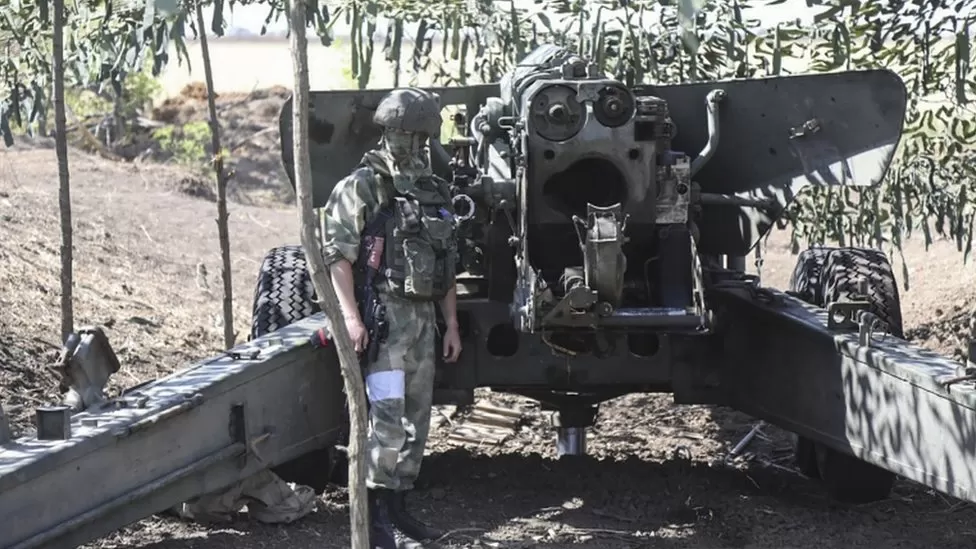
Putin told Modi that he understood the Indian leader had concerns about Ukraine, but that Moscow was doing everything it could to end the conflict.

“I know your position on the conflict in Ukraine, the concerns that you constantly express,” Putin said. “We will do everything to stop this as soon as possible.”

He said Ukraine had rejected negotiations. Ukraine has said it will fight until it drives all Russian troops from its land. Ukrainian President Volodymyr Zelenskiy says he will never accept a “peace” that allows Russia to keep Ukrainian land.

India has become Russia’s No. 2 oil buyer after China as others have cut purchases following the invasion.

US President Joe Biden has warned Russia not to use chemical or tactical nuclear weapons in the war in Ukraine.

Speaking during an interview with CBS News, Mr Biden said such action would “change the face of war unlike anything since World War Two”.

He would not say what response the US would make to the use of such weapons.

Russian President Vladimir Putin put the country’s nuclear forces on “special” alert following its invasion of Ukraine in February.

He told defence chiefs it was because of “aggressive statements” by the West.

Nuclear weapons have existed for almost 80 years and many countries see them as a deterrent that continues to guarantee their national security.

Russia is estimated to have around 5,977 nuclear warheads, according to the Federation of American Scientists.

It, however, remains unlikely that it intends to use such weapons.

Tactical nuclear weapons are those which can be used at relatively short distances, as opposed to “strategic” nuclear weapons which can be launched over much longer distances and raise the spectre of all-out nuclear war.

In an interview with CBS’ 60 Minutes correspondent Scott Pelley in the White House, President Biden was asked what he would say to President Putin if he was considering using weapons of mass destruction in Ukraine.

“Don’t, don’t, don’t,” was President Biden’s response.

Mr Biden was then asked what the consequences would be for Mr Putin if such a line was crossed.

“You think I would tell you if I knew exactly what it would be? Of course, I’m not gonna tell you. It’ll be consequential,” Mr Biden responded.

“They’ll become more of a pariah in the world than they ever have been. And depending on the extent of what they do will determine what response would occur.”

The war in Ukraine has not gone as well as the Kremlin had hoped.

In recent days, Ukraine says it has recaptured more than 8,000 sq km (3,088 sq miles) of territory in the north-eastern Kharkiv region.

Despite the apparent setback, President Putin has insisted that Ukraine’s successful counter-offensive will not stop Russia’s plans of continuing its operations in the east of the country.

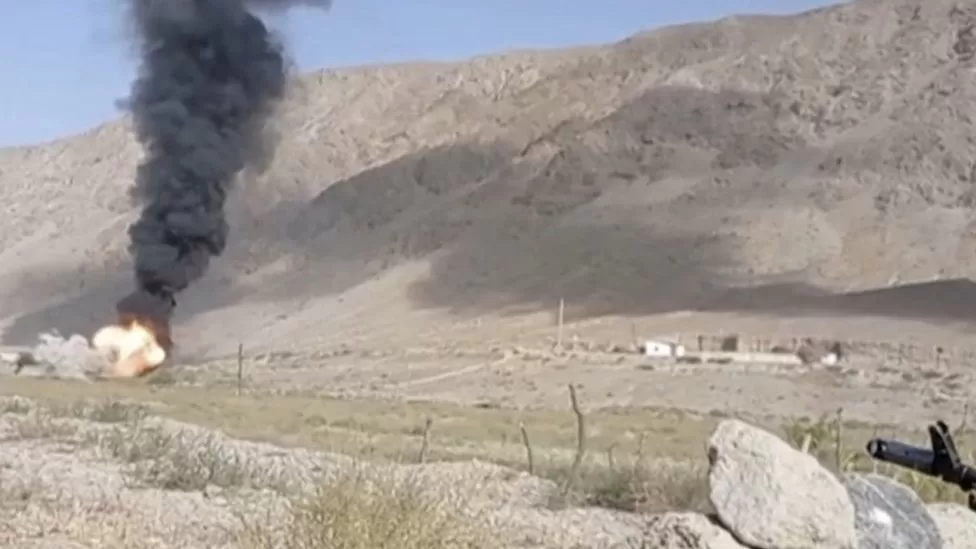
Almost 30 people have been reported killed and dozens injured in clashes on the Kyrgyzstan-Tajikistan border.

Fighting regularly flares up between the two former Soviet states, whose border has been disputed since the collapse of the USSR.

A fresh skirmish which began earlier in the week continued on Friday, despite the two countries agreeing a ceasefire.

Both sides blame the other for beginning the violence and breaching the ceasefire.

Some 24 people in Kyrgyzstan have so far been killed, the Kyrgyz health ministry said on Friday.

Earlier reports from Tajikistan said at least three people had been killed there.

Almost 20,000 people have fled their homes to avoid the violence, a regional branch of the Red Cross reported.

The conflict has renewed fears of an all-out war between the two countries.

The dispute flared up on Wednesday with at least two people killed in three separate incidents.

Kyrgyz border guards accused Tajikistan of taking positions on part of the border that has not been demarcated, while Tajikistan said Kyrgyz guards had opened fire without provocation.

The countries share a 1,000-km (600-mile) border, more than a third of which is disputed.

Russia -which has close ties with both countries – has offered to mediate, calling for “urgent” measures to stop the violence on Friday.

A ceasefire took effect from 16:00 local time (10:00 GMT), but Kyrgyzstan said two of its villages were later shelled.

It accused its neighbour of using tanks and armoured personnel carriers.

In turn, Tajikistan accused Kyrgyz forces of shelling an outpost and seven villages with “heavy weaponry”.

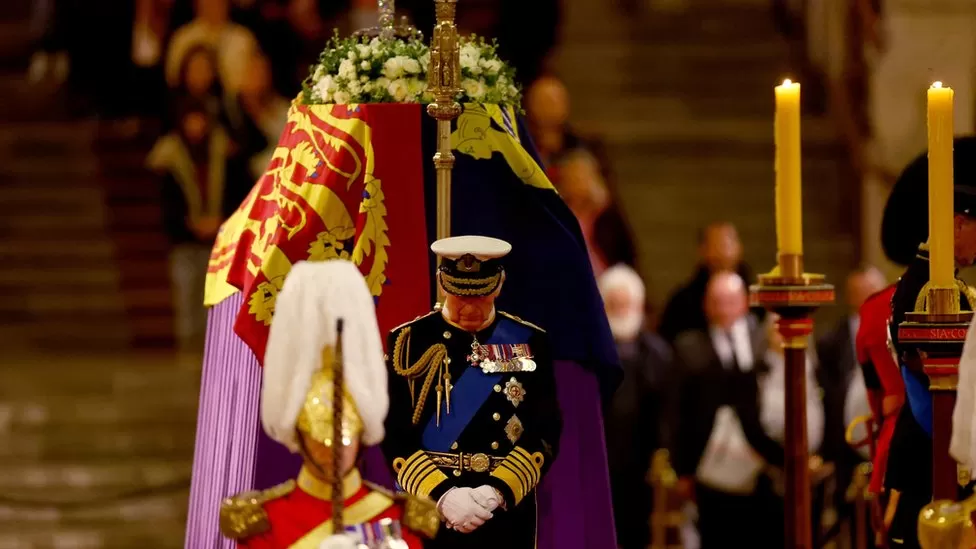
King Charles with Princess Anne and Princes Edward and Andrew have held a silent vigil around the Queen’s coffin.

Wearing military uniform, they stood with their heads bowed for about 10 minutes as the public filed past.

Prince Andrew wore his uniform for the occasion, despite being stripped of his military titles.

Queen Elizabeth II will lie in state at Westminster Hall until her funeral on Monday.

After the vigil ended, members of the public applauded them as they left Westminster Hall.

Other members of the Royal Family, including the Queen Consort, Camilla, the Countess of Wessex and Michael of Kent, watched from the gallery.

Watch: Queen’s children hold silent vigil beside her coffin

The King with his brothers and sister also observed a vigil for the Queen as she lay at rest in St Giles’ Cathedral in Edinburgh earlier this week.


Until Friday, Prince Andrew had not worn military uniform at the events marking his mother’s death, unlike his siblings who are working Royals with military titles.

An exception allowing Prince Andrew to wear military uniform was made for the vigil.

The 62-year-old stepped down as a working royal in 2019 after a Newsnight interview that addressed his relationship with the late convicted sex offender Jeffrey Epstein. The Duke of York was later stripped of his military titles.

Prior to the vigil, Prince Edward thanked the public for their support, saying: “We have been overwhelmed by the tide of emotion that has engulfed us and the sheer number of people who have gone out of their way to express their own love, admiration and respect to such a very special and unique person who was always there for us.

“And now, we are there for her, united in grief.”

On Saturday, the Queen’s grandchildren, including the Prince of Wales and the Duke of Sussex, will also observe a vigil by the late monarch’s coffin.

At King Charles’ request, Prince Harry will wear a military uniform for the occasion, like his brother Prince William, in line with the exception made for his uncle Prince Andrew.

It will be the first time Prince Harry has been seen in military uniform since stepping back as a senior royal in 2020.

Mourners filed past the royals as they stood in silent vigil around the coffin at Westminster Hall
UTERS
Image caption,

A special exception was made to allow Prince Andrew to wear his uniform after he was stripped of his military titles earlier this year
The Queen’s daughter, Princess Anne, accompanied her mother’s coffin as it travelled from Scotland to London
The Queen Consort, the Countess of Wessex and Michael of Kent were among the royals at Westminster Hall
Mourners wanting to see the Queen lying in state have been warned of long waits and cold temperatures overnight

It comes as mourners queuing to pay their respects to the Queen, the longest serving monarch in British history, were told to expect long waits.

The Queen died aged 96 last Thursday at her Scottish estate in Balmoral.

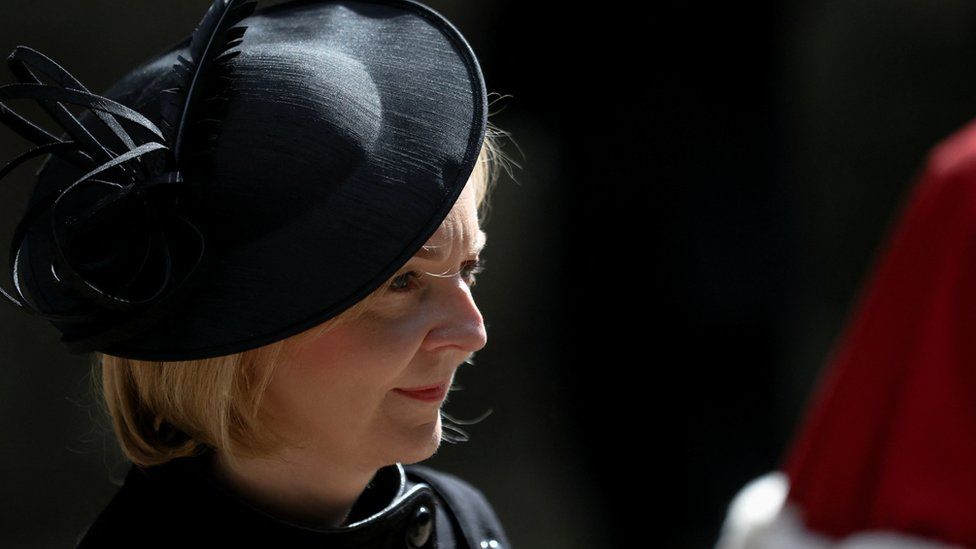
Liz Truss will meet a number of world leaders ahead of the Queen’s funeral on Monday, including President Joe Biden.

The prime minister will hold informal talks with the US leader – and the leaders of Canada, Poland and Ireland – on Sunday.

She will meet her Australian and New Zealand counterparts on Saturday.

Monday’s funeral will be one of the biggest diplomatic events of recent years, with some 500 heads of state and foreign dignitaries expected to attend.

It will provide Ms Truss with an opportunity to meet foreign counterparts less than two weeks after taking office.

Downing Street added that further meetings to take place over the weekend could be fixed later on Friday.

Although she met Mr Biden when she was foreign secretary, this weekend’s meeting with him will be Ms Truss’s first as UK prime minister.

No 10 said the meeting would take place in Downing Street on Sunday, along with meetings with Irish Taoiseach (Prime Minister) Micheál Martin, Canadian PM Justin Trudeau, and Polish President Andrzej Duda.

Before this, Ms Truss will also meet Australian PM Anthony Albanese and New Zealand PM Jacinda Ardern on Saturday at Chevening, the foreign secretary’s official country retreat in Kent.

Ms Truss will also attend the UN General Assembly in New York next week, where further meetings with global leaders are expected.

Downing Street said the talks this weekend would not be formal bilateral meetings because of the official 10-day mourning period, meaning there would be no media access.

The media will not receive summaries of the discussions as would normally happen after the PM’s meetings with foreign leaders, No 10 added.

Liz Truss met Joe Biden in Glasgow last November, when he attended the COP 26 climate summit

The meeting with Mr Martin comes at a time of strained relations with the EU over post-Brexit checks in Northern Ireland.

The UK is refusing to apply some of the checks it signed up to in the Brexit withdrawal deal, prompting a series of lawsuits from the EU.

Mr Martin has expressed concern about legislation Ms Truss introduced as foreign secretary enabling the UK to alter the legal commitments it signed up in the exit treaty in 2019.

Ms Truss is expected to meet European Commission president Ursula von der Leyen for talks at the UN meeting in New York next week.

Funeral guest list

The state funeral service in Westminster Abbey on Monday is expected to be attended by hundreds of foreign dignitaries, including politicians and royalty.

Syria, Venezuela, Afghanistan, Myanmar, Russia and Belarus have not been invited – whilst Iran, North Korea and Nicaragua have been asked to only send a senior diplomat.

A high-ranking official from China had been expected to attend, but a Chinese foreign ministry spokeswoman said earlier no decision had been made.

It comes after a delegation of Chinese officials was barred from attending the lying-in-state of the Queen in Westminster Hall.

According to parliamentary sources, Commons Speaker Sir Lindsay Hoyle refused a request for access over Chinese sanctions against five MPs and two peers.

Sir Lindsay told the BBC: “It’s better I don’t comment because everything has security implications. It would be wrong of me to do so.”

Taliban accuse US of ‘usurping’ Afghanistan’s frozen assets

When the Taliban stormed back to power in August last year, the US froze $7 billion in central bank assets, exacerbating a poverty crisis caused by the collapse of the old regime and suspension of foreign aid.

Earlier this year US President Joe Biden revealed a plan to split the cash, with half for aid to Afghanistan and half going to victims of the 9/11 terror attacks that prompted the US-led invasion.

Since then Kabul’s new leaders have been courting Washington to unlock the aid cash as Afghanistan has been lashed by a winter food crisis, economic free-fall and devastating earthquake. But on Wednesday the US said the $3.5 billion would be stored in a professionally run fund, as it did not trust the Taliban leadership with the country’s money.

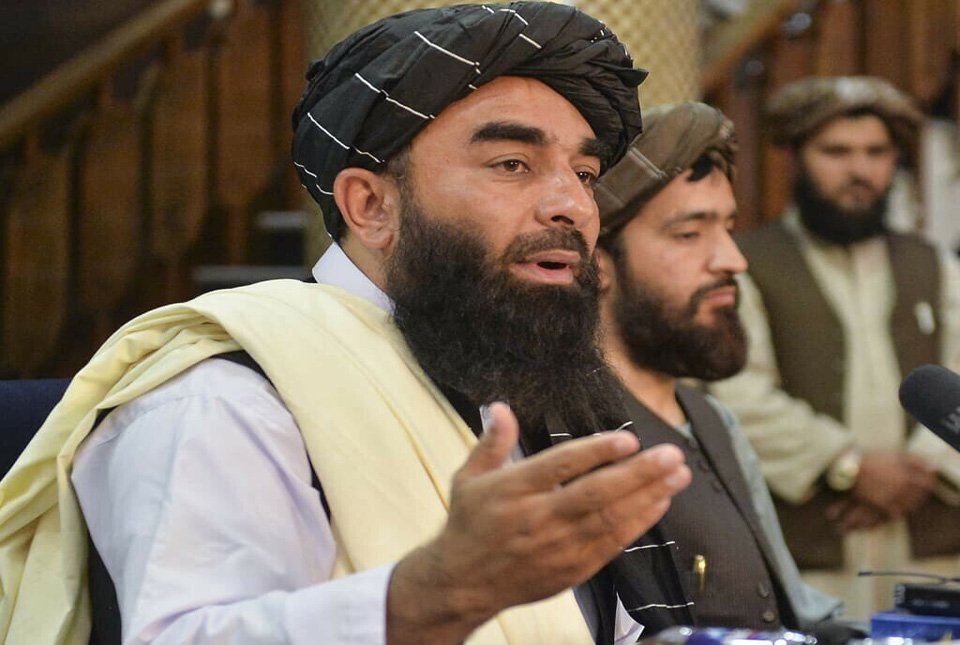
“The assets of the people of Afghanistan have been usurped by the United States,” government spokesman Zabihullah Mujahid said. “We consider it an invasion on the property of Afghans,” he added. “The United States is not the owner of these assets.” He demanded the funds are released “without any conditions”.

The new Afghan Fund, based in Geneva, will not provide humanitarian assistance but will be put in charge of core central bank functions such as paying Afghanistan’s international arrears and for its electricity imports — and potentially for necessities such as printing currency.

Since the end of the 20-year military intervention, the US and other nations have been grappling with how to funnel aid to Afghanistan without going through the Taliban.

“There is currently no institution in Afghanistan that can guarantee that these funds would be used only for the benefit of the people of Afghanistan,” US Deputy Treasury Secretary Wally Adeyemo wrote in a letter to the country’s central Da Afghanistan Bank (DAB) on Wednesday.

“Until these conditions are met, sending assets to DAB would place them at unacceptable risk and jeopardize them as a source of support for the Afghan people,” said. DAB also criticised the plan to deposit its reserves in Switzerland.

It said it would be “unacceptable” for the institution to use them for anything other than legitimate economic activity, such as stabilising the money market and facilitating trade.

Imran Khan calls for elections, says won’t stay patient for too long

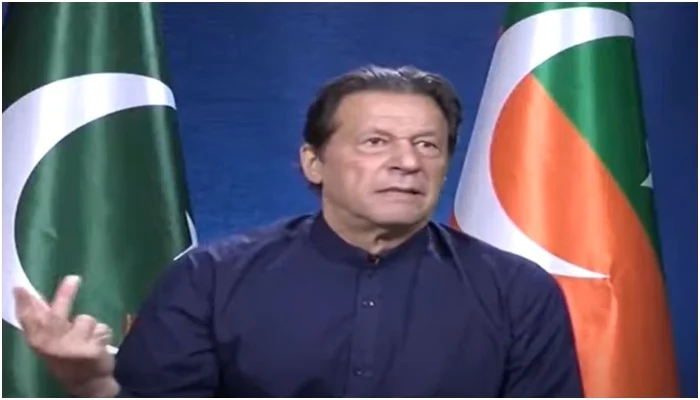
PTI Chairman Imran Khan on Thursday warned the government to announce fresh elections as soon as possible and said that his “party will not stay patient for too long.”

Addressing his supporters during a live telecast, the former prime minister said that the government had destabilised the political situation in the country.

“If they [coalition government] keeps pushing us against the wall, we will have no choice but to call on the public,” he said, adding that the economy was heading towards a downfall, leading to people’s suffering.

Khan said that it will be difficult to prevent the country from collapsing if it continues to suffer from political instability, reiterating that the government should conduct fresh elections soon.

The former premier said that the only reason he decided to address the nation was that the risk rate during his tenure was 5%, but it had increased to 9% when the no-confidence motion was submitted against him and now it has reached over 22%.

The PTI chief criticised the incumbent government, saying that it had “no way to stop the economy from collapsing.”

“The government said that the economy will improve after the revival of the International Monetary Fund (IMF) programme, but today, the country is facing record-high inflation,” he said.

Speaking about his party, Khan said that the PTI was the only party that could keep the whole country united. “Those assuming top governmental posts know that they can’t compete against the PTI in terms of popularity,” he added.

The party chairman put forward some statistics, saying that his government left the foreign exchange reserves of $16.2 billion, adding that at present, the country was facing inflation and unemployment and was heading in the direction of Sri Lanka.

“Pakistan will receive $8 billion from the IMF, the World Bank, and the Asian Development Bank, while the rest $22 billion will have to be financed from other countries,” said Khan. He added that Pakistan has to pay $30 billion in loans this year.

Pakistan rejects Indian propaganda on Neelum-Jhelum project

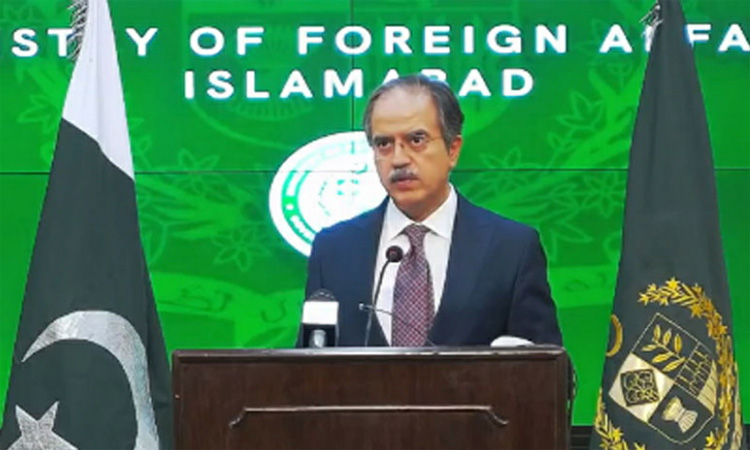
Foreign Office spokesperson Asim Iftikhar told a weekly press briefing that India was once again churning out false and baseless reports about the hydropower project. He said a fault was detected in the project and is currently undergoing remedial works for which the entity concerned, Gezhouba Group of China, has been contacted.

He said the group has alrea­­dy attained full mobilisation at the site and at present the work was proceeding smoothly without any interruption and completion of the project was expected in 2023.

The FO spokesperson said there was no truth in any report of work stoppage or so-called abandonment. He said these reports were aimed at misleading the public as well as part of malicious propaganda meant to fuel controversy around Pakistan-China relations. He said such efforts will not succeed, as all-weather strategic cooperative partners were fully committed to strengthening bilateral cooperation for the benefit of both countries and people.

Answering a question about the presence of a UN-designated individual in Afghanistan, Mr Iftikhar said the person was a proclaimed offender and wanted in numerous terrorism-related cases in Pakistan. He said Pakistani authorities have formally raised this issue with the relevant Afghan interlocutors on multiple occasions. He said Pakistan as well as the international community have sufficient reasons to believe that there were still pockets of ungoverned spaces in Afghanistan that have been used by terrorist groups as safe havens.

The spokesperson said multiple deadly cross-border terrorist attacks from Afghanistan only increase these legitimate concerns. He urged the Afghan interim authorities to take concert and verifiable actions to deliver on the assurances they have given to the international community that they will not allow anyone to use Afghan soil against any country.

About the continuing grave human rights and humanitarian situation in India-held Kashmir, he said unabated wanton state-terrorism by Indian occupation forces resulted in martyrdom of three more young Kashmiris in fake encounters in the occupied valley. This brings total extra-judicial killings to 670 since Aug 5, 2019 and to 150 since the beginning of this year.

“Today the Indian Illegally Occupied Jammu and Kashmir (IIOJK) is the world’s most heavily militarised zone, which has in fact been turned into the world’s largest prison — where people are not allowed to speak freely; APHC leadership, youth, journalists, civil society and human rights defenders are jailed and silenced,” he added.

He urged the international community to call upon India to end its gross and systematic violations of human rights in IIOJK, revoke its illegal and unilateral actions since Aug 5, 2019, and free all political prisoners, including the true Kashmiri leaders.